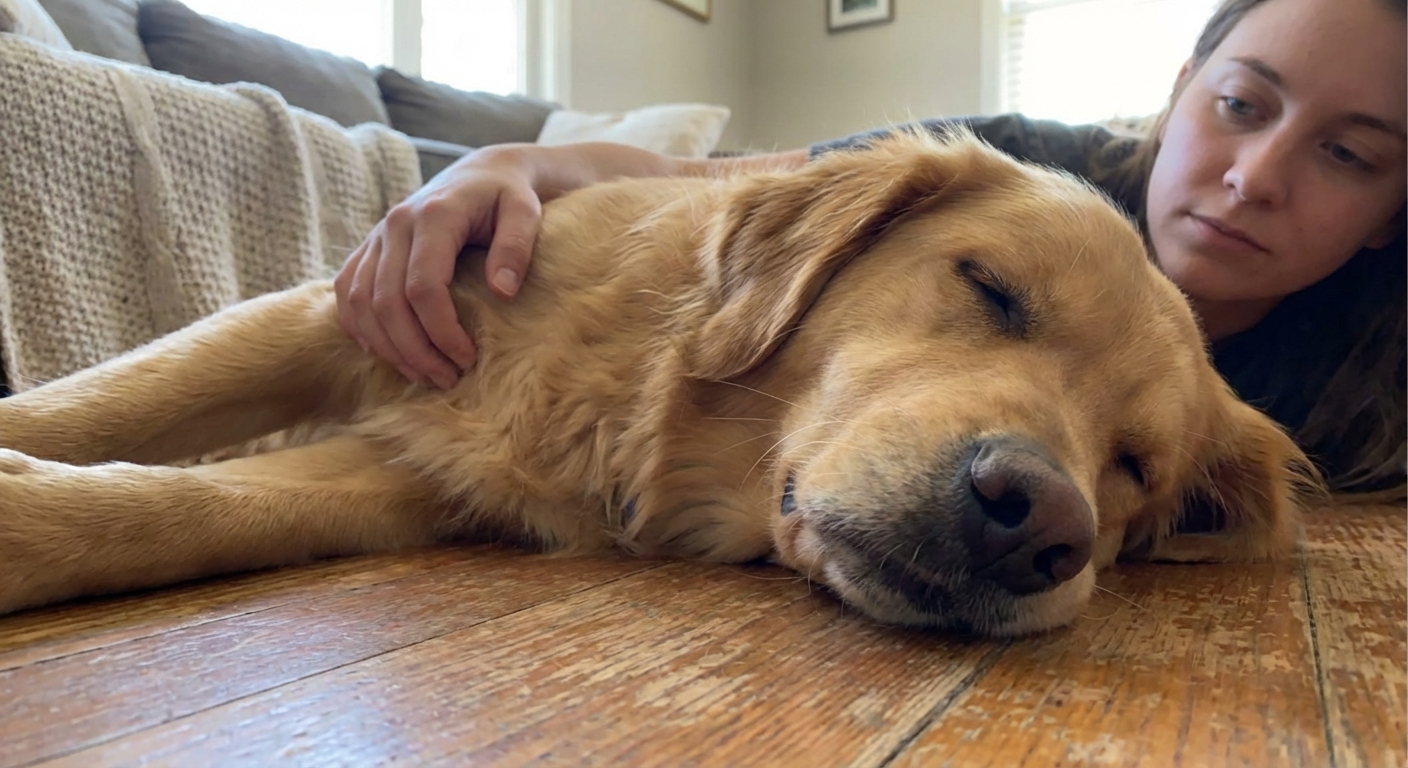
Understand heavy breathing in dogs: panting vs fast or labored breathing, how to check resting breathing rate and gums, common causes, and the emergency red ...
Article
•
Designer Mixes
Why Is My Dog Panting at Night? Anxiety vs. Pain

Shari Shidate
Designer Mixes contributor
Nighttime panting can be unsettling. One minute your dog is resting, and the next they are breathing fast, pacing, or staring at you with wide, worried eyes. As a veterinary assistant, I want you to know two things can be true at once: many causes are manageable, and some deserve prompt veterinary care.
In this article, we will focus on two very common (and often confused) reasons behind nighttime panting: anxiety and pain . The trick is learning the patterns and the extra clues that help you tell them apart. This is not a diagnosis, but it can help you choose a safe next step.
What panting is and what is normal
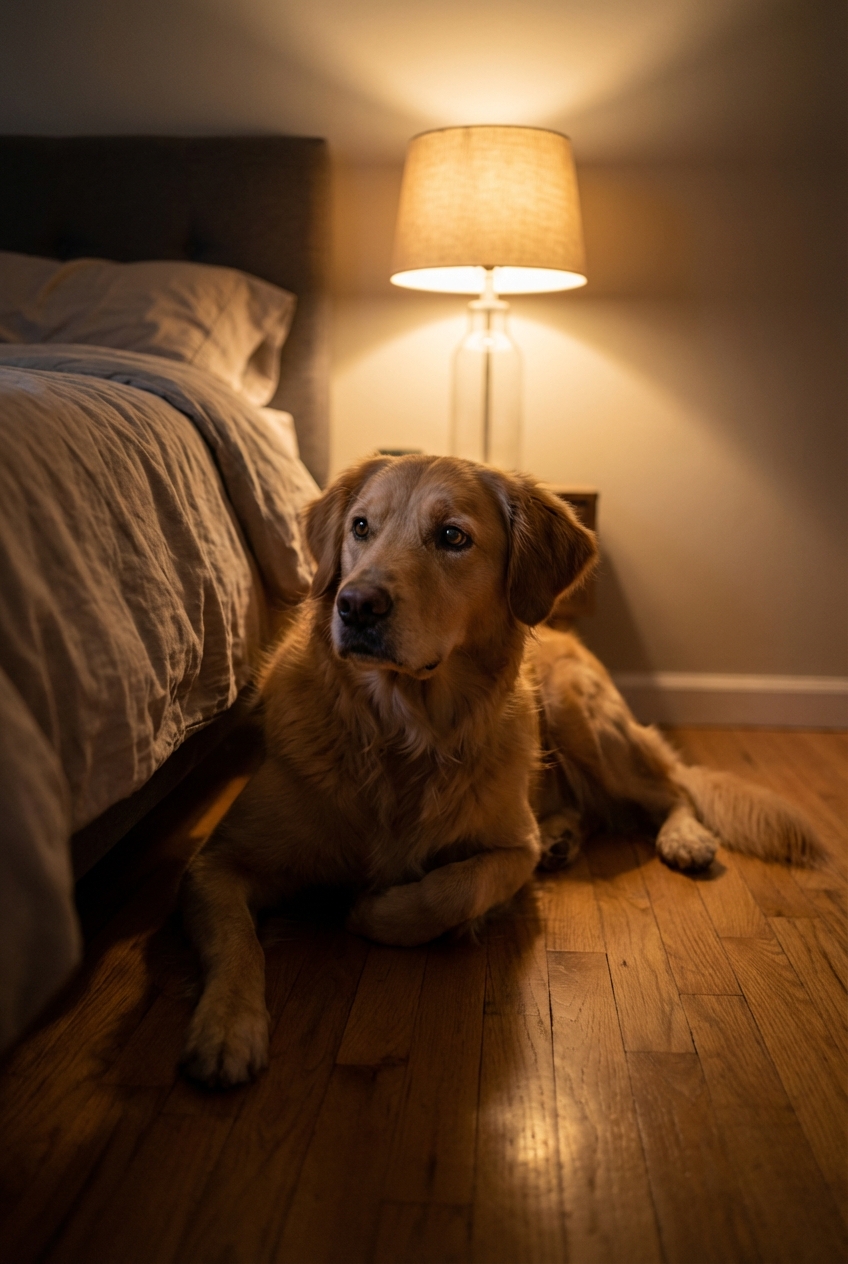
Panting is a normal cooling system for dogs. Dogs have a very limited ability to sweat (mostly through their paw pads), so panting is their main way to release heat by moving air across moist surfaces in the mouth and upper airways. Panting can also happen with excitement, stress, pain, or illness.
Normal reasons you might see panting at night
- The room is warm or your dog is sleeping on a thick bed.
- Recent evening exercise, especially in hot, humid weather.
- Dreaming. Light panting paired with twitching and quick eye movements can happen in REM sleep.
- Short-nosed breeds (like Pugs, French Bulldogs, and some mixes with brachycephalic traits) can pant more at baseline.
- Extra body weight can make it harder to cool down and can increase breathing effort.
One quick note: panting usually looks like open-mouth breathing with a relaxed tongue. Rapid breathing can also happen with the mouth closed. Either can be normal, but either can also be a sign of a medical problem if it is new, intense, or paired with other changes.
If panting is new, intense, lasts longer than about 10 to 15 minutes in a cool, calm room, or keeps happening night after night, it is worth investigating.
Anxiety panting at night: what it looks like
Anxiety-related panting often shows up with other stress behaviors. Some dogs hold it together during the day, then unravel when the house gets quiet and routines change.
Common anxiety triggers at night
- Separation anxiety if your dog cannot settle unless you are close.
- Noise phobias (thunderstorms, fireworks, neighborhood sounds, even a new HVAC noise).
- New environment such as travel, boarding after-effects, or moving homes.
- Cognitive dysfunction in senior dogs (similar to dementia), which often worsens in the evening.
- Schedule changes like a new work shift or a new baby in the home.
Clues that suggest anxiety over pain
- Pacing and scanning the room, or repeatedly changing sleeping spots.
- Clinginess, following you room to room, or trying to get on the bed when they usually do not.
- Trembling, hiding, wide eyes, or ears pinned back.
- Yawning, lip licking, and “whale eye” (seeing the whites of the eyes).
- Settles with comfort: gentle petting, a quiet routine, or moving to a calmer room helps.
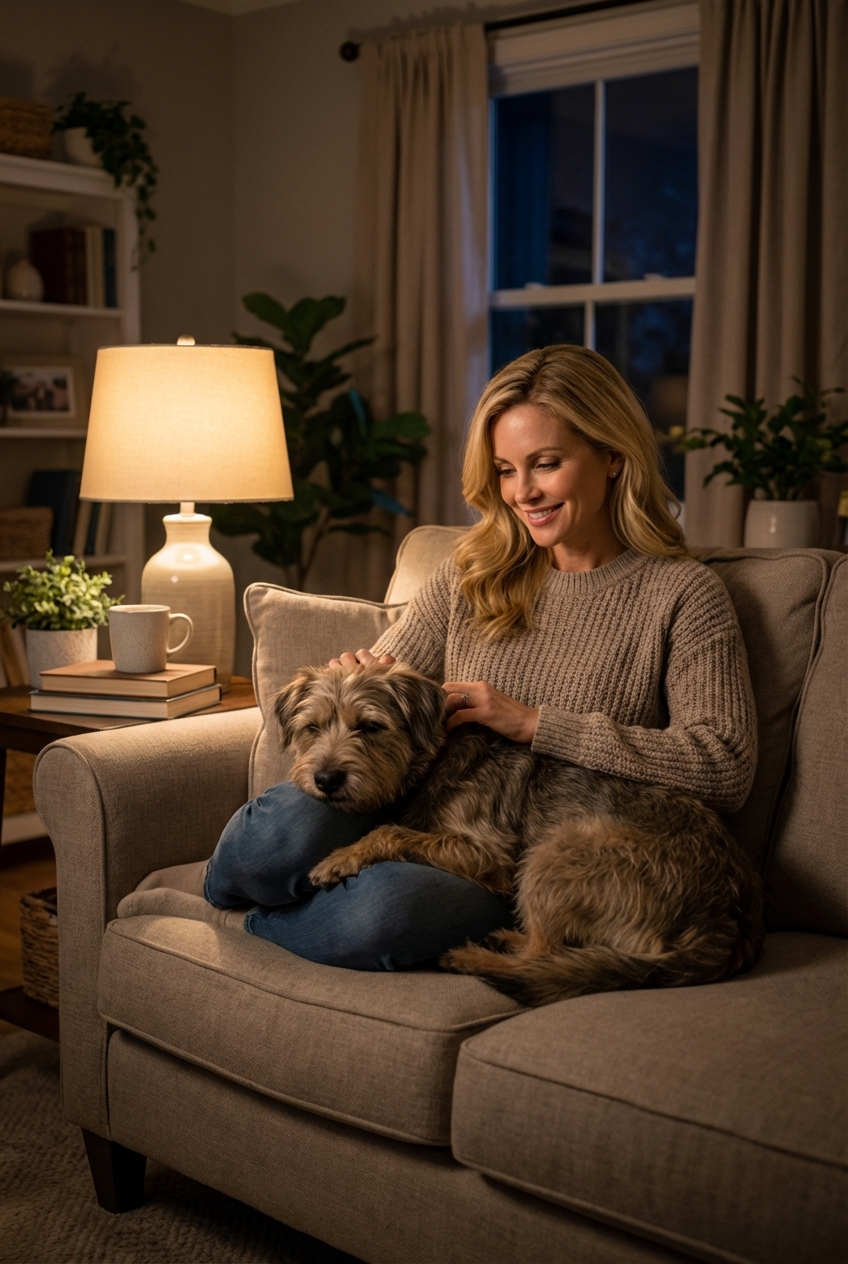
One helpful question: Does your dog seem emotionally distressed, or physically uncomfortable? Anxiety looks like “I cannot relax.” Pain looks like “I want to relax but my body will not let me.”
Pain panting at night: what it looks like
Pain can feel worse at night because distractions fade and stiffness can increase after rest. Dogs are also very good at hiding discomfort during the day, then showing it when they are exhausted.
Common sources of nighttime pain
- Arthritis or joint degeneration (especially hips, knees, elbows, and spine).
- Dental pain from infected teeth, fractured teeth, or gum disease.
- Back or neck pain (disc disease can worsen with certain movements).
- Abdominal discomfort such as pancreatitis, gas, constipation, or GI upset.
- Ear infections that may seem worse at night or when trying to rest.
Clues that suggest pain over anxiety
- Looks uncomfortable when settling and keeps shifting positions as if they cannot get comfortable.
- Reluctance to lie down or trouble getting up after resting.
- Limping, stiffness, bunny-hopping, or slower movement on stairs.
- Flinching when touched, or guarding a body part.
- Changes in appetite, licking at a spot, or new irritability.
- Panting persists even in a calm, cool room.
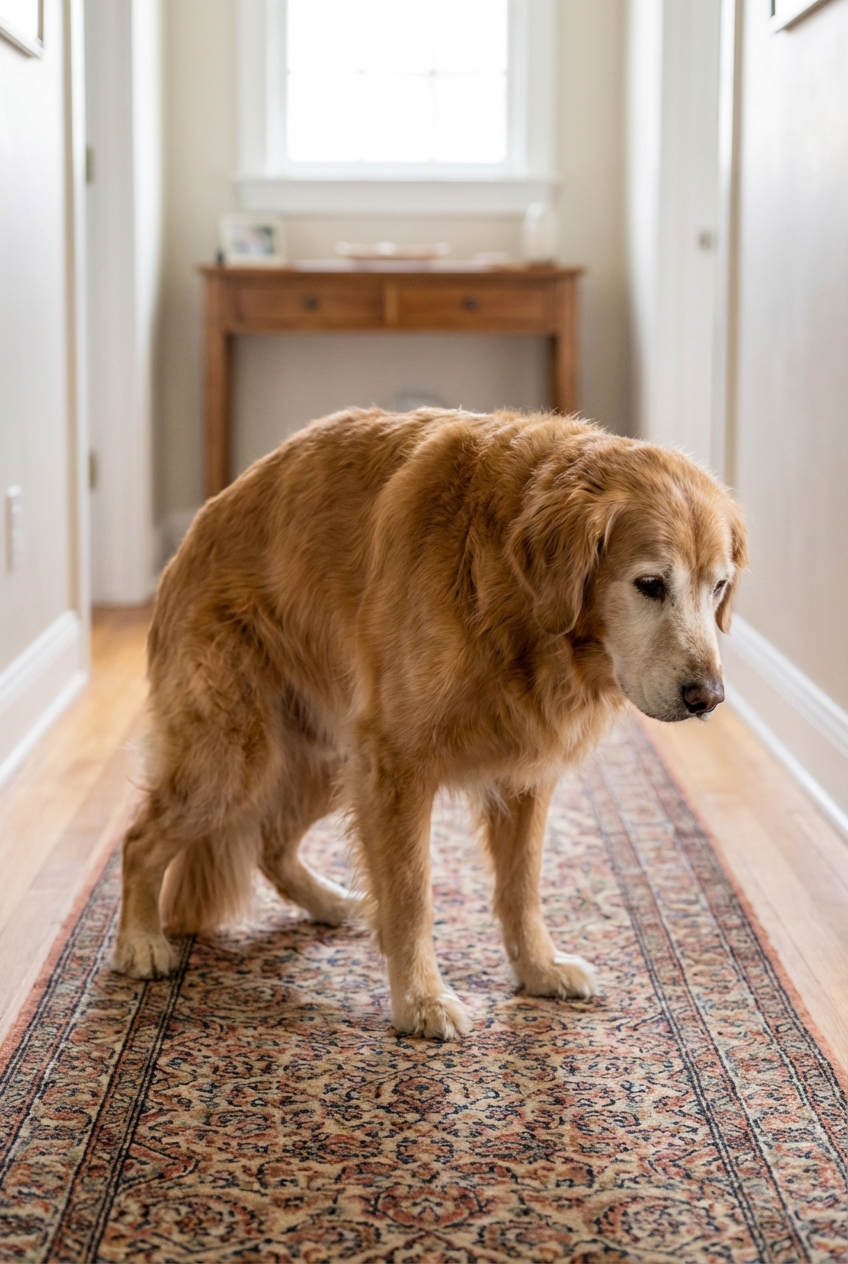
If your dog is panting at night and also showing stiffness, limping, a hunched posture, or sensitivity to touch, pain moves higher on the list.
How to tell the difference: a quick at-home checklist
You do not need to guess perfectly. You just need enough information to make a safe next step.
Step 1: Check the environment
- Is the room cool and comfortable for your dog? Many dogs do well in the high 60s to low 70s°F, but coat type, age, and breed can change what feels best.
- Is there humidity or poor airflow?
- Did your dog have late exercise or play?
- Is the air stuffy or smoky (fireplace smoke, candles, wildfire smoke, poor air quality)?
Step 2: Look for a comfort response
- Anxiety : often improves with a predictable routine, quiet, a safe space, or your calm presence.
- Pain : comfort may help emotionally, but panting and discomfort often persist until the body feels better.
Step 3: Observe movement
- Does your dog hesitate to jump up, climb stairs, or settle into a down position?
- Do they take short steps, limp, or shift weight off a leg?
- Do they seem weaker in the back end than usual (common with arthritis and sometimes nerve or spine issues)?
Step 4: Check for other symptoms
- Anxiety often pairs with trembling, hiding, vocalizing, drooling, or hypervigilance.
- Pain often pairs with decreased appetite, licking a body area, a tense abdomen, whining when moving, or “prayer position” stretching.
When in doubt, take a short video of the panting episode and your dog walking from the side. Videos are incredibly helpful for your veterinary team.
Other causes that can look like anxiety or pain
It is important to mention that panting is not exclusive to anxiety or pain. A few other causes can overlap.
Medical causes to keep on your radar
- Heart or lung disease: panting plus coughing, decreased stamina, or faster breathing at rest.
- Laryngeal paralysis (more common in older, large-breed dogs): noisy breathing, a raspy bark, panting that seems out of proportion to activity, worse with heat or excitement.
- Cushing’s disease : increased thirst and urination, pot belly, thin skin, panting.
- GI upset: lip licking, swallowing, pacing, vomiting, diarrhea.
- Medication effects : steroids like prednisone commonly cause panting; some pain medications and seizure medications can too.
- Fever or infection: warm body, lethargy, decreased appetite.
- Heat stress: especially in brachycephalic dogs or dogs with thick coats.
- Anemia: weakness, pale gums , faster breathing, low energy.
If panting is sudden, severe, or paired with rapid breathing at rest, do not assume it is “just stress.”
What you can do tonight
Here are gentle steps that are generally safe while you decide if your dog needs urgent care.
Create a calmer, cooler sleep setup
- Lower the thermostat a couple degrees and use a fan for airflow.
- Offer a cooling mat or let your dog lie on a bare floor for a bit.
- Provide fresh water nearby.
- Use white noise to mask sudden outdoor sounds.
Support anxiety in a low-key way
- Keep lights dim and your voice calm.
- Try a predictable bedtime routine: short potty break, then bed.
- Offer a safe den-like space: crate with the door open, or a quiet room.
- Consider vet-approved calming options such as pheromone diffusers or calming supplements, especially for noise-sensitive dogs.
Support possible pain without risking harm
- Provide traction (a rug) so your dog does not slip getting up.
- Offer an orthopedic bed or extra padding.
- Keep stairs to a minimum and help them up or down if needed.
- Do not give human pain medications unless your veterinarian specifically directs you. Ibuprofen and naproxen are especially dangerous for dogs. Acetaminophen can also be harmful at the wrong dose and should only be used under veterinary guidance.
If your dog is repeatedly panting at night for more than a day or two, or it is lasting longer even after the room is cool and quiet, the kindest next step is a veterinary visit. Nighttime panting is a symptom, not a diagnosis.
When nighttime panting is an emergency
Please seek urgent or emergency veterinary care if you notice any of the following:
- Labored breathing (belly working hard, flared nostrils, neck extended, or obvious effort).
- Blue, gray, or very pale gums .
- Collapse, extreme weakness, or inability to settle.
- Distended abdomen, unproductive retching, or signs consistent with bloat.
- Rapid breathing at rest or during sleep that is persistent, keeps climbing, or looks effortful. A brief increase during dreaming can be normal. The concern is ongoing fast breathing, especially with effort.
- Heat exposure plus heavy panting, drooling, vomiting, or confusion.
A helpful at-home metric: when your dog is truly resting or asleep, count breaths for 30 seconds and multiply by 2. Many healthy dogs are often around 10 to 30 breaths per minute at rest. What matters most is trend and effort. If your dog is consistently above that range, or looks like they are struggling, call an emergency clinic.
What your veterinarian may check
If you bring your dog in for nighttime panting, your veterinary team may recommend:
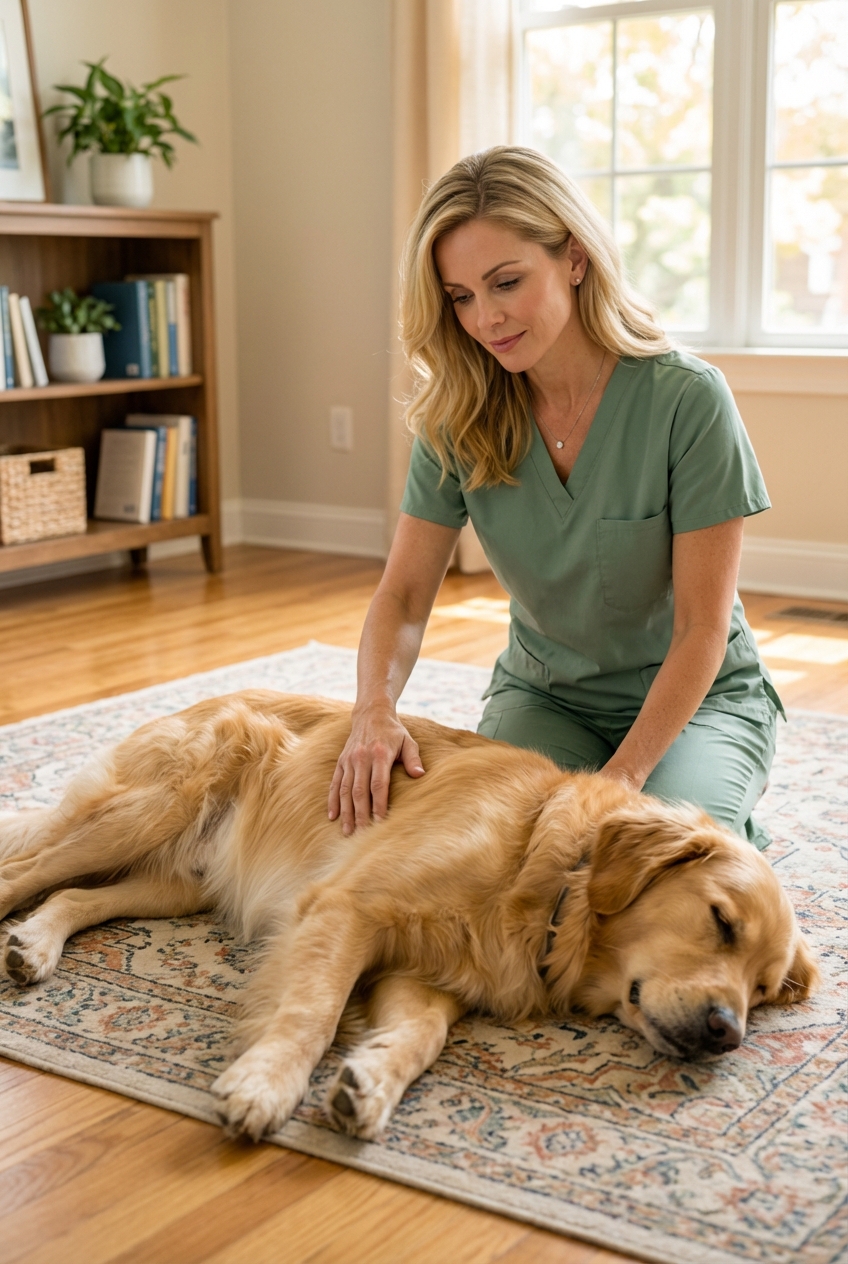
- A full physical exam, including orthopedic and abdominal palpation
- Oral exam for dental pain
- Listening to heart and lungs, possibly chest X-rays
- Bloodwork to screen for infection, organ function, endocrine issues like Cushing’s, and sometimes anemia
- Urinalysis if increased thirst or urination is present
- Pain control trial if arthritis or disc pain is suspected
Your observations at home truly matter. Bring notes: what time it happens, how long it lasts, and what helps.
A gentle bottom line
Nighttime panting is your dog communicating. Anxiety says, “I feel unsafe.” Pain says, “I hurt.” Both deserve compassion, and both have real solutions.
If you are seeing this often, I encourage you to schedule a vet visit and bring a video. With a little detective work and the right support, most dogs can get back to peaceful sleep, and you can too.