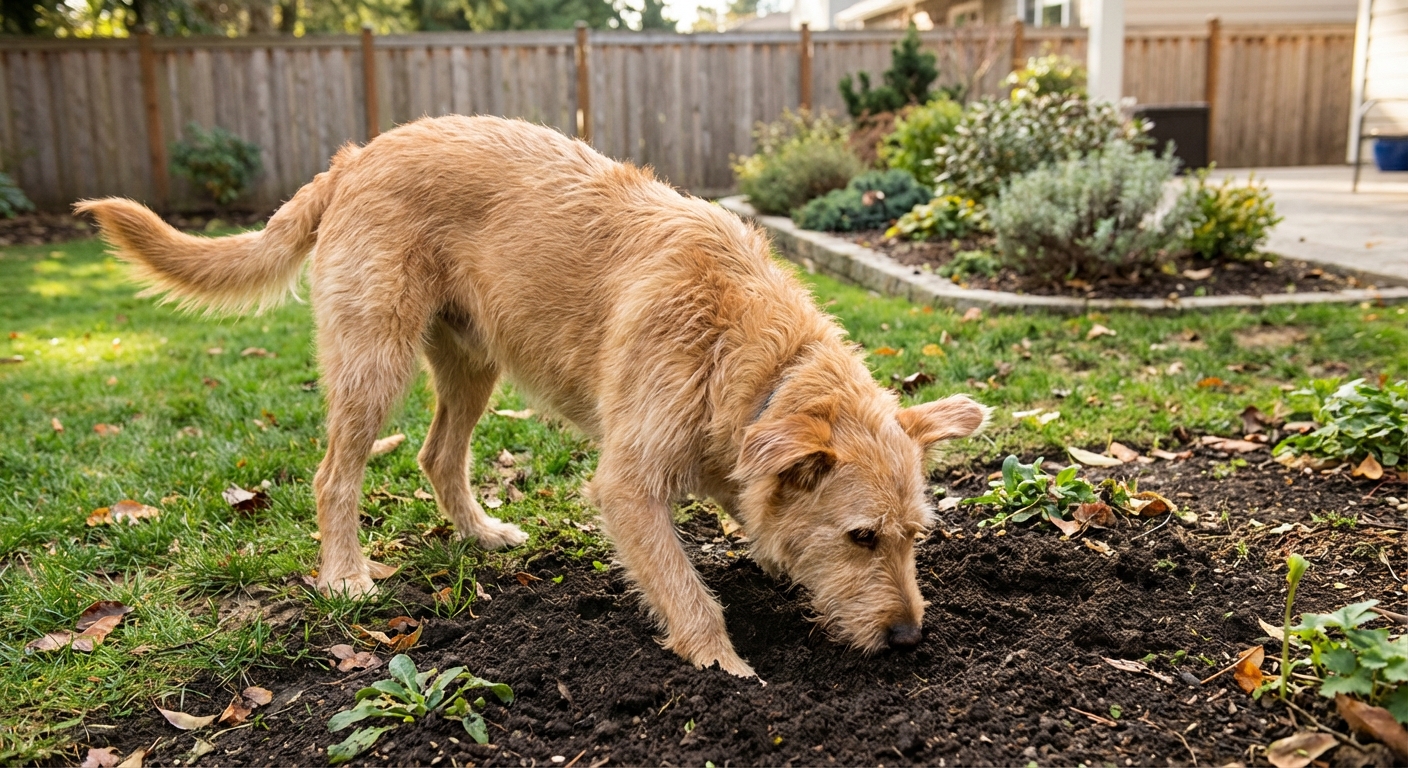
If your dog is eating dirt, it may signal pica, boredom, nausea, diet imbalance, parasites, or yard toxins. Learn dangers, red flags, vet checks, and safe ho...
Article
•
Designer Mixes
Why Is My Dog Eating Dirt?

Shari Shidate
Designer Mixes contributor
If you have caught your dog eating dirt, you are not alone. This behavior is fairly common, and it can range from a one-time curiosity to a frequent habit. Sometimes it is harmless. Other times it can point to a health issue, stress, or an environmental problem. Here is what it can mean, what to watch for, and how to help.
Occasional dirt tasting happens, especially after digging or sniffing new areas. Repeated dirt eating, or eating large amounts, is a good reason to look closer.
## Common reasons
### Curiosity and normal exploration
Dogs explore the world with their mouths. Puppies, young dogs, and even adults may taste dirt after digging, sniffing new areas, or copying another dog.
### Hunger or not feeling full
Some dogs graze on non-food items if their diet is not meeting their needs or if they are on a strict calorie reduction plan. It can also happen if meals are inconsistent.
### Boredom or lack of enrichment
A dog that is understimulated may chew, dig, and eat dirt simply to do something. This is more common in high-energy breeds, young dogs, and dogs that spend long periods alone in the yard.
### Stress and anxiety
Changes like moving, a new baby, schedule changes, construction noise, or conflict with another pet can increase repetitive behaviors. Dirt eating can become a coping habit.
### Pica
Pica is the repeated eating of non-food items. Dirt is a common target. Pica can be behavioral, medical, or both, so it is worth taking seriously if it is frequent or hard to interrupt.
### Upset stomach or nausea
Some dogs eat grass or dirt when they feel nauseated. This does not always lead to vomiting, but it can be a clue that your dog is not feeling well.
### Nutrient deficiencies or medical conditions
In some cases, dirt eating is linked with issues such as:
- Anemia
- Gastrointestinal disease or parasites
- Malabsorption problems
- Endocrine disease such as diabetes or Cushing’s disease
- Diets that are not complete and balanced
True dietary deficiencies are less common in dogs eating a reputable complete-and-balanced commercial diet, and cravings do not reliably point to a specific missing nutrient. If your dog is on a homemade diet, a raw diet, or a diet with unverified formulation, it is especially important to confirm it is nutritionally complete (for example, AAFCO-compliant and ideally formulated by a veterinary nutritionist).
## When it can be dangerous
Dirt itself is not the only concern. The risks often come from what is in the soil or mixed into it.
### Parasites and pathogens
Soil can contain parasite eggs, bacteria, or fungi. Risk varies by region and is often higher in areas contaminated with feces. Examples include roundworm and hookworm eggs.
### Toxins and chemicals
Dirt may contain:
- Fertilizers and pesticides
- Herbicides
- Rodent bait residue
- Compost or mold
- Heavy metals in some older urban soils
Potting soil deserves a special mention. Many mixes contain fertilizers, wetting agents, or mold, and some dogs actively seek it out.
### Foreign material and blockages
Soil can hide stones, mulch, sticks, plastic, or sharp objects. Eating these can cause choking, broken teeth, vomiting, diarrhea, or an intestinal blockage.
### Too much dirt at once
Large amounts of dirt can irritate the stomach and intestines and may cause constipation or discomfort.
## What to look for
Track the behavior and any other changes. These details help your veterinarian.
- How often it happens and how much dirt is eaten
- Where your dog is eating dirt, such as yard, park, potted plants
- Any vomiting, diarrhea, constipation, gas, or loss of appetite
- Weight loss or weight gain
- Increased thirst or urination
- Pale gums, low energy, or weakness
- Restlessness, lip-licking, or other signs of nausea
- Evidence of fleas, worms, or scooting
## What you can do at home
### Manage access
- Supervise outdoor time if your dog is actively seeking dirt.
- Block off garden beds or cover tempting areas with river rock or safe ground cover.
- Keep fertilizers and chemicals locked up and avoid applying them where your dog plays.
- If needed for safety, ask your veterinarian or trainer about a basket muzzle. Use it only with proper fit and positive training.
### Improve enrichment
- Add daily walks with sniffing time.
- Use puzzle feeders and scatter feeding in grass instead of a bowl.
- Provide chew options that fit your dog’s chewing style.
- Increase training sessions and play.
### Review diet basics
- Feed a complete-and-balanced diet appropriate for your dog’s life stage.
- Avoid abrupt diet changes.
- If your dog seems constantly hungry, talk with your vet about calorie needs and feeding schedule.
If your dog is already on a high-quality complete-and-balanced diet, do not assume this is a vitamin or mineral problem. Focus on ruling out nausea, parasites, anemia, endocrine disease, stress, and other medical causes with your vet.
### Train a reliable leave it
Teach a cue like “leave it” and reward your dog heavily for disengaging from dirt. Practice first with easy items indoors, then gradually work up to outdoor distractions.
Avoid punishing your dog for eating dirt. Punishment can increase anxiety and may make pica behaviors worse. Stick with management, training, and addressing the underlying cause.
## When to call the vet
Contact your veterinarian if:
- Dirt eating is frequent or escalating
- Your dog also eats other non-food items
- There is vomiting, diarrhea, constipation, blood in stool, or abdominal pain
- You notice lethargy, pale gums, weight loss, or appetite changes
- You suspect exposure to chemicals, compost, mushrooms, or rodent bait
- Your dog may have swallowed rocks, mulch, sticks, or other objects
Seek urgent veterinary care if you notice possible blockage or poisoning signs, such as repeated vomiting, a swollen or painful abdomen, retching without bringing anything up, straining without producing stool, inability to keep water down, or severe weakness.
Do not induce vomiting or add supplements like iron or vitamins without veterinary guidance.
Your vet may recommend a fecal test for parasites, bloodwork to check for anemia and organ function, and a discussion of diet and behavior.
## Bottom line
Occasional dirt tasting can be normal, but repeated dirt eating is a sign to look closer. With a mix of supervision, enrichment, training, and a veterinary check when needed, most dogs can stop the habit or you can identify and treat the underlying cause.