Busy schedule? Cook real dog food in your Instant Pot with a simple turkey, rice, and veggie batch. Get meal-prep, storage, feeding tips, and how to keep hom...
Article
•
Designer Mixes
Why Is My Dog Breathing So Heavy?

Shari Shidate
Designer Mixes contributor
Heavy breathing can be totally normal, or it can be the first clue that your dog needs help. As a veterinary assistant here in Frisco, Texas, I always tell families to start with two questions: When is it happening and what else is changing? Heavy breathing after zoomies is very different from heavy breathing at rest.
Quick note: This guide is educational and not a substitute for veterinary diagnosis. If your dog looks like they are struggling to breathe, has abnormal gum color, collapses, or you feel something is truly off, seek emergency care right away.
This handbook will walk you through what is normal, what is not, how to check your dog safely at home, and when to call your veterinarian.
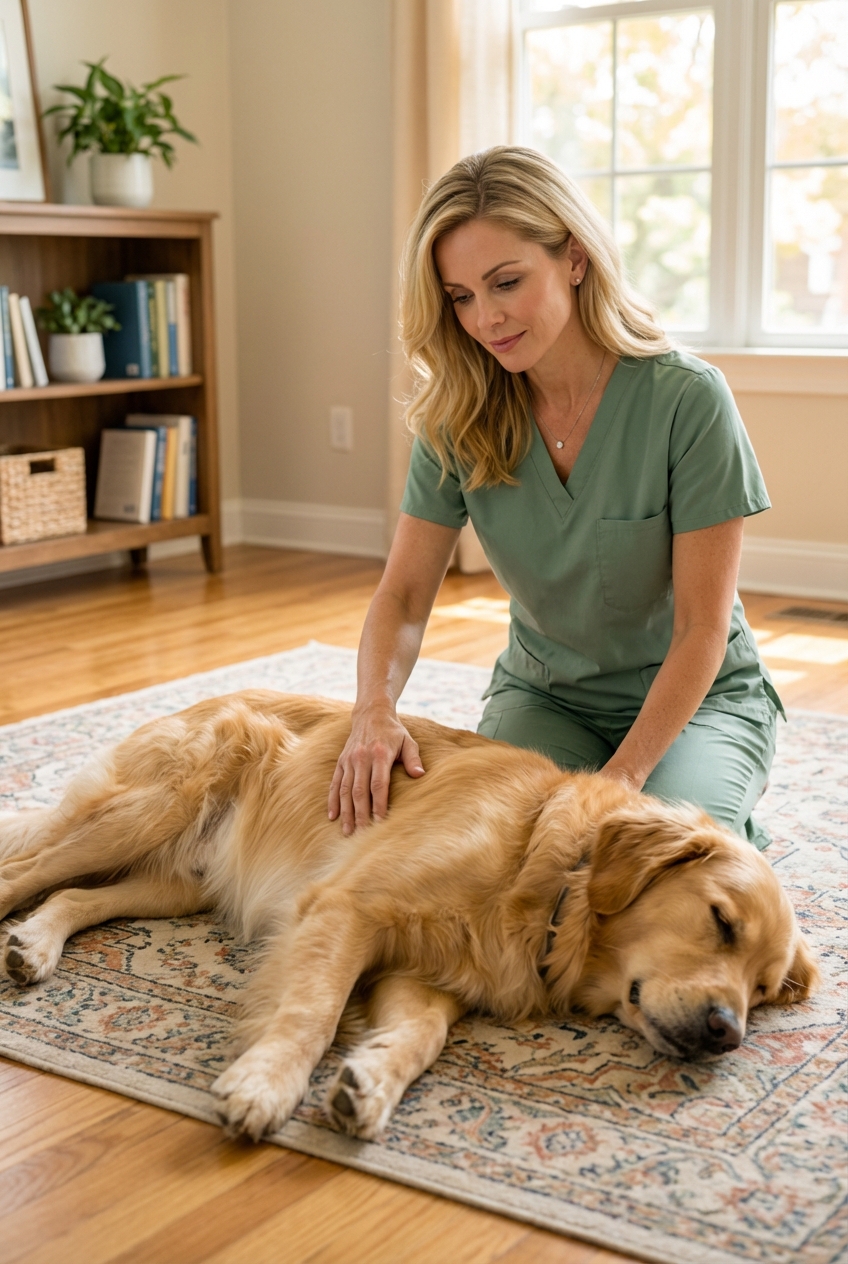
Breathing terms
Pet owners use “heavy breathing” to describe a few different things. A quick definition helps you and your vet stay on the same page.
- Panting: open-mouth, often with the tongue out. Common after exercise, heat, stress, or excitement.
- Fast breathing: quicker chest rise and fall with a closed mouth. This is especially important to notice when your dog is resting or asleep.
- Labored breathing: looks hard or uncomfortable. Think belly heaving, wide nostrils, neck stretched, elbows held out, or your dog cannot settle.
Normal vs. not normal
What can be normal
- Panting after exercise that settles within 10 to 30 minutes in a cool, calm space.
- Panting in warm weather, especially for dogs who are older, overweight, or have thick coats.
- Excitement or stress panting during car rides, visitors, fireworks, grooming, or vet visits.
- Short bursts of fast breathing during dreaming while asleep that stop when they wake.
What is more concerning
- Heavy breathing at rest, especially if it is new for your dog.
- Breathing that looks hard: belly heaving, wide nostrils, elbows held away from the body, neck stretched.
- Noise: wheezing, honking, harsh raspy sounds, or repeated gagging.
- Color change: pale gums, gray, or blue tint to tongue or gums.
- It comes with other signs: coughing, collapse, weakness, not eating, vomiting, fever, pain, or a swollen belly.
Quick home check
If your dog is breathing heavily and you are unsure what to do, a calm, quick assessment gives your vet very useful information.
Step 1: Cool and calm first
Move your dog to a quiet, air-conditioned room. Offer water, but do not force drinking. Avoid exercise and avoid wrapping them in blankets.
Step 2: Count resting breathing rate
For accuracy, do this when your dog is truly resting or asleep, not right after walking across the room. Watch the chest rise and fall. One rise and fall equals one breath. Count for 30 seconds and multiply by 2. If you can, repeat 2 to 3 times and write down the numbers.
- Often normal for many adult dogs: around 15 to 30 breaths per minute at rest (age, size, fitness, and breed can change this).
- Worth a call if your dog is persistently above 30 at rest, especially if this is higher than their usual baseline.
- Urgent if your dog is above 40 at rest or shows any effort or distress.
Step 3: Check gum color and capillary refill
Gently lift the lip and look at the gums.
- Healthy: bubblegum pink.
- Not good: pale, white, gray, or blue.
- Press a finger on the gum until it blanches, then release. Color should return in about 1 to 2 seconds.
Step 4: Note the context
- Was there heat, exercise, stress, travel, or a new medication?
- Any cough, vomiting, diarrhea, limping, or pain?
- Any chance of toxin exposure (THC edibles, xylitol gum, chocolate, mushrooms, household cleaners, stimulant medications, insecticides)?
Write down what you see and, if safe, take a short video of the breathing to show your clinic.
Common causes
1) Heat and poor cooling
Dogs cool themselves mostly by panting, plus they release heat by increasing blood flow to the skin and a small amount of sweating through paw pads. Warm rooms, hot sidewalks, cars, heavy coats, obesity, and humid weather can overwhelm their ability to cool down.
Watch for: thick ropey drool, bright red gums, vomiting, diarrhea, wobbliness, collapse.
What to do now: move to shade or AC. Start cooling with cool (not ice-cold) water over the body, especially the belly and inner thighs, and use a fan if available. Do not use ice baths. Offer small amounts of water if your dog can swallow normally. Go to an emergency clinic even if your dog seems to improve, since heat injury can worsen after the fact. If you can safely take a rectal temperature, stop active cooling when it approaches about 103°F (39.4°C) and continue transport.

2) Stress, anxiety, or excitement
Stress panting can look dramatic, especially in the car, during thunderstorms, or when guests arrive. It often comes with pacing, lip licking, whale eye, trembling, or clinginess.
Helpful next steps: create a quiet safe space, lower stimulation, consider a calming routine, and ask your vet about evidence-based anxiety options if this is frequent.
3) Pain
Pain is one of the most overlooked causes of heavy breathing. Dogs often pant with arthritis flare-ups, back pain, abdominal pain, dental pain, or after an injury.
Clues: restlessness, hiding, reluctance to jump, tight belly, hunched posture, licking one spot, change in appetite.
Important: do not give human pain meds. Many are toxic to dogs. Call your vet.
4) Airway and lung disease
Conditions like chronic bronchitis, allergic airway inflammation, pneumonia, collapsing trachea, laryngeal paralysis, or nasal disease can increase breathing rate and effort.
Clues: cough, gagging, wheezing, noisy breathing, exercise intolerance, fever, nasal discharge.
What your vet may do: exam, chest X-rays, oxygen support, airway evaluation, medications.
5) Heart disease and fluid in the lungs
Heart disease can cause fluid buildup in the lungs (congestive heart failure), making breathing faster and harder, especially at rest.
Clues: increased resting breathing rate, coughing at night, tiring easily, fainting episodes, swollen belly.
Why tracking resting rate matters: an increasing resting breathing rate at home is a classic early warning sign for many heart patients.
6) Flat-faced breed airway issues
Bulldogs, Pugs, French Bulldogs, Boston Terriers, and some mixes can have narrow nostrils and soft palate issues. These dogs may sound loud even when happy, but they are also higher risk in heat and stress.
Clues: snoring, snorting, exercise intolerance, trouble cooling down, collapsing in warm weather. Reverse sneezing can also happen in many dogs (not just flat-faced breeds) and can look scary but is often harmless if your dog recovers quickly and acts normal afterward.
Vet help: weight management, avoiding heat, harness use, and sometimes corrective airway surgery.
7) Anemia
If your dog has fewer red blood cells, they may breathe faster to get enough oxygen to tissues.
Clues: pale gums, weakness, rapid heart rate, lethargy. Causes can include parasites, bleeding (internal or external), immune disease, and toxins.
8) Metabolic and hormonal issues
Diseases like Cushing’s, fever from infection, or severe GI upset can cause panting and heavy breathing.
Clues: increased thirst and urination, pot-bellied appearance, hair loss, panting that is worse at night, vomiting or diarrhea.
9) Medication side effects
Steroids (like prednisone), some pain medications, and some anxiety meds can increase panting.
What to do: never stop a prescription abruptly without guidance. Call your vet and describe the change.
10) Toxins
Some toxic exposures can cause panting, agitation, tremors, vomiting, high heart rate, and overheating.
High concern exposures: THC edibles, xylitol, chocolate, stimulant medications (for example ADHD medications), and some insecticides (for example permethrin products).
What to do: call your vet, an ER, or a pet poison hotline immediately.
Higher-risk dogs
Some dogs tip into trouble faster than others. Be extra cautious and call earlier if you have:
- Very young puppies or senior dogs
- Flat-faced breeds
- Overweight dogs
- Dogs with known heart or lung disease
Emergency signs
If you remember only one part of this article, let it be this. Heavy breathing becomes an emergency when your dog cannot get comfortable or cannot get enough oxygen.
Go now if you notice
- Blue, gray, or very pale gums or tongue
- Collapse, extreme weakness, or inability to stand
- Breathing with a lot of effort: belly heaving, neck stretched, elbows held out
- Resting breathing rate persistently above 40 breaths per minute
- Repeated coughing with distress, or coughing up foam or fluid
- Possible heatstroke
- Suspected toxin ingestion
- Bloated abdomen with restlessness, drooling, and repeated unproductive retching (possible GDV bloat)
If your gut says, “This is not my dog,” trust that instinct and call a clinic. In respiratory cases, earlier support can make a huge difference.
What your vet may check
Heavy breathing is a symptom, not a diagnosis. At the clinic, your veterinarian may recommend:
- Full physical exam including temperature and lung and heart sounds
- Pulse oximetry to measure oxygen saturation
- Chest X-rays to look at lungs, heart size, and airway patterns
- Bloodwork to check anemia, infection, organ function
- Heart testing like NT-proBNP screening, ECG, or echocardiogram if indicated
- Parasite testing in coughing or anemia cases
- Airway evaluation for flat-faced breed concerns, laryngeal paralysis, or collapsing trachea

Bring any videos you captured at home. Breathing episodes often improve in the clinic, and video helps your vet see what you are seeing.
Help at home
Safe supportive steps
- Keep your dog in a cool, quiet room.
- Use a harness instead of a collar if pulling worsens coughing or breathing.
- Offer small amounts of fresh water.
- Reduce excitement: limit visitors, stairs, play sessions, and long walks until you have answers.
- Track resting breathing rate once or twice daily for a few days and compare to your dog’s baseline.
Do not do these
- Do not give human medications unless your vet directs you.
- Do not force exercise to “work it out.”
- Do not delay care if breathing is labored, gums are abnormal, or your dog seems weak.
Special situations
Puppies
Puppies can breathe faster than adult dogs, but heavy breathing with lethargy, vomiting, diarrhea, coughing, nasal discharge, or poor appetite needs prompt evaluation. Parvo, pneumonia, congenital heart issues, and parasites are all possibilities.
Senior dogs
In older dogs, new heavy breathing can point to pain, heart disease, lung disease, cancer, or endocrine disease. Seniors benefit from earlier diagnostics rather than waiting it out.
After surgery
Mild panting after anesthesia can happen, but significant heavy breathing, pale gums, weakness, or repeated vomiting after surgery should be reported right away.
At night
Nighttime heavy breathing is a common reason families discover heart or lung disease. If your dog is repeatedly breathing fast at rest overnight, track the resting breathing rate and call your vet.
Reverse sneezing
Reverse sneezing often looks like a sudden snorting or honking episode where your dog pulls air in sharply. Many dogs recover quickly and act normal afterward. Call your vet if episodes are frequent, getting worse, paired with nasal discharge or bleeding, or if your dog seems distressed or cannot recover within a minute or two.
Prevention
- Keep up with parasite prevention as recommended by your veterinarian.
- Maintain a healthy weight. Extra weight makes breathing and cooling harder.
- Avoid heat risk: never leave dogs in cars, limit midday walks, use shaded routes, and bring water.
- Condition gradually: build fitness slowly, especially in hot Texas months.
- Dental care: oral pain can cause stress panting, and dental infections can impact overall health.
- Know your dog’s baseline: record a normal resting breathing rate when your dog is healthy.
Heavy breathing is one of those signs that is easy to normalize until it is not. You do not need to panic, but you do need to observe carefully and act early when something feels off.