A practical, vet-informed guide to nighttime cat meowing: common causes, medical red flags to rule out, and step-by-step fixes with feeding, play, routine, a...
Article
•
Designer Mixes
Why Is My Cat Yowling? Causes and How to Stop Excessive Yowling

Shari Shidate
Designer Mixes contributor
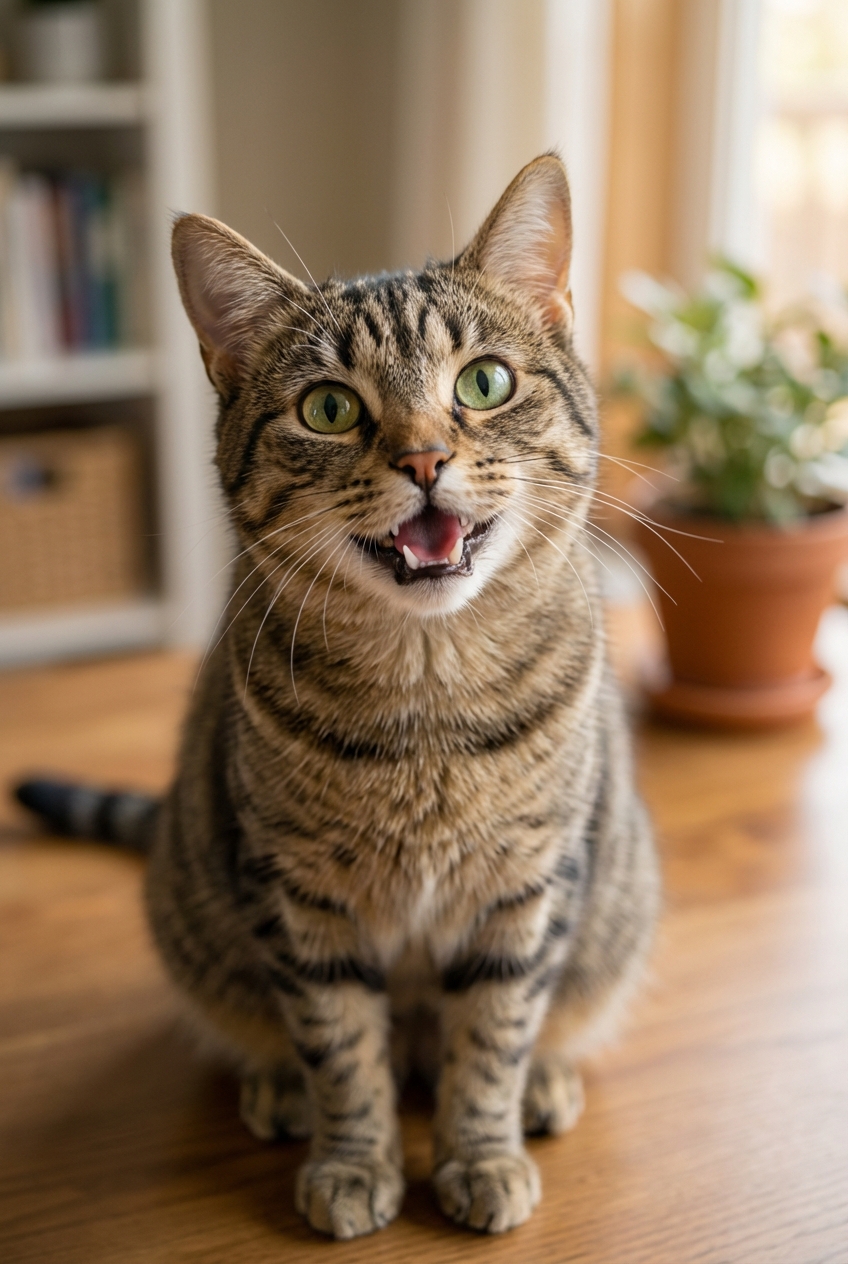
That long, loud, dramatic meow that sounds like a wail is what many people call a yowl (sometimes also called a “howl” or “caterwaul”). A little vocalizing is completely normal for cats, but new, frequent, or intense yowling is your cat’s way of saying, “Something’s off, please help.”
I always remind pet parents that behavior is communication. The key is to figure out what your cat is asking for, then respond in a way that meets the need without accidentally training more yowling.
One quick safety note: If your cat’s yowling is a sudden change from their normal, or it comes with litter box trouble, appetite changes, vomiting, or hiding, it is smart to rule out medical causes early with your veterinarian.
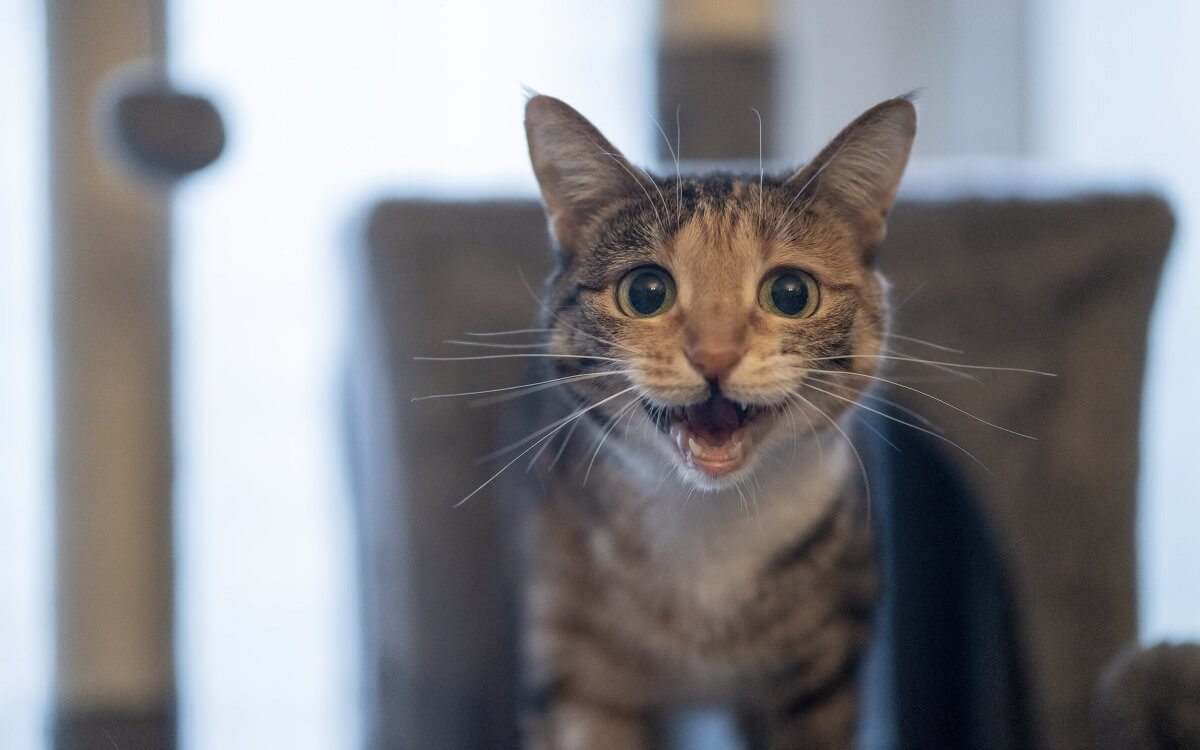
What yowling sounds like
Compared with a typical meow, yowling is often:
- Longer in duration
- Louder and more urgent
- Lower-pitched or drawn-out, almost like crying (though some cats yowl high-pitched)
- Repeated at certain times of day, often at night
Not every loud meow is a problem, but a pattern change is important. Some cats (including Siamese-type and other naturally chatty cats) are simply more vocal. The red flag is when your cat’s voice or frequency changes from their usual baseline.
Common reasons cats yowl
1) Hunger, boredom, or learned attention-seeking
Cats are excellent at noticing what works. If yowling leads to food, treats, play, or you getting up from the couch, the behavior can become a habit.
- Clues: Yowling happens near the kitchen, around meal times, or when you are busy.
- Often seen in: Smart, social cats and cats on inconsistent feeding schedules.
2) Stress or routine changes
Moves, new pets, new babies, visitors, remodeling, or even a new couch can be stressful to a cat. Some cats yowl when they feel unsettled or when their routine changes.
- Clues: Hiding, increased vigilance, overgrooming, changes in appetite, or avoiding the litter box.
3) Heat cycle and mating behavior
An unspayed female in heat may yowl intensely, especially at night. Unneutered males may yowl while trying to get outside or when they smell a female nearby.
- Clues: Restlessness, rolling, rubbing, tail held to the side (females), spraying or roaming behavior (males).
4) Territorial conflict
Cats can yowl to warn another cat away. This can happen between cats in the same home or with outdoor cats visible through a window.
- Clues: Yowling at windows or doors, staring, tail twitching, blocking hallways, or sudden scuffles.
5) Litter box trouble
If the litter box is dirty, in a stressful location, hard to access, or painful to use, some cats vocalize before or after trying to go.
- Clues: Frequent trips to the box, straining, accidents outside the box, or yowling right after eliminating.
Do not wait: If you see straining, crying in the box, blood in urine , or your cat is trying to pee but producing little to none, contact your vet the same day. In male cats, a blockage can become an emergency fast.
6) Pain or illness
Yowling can be a sign of discomfort. Dental pain, arthritis, gastrointestinal upset, hyperthyroidism, high blood pressure, kidney disease, constipation, and urinary tract issues are common culprits.
Important: If yowling is sudden, your cat seems unwell, or the vocalization is paired with changes in eating, drinking, urination, mobility, or behavior, schedule a veterinary visit.
7) Cognitive changes in older cats
Senior cats can develop age-related cognitive changes, sometimes similar to dementia in humans. Veterinarians often call this cognitive dysfunction syndrome (CDS). Nighttime yowling is a common complaint.
- Clues: Wandering, seeming “lost” in familiar rooms, staring at walls, changes in sleep patterns, or clinginess.
8) Sensory changes
If your cat cannot see or hear as well, they may vocalize more to orient themselves or because they feel insecure.
- Clues: Startles easily, hesitates in dim light, bumps into objects, or calls from another room.
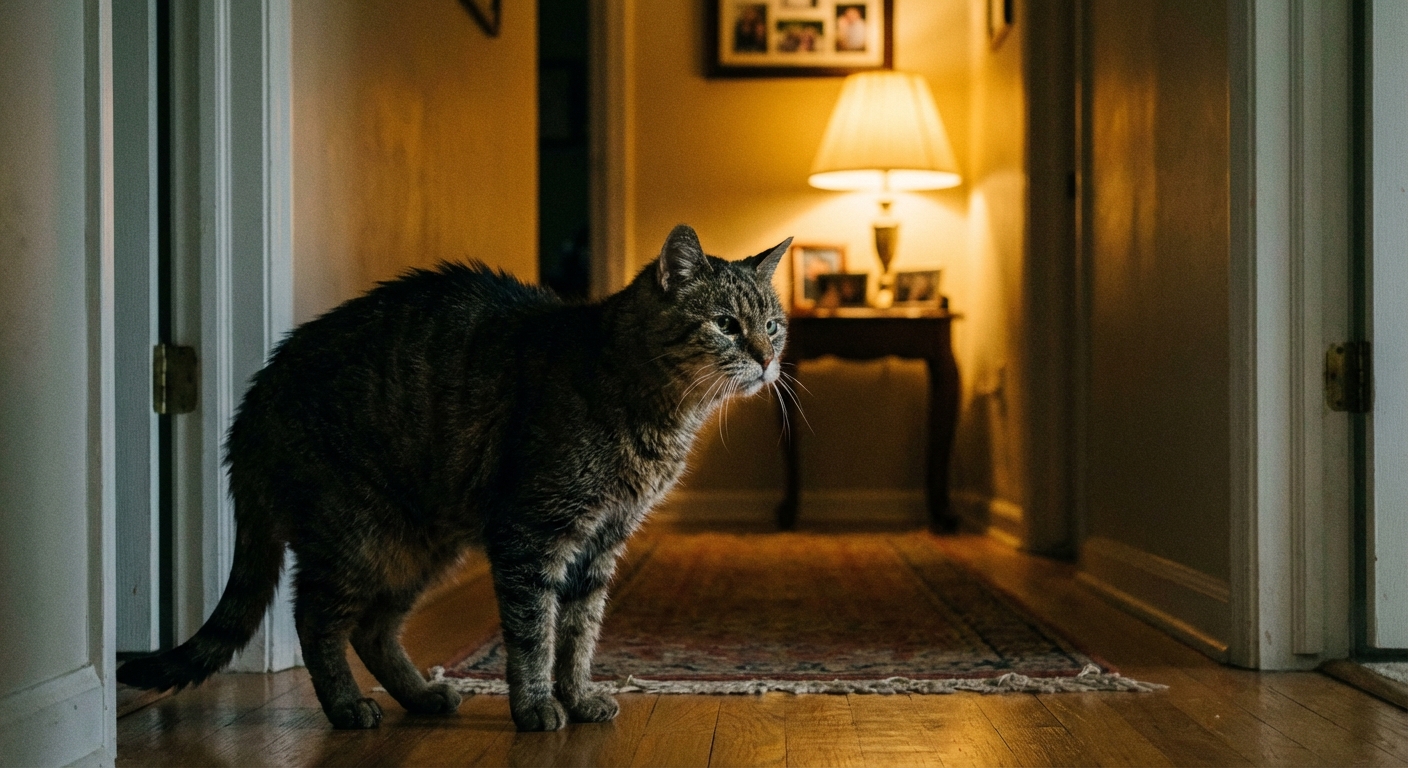
Red flags
Excessive yowling is sometimes the first sign of a medical issue. Seek prompt veterinary care if you notice:
- Straining to urinate, frequent tiny urinations, blood in urine, or crying in the litter box
- Sudden behavior change in a previously quiet cat
- Weight loss, ravenous appetite, vomiting, or diarrhea
- Limping, reluctance to jump, or sensitivity when touched
- Disorientation, stumbling, or seizures
- Labored breathing or open-mouth breathing
Urinary obstruction in male cats can be life-threatening. If your cat is trying to pee but producing little to none, treat it as an emergency.
How to stop yowling
Step 1: Spot the pattern
For 3 to 5 days, jot down:
- When the yowling happens (night, dawn, after you get home)
- Where it happens (by the food bowl, hallway, near windows)
- What happens next (you feed, pet, scold, open a door)
This quick “behavior log” often reveals a clear trigger.
Step 2: Meet the need early
Once you see the pattern, try proactive support:
- If it is hunger: Use a measured portion schedule and consider a timed feeder for early morning.
- If it is boredom: Add two to three short play sessions daily, especially before bedtime.
- If it is anxiety: Strengthen routine and provide safe spaces, like a covered bed or cat tree.
Step 3: Reward quiet
This part is hard but powerful. If your cat yowls for attention and you respond every time, you are training the yowl.
- Wait for a brief pause in the yowling, then offer attention, treats, or play.
- Use a cue like “good quiet” right as the pause happens.
- Avoid yelling. From your cat’s perspective, that can feel like you are “yowling back.”
Step 4: Upgrade enrichment
Cats need outlets for hunting, climbing, scratching, and exploring.
- Hunt-style play: Wand toy for 5 to 10 minutes, then a small meal to complete the “hunt, eat, groom, sleep” cycle.
- Food puzzles: Puzzle feeders or scattered kibble (if appropriate for your cat’s diet).
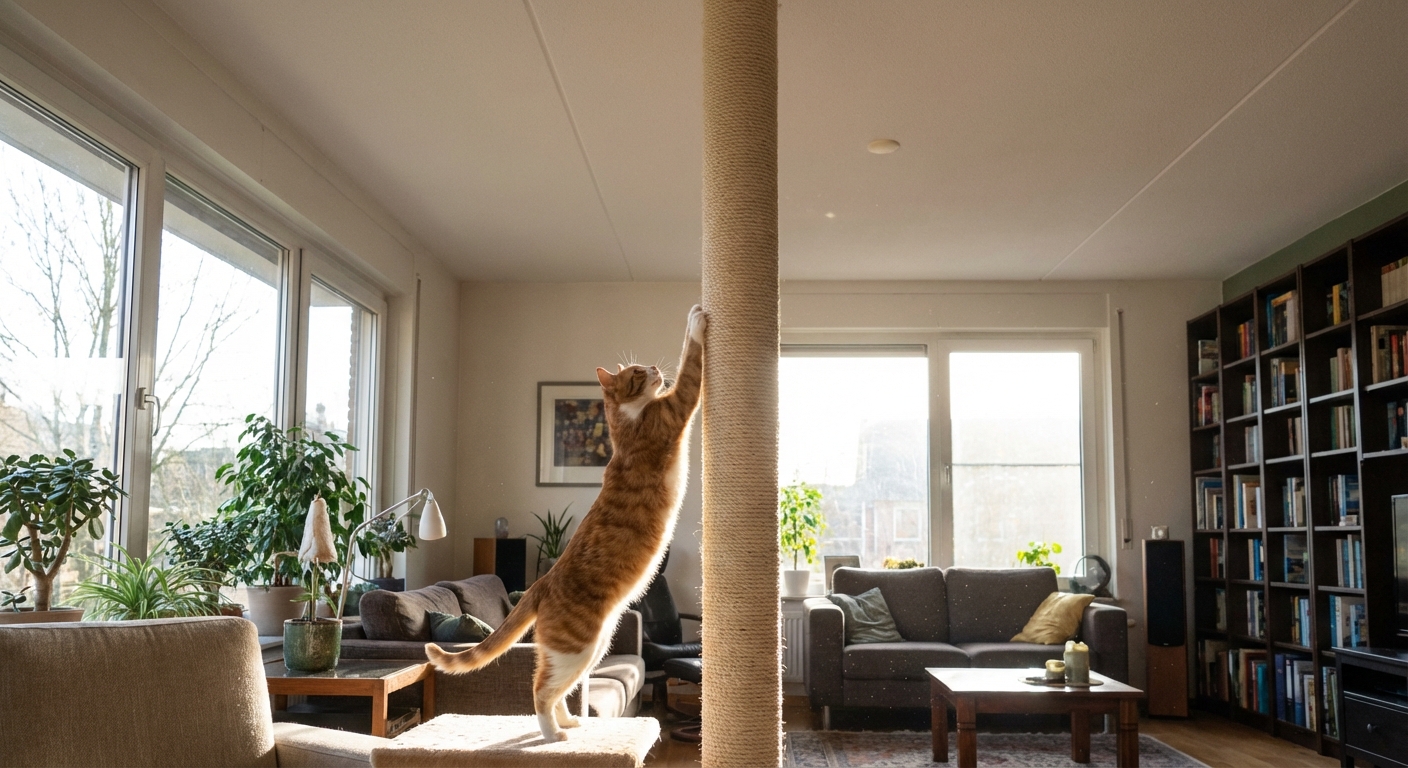
- Vertical space: Cat tree, shelves, or a window perch.
- Scratch options: At least one vertical and one horizontal scratcher.
Step 5: Set up calmer nights
Night yowling is common, especially in seniors and high-energy cats. Try:
- Evening play followed by the last meal
- Timed feeder for pre-dawn hunger
- Night light for older cats or cats with vision changes
- Consistent sleep setup if your cat wakes you repeatedly, plus enrichment during the day
If nighttime vocalizing is new in an older cat, talk with your veterinarian. Treating pain, thyroid disease, or blood pressure issues can make a dramatic difference. Any medications or supplements, including anti-anxiety options, should be used only with veterinary guidance.
Step 6: Reduce cat tension
If the yowling seems territorial:
- Block visual access to outdoor cats with window film or curtains.
- Provide multiple resources: one litter box per cat plus one extra, and multiple food and water stations.
- Use slow reintroductions if household cats are fighting.
Step 7: Consider spay or neuter
If your cat is intact, spaying or neutering is one of the most effective ways to reduce hormonally driven yowling and roaming behaviors. Discuss timing and health considerations with your veterinarian.
What not to do
- Do not punish (spraying water, yelling, startling). It increases stress and can worsen vocalization.
- Do not give in to yowling for food if you suspect the behavior is learned. Instead, feed on a predictable schedule and reward quiet moments.
- Do not ignore medical causes. Persistent yowling is a valid reason for a checkup.
Quick fixes
Yowling at the door
- Increase play and enrichment.
- Redirect to a perch at a different window.
- If intact, discuss spay or neuter.
Yowling after the litter box
- Clean daily, ensure easy access, and use unscented litter.
- Book a vet visit to rule out urinary, constipation, or gastrointestinal discomfort.
- Emergency: If straining or producing little to no urine, seek urgent care, especially for males.
Older cat yowling at night
- Night light, bedtime play, and a small late meal.
- Vet check for arthritis, thyroid disease, high blood pressure, kidney disease, and CDS.
Yowling during work calls
- Schedule short “attention appointments” and reward quiet.
- Offer a puzzle feeder or lickable treat during meetings.
Takeaway
Excessive yowling is rarely random. Most often, it is linked to needs (food, play, comfort), stress, or an underlying medical issue. If you combine a timely vet check when appropriate with a consistent routine, enrichment, and reinforcement of calm behavior, many cats improve over time, often over a period of weeks.
If you would like, share your cat’s age, spay or neuter status, and when the yowling happens most. I can help you narrow down the most likely cause and the best next steps.