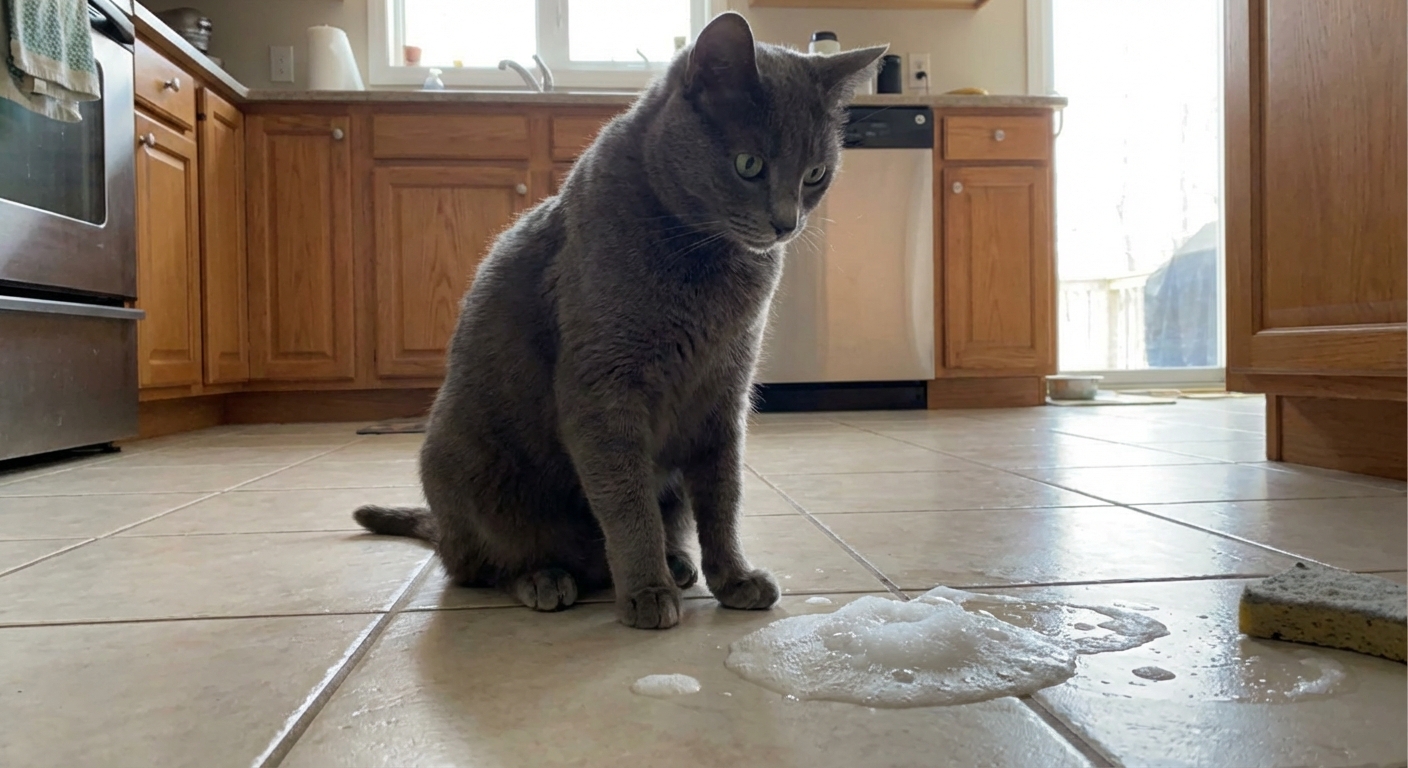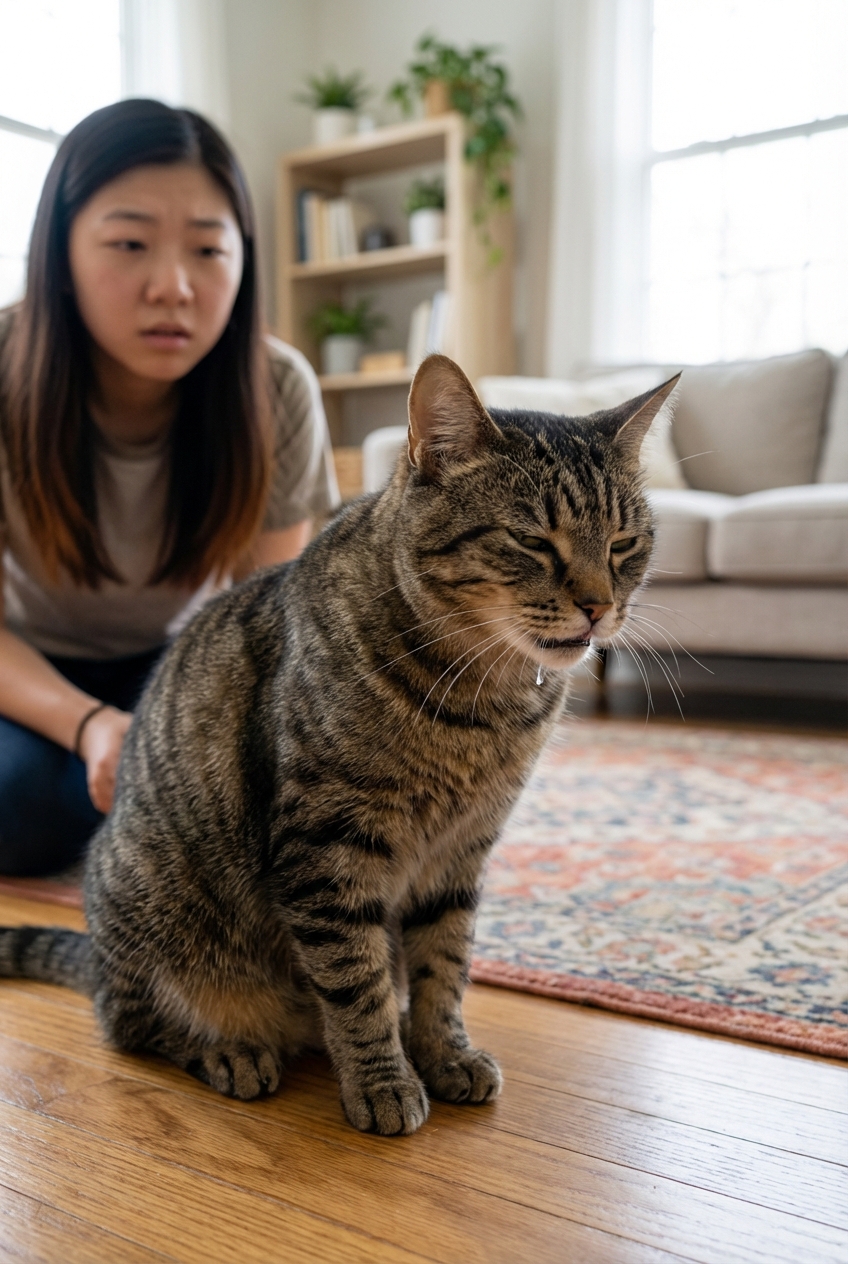
White foamy vomit in cats is often saliva and stomach fluid from an empty stomach, hairballs, or mild upset—but it can signal toxins or blockage. Learn cau...
Article
•
Designer Mixes
Why Is My Cat Vomiting White Foam?

Shari Shidate
Designer Mixes contributor
Seeing your cat vomit white foam can be alarming, especially when it looks like they are bringing up “nothing.” As a veterinary assistant, I can tell you this is a common concern, and it can mean something simple like an empty stomach, or something more serious that needs prompt care.
Quick note: This article is for general education and is not a substitute for veterinary diagnosis or treatment. If your cat seems unwell, call your veterinarian.
White foam is usually a mix of saliva, stomach acid, and mucus. The key is context: how often it happens, what your cat is doing before and after, and whether there are any other symptoms.
Vomiting vs. regurgitation: Many people use “vomit” for both. Vomiting usually includes nausea signs and belly heaving, and the material can look foamy, liquid, or partially digested. Regurgitation is often more effortless and may look like undigested, tube-shaped food. If you are seeing repeated “spit ups,” tell your vet which one it looks like.
White foam vs. bile: Bile is more often yellow or green. It can show up with an empty stomach, but it can also occur with other GI issues, so it still counts as “vomiting” worth tracking.
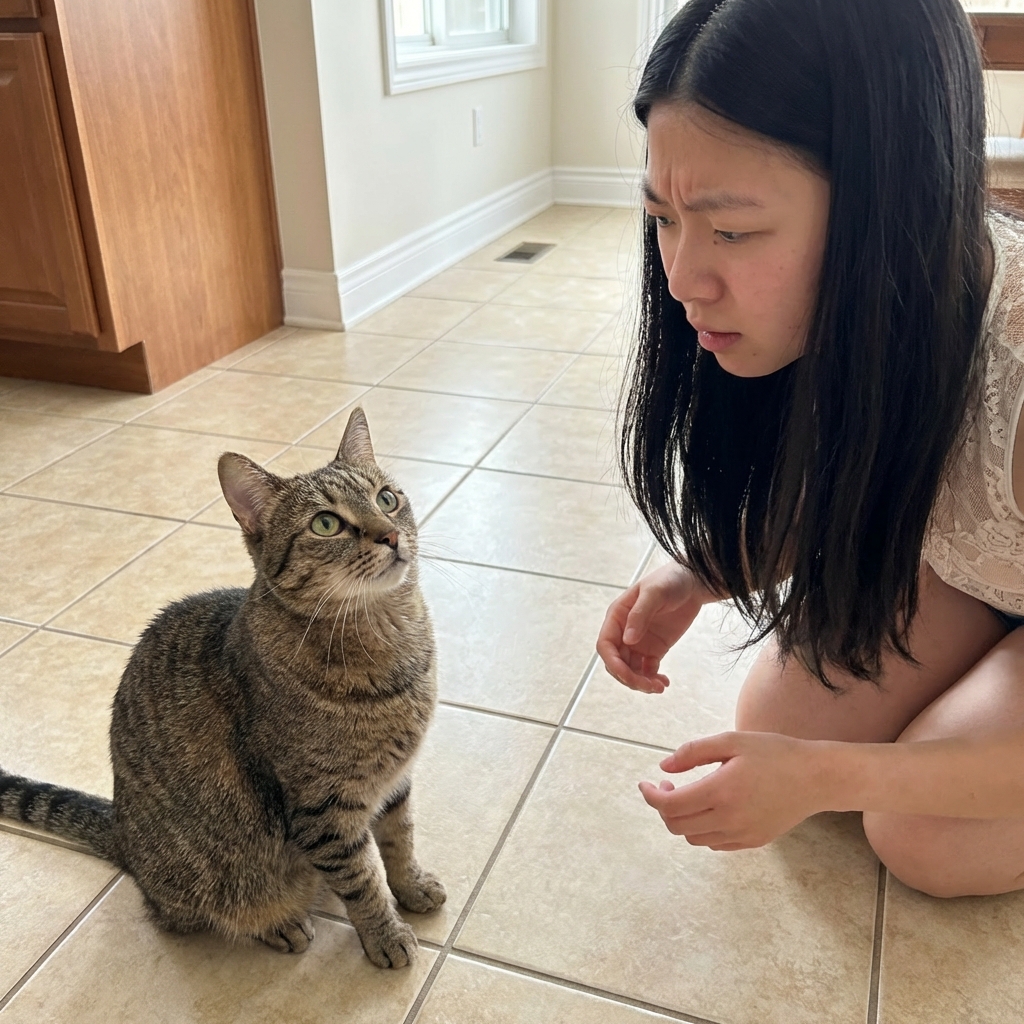
Common causes of white foam vomit
1) Empty stomach or acid irritation
One common reason is that the stomach is empty and acid irritates the lining. Cats may vomit small amounts of foamy liquid, often early in the morning or if meals are spaced too far apart.
- Clues: happens before breakfast, cat seems hungry afterward, vomit is mostly foam or clear fluid
- What to do: ask your vet if smaller, more frequent meals are appropriate, or a small bedtime snack
2) Hairballs (even if no hair comes up)
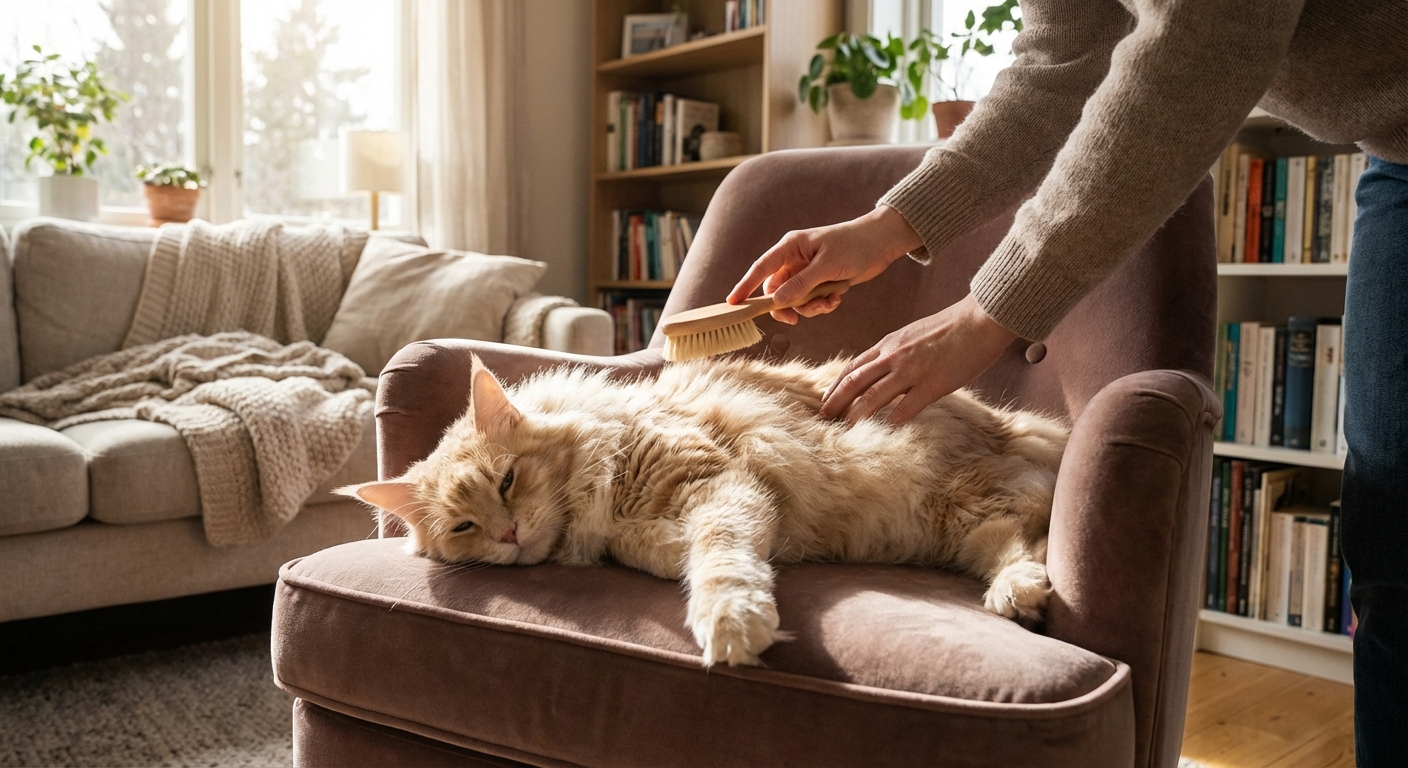
Cats can gag and vomit foam when a hairball is forming but not passing yet. Repeated hacking and retching can leave the throat and stomach feeling irritated.
- Clues: coughing or hacking, frequent grooming, long-haired cats, seasonal shedding
- What to do: brushing, vet-approved hairball gel or diet, and checking hydration and stool quality
3) Eating too fast or dietary upset
Some cats gulp food, then vomit foam or partially digested food soon after. Others react to sudden diet changes, rich treats, table foods, or scavenging.
- Clues: vomiting within minutes to a couple hours after meals, food changes, new treats
- What to do: slow feeder bowls, smaller portions, and gradual diet transitions over 7 to 10 days
4) Mild gastritis
Gastritis simply means stomach inflammation. It can be triggered by stress, dietary indiscretion, spoiled food, or underlying conditions. Cats may vomit foam, bile-tinged fluid, or food.
- Clues: decreased appetite, lip licking, hiding, nausea signs, intermittent vomiting
- What to do: contact your veterinarian for guidance, especially if it lasts more than 24 hours or comes back frequently
5) Parasites
Intestinal parasites can cause vomiting and stomach irritation, particularly in kittens, outdoor cats, or newly adopted cats. Even indoor cats can occasionally be exposed.
- Clues: diarrhea, weight loss, pot-bellied appearance in kittens, poor coat quality
- What to do: stool testing and vet-prescribed deworming, plus ongoing prevention
6) IBD or food sensitivities
Chronic vomiting can be a sign of inflammation in the gastrointestinal tract. Some cats vomit white foam when their stomach is irritated between meals, while others vomit food more directly.
- Clues: ongoing vomiting (weekly or more), weight loss, picky appetite, soft stool
- What to do: work with your vet on diagnostics and a nutrition plan, which may include a limited-ingredient or hydrolyzed diet
7) Foreign material or blockage
Cats are famous for chewing string, ribbon, hair ties, and toys. A partial obstruction can cause repeated vomiting, including foam, because the gut cannot move food and fluid through normally.
- Clues: repeated vomiting attempts, refusing food, lethargy, painful belly, hiding
- What to do: this is urgent. Contact an emergency clinic if you suspect a blockage or string ingestion
8) Toxin exposure
Some toxins and irritants can trigger drooling and foamy vomit, including certain houseplants, cleaners, human medications, and topical products. A few well-known high-risk plant examples include lilies (especially dangerous for cats), sago palm, and tulips. This is not a complete list.
- Clues: sudden drooling, pawing at the mouth, tremors, weakness, vomiting that starts abruptly
- What to do: call your veterinarian or a pet poison helpline immediately
9) Systemic illness
Vomiting can also be associated with issues beyond the stomach and intestines, such as kidney disease, hyperthyroidism, pancreatitis, or liver disease. In these cases, foam can appear when appetite drops and the stomach becomes empty and irritated.
- Clues: increased thirst or urination, weight loss, decreased appetite, diarrhea, “off” behavior
- What to do: schedule a veterinary exam and discuss bloodwork and urinalysis
When it is an emergency
Please seek urgent veterinary care if you notice any of the following:
- Repeated vomiting over several hours or unable to keep water down
- Blood in vomit or vomit that looks like coffee grounds (digested blood)
- Severe lethargy, collapse, or trouble breathing
- A swollen or painful abdomen
- Possible string, ribbon, or toy ingestion
- Known or suspected toxin exposure
- Vomiting in a kitten, senior cat, or a cat with diabetes, kidney disease, or other chronic illness
If your cat is vomiting and also acting “not like themselves,” trust your gut and call your vet. Waiting is rarely helpful when a cat is dehydrating or possibly obstructed.
Call your vet today
These situations may not be a true emergency, but they are worth same-day advice or an appointment:
- Vomiting plus decreased appetite that lasts more than 24 hours
- Vomiting that keeps happening, even if your cat seems fine between episodes (for example, weekly or more)
- Weight loss, increased thirst, or a clear change in energy
- New vomiting in a cat with known chronic illness
Many people assume hairballs make regular vomiting “normal.” Occasional hairball-related vomiting can happen, but frequent vomiting is a sign to investigate, not ignore.
What you can do at home
For a single episode in an otherwise bright, alert cat, your veterinarian may recommend simple supportive steps. Always check first, especially if your cat has other health conditions.
- Document it: take a photo of the vomit and note timing, meal schedule, and any new foods or treats.
- Offer water: keep fresh water available. If your cat gulps water and vomits again, tell your vet. This can suggest significant nausea and increases dehydration risk.
- Check appetite and energy: normal eating and normal behavior after a single vomit is reassuring.
- Reduce triggers: remove access to string, plants, and scented cleaners. Consider a slow feeder if your cat eats too fast.
Avoid giving human medications, including antacids, without veterinary instruction. Some common products that can be dangerous for cats include ibuprofen, acetaminophen, and bismuth subsalicylate (Pepto-Bismol).
How vets find the cause
If vomiting is recurring or your cat seems unwell, your vet will typically start with a thorough history and exam and may recommend:
- Fecal testing for parasites
- Bloodwork and urinalysis to check organ function and hydration
- X-rays or ultrasound to look for obstruction, inflammation, or other changes
- Diet trials to assess food intolerance or IBD
The goal is to move from symptom control to root cause, because frequent vomiting is not something to brush off, even when it seems mild.
Preventing future episodes
Not every case is preventable, but these steps can reduce common triggers:
- Feed on a routine: consistent mealtimes, and ask your vet if a small bedtime snack fits your cat’s needs.
- Slow down meals: puzzle feeders, smaller meals, and separating cats during feeding can help.
- Groom regularly: especially for long-haired cats or heavy shedders.
- Keep hazards put away: string, hair ties, rubber bands, and ribbon are frequent offenders.
- Stay current on prevention: parasite control and wellness visits catch issues early.
Quick checklist
Use this as a simple guide, not a diagnosis.
More likely mild
- One episode, small amount of foam
- Normal energy and appetite afterward
- No diarrhea, no pain, no known toxin exposure
More likely serious
- Multiple episodes, worsening frequency
- Not eating, hiding, lethargic, painful belly
- Blood, dehydration, or suspected foreign object
If you are unsure, call your veterinarian. It is always okay to ask, “Do I need to be seen today?”