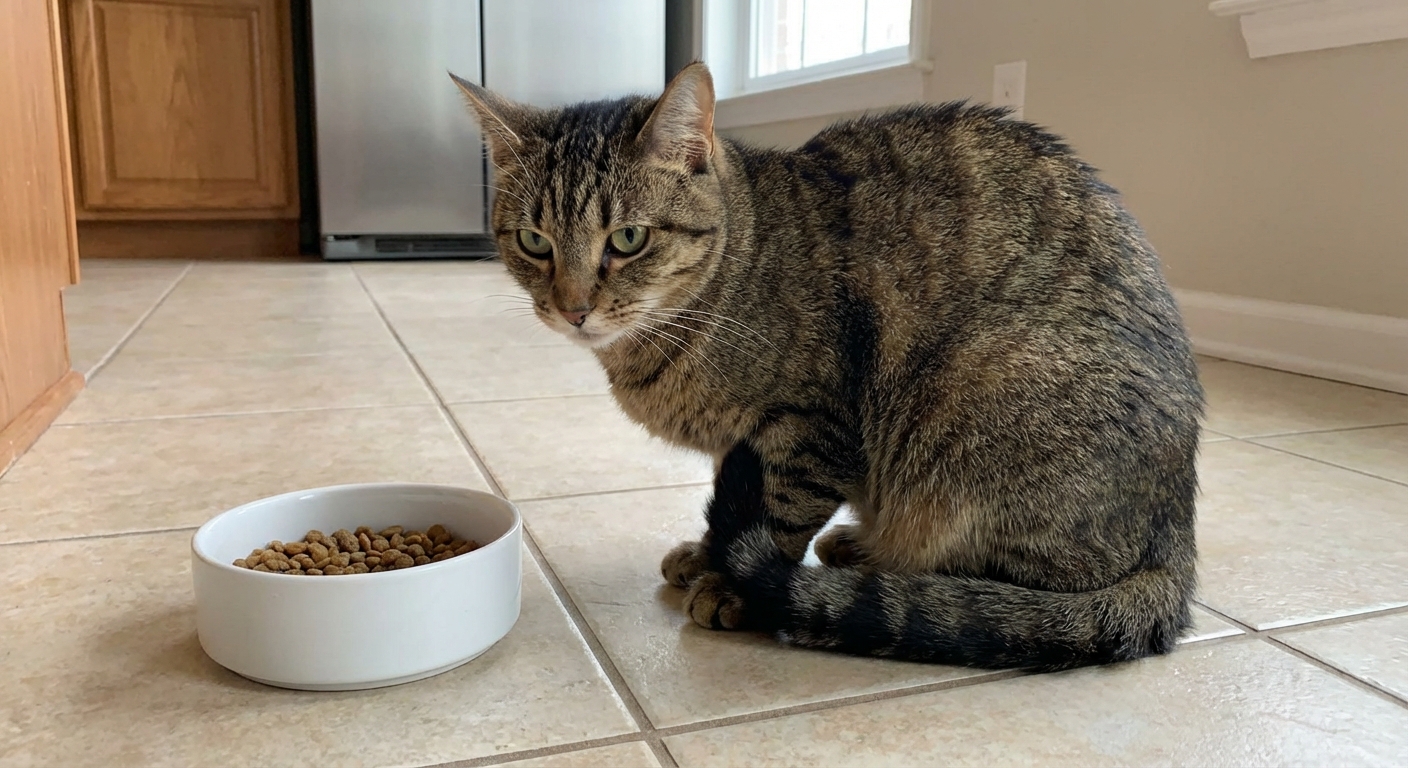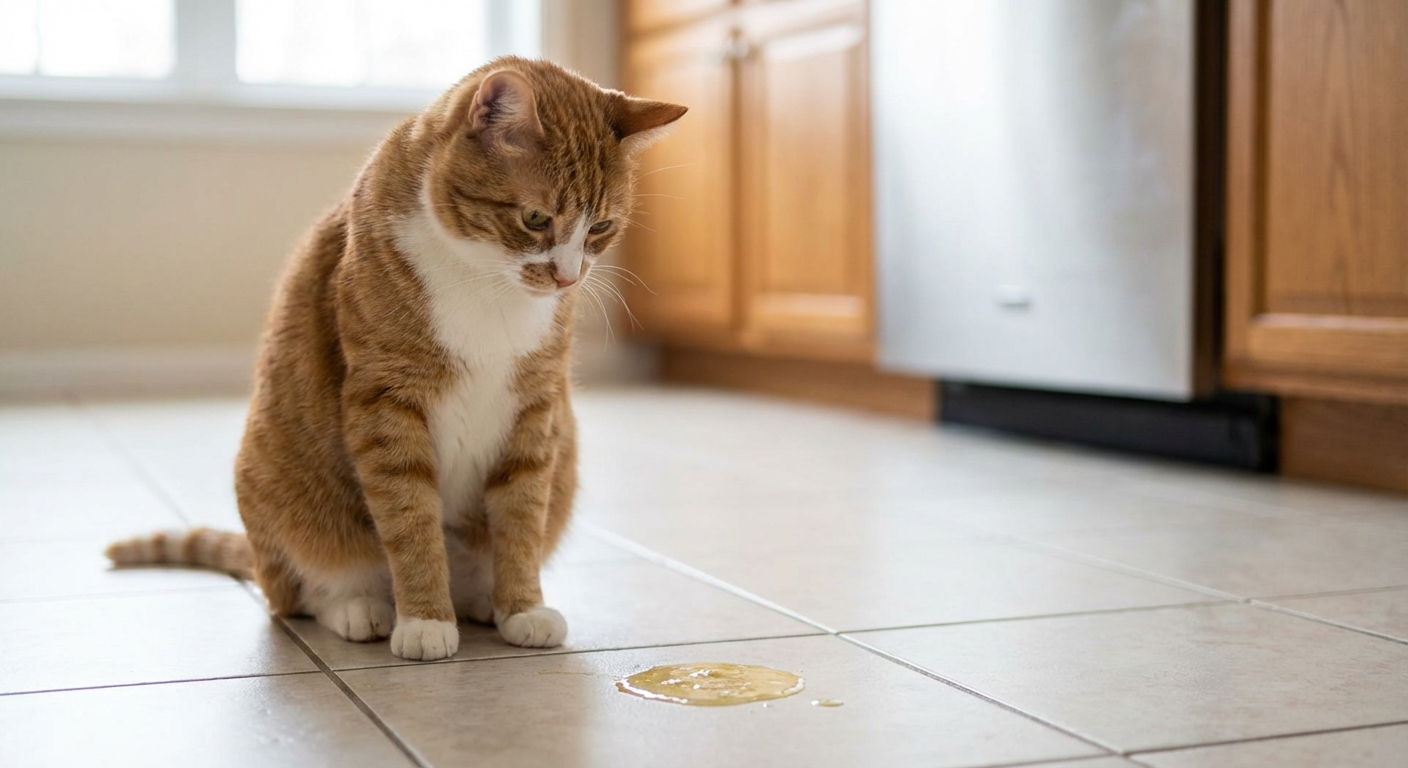
From hairballs to toxins and foreign bodies, this guide explains what cat vomit can mean, when it’s an emergency, what to do at home, and what your vet wil...
Article
•
Designer Mixes
Why Is My Cat Throwing Up? Causes and When to Worry

Shari Shidate
Designer Mixes contributor
Finding vomit on the floor is one of those pet parent moments that can spark instant worry. The good news is that an isolated episode can happen in cats for a variety of mild reasons. The important part is learning what is normal for your cat, what might be triggering it, and when vomiting is a sign of something more serious. Vomiting that happens regularly (for example, weekly or more) is not something to brush off and is worth a veterinary conversation.
Quick note: This article is for general education and does not replace veterinary care. If your cat seems unwell, trust your instincts and call your veterinarian.
Vomiting vs. regurgitation
People often say “throwing up,” but in cats there are two different events that can look similar.
- Vomiting is an active process. Your cat may drool, lick lips, gag, or heave from the belly before bringing up food, liquid, foam, or bile.
- Regurgitation is more passive. Food comes back up with little effort, often soon after eating. It may look like undigested kibble shaped like a tube, and it is typically not mixed with bile. You usually will not see the strong abdominal contractions that come with vomiting.
This distinction helps your veterinarian narrow down whether the issue is more likely stomach-related (vomiting) or esophagus-related (regurgitation).
Common reasons cats vomit
Many causes are mild and fixable, especially when vomiting happens infrequently and your cat otherwise acts normal.
Hairballs
Cats groom constantly, and swallowed fur can clump in the stomach. Some cats vomit hairballs occasionally, especially during seasonal shedding.
Tip: Regular brushing and hairball-focused diets or gels can help reduce frequency.
Eating too fast or overeating
When cats gulp food, the stomach can reject it. This often shows up as vomiting shortly after meals.
- Try a slow feeder bowl or puzzle feeder.
- Offer smaller, more frequent meals.
Diet change or food intolerance
Switching foods quickly can upset the stomach. Some cats are sensitive to specific proteins, rich treats, dairy, or table scraps.
Tip: Transition foods over 7 to 10 days when possible.
GI upset from something they ate
Cats may chew plants, lick residue from cleaning products, or nibble human foods that do not agree with them. Even “cat safe” plants can cause irritation in some pets.
Parasites
Intestinal parasites can cause vomiting, diarrhea, weight changes, or a bloated belly. Kittens are especially at risk.
What helps: Routine fecal testing and vet-recommended deworming.
Stress and routine disruption
Cats are sensitive to change. Moving, new pets, new schedules, or even a different litter can affect appetite and digestion.
Medications and toxins
Vomiting can also be triggered by medications or toxic exposures. Common risks include certain human pain relievers (including acetaminophen and many NSAIDs), toxic plants (especially lilies), rodent bait, antifreeze, and permethrin exposure from dog-only flea and tick products. If you suspect any exposure, treat it as urgent and contact your veterinarian or a pet poison hotline right away.
Constipation
Some cats vomit when they are constipated or straining, especially if stool is hard, infrequent, or painful to pass. If you notice vomiting along with little to no stool, crying in the litter box, or a firm belly, call your veterinarian.
Chronic conditions
Repeated vomiting can also be linked to medical problems that need veterinary diagnosis, such as:
- Inflammatory bowel disease (IBD)
- Food allergy or sensitivity
- Pancreatitis
- Hyperthyroidism (more common in older cats)
- Kidney disease
- Liver disease
One important note: small, frequent vomiting that keeps happening is a common pattern with chronic GI disease and is not something to manage indefinitely at home.
Foreign body or blockage
If a cat swallows string, ribbon, hair ties, rubber bands, or pieces of toys, it can irritate the gut or cause an obstruction. This can become an emergency quickly.
What the vomit can tell you
While you cannot diagnose the cause from appearance alone, these details can be helpful to share with your veterinarian.
- Undigested food soon after eating: eating too fast, overeating, regurgitation, or irritation.
- Foam or clear liquid: stomach irritation, empty stomach, nausea, or hairball-related irritation.
- Yellow fluid: often bile and can happen with an empty stomach, but it can also occur with ongoing GI upset.
- Green fluid: can sometimes be bile, but it may also reflect plant material, food coloring, or other ingested substances. If it is persistent or your cat seems unwell, call your veterinarian.
- Hairball present: grooming-related, but frequent hairballs can still warrant a checkup.
- Blood: can look like bright red streaks or dark, coffee-ground material. This should be treated as urgent.
Best practice: Take a quick photo and note the time, contents, and any other symptoms. It can save time and help your veterinarian decide next steps.
When to worry
Occasional vomiting may not be an emergency, but certain signs mean your cat should be seen promptly.
Call your veterinarian the same day if:
- Vomiting happens more than once, or any repeat vomiting happens along with other symptoms
- Your cat seems lethargic, hiding, or unusually quiet
- There is diarrhea, especially if it is persistent
- Your cat refuses food for more than 24 hours, or you notice a significant decrease in appetite (especially in overweight cats)
- You notice weight loss, increased thirst, or appetite changes over time
Seek urgent or emergency care if:
- There is blood in the vomit or black, tarry stool
- Your cat cannot keep down water
- The abdomen looks swollen or is painful to touch
- There is repeated retching with little or no vomit produced
- You suspect poisoning (lilies, antifreeze, rodent bait, certain human medications, permethrin from dog flea products)
- You suspect a foreign body (string, ribbon, toy parts) or you saw your cat chew something risky
- Your cat is a kitten, senior, diabetic, or has known kidney or thyroid disease
If you are ever unsure, it is safer to call your veterinarian. In cats, small changes can become serious faster than many people expect.
What is normal
Every cat is different, but these guidelines can help.
- More likely to be mild: one isolated episode, your cat returns to normal behavior, and they are eating, drinking, and using the litter box as usual.
- Worth discussing with your veterinarian: vomiting that keeps happening (such as weekly or more), vomiting paired with weight loss or appetite changes, or any pattern that is new for your cat.
What to do at home
If your cat vomited once and is otherwise acting normal, these gentle steps often help while you monitor closely.
1) Pause food briefly
For a healthy adult cat, your veterinarian may recommend a short break from food, often just a few hours, and then reintroducing small amounts. Do not do this for kittens, overweight cats, or cats with medical conditions like diabetes without veterinary guidance. Always keep fresh water available.
2) Offer small, bland meals if your veterinarian approves
Once vomiting stops, small portions of a sensitive stomach diet can be easier on the gut. Your veterinarian can recommend a specific option, especially if vomiting is recurring.
3) Slow down eating
- Use a slow feeder bowl
- Feed measured portions
- Try a puzzle feeder for cats who inhale kibble
4) Support hairball control
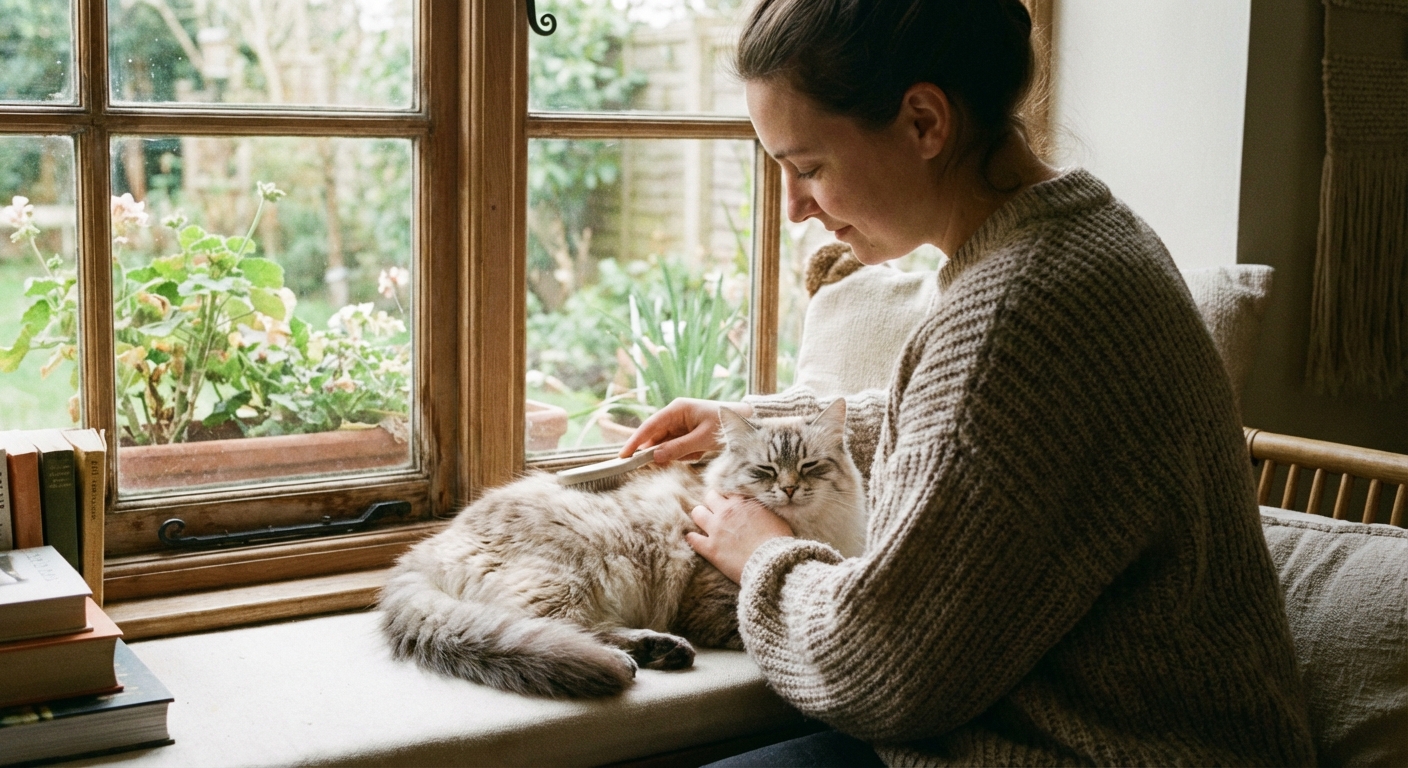
- Brush more often during shedding seasons
- Consider a vet-approved hairball remedy
- Make sure hydration is good (wet food can help some cats)
5) Check your environment
Scan for string, ribbon, toxic plants, new cleaners, essential oils, or foods left out. Also check for access to human medications and ensure your cat has not been exposed to dog-only flea products. Cats are skilled at getting into trouble quietly.
How veterinarians evaluate vomiting
If vomiting is frequent or accompanied by other symptoms, your veterinarian may recommend:
- A physical exam and weight check
- Fecal testing for parasites
- Bloodwork and urinalysis to assess kidney, liver, thyroid, and hydration status
- X-rays or ultrasound to look for obstruction, inflammation, constipation, or masses
- Diet trial with a veterinary therapeutic food if food sensitivity is suspected
The goal is to rule out urgent causes first, then identify patterns that point to chronic GI disease or systemic illness.
Prevention
Simple routines can protect your cat’s digestion over time. Small, consistent habits really do add up.
- Keep meals consistent: predictable feeding times and measured portions reduce overeating and gulping.
- Transition foods slowly: sudden changes are a common trigger.
- Brush regularly: especially for long-haired cats.
- Hydration matters: add wet food, a cat water fountain, or extra bowls around the home.
- Schedule routine checkups: early kidney and thyroid changes are easier to manage when caught sooner.
- Pet-proof risky items: string, needles, rubber bands, and small toys should be stored securely.
- Store medications safely: keep human and pet medications out of reach, and only give cat medications exactly as prescribed.
Track and ask
If your cat vomits occasionally, keeping a simple log can be surprisingly helpful. Note:
- Date and time
- What was eaten in the previous 12 hours
- Whether a hairball was present
- Any changes in water intake, stool, energy, or appetite
Then share it with your veterinarian. You do not need to have all the answers. You just need enough information to help your care team connect the dots and keep your cat feeling their best.