Cats don’t pee on the bed out of spite. Learn how to tell urine vs spraying, rule out FLUTD/UTIs, improve litter box setup, reduce stress, and clean properly.
Article
•
Designer Mixes
Why Is My Cat Peeing in My Bed?

Shari Shidate
Designer Mixes contributor
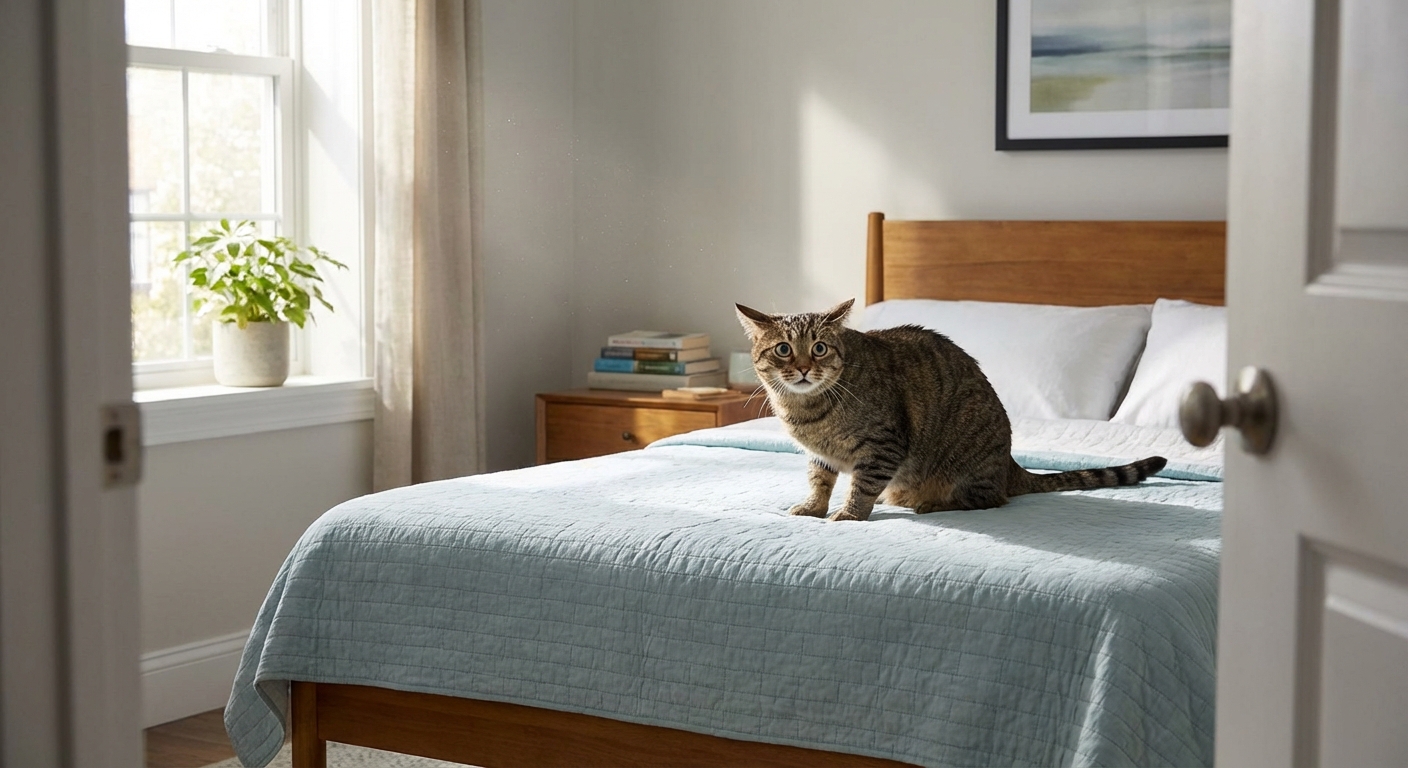
Finding cat urine in your bed is upsetting, and I completely understand why it can feel personal. But in most cases, it is not spite. This is called inappropriate urination, meaning your cat is peeing outside the litter box. Cats may choose soft, high-value places like beds when something is off medically, emotionally, or with the litter box setup. The good news is that once you identify the cause, this problem is often very fixable.
First, is it pee or spraying?
How the urine shows up can help you and your veterinarian narrow down the “why.” These patterns are common, but not absolute.
- Urinating (full-voiding) often leaves a larger puddle on a horizontal surface (like the middle of the bed). Cats usually squat to do it.
- Spraying (marking) often involves smaller amounts on more upright surfaces (walls, bed skirts, furniture edges). Cats typically stand, lift the tail, and may “tread” with their feet.
Both deserve attention. Full-voiding outside the box is commonly linked to medical discomfort or stress, so it is smart to rule out medical causes early.
Medical reasons (common and important)
In clinic settings, we always encourage families to start here. If your cat has a medical issue, no amount of scolding will solve it. Your cat is trying to cope.
UTI or bladder inflammation
True bacterial UTIs are less common in younger cats than many people expect and tend to be more common in older cats or cats with other conditions. However, bladder inflammation is common and can cause urgency, pain, and accidents.
- Frequent trips to the box
- Small amounts of urine
- Crying or straining
- Blood-tinged urine
- Licking the genitals
Feline idiopathic cystitis (FIC)
FIC is painful bladder inflammation that is often linked to stress. It is a diagnosis of exclusion, meaning your veterinarian rules out infection, stones, and other causes first. When the bladder hurts, some cats start associating the litter box with discomfort and choose a softer, safer-feeling place like a bed.
Urinary crystals or stones
Crystals and stones can irritate the urinary tract and cause painful urination. In male cats, they can also contribute to a life-threatening blockage.
Kidney disease, diabetes, or hyperthyroidism
These conditions can increase thirst and urine volume. Your cat may not make it to the box in time, or the box may become too dirty too quickly for their comfort.
Arthritis or mobility pain
Older cats may struggle to climb into a high-sided box or walk far. A bed is close, soft, and easy.
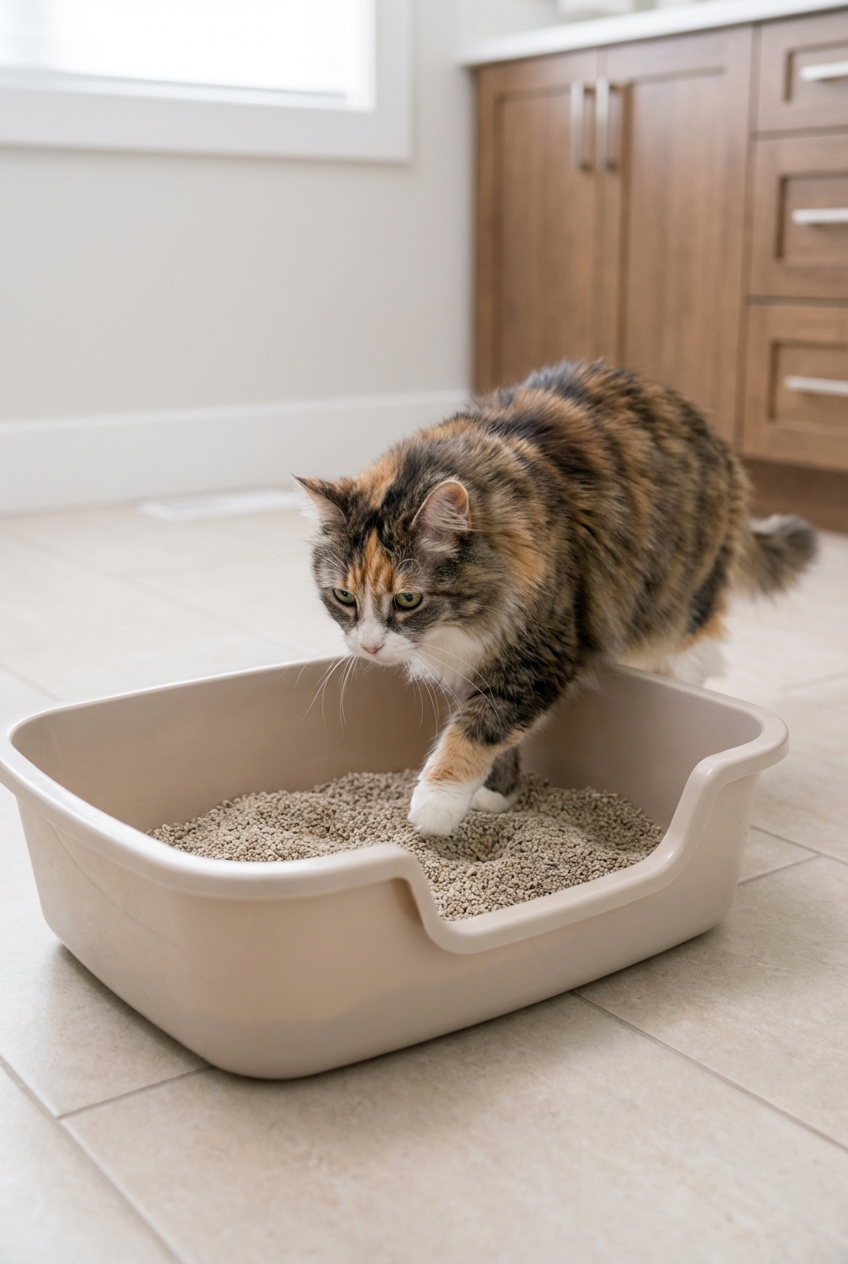
Emergency signs: go now
If you think your cat cannot pass urine, seek emergency care immediately. If your cat is straining with little or no urine, crying in the box, vomiting, hiding, or acting weak, treat this as an emergency. A urinary blockage (especially in male cats) can become life-threatening fast.
Litter box problems (very common)
Even healthy cats may choose the bed if the litter box situation is not meeting their standards. Cats are picky, and honestly, I do not blame them.
Box is too dirty
Many cats want a fresh, scooped box. If the box smells even slightly “off” to you, it smells very off to your cat.
Not enough boxes
A great rule of thumb is one box per cat, plus one extra. In multi-cat homes, placing boxes in different locations (not all in one tight area) can make a big difference.
Box location feels unsafe
Boxes in loud, busy, or “trapped” areas (like a tight laundry room) can make cats avoid them. A cat wants to feel safe while using the box, with a clear path in and out.
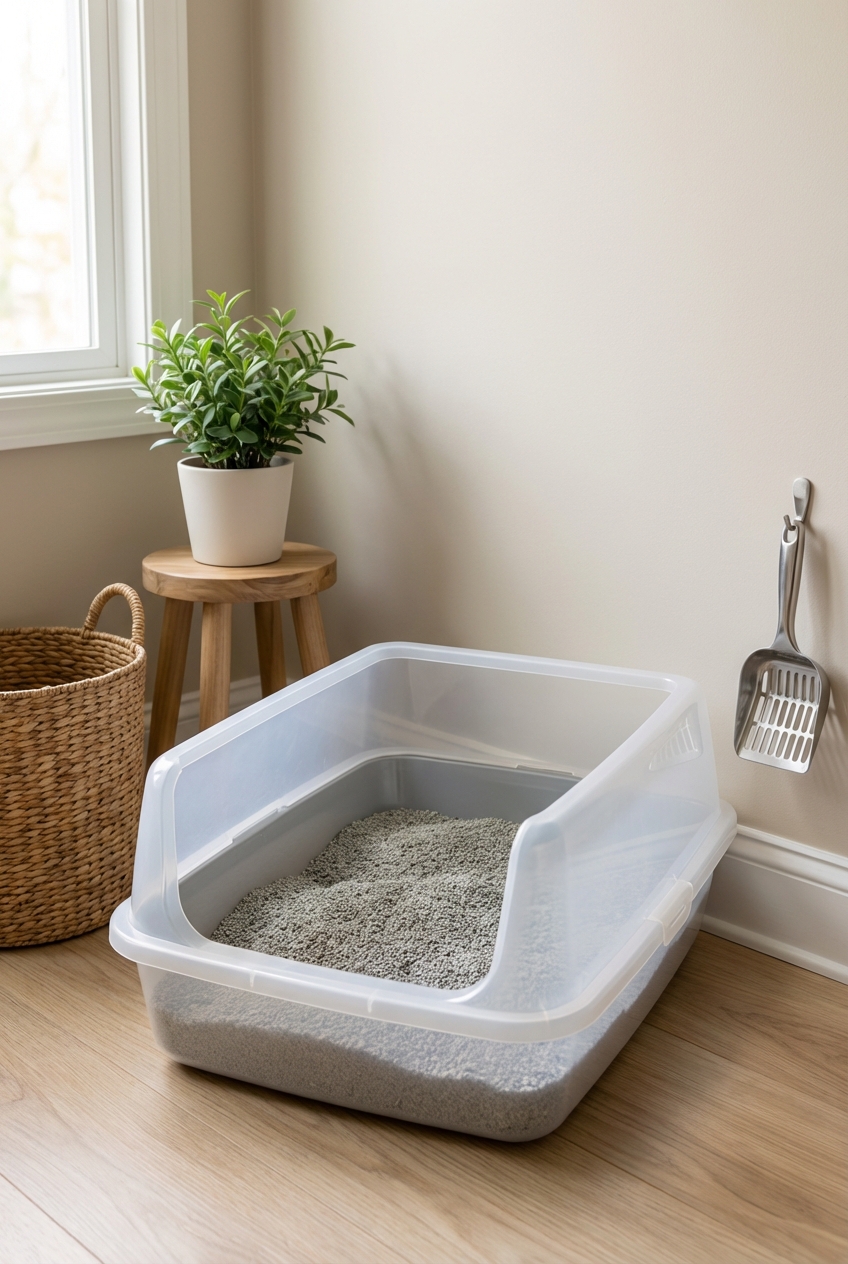
Wrong litter or box style
- Strongly scented litters can be a dealbreaker.
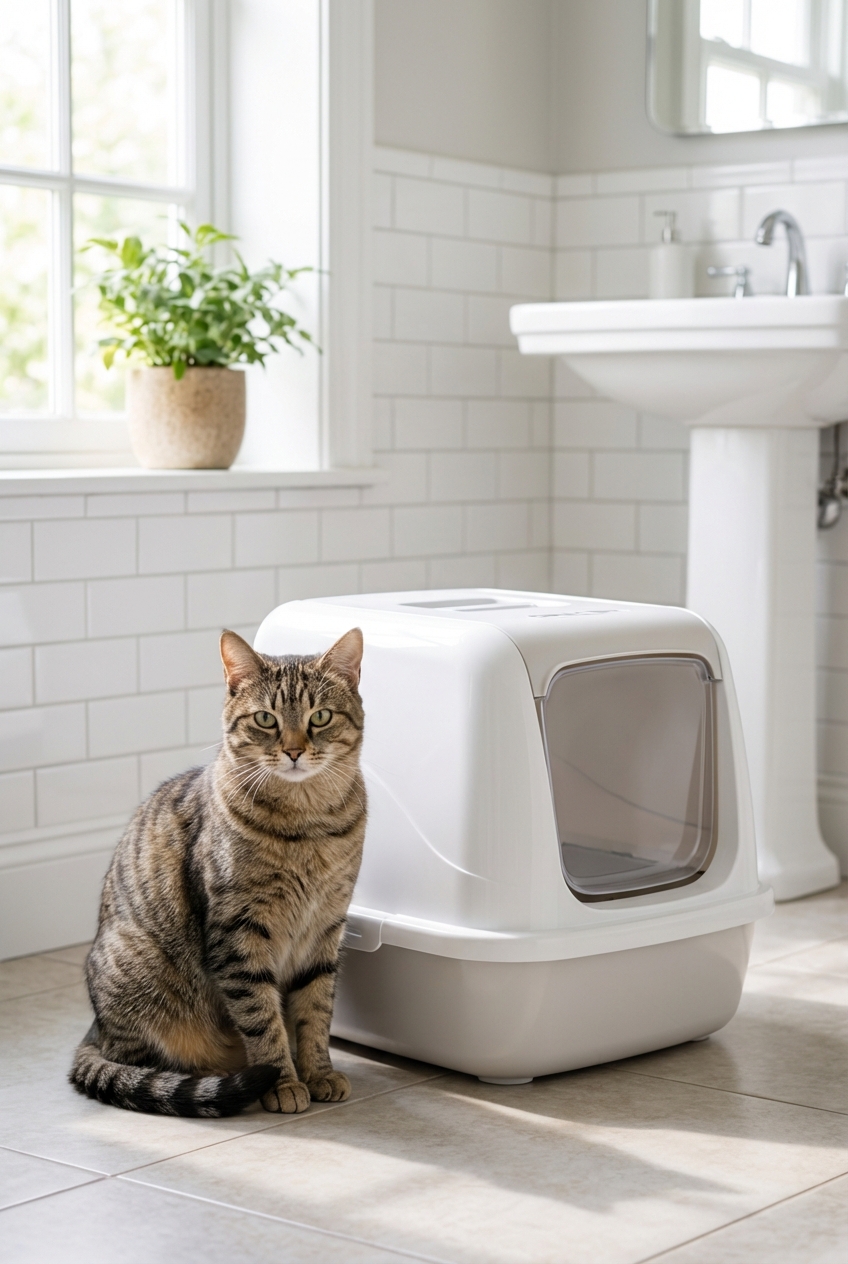
- Covered boxes trap odor and may feel confining for some cats.
- High sides can be difficult for kittens or seniors.
- Liners can bother sensitive paws.
- Size matters: many cats prefer a box about 1.5 times their body length (not counting the tail).
Negative associations
If your cat had pain while urinating, they may connect the box with discomfort. They may seek a new spot, and beds often become an appealing alternative because they are soft and strongly associated with you.
Stress and changes at home
Cats are creatures of routine. When life changes, some cats show stress through their bladder.
- New baby, partner, roommate, or pet
- Moving or remodeling
- Schedule changes and longer time alone
- Outdoor cats seen through windows
- Conflict between cats in the home
When a cat pees on your bed, it can be a form of seeking comfort. Your scent is there, and the space may feel calmer than a busy hallway or a guarded litter box area.
Neutering and marking
Spraying is more common in intact cats, especially intact males, but any cat can spray, including neutered cats. Neutering often reduces spraying, but stress, outdoor cat sightings, and multi-cat tension can still trigger marking behaviors.
Pee vs poop issues
This article focuses on urination. If your cat is pooping outside the box instead (or doing both), that can point to different issues, including constipation, GI upset, box aversion, or location preferences. Your vet can help you sort out which problem you are dealing with.
What to do today
1) Schedule a vet visit
Ask about a urinalysis and, if recommended, a urine culture. If your cat is older or drinking more, bloodwork may also be suggested. For cats with suspected FIC, your veterinarian may also discuss stress reduction, increasing water intake (often with wet food or water strategies), and other supportive options.
2) Protect the bed while you troubleshoot
- Close bedroom doors or use a temporary barrier
- Use a waterproof mattress protector and washable layers
- Consider keeping a litter box temporarily in the bedroom (especially for seniors or anxious cats)
3) Clean in a way that prevents repeat accidents
Use an enzymatic cleaner made for pet urine. Regular soap can leave scent behind, and cats may return to the same spot.
- Bedding: Wash promptly. If safe for the fabric, add an enzyme laundry booster. Air-dry first to confirm the smell is gone before using a hot dryer, since heat can “set” odors.
- Mattress: Blot (do not rub), apply enzymatic cleaner generously, and allow enough dwell time per the label. Deep spots often need repeated treatments. Let it fully dry before remaking the bed.
- Avoid ammonia-based cleaners: the smell can resemble urine to cats.
4) Reset the litter box setup
- Scoop at least once daily (twice is even better)
- Offer enough boxes (one per cat plus one)
- Use large, open boxes when possible
- Choose unscented clumping litter
- Place boxes in quiet, easy-to-access areas
5) Lower stress in simple ways
- Keep feeding and playtime on a predictable schedule
- Add daily interactive play (5 to 10 minutes, 1 to 2 times per day)
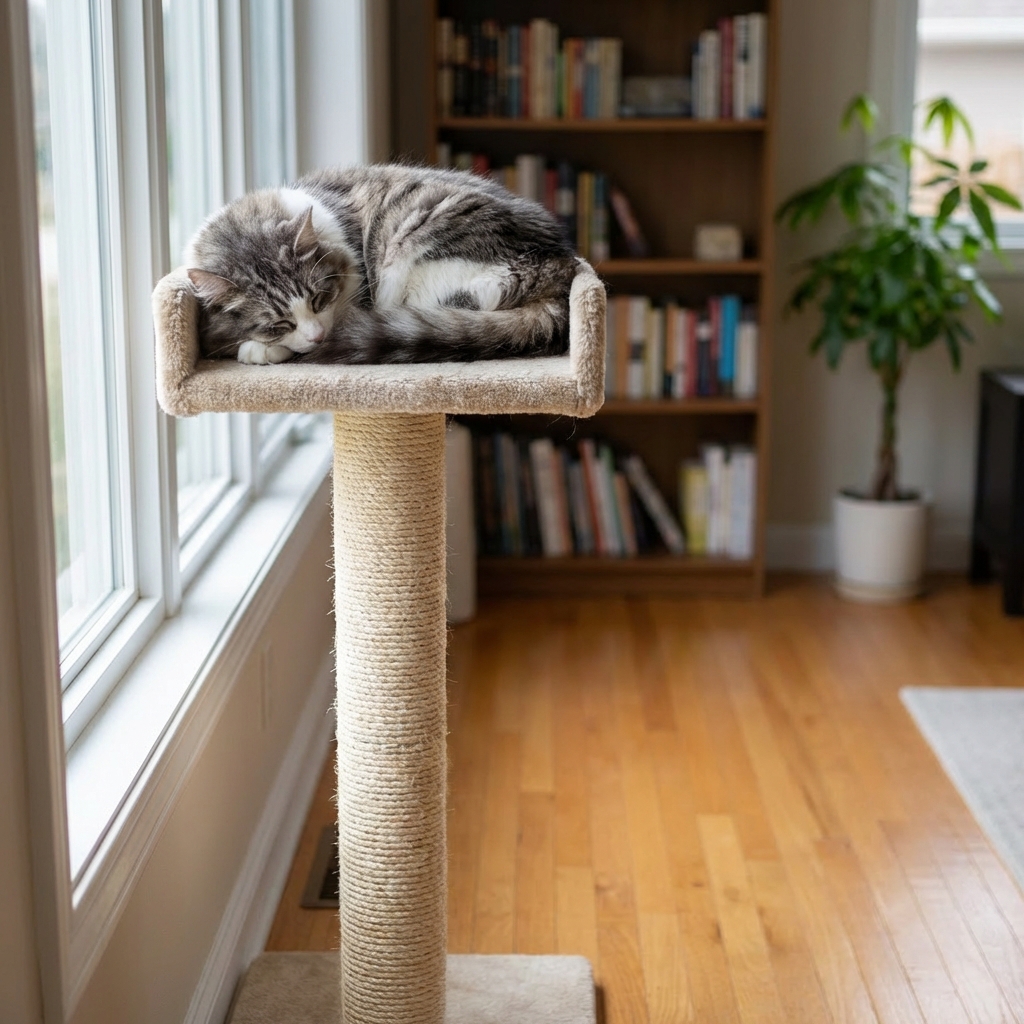
- Create vertical space (cat tree, shelves) and hiding spots
- Feline pheromone diffusers may help some cats, especially during change or conflict
One of the most helpful mindset shifts: treat this like a health and environment puzzle, not a behavior “bad habit.” Your cat is giving you a clue.
If it keeps happening
If your vet rules out medical causes and the litter box setup is solid, you may be dealing with ongoing anxiety, inter-cat tension, or a habit that formed after an illness.
- Track patterns: time of day, household activity, which room, which box, and what changed recently.
- Look for cat conflict: blocking hallways, staring, swatting, or preventing access to boxes can lead to bed urination.
- Ask about pain: arthritis is commonly missed and can absolutely lead to accidents.
- Get behavior support: a feline-focused veterinarian or a credentialed behavior professional can build a step-by-step plan.

What not to do
- Do not punish or rub your cat’s nose in it. This increases fear and stress and can worsen the problem.
- Do not switch litters and boxes constantly. Make changes thoughtfully and give your cat time to adjust.
- Do not mask odors with heavy fragrances. Strong scents can push cats away from the box.
A hopeful note
I have seen many cats return to solid litter box habits once pain is treated, stress is reduced, and the litter box setup is made cat-friendly. Start with the vet, make the environment easy, and give your cat a calm path back to success. You can absolutely get your bed back, and help your cat feel better at the same time.