Cats can get asthma, and it can look like hairballs. Learn common symptoms, emergency breathing signs, triggers, how vets diagnose it, and treatments to help...
Article
•
Designer Mixes
Why Is My Cat Panting? Anxiety vs. Pain

Shari Shidate
Designer Mixes contributor
Seeing a cat pant can be scary, because cats are not like dogs. Cats typically do not pant often, so when you notice open-mouth breathing, it usually means something is pushing their body or emotions beyond a comfortable threshold. Sometimes it really is anxiety or excitement. Other times, panting is your cat’s way of saying, “I don’t feel right,” and pain, overheating, or respiratory issues may be involved.
Let’s walk through how to tell the difference between anxiety panting and pain or illness-related panting , and what you can do right now to keep your cat safe.
What panting looks like in cats
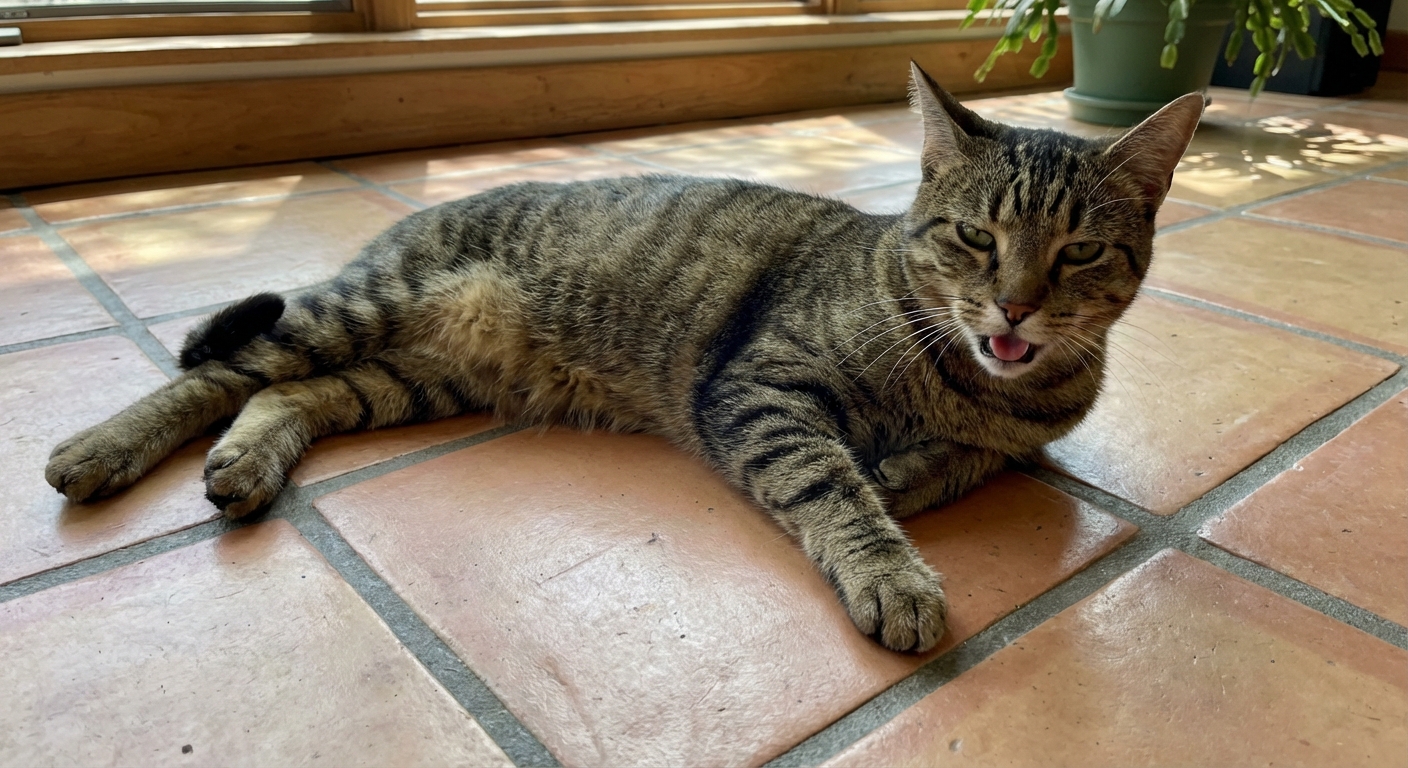
Panting in cats usually looks like fast, open-mouth breathing. You may see the tongue, or the mouth may be open just a little. Some cats also hold their body low, extend the neck, or look wide-eyed.
Important note: a cat purring can still be in distress. Purring sometimes happens when cats are anxious or painful, not only when they are content.
Also, not every “fast breathing” episode is true panting. Some cats hyperventilate from stress or pain with rapid breathing that may or may not include an open mouth. Either way, breathing changes deserve attention.
When panting can be normal
There are a few situations where brief panting can happen without a major medical problem, especially if it stops quickly once the trigger ends.
- After intense play, especially in kittens or high-energy cats
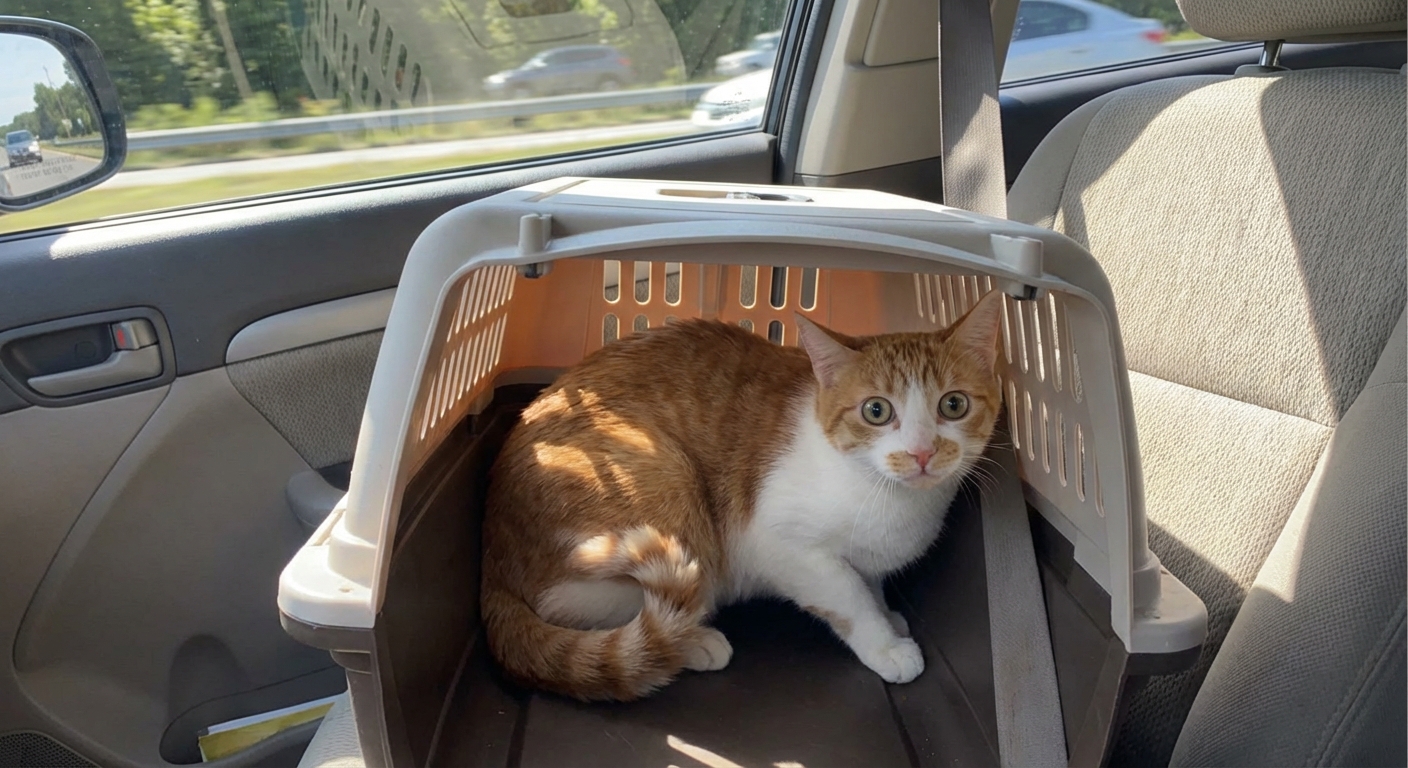
- During a car ride or a stressful trip
- After a scary event like fireworks, a new dog visiting, or loud construction
- Heat exposure (even indoor heat), especially if your cat was in a sunny window or warm room
If your cat pants briefly, then settles with normal breathing and normal behavior, anxiety, exertion, or heat may be the cause.
Important caveat: some serious problems can look intermittent at first. Even if an episode is short, call your vet promptly if panting happens at rest, keeps returning, seems intense, or comes with any other symptoms.
Anxiety panting
Anxiety panting often has a clear “story” behind it. Something stressful happened, and your cat’s nervous system is in high gear.
Common triggers
- Car rides and vet visits
- New pets, visitors, or a move
- Loud noises like storms or fireworks
- Being chased by another pet in the home
- Handling they dislike, especially nail trims
Clues it may be anxiety
- Panting starts during the stressful event
- Your cat may hide, crouch, or try to escape
- Ears may be back, pupils dilated, body tense
- Panting improves once your cat is in a quiet, safe room
- No limping, no obvious injury, no belly swelling
Even if anxiety is the cause, persistent panting is still a signal that your cat is overwhelmed. Chronic stress can affect appetite, digestion, grooming, and urinary health.
Pain or illness panting
Panting can also be a sign your cat is struggling physically. Cats are masters at hiding pain, so open-mouth breathing is a symptom veterinarians take seriously.
Clues it may be medical
- Panting happens at rest, not just after play
- It lasts more than a couple minutes or keeps returning
- Breathing looks labored: belly heaving, nostrils flaring, neck stretched
- Your cat will not lie down comfortably or keeps repositioning
- They seem “off”: quiet, withdrawn, growling, or unusually still
- Reduced appetite, vomiting, diarrhea, or hiding more than usual
Medical causes your vet may consider
- Overheating or heatstroke
- Pain from injury, arthritis flare, dental pain, urinary blockage, or abdominal issues
- Heart disease (often shows up as increased resting breathing rate or effort, but open-mouth breathing can occur in severe distress)
- Respiratory disease like asthma, pneumonia, pleural effusion, or upper airway obstruction
- Anemia (low red blood cells) or other systemic illness
- Toxin exposure (including some essential oils and certain human medications)
Because the “serious” list is long, the safest approach is simple: if panting is not clearly tied to brief exertion or a short-lived stressful event, it deserves a veterinary call right away.
Anxiety vs. pain checklist
Use these questions to guide your next step. You do not need to diagnose the cause, but you do want to decide if this is an emergency.
- Did it start after a trigger? (car ride, loud noise, new guest) Anxiety is more likely.
- Is your cat panting at rest? Pain or illness becomes more likely.
- Does it stop quickly in a quiet room? Anxiety or exertion is more likely, but still call if it repeats or seems intense.
- Are gums pale, gray, or blue? This is an emergency.
- Is your cat weak, collapsing, or unable to get comfortable? This is urgent.
- Any other signs? Limping, hunched posture, crying out, vomiting, not urinating, or belly swelling all push this toward medical.
What to do right now
If your cat is panting, your first job is to reduce stress and heat while you decide whether to head to the vet.
Step 1: Create calm
- Move your cat to a quiet, dim room.
- Keep other pets and kids away.
- Speak softly and avoid excessive handling.
Step 2: Check the environment
- Lower the temperature if the room is warm.
- Offer a cool surface like tile.
- Provide fresh water nearby, but do not force drinking.
Step 3: Observe breathing and color
- Look at gum color: healthy gums are usually pink.
- Watch for belly effort or neck extension.
- Time how long panting lasts and whether it returns.
Step 4: Call your veterinarian
Even if the panting stops, call if it was intense, happened at rest, lasted several minutes, or has happened more than once. If it is after-hours, call an emergency clinic for guidance.
If your cat is open-mouth breathing and seems distressed, it is safer to assume it is urgent until proven otherwise.
Do not do these
- Do not give human medications, including pain relievers or sedatives. Many are toxic to cats.
- Do not restrain a struggling cat to “check them” if they are having trouble breathing. Stress can make respiratory distress worse.
- Do not immerse your cat in cold water if you suspect overheating. Rapid cooling can be dangerous. Focus on getting to emergency care while keeping them calm and in a cooler environment.
When panting is an emergency
Go to an emergency vet now if you notice any of the following:
- Panting or open-mouth breathing that lasts more than a few minutes
- Blue, gray, or very pale gums
- Collapse, extreme weakness, or unresponsiveness
- Labored breathing, belly heaving, or neck stretched out
- Suspected toxin exposure
- Signs of urinary blockage in a male cat (frequent trips to the box, straining, crying, little or no urine)
- Your cat cannot settle and looks panicked or painful
Do not try to force food or water. Keep them calm, minimize handling, and transport in a carrier with good airflow.
Breathing rate
When your cat is resting or asleep, their breathing should look easy and quiet. Many healthy cats are often around 20 to 30 breaths per minute at rest, but individuals vary.
If your cat’s resting breathing rate is consistently higher than normal for them, looks effortful, or is paired with any open-mouth breathing, call your veterinarian for advice.
What the vet may do
At the clinic, the team will focus on stabilizing breathing first, then finding the cause. Common steps may include:
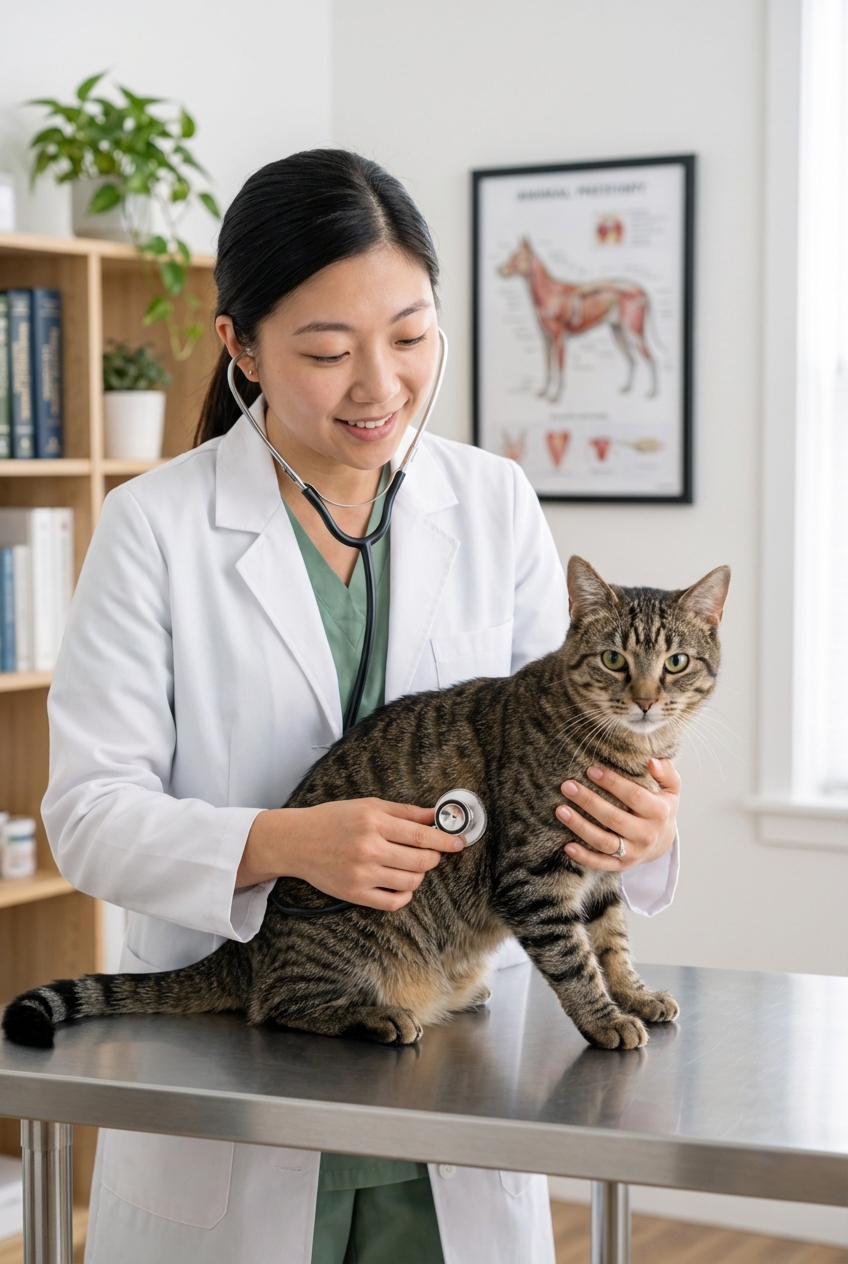
- Listening to heart and lungs
- Checking temperature and oxygenation
- Chest X-rays if respiratory or heart disease is suspected
- Bloodwork to look for anemia, infection, and organ issues
- Assessment for pain, injury, or abdominal discomfort
If anxiety is the most likely cause, your veterinarian may also discuss behavior changes and safe calming medications for stressful events like travel.
Preventing anxiety panting
If your cat tends to pant from fear, you can often reduce episodes with a few practical changes.
- Carrier comfort: leave the carrier out year-round with a soft blanket so it is not a “bad news only” object.
- Practice sessions: short, calm carrier time with treats, then release.
- Cover the carrier: a light blanket can reduce visual stress for some cats.
- Pheromones: feline pheromone sprays or diffusers can help some cats feel safer.
- Talk to your vet: for severe travel fear, prescription options can be a kindness, not a failure.
The takeaway
Cat panting is not something to ignore. Yes, anxiety can cause it, especially during travel or loud events. But panting can also signal pain, overheating, heart trouble, or respiratory disease. When in doubt, trust your instincts and call your veterinarian. Your cat cannot tell you what hurts, but their breathing can tell you when they need help.