Learn how to confirm weight loss in senior cats, recognize urgent warning signs, understand common causes like CKD or hyperthyroidism, and support eating whi...
Article
•
Designer Mixes
Why Is My Cat Losing Weight?

Shari Shidate
Designer Mixes contributor
If your cat is losing weight and you did not intentionally change their diet or routine, it deserves attention. Some weight loss is subtle at first, especially in long-haired cats, but it can be an early clue that something is going on with metabolism, digestion, hormones, dental pain, stress, or chronic disease.
As a veterinary assistant, I always tell families this: unplanned weight loss is a symptom, not a diagnosis. The good news is that many causes are treatable, especially when caught early.
This article is for general education and is not a substitute for veterinary diagnosis or care.
How much weight loss is too much?
A practical rule of thumb is that any ongoing weight loss over a few weeks should prompt a vet visit, even if your cat seems happy. Cats can look surprisingly “fine” while their body is under stress.
- Fast loss: noticeable change over days to a couple of weeks
- Slow loss: gradual change over months, often missed until the cat looks slimmer or bony
- Helpful benchmark: about 5% or more body weight lost in a month, or a steady drop across 2 to 3 weekly weigh-ins
- Red flag: weight loss plus reduced appetite, vomiting, diarrhea, coughing, or behavior changes
If you can, weigh your cat weekly using a baby scale or weigh yourself holding the cat, then subtract your weight. Write it down. Patterns are incredibly helpful for your veterinarian.
Common reasons cats lose weight
Weight loss can happen even when a cat eats well. That is why it is important not to assume it is “just aging” or “just picky eating.” Here are some of the more common, evidence-based causes we see in practice.
Hyperthyroidism (overactive thyroid)
This is very common in older and senior cats (often over about 8 years). Their metabolism speeds up, so they burn through calories.
- Often: weight loss with increased appetite
- May also see: restlessness, vocalizing, vomiting, increased thirst, unkempt coat
Diabetes mellitus
Diabetes can cause the body to break down fat and muscle because glucose is not being used properly.
- Often: weight loss with increased thirst and urination
- May also see: increased appetite at first, then decreased appetite later
Dental disease or mouth pain
Tooth resorption, gingivitis, and broken teeth can make eating painful. Some cats still approach food and act hungry, but they eat less than you think.
- May see: dropping kibble, chewing on one side, bad breath, pawing at mouth
Gastrointestinal issues and malabsorption
Conditions like inflammatory bowel disease, intestinal parasites, food intolerance, and some cancers can reduce nutrient absorption.
- May see: vomiting, diarrhea, greasy stool, gas, loud gut sounds
Kidney disease
Chronic kidney disease is common in older cats. Early on, weight loss may be one of the only visible signs.
- May see: increased thirst, larger urine clumps, nausea, decreased appetite over time
Stress or access to food
Cats can lose weight when they feel unsafe or when routines change. New pets, moving, loud construction, or even a new litter type can affect eating. In multi-cat homes, a cat may also be getting pushed away from food more than you realize.
- May see: hiding, reduced social behavior, changes in litter box habits, hovering near food but not eating
Pain or arthritis
Chronic pain can reduce appetite and lead to muscle loss, especially in senior cats. Some cats eat less because getting to the bowl, jumping, or bending to eat is uncomfortable.
- May see: less jumping, stiffness, irritability when handled, sleeping more
Chronic infections and inflammation
Some infections and inflammatory conditions can drive weight loss over time, including significant dental and oral infections.
Heart disease
Not every cat with heart disease loses weight, but chronic illness can contribute. Cats may show subtle signs.
- May see: lower energy, breathing changes, decreased appetite
Cancer
Not every thin cat has cancer, but unexplained weight loss is a classic symptom. The earlier it is investigated, the better.
When to seek urgent help
Call your veterinarian promptly, or seek emergency care if any of the following are happening:
- Your cat is not eating for 24 hours (kittens and medically fragile cats need help sooner, and it is smart to call earlier if other symptoms are present)
- Repeated vomiting, inability to keep water down, or severe diarrhea
- Labored breathing, collapse, extreme weakness, or pale gums
- Yellow tint to gums, eyes, or skin (possible jaundice)
- Rapid weight loss or your cat feels suddenly bony
Cats can develop hepatic lipidosis (fatty liver disease) when they stop eating, especially if they are overweight to start. This is one reason we take appetite changes so seriously.
What your vet may recommend
A good workup is not about “running every test.” It is about narrowing down the most likely causes and protecting your cat from complications.
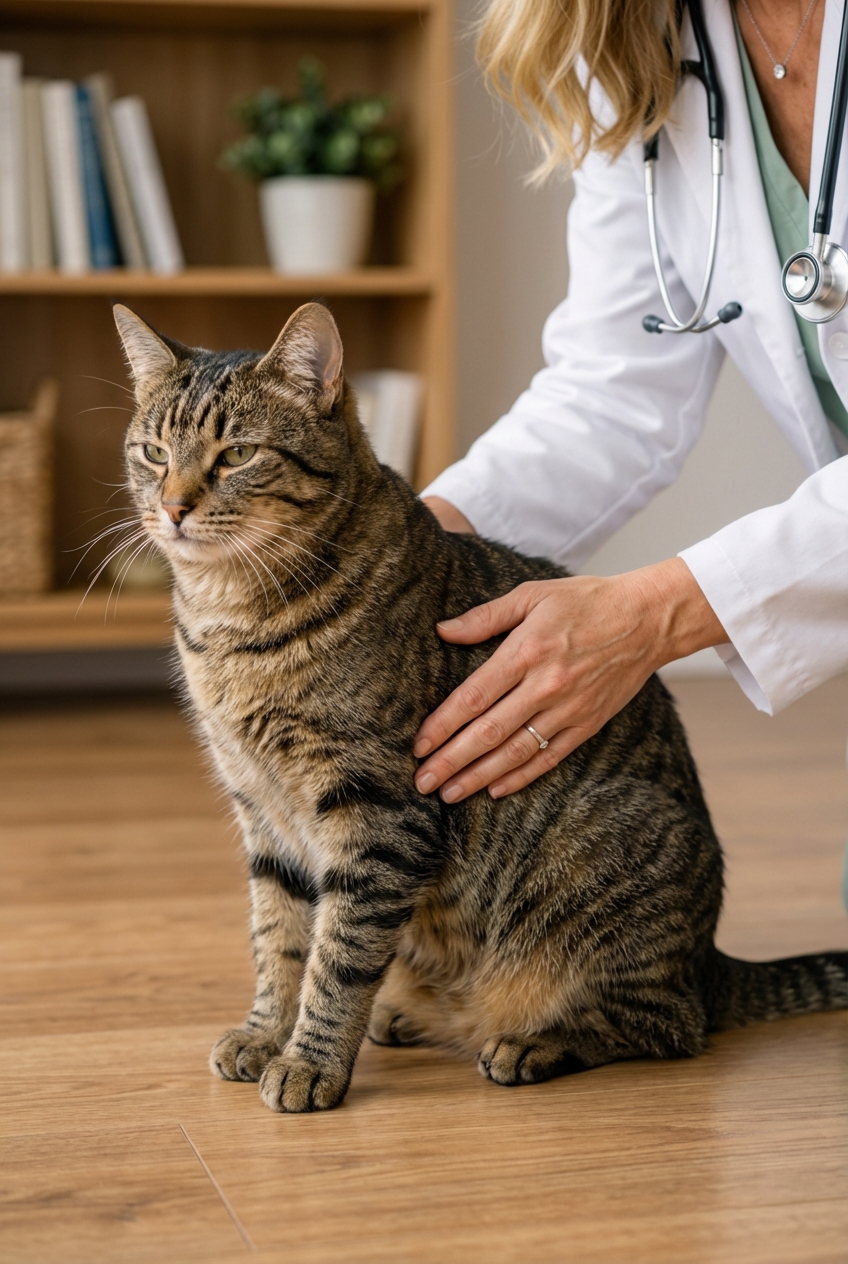
History and exam
- Diet details (brand, flavor, wet versus dry, treats, changes)
- Appetite, vomiting, stool quality, thirst, urination
- Dental and body condition check (muscle loss versus fat loss)
- Pain and mobility check, especially in senior cats
Baseline lab work
Common starting points include:
- CBC (infection, inflammation, anemia)
- Chemistry panel (kidneys, liver, electrolytes, protein levels)
- Total T4 (thyroid screening in adult and senior cats)
- Urinalysis (kidney function, diabetes clues, infection)
Additional tests based on clues
- Fecal test and deworming plan
- Blood pressure check (common with hyperthyroidism and kidney disease)
- Fructosamine for diabetes monitoring, if needed
- Abdominal ultrasound or X-rays
- Special GI panels (B12, folate, and pancreatic markers such as fPLI, interpreted alongside symptoms and imaging)
How to help at home
Home care is supportive, not a replacement for diagnosis. But you can absolutely make things easier and safer for your cat right now.
1) Track intake and symptoms
- Measure food, do not guess. Note how much is actually eaten.
- Write down vomiting episodes, stool changes, coughing, and water intake changes.
- Weigh weekly and record it.
2) Support calories safely
If your cat is eating but losing weight, talk to your veterinarian about a higher-calorie option. In general:
- Wet food can help with hydration and is often more enticing.
- Warming food slightly can boost aroma and interest.
- Offer small, frequent meals, especially if nausea seems to be part of the picture.
Avoid sudden, dramatic diet changes unless your vet advises it, especially if your cat has a sensitive stomach.
3) Reduce stress around meals
- Feed in a quiet location away from other pets.
- Use separate bowls for cats in multi-cat homes, and consider feeding in separate rooms if one cat is a “blocker.”
- Make sure the litter box is clean and easy to access, since discomfort can reduce appetite.
4) Be careful with supplements and people food
It is tempting to add “a little something” to get them to eat, but some foods are toxic to cats (onion, garlic, alcohol, and especially lilies if you have flowers in the home). For grapes and raisins, the risk in cats is not as clear as it is in dogs, but they are best avoided. If appetite is poor, ask your vet about safe appetite support options.
What to bring to the appointment
If you can, bring:
- A simple log of appetite, water intake, litter box changes, vomiting, and weekly weights
- Photos of the food label, treats, and supplements
- Short videos of any vomiting, coughing, weird breathing, or behavior changes
- A photo of stool or vomit if it is unusual (gross, but helpful)
Senior cat note
Older cats can lose muscle even when they appear to eat normally. That is why routine senior screening matters. If your cat is over 7 to 10 years old and getting thinner, it is worth asking your vet about:
- Senior bloodwork and urinalysis
- Thyroid testing
- Dental evaluation
- Blood pressure
Sometimes the fix is straightforward, like treating dental pain. Sometimes it is longer-term management, like kidney support. Either way, you will do best with a plan.
If your gut is telling you your cat feels lighter, trust that instinct and get the weight checked. Early care gives you more options.