Seeing bald spots or thinning fur? Learn what cat hair loss can look like, the most common causes (fleas, allergies, ringworm, stress), safe at-home steps, a...
Article
•
Designer Mixes
Why Is My Cat Losing Hair?

Shari Shidate
Designer Mixes contributor
If you have noticed thinning fur, bald patches, or extra shedding around your home, you are not alone. Hair loss in cats is called alopecia , and it can happen for many reasons, from itchy skin issues to stress or underlying disease. The key is to look at the pattern and your cat’s other symptoms, then involve your veterinarian early, especially if the skin looks red, scabby, painful, or your cat seems uncomfortable.
In this article, I will walk you through common causes of alopecia, what you can check at home, and when it is time to get help.
Quick note: This guide is not a substitute for veterinary diagnosis. Some causes of hair loss (like ringworm or certain parasites) can be contagious, so it is best to get clear answers sooner rather than later.
First, what type of hair loss is it?
Veterinarians often start with one big question: is the hair falling out, or is your cat licking it off? Those two scenarios can look similar, but they point to different causes.
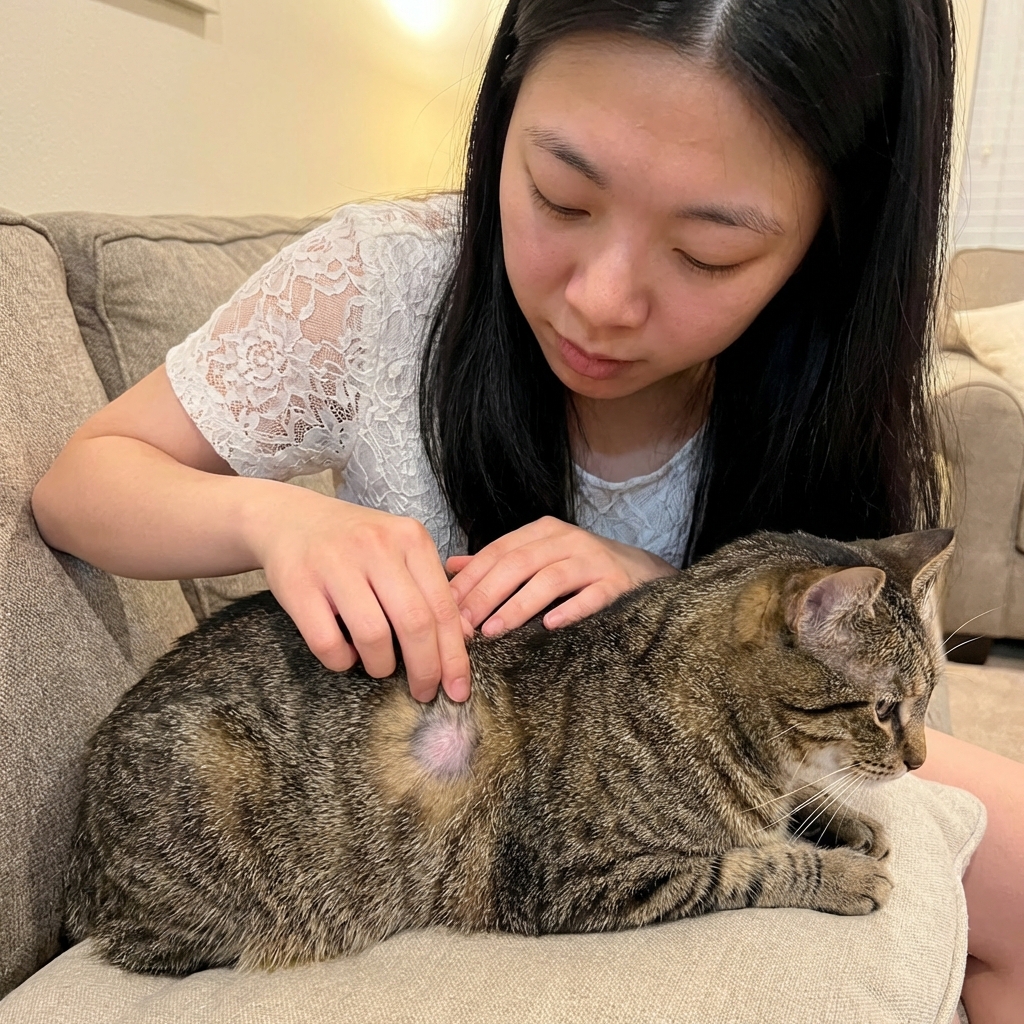
- Hair falling out: You might see broken hairs, scaling, dandruff, crusting, or circular bald spots.
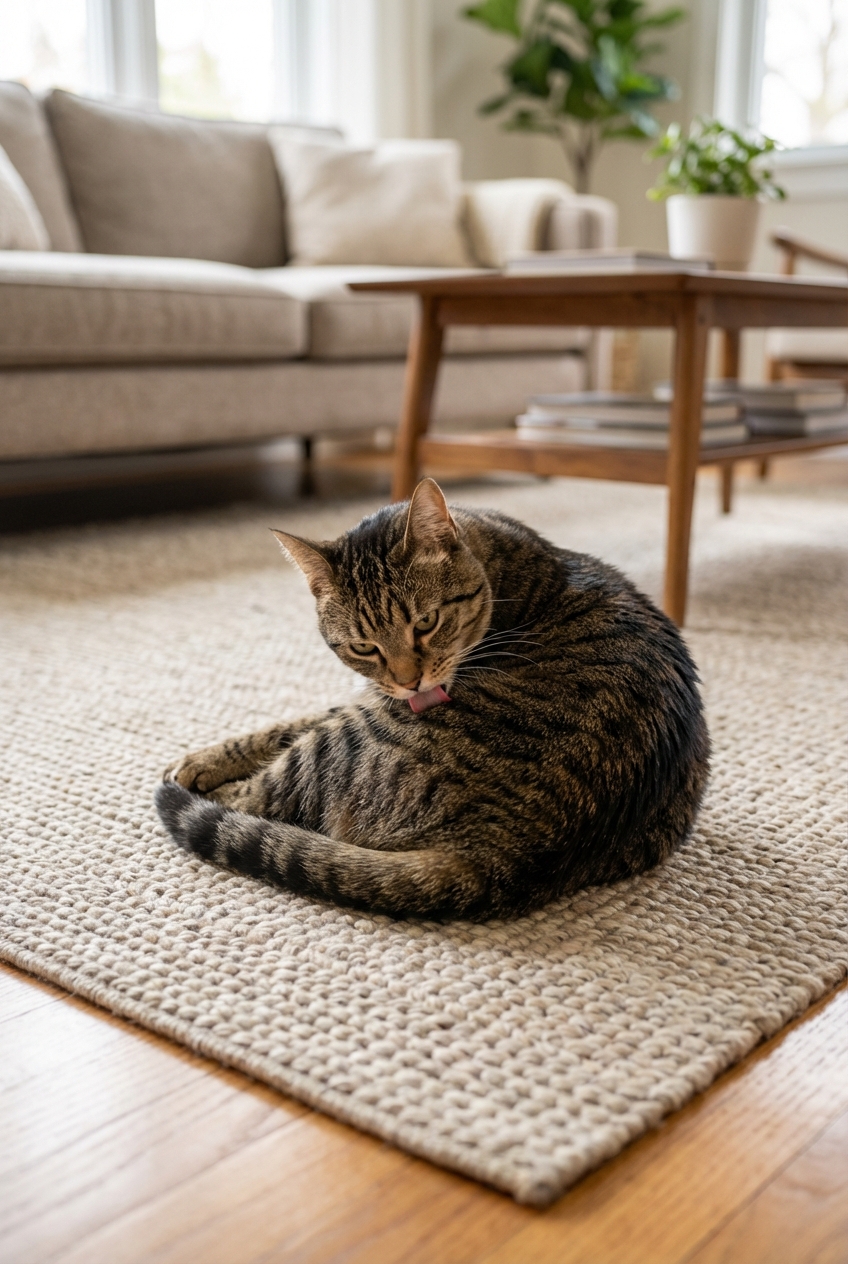
- Overgrooming (licking or chewing): The skin may look fairly normal, but the fur is thinned, especially on the belly, inner thighs, or sides. Some cats groom when itchy, and some groom from anxiety or pain.
Take a quick look at the skin where hair is missing. Is it red, bumpy, flaky, moist, smelly, or lumpy? That information is extremely helpful for your vet.
Common causes of alopecia in cats
1) Fleas and flea allergy dermatitis
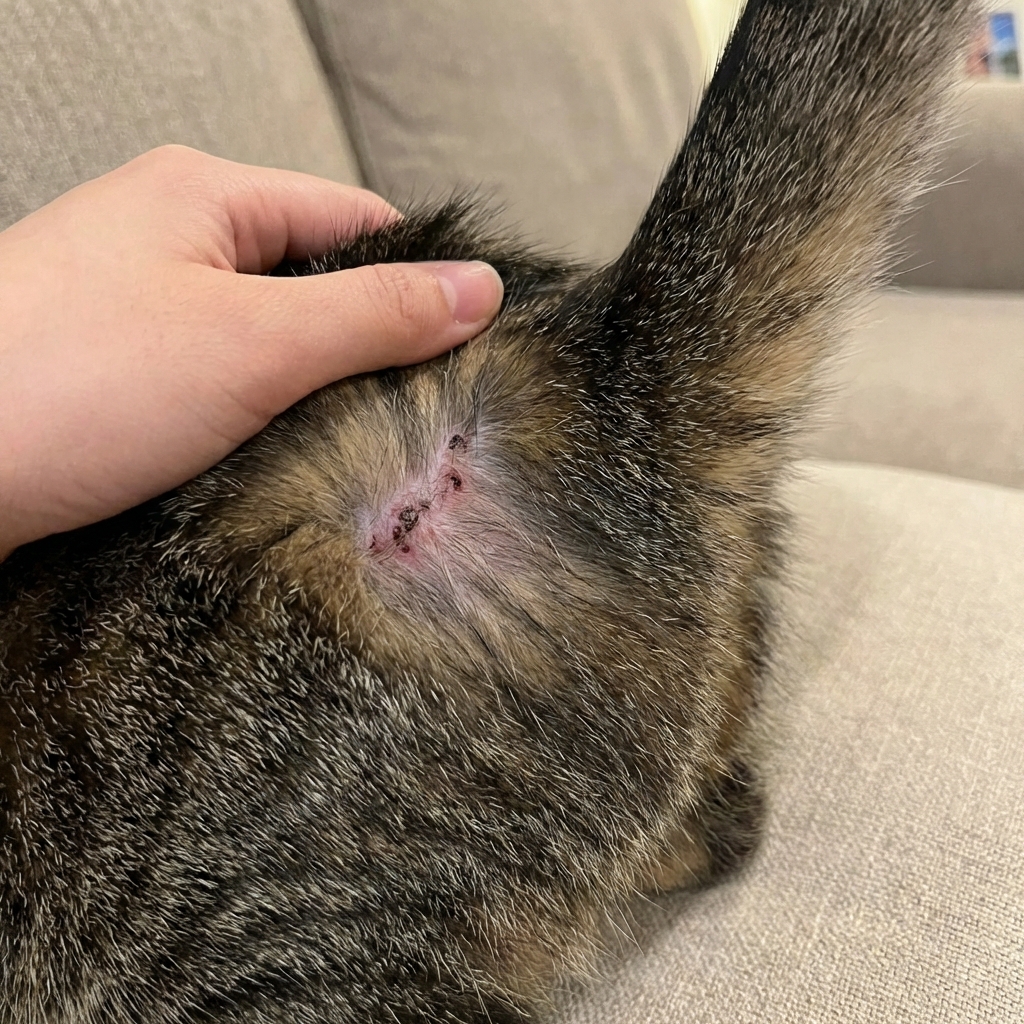
Fleas are still one of the top causes of hair loss, even in indoor cats. Some cats have an allergy to flea saliva, which can cause intense itching from just one or two bites. Many cats with flea or allergy issues develop miliary dermatitis , which looks like tiny scabs or crusts you can feel when you pet them.
- Typical clues: Overgrooming, scabs or tiny crusts (often along the back), hair thinning near the tail base, restlessness.
- Important note: You may not see fleas. Cats are excellent groomers and can remove evidence.
If fleas are even a possibility, ask your veterinarian about reliable flea prevention. Some over-the-counter products can be ineffective (or poorly matched to your area), and some dog-only products can be dangerous for cats. A vet-recommended option and a plan for every pet in the home usually works best.
2) Skin mites and other parasites
Parasites like mites can cause itching, scaling, and patchy hair loss. Some mites are contagious to other pets, and a few can be a concern for people with close contact.
- Typical clues: Intense itch, crusting, flaky skin, hair loss on the ears, face, neck, or body depending on the parasite.
- Diagnosis: Your vet may do skin scrapings, tape tests, or a trial treatment.
3) Ringworm (fungal infection)
Ringworm is a fungus, not a worm. It is common in kittens, shelter cats, and multi-pet homes, but any cat can get it. It is also contagious to people and other animals.
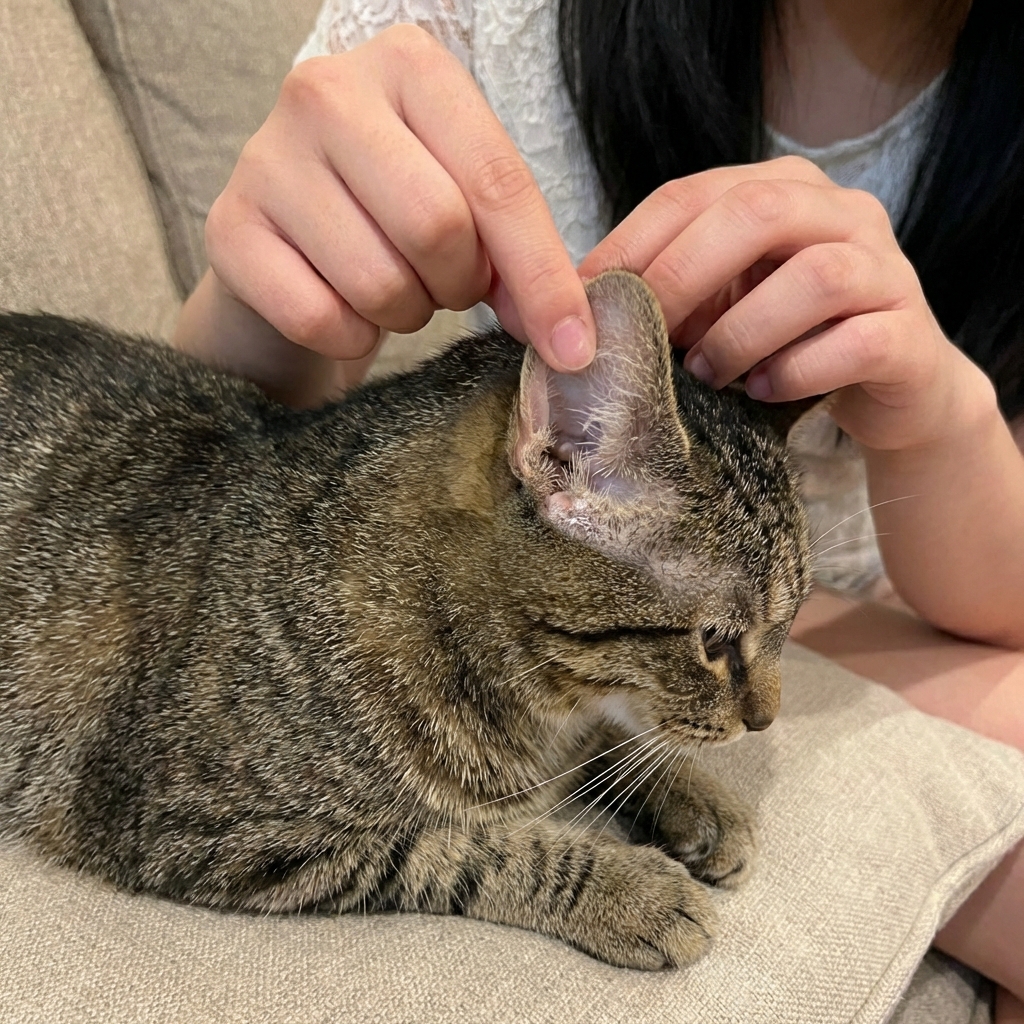
- Typical clues: Circular patches of hair loss, broken hairs, scaling, sometimes mild itch. Lesions often appear on the face, ears, and forelimbs, but can be anywhere.
- Diagnosis: Fungal culture, PCR testing, or examining hairs under a microscope. A Wood’s lamp can help in some cases, but it is not definitive and cannot rule ringworm out.
If ringworm is suspected, avoid close face contact until your vet confirms what is going on, wash hands after handling your cat, and consider limiting shared bedding between pets until you have an answer.
Transition: If parasites and infections are not the cause, the next most common bucket is allergic or inflammatory skin disease, plus grooming driven by stress or pain.
4) Allergies (food or environmental)
Cats can develop allergies to ingredients in food (often proteins like chicken, beef, or fish) or to environmental triggers (like dust mites, pollen, or mold). Allergies commonly show up as itching, overgrooming, or recurrent skin and ear problems.
- Typical clues: Itchy skin, hair thinning from licking, recurrent ear debris or infections, small scabs, seasonal flare-ups (for some cats).
- Diagnosis: A careful history, ruling out fleas and infection, and sometimes a strict elimination diet trial.
For food allergy testing, the gold standard is still a veterinarian-guided elimination diet, not a mail-in test.
5) Eosinophilic granuloma complex
This is a common allergic or inflammatory pattern in cats that can look like hair loss, plaques, or raised lesions. It is often linked to allergies (including flea allergy), but it can have multiple triggers.
- Typical clues: Thickened or red “plaques” (often on the belly or thighs), raised linear lesions, lip or mouth lesions, and overgrooming in the area.
- Diagnosis: Exam plus ruling out fleas, infection, and ringworm. Some cases need cytology or a biopsy.
6) Bacterial or yeast skin infection
Skin infections can be a primary problem or can happen secondary to allergies, parasites, or excessive licking. Infections often make cats itchier, creating a frustrating cycle.
- Typical clues: Redness, odor, greasy or flaky skin, crusting, moist spots, and small bumps or “pimples” (papules or pustules).
- Diagnosis: Skin cytology (a quick microscope check), sometimes culture.
These infections often improve quickly with the right medication, but lasting improvement usually depends on addressing the underlying trigger (like fleas or allergies). It is important not to guess, since treatment differs for bacteria versus yeast.
7) Stress or anxiety (overgrooming)
Cats are sensitive, and some respond to stress by licking the same areas repeatedly. Common triggers include a new pet, moving, schedule changes, conflict with another cat, boredom, or lack of safe hiding spaces.
- Typical clues: Symmetrical hair loss on the belly or inner thighs, skin looks fairly normal, grooming increases during quiet times or after stressful events.
Because itch and pain can look just like anxiety grooming, your vet will usually rule out medical causes first. If stress is part of the picture, environmental enrichment and targeted behavior support can be life-changing.
8) Pain-related overgrooming
This one surprises many cat parents. Cats sometimes lick over an area that hurts, such as arthritic hips, a painful bladder, or even dental pain that changes behavior and stress levels. You may only see hair loss and think “skin problem,” but the real issue can be deeper.
- Typical clues: Licking focused over hips, lower back, belly, or inner thighs; changes in jumping, hiding more, grumpiness when touched, litter box changes.
Let your veterinarian know if your cat’s mobility, mouth comfort, or litter box habits have changed. Pain is treatable, and cats deserve relief.
9) Hormonal or internal disease (less common, but important)
Some medical conditions can affect coat quality and hair growth. In cats, endocrine (hormone) causes are less common than in dogs, but they do happen. Chronic illness can also cause a dull coat and shedding.
- Examples: Hyperthyroidism can contribute to a scruffy, unkempt coat and increased shedding. Diabetes and other chronic systemic diseases can affect skin and coat quality. Hyperadrenocorticism (Cushing’s disease) is rare in cats but can cause skin and coat changes.
- Typical clues: Thinning coat with fewer scabs or itch signs, lethargy, weight change, increased thirst, changes in appetite.
Your vet may recommend bloodwork, urinalysis, and possibly imaging based on what else is going on.
10) Reaction to medications or topical products
Some cats develop irritation from topical flea products, shampoos, essential oils , or even cleaning chemicals that contact the coat.
- Typical clues: Redness or hair loss where the product was applied (often between the shoulder blades), sudden itching after a new product.
Use only cat-safe products, and never apply dog medications to cats unless your veterinarian specifically directs you to.
11) Normal shedding versus true alopecia
Seasonal shedding and coat changes can be normal, especially in indoor cats exposed to artificial light year-round. But bald patches, scabs, and redness are not normal, and neither is constant grooming that interrupts rest or play.
What you can do at home
You do not need to diagnose the exact cause at home, but you can collect helpful clues and reduce discomfort safely.
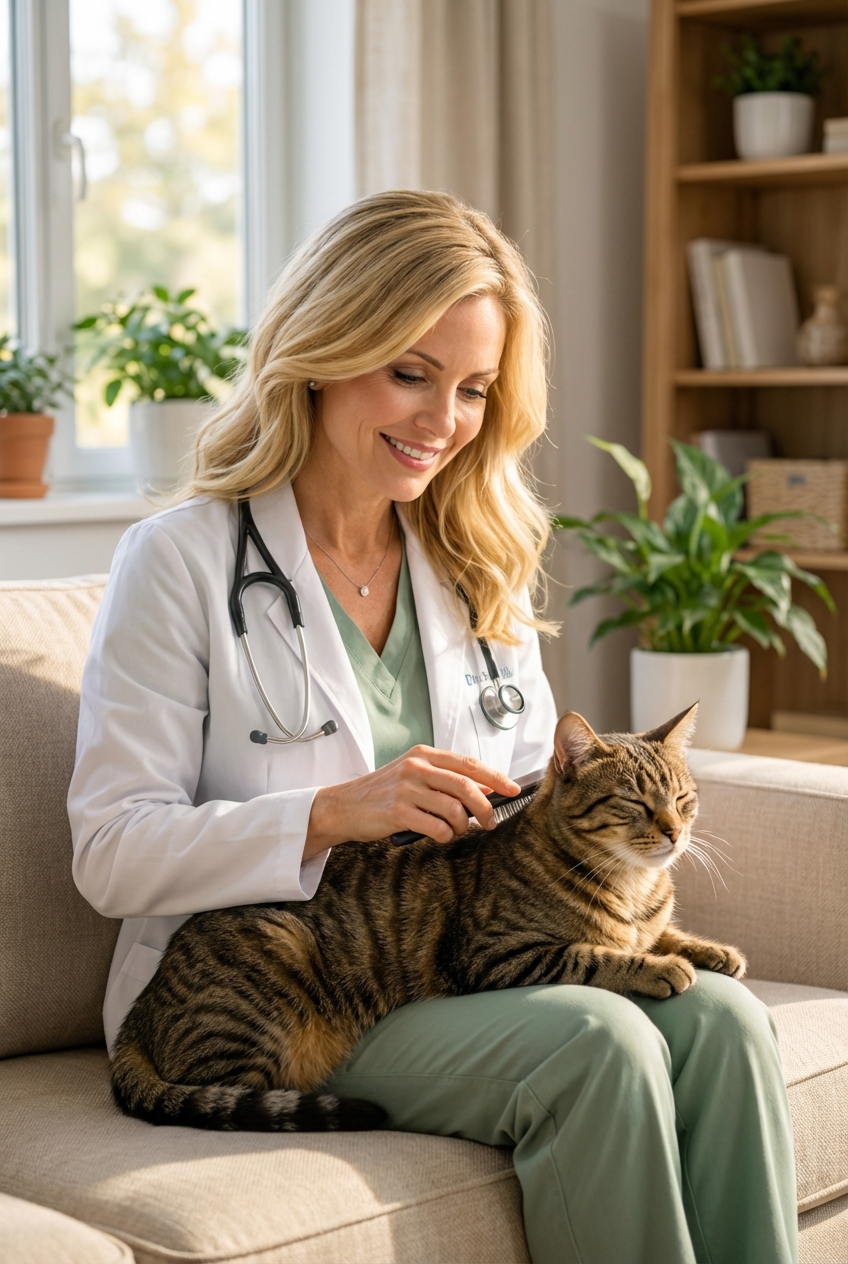
- Check for parasites: Use a flea comb if your cat tolerates it, especially around the tail base and neck. Look for black specks that turn reddish-brown when wet (flea dirt).
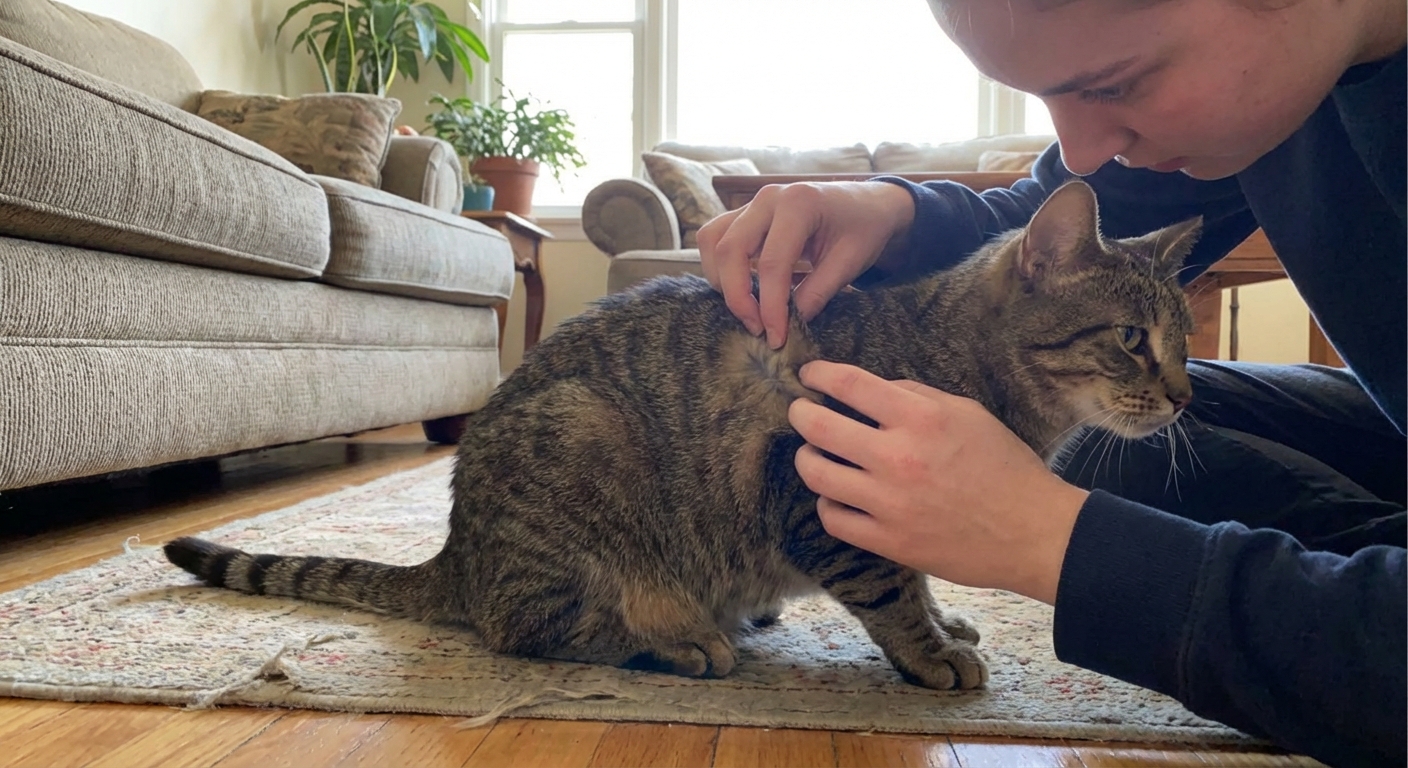
- Take clear photos: Capture the hair loss area in good light, plus a close-up of the skin.
- Track patterns: When did it start? Any new foods, treats, litters, household products, pets, or stressors?
- Avoid human creams: Many are unsafe if licked, and cats will lick.
- Do not use essential oils: Many can be toxic to cats.
- Avoid bathing unless your vet advises it: Bathing can irritate already-inflamed skin, and in suspected ringworm it can spread spores if done incorrectly.
- Limit sharing if ringworm is possible: Until you know, consider separating pets when practical and avoid sharing bedding, brushes, and carriers.
- Prevent self-trauma: If your cat is chewing or scratching intensely, ask your vet about an e-collar or soft cone to protect the skin while you wait for an appointment.
When to call the vet now
Please contact your veterinarian promptly if you notice any of the following:
- Open sores, bleeding, or oozing skin
- Significant redness, swelling, heat, or a foul odor
- Rapidly spreading hair loss
- Hair loss in a kitten, senior cat, or immunocompromised cat
- Signs of pain (hiding, growling when touched, not jumping)
- Changes in appetite, thirst, weight, urination, or energy
- Any concern for ringworm, especially with children or immune-compromised people in the home
- Any new lump, persistent ulcer, or wound that is not healing
How vets find the cause
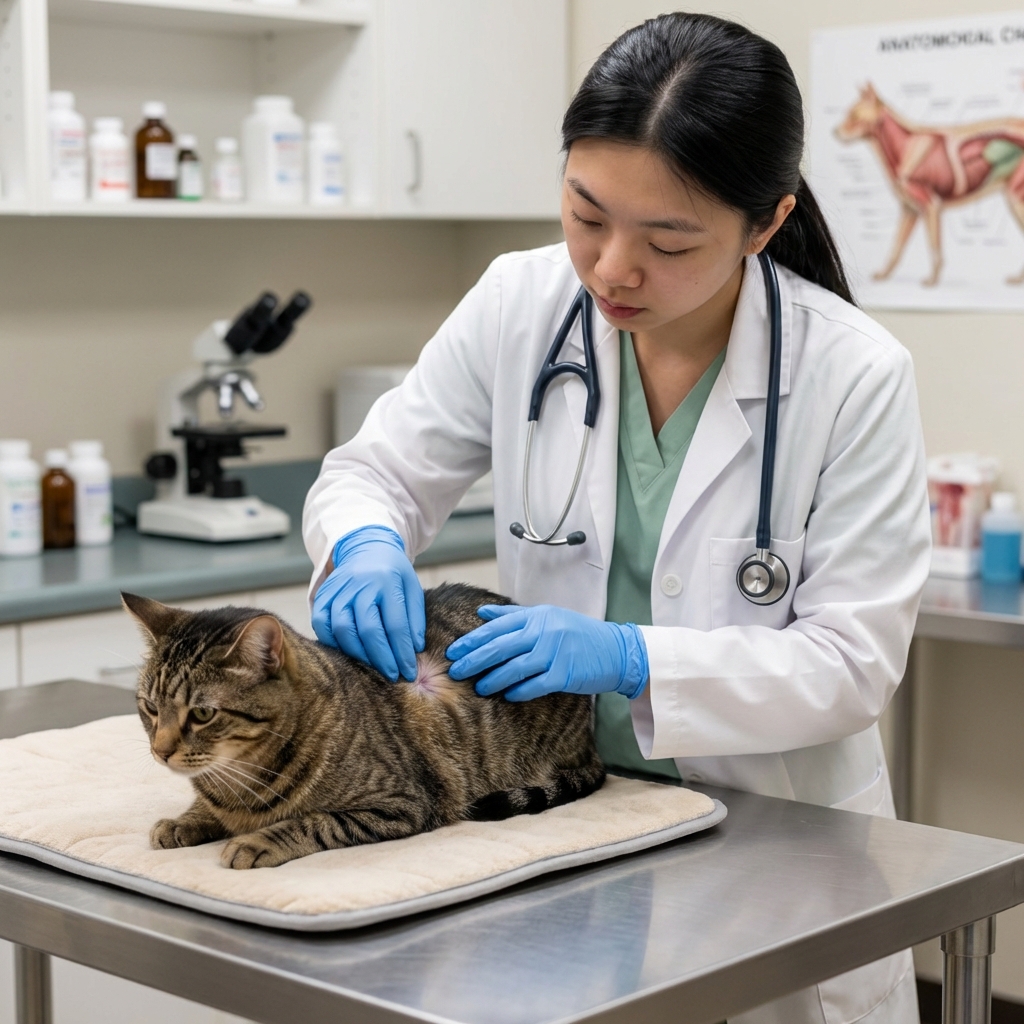
In clinic, your veterinarian may recommend a mix of quick, practical tests. These are common and often very affordable compared to prolonged guesswork.
- Skin cytology: Checks for bacteria and yeast.
- Skin scraping or tape test: Looks for mites.
- Fungal testing: Culture or PCR for ringworm.
- Flea control trial: A reliable prevention plan for every pet in the home.
- Elimination diet trial: If food allergy is suspected.
- Bloodwork and urinalysis: If internal disease is suspected or the coat looks generally poor.
Many cases improve dramatically once the underlying itch, infection, pain, or stressor is identified and treated consistently.
Helping hair grow back
The best “hair growth treatment” is fixing the reason the hair was lost in the first place. Once the skin is calm and your cat is comfortable, regrowth often follows.
- Be consistent with treatment: Flea prevention and ringworm plans fail most often due to missed doses.
- Support the skin barrier: Your vet may recommend omega-3 fatty acids or a therapeutic diet, especially for allergy-prone cats.
- Reduce stress: Predictable routines, play sessions, vertical space, scratching posts, and safe hiding areas can lower anxiety grooming.
- Recheck when advised: If your vet wants a follow-up, it is usually because skin issues can look better before they are fully resolved.
If your cat is losing hair, you are not overreacting by getting it checked. Cats are experts at hiding discomfort, and coat changes are often one of the first visible clues that something is off.