Know what normal breathing looks like, how to count resting respiratory rate, and which signs mean urgent care. Covers URI, asthma, pneumonia, heart-related ...
Article
•
Designer Mixes
Why Is My Cat Breathing Fast?

Shari Shidate
Designer Mixes contributor
If you glance over and notice your cat breathing faster than usual, it is completely normal to feel worried. As a veterinary assistant, I can tell you that fast breathing can be something as simple as stress, or it can be an early sign of a serious issue involving the lungs or heart.
This guide will help you understand what is normal for cats, how to count breaths correctly, the most common causes of rapid breathing, what you can safely do at home, and the red flags that mean you should seek emergency veterinary care right away.
Quick note: This article cannot diagnose your cat and does not replace veterinary care. When in doubt, call your veterinarian or an emergency clinic.

Normal vs. abnormal breathing
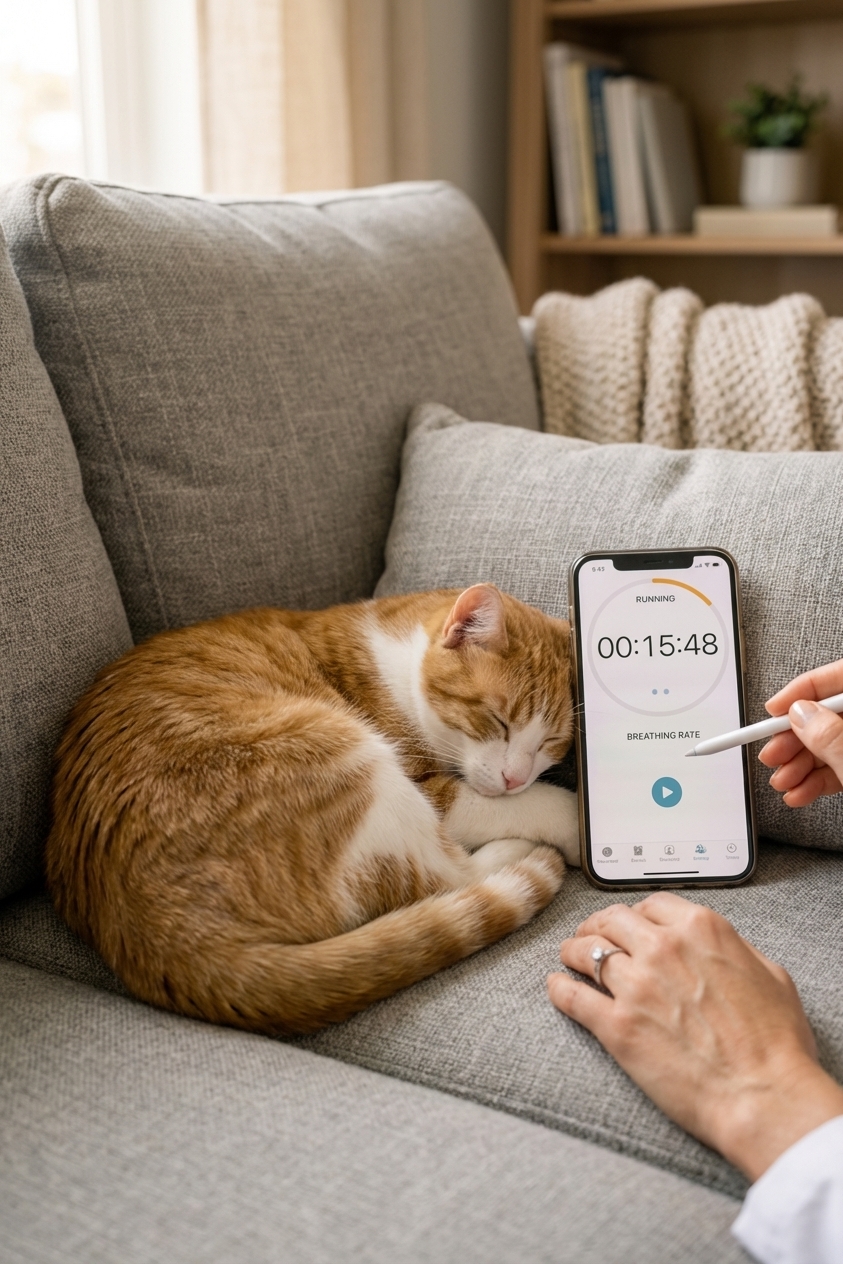
A cat’s breathing rate is best checked when they are asleep or fully resting. Purring, anxiety, heat, and recent play can all temporarily increase breathing, so a single reading can be misleading. If you get a high number, recheck when your cat is truly asleep.
Normal resting rate
- Typical resting range: about 15 to 30 breaths per minute
- Concerning: repeatedly over 30 at rest, especially if it is new for your cat
- Urgent: over 40 at rest, or any fast breathing paired with distress signs
One important note: panting and open-mouth breathing are uncommon in cats. A brief episode after intense play, high heat, or extreme stress can happen. However, open-mouth breathing at rest, open-mouth breathing that persists, or any open-mouth breathing with weakness or distress should be treated as an emergency unless your veterinarian has already told you otherwise for a known condition.
How to count breaths
You will get the most accurate number when your cat is sleeping or resting quietly.
Step-by-step
- Watch the chest or belly. One breath equals one rise and one fall.
- Set a timer for 30 seconds and count the breaths.
- Multiply by 2 to get breaths per minute.
If your cat is purring, grooming, or alert, wait and recheck later. If you are unsure, take a short video of the breathing and bring it to your vet. That video can be very helpful.
Rate vs. effort
In clinic, we pay attention to both the number and the effort. Effort is often the bigger red flag.
- Higher rate can look like rapid, shallow breaths.
- Increased effort can look like belly heaving, nostrils flaring, elbows held out, neck extended, or a cat that refuses to lie down.
- Noisy breathing (wheezing, harsh sounds, or high-pitched sounds) can point to airway narrowing or obstruction.
If your cat looks like they are working to breathe, do not wait for the rate to climb. Seek care.
Common causes
Fast breathing is a symptom, not a diagnosis. Here are the most common categories we see in clinics, along with what they can look like at home.
Stress or excitement
A car ride, a new pet, visitors, fireworks, or even a vet appointment can make some cats breathe faster. Usually, this improves once the cat is back in a calm, quiet space.
- Often temporary
- May hide, crouch, or have wide pupils
- Breathing rate returns to normal after they settle
Overheating
Cats can overheat in hot rooms, poorly ventilated spaces, or during high activity. Flat-faced breeds (like Persians) and overweight cats can struggle more.
- May seek cool surfaces
- May breathe faster and look restless
- In severe cases, may drool, vomit, or become weak
Respiratory infection
Viral and bacterial infections can cause congestion and inflammation that makes breathing harder. Sometimes you will see classic cold-like signs, but not always.
- Sneezing, watery eyes, nasal discharge
- Coughing or gagging
- Reduced appetite (congestion can reduce smell, and fever or systemic illness can also reduce appetite)
Feline asthma
Asthma is more common than many people realize. It can cause episodes of airway tightening and inflammation. Some cats have obvious coughing fits, while others mainly show increased effort when breathing.
- Coughing that can look like trying to cough up a hairball
- Wheezing or noisy breathing
- Episodes triggered by dust, smoke, scented products, or stress
Heart disease
Heart disease can lead to fluid buildup in or around the lungs, making breathing faster and harder. Some cats show no signs until a sudden change happens, which is why a new increase in resting breathing rate is taken very seriously.
- Fast breathing at rest or during sleep
- Lethargy, hiding, reduced appetite
- Sometimes fainting or sudden weakness
Fluid around the lungs (pleural effusion)
Pleural effusion is fluid in the space around the lungs (inside the chest). This prevents the lungs from expanding normally. Causes include heart disease, infection, cancer, trauma, and other conditions.
- Rapid, shallow breathing
- Often prefers to sit upright or with elbows held slightly away from the body
- May not want to lie down
Pain, fever, or anemia
Pain (including from injury), fever, or a low red blood cell count can all increase breathing rate because the body is trying to compensate.
- Hunched posture, hiding, not wanting to be touched
- Gums may look pale (possible anemia)
- Reduced appetite and lower energy
Toxin exposure
Some toxins can irritate the airways, affect the nervous system, or cause serious internal damage that leads to rapid breathing or respiratory distress.
- Chewing or ingesting toxic plants (for example, lilies)
- Exposure to smoke, fumes, or strong chemicals
- Drooling, vomiting, tremors, weakness, or sudden open-mouth breathing
Parasites
In some areas, lungworms and other parasites can contribute to coughing and breathing changes.
- Chronic cough in an outdoor cat
- Weight loss or reduced stamina
- Breathing changes that do not resolve
Foreign object or obstruction
Less common, but serious. Cats can inhale or choke on small objects, or have swelling that blocks airflow.
- Sudden onset breathing trouble
- Pawing at the mouth, gagging, distress
- Open-mouth breathing
Trauma
Falls, dog attacks, or being hit by a car can cause internal injuries, bruising to the lungs, or bleeding in the chest.
- Rapid breathing after a known injury
- Weakness, shock, pale gums
- Reluctance to move
Kittens and older cats
Kittens can have slightly higher respiratory rates than adult cats, and they can get dehydrated or worsen quickly when sick. Older cats have a higher risk of conditions like heart disease. Any new, persistent change in a kitten or senior cat should be taken seriously.
What you can do now
If your cat is breathing fast but does not seem distressed, you can take a few safe steps while you decide if you need urgent care.
Safe steps
- Keep your cat calm and still. Restrict activity, lower noise, and dim the room.
- Move them to a cooler area if it is warm. Use a fan for air circulation, but do not blast cold air directly at them.
- Check the resting respiratory rate using the method above and write it down with the time. If it is high, recheck when your cat is asleep.
- Remove irritants like smoke, candles, essential oil diffusers, dusty litter, or strong cleaners.
- Offer water, but do not force drinking.
- Take a video of the breathing to show your veterinarian.
What not to do
- Do not give human medications (including cold meds or pain relievers). Many are toxic to cats.
- Do not force your cat to lie down if they want to sit upright.
- Do not delay care if you see emergency signs. Cats can deteriorate quickly with breathing problems.
When to seek care
Go to emergency now
If you notice any of the signs below, treat it as an emergency and go to an emergency vet immediately. If possible, call on the way so the team can be ready.
- Open-mouth breathing or panting that does not quickly resolve
- Blue, gray, or very pale gums or tongue
- Breathing rate over 40 breaths per minute at rest
- Very labored breathing, belly heaving, or nostrils flaring
- Unable to get comfortable, sitting with neck extended, elbows out
- Collapse, severe weakness, or fainting
- Sudden fast breathing after trauma (fall, bite wound, hit by car)
- Possible toxin exposure (lilies, chemicals, smoke inhalation) plus drooling, vomiting, tremors, or distress
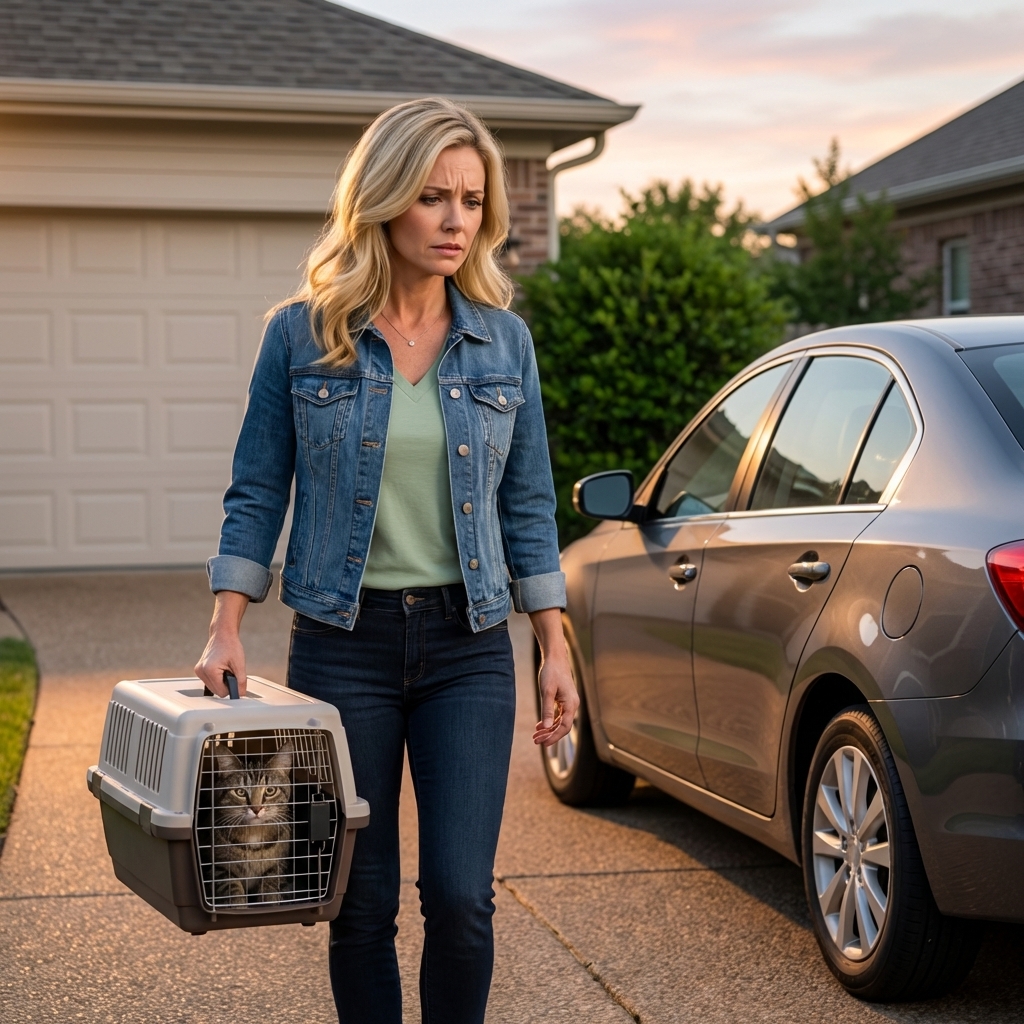
Transport tip: Keep your cat in a carrier with a towel, keep the car quiet, and avoid unnecessary handling. Stress can worsen breathing difficulty.
When to call your vet
- Resting rate 31 to 39 and your cat is comfortable: call your veterinarian for advice and plan a same-day visit if it persists or keeps trending upward.
- Over 30 repeatedly during sleep or true rest: book an appointment soon, even if your cat seems otherwise normal.
- Any increased effort (not just a higher number): treat as urgent.
What your vet may check
Your vet will focus on stabilizing breathing first, then finding the cause. Depending on the situation, they may recommend:
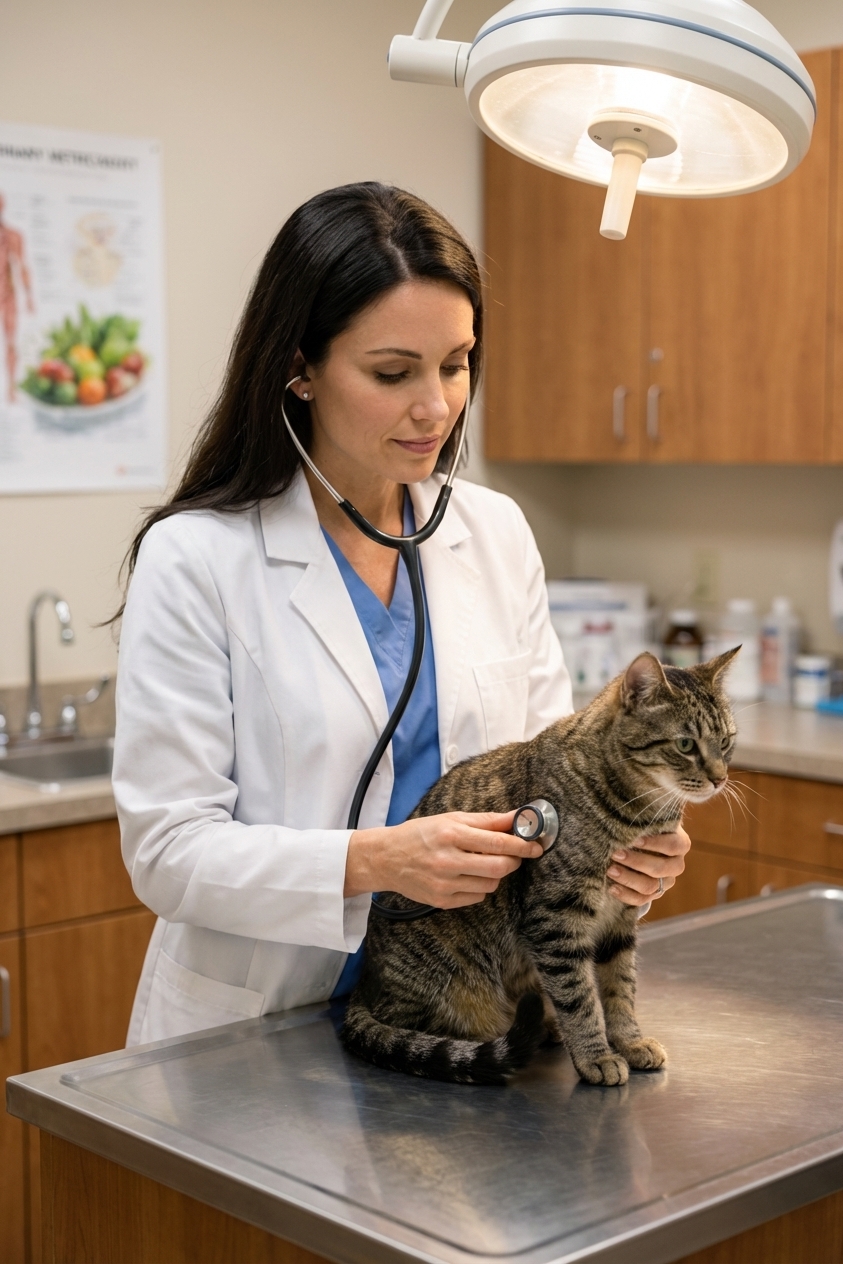
- Physical exam and listening to the heart and lungs
- Pulse oximetry to check oxygen levels
- X-rays to look for asthma patterns, pneumonia, fluid, or an enlarged heart
- Ultrasound for heart evaluation or fluid assessment
- Bloodwork to check infection, anemia, organ function, and inflammation
- Heartworm testing in appropriate cases (cats can be affected, even indoors)
If fluid is present around the lungs, removing it can quickly relieve breathing effort and also helps the vet test the fluid to find the underlying cause.
Frequently asked questions
My cat is breathing fast but acting normal. Should I still worry?
It depends on the number and whether it persists. If your cat’s resting rate is repeatedly over 30, or it is climbing over time, it is worth a veterinary call even if they are otherwise acting okay.
Is fast breathing ever normal after play?
A brief increase after intense play can be normal, but it should settle down quickly once they rest. Fast breathing that persists after mild activity is not normal and should be checked.
Can purring make it look like my cat is breathing fast?
Yes. Purring can make chest movement harder to interpret. Try counting while they are asleep, or take a video for your vet.
The bottom line
Fast breathing in cats is one of those symptoms that deserves attention. Sometimes it is stress or heat. Other times, it can be asthma, infection, heart disease, fluid around the lungs, or toxin exposure.
If you do one thing today, make it this: count your cat’s resting breaths and watch for effort. If you see open-mouth breathing at rest, blue or pale gums or tongue, obvious distress, or a resting rate above 40, please head to emergency care right away.
You know your cat best. If something feels off, trust that instinct and reach out to your veterinarian.