A veterinary-assistant guide to stopping cat biting: identify the cause, handle bites safely in the moment, prevent play and petting bites, rule out pain, an...
Article
•
Designer Mixes
Why Is My Cat Biting Me All of a Sudden?

Shari Shidate
Designer Mixes contributor
When a cat starts biting “out of nowhere,” it can feel personal. In my experience as a veterinary assistant, it is rarely about spite. New or unexpected biting is usually communication. Your cat is using teeth to communicate because other signals did not work or because something changed in their body, environment, or routine.
The key is to look for patterns and respond with calm, consistent care. Let’s walk through the most common reasons, what to do in the moment, and when it is time to call your veterinarian.
Types of biting
Not all bites mean the same thing. Paying attention to context helps you choose the right fix.
- Play biting: Often happens during high-energy moments, especially with hands or feet moving under blankets.
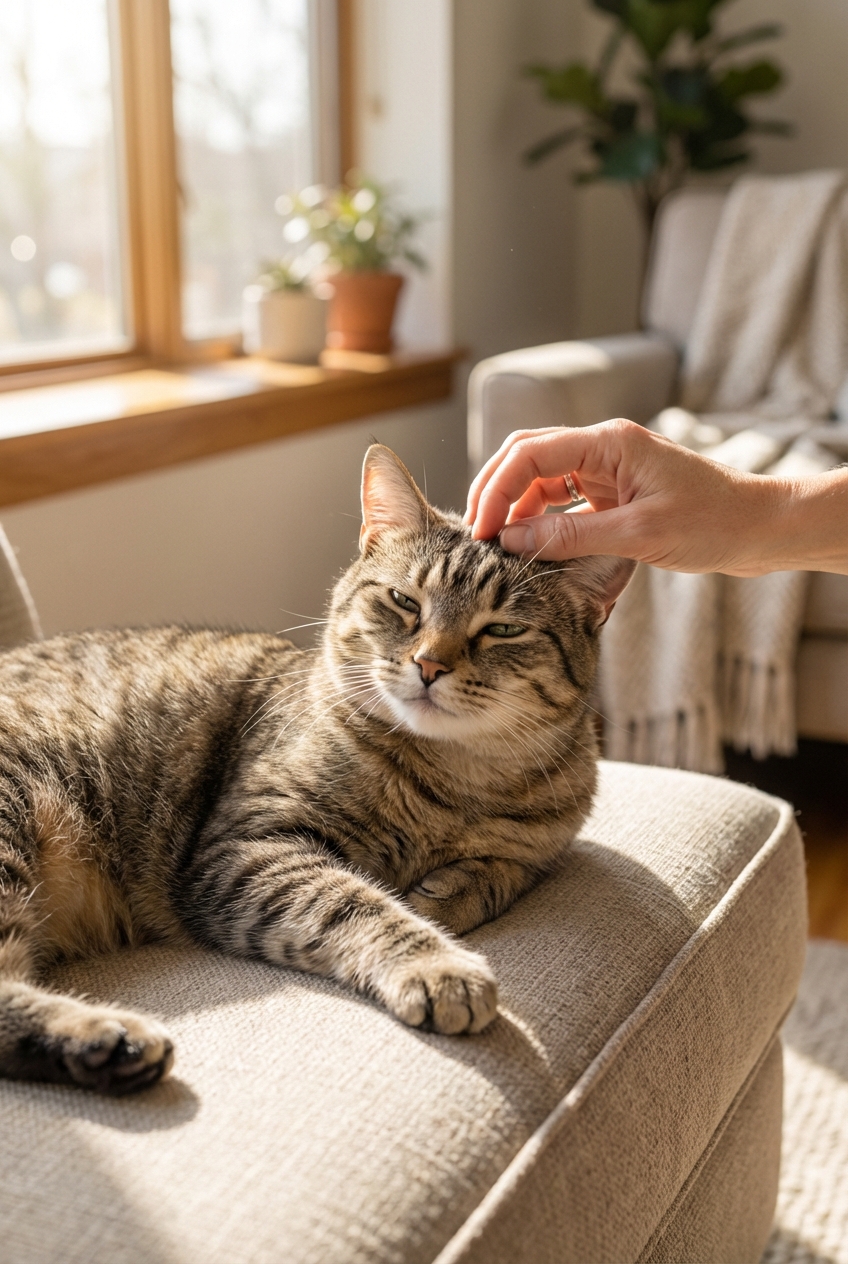
- Petting-induced biting: Starts as cuddles, then your cat suddenly grabs and bites as if they have “had enough.”
- Fear or defensive biting: Triggered by startling, handling, pain, or feeling cornered.
- Pain-related biting: Touching a sore area, jumping up, being picked up, or grooming may set it off.
- Overstimulation or stress biting: Happens when your cat’s nervous system is overloaded, often due to noise, changes, other pets, or boredom.
Common reasons for new biting
1) Overstimulation during petting
Cats can enjoy affection but still have a low threshold for touch in certain areas. Some cats tolerate only a few seconds of petting before the sensation becomes irritating.
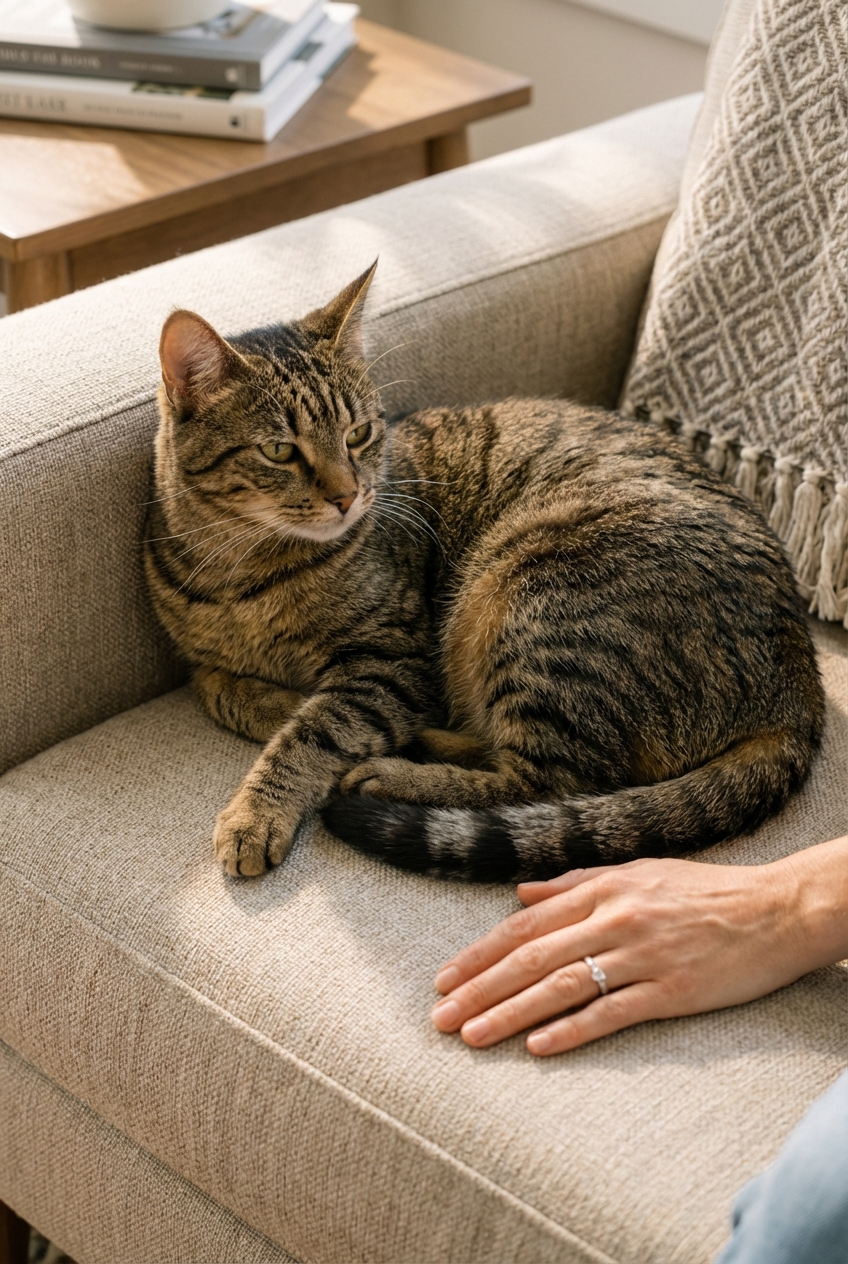
Clues: Skin twitching, tail swishing, ears rotating back, sudden stillness, dilated pupils, looking back at your hand.
What helps: Keep petting sessions short, focus on “safe zones” (often cheeks, chin, behind the ears), and stop before your cat hits their limit.
2) Rough play and “hand training”
If your cat learned that hands are toys, biting is a normal part of their play script. This can intensify as a young cat matures, if an indoor cat is bored, or if a household routine changes.
Clues: Stalking, pouncing, bunny-kicking, grabbing your arm or ankle, biting then running off.
What helps: Switch to wand toys, kicker toys, and short structured play sessions. Teach that skin ends the game, toys keep it going.
3) Stress, anxiety, or environmental changes
Cats are sensitive to changes we may barely notice. New schedules, visitors, remodeling sounds, a new baby, a new pet, or even a new scent on you can increase arousal and lower bite thresholds.
Clues: Hiding more, increased vocalizing, more startle responses, changes in appetite or litter box habits, new irritability.
What helps: Predictable routines, more vertical space (cat trees, shelves), safe hiding spots, and giving your cat control over interactions.
4) Pain or medical issues
This is the big one to take seriously when biting is truly new. Cats may mask pain until it is harder to hide, and behavior shifts can be an early clue.
Common pain sources that can trigger biting:
- Dental disease, tooth pain, mouth ulcers
- Arthritis or joint pain (especially in adult and senior cats)
- Skin irritation, fleas, allergies
- Ear infections
- Urinary discomfort
- GI discomfort or nausea
Clues: Biting when you touch certain areas, reluctance to jump, changes in grooming, bad breath, drooling, head shaking, scratching ears, litter box straining, or new hiding.
If you are seeing any of these, a veterinary exam is the safest next step.
5) Redirected aggression
This happens when your cat gets “revved up” by something they cannot reach, like a cat outside the window, and then bites the closest thing, sometimes you.
Clues: Intense staring at a window, puffed tail, growling, a bite when you approach, especially after a triggering event.
What helps: Give space, block the trigger if possible, and avoid handling until your cat fully decompresses.
6) Hormones or brain-related changes (less common, but important)
In some cats, hormones can contribute to behavior shifts. Intact cats may be more prone to roaming, conflict, and agitation. In older cats, new aggression can rarely be linked to cognitive decline or neurologic disease. I do not include this to alarm you, only to underline why a true behavior change deserves a checkup.
What to do in the moment
- Pause and go still, then slowly disengage. Jerking your hand away can trigger chasing and harder bites.
- Do not yell or punish. Punishment increases fear and can escalate aggression over time.
- Create space. If you can, place a pillow, folded blanket, or cushion between you and your cat, then calmly step away.
- Redirect from a distance. Toss a treat away from you or slide a toy across the floor to shift focus without putting your hands near their mouth.
- End the interaction for 5 to 10 minutes. Think of it as giving your cat’s nervous system time to reset.
If you were bitten hard enough to break the skin, wash immediately with soap and running water.
Call a human healthcare professional promptly if the bite is on the hand or fingers, is a deep puncture, you are immunocompromised, or you notice swelling, worsening pain, pus, red streaks, or fever. Cat bites can become infected quickly.
Prevention habits vets recommend
Teach consent-based petting
Try a “3-second rule.” Pet your cat for about three seconds, then pause and see what they do.
- If your cat leans in, purrs, or rubs, continue.
- If they look away, tense, or tail-swish, stop.
Upgrade play
Many “out of nowhere” bites are really unmet play needs.
- Do 2 to 3 play sessions daily, 5 to 10 minutes each.
- Use a wand toy to mimic prey: stalk, chase, pounce, catch.
- End with a small meal or a few treats to complete the “hunt-eat-groom-rest” cycle.
Make your home more cat-friendly
- Add vertical territory: cat trees, window perches, shelves.
- Create safe hiding spots in quiet rooms.
- Place scratching posts near sleeping areas and main rooms.
- Use puzzle feeders for indoor enrichment.
Lower overall stress
If you suspect anxiety, talk with your veterinarian about environmental support and behavior plans. In clinic, we often start with simple routine changes and enrichment, and some cats also benefit from pheromone diffusers. The goal is lowering overall arousal so your cat has a bigger buffer before they bite.
What not to do
- Do not use your hands as toys. It teaches your cat that skin is fair game.
- Do not scruff, pin, or physically “dominate” your cat. This can increase fear and make biting worse.
- Avoid spray bottles or loud corrections. They may stop behavior in the moment, but often increase anxiety and damage trust.
- Do not force affection. If your cat walks away, let them.
Kids and household safety
If there are children in the home, supervise all interactions and set clear rules: no chasing, no picking up, and no hugging. During high arousal times (zoomies, visitors, loud events), give your cat a quiet room or gated space with food, water, and a litter box so everyone stays safe.
When to call the vet
Because sudden behavior changes can signal pain or illness, please schedule an exam if you notice any of the following:
- Biting started abruptly in an adult or senior cat
- Your cat bites when picked up or when a specific area is touched
- Changes in appetite, drinking, weight, grooming, or sleep
- Bad breath, drooling, pawing at the mouth, or dropping food
- Litter box changes, straining, crying, or accidents outside the box
- Hiding, limping, reduced jumping, or stiffness
- Hissing, growling, or aggression that is escalating
It is always okay to advocate for pain screening. Cats can be subtle about discomfort, and a simple exam can uncover dental disease, arthritis, or skin issues that are very treatable.
A gentle reset plan
- Track patterns for 3 days. Note time of day, triggers, and what happened right before the bite.
- Switch all hand play to toy play. Keep wand toys handy and retire “wrestling hands.”
- Shorten petting sessions. Pause often and respect “I’m done” signals.
- Add one enrichment upgrade. A window perch, a puzzle feeder, or a new scratching post.
- Book a vet visit if this is truly new. Especially for adult and senior cats, assume pain until proven otherwise.
Your cat is not being “bad.” They are communicating a need. When you listen closely, most biting problems become solvable and your bond gets stronger, not weaker.