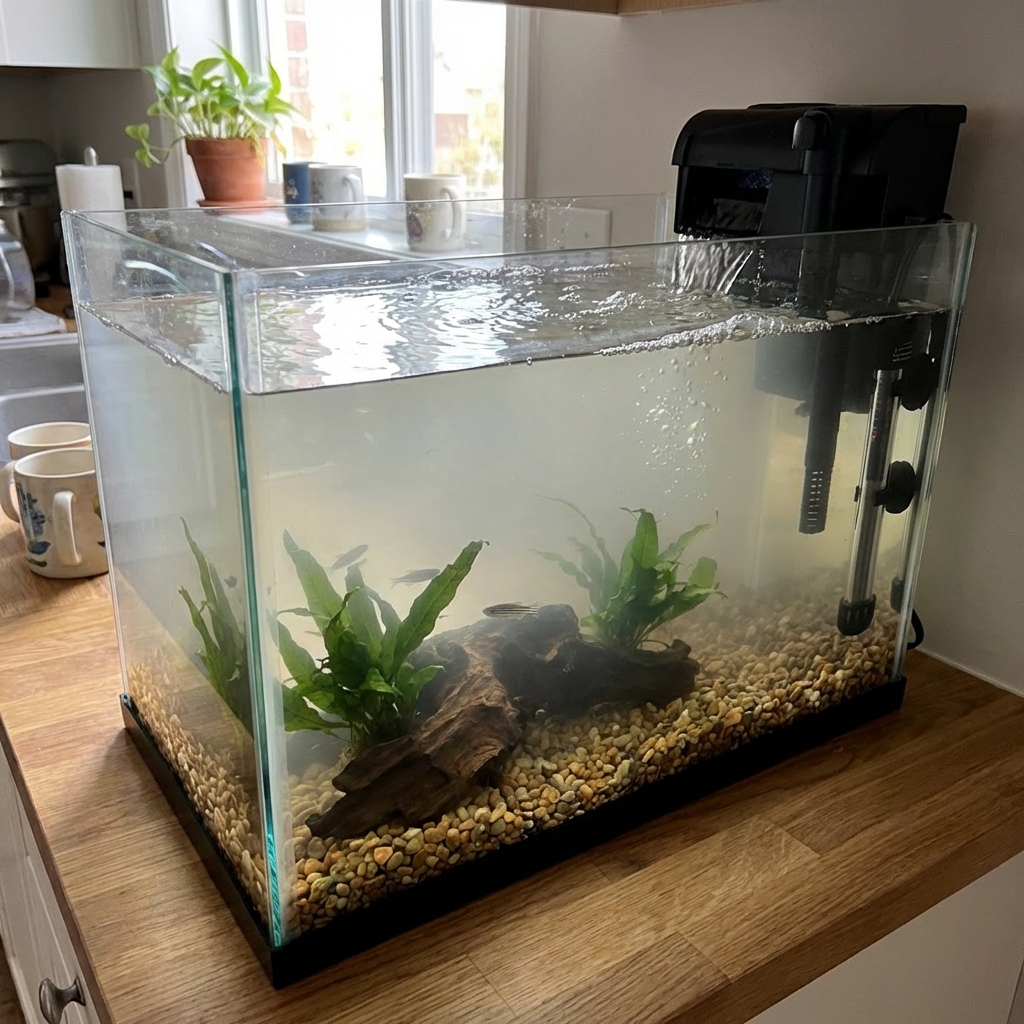
Cloudy aquarium water? Use color clues to find the cause, then test ammonia and nitrite, do safe water changes, boost filtration and aeration, and stop haze ...
Article
•
Designer Mixes
Why Is My Aquarium Cloudy?

Shari Shidate
Designer Mixes contributor
A cloudy aquarium can feel alarming, especially when the tank sits right in the middle of family life where everyone can see it. The good news is that most cloudy water has a simple, fixable cause. With a little detective work, you can usually clear it up quickly and keep your fish and plants safe.

First, what kind of cloudy is it?
Cloudy water is not one single problem. The color, timing, and what you did recently tell you a lot.
- Milky white or gray haze: often a bacterial bloom or fine particles from new substrate.
- Green water: typically free-floating algae driven by excess light and nutrients.
- Brown or tea-colored water: tannins from driftwood or certain botanicals.
- Cloudy after you cleaned or stirred gravel: debris kicked up, a filter flow or media issue, or both.
Quick match: White + new tank or filter disruption usually points to a bloom. White + you just stirred the bottom usually points to sediment. Green points to algae. Brown points to tannins.
If you can match your tank to one of these, you are already halfway to the solution.
Very common: bacterial bloom (new or disrupted tanks)
If your tank is new, or you recently replaced filter media, did a deep clean, or added a lot of new fish, a bacterial bloom is a top suspect. This looks like a cloudy, milky haze and can appear suddenly.
Why it happens
Aquariums rely on beneficial bacteria to process fish waste. When the biological filter is immature or disrupted, fast-growing bacteria can multiply in the water column. It looks bad, but it is often part of the tank settling into balance.
What to do (safe, family-friendly steps)
- Test your water today: ammonia and nitrite should be 0. For nitrate, aim as low as practical. Many community tanks target under about 20 to 40 ppm, depending on stocking, plants, and maintenance.
- Do a partial water change if ammonia or nitrite are above 0: 25 to 50% using dechlorinated, temperature-matched water.
- Boost oxygen: add an airstone or increase surface agitation, especially if fish are breathing faster than normal. Blooms and decaying waste can reduce available oxygen.
- Stop overfeeding: offer a small amount the fish finish quickly. Remove uneaten food. Some fish do better with multiple small feedings, but during a cloudy-water phase it is safer to keep portions modest.
- Do not replace all filter media: that removes the helpful bacteria you need. If you must clean it, rinse media gently in old tank water, not tap water.
- Be patient: many blooms clear in a few days to a week once the nitrogen cycle catches up.

Green cloudy water: free-floating algae
Green water is usually not dangerous in the short term, but it is a sign your tank has extra light, extra nutrients, or both. If it gets very dense, it can reduce visibility and contribute to oxygen swings (often lowest overnight and early morning). Good aeration helps.
Common triggers
- Too many hours of light (including sunlight from a window)
- High nitrate and phosphate from overfeeding or infrequent water changes
- New tanks that are still balancing
How to clear it
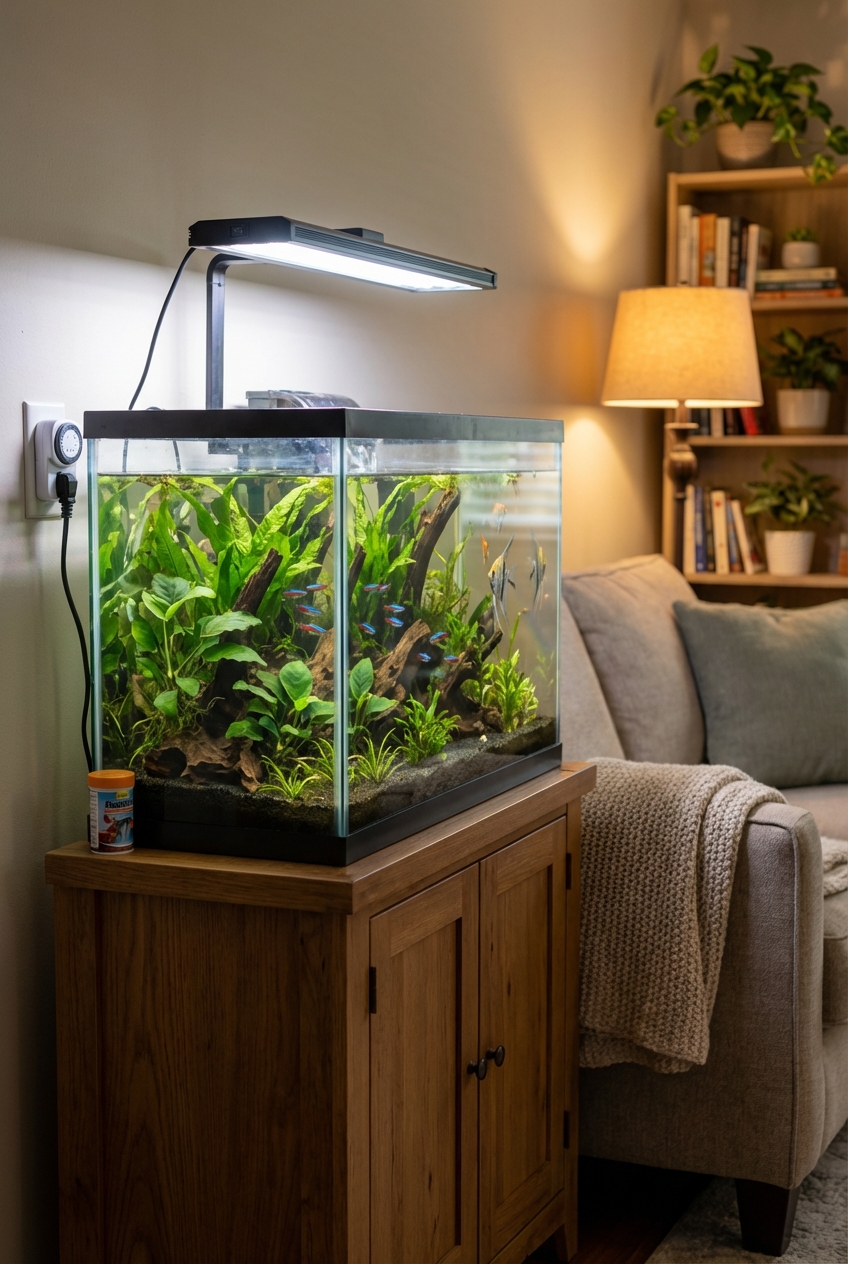
- Reduce light: aim for 6 to 8 hours a day for planted tanks, often less for non-planted tanks. Use a timer so the whole family can follow a consistent routine.
- Avoid direct sun: move the tank away from windows if possible.
- Step up maintenance: weekly 25 to 40% water changes and gravel vacuuming to remove waste.
- Increase aeration: more surface movement can help fish handle oxygen dips while you bring algae under control.
- Consider a UV sterilizer: it is one of the fastest ways to clear green water because it targets algae in the water column.
Cloudy after setup: substrate dust and microbubbles
If the tank is brand new and you just added sand or gravel, cloudiness may be simple sediment. Fine sand can take time to settle, and filters need time to catch it.
What helps
- Run fine filtration: add filter floss or a polishing pad (fine filter media) temporarily to trap tiny particles.
- Let things settle: avoid repeatedly stirring the bottom while the filter clears the water.
- Check for microbubbles: tiny bubbles from new plumbing, airstones, or a loose intake can make the water look hazy. Adjust connections and give it a day or two.
- For next time: rinse new substrate thoroughly (when appropriate for the material) before adding it to reduce dust.
Cloudy in an established tank: fine debris and filtration
If your tank has been running for a while and suddenly looks hazy (especially after cleaning, heavy feeding, or a filter slowdown), the issue may be suspended debris that is not getting captured.
What to check
- Filter flow: if the flow has dropped, the intake, impeller, or sponge may be clogged.
- Mechanical filtration: add a thin layer of filter floss (fine filter media) to catch particles, and replace it as it clogs.
- Gravel vacuuming: vacuum a portion of the substrate each week rather than doing an aggressive, all-at-once deep clean.
- Avoid total clean-outs: do not wash gravel decor or filter media in tap water. It can kill beneficial bacteria and trigger a cycle wobble.
Brown water: tannins from driftwood
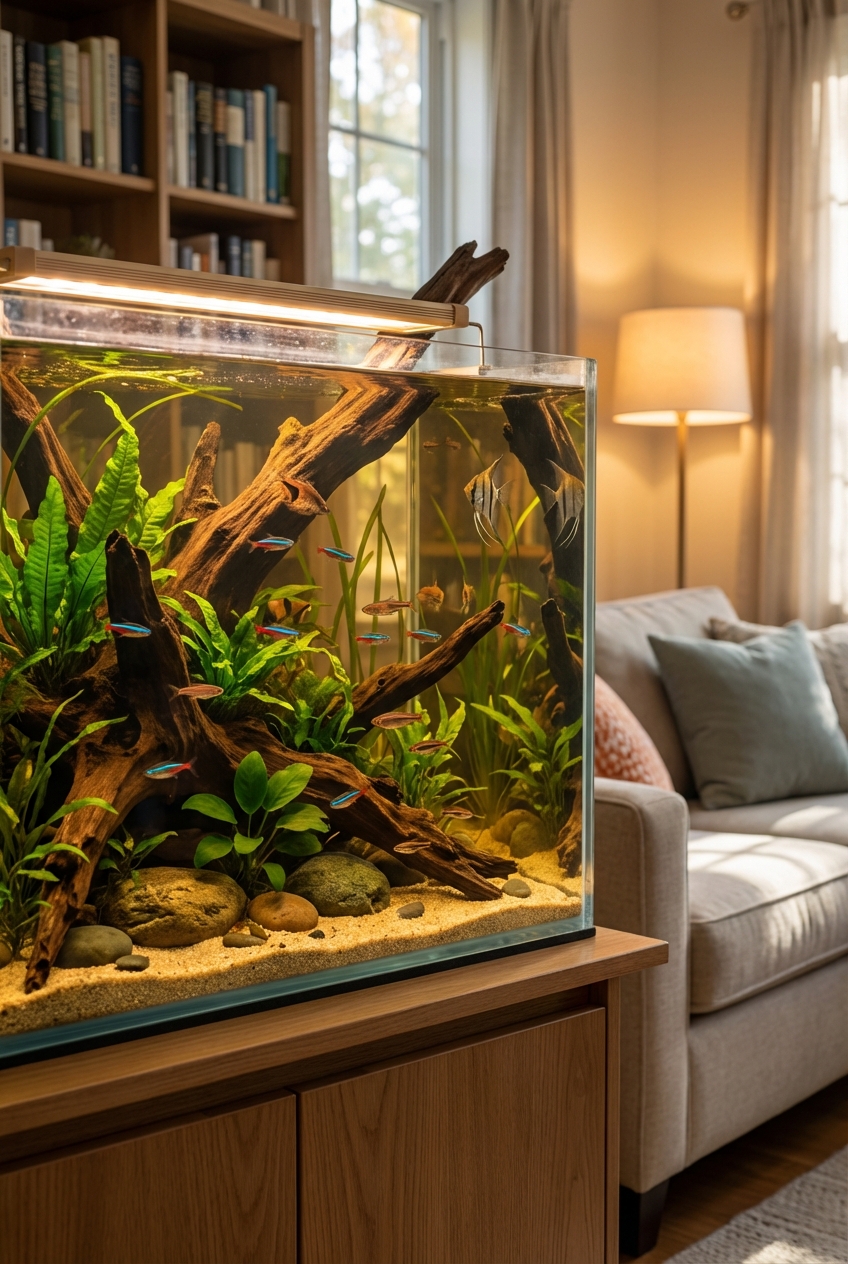
Brown or tea-colored water is usually from tannins released by driftwood or leaf litter. This is often harmless and can even be beneficial for some species, but many families prefer a crystal-clear look.
Clearing tannins
- Soak driftwood first: soaking for days or weeks (and changing the water) can reduce tannins. Some people also pre-boil driftwood, but only if it is safe for the wood type and size.
- Use activated carbon: run it in the filter for a few weeks.
- Keep up with water changes: 25 to 30% weekly until the tint fades.
Red flags: when cloudy water is urgent
Most cloudiness is cosmetic, but sometimes it is a warning sign that water quality is unsafe.
Act fast if you see any of these
- Fish gasping at the surface (especially early morning)
- Fish clamped fins, lethargy, or sudden hiding
- Strong rotten smell
- Ammonia or nitrite above 0 on a liquid test kit
Quick response
- Do a large partial water change: 40 to 50% with dechlorinated, temperature-matched water. If ammonia or nitrite are very high, you may need back-to-back partial changes. Re-test between changes so you know where you stand.
- Increase aeration: add an airstone or point the filter output toward the surface.
- Pause feeding: for 24 to 48 hours.
- Check the basics: confirm the filter is running and the heater is holding steady temperature.
Cloudy water plus stressed fish is a water-quality problem until proven otherwise. Testing takes the guesswork out of it.
A simple clear-water routine
If you want a tank that looks good without becoming a second job, consistency beats intensity. Here is a routine many households can keep up with:
- Daily: quick look at fish behavior, check temperature, feed lightly.
- Weekly: test water, 25 to 35% water change, gently vacuum a portion of the substrate.
- Monthly: rinse filter sponge or media in old tank water (only if flow is reduced), wipe algae from glass.
- Every 6 to 12 months: replace bulbs if using older light types, inspect hoses and impellers.
And one of my favorite practical tips: keep a small tote with your dechlorinator, siphon, algae scraper, and towels together. When supplies are easy to grab, maintenance actually happens.
FAQ
Will cloudy water hurt my fish?
Not always. Sediment and tannins are usually harmless. A bacterial bloom can be harmless if ammonia and nitrite are 0 and fish are breathing normally. If ammonia or nitrite are elevated, or fish are gasping, that is when fish are at real risk.
Should I do a 100% water change to fix it?
No. Big, complete water changes can shock fish and can slow the tank’s biological stability. Targeted partial changes plus testing are safer and more effective.
Do water clarifiers work?
Some do by clumping particles so the filter can catch them. They can be helpful for sediment, but they do not fix the underlying cause of bacterial blooms, algae, or water quality issues. Use them as a tool, not a shortcut.