Worried about a vomiting dog? Learn when vomiting is an emergency, how to offer small sips safely, and the best bland foods (chicken/rice, turkey, pumpkin, e...
Article
•
Designer Mixes
Why Dogs Throw Up: Must-Know Facts

Shari Shidate
Designer Mixes contributor
Watching your dog vomit can feel scary, and it is one of the most common reasons pet parents call a clinic. The good news is that many episodes are brief and pass quickly. The important part is knowing what’s normal, what’s not, and when to get help.
Vomiting vs. regurgitation
These two can look similar, but they can point to different problems.
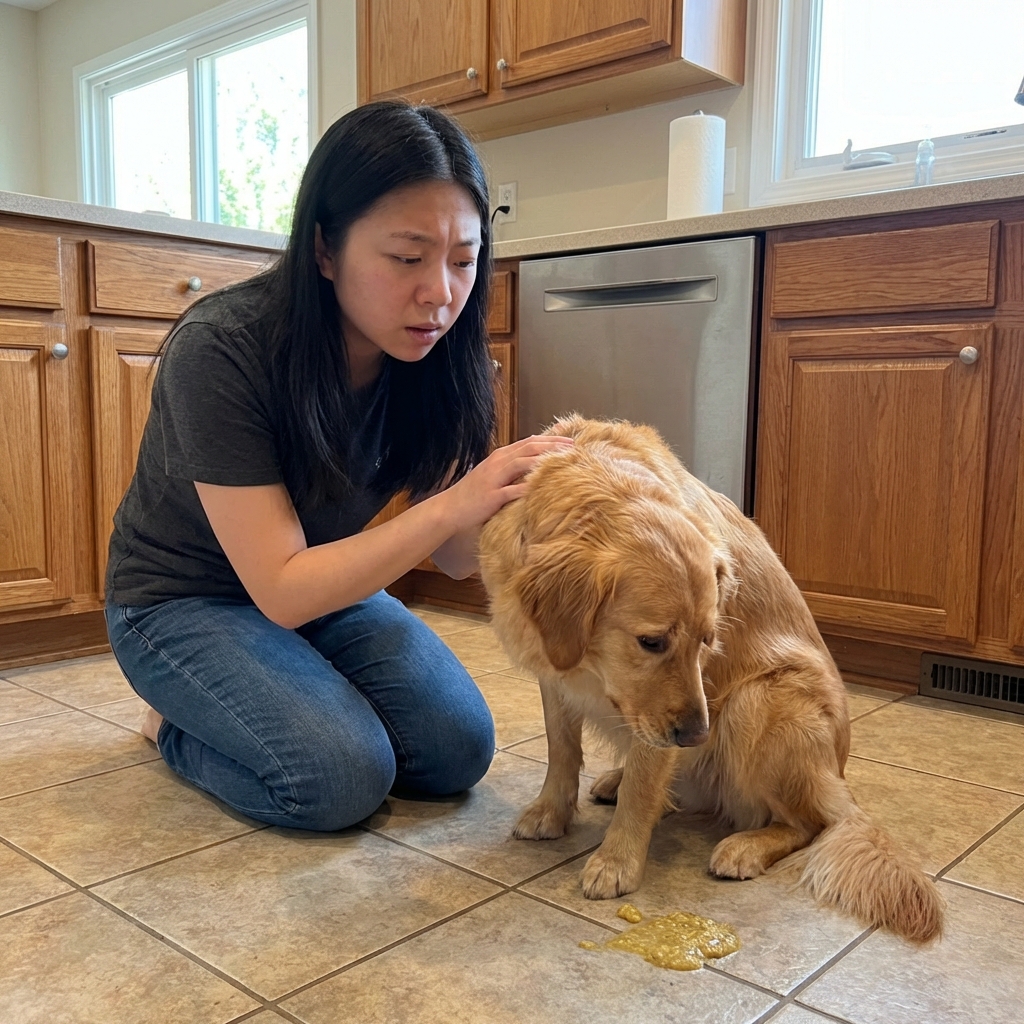
- Vomiting is usually active. You may see drooling, lip licking, gagging, retching, and belly contractions. The material may include partially digested food, foam, or bile.
- Regurgitation is more passive. Food or liquid seems to come back up with little effort, often shortly after eating, and it may look undigested or tube-shaped. This can suggest an esophagus issue rather than a stomach issue.
Why it matters: regurgitation can raise the risk of aspiration (breathing material into the lungs). If your dog regurgitates and then coughs, breathes faster than normal, seems unusually tired, or has noisy breathing, call a veterinarian promptly.
If you are not sure which it is, try to note what you saw right before it happened and share that with your veterinarian. Details really help.
Common mild causes
In many homes, a dog’s stomach can get upset for simple reasons. These are common patterns veterinary teams see.
Eating too fast
Dogs that inhale food can bring it right back up. Slow feeders, puzzle bowls, or splitting meals into smaller portions can help.
Diet changes
A sudden switch in food, treats, chews, or table scraps can irritate the gut. Transition over 7 to 10 days when possible.
Dietary indiscretion
Trash, fatty foods, lawn clippings, and mystery items are classic triggers. Some dogs recover quickly, but others can develop complications such as pancreatitis or an intestinal blockage.
Motion sickness or stress
Car rides, boarding, moving, or a new schedule can cause nausea. Stress may also contribute to reflux in some dogs.
Grass, hair, and small non-food items
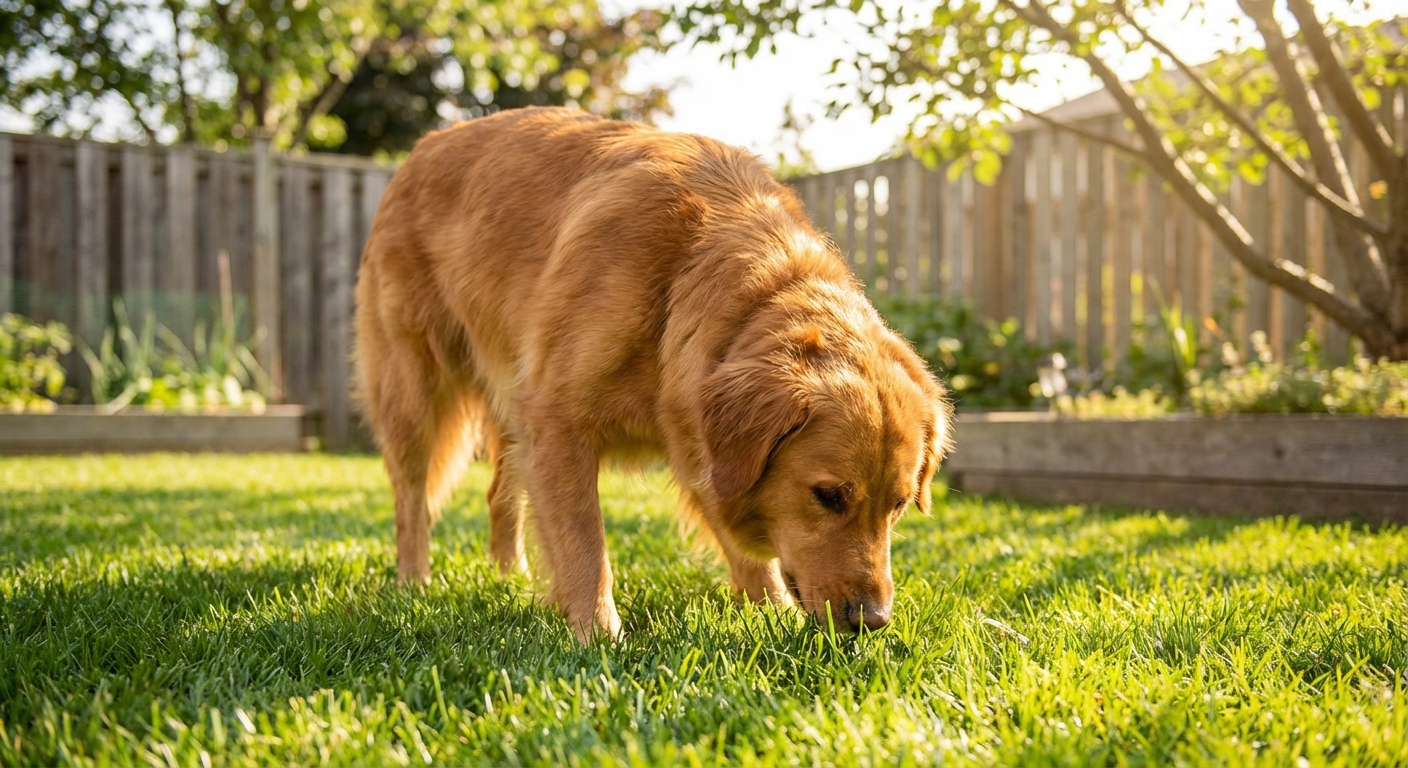
Some dogs vomit after eating grass. Occasional grass vomiting can be benign, but repeated episodes should be evaluated, especially if your dog is eating grass constantly or seems nauseated.
What vomit can suggest
Vomit appearance is not a diagnosis by itself, but it can offer helpful clues when paired with your dog’s behavior, appetite, and energy level. If you can, take a photo to show your veterinarian.
- Foamy white vomit: Often stomach irritation, reflux, or vomiting on an empty stomach.
- Yellow or green liquid: Usually bile, commonly seen when the stomach is empty or with reflux. If it is frequent, it is worth a vet call.
- Undigested food: Can happen with fast eating, overeating, regurgitation, or stomach upset.
- Blood: Fresh red streaks can occur from irritation, but any blood should be taken seriously. Coffee-ground material can indicate digested blood.
- Foreign material: Bits of toys, fabric, bone, corn cob pieces, or rocks raise concern for blockage.
- Foul odor with diarrhea: Can be seen with infection, parasites, dietary indiscretion, or pancreatitis. Odor alone is not diagnostic.
Safety note: do not try to induce vomiting unless a veterinarian or pet poison control tells you to. It can be dangerous with certain toxins or objects.
Red flags: get urgent help
Vomiting becomes urgent when it is paired with signs of dehydration, pain, toxin exposure, or possible obstruction.
- Vomiting multiple times in a day, or vomiting that continues beyond 12 to 24 hours
- Can’t keep water down
- Bloated, hard abdomen or signs of belly pain
- Retching with little or no vomit produced (especially in deep-chested breeds, concern for bloat)
- Weakness, collapse, pale gums, or trouble breathing
- Blood in vomit or black, tarry stool
- Known or suspected toxin exposure (xylitol, grapes or raisins, chocolate, onions or garlic, medications including NSAIDs like ibuprofen or naproxen, rodent bait, antifreeze, marijuana products, certain mushrooms)
- Possible foreign body (missing toy pieces, string, socks, corn cobs)
- Puppies, seniors, very small dogs, brachycephalic breeds, or dogs with chronic disease (kidney disease, diabetes, Addison’s disease) vomiting at all can warrant faster care
- History of prior GI surgery or previous foreign body obstruction
If any of these apply, call your veterinarian or an emergency clinic right away.
Home care (when it seems mild)
If your dog vomits once, then acts normal, has normal energy, and wants to eat, you can often monitor closely at home. If you are unsure, it is always okay to call your vet for guidance.
When not to try home care
- Suspected toxin exposure
- Suspected foreign object (or you are missing a toy piece, sock, string, or chew)
- Repeated retching or a swollen, painful belly
- Repeated vomiting, severe lethargy, or your dog cannot keep water down
- Puppies, seniors, or dogs with significant medical problems
Step 1: Pause and assess
- Is your dog bright, alert, and comfortable?
- Is there diarrhea, lethargy, fever, or belly pain?
- Any chance they ate a toxin or a non-food object?
Step 2: Offer small sips of water
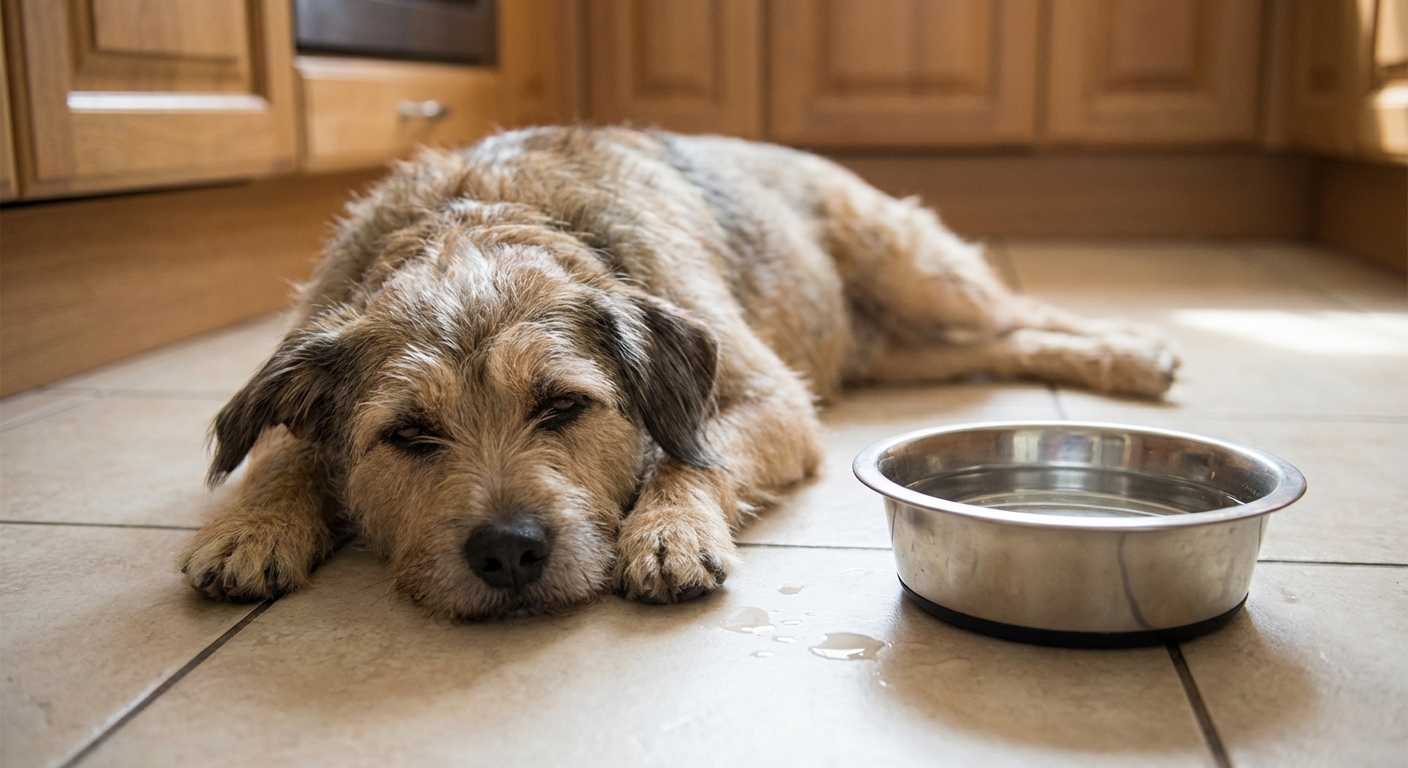
Dehydration is a big risk with vomiting. Offer small amounts frequently. If your dog gulps and vomits again, pause and call your vet.
Step 3: Feed a bland diet in small portions (only if appropriate)
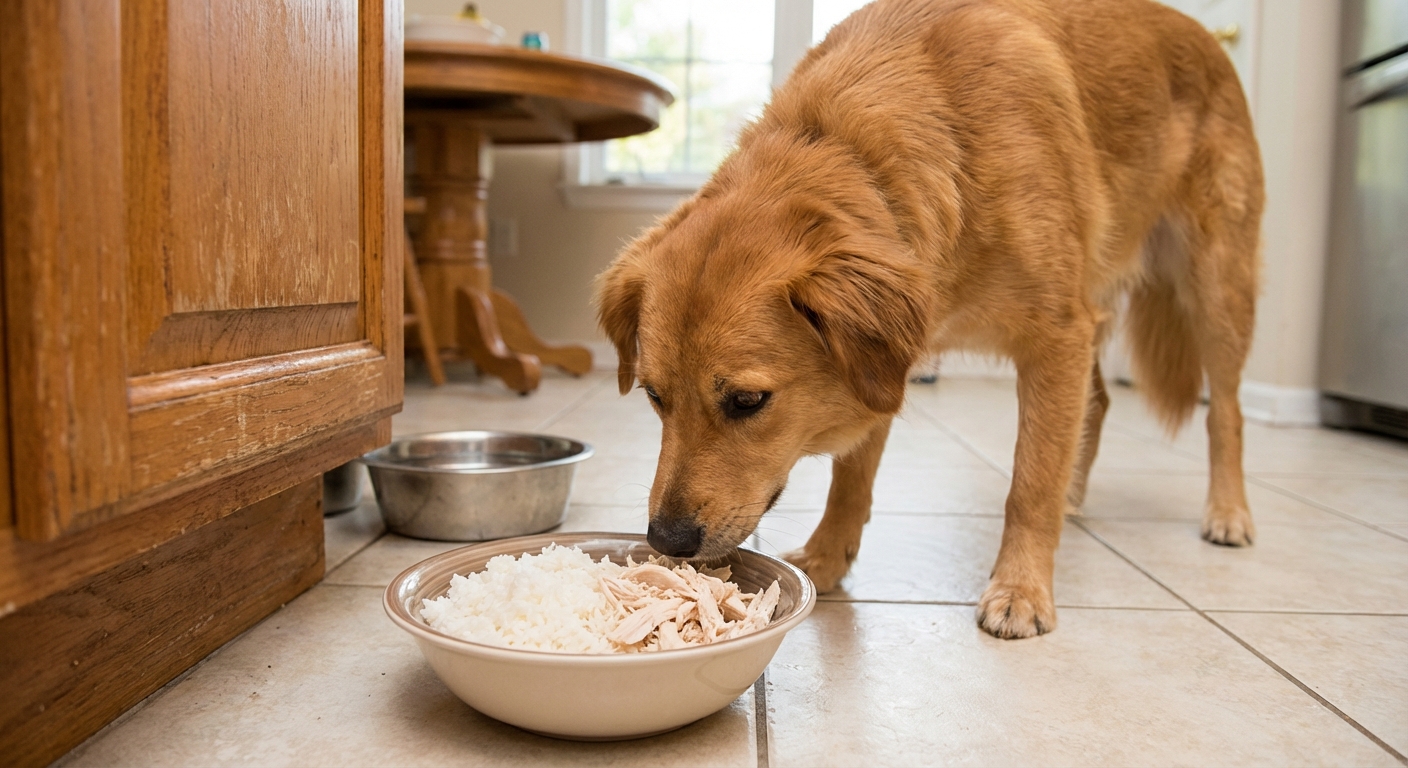
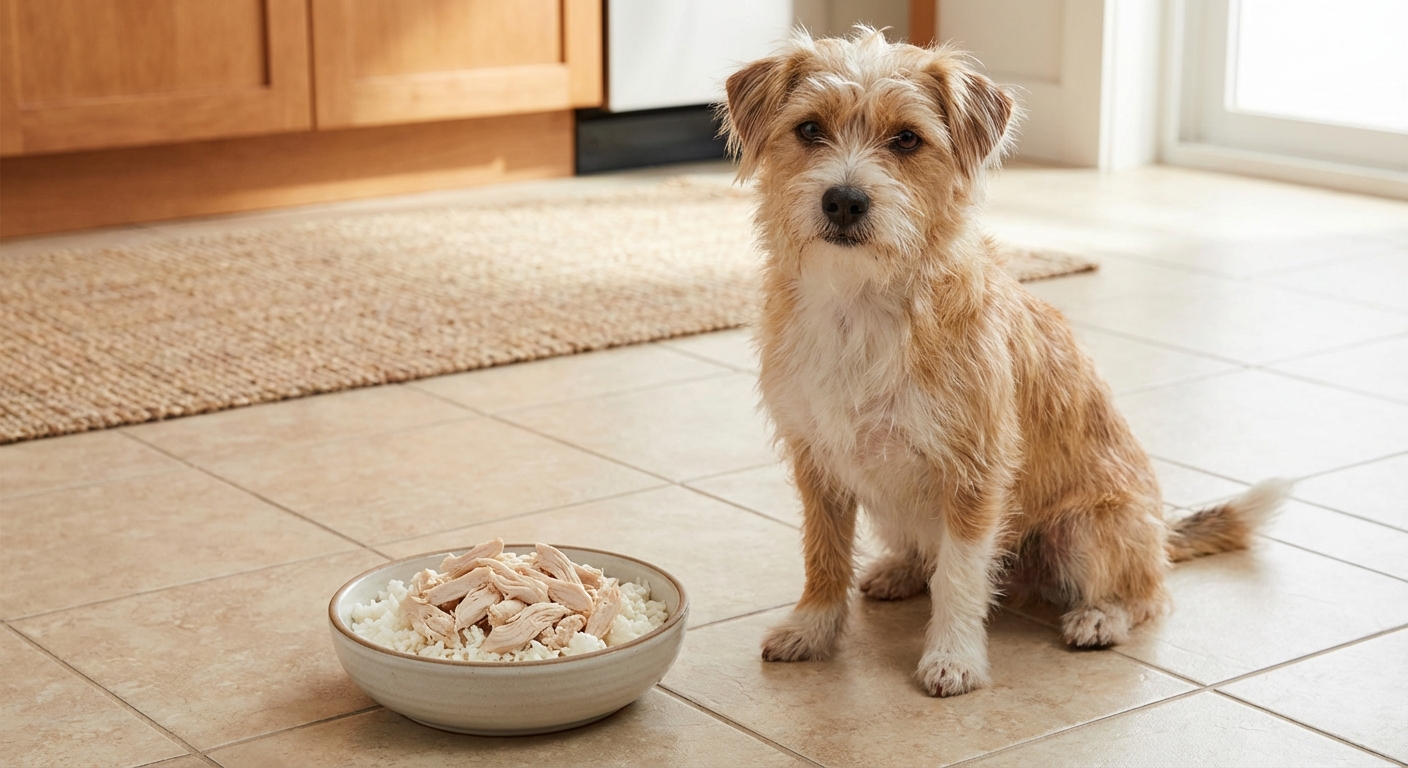
Many clinics recommend a short bland-diet plan for mild stomach upset, such as boiled chicken or turkey with white rice in small meals. Avoid fatty foods. Do not force eating.
Important: some dogs do better on a prescription gastrointestinal diet, and some are sensitive to chicken or certain proteins. Your veterinarian can tell you what is safest for your dog and how much to feed.
Step 4: Avoid human OTC meds
Do not give Pepto-Bismol (bismuth), ibuprofen, naproxen, acetaminophen, or other human medications unless your veterinarian specifically instructs you. Some can be toxic to dogs or can mask important symptoms.
Step 5: Keep a simple log
- Time of vomiting
- What it looked like
- Meals, treats, chews, and any new foods
- Energy level, appetite, water intake
- Stool quality and frequency
This information helps your veterinarian decide whether you can continue monitoring or need an exam.

How vets find the cause
At the clinic, your veterinarian will typically start with a history and physical exam, then recommend tests based on your dog’s age, symptoms, and risk factors.
- Fecal test for parasites or Giardia
- Bloodwork to check hydration, infection markers, pancreas indicators, electrolytes, liver and kidney function
- X-rays to look for obstruction, bloat, or abnormal gas patterns
- Ultrasound for a closer look at stomach and intestines, and for pancreatitis or foreign bodies
- Parvovirus test in unvaccinated or under-vaccinated puppies with vomiting and diarrhea
Many dogs improve quickly with supportive care such as anti-nausea medication, fluids, and gut protectants, but the right plan depends on the cause.
Prevention tips
Not all vomiting is preventable, but these habits reduce common triggers.
- Switch foods slowly over 7 to 10 days.
- Use a slow feeder if your dog eats fast.
- Lock down trash and keep fatty leftovers out of reach.
- Choose safer chews and supervise. Avoid items that splinter or are easily swallowed in chunks.
- Stay current on parasite prevention and fecal checks as recommended by your veterinarian.
- Feed consistent meals. For dogs that vomit bile in the morning, a small bedtime snack may help, but ask your vet first.
- Introduce extras carefully. Plain pumpkin, a little cooked lean protein, or vet-approved probiotics can support digestion, but add anything new gradually.
If your dog’s vomiting is recurring, even if it looks mild, it deserves a veterinary visit. Chronic vomiting can be linked to food sensitivities, inflammatory bowel disease, pancreatitis, endocrine disease, or an ongoing dietary trigger.
Quick FAQ
Is it normal for a dog to throw up bile sometimes?
It can happen when the stomach is empty, especially early morning. If it is frequent, paired with appetite changes, or your dog seems nauseated often, schedule a vet check.
Should I withhold food after vomiting?
Some cases benefit from a short break from food, but guidance varies based on age, medical conditions, and what your dog may have eaten. When in doubt, call your veterinarian for a plan that fits your dog.
When should I worry about one episode of vomiting?
Worry more if your dog is a puppy or senior, cannot keep water down, may have eaten a toxin or foreign object, or seems painful, bloated, weak, or unusually quiet.