From boredom and stress to nausea, reflux, allergies, dental pain, and toxins—learn what excessive licking means, red flags to watch for, and safe steps to...
Article
•
Designer Mixes
Why Dogs Lick

Shari Shidate
Designer Mixes contributor
If you have ever thought, “Why is my dog licking everything?”, you are not alone. Dogs lick people, other pets, floors, furniture, and even the air. And while licking can be sweet (hello, puppy kisses), it can also be a clue about your dog’s emotions, health, or environment.
As a veterinary assistant, I like to remind pet parents of one comforting truth: most licking is completely normal. The key is learning when it is simple communication and when it is your dog asking for help.
Main reasons dogs lick
Licking is one of your dog’s built-in tools for exploring the world and connecting with you. Here are the most common reasons, with what they can look like in real life.
1) Affection and bonding
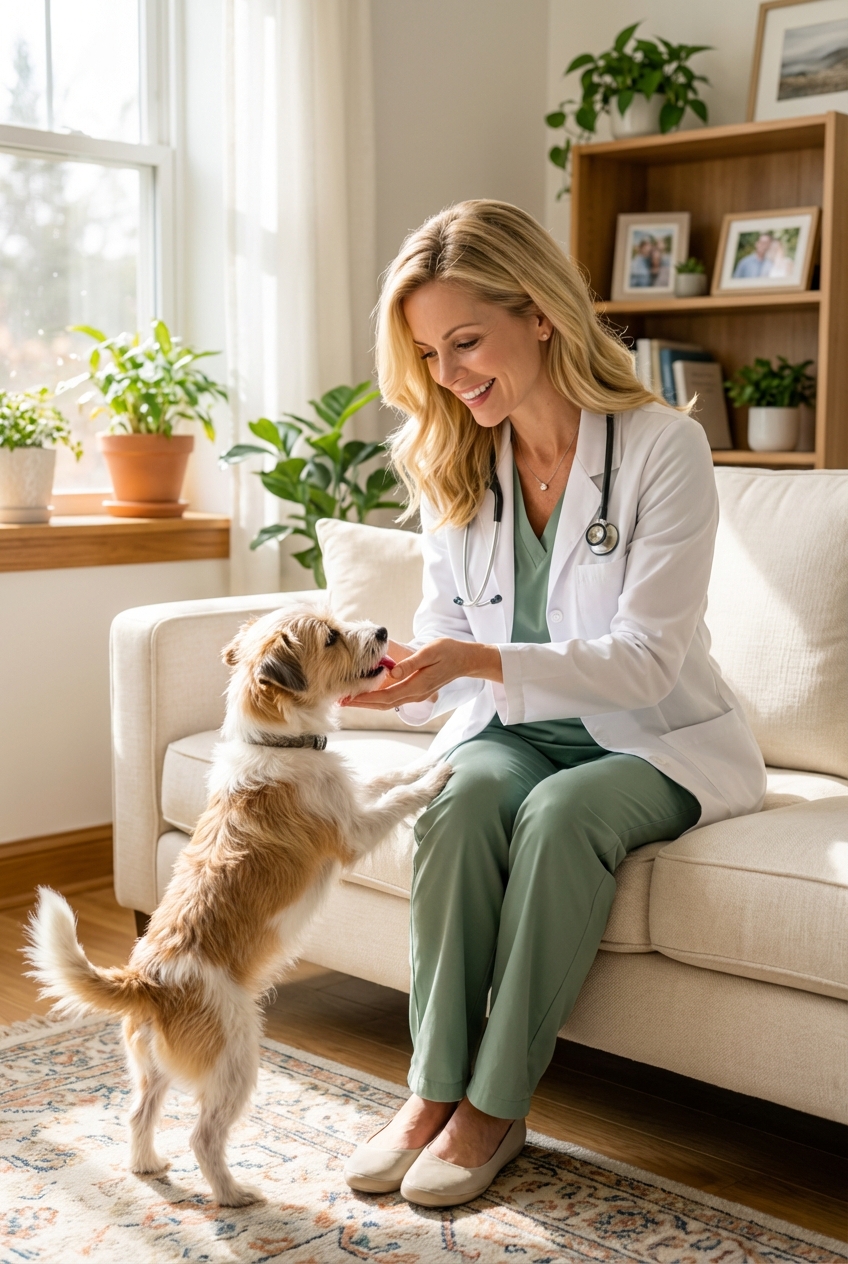
Many dogs lick because it is a friendly, social behavior. Puppies lick their mom, and adult dogs lick family members as part of bonding. If your dog’s body looks relaxed (soft eyes, loose posture, wagging tail), those licks are usually a sign of comfort and connection.
2) “You taste interesting”
Human skin is salty. If you just worked out, used scented lotion, or spilled a snack, your dog may be doing a simple taste-test. Dogs also use licking as a way to gather information about where you have been and what you have touched.
3) Attention and learned habits
Licking often works. If your dog licks and you laugh, pet them, talk to them, or even push them away, they may learn: “Licking makes humans respond.” Over time, that can turn into a habit.
4) Stress relief and self-soothing
Licking can help a dog calm down, similar to how some people fidget. You may see increased licking during thunderstorms, fireworks, visitors, travel days, or changes in routine.
Common stress-licking targets include paws, legs, blankets, and the couch.
5) Grooming and “pack care”
Dogs groom themselves by licking, and they may groom other pets too. A little grooming is normal. But frequent licking of one spot on the body can signal pain, itch, or infection.
6) Nausea, reflux, or tummy trouble
This one surprises many families. Lip licking, swallowing, drooling, and licking floors can be signs of nausea or acid reflux. That said, these signs are not exclusive to GI upset. Anxiety and oral pain can look similar, so it is worth paying attention to the full picture.
Some dogs lick grass, carpet, or tile when their stomach feels “off.”
7) Skin allergies or irritation
Environmental allergies, food sensitivities, fleas, dry skin, or contact irritation can all drive licking. Paw licking is especially common with seasonal allergies.
8) Pain in joints, mouth, or abdomen
Dogs sometimes lick the area that hurts. For example, a dog with arthritis may lick a front leg joint (carpus) or a back leg joint (stifle). Dental pain can also cause unusual licking, drooling, or face rubbing.
9) Compulsive licking and lick granulomas
Some dogs develop repetitive licking that becomes self-reinforcing, especially on the front legs. Over time, this can lead to a raised, irritated sore called an acral lick granuloma. These can be stubborn once established, so early help (medical and behavior support) really matters.
10) Changes in senior dogs
Older dogs can develop changes in memory and behavior. Repetitive licking, pacing, or staring can sometimes be part of canine cognitive dysfunction. It is worth a vet conversation, especially if the behavior is new.
11) Air licking and “licking at nothing”
Some dogs do occasional air licking when they feel uncertain. But frequent or sudden air licking can be nonspecific and may also be linked to nausea or reflux, oral pain, compulsive behavior, or (more rarely) neurologic issues. If it is new, escalating, or hard to interrupt, put it on your vet’s radar.
What licks can mean
Context matters. The same lick can mean different things depending on what happens right before and after.
- Quick lick, then looking away: often calming or polite communication.
- Slow, relaxed licking with cuddles: bonding and affection.
- Intense licking that is hard to interrupt: stress, nausea, itch, pain, or compulsive behavior.
- Licking only one paw or one patch of skin: injury, allergies, or infection are common.
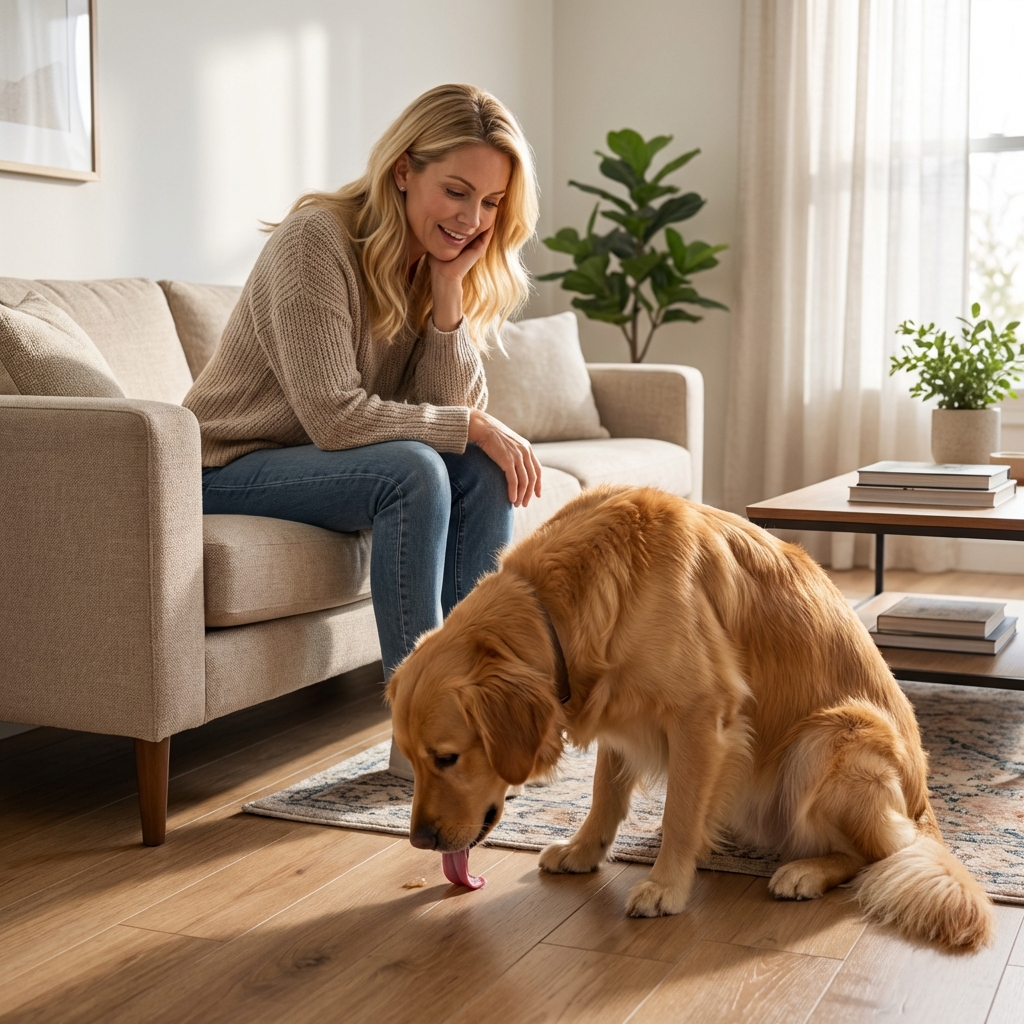
- Licking floors or objects repeatedly: can be boredom, anxiety, oral discomfort, or GI upset.
Normal or a red flag?
Usually normal
- Occasional licking during greetings or petting
- Short grooming sessions that do not irritate the skin
- Licking that stops easily when redirected with a cue or toy
Call your veterinarian if you notice
- Licking that causes hair loss, redness, sores, or a moist “hot spot”
- Sudden increase in licking with vomiting, diarrhea, appetite changes, or lethargy
- Repeated lip licking, swallowing, drooling, or licking the floor (possible nausea, anxiety, or oral pain)
- Swollen paws, limping, or sensitivity when you touch the area
- Bad breath, pawing at the mouth, reluctance to chew (possible dental pain)
- Nighttime restlessness or new repetitive behaviors in senior dogs
- New, frequent air licking, “licking at nothing,” or odd episodes that include staring, disorientation, or body twitches
Safety note: If your dog is licking up cleaners, essential oils, xylitol-containing products, medications, or anything toxic, treat it as urgent and contact your vet or a pet poison helpline immediately.
How to reduce excess licking
You do not have to punish licking to improve it. The goal is to meet the underlying need, then teach a replacement behavior.
Step 1: Rule out medical causes
If licking is new, intense, or focused on one body area, schedule a vet visit. Allergies, ear infections, parasites, pain, and GI issues are common, treatable triggers. Getting answers early can prevent chronic skin damage and stress for both of you.
Step 2: Meet the need behind it
- For boredom: add sniff walks, short training sessions, food puzzles, and toy rotation.
- For anxiety: create a calm routine, offer a quiet safe space, and consider behavior support.
- For itch: talk with your vet about flea prevention, allergy plans, and skin-friendly bathing routines.
- For nausea: your vet may recommend diet adjustments or medication after an exam.
Step 3: Teach a simple alternative
Pick an easy cue like “touch” (nose to hand), “sit,” or “go to bed.” When your dog starts licking, calmly cue the alternative, then reward right away with praise or a small treat. Keep rewards handy at first so your timing stays fast and clear. Over time, many dogs learn a more polite way to ask for attention.
If your dog is fixated on licking certain spots (like a couch corner or rug), management helps too. You can block access with a baby gate, cover the surface with a washable blanket, or offer a lick-safe enrichment option approved by your vet.
Step 4: Protect irritated skin while you heal the cause
If your dog is licking a spot raw, your vet might recommend an e-collar, recovery cone, bootie, or bandage. It feels tough in the moment, but it can be the difference between a small irritation and a painful infection.
What not to do
- Do not punish licking. It can increase stress and make the behavior worse.
- Do not use bitter sprays on broken or inflamed skin unless your vet recommends it. Some products can sting or irritate.
- Do not apply tight bandages at home unless you have been shown how. Poorly placed wraps can cause serious swelling and circulation problems.
Is face licking okay?
This is personal, and it depends on your household’s health situation and your comfort level. From a hygiene standpoint, dog mouths carry bacteria, and the bigger concern is what dogs may pick up and lick (like dirt, feces, dead animals, or chemicals). For most healthy adults, occasional contact is typically low risk, but risk tolerance varies.
- If you are immunocompromised, have open cuts, or have infants and toddlers in the home, it is safest to avoid face licking.
- Hand licking is generally lower risk, and washing your hands afterward is a smart habit.
If you enjoy those affection licks, you can set boundaries: “kisses on the hand, not the face.” Dogs learn routines quickly when we are consistent.
Quick checklist
If you are trying to figure out what is going on, these quick notes can help you spot patterns before you call your vet.
- When is it happening? After meals, at night, during stress, after walks?
- What is your dog licking? You, floors, paws, one specific spot?
- Can you interrupt it? Easily redirected or locked in?
- Any other changes? Stool, appetite, energy, breath, scratching, ear odor?
Write it down for 3 to 5 days. That little bit of information can be incredibly helpful for your veterinary team.
Bottom line
Dogs lick for many reasons: love, curiosity, communication, stress relief, grooming, and sometimes because something does not feel right. Often, it is normal. But when licking becomes intense, repetitive, hard to interrupt, or physically damaging, it is worth taking seriously.
If you are ever unsure, trust your instincts and check in with your veterinarian. You are not overreacting. You are paying attention, and that is one of the best gifts you can give your dog.