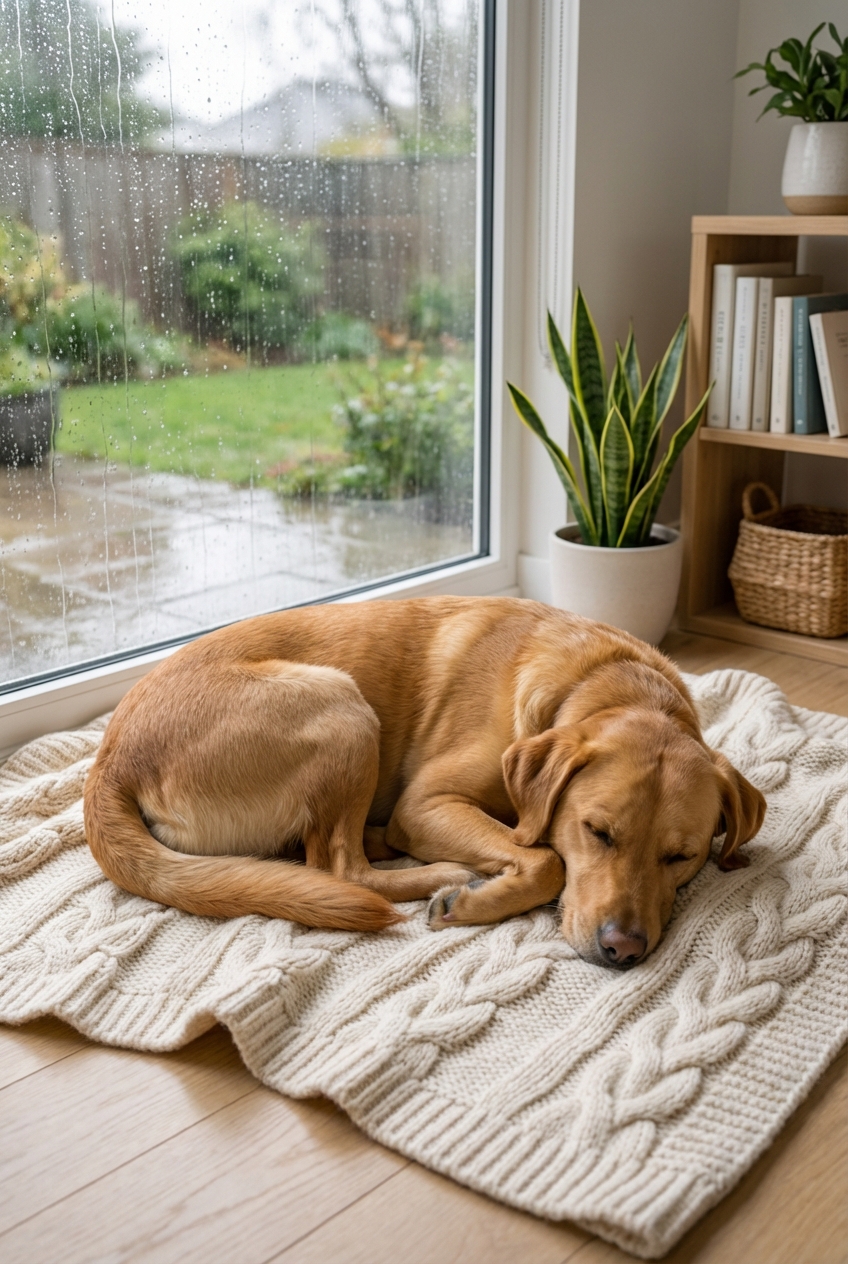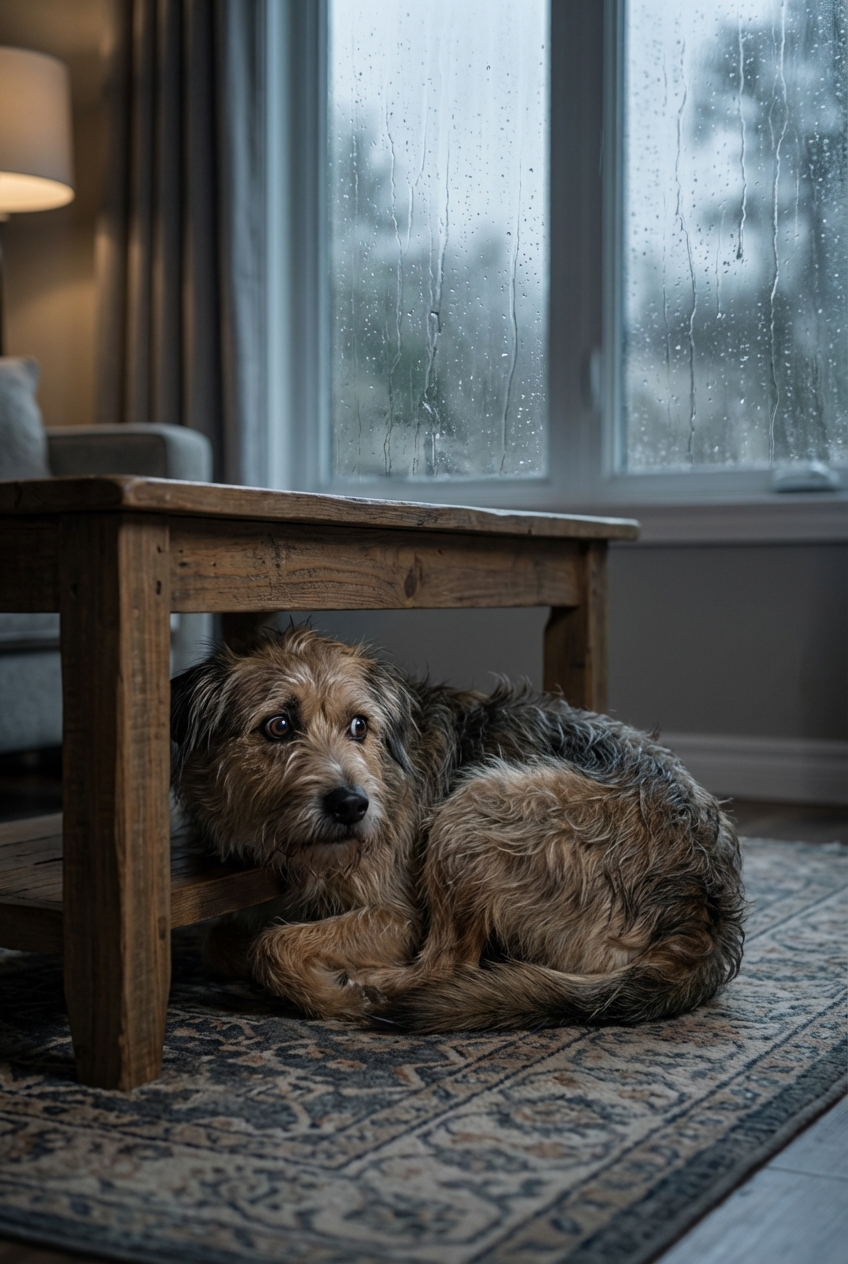
Thunderstorms can trigger shaking, hiding, and escape attempts. Learn vet-backed ways to calm your dog: storm station setup, steady sound, chews, training, w...
Article
•
Designer Mixes
Why Dogs Fear Thunder

Shari Shidate
Designer Mixes contributor
As a veterinary assistant here in Frisco, Texas, I hear this every storm season: “My dog turns into a completely different animal when thunder hits.” If that is your home too, take a deep breath. Thunder fear is incredibly common. It is not your dog being stubborn, and there are practical ways to help.

Let’s break down what is really going on, including a few less-obvious factors that can make storms feel extra intense, plus what actually helps reduce panic safely.
What thunder sounds like to your dog
Dogs hear a much wider range of frequencies than we do and they detect quieter sounds at lower volumes. So while thunder might feel like background noise to us, to many dogs it is loud, layered, and unpredictable. Add in echoes, window rattling, and booming bass vibrations, and you get a sensory event that can feel impossible to escape.
Key point: it is not just the clap of thunder. It is the whole storm package.
Why thunder triggers fear
1) Static and odd skin sensations
This is one of the most overlooked pieces. Changes in the atmosphere during storms may increase static electricity. Some dogs seem to experience uncomfortable sensations in their fur or on their skin, especially long-coated dogs or dogs who are already touch sensitive. The research here is still evolving, but it is a commonly reported pattern.
You might notice pacing, shaking, air licking, or rubbing against furniture. It can look like pure anxiety, but physical discomfort may be part of it.
2) Pressure shifts and physical discomfort
Many dogs seem to know a storm is coming before we do. Barometric pressure changes may play a role for some dogs. If your dog has ear disease, arthritis, or chronic pain, storms can also make discomfort worse and lower their coping skills.
If thunder fear is new, suddenly worse, or paired with head shaking, ear scratching, limping, or stiffness, a vet check is worth it.
3) Low rumbles you can feel
Thunder is not only an air sound. The low-frequency rumble can be felt through floors and walls. Dogs may respond to this in-the-body sensation by trying to hide in bathtubs, closets, or interior rooms where vibrations feel muffled.
4) A learned association
Sometimes thunder fear starts after a single frightening event, like a lightning strike nearby, a power outage, a smoke alarm, or even a person reacting strongly. Dogs are brilliant at connecting patterns. If thunder once led to something scary, their brain may hit the panic button every time after.
5) Temperament and early exposure
Some dogs are simply more noise sensitive by temperament. You may also see patterns in certain lines or breeds, and in dogs with limited early exposure to varied sounds. This is not anyone’s fault. It just helps explain why one dog sleeps through storms and another unravels.
Signs your dog is scared
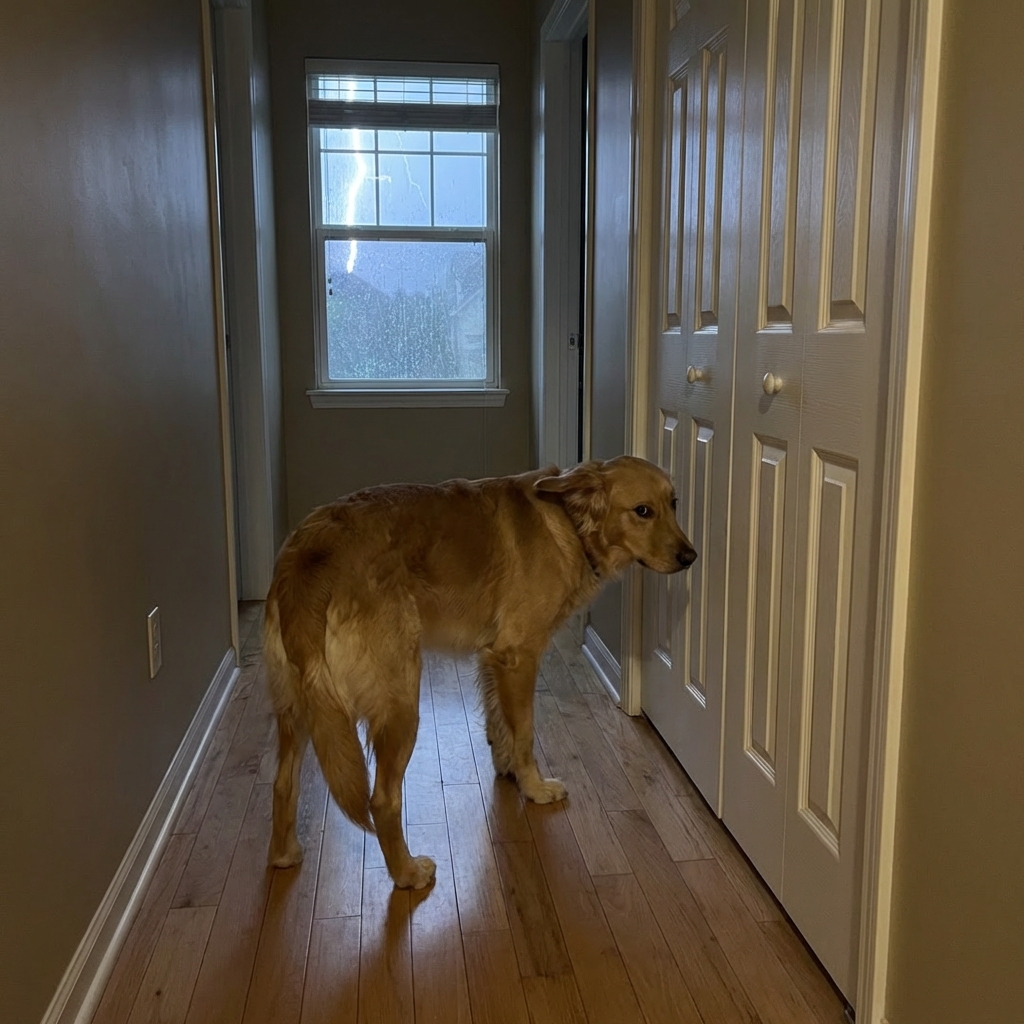
Thunder fear can range from mild to severe. Watch for:
- Shaking or trembling
- Panting when it is not hot
- Pacing, restlessness, inability to settle
- Hiding, clinging, or trying to get into tight spaces
- Excess drooling
- Whining, barking, or howling
- Destructive behavior (scratching doors, chewing, digging)
- Accidents in the house
- Attempts to escape (this is an emergency risk)
If your dog is trying to bolt, break through windows, or chew through crates, please take it seriously. Severe storm panic is a welfare issue and a safety issue.
What to do during a storm
Set up a safe den early
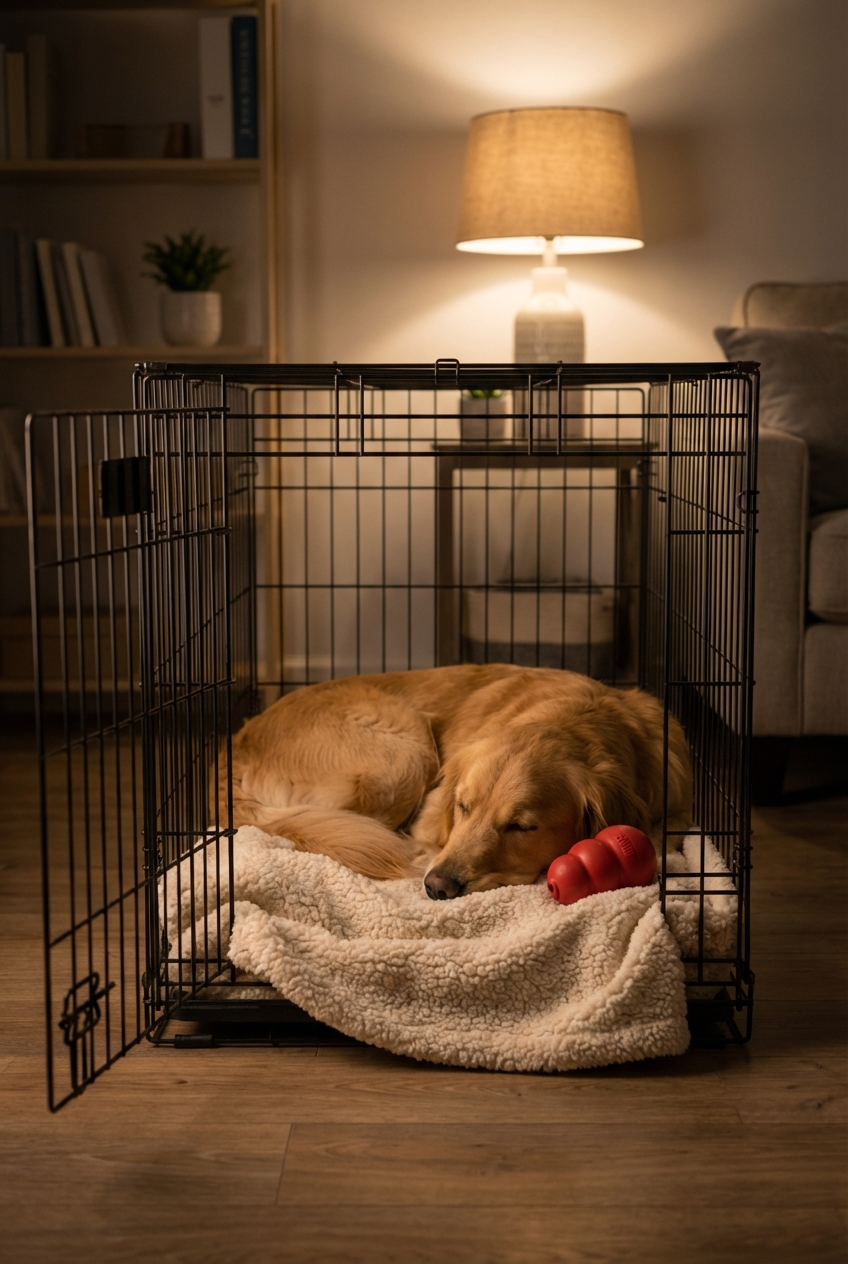
Pick a quiet interior spot like a closet, bathroom, or covered crate. Add thick bedding, a familiar blanket, and a favorite long-lasting chew (only if your dog safely chews when stressed). The goal is to give your dog a place that feels protected and predictable.
Buffer sound and light
- Close curtains or blinds to reduce lightning flashes.
- Turn on a fan, white noise, or calming music to mask thunder.
- Keep the TV on at a steady volume if that helps your dog.
Be calm and steady
You do not need to ignore your dog. Comfort does not reward fear in the way people worry about. Fear is an emotional state, not a behavior your dog is choosing for treats. If your dog seeks you out, speak softly and offer gentle contact if they like it.
One nuance: try to keep your own energy low. Slow, calm reassurance helps more than frantic petting, repeated soothing, or pacing the house together. If your dog is able, gently guide them to their safe spot and keep the routine predictable.
Try gentle pressure if they like it
Some dogs relax with a snug ThunderShirt style wrap or by lying next to you with a blanket. Others do not want touch at all when scared. Let your dog choose. Consent matters, even in a storm.
Add quick safety steps
- Keep doors, garage access, and gates secured. Close windows if your dog tries to push through screens.
- Make sure ID tags are up to date and your dog is microchipped, especially if they are a known bolter.
- If your dog tries to dart, consider keeping a leash on indoors (drag leash only under supervision) so you can guide them safely without grabbing a collar in a panic.
Long-term fixes
Desensitization and pairing
This is the evidence-based method trainers and veterinary behaviorists rely on.
- Play thunder recordings at a very low volume.
- Pair the sound with something wonderful: tiny treats, a lick mat, a favorite game.
- Stop before your dog gets anxious.
- Gradually increase volume over days to weeks, not minutes.
The secret is keeping your dog under threshold. If your dog is already panicking, their brain is not in learning mode.
Also, not all dogs will take food during storms. That is common. Start earlier, use higher-value rewards, or use non-food comfort like a favorite toy or a sniff game if they are able.
Start before the first rumble
If your dog escalates quickly, begin your plan before thunder starts. Use a weather app, radar alerts, or a smart speaker routine. Early intervention works better than trying to calm a dog once they are flooded with adrenaline.
Build calm routines
Chronic stress makes storm fear worse. Build resilience with:
- Consistent exercise appropriate for your dog’s body and age
- Sniff walks and enrichment games that use the brain
- Predictable mealtimes and rest
- Gentle training that builds confidence
Ask your vet about medication
Some dogs need more help than environmental changes can provide, especially with severe panic. Veterinarians can prescribe situational anti-anxiety medication, or daily medication for generalized anxiety, depending on the pattern. In many cases, medication plus behavior work is kinder and more effective than either alone.
Please do not use human medications unless your veterinarian specifically prescribes them for your dog. Many are unsafe.
Other aids people ask about
- Pheromone support: products like Adaptil may help some dogs as part of a bigger plan.
- Noise masking: white noise machines can be more consistent than a TV.
- Calming chews and supplements: quality varies widely. Talk with your vet before starting anything new.
- CBD and herbal products: evidence and product consistency are still limited, and they can interact with medications. This is a vet conversation, not a guess.
Mistakes to avoid
- Punishing fearful behavior: it increases anxiety and can worsen future storms.
- Forcing your dog out of hiding: the hiding spot is their coping tool.
- Waiting until thunder hits: planning ahead is half the battle.
- Crating a panicked dog: if your dog is trying to escape a crate, it can lead to broken teeth, torn nails, and injury.
- Assuming they will grow out of it: many dogs worsen over time without support.
When to get help
Consider a veterinarian, a board-certified veterinary behaviorist, or a qualified positive-reinforcement trainer if:
- Your dog’s fear is escalating each storm season
- They refuse food during storms (often a sign of high stress)
- They try to escape the home, crate, or yard
- They injure themselves or you during storms
- You are feeling overwhelmed (you deserve support too)
If you are hiring a trainer, look for force-free credentials and experience with anxiety, such as IAABC or CCPDT. For severe cases, a DACVB (board-certified veterinary behaviorist) is the highest level of specialty care. Avoid trainers who recommend punishment, startle tools, or flooding. Those approaches often make noise fears worse.
The goal is not to make your dog tough. The goal is to help them feel safe in their own home.
A simple storm plan
- Pick a safe den and set it up on a calm day.
- Stock calming tools: white noise, treats, lick mat, blanket.
- Practice going to the den with treats when there is no storm.
- Use early alerts and start the routine before thunder begins.
- Add safety checks: secure exits, update ID, have a leash ready for bolters.
- Track what works after each storm, so your next one is easier.
You do not have to fix thunder fear overnight. Small, consistent steps can change how your dog’s brain and body respond over time.