Coprophagia is common but fixable. Learn why dogs eat poop, when to call the vet, health risks, and a practical plan: quick cleanup, leash control, “leave ...
Article
•
Designer Mixes
Why Dogs Eat Poop

Shari Shidate
Designer Mixes contributor
As a veterinary assistant here in Frisco, Texas, I can tell you this: you are not “a bad dog parent” if your dog eats poop. It is surprisingly common, it is incredibly gross, and it usually has a reason behind it. The behavior has a name, too: coprophagia.
The good news is that many cases improve once you address the “why” and put a clear plan in place. Let’s break down the most common causes behind stool-eating, what it can mean medically, and what actually helps.
First, is it normal?
Some stool-eating is normal in specific situations:
- Puppies explore the world with their mouths. Many grow out of it.
- Mother dogs may eat puppy stool to keep the nest clean, especially during the first few weeks.
- Some dogs learn it from other dogs at daycare, dog parks, or multi-dog homes.
That said, “common” does not mean “harmless,” especially if your dog is eating stool from other animals.
Common causes
1) They are hungry, or they think they are
Dogs are scavengers by nature. If a dog is not feeling satisfied after meals, stool can become a fallback “snack,” especially if the stool still contains appealing, undigested nutrients due to diet composition or maldigestion.
What to watch for: gulping meals, constant food-seeking, counter surfing, weight loss, or a ravenous appetite.
2) Maldigestion or malabsorption
If your dog is not digesting or absorbing nutrients well, they can feel driven to eat things that are not food. Conditions that can contribute include intestinal parasites, inflammatory bowel disease, exocrine pancreatic insufficiency (EPI), and chronic GI upset.
Clues: large-volume stool, greasy stool, chronic diarrhea, gassiness, weight loss despite eating well.
3) Parasites and gut infections
Parasites and some intestinal infections can disrupt digestion and appetite cues. Stool-eating can also contribute to ongoing exposure and environmental contamination, which makes it harder to fully break the cycle in a household or yard.
Clues: soft stool, mucus in stool, scooting, bloated belly (especially in puppies), or a history of missed fecal checks.
4) Stress, boredom, or anxiety
Stool-eating can be a self-soothing behavior. Dogs left alone too long, under-exercised, or anxious can develop repetitive habits like chewing, licking, or eating stool.
Clues: destructive behavior, pacing, excess barking, or stool-eating that happens mainly when you are gone.
5) It started as “cleanup” and turned into a habit
If a dog had accidents as a puppy and was punished for it, they sometimes learn to “hide the evidence” by eating it. In other cases, the habit begins simply because stool is accessible in the yard, litter box, or on walks.
Clues: stool-eating happens right after defecation, or your dog seems to rush to it.
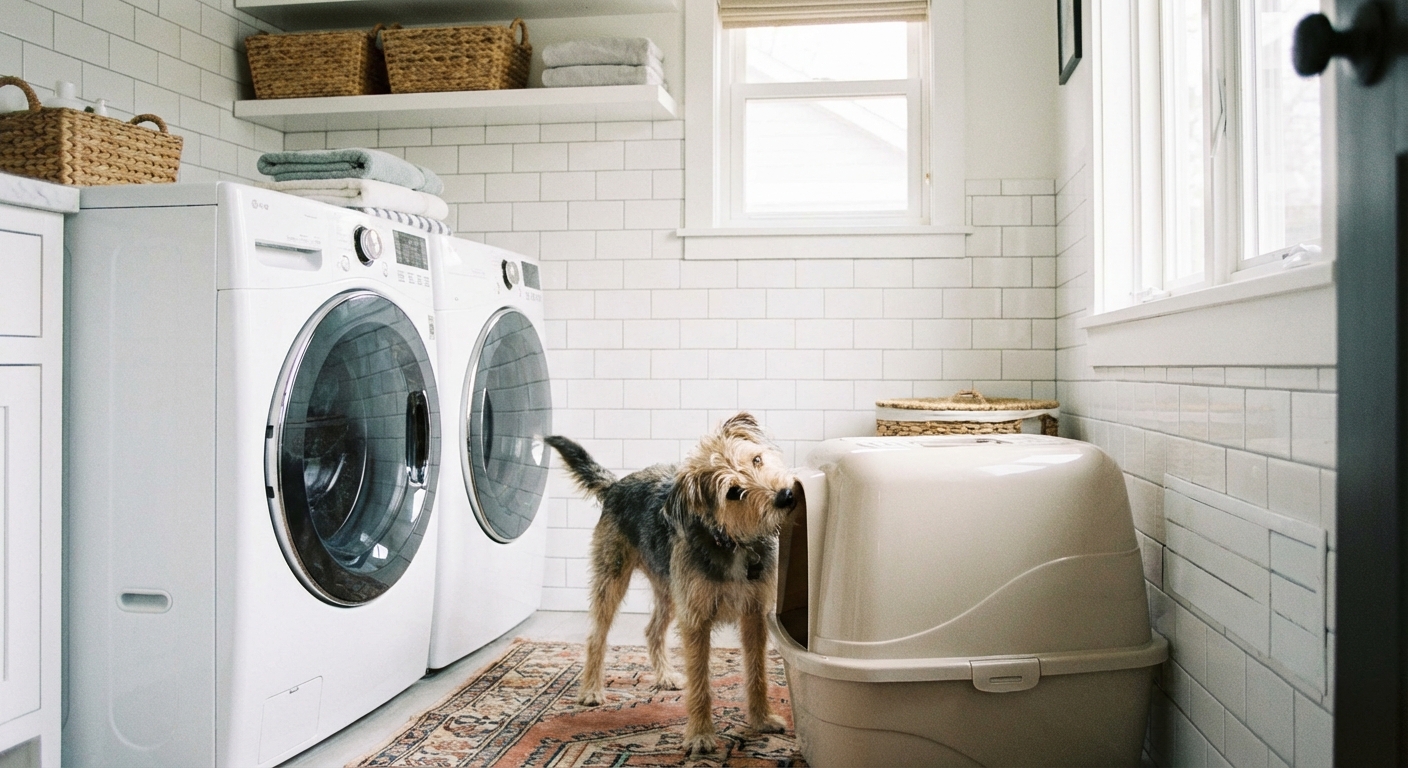
6) The litter box is basically a buffet
Cat poop (and cat litter) is a very common target. Many dogs find it especially tempting, often because it smells and tastes appealing based on what cats eat.
Extra concern: cat feces can upset your dog’s stomach and may expose pets and people to parasites depending on the cat’s infection status (including Toxoplasma).
Is it dangerous?
Sometimes it is just unpleasant. Other times, it can create real health risks:
- Parasites (roundworms, hookworms, whipworms, Giardia) from other animals’ stool.
- Bacteria like Salmonella or Campylobacter, especially from wildlife or raw-fed pets.
- Viruses spread through the fecal–oral route in higher-risk settings. For example, parvovirus risk is most concerning in under-vaccinated puppies and in high-density environments.
- Foreign material if they ingest litter, sticks, rocks, or plastic mixed with stool.
- Medication exposure from stool of pets on certain drugs.
If your dog eats stool from the yard once and seems fine, you usually do not need to panic. But if it is recurring or your dog eats poop from unknown dogs, cats, wildlife, or horses, it is worth taking seriously.
Hygiene tip: Wash hands after poop pickup and clean contaminated areas when you can. It protects you and it reduces repeat exposure for your dog.
When to call your veterinarian
Reach out promptly if you notice any of these:
- Weight loss, increased hunger, or increased thirst
- Chronic soft stool or diarrhea
- Vomiting, lethargy, or abdominal discomfort
- Stool-eating that starts suddenly in an adult dog
- Any stool-eating in a dog with a compromised immune system
Also worth mentioning to your vet: sudden stool-eating paired with increased thirst or hunger can sometimes point to metabolic or endocrine issues (like diabetes or Cushing’s disease), or medication side effects (steroids are a common example).
In-clinic, your vet may recommend a fecal test, deworming, a diet review, and possibly bloodwork depending on symptoms. If your dog is not fully vaccinated (especially puppies), tell your clinic. It matters for risk assessment and prevention.
What helps
Step 1: Make stool hard to access
- Scoop immediately, especially in multi-dog yards.
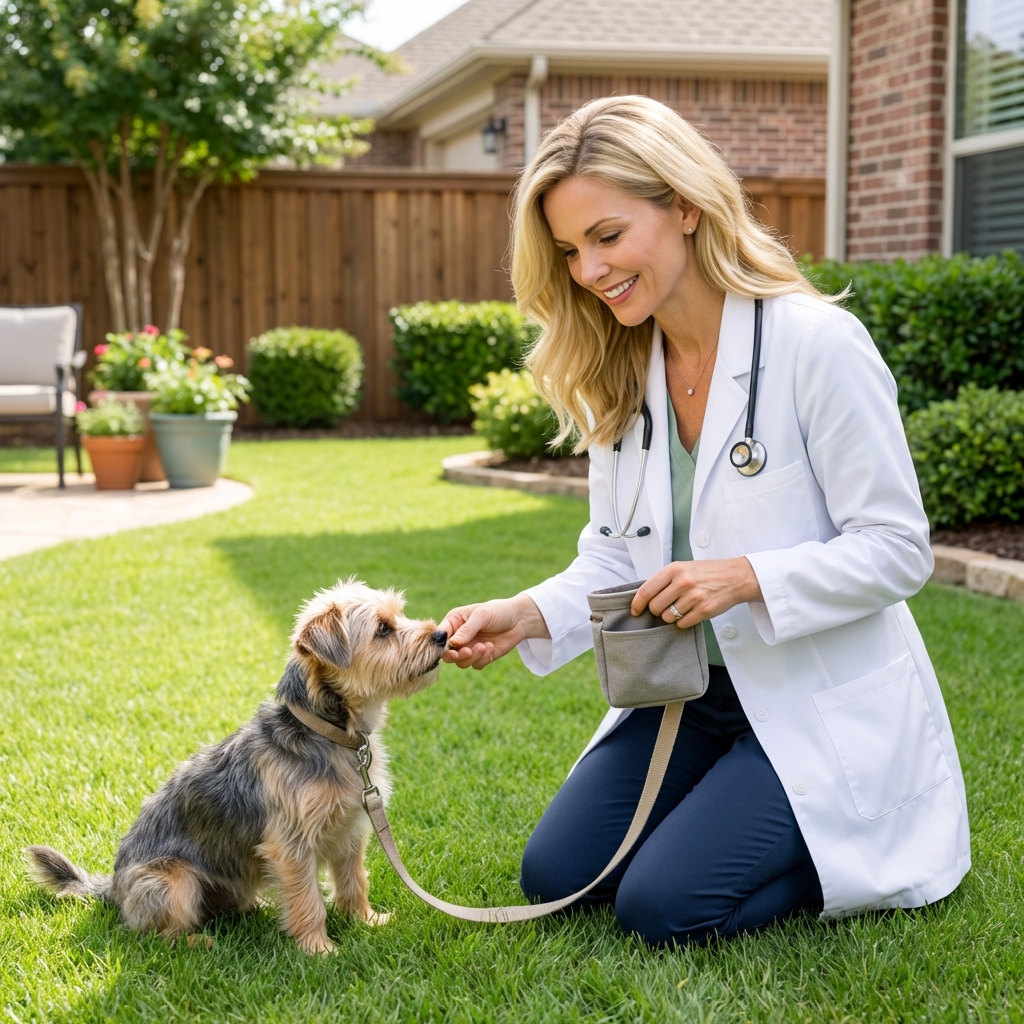
- Leash walks for a few weeks so you can interrupt and redirect.
- Use a basket muzzle temporarily for dogs that vacuum stool outdoors. Choose a properly fitted basket muzzle that allows panting and drinking, condition it gradually with treats, and never leave it on unattended.
- Block litter box access with a baby gate, cat door, or top-entry box.
Step 2: Teach a rock-solid “leave it”
Reward-based training is your best friend here. Practice leave it with boring items, then higher-value items, then outdoors. Consistency is everything.
Tip: If you only say “leave it” once your dog already has poop in their mouth, you are training at the hardest level. Start earlier, at the sniffing stage.
Step 3: Meet their enrichment needs
Bored dogs invent jobs. Give them better ones:
- Food puzzles and snuffle mats
- Long sniff walks (sniffing tires them out)
- Short training sessions, 5 minutes at a time
- Appropriate chew items approved by your vet
Nutrition tweaks that can help
Because digestion and satisfaction play such a big role, diet changes can be powerful. I am a big believer in food that supports the gut, because the gut influences cravings, stool quality, and overall health.
Support digestion first
- Talk to your vet before switching diets, especially if your dog has GI disease.
- Transition slowly over 7 to 14 days.
- Consider a probiotic if your vet recommends it.
- Ask about digestive enzyme support if signs point toward maldigestion.
Increase satisfaction
- Make sure calories match your dog’s needs. Underfeeding can drive scavenging.
- For some dogs, smaller, more frequent meals reduce intense hunger.
- Add vet-approved fiber sources if appropriate, like plain pumpkin.
Important: Avoid random supplement stacks. If we do not know why your dog is doing it, we cannot intelligently choose what to add.
Do deterrent products work?
Some families have success with stool deterrent powders or chews (the idea is to make the stool taste worse). In real life, results are mixed. A few dogs ignore the taste and keep going.
If you want to try one, think of it as a helper, not the solution. The most effective combo is still:
- Remove access to stool
- Treat any medical causes
- Train “leave it”
- Increase enrichment
Common myths
“My dog does it because they are being spiteful.”
Dogs generally do not process stool-eating as revenge. It is usually instinct, appetite, habit, stress relief, or digestion-related.
“If I punish them, they will stop.”
Punishment often makes it worse. It can increase anxiety and teach them to eat stool faster or hide when they do it.
What not to do
- Do not punish your dog for accidents or stool-eating.
- Do not forcefully pry their mouth open unless your vet has told you to (you can get bitten, and some dogs guard items when scared).
- Do not induce vomiting unless your veterinarian directs you to. It is not appropriate for many situations, and it can be risky.
A simple action plan
If you want a straightforward place to start, here is my go-to plan for most households:
- Schedule a fecal test and bring a fresh stool sample to your vet.
- Scoop twice daily and leash-walk for potty breaks for 2 to 3 weeks.
- Teach “leave it” and reward heavily for turning away.
- Add enrichment every day, especially sniffing and puzzle feeding.
- Review diet with your vet if hunger, soft stool, or weight loss is present.
Progress is usually measured in fewer attempts, faster response to “leave it,” and better stool quality. Celebrate those wins. Consistency beats perfection.
Bottom line
Dogs eat poop for reasons that are usually fixable. When you support the gut, meet the dog’s mental and physical needs, and prevent access while you retrain the habit, most families see a big improvement.
If your dog’s stool-eating is frequent, suddenly new, or paired with weight loss, diarrhea, vomiting, or big changes in thirst or hunger, loop your veterinarian in sooner rather than later.