Scooting or fishy odor? Learn what anal glands do, common warning signs, when home care is safe, prevention for firmer stools, and cooperative care training ...
Article
•
Designer Mixes
Why Dogs Drag Their Butt

Shari Shidate
Designer Mixes contributor
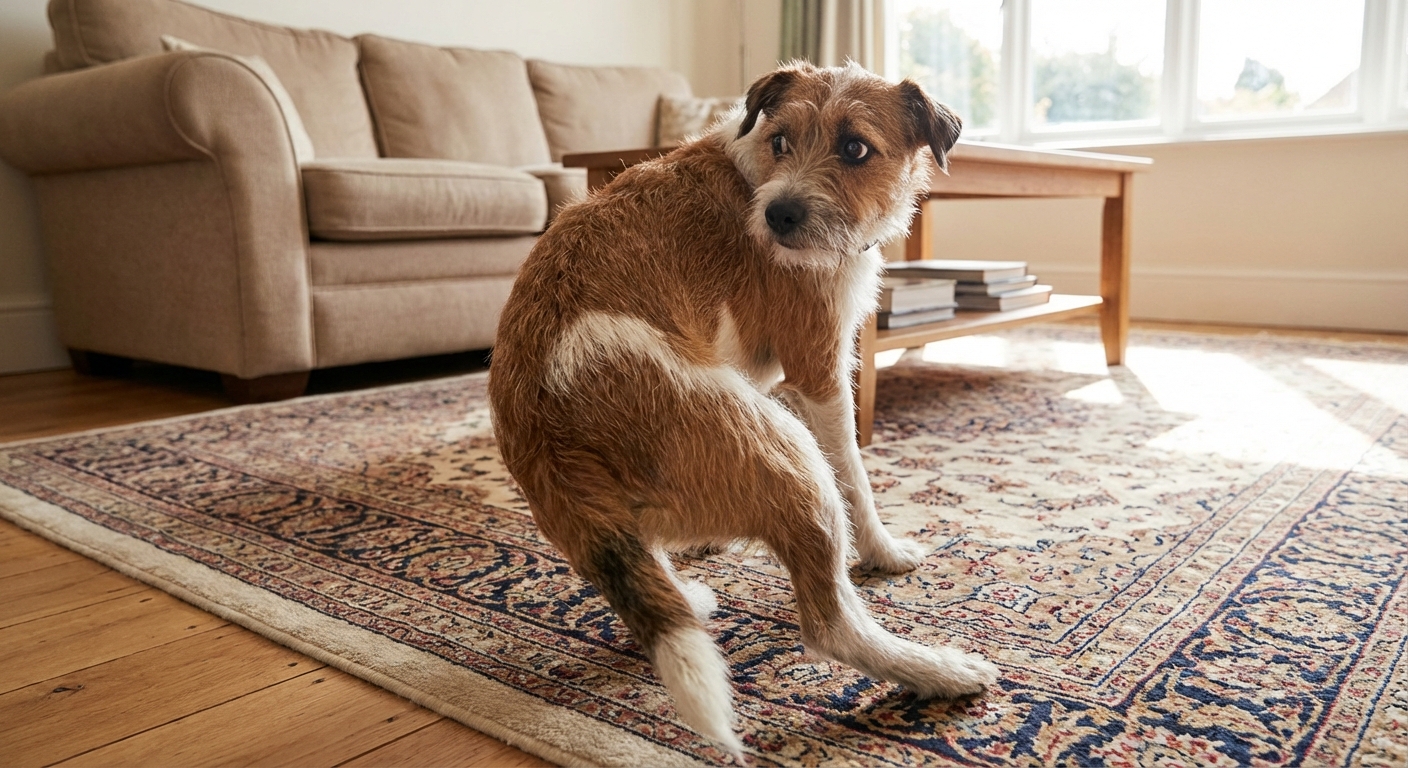
If you have ever watched your dog sit down and scoot across the carpet, you are not alone. In vet clinics we jokingly call it “scooting,” but the reason behind it is not always funny. Rear-end dragging is your dog’s way of saying, “Something back there feels irritated, itchy, painful, or just not right.”
The good news is that many causes are minor and fixable. The important part is knowing what to look for, what you can safely do at home, and when it is time to see your veterinarian.
What scooting usually means
Most dogs drag their rear end because of irritation around the anus or the skin under the tail. That irritation can come from something as simple as soft stool stuck in the fur, or something that needs medical treatment, like anal sac disease or parasites.
Dogs do not have hands to scratch an itch. Scooting is their workaround. Some dogs will also lick the area, chase their tail, or suddenly sit down mid-walk.
Common causes of scooting
1) Full or irritated anal glands
This is one of the most common causes veterinarians see. Dogs have two small anal sacs (often called anal glands) located just inside the anus. They hold a strong-smelling fluid that is used for scent marking.
These sacs typically empty during a firm bowel movement. If stool is too soft, if the sacs are inflamed, or if your dog’s anatomy makes emptying difficult, the sacs can overfill or become irritated. Some dogs still need help even with otherwise normal stools.
- Signs: scooting, licking under the tail, fishy or metallic smell, sudden discomfort sitting, swelling near the anus.
- Why it matters: overfull sacs can become infected or form an abscess, which is painful and can rupture.
2) Parasites (especially tapeworms)
Tapeworm segments can cause itching or irritation around the anus, although some dogs barely seem bothered. People sometimes notice tiny white pieces that look like rice on the fur, bedding, or where the dog sleeps.
- Signs: scooting, licking, visible “rice grains,” sometimes increased appetite or weight changes.
- Important note: fleas are a common way dogs get tapeworms, so flea prevention is part of the solution.
- Diagnosis tip: tapeworm segments are often diagnosed by appearance and history. A fecal test can help check for other parasites, but it does not always catch tapeworms.
3) Allergies and skin irritation
Environmental allergies (like pollen and grass) and food sensitivities can cause inflammation in the skin, including the rear end. This can lead to itchiness, redness, and recurring anal gland issues.
- Signs: chronic licking of paws, recurrent ear infections, itchy belly or rear, seasonal flare-ups.
4) Fleas, mites, and hot spots
It is not just intestinal parasites. Fleas can trigger significant itch near the tail base and rear end. Mites and skin infections can also cause intense irritation, sometimes leading to licking, scooting, and “hot spots” from self-trauma.
- Signs: scratching near the tail base, hair loss, scabs, red moist patches, restlessness, visible flea dirt.
5) Diarrhea, soft stool, or constipation
Loose stool can leave residue that irritates skin and prevents normal anal sac expression. Constipation can also cause straining and discomfort. Both can trigger scooting.
- Signs: frequent small bowel movements, straining, changes in stool shape, mucus in stool, accidents in the house.
6) Fur, poop, or debris stuck to the coat
Long-haired dogs and curly-coated mixes can get fecal matter stuck in the hair under the tail, especially after soft stool. Even a small amount can cause major discomfort.
- Signs: scooting after potty breaks, visible debris, odor, matting.
7) Painful problems that need prompt care
Sometimes scooting is pain, not itch. Conditions like perianal infections, abscesses, rectal polyps, injuries, or tumors can make sitting or defecating uncomfortable.
Another important condition is perianal fistulas (most common in German Shepherds and related breeds). These are painful, infected-looking tracts and ulcers around the anus that need veterinary treatment.
- Signs: blood, swelling, open sores, strong foul odor, discharge, sudden behavior changes, yelping, refusing to sit, fever, lethargy.
8) Behavior (rare)
Occasionally, dogs scoot out of habit or stress. That said, this is uncommon, and it should be considered only after medical causes have been ruled out by your veterinarian.
When to call the vet
Scooting once in a while can be harmless. Repeated scooting or any additional symptoms should be checked.
- Scooting happens multiple times in a day or keeps recurring for more than 24 to 48 hours
- You notice a fishy smell or a strong foul odor, swelling, or redness around the anus
- Your dog cries, snaps, or seems painful when you touch near the tail
- There is blood, pus, discharge, or an open wound
- Your dog is straining to poop, cannot poop, or seems painful while pooping
- You see “rice-like” tapeworm segments
- Your dog is lethargic, not eating, or has vomiting or diarrhea
Go in urgently if you see rapid swelling, a suspected abscess rupture (sudden bloody or pus-like drainage), severe pain, or your dog cannot pass stool.
Anal gland infections and abscesses can escalate quickly. If you suspect this, it is worth getting in sooner rather than later.
What you can safely do at home
Step 1: Check for simple coat irritation
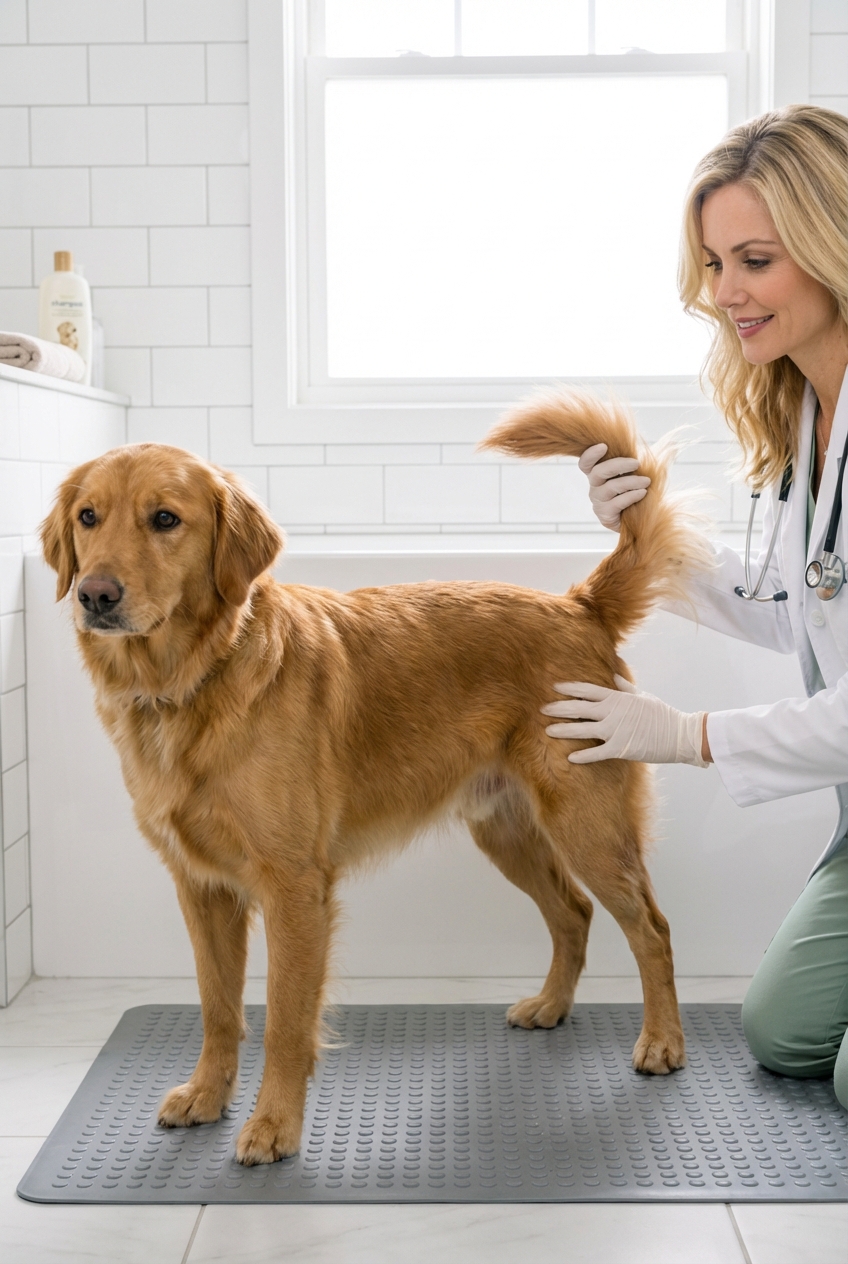
If your dog allows it, gently lift the tail and look for:
- Stuck stool or matting
- Redness or rash
- Small white “rice grains” (possible tapeworm segments)
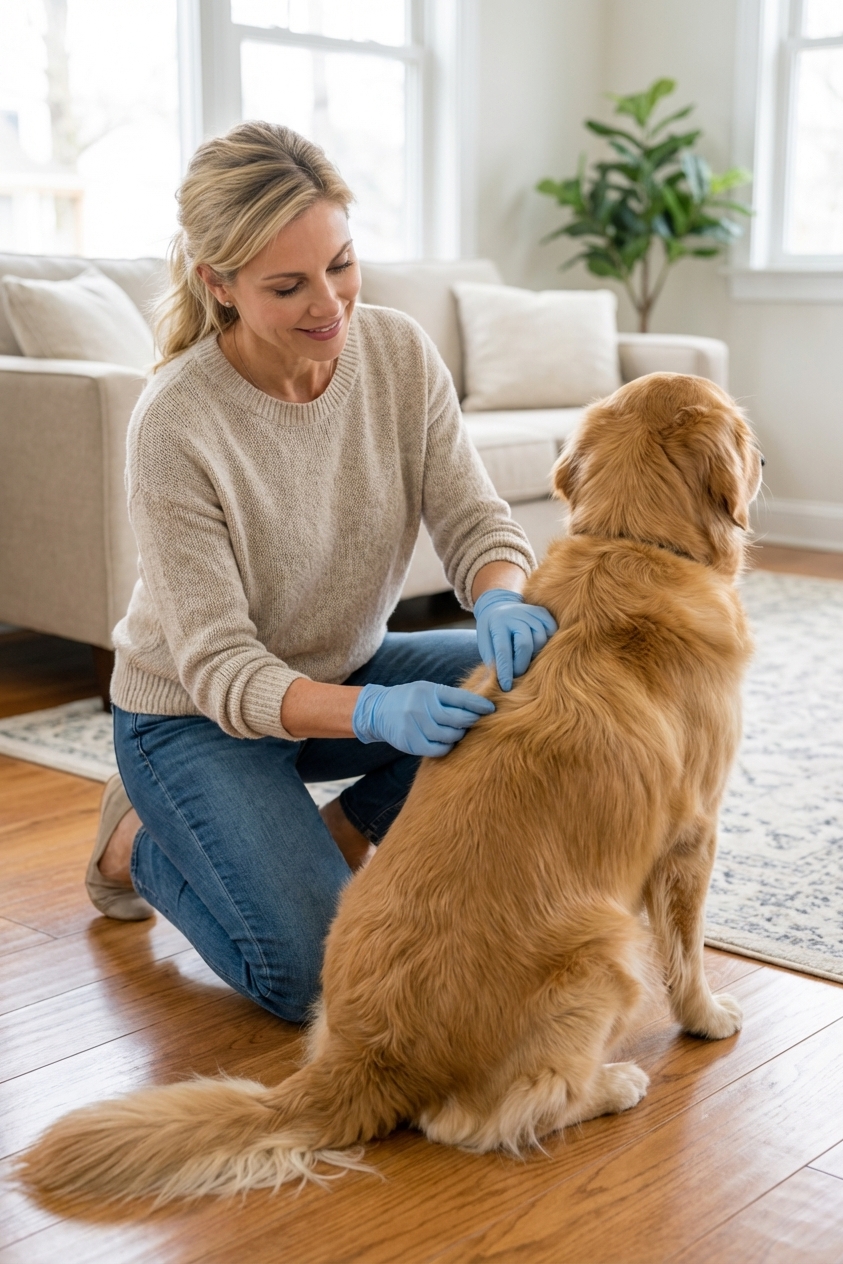
- Swelling at about the 4 o’clock and 8 o’clock positions around the anus (possible anal sac issue)
If you see stuck stool, a warm damp cloth can help clean the area. For long-haired dogs, consider a sanitary trim with a groomer to prevent future issues.
Step 2: Support healthy, firm stool
Firm, well-formed stools often help anal sacs empty naturally. If your dog’s stool tends to be soft, talk with your veterinarian about diet adjustments. Depending on your dog, options may include:
- Gradual fiber support: plain canned pumpkin (not pie filling) is commonly used, but dosage should be tailored to your dog’s size and stool quality.
- Consistent diet: frequent switching can trigger GI upset in sensitive dogs.
- Probiotics: sometimes helpful for chronic loose stool, especially after antibiotics.
If diarrhea is significant, frequent, bloody, or paired with vomiting or lethargy, skip home experiments and call your vet.
Step 3: Keep parasite prevention current
Stay up to date on flea prevention and ask your veterinarian which deworming schedule makes sense for your dog’s lifestyle. Dogs who visit dog parks, daycare, boarding facilities, or shared yards often have higher exposure risk.
If you are headed in, bring a fresh stool sample if you can. It helps your vet run a fecal test for common parasites.
What not to do
- Do not squeeze anal glands at home unless you have been trained by a veterinary professional. It is easy to cause pain, trauma, or push infection deeper.
- Do not use human hemorrhoid creams or medicated wipes unless your veterinarian approves. Some ingredients are unsafe if licked.
- Do not give OTC dewormers “just in case” without guidance. The wrong product or dose can miss the real cause or create side effects, and your vet may want to confirm the parasite first.
- Do not ignore recurring scooting, especially if it keeps returning every few weeks. Chronic anal sac problems can become a cycle unless the underlying issue is addressed.
What to expect at the vet
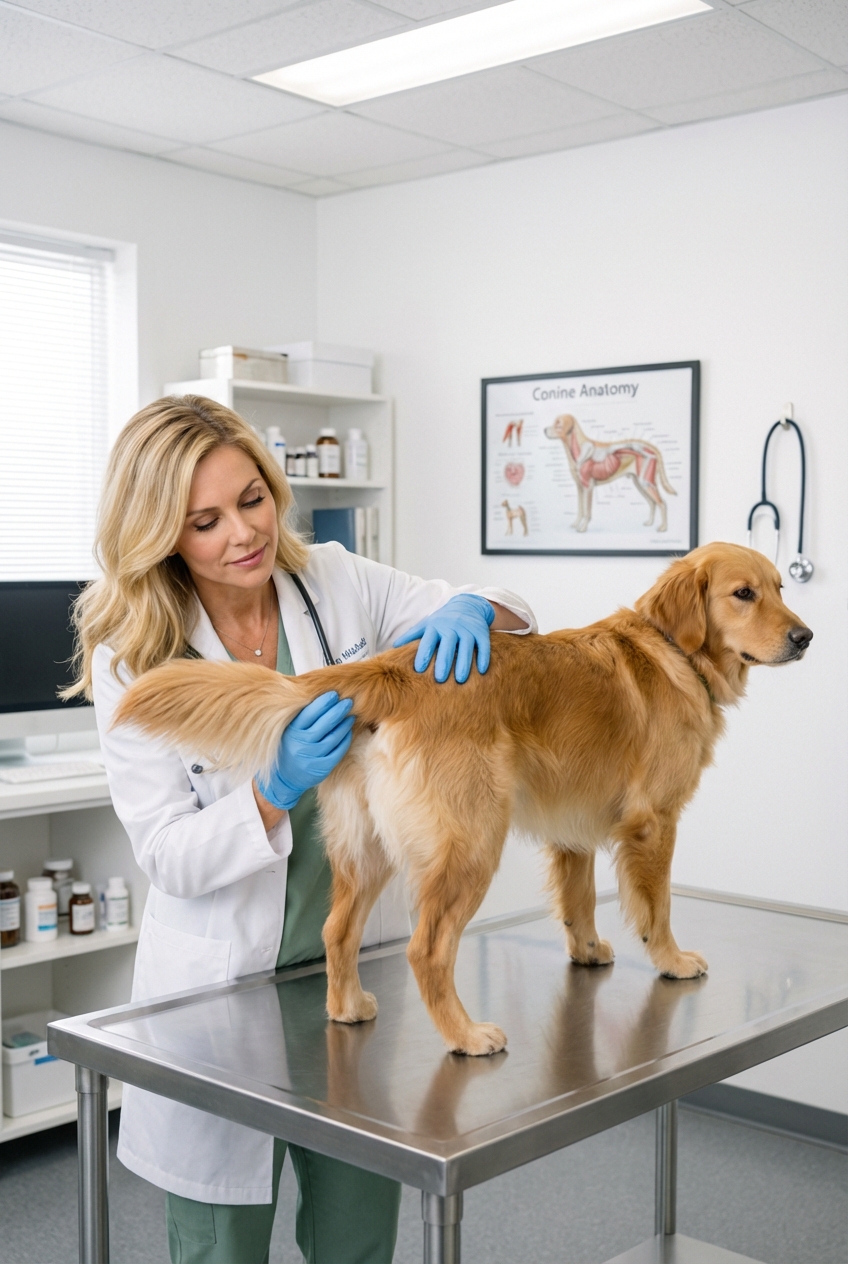
Your veterinarian will usually do a quick, targeted exam that may include:
- Checking the skin and anus for irritation, swelling, sores, or masses
- Assessing and possibly expressing the anal sacs
- Looking for infection, which may require antibiotics or anti-inflammatory medication
- Running a fecal test for parasites
- Discussing diet and stool quality, including fiber options
If allergies are suspected, your vet may recommend a step-by-step plan such as a diet trial, allergy management, or addressing secondary infections in the skin or ears.
Preventing scooting
Not all scooting is preventable, but you can reduce the odds with a few consistent habits.
- Prioritize stool quality: aim for well-formed stools, not too hard and not too soft.
- Maintain a healthy weight: extra weight may increase the risk of anal gland trouble in some dogs.
- Regular grooming: especially for doodles and long-haired mixes, keep the area clean and trimmed.
- Stay on parasite prevention: flea control plus routine fecal checks go a long way.
- Address allergies early: chronic itch and inflammation can create repeated rear-end problems.
Quick checklist: itch or pain?
This simple breakdown can help you decide how urgent the situation might be.
- More likely itch: licking, mild scooting, normal energy, no swelling, no blood.
- More likely pain or infection: yelping, refusing to sit, swelling, strong odor, discharge, blood, sudden behavior changes.
If your dog is acting painful or you see swelling or discharge, treat it like an urgent issue. Anal gland abscesses can worsen quickly and are much easier to treat early.