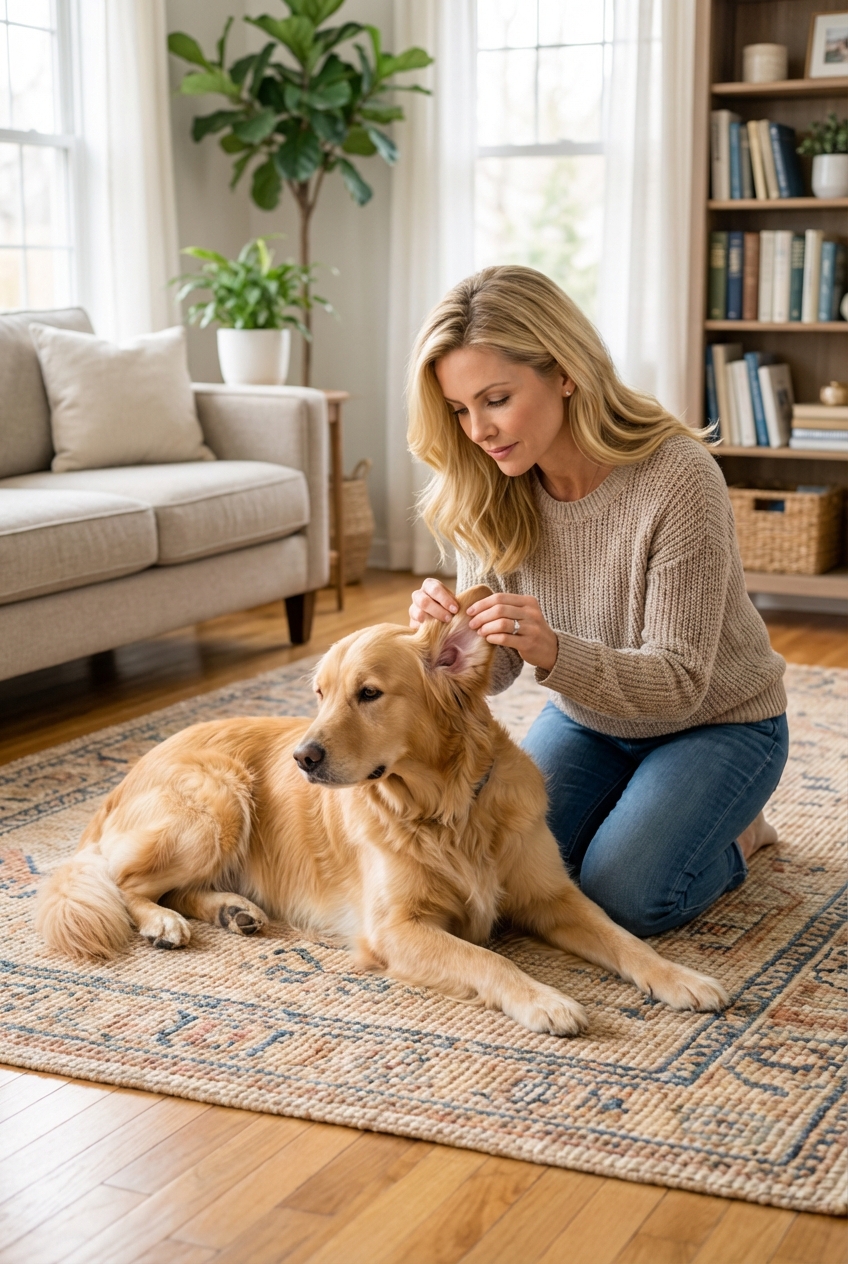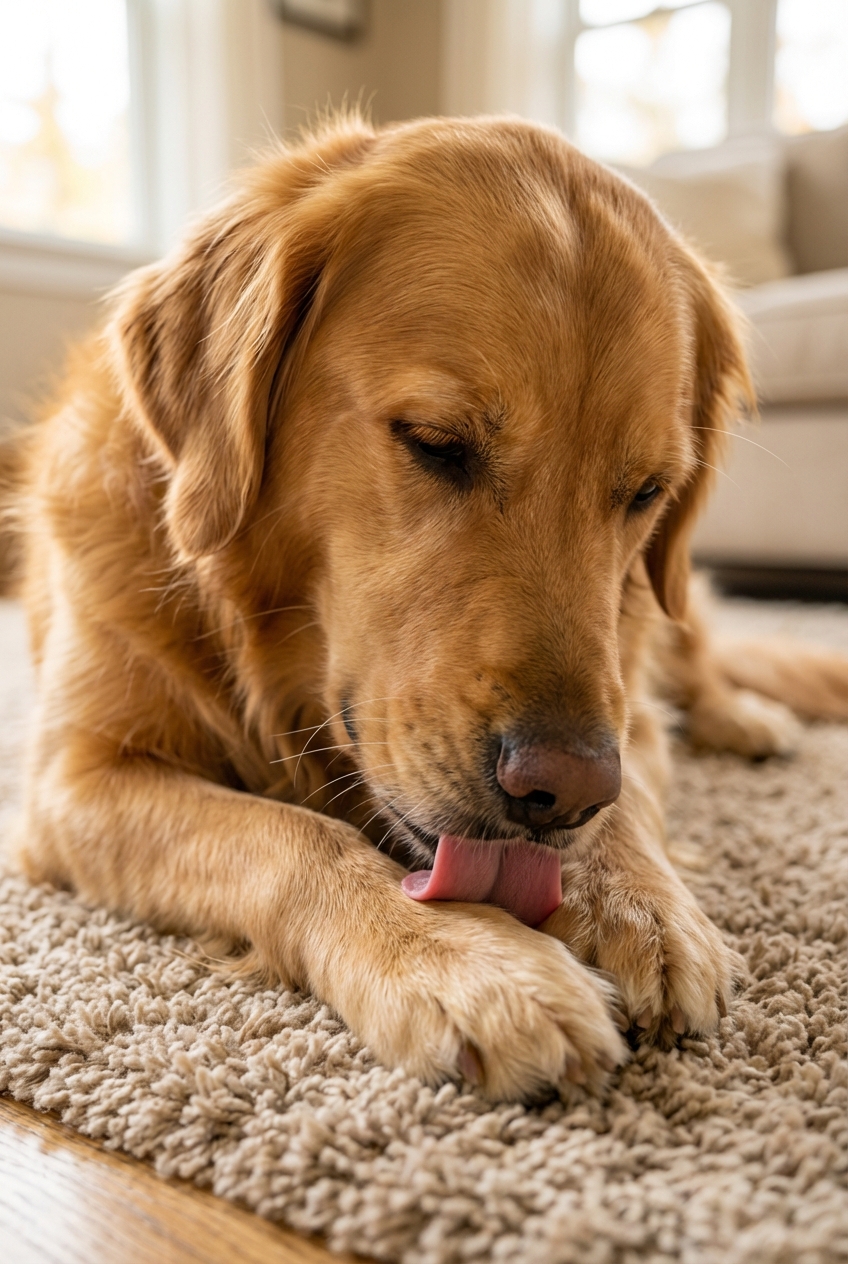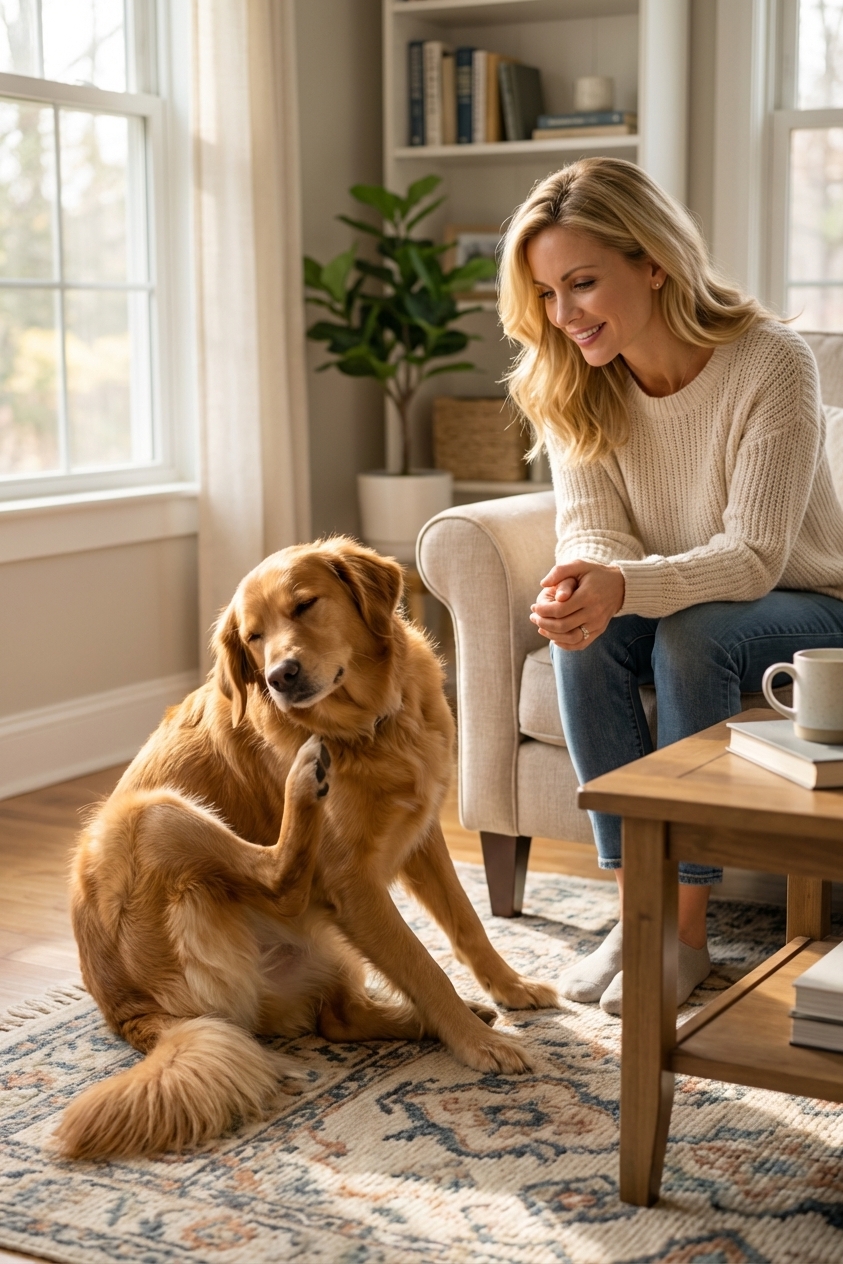
Is your dog licking paws or getting a red belly in spring or fall? Learn common symptoms, top triggers (pollen, grass, mold), easy home relief steps, and whe...
Article
•
Designer Mixes
Why Dogs Chew Their Paws

Shari Shidate
Designer Mixes contributor
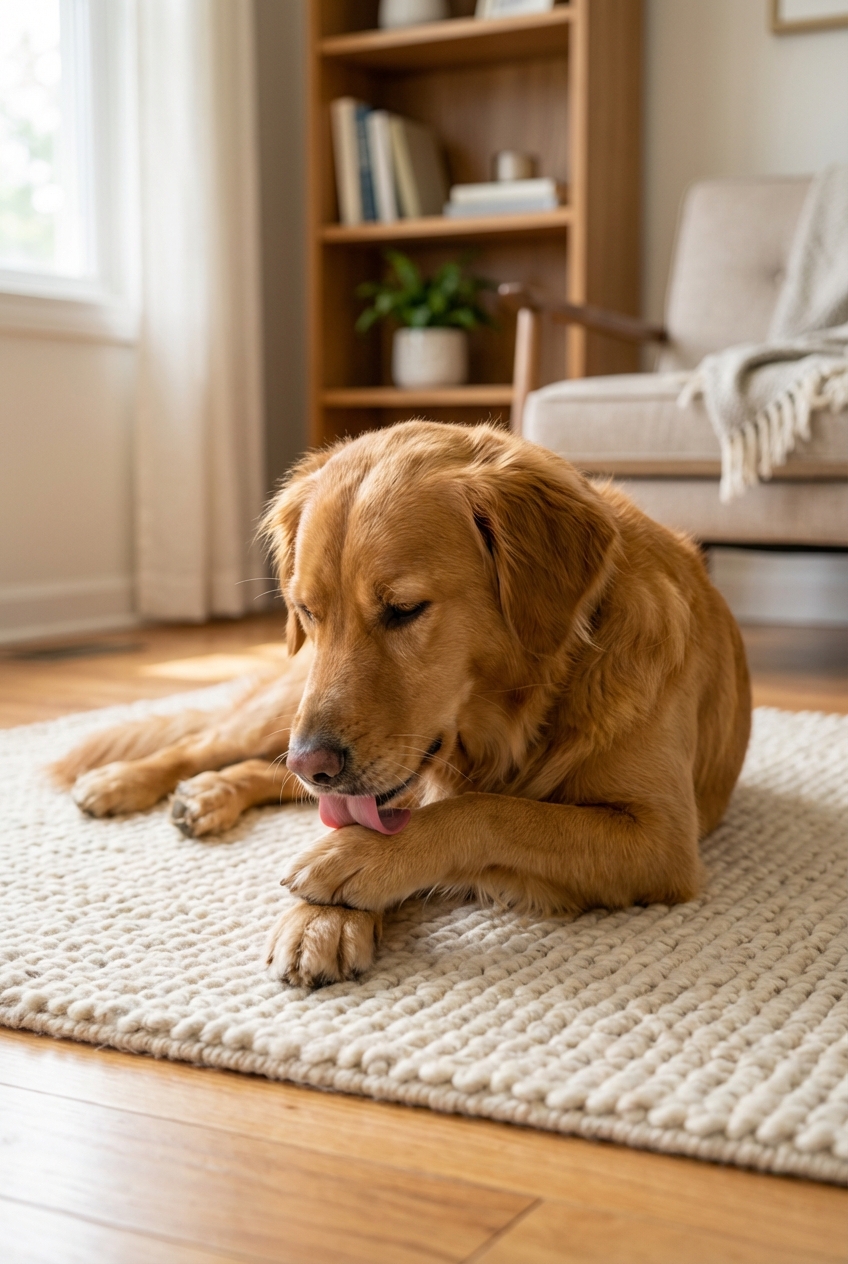
Paw chewing is one of those behaviors that can look harmless at first, until you notice the fur turning rusty brown, the skin getting pink, or your pup waking up just to lick. As a veterinary assistant, I see this every week. The good news is that paw chewing usually has a clear underlying cause, and once you address the “why,” the chewing often improves fast.
This guide will walk you through the most common reasons dogs chew their paws, what you can safely do at home, and when it is time to call your veterinarian.
Common reasons dogs chew their paws
Paws are exposed to everything: grass, pollen, cleaners, hot sidewalks, snow melt, and bacteria. When something irritates the skin, many dogs respond the same way we do when something itches. They scratch, lick, and nibble.
1) Allergies (a very common cause)
Allergies are one of the most common causes of ongoing paw chewing. Dogs can react to environmental triggers, ingredients in food, or both.
- Environmental allergies (atopy): Pollens, molds, dust mites, and grasses can cause itchy feet. Many dogs get worse seasonally, but indoor allergens can make it year-round.
- Food allergy or adverse food reaction: This is generally less common than environmental allergy, but it does happen. Common clues include itchy skin, recurring ear infections, and paw licking.
What you may notice: licking after walks, red skin between toes, repeated ear inflammation, rubbing face on carpet, or symptoms that flare up during certain months.
2) Yeast or bacterial infections
Yeast loves warm, moist places, and the space between toes is perfect. Once licking starts, moisture increases, which can let yeast and bacteria overgrow even more. This becomes a frustrating itch cycle.
- Yeast overgrowth: can be associated with a musty smell (some people describe it as a “corn chip” odor) and may come with brown saliva staining.
- Bacterial skin infection: may look like pimples, scabs, or oozing sores between toes.
These conditions are very treatable, but they typically require the right medication. If an infection is present, home remedies alone usually do not solve it.
3) Irritants and contact reactions
Sometimes it is not an “allergy,” but a direct irritant. Think lawn chemicals, ice melt salts, cleaning products on floors, or even rough grasses.
Clues: sudden chewing after a change in cleaning routine, after visiting a new park, or after winter walks on treated sidewalks.
4) Parasites
Fleas, mites, and ticks can cause intense itching. Even if you do not see fleas, one bite can trigger major itchiness in flea-allergic dogs.
- Fleas: often cause itch around the rump and tail base, but paws can be involved too.
- Mites (like sarcoptic mange): can cause severe itching and can affect feet and elbows.
5) Pain, injury, or something stuck
A thorn, foxtail, small cut, cracked nail, or sprain can lead to licking. Some dogs chew a single paw repeatedly when pain is the driver.
A helpful rule of thumb is that one paw often suggests injury or a foreign body, while multiple paws more often suggests allergies or an irritant. It is not a sure thing, but it can help you decide what to look for first.
6) Interdigital cysts and chronic pododermatitis
If you are seeing repeated swelling between toes, recurring sores, or a firm painful “bump” that comes and goes, interdigital cysts (also called furuncles) or chronic pododermatitis may be involved. These can be triggered by allergies, infection, friction, or other underlying issues, and they usually need veterinary treatment.
7) Dry skin, overbathing, and grooming factors
Overbathing, harsh shampoos, or not fully drying paws after baths or rainy walks can irritate skin and worsen licking. Some dogs also react to scented wipes or home sprays used on feet.
8) Behavioral licking (boredom, stress, habit)
Some dogs lick when they are stressed, under-stimulated, or stuck in a habit loop. That said, I recommend ruling out itch and pain first, because medical causes are far more common than purely behavioral ones.
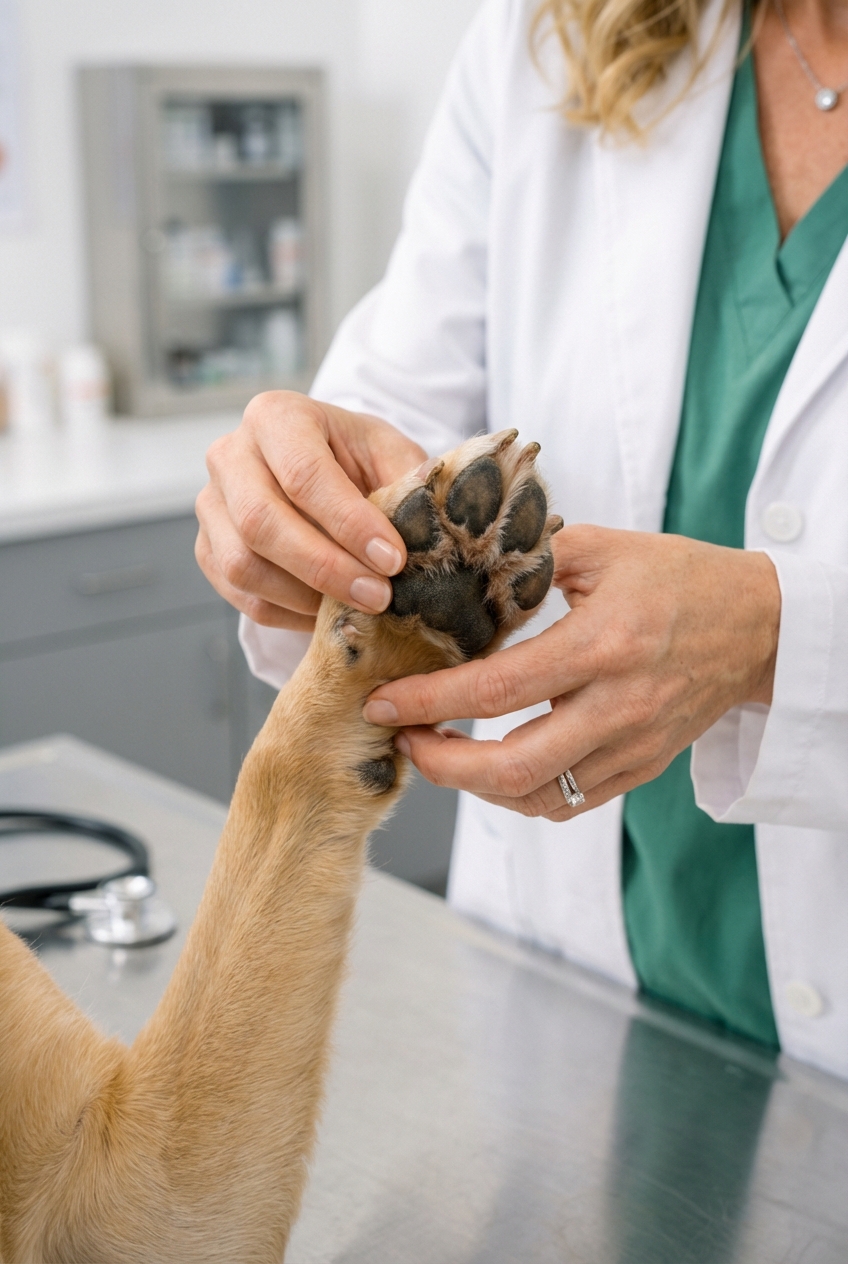
Quick at-home checks (5 minutes, no stress)
Before you assume it is “just allergies,” do a calm, gentle paw check in good light. If your dog is painful or won’t let you look, stop and call your veterinarian.
- Look between each toe for redness, swelling, discharge, or a small lodged object.
- Check the nails for cracks, bleeding, or a broken nail bed.
- Smell the paws for a strong musty odor that can suggest infection (including yeast), especially if it returns quickly.
- Check paw pads for burns, cracking, or a raw spot.
- Notice if one paw or all paws are affected. One paw often points to injury or a foreign body, but not always.
If you can do so safely, take a clear photo of the top and bottom of the paw. If things worsen, photos help your veterinarian see changes over time.
Safe, pet-friendly care you can do at home
If your dog is mildly licking and the skin is intact, these steps can help reduce irritation and break the lick cycle. If there is open skin, bleeding, significant swelling, or pus, skip home care and call your veterinarian.
Rinse after walks
A quick rinse can remove pollen, grass, and sidewalk residue. Use lukewarm water and gently pat dry, including between the toes.
Try a short soak (plain water)
For mild itchiness, a brief paws-only soak in plain lukewarm water can be soothing. The key is thorough drying afterward so you do not trap moisture.
- Keep it short: about 2 to 5 minutes.
- Use lukewarm water.
- Pat dry well, especially between toes.
If your dog’s paws smell strongly musty, the skin looks angry and inflamed, or the chewing is intense, do not keep soaking without veterinary guidance. Moisture can worsen yeast problems, and an underlying allergy often needs a more complete plan.
Prevent licking while you troubleshoot
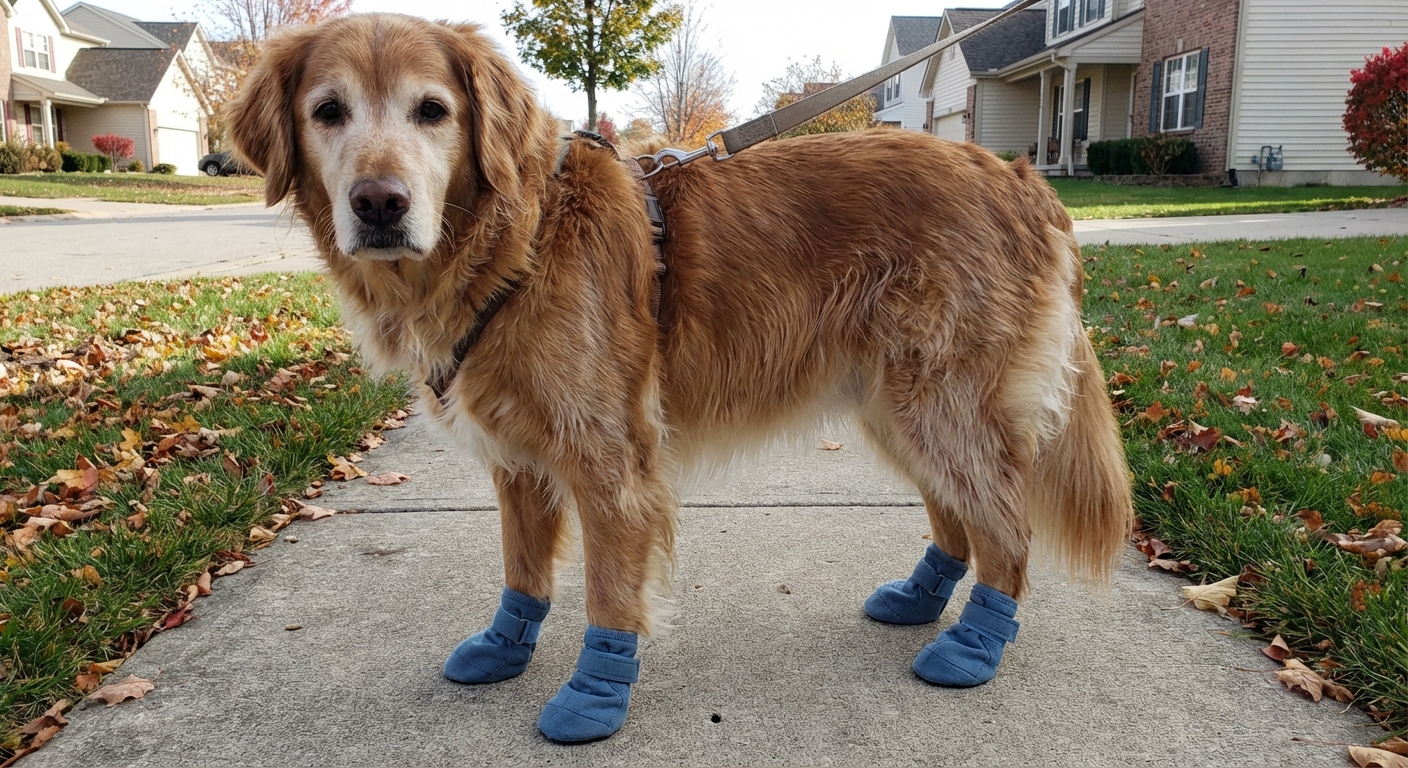
Constant licking can turn mild irritation into infection. Use a comfortable e-collar, inflatable collar, or booties for short periods while the skin calms down.
Avoid human products unless your veterinarian says otherwise
This is a big one. Many well-meaning owners reach for human creams or home remedies, but some can sting, trap moisture, be toxic if licked, or make infections worse.
- Avoid essential oils on paws.
- Avoid zinc-based diaper rash creams.
- Be cautious with antibiotic ointments or steroid creams unless your veterinarian tells you exactly what to use and where to apply it.
Support skin health from the inside
Nutrition will not “cure” allergies overnight, but a healthier skin barrier can reduce flare-ups over time.
- Omega-3 fatty acids (like fish oil) can support the skin barrier and reduce inflammation in some dogs. Ask your veterinarian for a safe dose for your dog’s weight.
- Keep treats simple if you suspect a food sensitivity. Too many mixed-ingredient treats can make patterns harder to spot.
- Hydration matters for skin health. Fresh water and moisture-rich foods can help support overall comfort.
When paw chewing needs a veterinarian
Please reach out to your veterinarian promptly if you see any of the following. These are signs the issue may be infection, pain, or a foreign body, and delaying care can make treatment longer and more expensive.
- Swelling of the paw or between toes
- Limping or yelping when the paw is touched
- Bleeding, open sores, or raw skin
- Pus or a sticky discharge
- Strong odor that returns quickly after cleaning
- Chewing that is waking your dog up or interfering with sleep
- Symptoms lasting more than 3 to 5 days despite basic care
To help your visit go smoothly, bring a list (or photos) of any products that touch your dog’s feet: floor cleaners, yard treatments, wipes, shampoos, and booties. Your veterinarian may recommend skin cytology (a quick microscope check for yeast or bacteria), parasite treatment, pain control, allergy control options, or a food trial if a food allergy or adverse food reaction is suspected.
Preventing future flare-ups
Once you identify the underlying cause, prevention gets much easier. These habits can make a real difference, especially for allergy-prone dogs.
- Keep paws clean and dry: quick rinse after walks, then dry well.
- Trim hair between paw pads: less trapped pollen and moisture.
- Stay consistent on parasite prevention: even indoor dogs can be exposed.
- Track patterns: note season, location, foods, and cleaning products when licking worsens.
- Ask about an allergy plan: many dogs do best with a layered approach rather than one “magic fix.”
If you take one thing from this: paw chewing is a symptom, not a personality flaw. When you calmly investigate the cause and protect the skin barrier, you give your dog real relief.
Frequently asked questions
Is paw chewing always allergies?
No. Allergies are common, but infections, irritants, parasites, injury, and pain are also frequent causes. If it is sudden, intense, or limited to one paw, think injury or foreign body first, but keep in mind some skin conditions can still be uneven.
Why are my dog’s paws turning brown?
Rusty brown staining is often from saliva. It can be a clue that licking is frequent and ongoing, and it commonly appears with allergies or infection (including yeast). The staining itself is not the danger, but the ongoing moisture can contribute to skin breakdown and secondary infections.
Can anxiety cause paw chewing?
Yes, some dogs lick when stressed or bored. But I always recommend ruling out medical causes first, because itch and pain are much more common than purely behavioral causes.