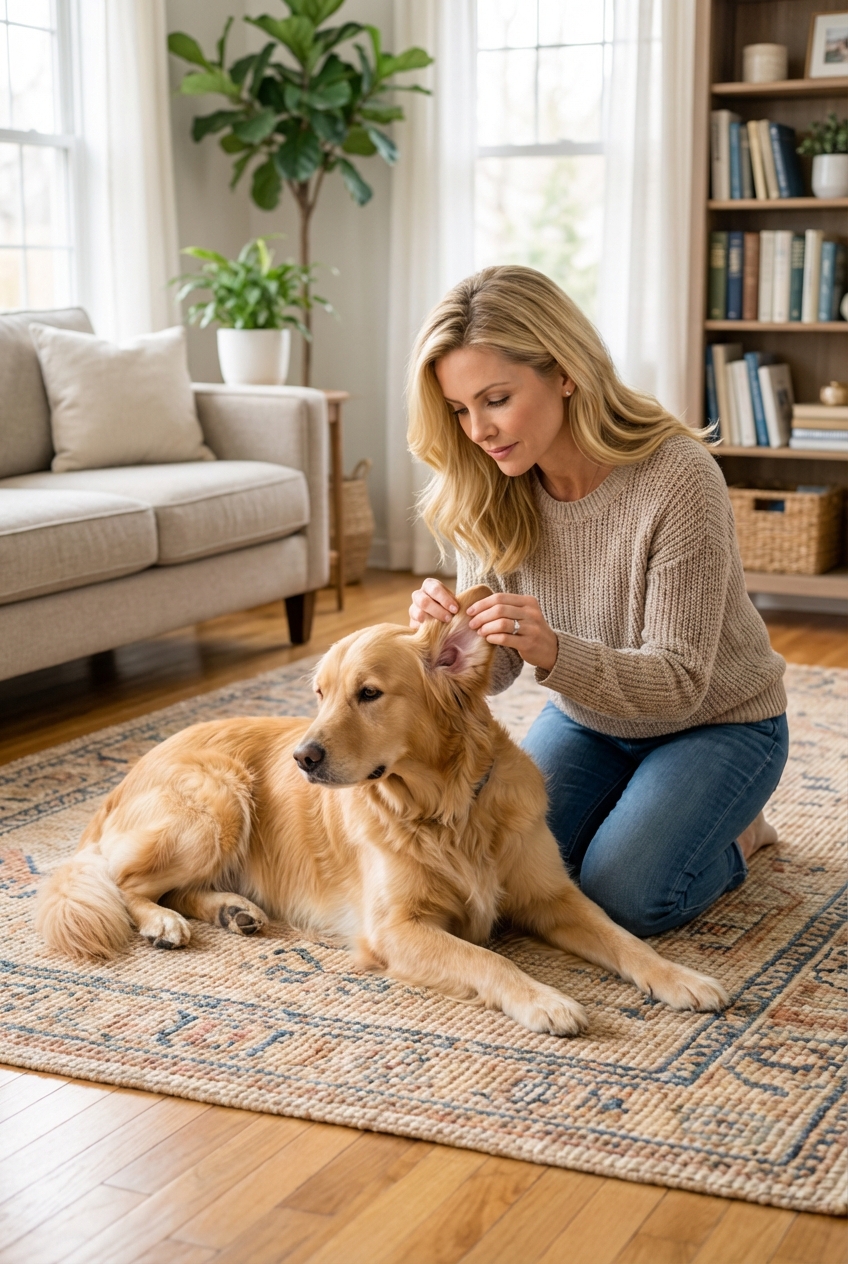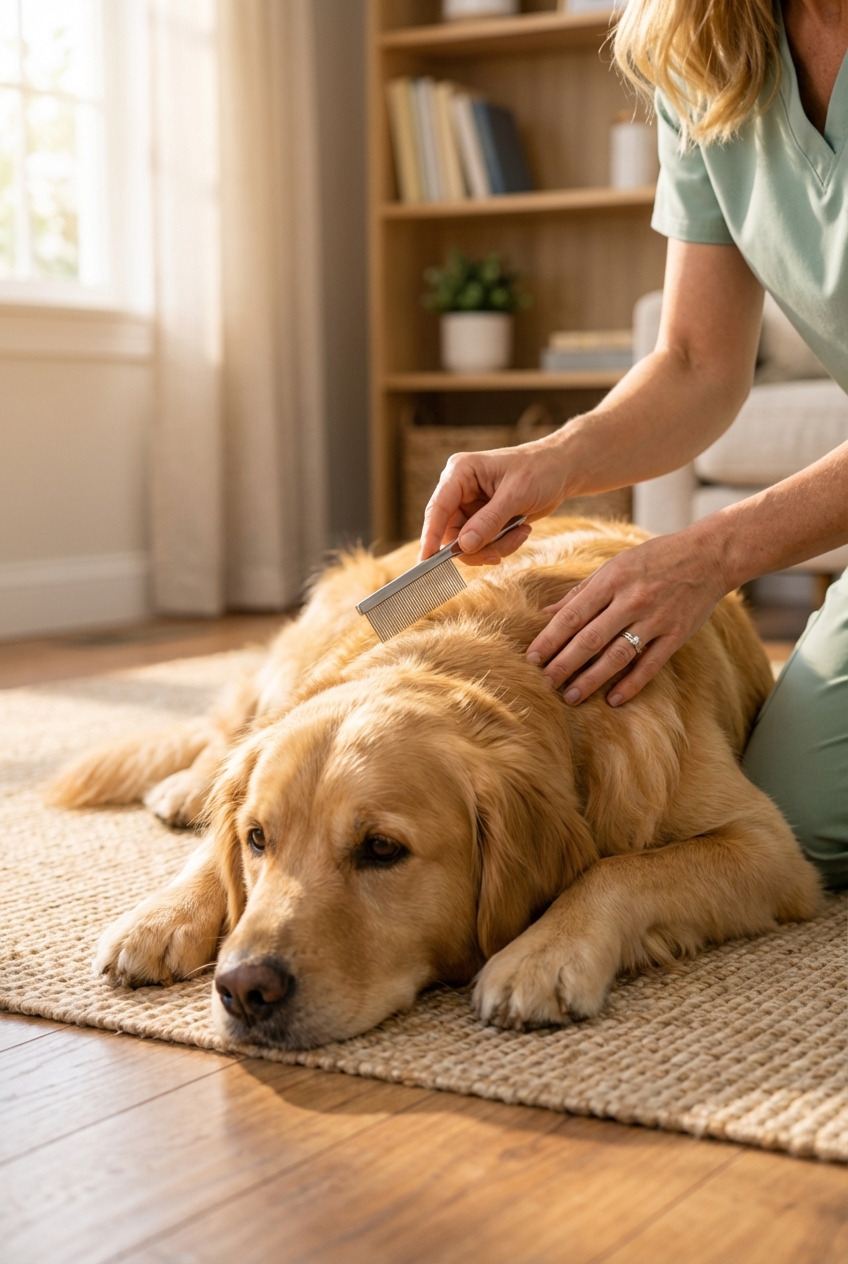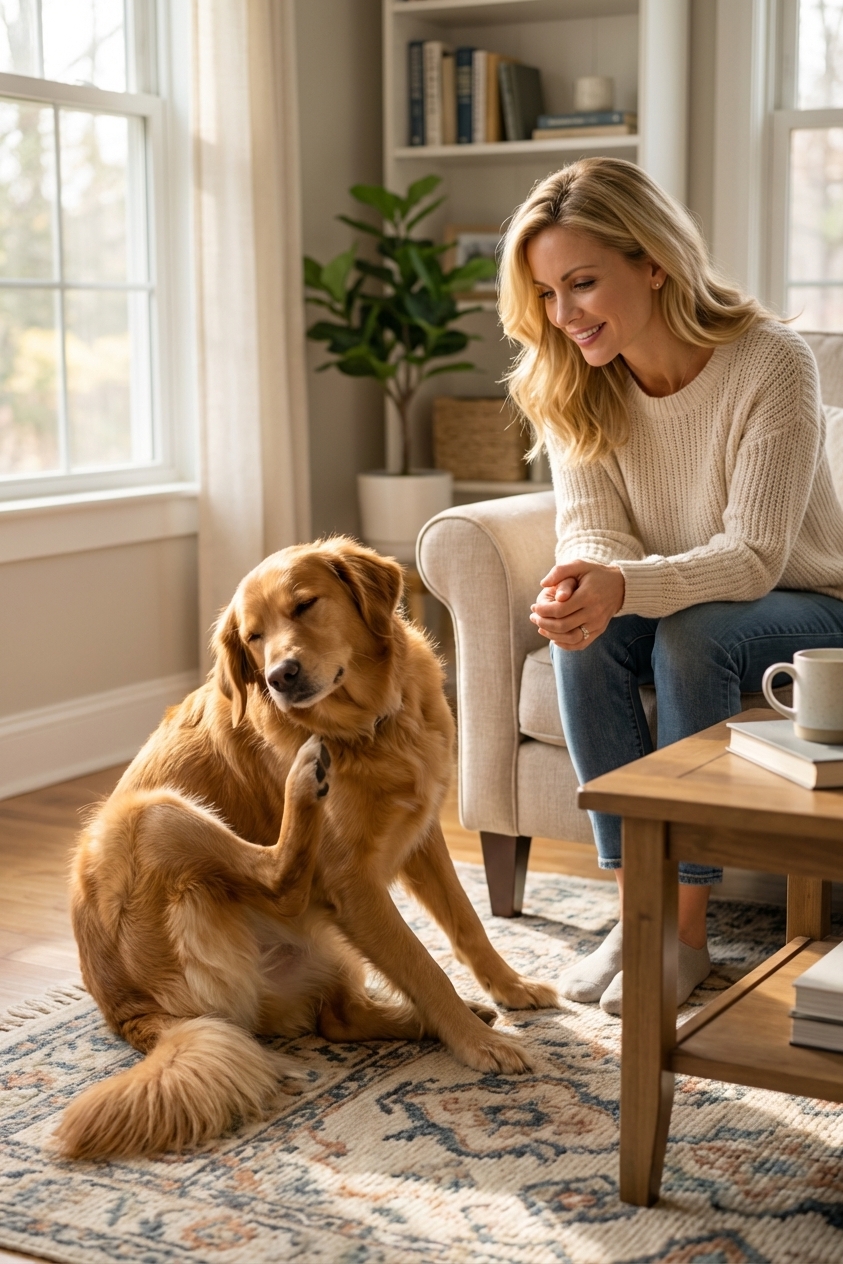
Is your dog licking paws or getting a red belly in spring or fall? Learn common symptoms, top triggers (pollen, grass, mold), easy home relief steps, and whe...
Article
•
Designer Mixes
Why Dogs Chew Their Feet

Shari Shidate
Designer Mixes contributor
Watching your dog chew, lick, or nibble their feet can be confusing and honestly a little heartbreaking, especially when you can tell they cannot get comfortable. As a veterinary assistant in Frisco, Texas, I see this concern in puppies, adults, and seniors, and the good news is that most causes are very treatable once you pinpoint the “why.”
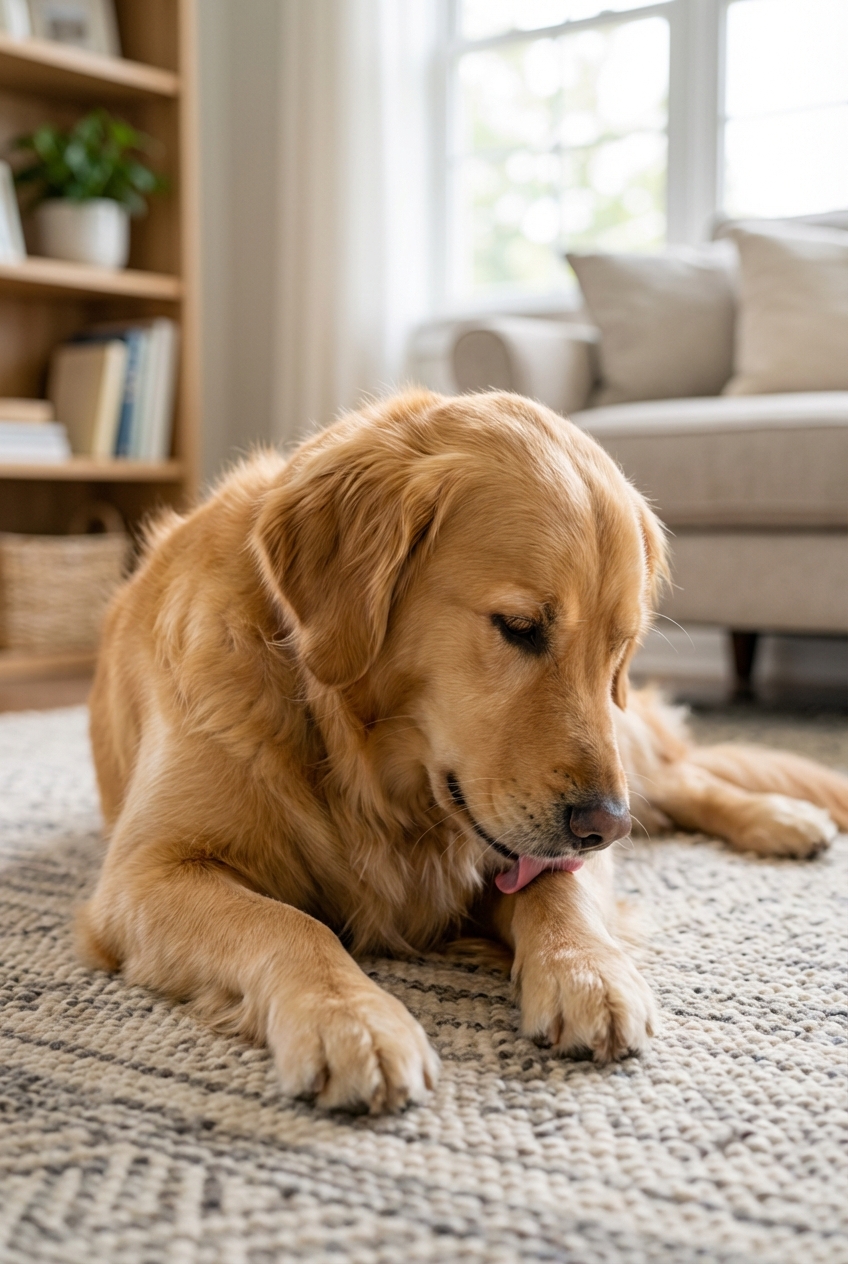
This guide walks you through common reasons dogs chew their paws, what to look for at different ages, safe at-home steps, and when it is time to call your vet.
Is paw chewing ever normal?
A little paw licking after a walk or after grooming can be normal. It becomes a problem when it is frequent, intense, causes redness, hair loss, broken skin, odor, or keeps your dog from sleeping or playing.
Rule of thumb: If you are noticing it daily, seeing skin changes, or your dog seems uncomfortable, treat it like a medical clue, not a quirky habit.
The most common reasons dogs chew their paws
1) Allergies (the big one)
Paws are a top target for allergies because they touch grass, pollens, cleaning chemicals, and other irritants. Allergies can also cause whole-body itch, and many dogs focus on their paws because they are easy to reach.
- Environmental allergies (pollen, grasses, dust mites, mold): often seasonal at first, then can become year-round.
- Food allergies: can show up as itchy paws, ear infections, or skin irritation. They are less common than environmental allergies in many dogs, but still important.
- Contact irritation: lawn treatments, de-icers, detergents, new wipes or shampoos.
Clues: licking multiple paws, face rubbing, recurrent ear issues, red saliva staining between toes.
2) Yeast or bacterial infection
Moisture trapped between toes is a perfect environment for yeast and bacteria. Allergies often start the itch, then licking breaks the skin barrier. That barrier is the skin’s protective outer layer that helps keep germs out and moisture in. Once it is damaged, infection moves in more easily.
- Yeast may have a musty odor and greasy or darkened skin. Odor alone is not diagnostic, but it is a helpful clue.
- Bacterial infection may cause pustules, swelling, tenderness, and sometimes oozing.
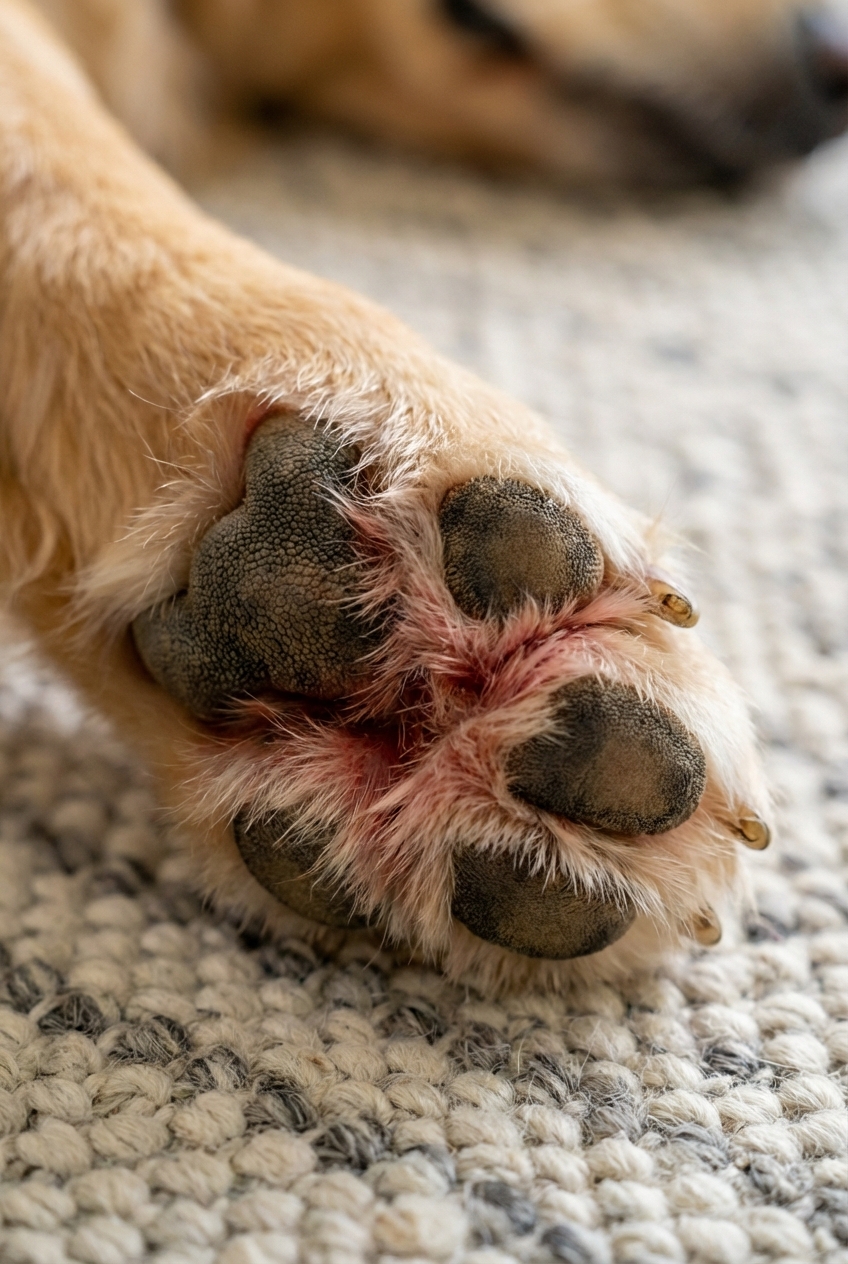
Clues: odor, redness between toes, thickened skin, brown discoloration, increased licking after baths or swimming. If you are seeing persistent redness plus odor or discharge, home rinsing is rarely enough and prescription therapy is often needed.
3) Fleas, mites, and other parasites
Flea allergy dermatitis can make dogs intensely itchy even with very few fleas. Mites can also cause paw itching depending on the species.
- Fleas often cause itch around the rump and tail base too, not just the paws.
- Mange mites can cause crusting, hair loss, and intense itch.
Clues: sudden itch, scabs, hair loss, other pets itchy, not on consistent vet-approved prevention.
4) Something stuck in the paw
Foxtails, thorns, small splinters, sticker burrs, or even a tiny piece of glass can create a big reaction. Dogs may chew one paw aggressively and limp or refuse to put weight on it.
Clues: one paw only, sudden onset, limping, swelling in one toe, a small draining tract.
Important: If you suspect a foxtail or see a puncture or draining tract, do not wait. Foxtails can migrate and cause deeper infection, so prompt veterinary care matters.
5) Dry skin, cracked pads, or irritation
Hot sidewalks, cold dry weather, rough terrain, and frequent bathing can dry out paw pads. Cracks can sting, and dogs respond by licking.
Clues: rough or flaky pads, licking after walks, worse in extreme heat or cold.
6) Pain and arthritis (especially in seniors)
Sometimes paw chewing is your dog’s way of coping with pain in a joint, nail bed, or toe. Seniors may focus on a paw that hurts due to arthritis, an old injury, or a nail that is pressing into the quick.
Clues: stiffness, difficulty getting up, licking one area, sensitivity when you touch the paw.
7) Anxiety, boredom, or habit (overgrooming)
Dogs can self-soothe through licking, especially during stressful changes, long days alone, or when they are under-exercised. This can become a learned habit and may lead to lick granulomas, most commonly on legs, but paws can be involved too.
Clues: licking mostly in the evenings, when alone, or during storms, and paws look normal at first.
8) Interdigital cysts and furuncles
These are painful, inflamed bumps between the toes that can look like swelling in one web space or around one toe. They can be linked to allergies, infection, pressure on the feet, or hair and debris trapped in the skin.
Clues: a tender lump between toes, recurring swelling in the same spot, limping, licking one paw, or a spot that drains and then returns.
9) Hormonal or immune-related skin issues
Conditions like hypothyroidism can change skin quality and increase infection risk. Autoimmune conditions can affect nails and paw pads too. These are less common, but important when paw problems are chronic or recurring.
What paw chewing looks like by age
Puppies
- Exploration and mild grooming can be normal.
- Parasites and contact irritation are common.
- Early allergies can start young, especially in certain breeds and mixes.
If a puppy is chewing enough to make the skin red, it deserves a closer look. Puppies can go from a little irritated to infected quickly.
Adult dogs
- Environmental allergies and yeast are frequent drivers.
- Foxtails and foreign bodies are a big warm-weather issue in Texas.
- Behavioral licking can appear after routine changes, moving, or schedule shifts.
Senior dogs
- Arthritis or localized pain rises on the list.
- Thickened nails, reduced flexibility, and less grooming efficiency can contribute.
- Secondary infections are common when the skin barrier is weaker.
At-home checks you can do today
Pick a calm moment, use good light, and check all four paws. If your dog is painful or will not let you look, do not force it. That is a sign to get veterinary help.
If your dog might bite due to pain, ask your clinic about safe handling tips. In some cases, a properly fitted basket muzzle can be the safest option for everyone.
- Between toes: redness, discharge, swelling, brown staining, odor.
- Paw pads: cracks, flaking, burns, cuts.
- Nails: broken nails, nails too long, swelling around the nail, licking one toe only.
- Top of the paw: hot spots, scabs, hair loss.
- One paw or multiple paws: one paw suggests injury, a foreign body, a nail issue, or an interdigital cyst; multiple paws suggests allergy or infection.
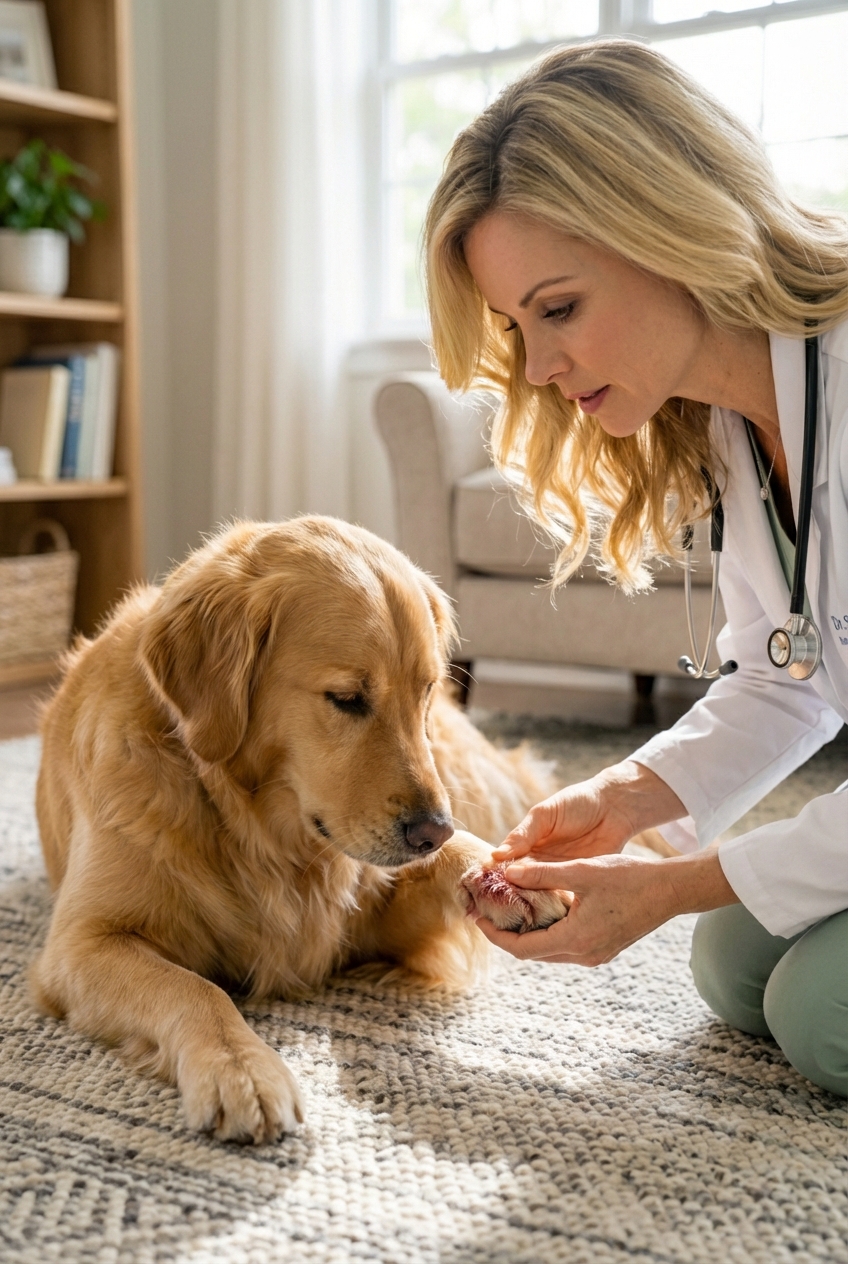
Safe, practical steps that often help
Rinse and dry after outdoor time
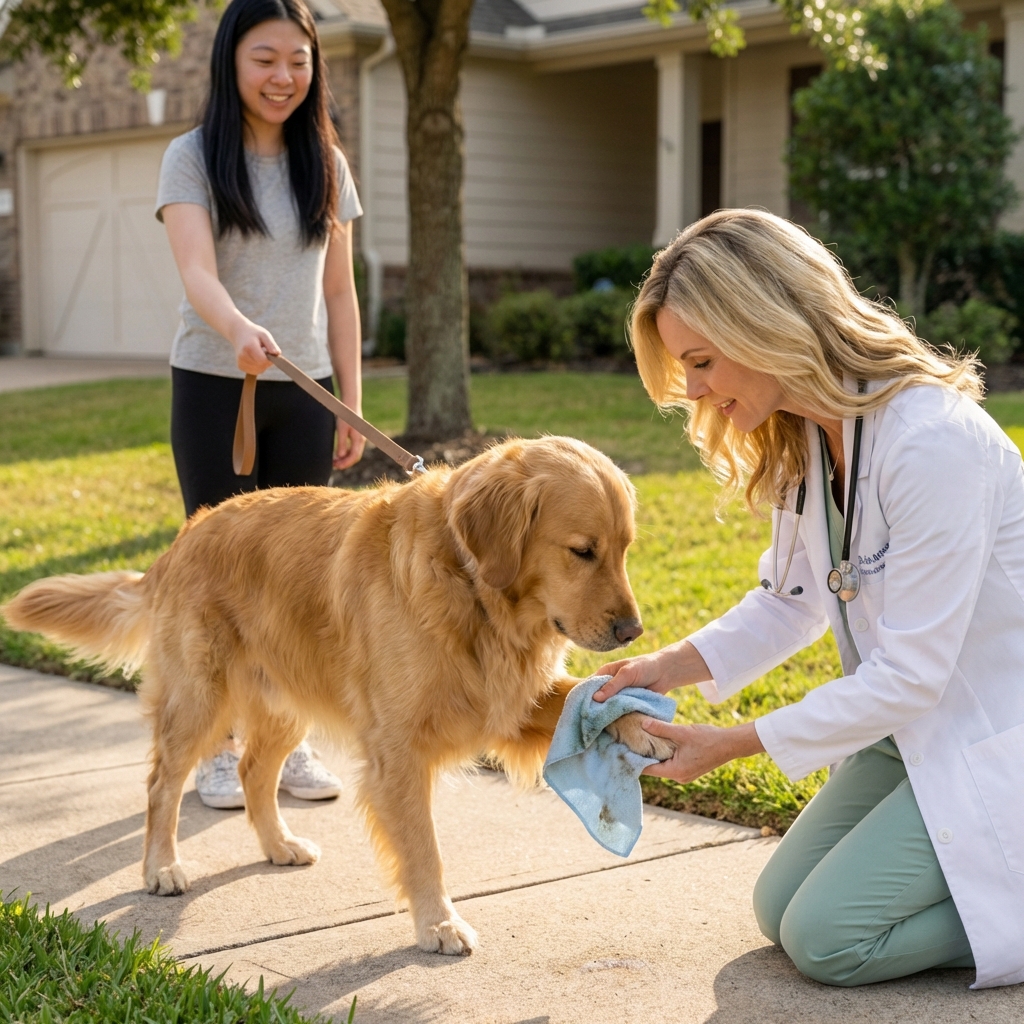
If environmental allergies or contact irritation are suspected, rinsing paws after walks can reduce allergens. Use lukewarm water, then dry well, especially between toes.
Prevent the lick and itch cycle
If the skin is already irritated, licking keeps it inflamed and invites infection. Consider:
- An e-collar (cone) for short-term protection if your dog cannot stop.
- A breathable bootie outdoors if grass triggers symptoms, but remove it indoors so the paw can stay dry.
Check flea prevention
Use consistent, vet-recommended flea prevention, especially if you are seeing itching plus scabs. Many over-the-counter products are less reliable, and some are unsafe for certain pets. If you have cats in the home, always verify dog products are cat-safe before using them.
Support skin health from the inside
Nutrition matters because the skin barrier is partly built from dietary protein and fatty acids. If your dog is on a low-quality diet, or you notice flaky skin and recurrent infections, talk with your veterinarian about diet quality and whether omega-3s (EPA and DHA) are appropriate for your dog.
Small, consistent improvements often work best: cleaner ingredients, steady routine, and targeted supplements when your vet agrees.
What not to do
- Do not use human antifungal or steroid creams unless your vet directs you. Dogs can lick them off, and some ingredients are unsafe when ingested.
- Do not ignore odor or discharge. That often means infection, and infections rarely resolve with waiting it out.
- Do not do a diet switch every week trying to guess a food allergy. Food trials need a structured plan to be meaningful.
- Do not cut out all grains automatically. Grain-free is not a treatment for most itchy paws. Any diet change should be vet-guided to keep nutrition balanced and appropriate for your dog.
When to call the vet
Get veterinary help promptly if you notice:
- Limping, sudden intense chewing, or a swollen toe
- Open sores, bleeding, or raw skin
- Bad odor, pus, or sticky discharge
- Repeated ear infections along with paw licking
- Paw chewing that persists for several days despite rinsing and preventing licking, especially if it is not a mild case or you are seeing redness
- Your dog seems painful, lethargic, or is not eating normally
At the clinic, your vet may recommend a skin cytology (a quick microscope check), a fungal or bacterial culture, parasite testing, and sometimes an allergy plan. This is evidence-based detective work, and it is usually the fastest path to relief.
How vets treat paw chewing
Treatment depends on the cause, and many dogs need a combination approach.
- Allergies: targeted itch control medications, allergy immunotherapy, and environmental management.
- Yeast or bacterial infections: medicated wipes or shampoos, prescription antifungals or antibiotics when needed.
- Foreign bodies: removal and sometimes antibiotics or wound care.
- Nail and toe issues: proper nail trims, treating nail-bed infections, and addressing interdigital cysts when present.
- Pain: addressing arthritis or localized injury, and building a safe pain control plan.
- Behavioral licking: enrichment, structured exercise, reducing triggers, and sometimes anti-anxiety support.
Prevention tips that actually stick
- Keep paws clean and dry, especially after rain, swimming, or dewy grass.
- Trim hair between paw pads if it traps moisture or debris.
- Maintain nail length so toes sit naturally and do not splay.
- Use consistent parasite prevention year-round.
- Address allergies early so itching does not progress into chronic infection.
- Support a strong skin barrier with high-quality nutrition and vet-approved omega-3s when appropriate.
Quick checklist: What your dog’s paws are telling you
- Multiple paws, seasonal flare-ups: likely environmental allergies.
- Odor and brown staining: could be yeast, especially if the skin looks greasy or dark. Your vet can confirm with testing.
- One paw, sudden chewing: look for a foreign body, injury, nail problem, or interdigital cyst.
- Red bumps or oozing: likely infection.
- Senior dog licking one paw with stiffness: consider pain and arthritis.
If you are not sure, that is okay. Your job is not to diagnose perfectly. Your job is to notice patterns and get help before the skin barrier breaks down.
Bottom line
Dogs chew their paws for reasons that almost always make sense once you look closely: allergies, infection, parasites, something stuck, irritation, pain, stress, or painful toe issues like interdigital cysts. Start with a gentle paw check, keep the paws clean and dry, prevent licking when skin is inflamed, and involve your veterinarian early if you see odor, discharge, limping, swelling, or persistent chewing.
Relief is possible, and in many cases it is quicker than you think when you match the right solution to the real cause.