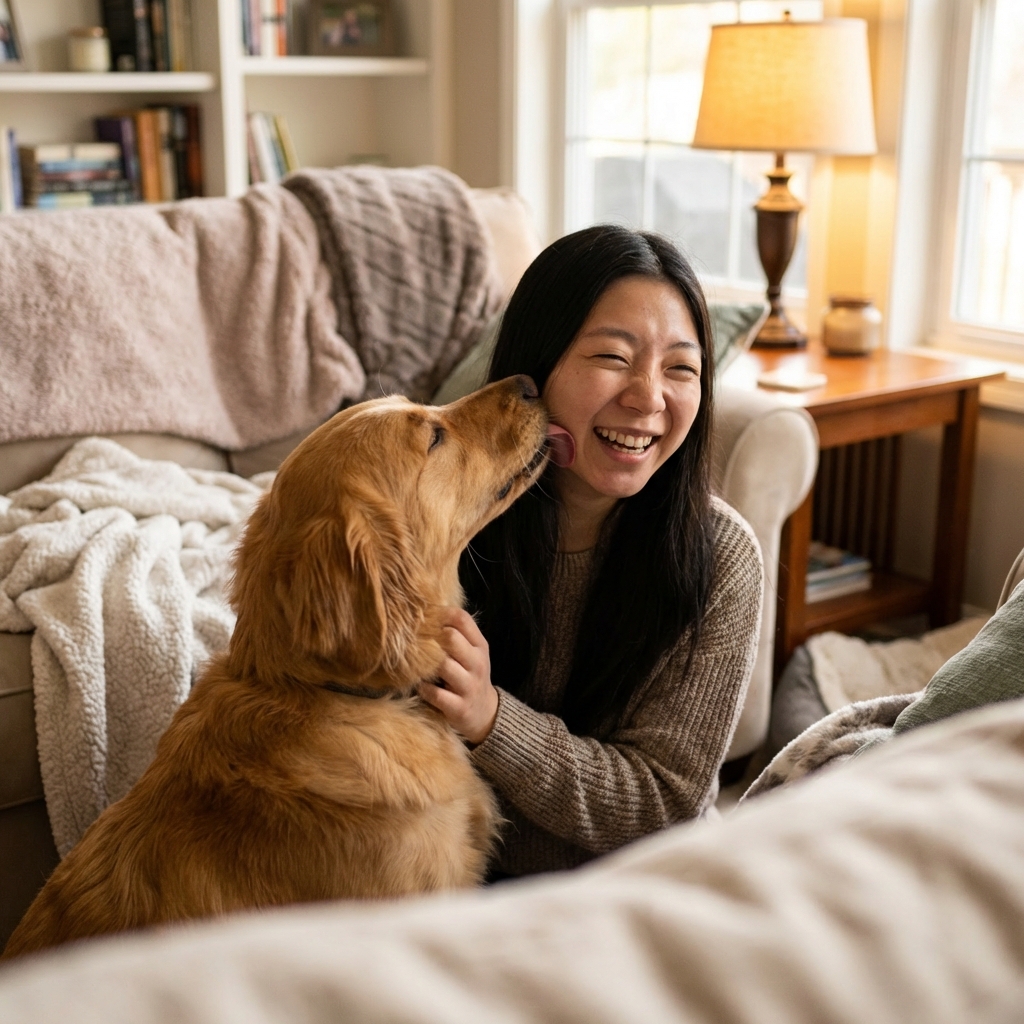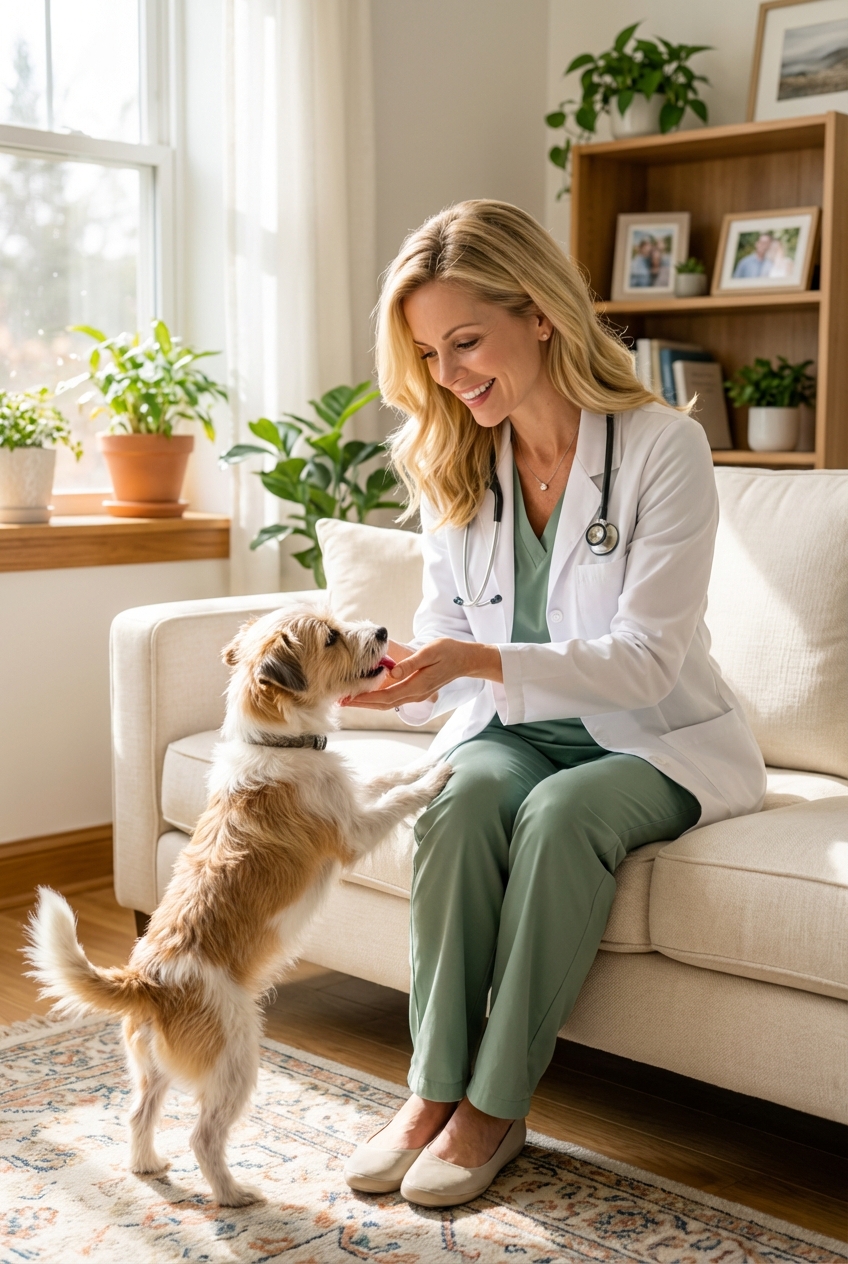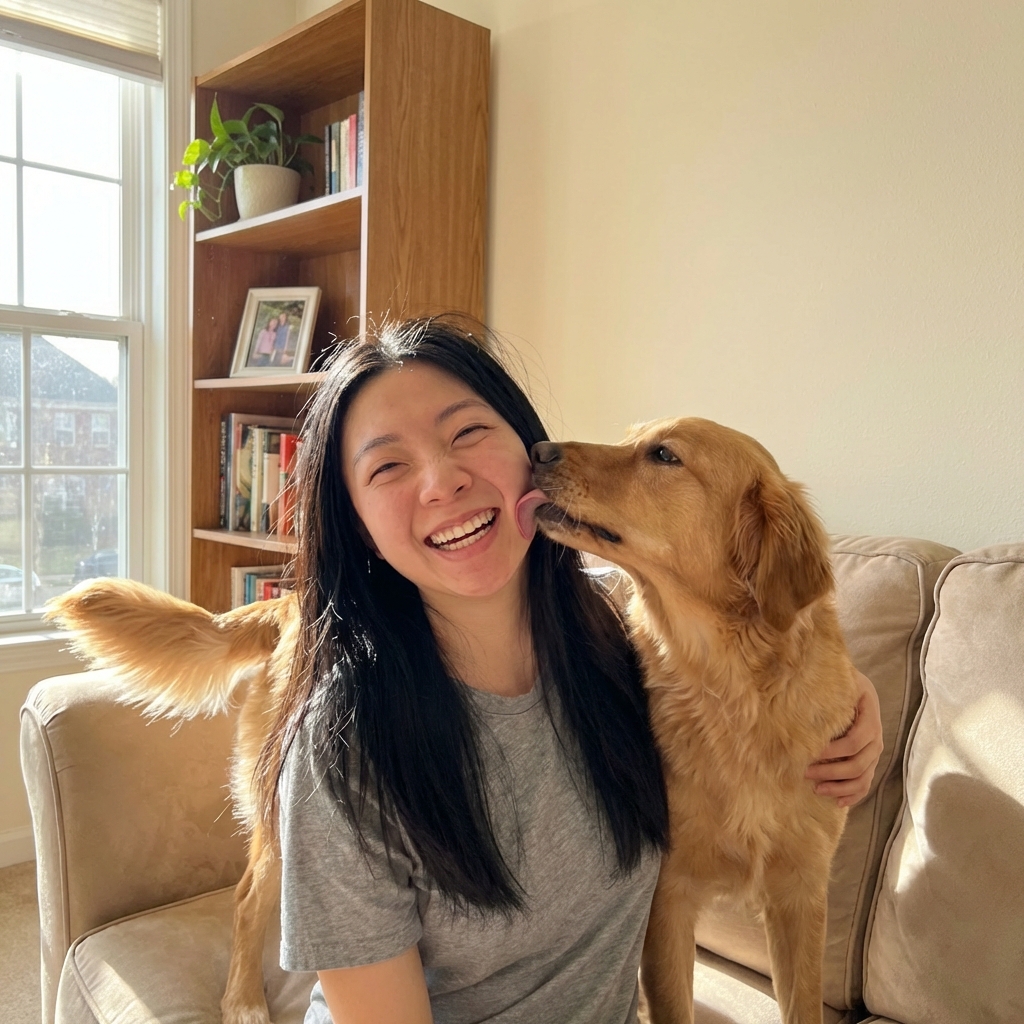
Dogs lick faces for bonding, communication, taste, attention, and stress relief. Learn when it’s normal, when to be cautious, and how to set kind “no kis...
Article
•
Designer Mixes
Why Does My Puppy Lick My Face?

Shari Shidate
Designer Mixes contributor
Puppy kisses can feel like the sweetest little love note. They can also be… a lot. If you’re wondering, “Why does my puppy lick my face?” you’re not alone. In vet clinics, this is one of those behaviors that’s commonly discussed and totally normal, even if it leaves owners confused.
The good news: face licking is usually a mix of normal puppy communication, bonding, and curiosity. Even better, you can guide it gently so it stays cute and doesn’t become overwhelming.
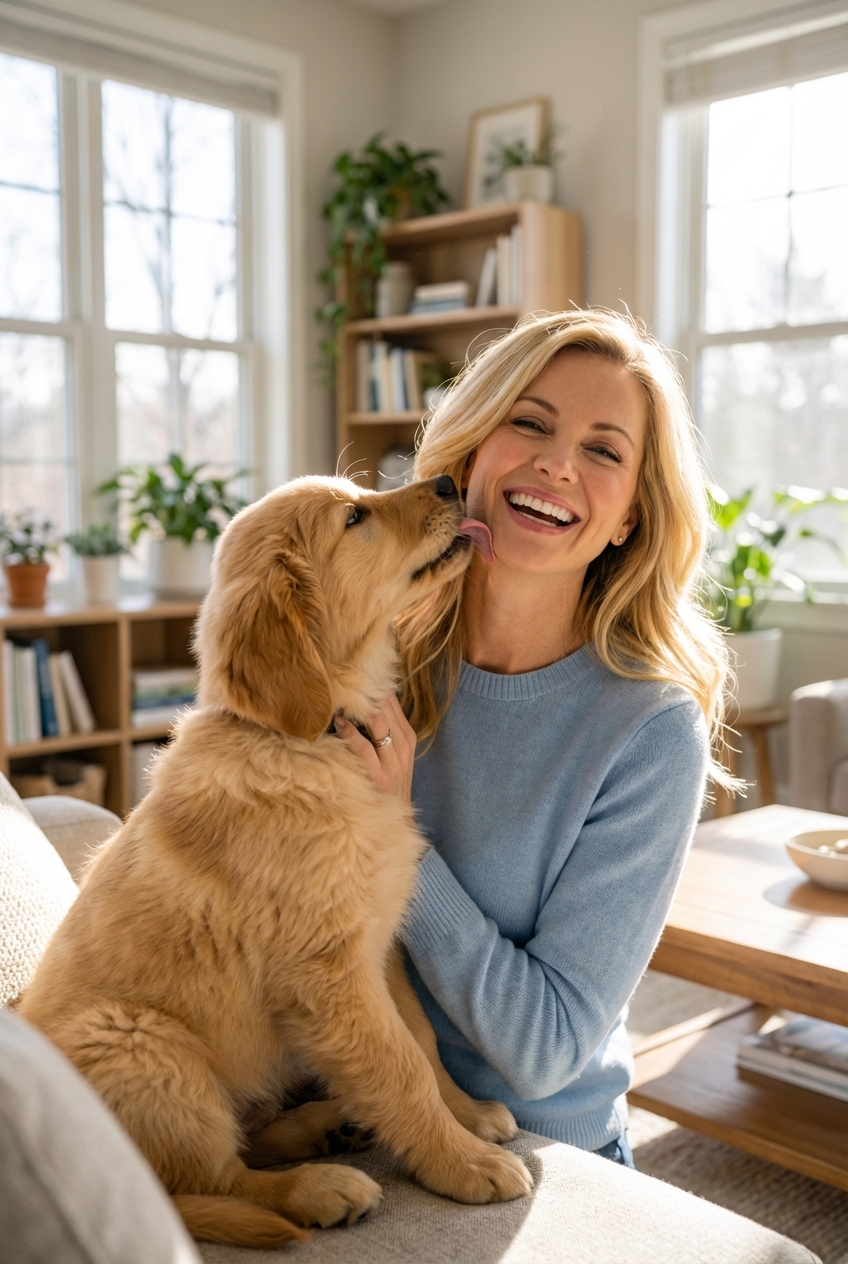
What face licking means
Puppies don’t lick for one single reason. Most of the time, licking is a combination of instinct, learning, and reinforcement from us humans.
1) Social bonding
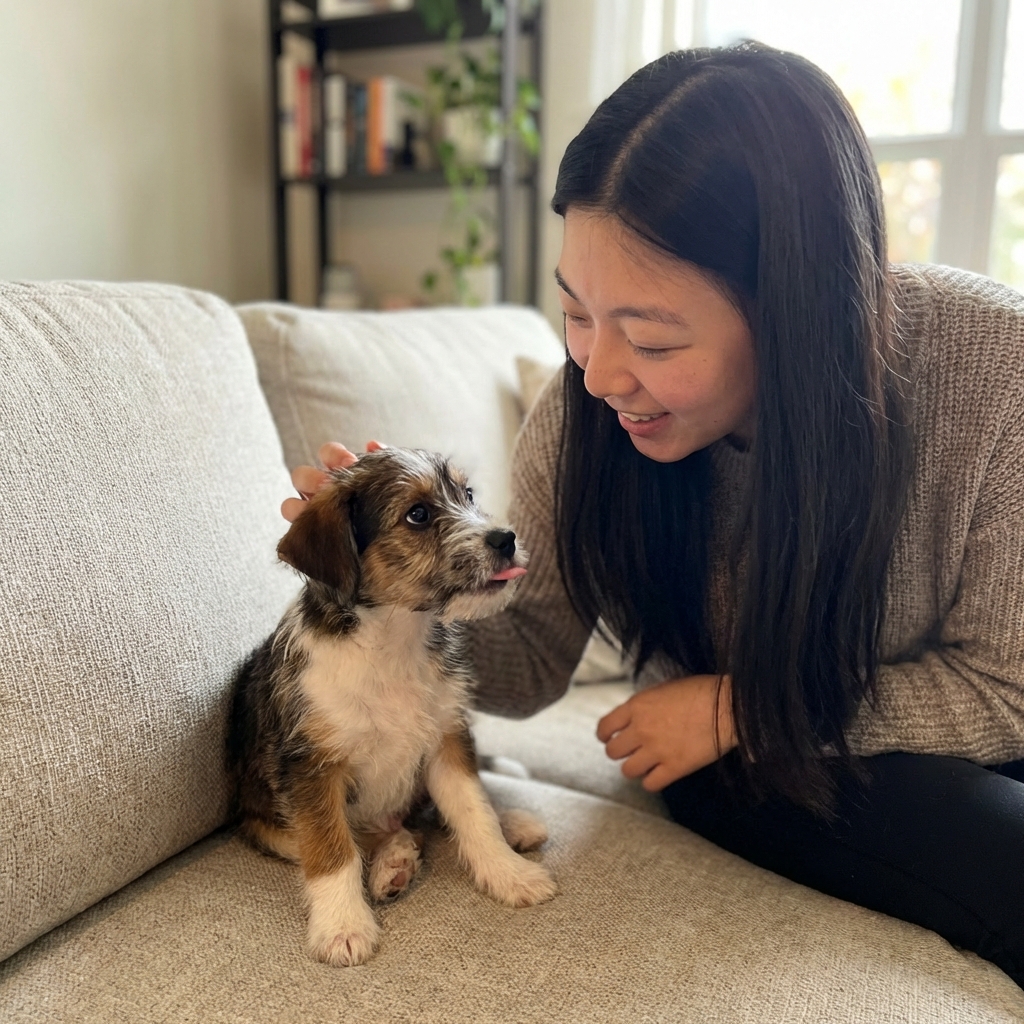
Dogs are social animals. Licking is one way they connect and maintain relationships. When your puppy licks your face, they may be saying, “You’re my person,” in the most puppy way possible.
2) Communication and appeasement
In canine body language, licking can be an appeasement gesture. Some puppies lick when they’re excited, a little unsure, or trying to keep the interaction friendly. If your puppy is wiggly, mouthy, and licking quickly, they may be a bit overstimulated rather than purely affectionate.
Look at the rest of the body language, too: a loose, wiggly puppy is usually having fun. A puppy who looks tense, turns their head away, freezes, or shows lots of “whale eye” may be stressed and trying to de-escalate.
3) You taste interesting
Skin is salty. Faces can smell like food, lip balm, lotion, toothpaste, or whatever you ate earlier. Puppies explore the world with their mouths, and your face is close, warm, and full of information.
4) They learned it works
Most puppies repeat behaviors that get a reaction. If licking makes you laugh, talk in a happy voice, pet them, or pick them up, your puppy can learn, “Face licking gets me attention fast.” That’s not bad. It’s simply learning.
5) It may be self-soothing
Licking can be a calming activity for some dogs and may help them self-soothe. If your puppy licks during quiet time, at bedtime, or when they’re tired, it might be part of a settling routine.
Is it normal?
Yes, in most cases face licking is normal puppy behavior. Puppies are learning their social world and testing what gets them engagement.
That said, frequency and context matter. A puppy who licks occasionally when greeting you is different from a puppy who seems frantic, can’t settle, and licks constantly.
When it can be something else
As a veterinary assistant, I always share this simple rule: behavior changes are worth noticing. An increase in licking, especially if it’s sudden or intense, can sometimes come with medical or comfort issues.
Reasons licking may increase
- Anxiety or stress: new home, loud environment, separation, too much activity.
- Nausea, reflux, or stomach upset: some dogs lick more when they feel queasy.
- Pain or discomfort: if your puppy seems restless, clingy, or unable to settle.
- Itchy skin or allergies: this usually shows up as licking their own paws or skin (plus scratching, ear issues, or redness). It doesn’t always cause face licking specifically, but overall “extra licking” can increase.
- Dental discomfort: bad breath, pawing at the mouth, reluctance to chew.
- Compulsive behavior: rare in very young puppies, but worth discussing if licking looks nonstop and out of context.
If you notice sudden changes, excessive licking, drooling, vomiting, diarrhea, appetite changes, or your puppy can’t settle, it’s smart to check in with your veterinarian.
Should you allow it?
This is a personal choice, but it helps to make it an intentional one.
Health and hygiene
Puppy mouths aren’t uniquely “dirty,” but they do carry normal mouth bacteria. Puppies also lick floors, toys, other dogs, and sometimes poop. That’s normal puppy life. For most healthy adults, an occasional lick is typically low risk, but there’s still some zoonotic risk. If you’re cautious, avoid letting your puppy lick your mouth, nose, or eyes.
It’s especially wise to avoid face licking if:
- You’re immunocompromised.
- You have open cuts, cold sores, or facial wounds.
- You have very young children who can’t manage boundaries.
- Your puppy has intestinal parasites or isn’t up to date on vet care.
If you’re in the “no face licking” camp, that’s completely okay. Boundaries are part of good training and good relationships.
How to reduce it
You don’t have to scold. Harsh reactions can accidentally make licking more intense if your puppy thinks you’re playing. Instead, aim for calm, consistent feedback.
Also avoid common accidental rewards: squealing, laughing, excited talking, or pushing your puppy away with your hands can turn it into a game. If your puppy is jumping up toward your face, create a little space and reset instead.
Step 1: Pick a replacement
Dogs learn faster when we replace a behavior, not just stop one. Great alternatives include:
- Sit for greetings
- Hand target: touch nose to your palm
- Go to mat when visitors arrive
Step 2: Pause attention for licking
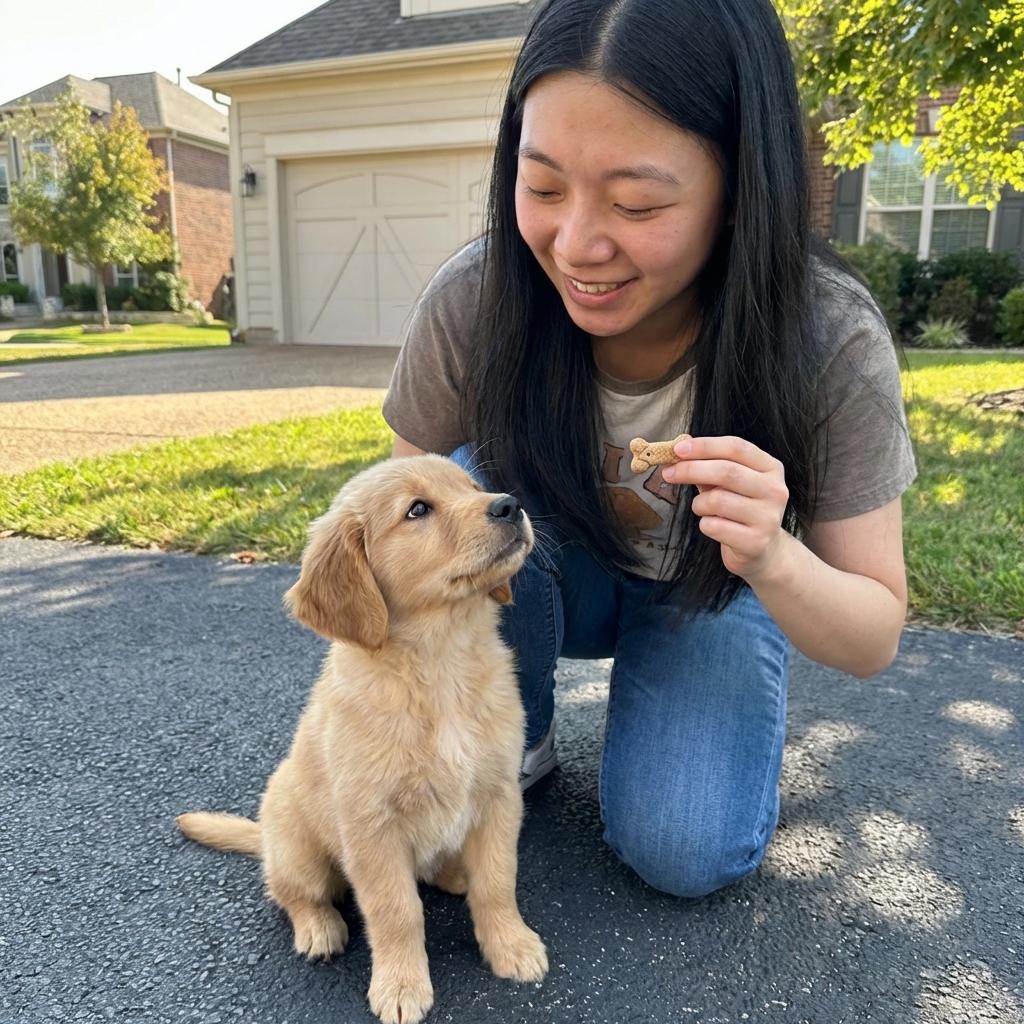
If licking starts, gently turn your face away and pause attention for a moment. No eye contact, no talking, no petting. The second your puppy pauses, reward the calm moment with attention or a treat.
Step 3: Reward calm greetings
When your puppy approaches with four paws on the floor, offer praise, petting on the chest or side, or a small treat. You’re teaching, “Calm gets you what you want.”
Step 4: Use simple management
Sometimes puppies lick because they’re overtired or overstimulated. Helpful tools:
- Leash during greetings so you can create space
- Baby gate for calm re-entry when you get home
- Chews and food puzzles to redirect mouthy energy
If your puppy keeps trying to reach your face, increase distance. Stand up, step behind a gate, or ask for a sit and reward it. Make the “right answer” easy.
Common situations
When you walk in the door
Puppies often lick faces during high excitement greetings. Try a short routine: come in quietly, ask for a sit, reward, then give calm affection. If your puppy is too excited to sit, wait for a moment of stillness and reward that.
When your puppy is in your lap
Lap time can turn into lick time quickly. Keep a small chew or toy nearby. If licking starts, offer the chew and calmly redirect to the toy.
When kids are involved
Teach children to keep faces back and offer a hand target or gentle petting on the puppy’s chest. Supervise closely. A puppy who is licking can also start nibbling, and we want everyone safe and confident.
Does it mean love?
Often, yes, it can be affection and bonding. But I like to keep it evidence-based and honest: licking isn’t a single emotion. It can be affection, excitement, appeasement, curiosity, or learned behavior. The real win is that your puppy is engaging with you and seeking connection. You can shape how that connection looks.
Age matters, too. Very young puppies are often extra mouthy, and many dogs lick less with maturity and consistent training.
If face licking feels sweet to you, set gentle boundaries so it stays enjoyable. If it feels stressful, you can absolutely teach a calmer greeting. Either way, you’re building trust.
When to call your vet
Contact your veterinarian if you notice any of the following:
- Licking becomes sudden, intense, or compulsive
- Your puppy seems nauseated, drools more than usual, or vomits
- Paw licking, itchy skin, ear redness, or frequent scratching
- Bad breath, trouble chewing, or signs of mouth pain
- Diarrhea or scooting, which can suggest parasites or GI upset
Most of the time, it’s simple puppy behavior. But when it’s not, early support can prevent bigger problems.
Bottom line
Your puppy likely licks your face because you’re comforting, interesting, and rewarding to interact with. It’s normal, and it’s also trainable. If you want fewer face kisses, focus on calm alternatives, pause attention when licking happens, and reward the behavior you want to see.
With a little consistency, you can keep the sweetness and skip the slobber.