A practical home-care plan for mild puppy diarrhea: safety check, hydration tips, bland diet portions, probiotics and pumpkin, plus red flags that mean call ...
Article
•
Designer Mixes
Why Does My Puppy Have Diarrhea?

Shari Shidate
Designer Mixes contributor
Puppy diarrhea is a common reason pet parents call the vet, and I get it. It can feel scary and messy, especially when your puppy is still so little. The good news is that many cases are mild and short-lived. The not-so-good news is that puppies can get dehydrated quickly, so it matters how long it lasts and how your puppy is acting.
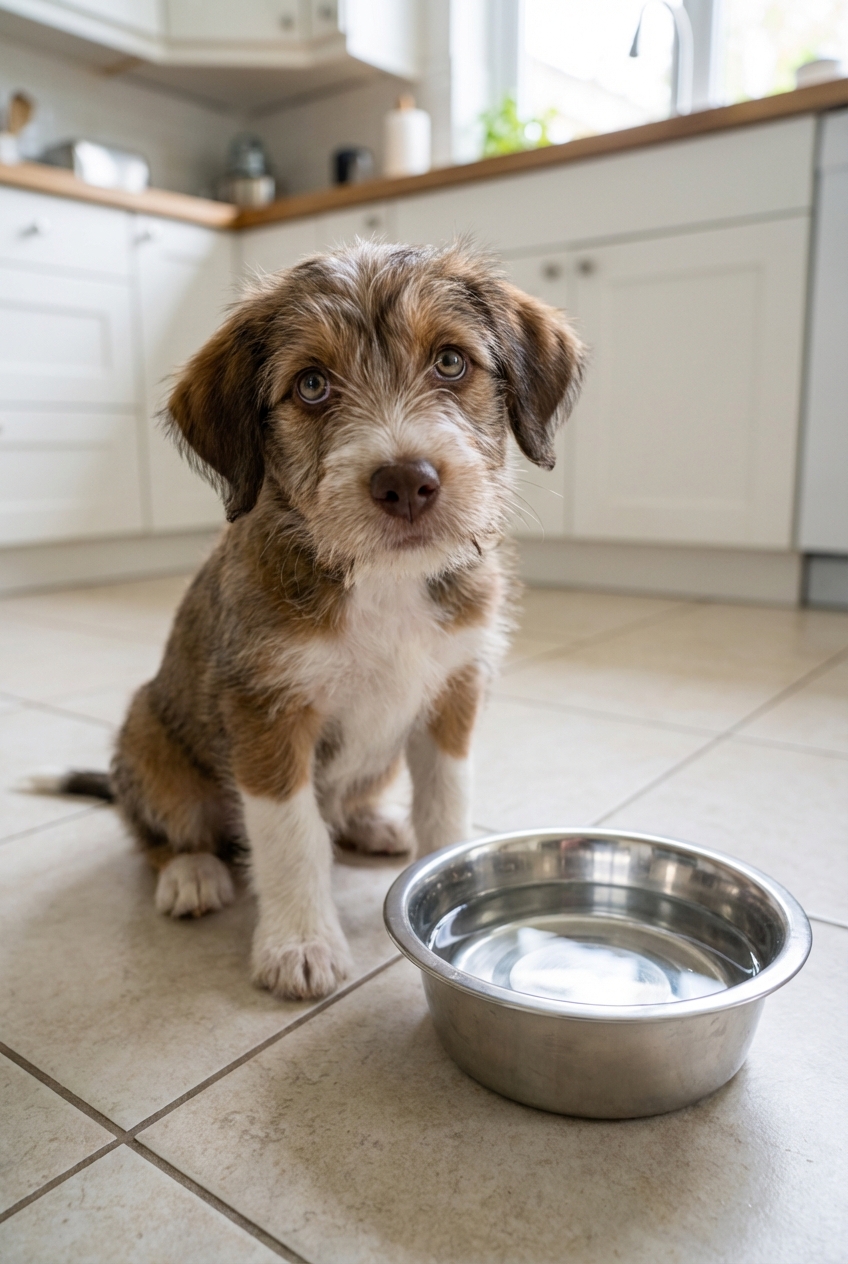
Let’s walk through the most likely causes, what you can do at home, and the red flags that mean it’s time to call your veterinarian right away.
What counts as diarrhea?
Diarrhea means stools that are looser than normal, more frequent than normal, or both. In puppies, it can show up as:
- Soft serve stool that still has some shape
- Watery stool that puddles
- Mucus on the stool (a slippery, jelly-like coating)
- Urgency or accidents in the house
One loose stool is not always an emergency. Ongoing diarrhea, watery diarrhea, or diarrhea paired with vomiting or lethargy need closer attention.
Common causes
1) Diet changes and “new treat syndrome”
Puppy tummies are sensitive. Switching foods too quickly, trying multiple treats, chewing on bones, or even licking plates can trigger diarrhea. This is especially common right after adoption, travel, boarding, or a holiday weekend.
2) Stress and big changes
Moving to a new home, meeting new pets, crate training, and changes in routine can all affect gut function. Some puppies may also have stress-related changes in their gut bacteria. Stress-related diarrhea often improves once your puppy feels safe and your routine becomes predictable.
3) Intestinal parasites
Parasites are extremely common in puppies and can include roundworms, hookworms, giardia, and coccidia. Others, like whipworms, can happen too, but are more variable by age and region. Some parasites cause loose stool with mucus, smelly gas, or weight loss. Many puppies look “fine” otherwise, which is why fecal testing matters.
4) Viral or bacterial infections
Puppies can get infectious diarrhea from exposure to contaminated environments or other dogs. Some illnesses are mild, but others, like parvovirus, can become life-threatening quickly. Vaccination status, age, and symptoms help your vet decide how urgent it is.
5) Eating something they should not
Puppies explore with their mouths. Diarrhea can happen after getting into:
- Trash or compost
- Fatty foods (grease, bacon, pizza)
- Toys, socks, rocks, sticks (risk of obstruction)
- Plants, chemicals, human medications (toxicity risk)
6) Food intolerance or sensitivity
Some puppies react poorly to certain proteins, rich foods, dairy, or high-fat treats. You might see recurring loose stools, gassiness, itchy skin, or frequent ear issues over time. True food allergies are less common than intolerance, but both are worth discussing with your vet if diarrhea is recurrent.
7) Too many “extras”
Chews, supplements, bully sticks, rawhides, and sudden additions like coconut oil can overwhelm a puppy’s digestive system. Even “healthy” additions can cause diarrhea if the portion is too large or introduced too fast.
Mild or urgent?
Age matters. Very young puppies (especially under 12 weeks) and small or toy breeds can dehydrate faster and may also be more prone to low blood sugar. When in doubt, call sooner.
Call your vet today if you notice
- Blood in stool (bright red or dark, tarry stool)
- Vomiting along with diarrhea, especially repeated vomiting
- Lethargy, weakness, collapse, or your puppy “just isn’t themselves”
- Signs of dehydration: dry gums, sticky saliva, sunken eyes, or not drinking
- Refusing food for more than one meal (take this seriously in young puppies)
- Fever or shivering
- Very watery diarrhea lasting more than 12 to 24 hours
- Unvaccinated or partially vaccinated puppies with diarrhea
- Suspected toxin or foreign object ingestion
Go to emergency care now
- Repeated vomiting and cannot keep water down
- Collapse, severe weakness, or pale gums
- Suspected parvo (especially in unvaccinated puppies)
- Possible obstruction (swallowed toy, sock, bone) with vomiting, belly pain, or straining without producing stool
- Known or suspected toxin exposure (medications, chemicals, xylitol, rodenticides)
Often mild (but monitor closely)
- A single soft stool with normal energy
- Mild loose stool after a new treat, with normal appetite and no vomiting
- Loose stool that improves within 24 hours and does not recur
If you are unsure, trust your instincts and call your veterinarian. Puppies do not have the same safety buffer adult dogs do.
What you can do at home
1) Prioritize hydration
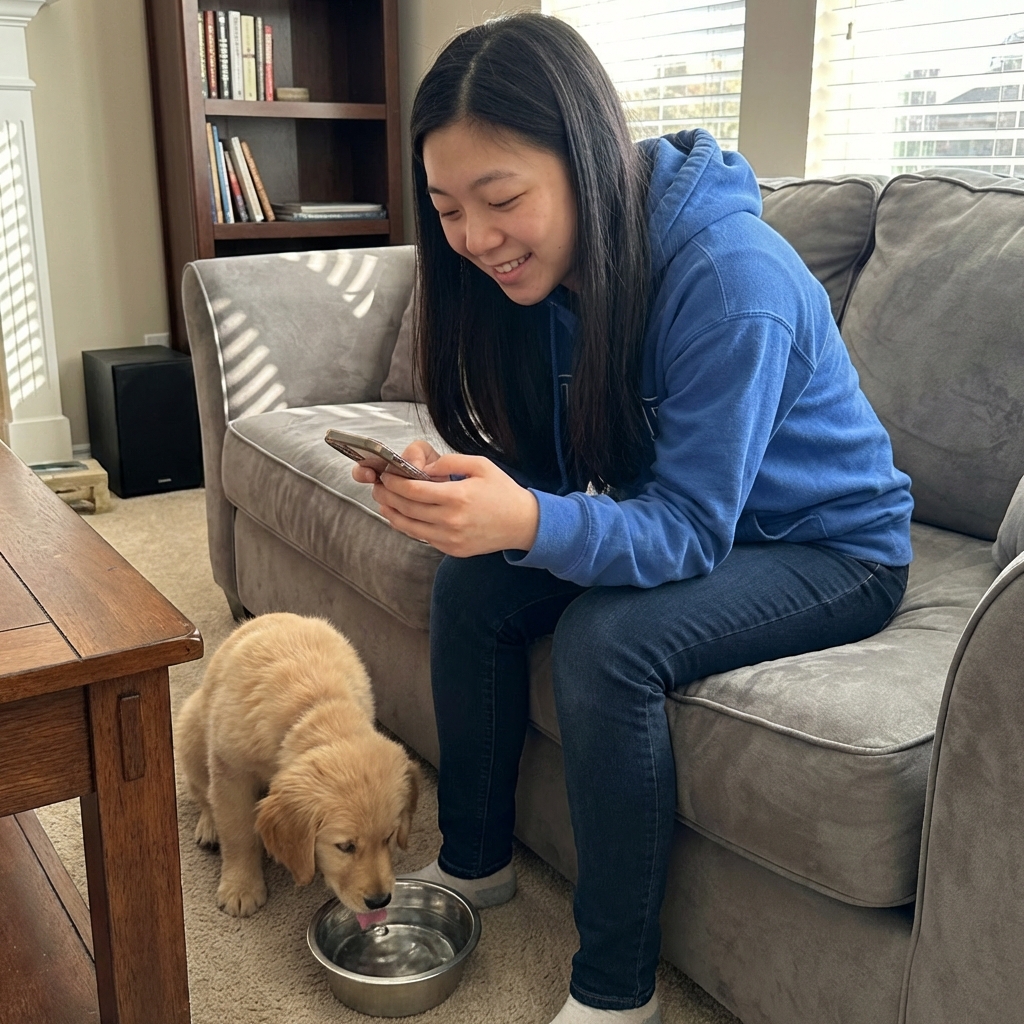
Dehydration is the biggest short-term risk. Make sure fresh water is always available. If your puppy is not interested in drinking, call your vet.
2) Pause treats and table food
For the next couple of days, keep it simple. No chews, no rich snacks, and no sudden “extras.”
3) Feed small, gentle meals
For many puppies with mild diarrhea who are otherwise acting normal, a short-term bland diet can help for 24 to 48 hours. Common vet-approved options include boiled chicken and white rice or, even better when available, a prescription gastrointestinal diet. Feed small portions more often.
Important: Chicken and rice is not nutritionally complete for growing puppies long-term. It is a temporary tool, not a forever plan.
Also important: Because puppies are growing fast and can be prone to low blood sugar (especially very young puppies and toy breeds), do not fast your puppy unless your veterinarian specifically tells you to.
4) Consider probiotics (ask your vet)
Some canine-specific probiotics have evidence supporting stool quality in acute diarrhea and during transitions like antibiotics. Choose products made for dogs and ask your vet for a recommendation and dose.
5) Avoid common at-home meds
Do not give human anti-diarrheal meds (like loperamide/Imodium or Pepto-Bismol) unless your veterinarian tells you to. These can be risky in puppies and may hide symptoms that your vet needs to see clearly.
6) Track the details
It helps your veterinarian a lot if you can answer these questions:
- How long has the diarrhea been going on?
- How many times per day?
- Any vomiting, decreased appetite, or low energy?
- Any blood or mucus?
- Any new foods, treats, chews, or access to trash?
- Vaccination status and deworming history?
Stool sample tips
If diarrhea lasts more than a day or two, recurs, or your puppy has any red flags, your veterinarian will often recommend fecal testing. This can include a standard fecal exam and additional tests for giardia and other pathogens.
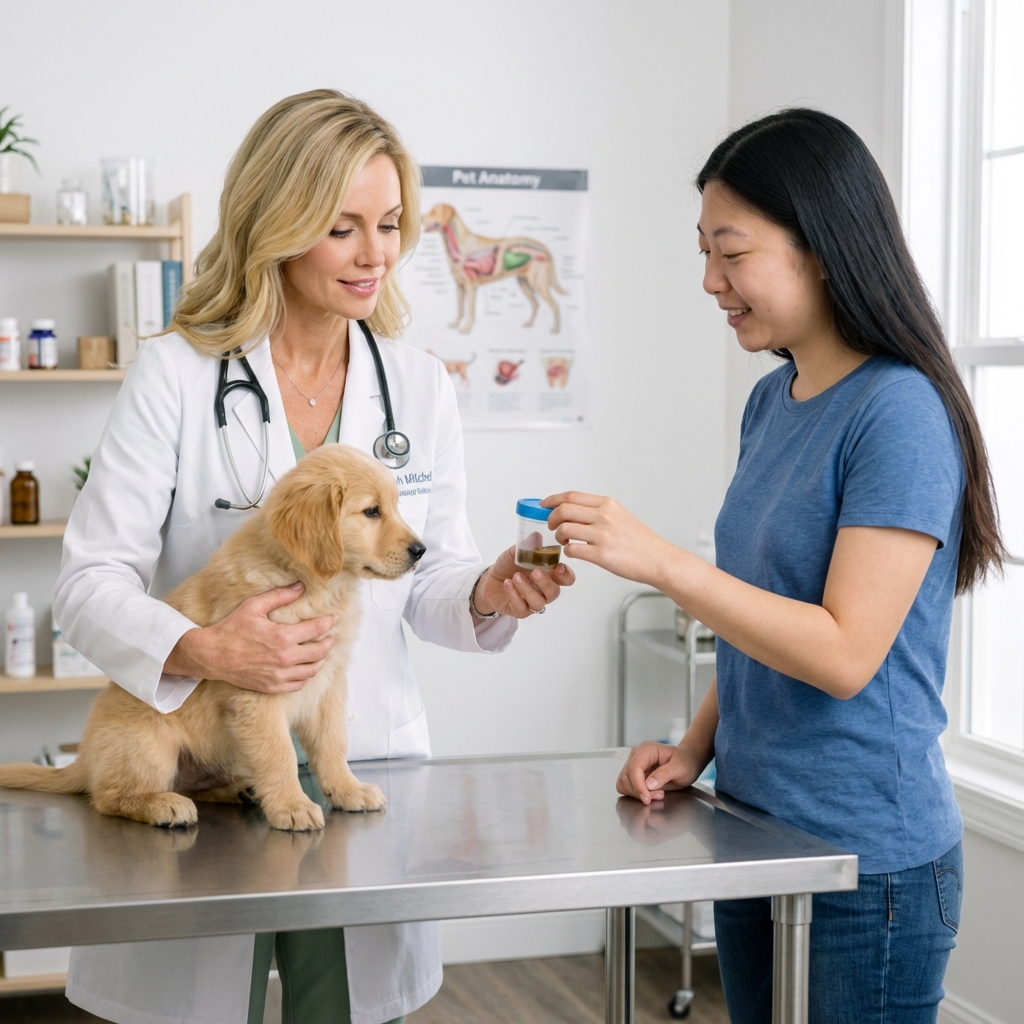
If you can, bring a fresh stool sample to your appointment. Ideally, collect one that is less than 12 hours old, place it in a sealed bag or container, and store it in the refrigerator until you leave (do not freeze it). If you cannot get a sample, still go. Your vet can guide you.
Parasites are treatable, but you need the right medication for the right culprit. Please avoid guessing with leftover meds or internet remedies. It can delay proper care and sometimes make things worse.
Prevention tips
- Transition foods slowly over 7 to 10 days whenever possible.
- Keep treats under 10 percent of daily calories and introduce one new item at a time.
- Stay on a vet-recommended deworming plan and do fecal checks, especially in the first year.
- Vaccinate on schedule, including protecting against parvovirus.
- Use puppy-safe management: pick up yard waste, block trash access, supervise chewing.
- Avoid sudden diet “upgrades”. Even healthy whole foods should be introduced gradually and balanced appropriately for growth.
Most puppy diarrhea is fixable. The key is acting early, protecting hydration, and knowing when to bring in your veterinarian.
Quick checklist
- If your puppy is bright, playful, drinking, and had mild loose stool after a diet change, monitor closely and simplify the diet.
- If your puppy has watery diarrhea, blood, vomiting, low energy, or is not fully vaccinated, call your vet today.
- If you suspect parvo, toxins, or a swallowed object, treat it as urgent and seek emergency care.