Worried about kitten diarrhea? Learn what counts as diarrhea, urgent signs to see a vet fast, safe at-home care, dehydration checks, common causes, and likel...
Article
•
Designer Mixes
Why Does My Kitten Have Diarrhea?

Shari Shidate
Designer Mixes contributor
Seeing diarrhea in a kitten can feel scary, especially because little bodies dehydrate fast. The good news is that many causes are treatable once you know what to look for and when to call your vet. I am Shari Shidate, a veterinary assistant in Frisco, Texas, and this step-by-step guide will help you connect behavior changes with possible causes, make safe choices at home, and recognize red flags.
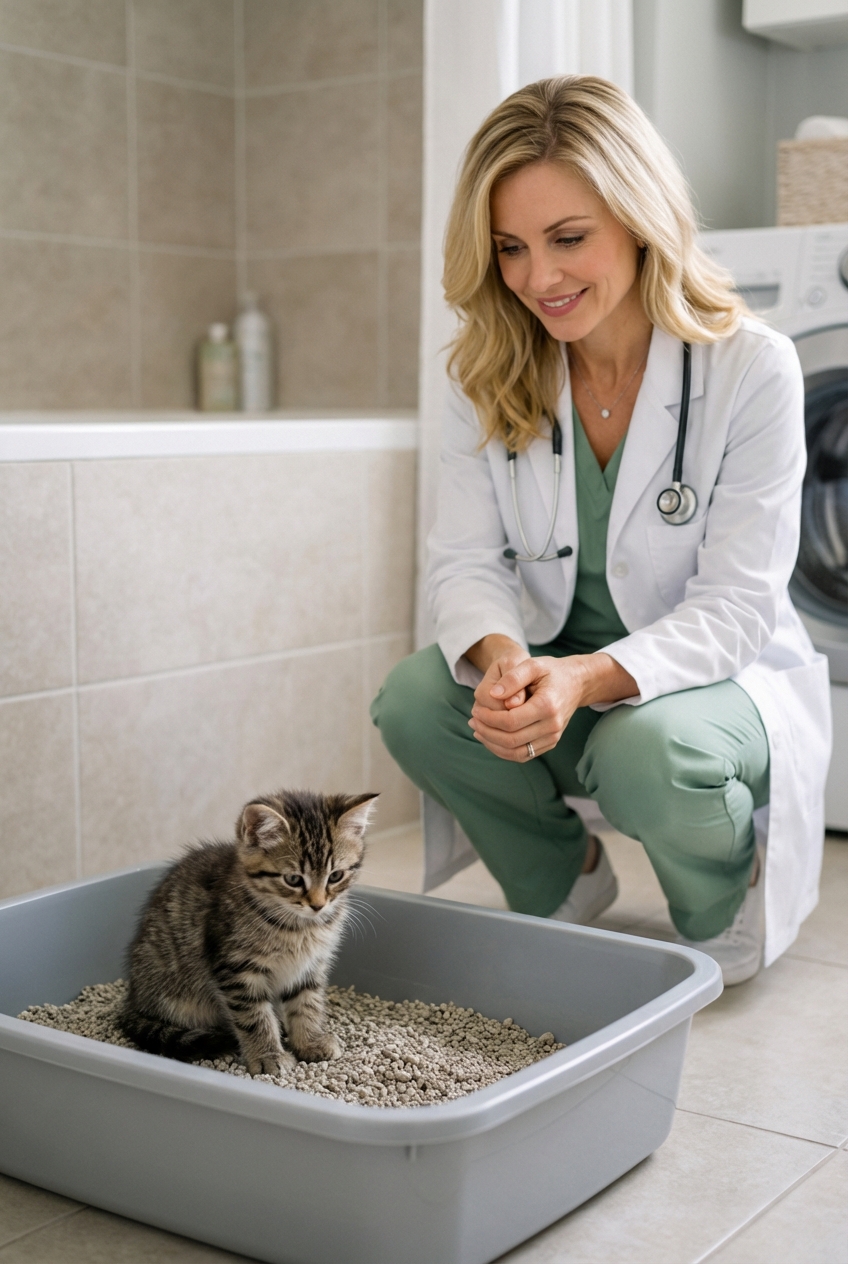
Quick note: diarrhea is a symptom, not a diagnosis. This guide is educational and not a substitute for an exam or medical advice from your veterinarian. If your kitten seems unwell, trust your instincts and reach out to your veterinarian.
Step 1: Check emergency red flags
Some diarrhea can be monitored briefly, but certain signs mean you should seek veterinary care right away, same day (or immediately if severe).
- Blood in the stool (bright red streaks or black, tarry stool)
- Ongoing watery diarrhea, especially multiple watery stools in a few hours or watery diarrhea that continues, and especially in very young kittens (around under 12 to 16 weeks)
- Vomiting along with diarrhea
- Lethargy, weakness, collapse, or hiding more than usual
- Not eating for more than one meal, or not drinking
- Dehydration (tacky gums, sunken eyes, skin that does not spring back quickly)
- Fever (a true fever is confirmed with a thermometer at the vet, and “warm ears” or a warm nose is not a reliable check)
- Known toxin exposure (plants, human medications, essential oils, chemicals)
- Very young, very small, or unvaccinated kitten
If any of these apply, skip the rest and call your veterinarian or an emergency clinic. Kittens can go downhill quickly.
Step 2: Match behavior to clues
Behavior changes often show up before you can identify the trigger. Use the patterns below like a detective.
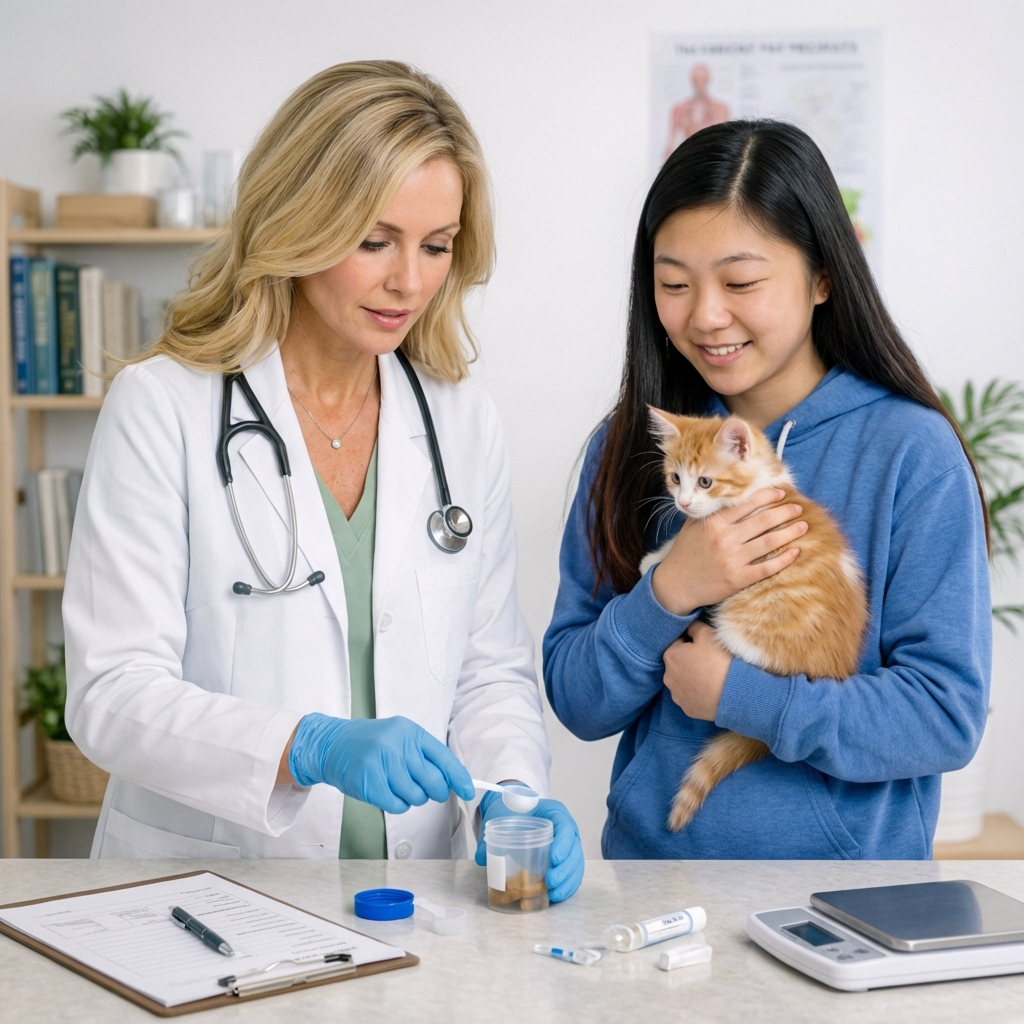
Clue A: Sudden diarrhea after a food change
If you recently switched foods, introduced new treats, gave cow’s milk, or your kitten got into human food, a simple digestive upset is common. Kittens have sensitive GI tracts and can react quickly.
- Behavior you may see: normal energy, still playful, but more frequent litter box visits
- Common triggers: new kibble, richer canned food, too many treats, table scraps, milk
Clue B: Diarrhea plus ravenous appetite or poor weight gain
This combination can suggest intestinal parasites, especially in kittens coming from shelters, outdoors, or multi-cat homes.
- Behavior you may see: hungry all the time, pot-bellied look, messy rear end, occasional vomiting
- Common causes: roundworms, hookworms, coccidia, Giardia
Clue C: Stress signs with softer stool
Kittens can develop stress-related diarrhea when their routine changes.
- Behavior you may see: hiding, vocalizing, clinginess, reduced play, increased grooming
- Common triggers: adoption week, new pets, guests, moving, loud noises, boarding
Clue D: Diarrhea plus straining, frequent squats, or accidents
Straining is not always constipation. With diarrhea, it can mean colitis, parasites, or inflammation. It can also be confused with urinary straining, which is an emergency in male cats.
- Behavior you may see: repeated trips to the box, small amounts of stool, crying, restlessness
- Important: if you suspect urinary straining (little to no urine, frequent squatting with no output, crying), go to the vet immediately
Clue E: Diarrhea plus fever, dullness, or a very sick kitten
This can indicate a more serious infection or disease process. Unvaccinated kittens are especially vulnerable.
- Possible causes: viral infections (including panleukopenia), bacterial infection, severe parasites
Step 3: Look at the stool
You do not need to overthink it, but a few details are genuinely helpful for your veterinarian.
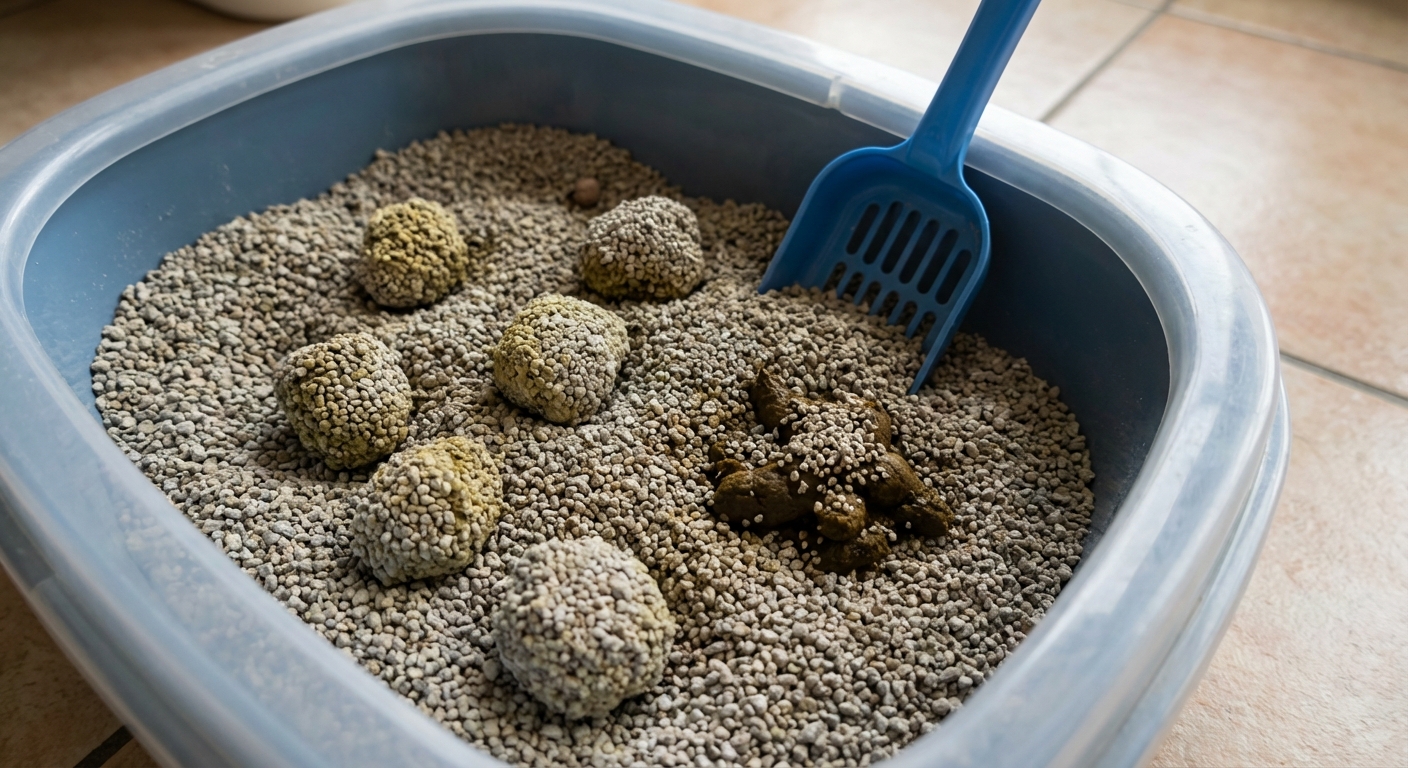
- Watery: higher dehydration risk, more urgent
- Pudding or soft-serve consistency: mild to moderate GI upset
- Mucus: often large-bowel irritation or parasites
- Bright red blood: irritation, colitis, parasites, more urgent
- Black or tarry: digested blood, urgent
- Greasy, pale, or unusually foul: can be seen with Giardia or other digestive issues, but it is not specific
- Worms visible: take a photo and call your vet, deworming is needed
Tip: snapping a quick photo for your vet can be more useful than trying to describe it over the phone.
Step 4: Quick home checklist
Here are the big categories we see most often in practice. More than one can be happening at the same time.
Diet
- Switching foods too quickly
- Overfeeding or too many treats
- Cow’s milk or rich dairy
- Food intolerance or sensitivity (less common in very young kittens, but possible)
Parasites
- Roundworms and hookworms are extremely common in kittens
- Giardia and coccidia are common in shelter or multi-cat settings
Infection
- Viral and bacterial infections can cause diarrhea, sometimes severe
- Risk is higher in unvaccinated kittens or kittens with unknown history
Stress and environment
- New home, new litter, new roommate, new schedule
- Not enough litter boxes, dirty box, or a scary box location
- New litter additives, deodorizers, or scented sprays (and some kittens will lick or chew odd things)
Toxins and meds
- Human medications, essential oils, toxic plants, cleaning products
- Antibiotics can trigger diarrhea by disrupting the gut
Step 5: Safe home steps
Home care is only appropriate for mild diarrhea when your kitten is bright, playful, eating, drinking, and there is no blood or vomiting. If you are unsure, call your vet first.
1) Protect hydration
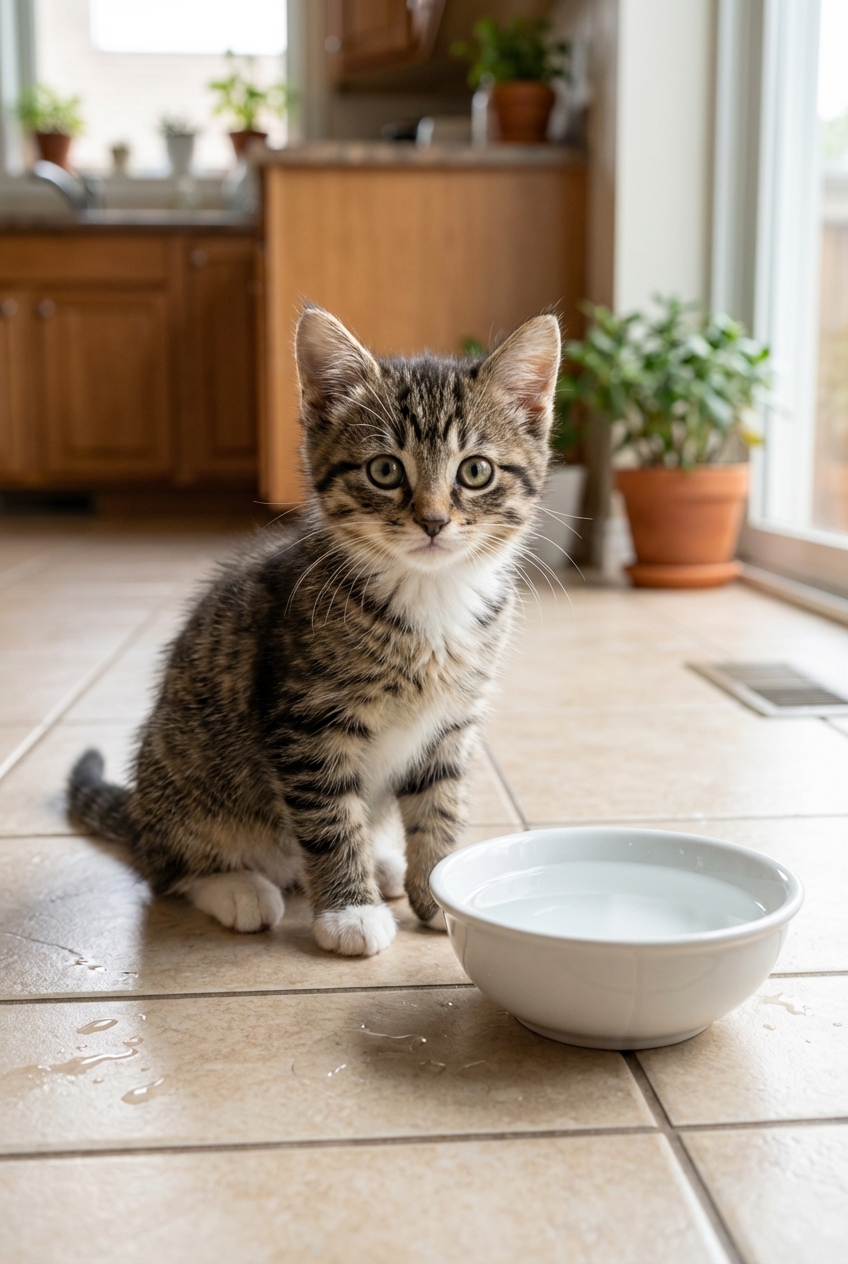
- Provide fresh water in multiple spots
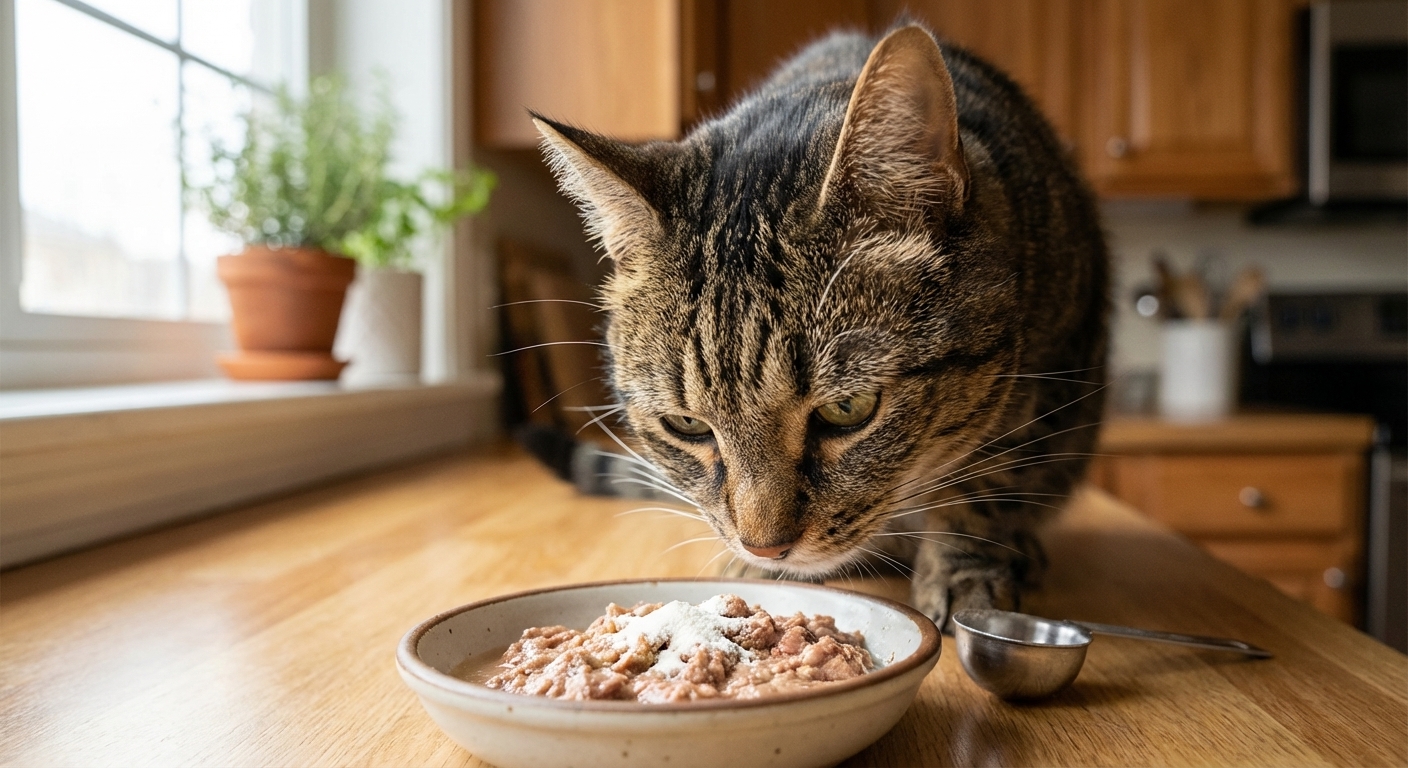
- Offer a little extra canned food if your kitten tolerates it, the moisture helps
- Monitor urine output as a practical clue. If your kitten is barely peeing, seems painful, or cannot pee, that is urgent
- Do not force water by mouth if your kitten is weak or resisting
2) Pause new foods and treats
Stick with the diet your kitten was doing best on. If you recently changed foods, consider going back to the previous food and transition more slowly later.
3) Consider a vet-approved probiotic
Some probiotics made for cats can help firm stool during mild digestive upset. Ask your veterinarian for a brand and dose appropriate for your kitten’s age and weight.
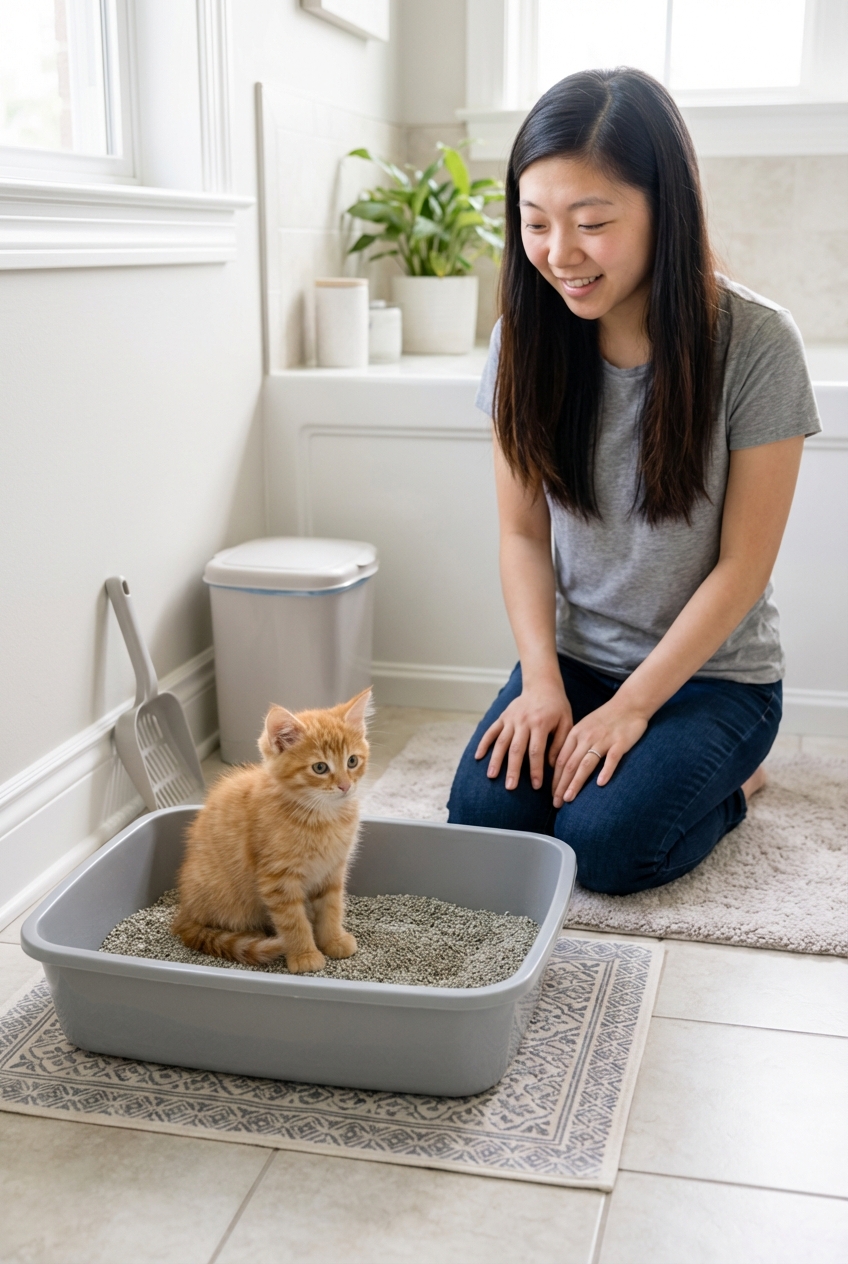
4) Keep the litter box extra clean
Diarrhea spreads germs easily. Scoop promptly, wash hands, and clean the box area to reduce reinfection risk, especially with parasites like Giardia.
5) Avoid common mistakes
- No over-the-counter anti-diarrheal meds unless your vet specifically instructs you. Many human products are unsafe for cats.
- Do not give Pepto-Bismol (bismuth) to cats unless your veterinarian tells you to. It can be dangerous.
- Do not give loperamide (Imodium) unless specifically prescribed by your veterinarian.
- No fasting for young kittens unless a veterinarian tells you to. Kittens need steady calories.
- No cow’s milk. Many kittens do not tolerate it well.
Step 6: When to call the vet
I recommend calling your veterinarian if:
- Diarrhea lasts more than 24 hours in a kitten
- There is recurrent diarrhea that keeps coming back
- Your kitten is not gaining weight or seems pot-bellied
- You adopted recently and do not know deworming or vaccine history
- Your kitten had recent deworming, vaccines, antibiotics, or other medication changes (this helps your vet interpret what is going on)
- There are multiple pets in the home and more than one has diarrhea
What to tell your vet
- Age and current weight (or best guess)
- How long the diarrhea has been going on and how often it is happening
- Any vomiting, low appetite, or low energy
- Any new foods, treats, chews, or human food
- Possible toxin exposure (plants, oils, cleaners, human meds)
- Any new litter, litter deodorizer, or anything your kitten might have chewed
- Recent travel, boarding, new pets, or shelter history
In many cases, your vet will recommend a fecal test. This is one of the fastest ways to get answers, and it guides the right treatment.
Step 7: What the vet may do
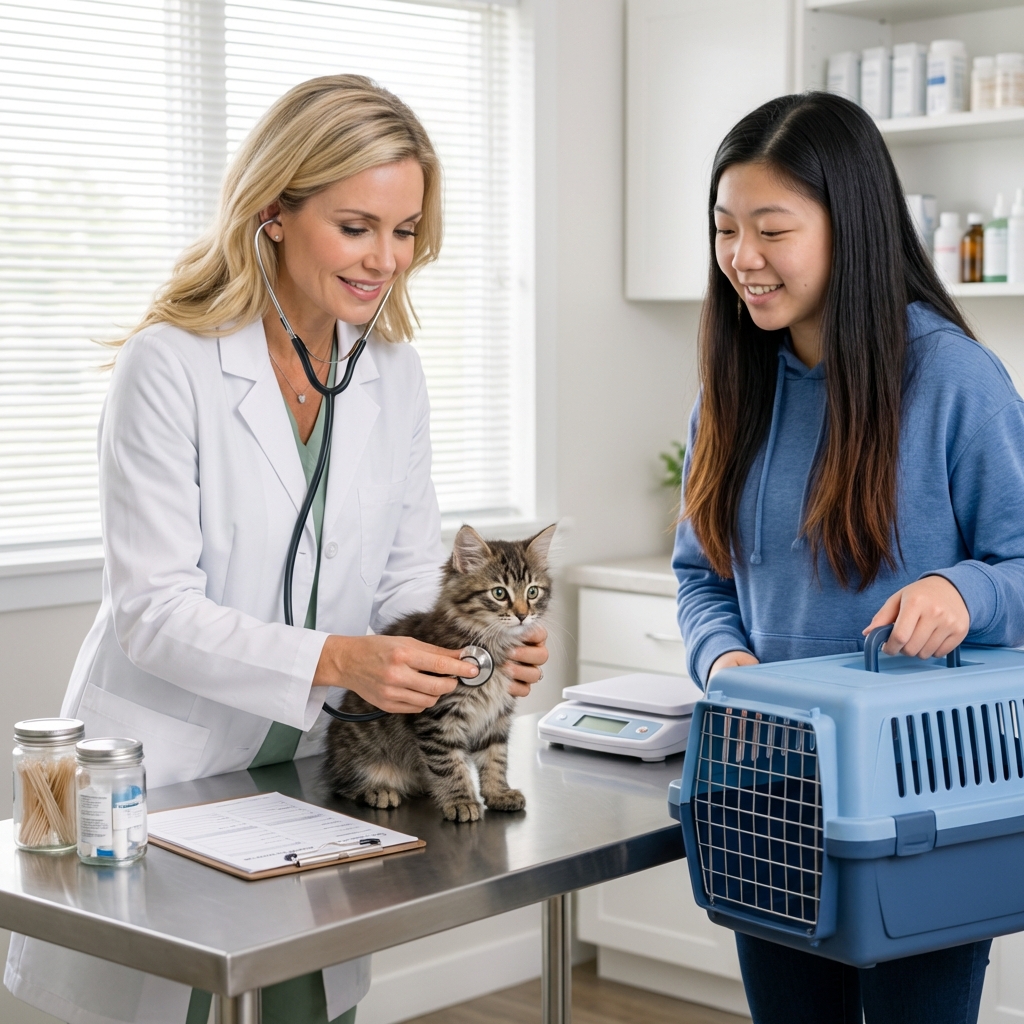
If you bring your kitten in, the visit typically focuses on hydration, parasite screening, and ruling out infectious disease.
- Physical exam: weight, hydration, temperature, abdominal feel
- Fecal testing: checks for worms and microscopic parasites
- Deworming: often recommended even if worms are not seen
- Fluids: oral or injectable if dehydration is a concern
- Diet plan: a gentle GI diet or controlled feeding plan
- Medication: only when indicated, based on cause and age
If diarrhea is chronic or keeps returning, your veterinarian may recommend additional testing such as Giardia testing (ELISA or PCR), expanded fecal panels, bloodwork, or a diet trial to look for food sensitivity.
Prevention
You cannot prevent every tummy issue, but you can reduce the odds.
- Vaccines and routine deworming on schedule
- Slow food transitions over 7 to 10 days
- Keep stress low with a calm safe room during the first week home
- Good litter hygiene, especially in multi-cat homes
- Parasite prevention recommended by your veterinarian
If you take only one thing from this guide, let it be this: kittens dehydrate quickly. When diarrhea is frequent, watery, or paired with low energy, it is time to call your vet.
Frequently asked questions
How long is too long for kitten diarrhea?
In a kitten, more than 24 hours is enough to justify a call to your vet, sooner if watery or accompanied by vomiting, blood, or lethargy.
Can teething cause diarrhea in kittens?
Teething is commonly blamed, but true diarrhea is more often linked to diet changes, parasites, stress, or infection. If you notice diarrhea during teething age, it is still worth checking for the common causes.
Should I change food right away?
If the diarrhea started after a new food, reverting to what worked before can help. Otherwise, avoid sudden switches and ask your vet about the best short-term diet option for your kitten.