Dog licking can mean affection, attention-seeking, stress relief, appeasement, or even discomfort. Learn what to look for, when it’s unsafe, and how to cur...
Article
•
Designer Mixes
Why Does My Dog Stare at Me?

Shari Shidate
Designer Mixes contributor
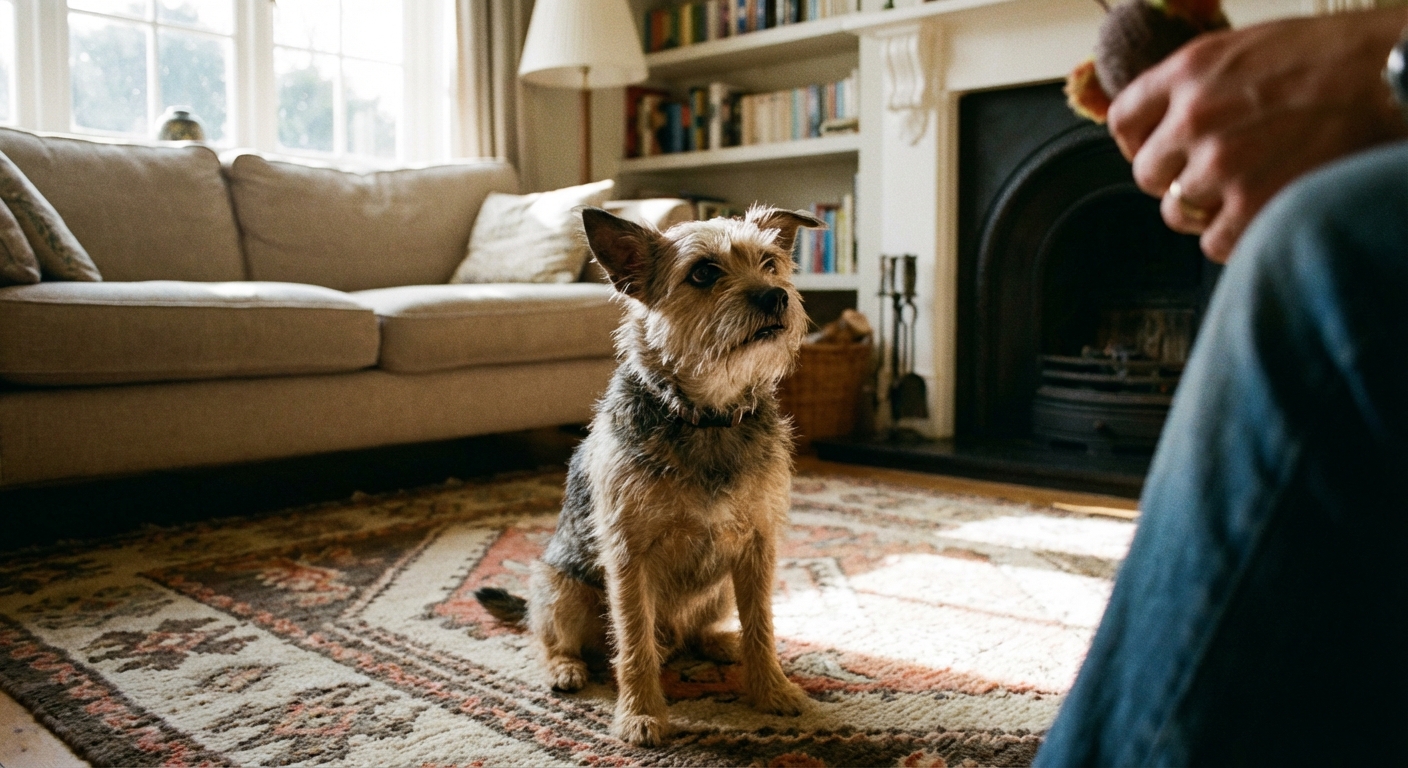
If you have ever looked up from your laptop and found your dog quietly watching you like you are the most interesting thing in the world, you are not imagining it. Dogs stare for reasons, and it is often a normal, helpful form of communication.
As a veterinary assistant, I like to remind families that staring is not automatically “dominance” or “disrespect.” It is rarely about “dominance” in the way people usually mean it. More often, it is your dog gathering information, asking for something, or checking in to feel safe.
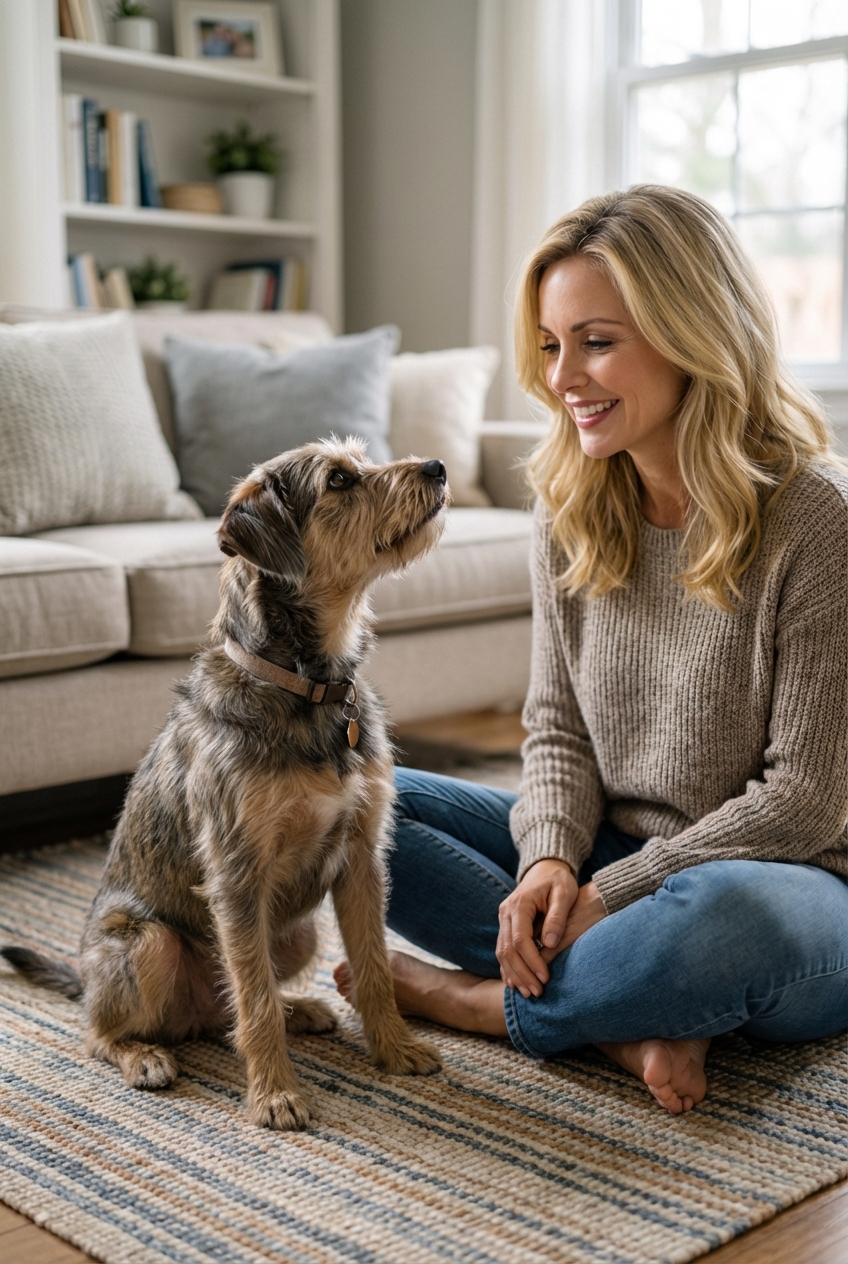
What a stare can mean
Dogs do not use words, so they rely on body language, facial expressions, and patterns. Staring can be part of:
- Bonding and attention: Your dog is socially connected to you and wants interaction.
- Requesting: They have learned that looking at you can make good things happen.
- Information gathering: Dogs watch faces to predict what comes next, especially in a household routine.
- Emotional regulation: A calm stare can be a “check-in” that helps a dog feel secure.
Context matters. A soft, relaxed stare is very different from a hard, tense stare, and individual dogs vary in how “watchy” they are.
7 reasons dogs stare
1) They want something
In day-to-day practice, this is the most common reason I see. Dogs quickly learn that eye contact can be powerful. Your dog may be asking for:
- Food or a treat
- A walk
- Help opening a door
- Playtime
- A potty break
Look for clues: lip licking , a little whine , pacing, sitting near the leash, or staring toward the kitchen.
2) They are reading you
Dogs are excellent observers. Many dogs watch your face and posture to figure out your mood and your next move. This is especially true for sensitive dogs and dogs with working or herding breed traits.
Try this: if you stand up suddenly, does your dog pop up too? That is a dog who is tracking your patterns.
3) They learned it works
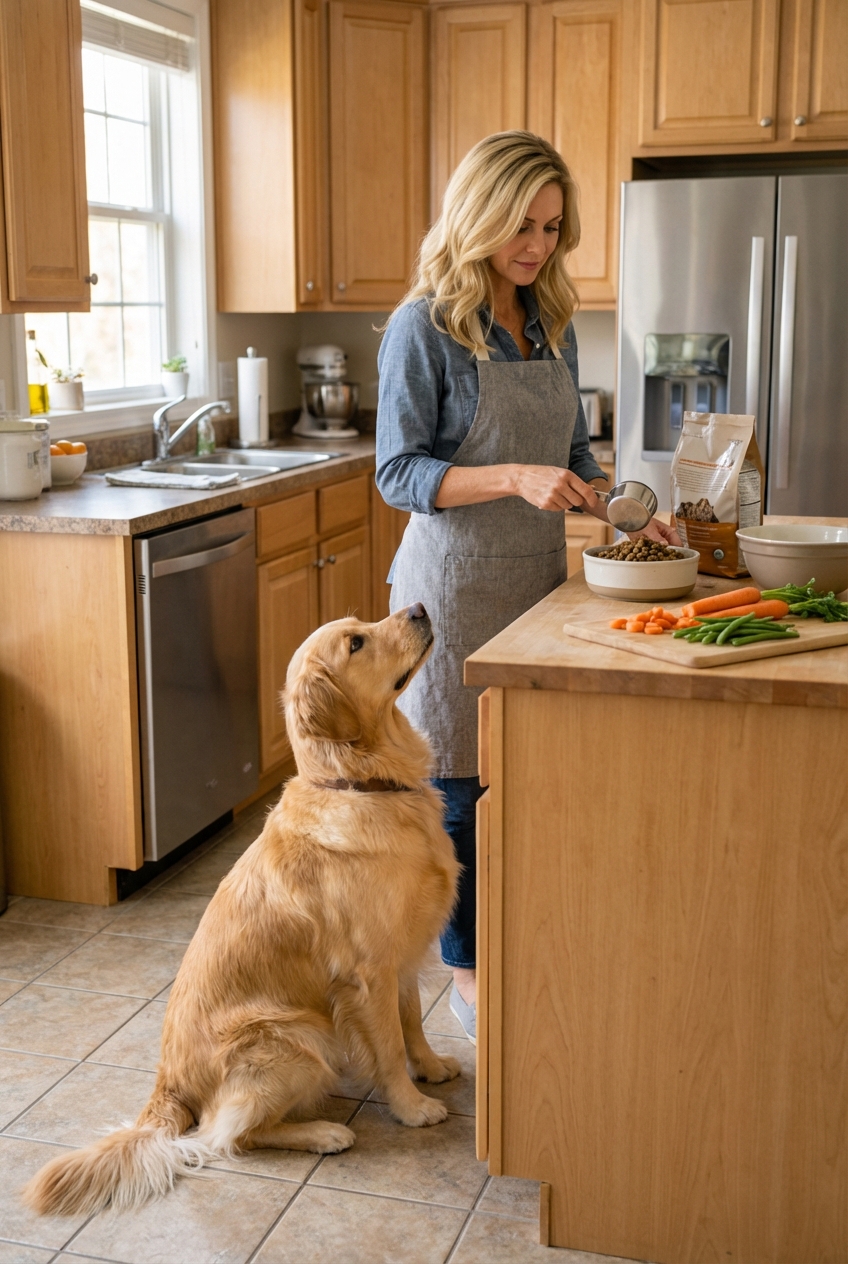
Sometimes we accidentally reward staring. Example: your dog stares while you cook, you give a bite “just this once,” and suddenly staring becomes a habit.
If your dog is staring at you during meals, it is likely a learned behavior, not a sign of aggression.
4) They are checking in
Some dogs stare more when they feel unsure. They are looking to you for reassurance, guidance, or permission to relax.
Common situations: guests in the home, thunderstorms, unfamiliar places, or loud household noises.
5) They are showing affection
Relaxed eye contact can be part of bonding. In research settings, gentle mutual gazing between dogs and their people has been linked to oxytocin release, a hormone involved in social bonding.
What affection looks like: soft eyes, loose body, slow blink, ears neutral, and a tail that moves naturally instead of stiffly.
Quick note: a wag is not always a happy wag. Always read the whole body.
6) They are processing something new
If you are doing something new, such as training a trick, bringing in a new baby item, or changing routine, your dog may stare because they are figuring out what is happening.
7) It could be medical
Occasionally, staring is a sign to take seriously, especially if it is new, intense, or paired with other symptoms. Keep in mind that some normal behaviors, like resting quietly or “daydreaming,” can look like staring. What matters most is a change from your dog’s normal, plus other signs.
Call your veterinarian if you notice staring plus any of the following:
- Disorientation, getting stuck in corners, or aimless wandering
- Sudden behavior change, agitation, or unresponsiveness
- Head pressing, circling, or abnormal eye movements
- Episodes that look like “spacing out,” especially if followed by confusion
- Increased thirst, appetite changes, vomiting, or weakness
These signs can be associated with pain, cognitive changes in senior dogs, vision issues, seizures, or other neurologic or metabolic problems. It does not mean that is the cause, but it is worth checking.
Soft vs. hard stare
Before we get into how to respond, it helps to separate normal communication from a potential warning. A relaxed stare toward you is very different from a fixed, tense stare paired with guarding or fear.
Often normal
- Loose, wiggly body
- Soft eyes, blinking
- Mouth relaxed, maybe slightly open
- Tail neutral and moving naturally
- Dog can be redirected easily
Warning signs
- Body stiff or frozen
- Hard, unblinking eye contact
- Ears pinned forward or very tight back
- Mouth closed tight, lip curled, or low growl
- Guarding food, toys, couch space, or a person
If you see warning signs, do not punish. Create distance calmly and reach out to a qualified trainer or veterinary behavior professional for help.
Staring at strangers or dogs
Owners often ask if staring is “the same” when it is directed at another dog or a stranger. It can be, but the stakes are higher. A fixed stare between dogs can be a challenge or a sign of tension, especially when bodies are stiff and movement is slow.
- If your dog stares at a stranger: increase distance, ask for an easy cue (like “touch” or “look”), and reward for disengaging.
- If your dog stares at another dog: avoid tight leash greetings, create space, and redirect before the stare turns into lunging or barking.
When in doubt, choose space over “let’s see what happens.” Space is safety.
Kids and staring
Children often stare right into a dog’s face because they are curious. Many dogs find that uncomfortable. Teach kids to:
- Look at the dog’s body, not into the eyes
- Turn their face slightly to the side when greeting
- Stop and step back if the dog freezes, growls, or looks away
If a dog seems unsure, an adult should step in and give the dog space.
What to do
The best response depends on what you want to encourage.
If your dog is politely asking
- Check needs first: water, potty, exercise, comfort.
- Reward calm behavior: ask for a sit, then give attention or a treat.
- Create a routine: predictable feeding and walk times reduce “what are we doing now?” staring.
If it turned into begging
- Do not feed from your plate, even occasionally, if you want the habit to fade.
- Give an alternative job: a stuffed food toy in a bed or a “place” cue during meals.
- Praise the off-switch: reward your dog for relaxing away from the table.
If your dog looks worried
- Lower the pressure: speak softly and avoid looming over them.
- Offer a safe space: crate, covered bed, or a quiet room.
- Use gentle enrichment: sniffing games and lick mats can help reduce stress.
If you suspect illness
Trust your gut. If the staring is new or paired with other changes, schedule a veterinary visit and bring notes or a short video of the behavior. Those details help your vet a lot.
Why some dogs stare more
Some dogs are simply more visually attentive than others, especially dogs bred to work closely with people. Breed traits can show up strongly, even in mixes, but it is never a guarantee.
- Poodles and poodle-type mixes: often observant and quick to learn that eye contact gets results.
- Herding breed dogs and mixes: may “watch” intensely because monitoring movement is part of their instinct. Some herding breeds also use a classic “eye” or stalk that can look like a stare.
- Companion breed dogs and mixes: may stare as a bonding and reassurance behavior .
If your dog is a natural watcher, it helps to give them a clear job: short training sessions, daily sniff walks, and a predictable routine.
When it is a good thing
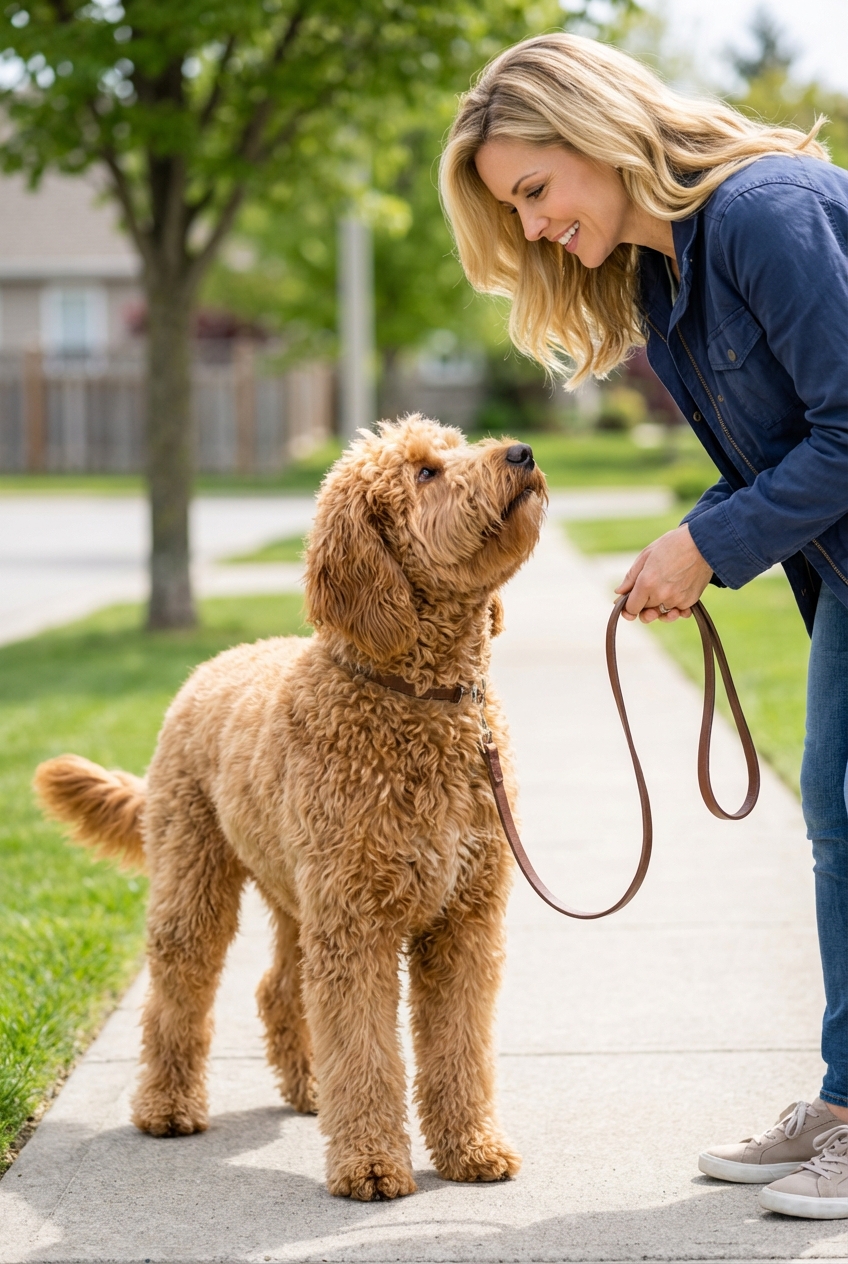
Here is the part I love most: staring can be a sign your dog is tuned in, emotionally connected, and ready to learn. In training, we often teach “watch me” because gentle eye contact helps dogs focus and feel guided.
So if your dog looks at you often, you can treat it as a conversation starter. Ask yourself, “What are they trying to tell me?” Then respond with kindness and structure.
Quick FAQ
Is staring a sign of love?
It can be. If the rest of the body language is soft and relaxed, staring is often bonding or a calm request for attention.
Should I stare back?
A gentle look is fine, but avoid a hard stare, especially with unfamiliar dogs. In dog language, prolonged, intense staring can feel threatening.
Why does my dog stare when I eat?
Usually because begging has been rewarded at some point. The fix is consistency: no handouts, and give your dog an alternative activity during meals.
Why does my senior dog stare into space?
Senior dogs can develop cognitive dysfunction, vision changes, or other medical issues. Some quiet “zoning out” can be normal, but if this is new or paired with other changes, talk with your veterinarian to rule out treatable causes .
A gentle reminder
Most staring is normal communication. Your dog is not being “weird” or trying to control you. They are doing what dogs do best: watching the person they trust most to understand the world. If you ever feel uncertain, take a short video and share it with your veterinary team. It is one of the simplest ways to get clear answers.