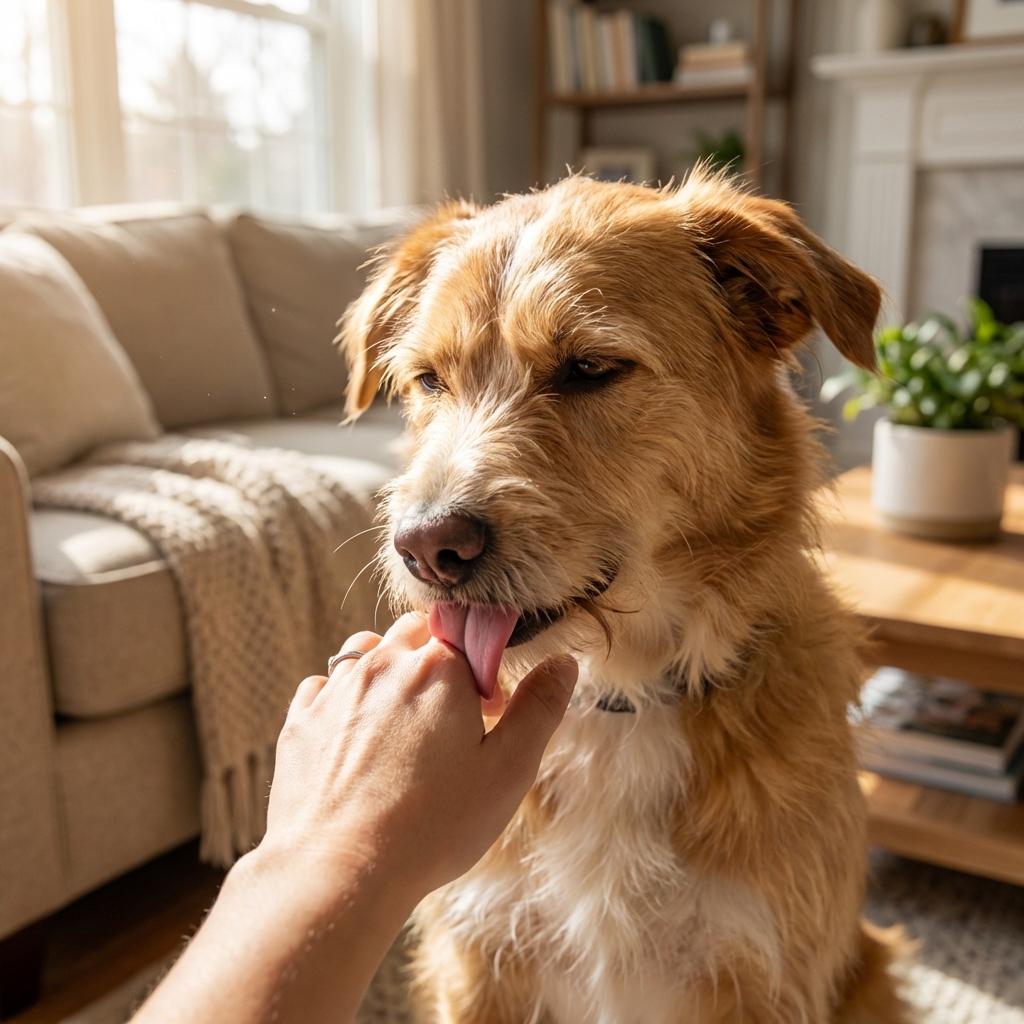
Tired of nonstop dog kisses? Learn why dogs lick, when it’s risky, and how to stop licking kindly with simple house rules, reward-based training, and kid-s...
Article
•
Designer Mixes
Why Does My Dog Lick Me All the Time?

Shari Shidate
Designer Mixes contributor
As a veterinary assistant here in Frisco, Texas, I hear this question all the time: “Why does my dog lick me nonstop?” The sweet (and sometimes slobbery) truth is that licking is a normal canine behavior. But the reason behind it can vary from affection to anxiety to a medical issue.
When clients say “nonstop,” they usually mean things like: licking every time you sit down, licking during greetings, or licking for minutes at a time and struggling to settle.
This guide will help you figure out what your dog is communicating and what to do next, using practical, evidence-based steps you can start today. (This is general education, not a diagnosis for your individual pet.)

What licking means
Dogs explore and communicate with their mouths, and licking is one tool. It can show up for many reasons at once. Think of it as your dog’s version of texting you: sometimes it is “I love you,” sometimes it is “I’m stressed,” and sometimes it is “What is that on your skin?”
Often, licking is harmless and easy to interrupt. If it becomes persistent, intense, or hard to stop, it is worth looking closer for stress, learned habits, or a health issue.
Common reasons dogs lick people
1) Affection and bonding
Many dogs lick the people they feel safest with. Puppies lick their mother’s face as part of early bonding and social interaction. Adult dogs often carry this behavior into family life.
2) Attention seeking (it works)
If licking gets a reaction, your dog learns fast. Even “Stop it!” can be rewarding if your dog is craving engagement. If your dog licks and you pet them, talk to them, laugh, or look at them, you may be unintentionally training the behavior.
One more thing I see a lot: pushing a dog away can turn into a game for some dogs, which is still attention. When possible, go hands-off and neutral instead of scolding.
3) Taste and smell cues
Your skin can be delicious from a dog’s perspective. Dogs may lick:
- salty sweat after a workout
- lotion, sunscreen, or body oil
- food residue from cooking
- tears (mostly for the salt and the interesting scent)
Quick caution: some lotions, sunscreens, and topical products can upset a dog’s stomach if licked, and some ingredients are not pet-friendly. If your dog targets freshly applied products, redirect and prevent licking until it fully absorbs, or switch to a safer option.
4) Stress, anxiety, or self-soothing
Licking can be calming for some dogs, the way nail-biting can be calming for some people. You may notice it increase during thunderstorms, visitors, schedule changes, or after being left alone.
5) Appeasement and excitement
Some dogs lick as a polite social signal, especially if they are unsure, overexcited, or trying to reduce tension. This is common in sensitive dogs and in many young dogs still building social confidence.
6) Boredom and lack of enrichment
If your dog does not get enough physical exercise, sniff time, training, and play, licking can become a default activity. This is especially common in smart, people-focused breeds and mixes.
7) Medical issues (sometimes the hidden cause)
Persistent licking can be linked to discomfort. Common contributors include:
- GI upset (nausea, reflux, food intolerance)
- skin allergies or itchiness (environmental or food-related)
- dental disease or oral pain
- pain elsewhere in the body, especially in senior dogs
- cognitive changes in older dogs
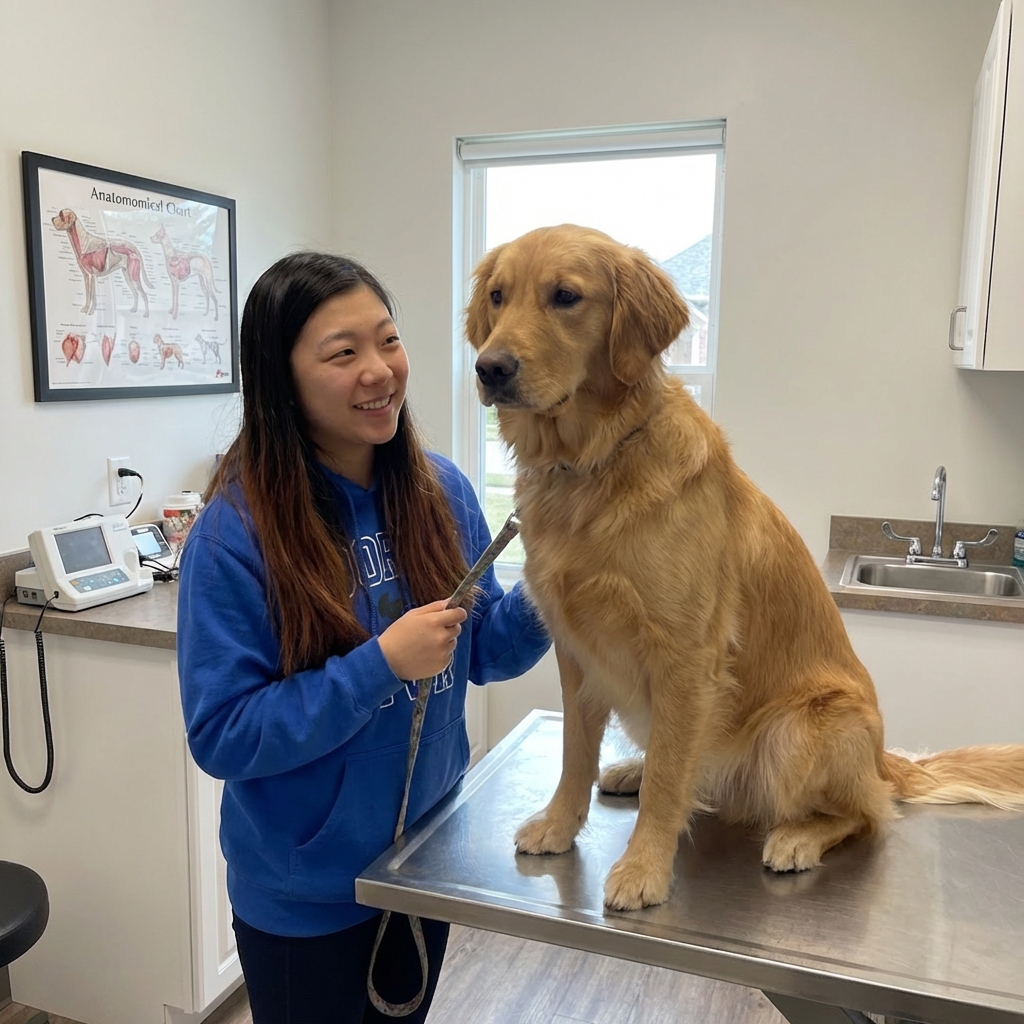
If licking is new, intense, or paired with other symptoms, it is worth a veterinary check.
Normal vs red flags
Use this quick checklist. Normal licking tends to be occasional, easy to interrupt, and not associated with other signs.
Call your veterinarian if you notice:
- Pattern change: a sudden increase in licking behavior
- Intensity: licking that seems frantic, prolonged, or hard to stop
- GI signs: lip licking, swallowing, drooling, or gulping (can be associated with nausea or reflux, but can also show up with stress or mouth discomfort)
- GI changes: vomiting, diarrhea, gas, or appetite changes
- Skin and allergies: skin redness, ear infections, paw chewing, or frequent scratching
- Mouth and dental: bad breath, dropping food, or reluctance to chew
- Pain and anxiety: panting, pacing, clinginess, restlessness, or trouble settling
Action tip: Take a short video of the licking and note what happened right before it started. This helps your veterinary team spot patterns quickly.
When licking becomes compulsive
Licking crosses into compulsive territory when it is frequent and repetitive enough that it interferes with normal life, like your dog cannot relax, it disrupts sleep, it is difficult to interrupt, or it replaces play, eating, or settling.
If you rule out medical causes and the behavior still feels “stuck,” ask your vet about next-step behavior support. A force-free trainer or a veterinary behaviorist can be a game-changer for true compulsive patterns.
How to reduce licking
You do not need to punish licking. Most dogs lick because they have learned it works, because something tastes or smells interesting, or because they are trying to cope. Instead, focus on clear boundaries and better outlets.
Step 1: Rule out health issues
If the behavior is new or intense, start with a vet visit. You can work on training at the same time, but medical causes should be addressed first.
Step 2: Remove the reward
If your dog licks to get attention, your response matters.
- Quietly stand up or turn away when licking starts.
- Avoid scolding. For many dogs, any reaction is still attention.
- Wait for a calm moment, then offer attention.
- Be consistent. Intermittent rewards make behaviors stronger.
Step 3: Teach an alternate behavior
Give your dog a clear job that replaces licking. Great options:
- Sit for greeting
- Go to mat when excited
- Touch (nose-to-hand) instead of licking
Reward the alternate behavior with treats, calm petting, or a toy, depending on what your dog loves most.
Step 4: Add enrichment
Some licking is normal and can even be soothing. The key is directing it appropriately.
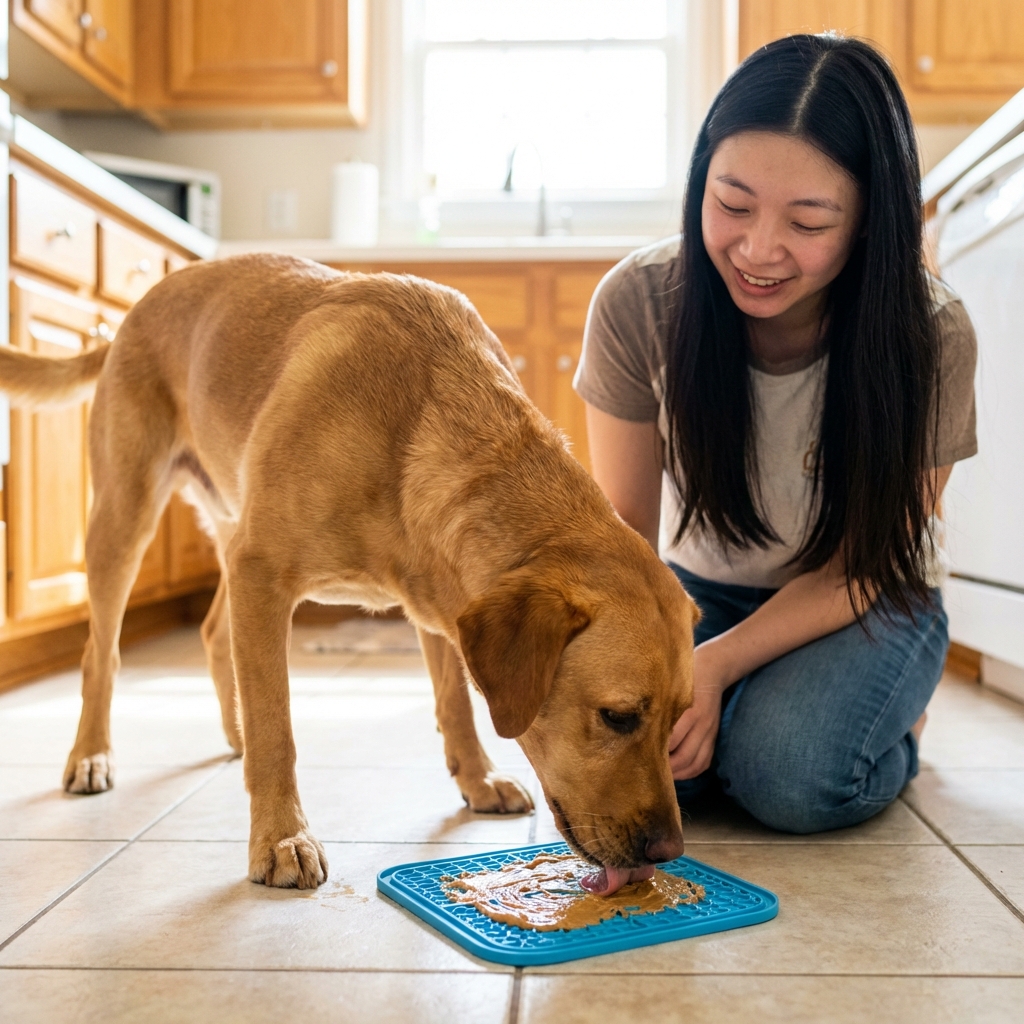
- Frozen lick mats with dog-safe options (plain pumpkin, wet food, or small amounts of plain yogurt if your dog tolerates dairy)
- Stuffed Kongs (avoid ingredients with xylitol, and keep portions reasonable)
- Snuffle mats and treat scatters
- Short training sessions (5 minutes goes far)
- Longer decompression walks where your dog can sniff
Step 5: Support anxious dogs
If licking seems tied to stress, build predictability and calm.
- Keep a consistent routine for meals and walks
- Create a quiet rest area
- Use gradual desensitization for triggers when possible
- Ask your vet about behavior support, supplements, or medication if anxiety is significant
Is it safe to let my dog lick me?
For most healthy adults, occasional licking on intact skin is generally low risk. Still, dog mouths can carry bacteria, and the risk goes up in certain situations.
- Avoid letting dogs lick open wounds, healing surgical sites, or rashes.
- Be extra cautious with kids, immunocompromised people, and older adults.
- Discourage licking around the mouth, nose, and eyes.
- Avoid licking right after you apply topical medications or strong skincare products.
- Wash your hands after heavy licking, especially before eating.
If you love the affection but want better boundaries, redirect licking to a toy or offer a calm cuddle instead.
Quick troubleshooting
If your dog licks when you come home
- Greet calmly, no high-energy squealing
- Ask for “sit” before petting
- Keep a toy by the door to redirect mouthy excitement
If your dog licks your legs after walks or workouts
- Wipe sweat off with a towel
- Offer water and a chew
- Try a lick mat while you cool down
If your dog licks at night or when resting
- Check for itchiness, ear irritation, or skin redness
- Consider nausea or reflux if you also see swallowing or lip licking
- Schedule a vet exam if it is new or escalating
The bottom line
Dogs lick for real, understandable reasons: affection, attention, taste, stress relief, boredom, and sometimes health issues. Your job is to look at the full picture: when it happens, how intense it is, and what else is going on.
With a few kind boundaries and the right outlets, most dogs can learn to show love without turning you into their favorite lick mat.