
Itchy skin or a dull coat? Add fish safely with this vet-assistant guide: best low-mercury choices, cooked-only safety, calcium balancing, and two easy toppers.
Article
•
Designer Mixes
Why Does My Dog Keep Scratching?

Shari Shidate
Designer Mixes contributor
As a veterinary assistant here in Frisco, Texas, one of the most common questions I hear is, “Why does my dog keep scratching?” The tricky part is that itching is not one single problem. It is a symptom, and the cause could be as simple as dry skin or as involved as allergies, parasites, or an infection.
The good news is that you can usually narrow it down with a few smart observations at home, then team up with your veterinarian for a plan that brings real relief.

First: what kind of scratching are we talking about?
Before you buy anything, take a minute to zoom out and notice the pattern. These details help your vet make faster, more accurate decisions.
- Where is your dog itching most (ears, paws, belly, base of tail, all over)?
- When did it start (sudden, seasonal, after boarding, after grooming, after a food change)?
- What else do you see (redness, bumps, scabs, hair loss, dandruff, odor, greasy coat)?
- How intense is it (occasional vs. waking from sleep, constant licking or chewing)?
- Any other signs (ear shaking, head tilt, scooting, vomiting or diarrhea, drinking more, behavior changes)?
Most common reasons dogs keep scratching
1) Fleas and flea allergy dermatitis
Even one or two flea bites can trigger intense itching in sensitive dogs. Many pet parents do not see fleas because they can be hard to spot and dogs may groom them off quickly, but the itch remains.
Clues: scratching at the base of the tail and lower back, tiny black “flea dirt” specks, scabs along the rump, sudden itch that seems to come out of nowhere.
What to do: use veterinarian-recommended flea prevention consistently for every pet in the household. Wash bedding and vacuum often. If your dog is already inflamed, your vet may prescribe medication to calm the allergic reaction.
2) Environmental allergies (atopy)
Pollens, grasses, mold, and dust mites are big triggers. In North Texas, seasonal flare-ups are very real, and many dogs show symptoms through their skin instead of sneezing.
Clues: paw licking, rubbing the face, itchy belly or armpits, recurrent ear issues, seasonal patterns (spring and fall are classic).
What to do: wipe paws and belly after outdoor time, use a gentle hypoallergenic shampoo as directed by your vet, and ask about allergy medications or immunotherapy if it is chronic.
3) Food allergies or food sensitivities
Food-related itch is often misunderstood. True food allergies are less common than environmental allergies, but they do happen. When they do, the itch can be year-round.
Clues: itching that does not follow seasons, recurrent ear infections, itching around the face, paws, or rear end, sometimes paired with soft stool or GI upset.
What to do: the gold standard is a veterinarian-guided elimination diet trial for 8 to 12 weeks. Blood, saliva, and hair tests marketed online are not considered reliable for diagnosing food allergies.
4) Yeast or bacterial skin infections
Infections often develop because of allergies, moisture, or skin damage from scratching. Then the infection makes itching even worse, creating a cycle.
Clues: odor (musty, or a “corn chip” smell), greasy coat, redness, thickened skin, hot spots, oozing, or crusting. Smell alone is not diagnostic, but it can be a helpful clue. Between toes and in skin folds are common locations.
What to do: infections need proper diagnosis and treatment. Your vet may do skin cytology (a quick microscope check) and prescribe medicated shampoos, topical treatments, or oral meds.
5) Ear infections, ear mites, and ear irritation
If your dog is scratching the ears or shaking the head, the ear canal may be the main issue.
Clues: head shaking, ear scratching, redness, discharge, odor, pain when touching the ear, or a tilted head. A head tilt or obvious pain can also suggest a deeper ear issue or, in some cases, a foreign body (like a foxtail) and should be checked promptly.
What to do: do not put random drops into the ear. A ruptured eardrum is uncommon but serious, and the wrong product can cause harm. Get an exam and the right medication.
6) Mange mites and other parasites
Different mites cause different patterns. Some are contagious, and some are related to an immune imbalance.
Clues: intense itching, hair loss, crusting, scaly skin, lesions on elbows, hocks, belly, or face depending on the mite type.
What to do: a veterinary skin scraping or other test confirms it, and treatment is very effective when targeted correctly.
7) Dry skin, over-bathing, or low humidity
Dry, flaky skin can trigger scratching, especially in winter or with frequent baths using harsh shampoos.
Clues: dandruff, dull coat, mild itch, no strong odor, no obvious redness.
What to do: switch to a veterinarian-approved gentle shampoo, bathe less often, and consider a humidifier. Talk to your vet about omega-3 fatty acids, which have good evidence for supporting skin barrier health. (More is not always better, so ask about dosing and product quality, especially EPA and DHA content.)
8) Contact irritation (grooming products, grasses, cleaning agents)
Sometimes the skin is reacting to something it touched.
Clues: redness on belly, feet, or areas that contact floors or grass, itching after a grooming appointment, new laundry detergent, or household cleaner.
What to do: rinse paws and belly, avoid the suspected product, and ask your vet about soothing topical options that are safe for dogs.
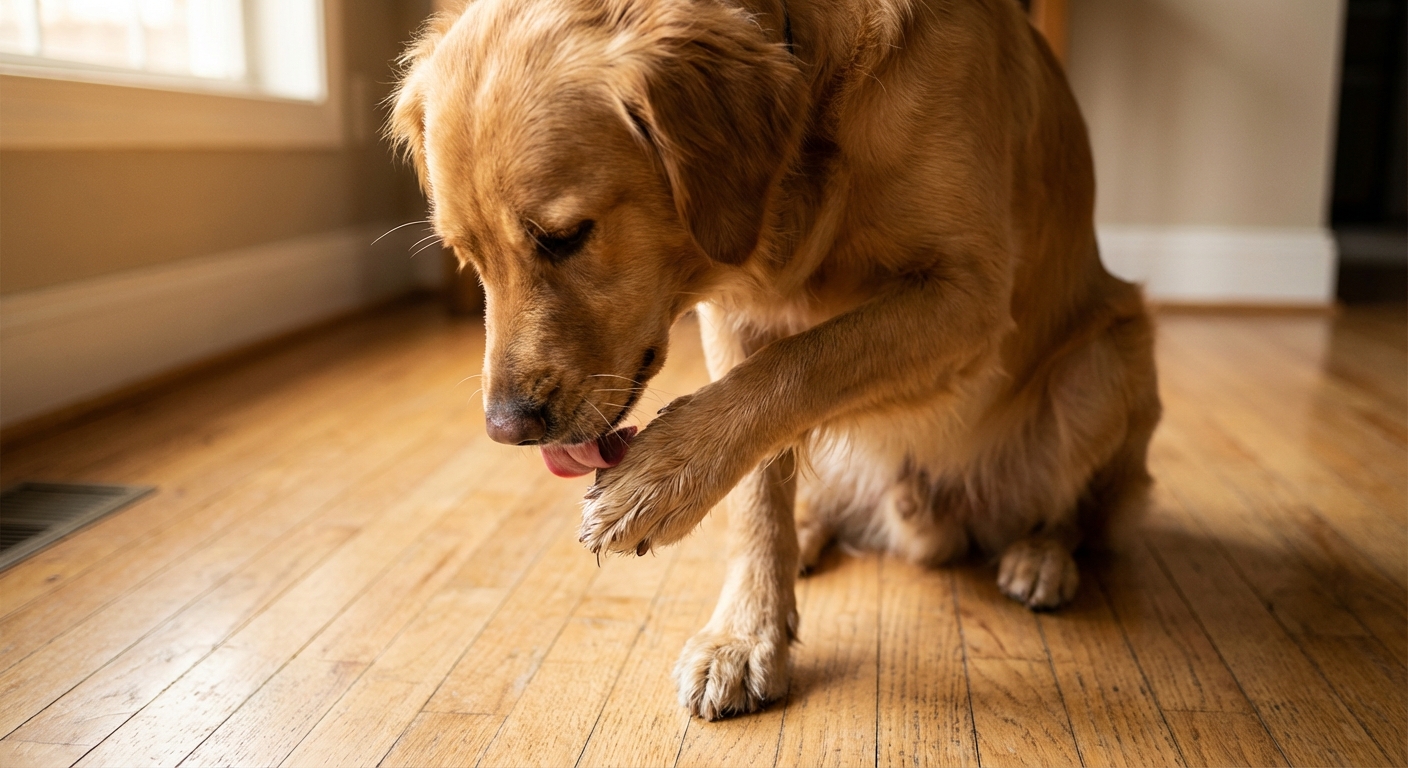
9) Stress, boredom, or compulsive licking
Not every itch is purely medical. Some dogs lick or chew due to anxiety or habit, especially if they are under-stimulated.
Clues: licking one spot repeatedly, worse when alone, no obvious rash at first, but skin becomes irritated over time.
What to do: rule out medical causes first. Then consider enrichment, more exercise, and behavior support if needed.
Other causes your vet may rule out
In clinic, when itching does not fit the usual pattern or keeps returning, your veterinarian may also consider:
- Ringworm (dermatophytosis): can cause hair loss, scaling, and sometimes itch. It is contagious to other pets and people.
- Anal gland issues: can cause scooting, rear-end licking, and irritation around the anus.
- Hormonal or internal conditions: issues like hypothyroidism or Cushing’s disease usually cause coat and skin changes more than itch, but they can increase the risk of recurrent infections.
- Foreign bodies: especially in ears or between toes, which can trigger sudden, intense licking or head shaking.
Quick home check: 5 things you can do today
Once you have a sense of the pattern, a quick at-home check can help you decide what to do next.
- Look for flea dirt: comb the coat over a white paper towel. Add a drop of water. If the specks turn reddish-brown, that is digested blood.
- Check ears and paws: sniff for odor, look for redness, brown discharge, or raw skin between toes.
- Note the pattern: seasonal, after meals, after walks, after baths, after playing in grass.
- Trim nails and tidy fur: long nails and matted fur can worsen skin irritation and trap moisture.
- Prevent self-trauma: use an e-collar if your dog is chewing hot spots or bleeding areas until you can be seen.
When scratching is urgent
Call your veterinarian promptly if you notice any of the following:
- Swollen face, hives, or trouble breathing
- Open sores, bleeding, or rapidly spreading redness
- Severe head shaking, ear pain, or head tilt
- Lethargy, fever, loss of appetite, vomiting, or diarrhea alongside itching
- Scratching that is nonstop or waking your dog from sleep
- Puppies, seniors, or immunocompromised dogs with sudden skin issues
Itching is not just “annoying.” Constant scratching breaks the skin barrier, invites infection, and makes your dog feel miserable. Getting ahead of it early is kinder and often less expensive.
What your vet may recommend
To get past guesswork, veterinarians often combine a few steps:
- Skin cytology: checks for yeast and bacteria quickly.
- Skin scrape or parasite testing: looks for mites and other causes.
- Ear cytology: determines if the ear problem is yeast, bacteria, or both.
- Flea control plan: prescription or veterinarian-guided preventives are often more reliable than many OTC options and can be tailored to your dog’s health profile.
- Allergy itch relief: medications to break the itch cycle while the underlying cause is addressed.
- Elimination diet trial: if food allergy is suspected.
- Long-term skin support: omega-3s, medicated shampoos, and barrier-repair products as appropriate.
If you are considering homemade food to support skin health, that can be a wonderful tool, but it needs to be nutritionally complete. A well-balanced diet supports the skin barrier and immune system, while an unbalanced one can do the opposite. When in doubt, ask your vet for a recipe resource or a veterinary nutrition consult.

Pet-friendly ways to reduce itching at home
These options are generally safe, but they are not a substitute for diagnosis if your dog has redness, odor, hair loss, or recurrent flare-ups.
- Rinse after outdoor time: a quick paw and belly rinse can reduce pollen load.
- Use a gentle shampoo: choose products made for dogs, and avoid frequent baths unless your vet instructs it.
- Wash bedding weekly: fragrance-free detergent is best for sensitive pups.
- Control humidity: a humidifier can help in dry months.
- Add evidence-based supplements: veterinarian-approved omega-3 fatty acids can support skin health over time. Ask about dosing and look for products that clearly list EPA and DHA.
A quick safety note: avoid giving human medications (including antihistamines) or using human creams, essential oils, or “natural” topicals unless your veterinarian tells you what is safe for your dog. Some products can be toxic if licked, and others can worsen infections.
Bottom line
If your dog keeps scratching, you are not being “overly worried.” Your dog is telling you something is off. Start by identifying the pattern and checking for fleas, ears, paws, and skin changes. Then bring those notes to your veterinarian so you can get targeted relief instead of playing product roulette.
With the right plan, most itchy dogs feel better fast, and you can prevent the cycle from coming back again and again. And yes, I see plenty of North Texas pups who feel dramatically better once we pinpoint the trigger and treat what is actually going on.