Is your dog licking paws or getting a red belly in spring or fall? Learn common symptoms, top triggers (pollen, grass, mold), easy home relief steps, and whe...
Article
•
Designer Mixes
Why Does My Dog Itch So Much?

Shari Shidate
Designer Mixes contributor
If your dog seems itchy all the time, you are not imagining it. Persistent scratching, licking, chewing paws, rubbing the face on the carpet, or ear debris and recurrent ear infections are some of the most common reasons pet parents end up at the vet. The tricky part is that “itch” is a symptom, not a diagnosis. The good news is that once you narrow down the real cause, most dogs can get meaningful relief.
As a veterinary assistant in Frisco, Texas, I have seen how frustrating itching can be for both dogs and their people. Let’s walk through the most common causes, what you can check at home, and when it is time to bring your dog in.
Common reasons dogs itch
Many different problems can “look like allergies.” Here are the big categories we see most often.
1) Fleas and other parasites
Fleas are still a top cause of intense itch, even in clean homes and even in dogs that “never go anywhere.” In very sensitive dogs with flea allergy dermatitis, even a few bites (and sometimes just one) can trigger a big reaction, leading to dramatic scratching and chewing, especially over the rump, tail base, and back legs.
- What you might notice: scratching around the tail base, small scabs, hair thinning, “flea dirt” (black specks that turn reddish when wet).
- Other culprits: mites (mange) and lice can also cause significant itch and secondary infection. Ticks more often cause localized irritation where they attach rather than full-body itching, but they can still make some dogs uncomfortable.
2) Environmental allergies (atopy)
Just like people, dogs can react to pollen, grasses, molds, and dust mites. In Texas, seasonal itch can be intense and may last a long time, depending on the year and where you live.
- Common patterns: paw licking, red belly, itchy face, frequent ear infections.
- Timing: can be seasonal or year-round.
3) Food allergy or food sensitivity
True food allergy is less common than environmental allergy, but it is real. Dogs can react to certain proteins (like beef or chicken) or other ingredients. Food issues often show up as skin itch, ear problems, and sometimes digestive signs.
- Clues: itch that does not match seasons, recurring ear infections, symptoms that persist even in winter.
- Important note: a “grain-free” label does not automatically mean a food is better for skin. The right diet is individual.
4) Yeast and bacterial skin infections
When dogs itch, they damage the skin barrier. That creates an opening for yeast and bacteria to overgrow, especially in warm, moist areas like paws, armpits, groin, skin folds, and ears. Many dogs end up in a cycle where allergies start the itch and infection keeps it going.
- Possible yeast or bacterial clues: a strong musty or “corn chip” type odor, greasy skin, or dark discoloration between toes. (Odor can be a helpful clue, but it is not diagnostic on its own.)
- Bacterial clues: pimples, pustules, crusts, hot spots, tenderness.
5) Dry skin and grooming-related irritation
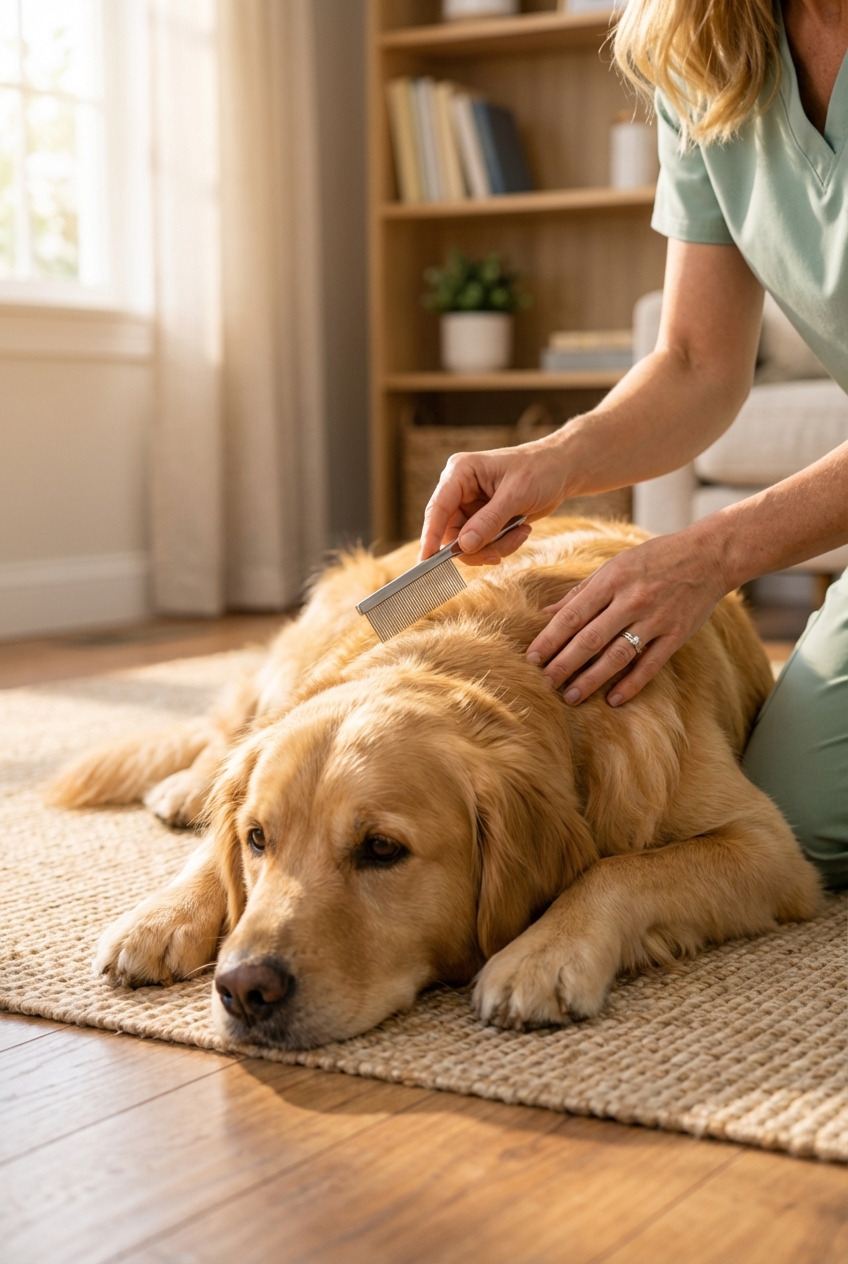
Overbathing, harsh shampoos, low humidity, or not rinsing soap thoroughly can leave dogs itchy. Some coats also mat easily, and mats tug on the skin and trap moisture.
- Clues: dandruff, dull coat, itch after baths, itch under mats or harness areas.
6) Contact irritation
Some dogs react to lawn chemicals, certain wipes, fragranced detergents, carpet cleaners, or even plastic food bowls.
- Clues: red belly after lying in grass, chin acne-like bumps, irritation where products touch.
7) Other causes that can look like “itch”
Not every lick or chew is an allergy. Sometimes the skin looks normal because the problem is coming from somewhere else.
- Pain: arthritis or a sore joint can lead to repeated licking of one leg or paw.
- Anal glands: scooting and licking under the tail is not always skin related.
- Behavior and stress: some dogs overgroom when anxious or bored.
- Hormone or systemic issues (less common): conditions like hypothyroidism or Cushing’s can affect skin and coat health and may contribute to recurrent infections.
Where your dog itches matters
The location of itching does not give a perfect diagnosis, but it often points you in the right direction.
- Tail base and rump: fleas are high on the list.
- Paws and ears: environmental allergies, yeast, and secondary infection are common.
- Belly and armpits: pollen and grass exposure, contact irritation, and yeast.
- Face rubbing: environmental allergies, mites, or irritation.
- All over itch with flaky skin: dryness, parasites, infection, or (less commonly) systemic issues.
Quick at-home checks
You do not need special tools to gather helpful information. These quick checks often make a vet visit more efficient, too.
- Part the fur near the tail base: look for flea dirt or tiny fast-moving fleas.
- Smell the paws and ears: a strong musty odor can be associated with yeast or bacterial overgrowth, but it is not definitive.
- Check the skin: redness, scabs, oozing, pimples, thickened dark skin, or hair loss are signs the skin barrier is struggling.
- Note timing: did it start after boarding, grooming, a diet change, moving, or a new detergent?
- Track intensity: if your dog is waking up at night to scratch, that is a sign the itch is significant and it is a good time to call your veterinarian.
If you can, take a few clear photos (paws, belly, ears, and any hot spots). It is amazing how much this helps when symptoms fluctuate.
What you can do now
These supportive steps can reduce irritation while you work on the root cause. If your dog has open sores, severe redness, swelling, or pain, skip the home steps and call your veterinarian.
Support the skin barrier
- Use a gentle, fragrance-free dog shampoo and rinse extremely well. Residue can make itching worse.
- Dry thoroughly after baths, swimming, and rainy walks, especially paws and skin folds.
- Wipe paws after outdoor time with a damp cloth to remove pollen and grass particles.
Control fleas consistently
If fleas are a possibility, treat all pets in the home with a veterinarian-recommended flea preventative. Inconsistent flea control is one of the most common reasons itching never fully improves.
Reduce licking and chewing damage
- Use an e-collar or a soft cone if your dog is creating raw spots.
- Keep nails trimmed to reduce skin trauma during scratching.
- Consider breathable booties for short periods if pollen makes paws flare, but do not trap moisture for long stretches.
Nutrition basics (keep it steady)
A complete and balanced diet supports the skin barrier and immune system. If your dog is being worked up for allergies, especially if your veterinarian is considering a food trial, try not to make diet changes (including new toppers, treats, or supplements) unless your vet directs you to. Changing foods at the wrong time can make results harder to interpret.
Action step: If food allergy is on your radar, ask your vet what to feed and what to avoid before you switch anything. Consistency matters during an allergy workup.
What not to do at home
- Do not use essential oils on the skin unless your veterinarian specifically recommends them. Some can be irritating or toxic.
- Do not apply human steroid creams or antibiotic ointments without veterinary guidance. Dogs often lick products off, and some ingredients can cause problems.
- Do not start random supplements during a diet trial or allergy workup. It can muddy the picture, and some supplements cause GI upset.
- Do not give human antihistamines unless your veterinarian tells you what to use and how to dose it for your dog.
When itching is an emergency
Most itching is not life-threatening, but some situations should be treated urgently.
- Facial swelling, hives, or trouble breathing
- Rapidly spreading redness or severe pain
- Oozing hot spots that expand quickly
- Head shaking with a painful ear (risk of ear hematoma)
- Extreme lethargy, fever, or loss of appetite along with skin symptoms
What your vet may recommend
There is no single “best itch medicine” for every dog. The best plan depends on the cause. Your veterinarian may suggest:
- Skin cytology (looking at cells under a microscope) to check for yeast and bacteria.
- Skin scraping if mites are suspected.
- Prescription flea control if over-the-counter products are not enough.
- Anti-itch medications to stop the scratch cycle so skin can heal.
- Medicated shampoos or ear treatments for infection.
- Elimination diet trial for suspected food allergy, done in a structured way for reliable results.
- Allergy testing and immunotherapy for chronic environmental allergies in some dogs.
If your dog has chronic itch, ask your vet about a step-by-step plan. The goal is not just fewer symptoms this week, but fewer flare-ups over the long haul.
An itch diary that helps
Chronic itch can feel random, but patterns usually show up when you track them. For two to four weeks, jot down:
- Itch level (1 to 10)
- Location (paws, ears, belly, face, tail base)
- Diet and treats (including chews)
- Baths, grooming, and new products
- Outdoor exposure (parks, tall grass, recent mowing)
- Flea prevention date given
This is one of the most evidence-based home tools you can use because it helps your veterinarian choose the right next step instead of guessing.
The bottom line
If your dog is itching a lot, you do not have to just live with it. Itching is often treatable, especially when you identify the driver: parasites, allergies, infection, diet, irritation, or even pain that is masquerading as a skin problem. Start with safe basics like consistent flea prevention, gentle skin care, and tracking patterns. And if the itching is persistent or intense, partner with your veterinarian to stop the scratch cycle before it turns into infection and chronic inflammation.
Your dog deserves to feel comfortable in their own skin, and you deserve to enjoy your time together without constant scratching in the background.