Vet-informed guide to a short-term bland diet for dogs: chicken and rice 1:2 ratio, daily cup ranges by weight, how many meals to split into, and red flags t...
Article
•
Designer Mixes
Why Does My Dog Have Diarrhea All the Time?

Shari Shidate
Designer Mixes contributor
If it feels like your dog has diarrhea more days than not, you are right to pay attention. An occasional loose stool happens to nearly every dog, but diarrhea that keeps coming back (or never fully resolves) can signal anything from a simple diet mismatch to parasites, chronic gut inflammation, or a condition outside the intestines.
As a veterinary assistant here in Frisco, Texas, I have seen many “mystery diarrhea” cases improve once we slow down, get organized, and work step-by-step. Let’s walk through the most common reasons and what you can do today to help your pup feel better.
First, define “all the time”
Use these descriptions to decide how urgent things may be and to help your veterinarian pinpoint the cause. These patterns are helpful clues, not a diagnosis.
Acute diarrhea
Starts suddenly and lasts less than about 14 days. Often triggered by diet changes, trash raiding, stress, or a short-lived infection.
Chronic diarrhea
Persists longer than about 3 weeks, or keeps recurring. This is where we start thinking about food intolerance, chronic enteropathies (IBD-like conditions), parasites that are hard to clear, or underlying medical problems.
Small intestine vs. large intestine clues
- Small intestine: large-volume stool, weight loss, poor appetite, gas, sometimes vomiting.
- Large intestine (colon): frequent small amounts, urgency, straining, mucus, and sometimes bright red blood.
Common reasons dogs get diarrhea repeatedly
1) Diet issues (one of the most common)
Dogs have sensitive guts, and consistency matters. Frequent diarrhea can come from:
- Sudden diet change or switching foods too fast
- Too many rich treats, chews, table scraps, or high-fat foods
- Food intolerance (not the same as a true allergy)
- Too much fiber for that particular dog, or too little
Pet-friendly tip: If you want to move toward fresh or homemade foods, go slow. Many dogs do best with a gradual transition (think 7 to 14 days), and even a 25% fresh-food “add-in” can be a gentle place to start.
2) Parasites (even indoor dogs can get them)
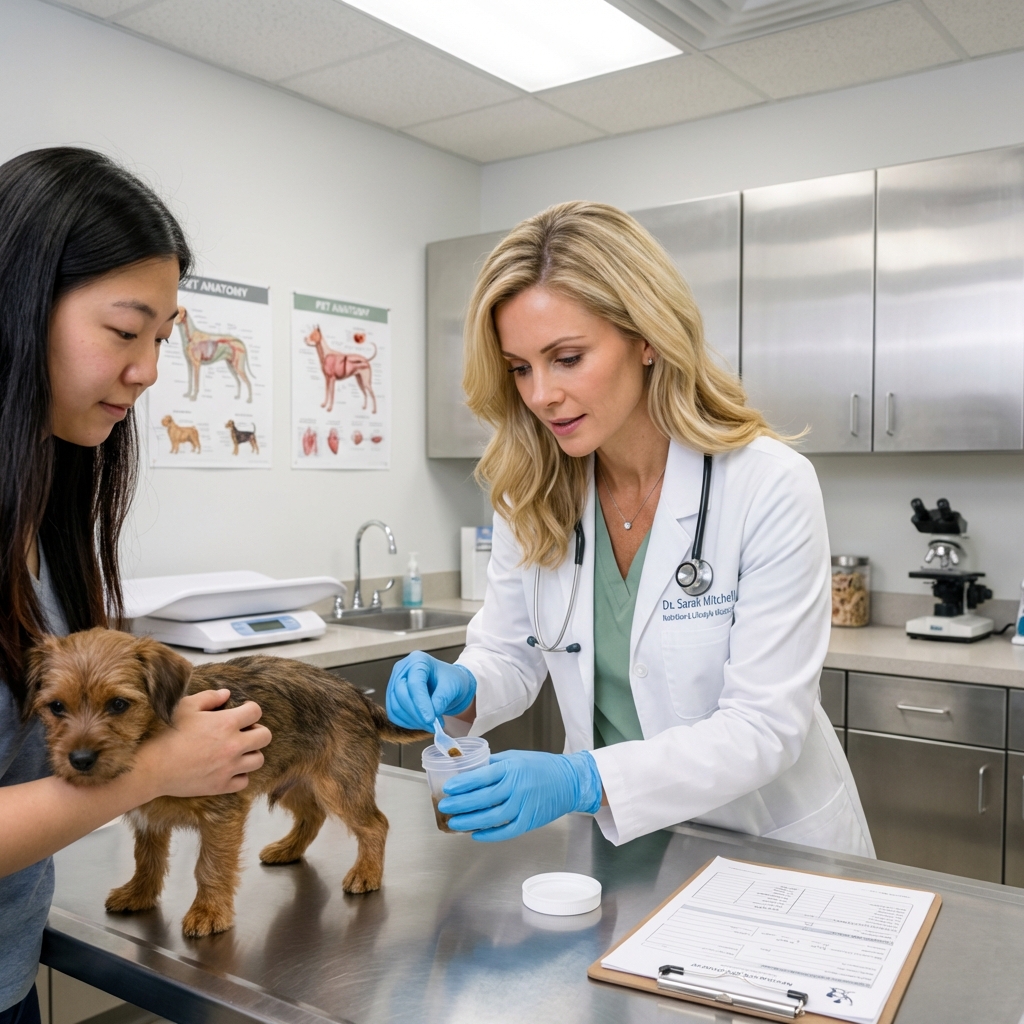
Giardia and whipworms are classic causes of recurring diarrhea. A single negative stool test does not always rule them out, especially if the sample is old, the shedding is intermittent, or the parasite load is low.
- Giardia: often soft or greasy, foul-smelling stool and gassiness (signs can vary)
- Whipworms: chronic large-bowel diarrhea, mucus, straining
- Roundworms and hookworms: more common in puppies but possible in adults
Practical testing note: A fresh sample helps, and some clinics recommend submitting more than one sample over a few days to improve the odds of catching intermittent shedders.
3) Gut infections and dysbiosis
Dogs can get diarrhea from viruses, bacteria, or simply an upset gut ecosystem after diet changes, stress, or antibiotics. Sometimes the issue is not one “bad germ,” but an inflamed gut that cannot regulate digestion normally.
Antibiotics: Your veterinarian will decide when they are truly needed. Empiric antibiotics are not a fit for every diarrhea case.
4) Stress and routine disruption
Boarding, travel, fireworks, new pets, moving, or even a schedule change can trigger stress colitis, which often looks like frequent small stools with mucus.
5) Chronic enteropathies (IBD-like conditions)
Chronic inflammation of the intestines can lead to persistent diarrhea, vomiting, and weight loss. These cases often require a structured diet trial and sometimes medications prescribed by your veterinarian.
6) Pancreas problems (pancreatitis or EPI)
Pancreatitis can be triggered by high-fat treats, greasy foods, or underlying issues. Diarrhea may be accompanied by vomiting, belly pain, and lethargy, and it can become serious quickly.
Exocrine pancreatic insufficiency (EPI) is different. It happens when the pancreas is not making enough digestive enzymes. A classic pattern is chronic loose stool, weight loss, and sometimes a ravenous appetite.
7) Conditions outside the gut
When diarrhea is chronic, we also consider problems that affect digestion indirectly, such as Addison’s disease, liver disease, kidney disease, certain medications, or other systemic illness. Thyroid disease is not a common primary cause of chronic diarrhea in dogs, but your veterinarian may still look at the whole picture depending on symptoms.
Red flags: when to call the vet today
Please seek veterinary care promptly if you notice any of the following:
- Black, tarry stool or large amounts of blood
- Repeated vomiting, inability to keep water down
- Significant lethargy, weakness, collapse, or signs of pain
- Dehydration (tacky gums, sunken eyes, skin not snapping back)
- Puppies, seniors, pregnant dogs, or dogs with chronic disease
- Diarrhea lasting more than 48 hours, or recurring for more than 3 weeks
- Weight loss, ravenous appetite with weight loss, or appetite loss
Chronic diarrhea is not just “messy.” Over time it can lead to dehydration, nutrient deficiencies, and a disrupted gut microbiome.
What you can do at home
These steps are meant for mild diarrhea in an otherwise bright, alert adult dog, and only when the red flags above are not present. If you are unsure, call your clinic.
1) Pause the extras
For 7 to 10 days, remove all non-essential treats, chews, table food, and flavored medications or supplements unless your veterinarian says otherwise. Many “mystery” cases improve just from simplifying.
2) Keep hydration front and center
Offer plenty of fresh water. If your dog is willing, you can ask your vet about using an oral electrolyte solution made for pets. Avoid sports drinks due to sugar and ingredient concerns.
3) Consider a short bland plan, or a GI diet
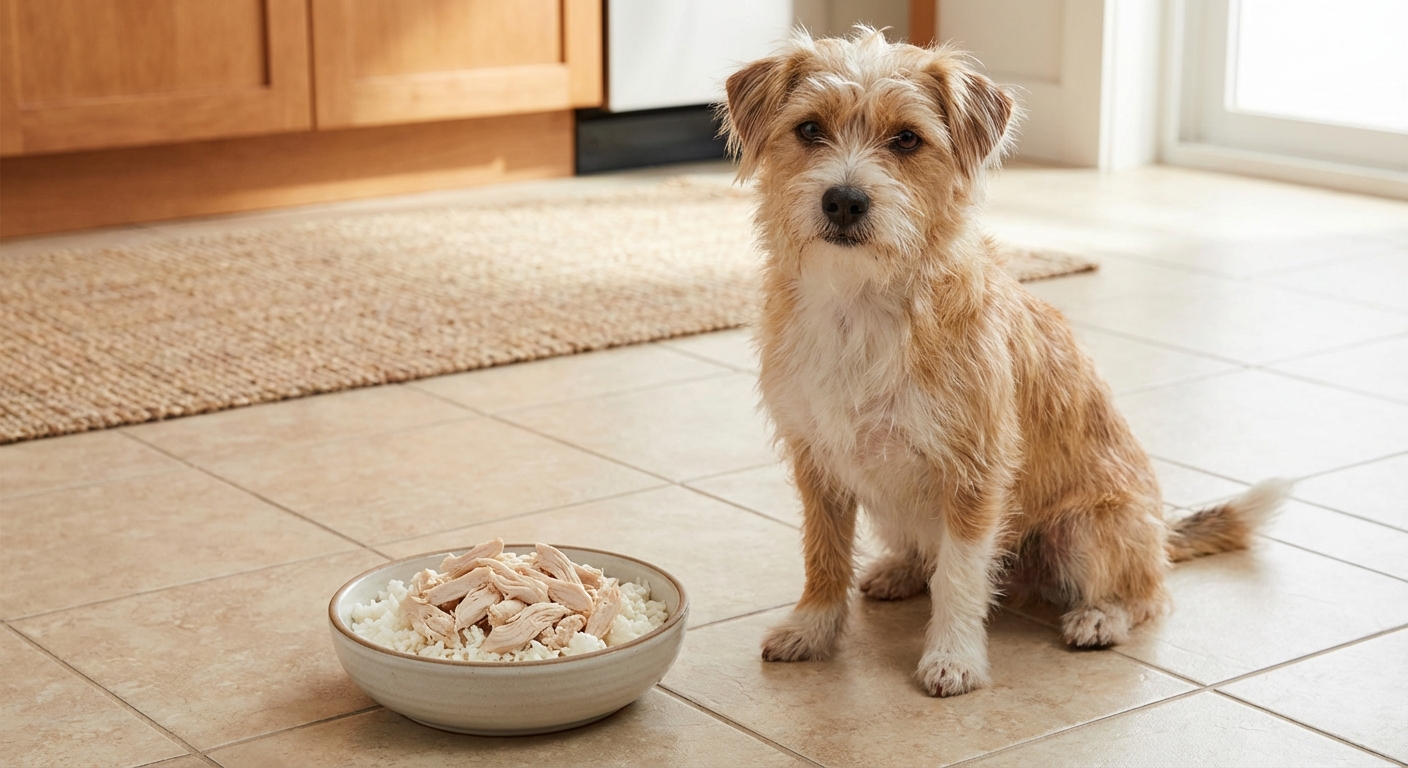
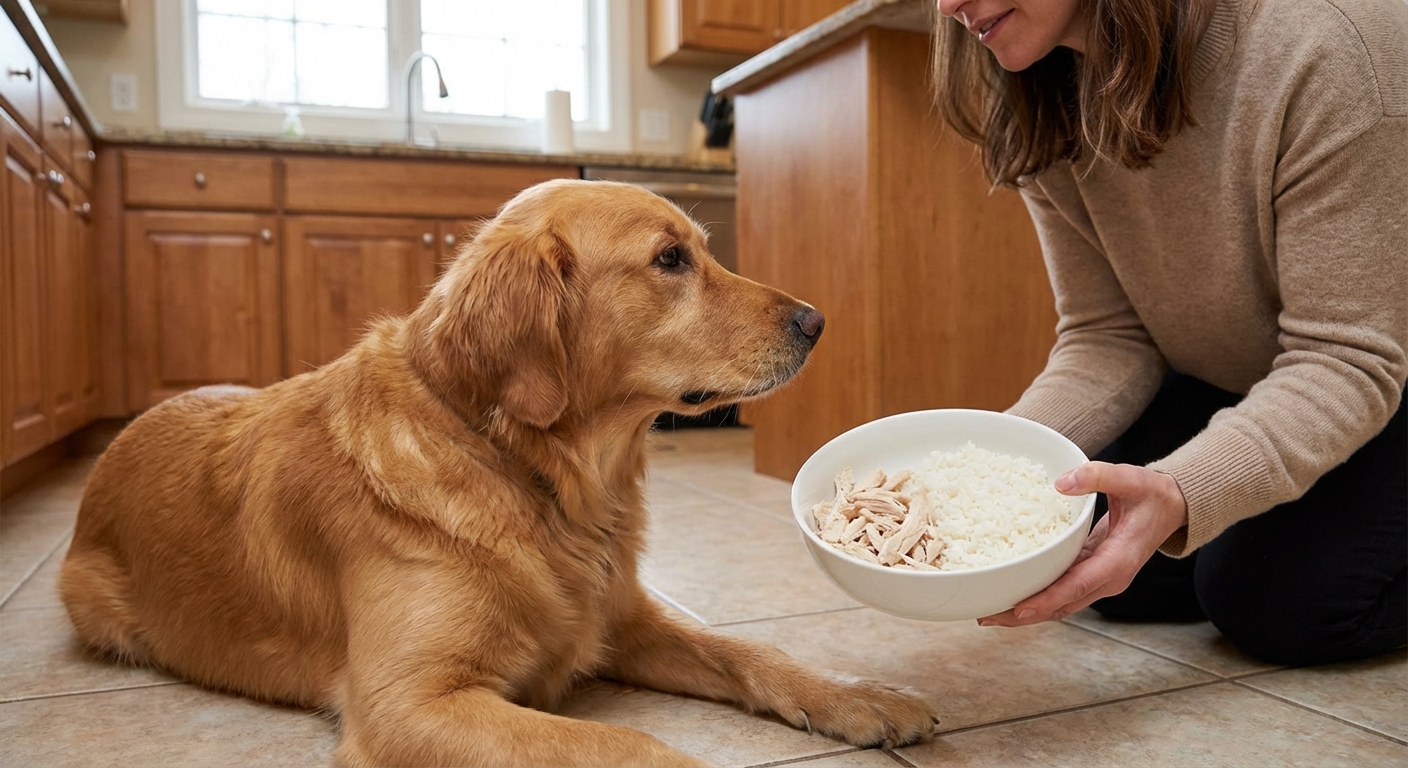
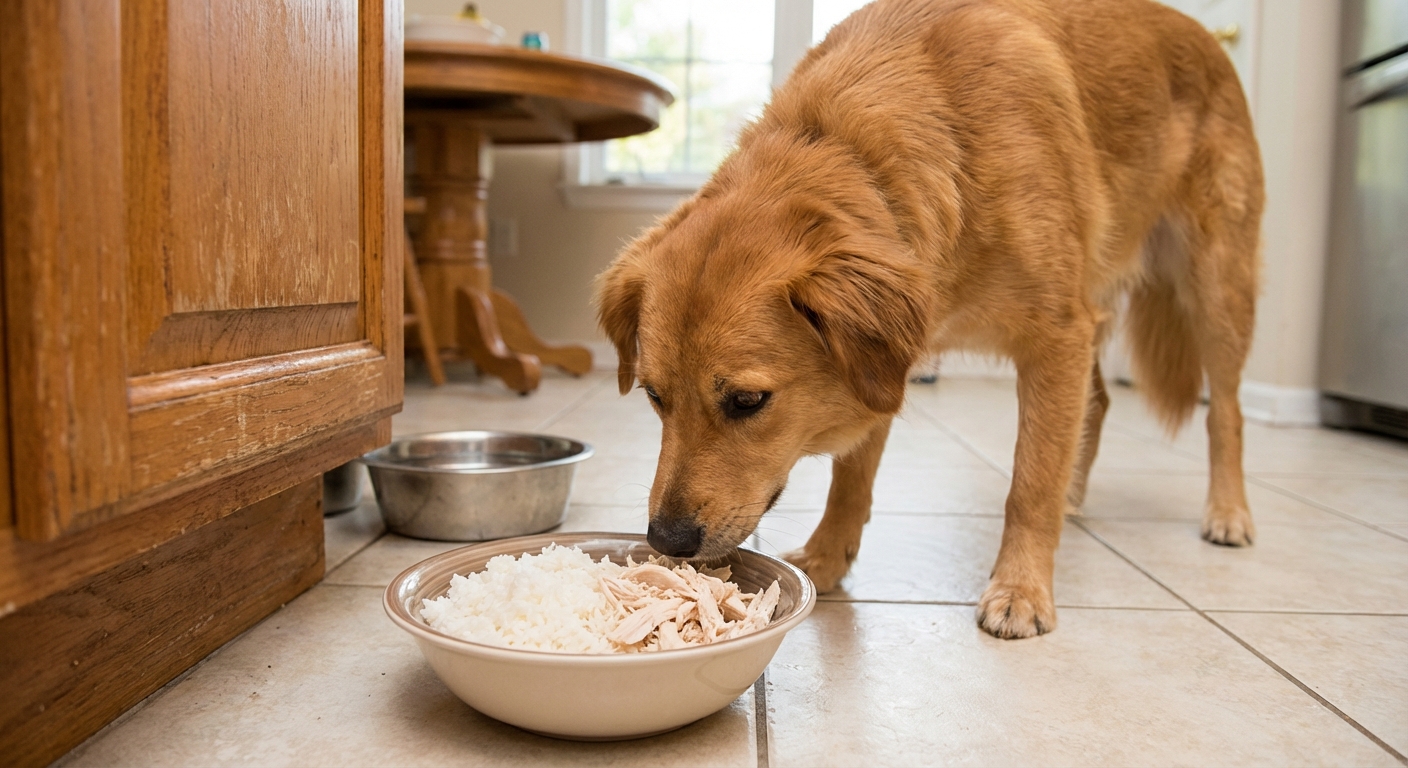
For mild cases in otherwise healthy adult dogs, many veterinarians recommend a short bland diet such as boiled chicken breast and white rice. This is not nutritionally complete long-term, so it is meant for a brief reset while you arrange next steps.
Some clinics prefer a highly digestible prescription GI diet instead of home bland food, especially if diarrhea is recurrent. If you have access to one, ask your veterinarian which option fits your dog best.
Important: If your dog may have food allergies, recurrent pancreatitis, or needs a prescription diet, a bland diet may not be the best choice. When in doubt, call your clinic.
4) Add gut-friendly support carefully
- Veterinary probiotic: evidence supports certain strains for acute diarrhea and antibiotic-associated diarrhea. Use a product made for dogs and follow label directions.
- Fiber support: plain canned pumpkin (not pie filling) is often used in small amounts to support stool quality, especially for large-bowel diarrhea.
5) Start a “poop journal”
This is one of the most helpful things you can do. Track:
- Food (brand, protein source, treats, chews)
- Stool frequency and consistency
- Mucus, blood, or unusually foul odor
- Vomiting, appetite changes, weight changes
- Any stress events (boarding, visitors, storms)

How vets work up chronic diarrhea
If your dog has diarrhea “all the time,” it often takes a layered approach. Your veterinarian may recommend:
- Fecal testing: flotation and antigen testing (and sometimes repeat samples)
- Fecal PCR panels: in some cases, to look for specific infectious causes
- Empiric deworming: because some parasites are easy to miss on tests
- Bloodwork and urinalysis: to check organ function, inflammation, protein levels, and hydration status
- GI-specific tests: such as cobalamin (B12), folate, pancreatic testing (including TLI for EPI), or Addison’s screening when indicated
- Diet trial: a strict 8 to 12-week trial with a hydrolyzed or novel-protein diet, with zero “cheats”
- Imaging: abdominal ultrasound if we suspect structural disease
That diet trial step is a big one. In practice, it is often the difference between guessing and actually learning what your dog’s gut can tolerate.
Feeding choices for steadier stools
Prioritize consistency
Pick one balanced plan and stick with it long enough to evaluate. Rotating foods too quickly can keep the gut in a constant state of adjustment.
Think “simple, complete, digestible”
- Complete and balanced: look for diets formulated to meet AAFCO nutrient profiles for your dog’s life stage
- Appropriate fat: some dogs need lower-fat options to prevent flare-ups
- Fiber that fits your dog: some do better with a bit more soluble fiber, others do not
If you want homemade, do it the safe way
I love the idea of fresh, human-grade whole foods, but chronic diarrhea is not the time for random improvising. If you are feeding homemade long-term, work with your veterinarian or a board-certified veterinary nutritionist so your recipe is balanced for calcium, essential fatty acids, and micronutrients. A dog can have “beautiful ingredients” and still be missing key nutrients.
FAQ
Can my dog have diarrhea from too many treats?
Yes. Treat overload is one of the most common, fixable causes. Even “healthy” treats can be too rich or too frequent for some dogs.
Is chronic diarrhea always food-related?
No. Food is common, but parasites, chronic enteropathies, pancreatitis, and hormonal disease like Addison’s can also be responsible. That’s why testing and a structured plan matter.
Should I fast my dog?
Fasting is not routinely recommended for many dogs, and it can be risky for puppies, small breeds, seniors, and dogs with medical conditions. Ask your veterinarian what is safest for your specific dog.
The bottom line
If your dog has diarrhea all the time, you do not have to live in constant cleanup mode. The most pet-friendly path is also the most effective one: simplify the diet, document patterns, rule out parasites, and partner with your veterinarian on a plan that is consistent and evidence-based. Small steps add up, and once the gut calms down, many dogs get their energy, appetite, and normal bounce back.