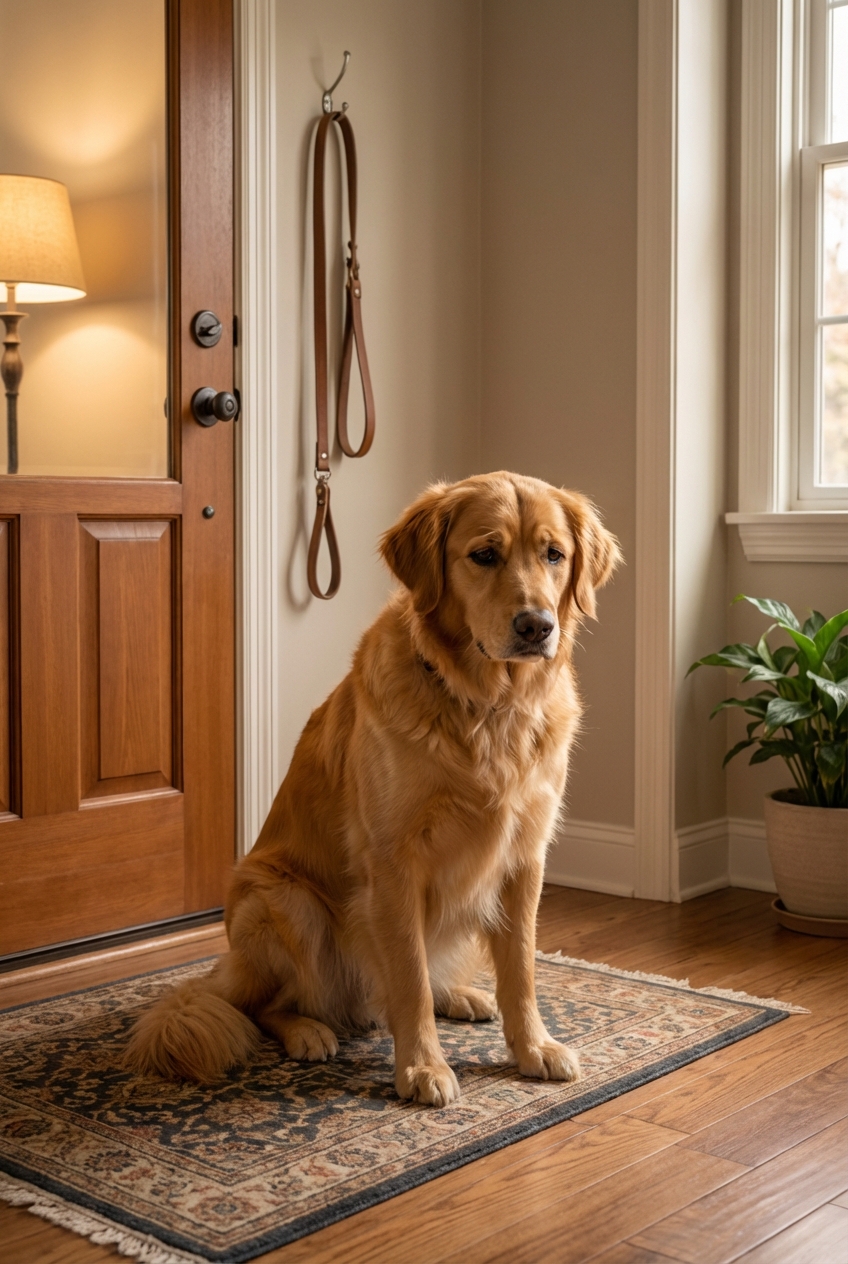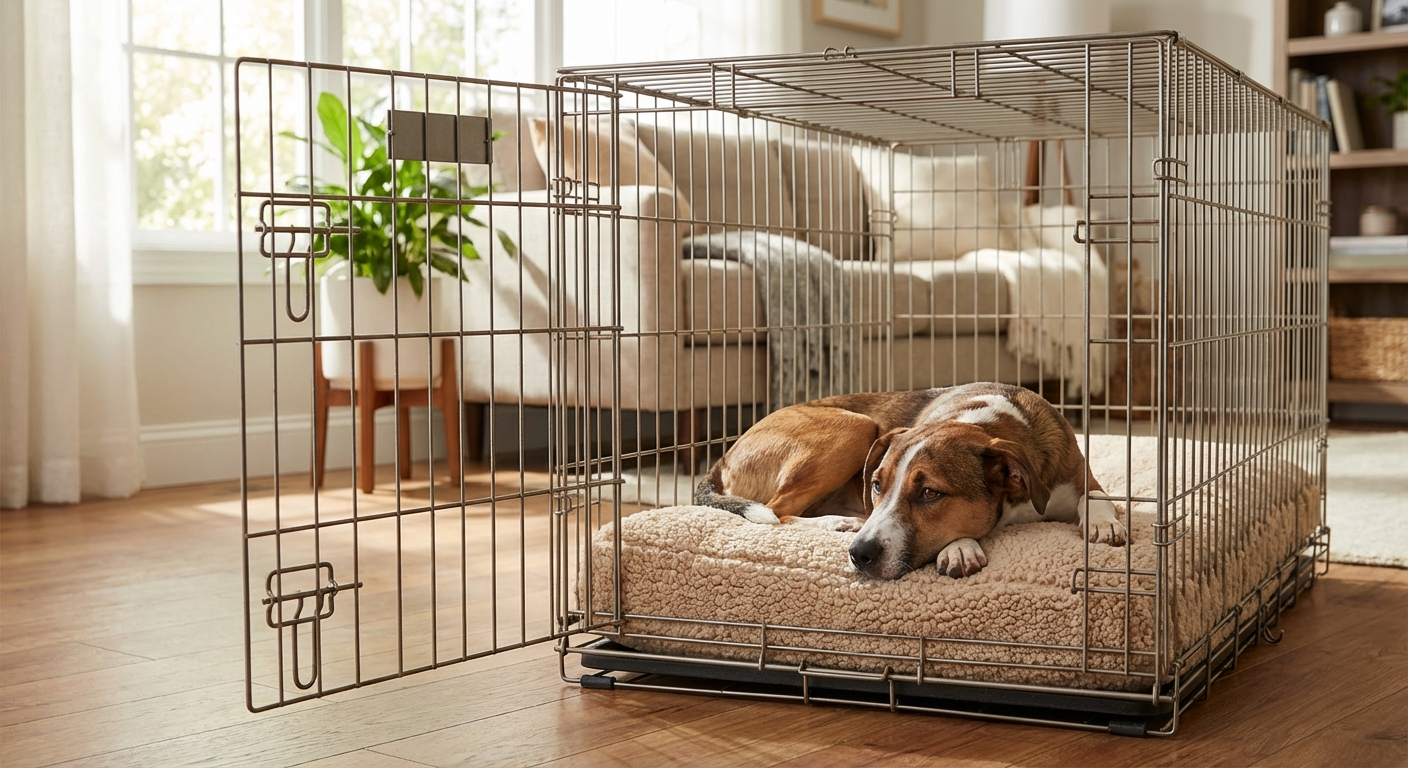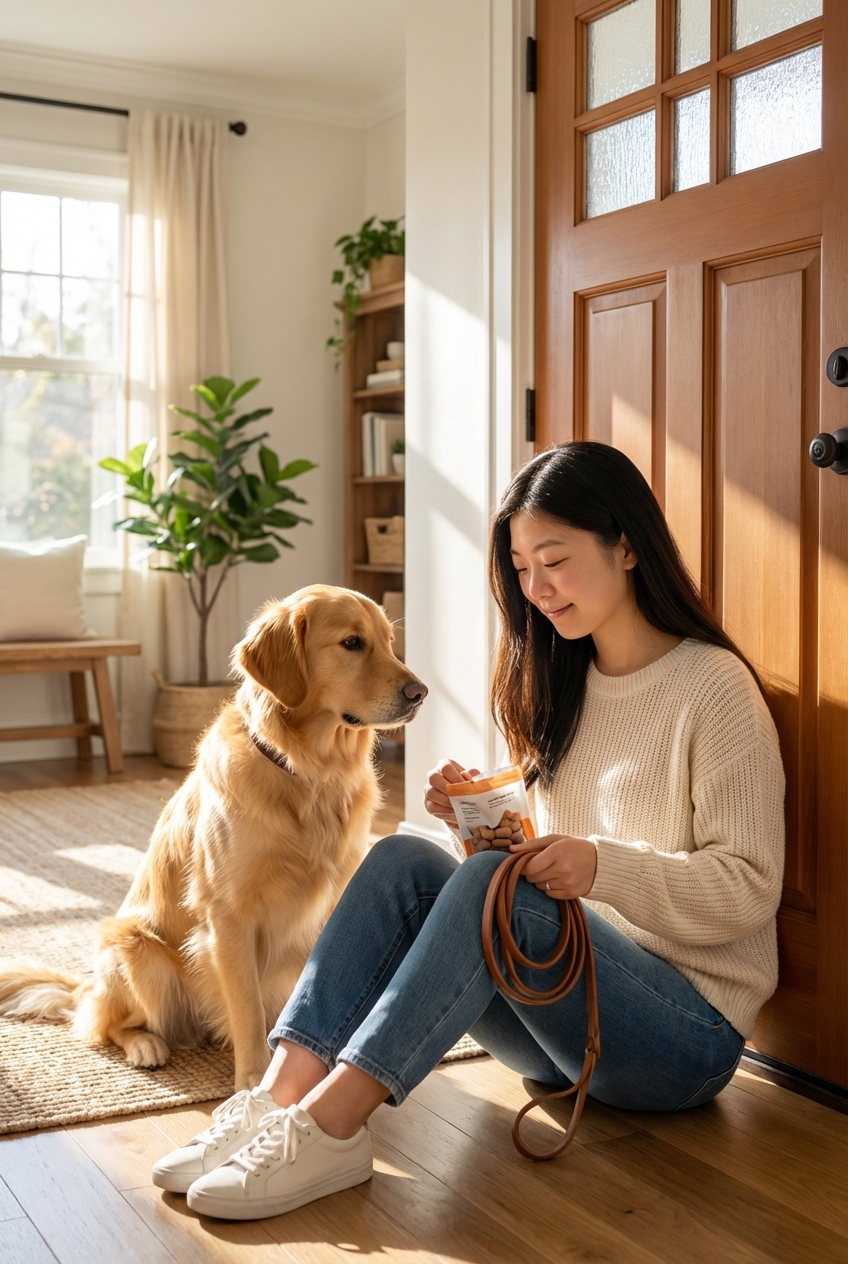
Hear your dog whine the moment you grab your keys? Learn the real signs of separation anxiety and follow a gentle, step-by-step plan—camera setup, calm ski...
Article
•
Designer Mixes
Why Does My Dog Follow Me to the Bathroom?

Shari Shidate
Designer Mixes contributor
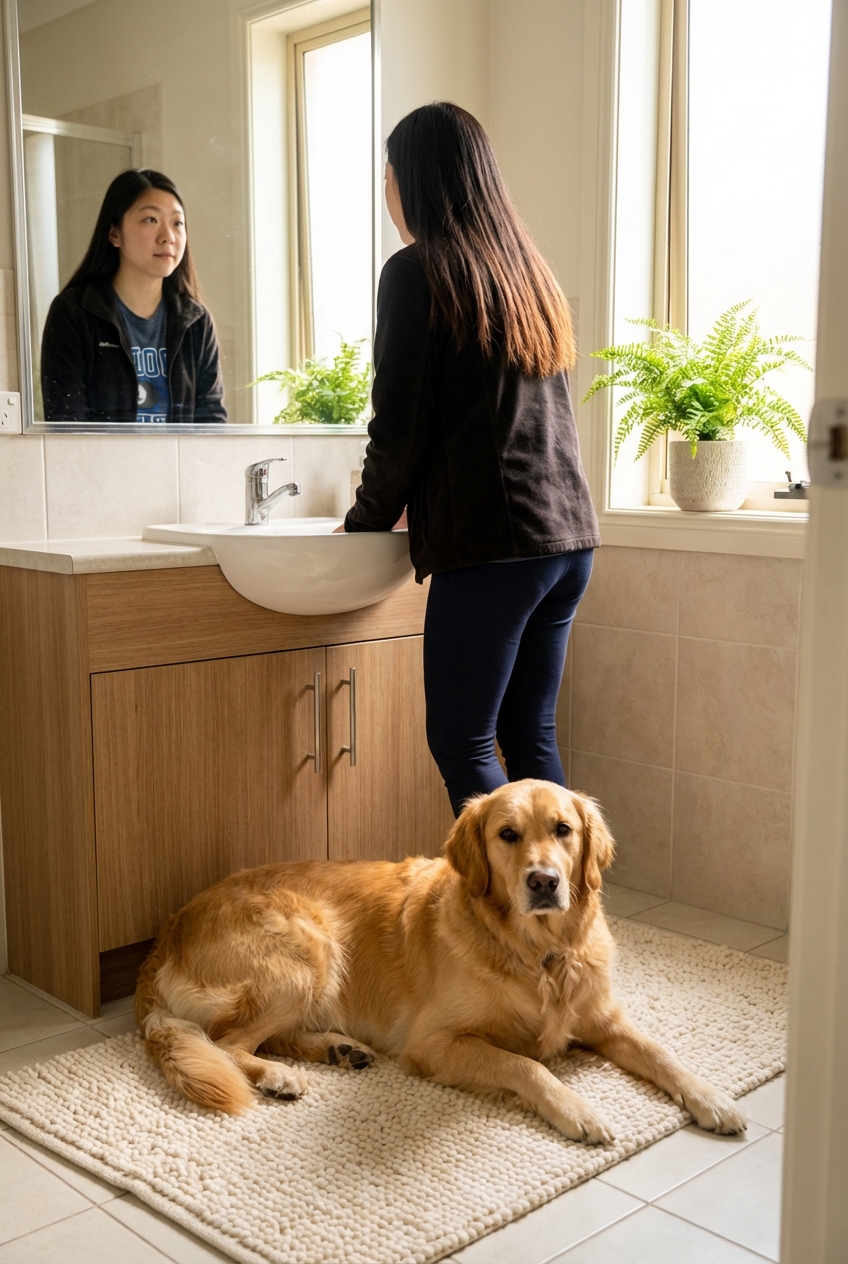
If you have a dog who shadows you from room to room and even stands guard outside the bathroom door, you are not alone. As a veterinary assistant here in Frisco, Texas, I hear this question all the time. Dogs are social animals, and many dogs bond intensely with their humans. That “Velcro dog” behavior can be perfectly normal, but sometimes it is also a clue that your dog needs a little more confidence, enrichment, or help with anxiety.
Let’s break down why it happens, what is normal, what is not, and how to support a dog who just cannot let you pee in peace.
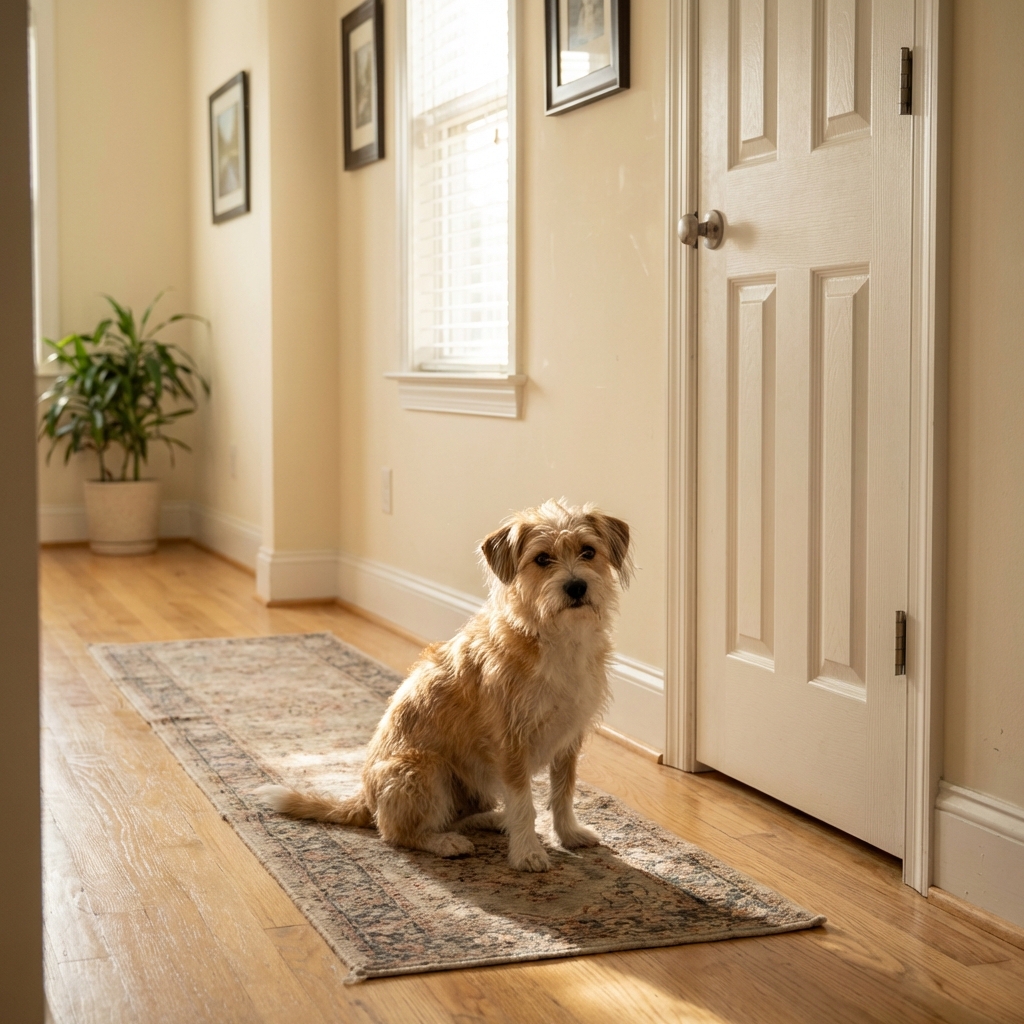
What is a Velcro dog?
A Velcro dog is a dog who sticks close to their person most of the time, like Velcro. They follow you from room to room, sit at your feet, and often choose your lap over any other cozy spot in the house.
This can show up in any breed or mix, and it is often seen in dogs bred to work closely with people or to be companions. That said, every dog is an individual. A label like “doodle” or “designer mix” does not guarantee a specific personality.
Why your dog follows you to the bathroom
1) They are bonded to you
Many dogs tend to stay near the people they trust. From your dog’s point of view, you are their safe place, their routine, and their favorite thing in the house. Following you is usually normal attachment behavior, not a sign of “dominance.”
2) The bathroom is part of your routine
Dogs learn patterns quickly. If you wake up, head to the bathroom, and then the day begins (walk, breakfast, attention), your dog may follow because they have learned that bathroom time predicts something good.
3) Curiosity and FOMO
Dogs are naturally curious. A closed door is interesting, and a human disappearing behind it can be even more interesting. Some dogs simply want to know what you are doing and whether anything exciting is about to happen.
4) They like the space
Bathrooms often have cool tile, small cozy spaces, and interesting smells. Some dogs also learn that their human is “trapped” for a moment, which means easy access to attention.
5) They want to stick together
Some dogs seem to prefer staying close when their person is in a small, closed-off space. Sometimes it looks protective, and sometimes it is just social closeness.
6) Separation-related distress
This is the one we take seriously. If your dog panics when you leave their sight, scratches at doors, cries, drools, paces, or has accidents, they may be experiencing separation-related distress, not just affection.
A key distinction: clinical separation anxiety is usually about being left alone (or thinking they have been left alone), not simply following you around the house. A dog can be Velcro and still be fine when truly alone. Another dog can look “independent” at home but panic the moment you leave.
Normal or red flag?
Following you is usually normal. Here is a quick way to sort out “clingy but okay” versus “needs help.”
Usually normal
- They follow you quietly and settle nearby.
- They can relax if you close the door, even if they wait outside.
- They still eat, play, and nap normally.
- They can be alone for short periods without panicking.
Possible concern
- Vocalizing, scratching, or trying to break through doors.
- Heavy drooling, panting, trembling, or pacing when separated.
- Destructive behavior focused around exits (doors, windows).
- House soiling when left alone, especially if otherwise housetrained.
- Sudden new clinginess in an adult dog (especially paired with restlessness, appetite changes, or pain signs).
These signs can overlap with other issues too. Destruction might be boredom, and accidents can be a medical or housetraining problem, not only anxiety. If the clinginess is new, intense, or messy, it is worth talking to your veterinarian. Pain, cognitive changes in seniors, and some medical issues can make dogs seek extra reassurance.
Why some dogs are extra Velcro
There is no single cause. Usually it is a combination of personality, genetics, early experiences, and reinforcement.
- Genetics and breed tendencies: Many companion and working breeds are selected to stay close to people and respond to cues.
- Early environment: Dogs who experienced frequent changes, shelter life, or limited social stability may cling more once they feel safe.
- Reinforcement: If following you results in petting, talking, or eye contact, the behavior is rewarded and becomes a habit.
- Life stage: Adolescents can become extra shadowy. Seniors may become more attached if their senses decline.
How to help without rejecting your dog
You do not need to stop loving on your Velcro dog. The goal is to teach your dog that being near you is great, and being apart is also safe.
Practice tiny separations
Start small and stay calm. Step behind a door for 1 to 5 seconds, then come back out before your dog escalates. Gradually increase time. This is called desensitization, and it works best when you move at your dog’s pace.
Create a settle spot
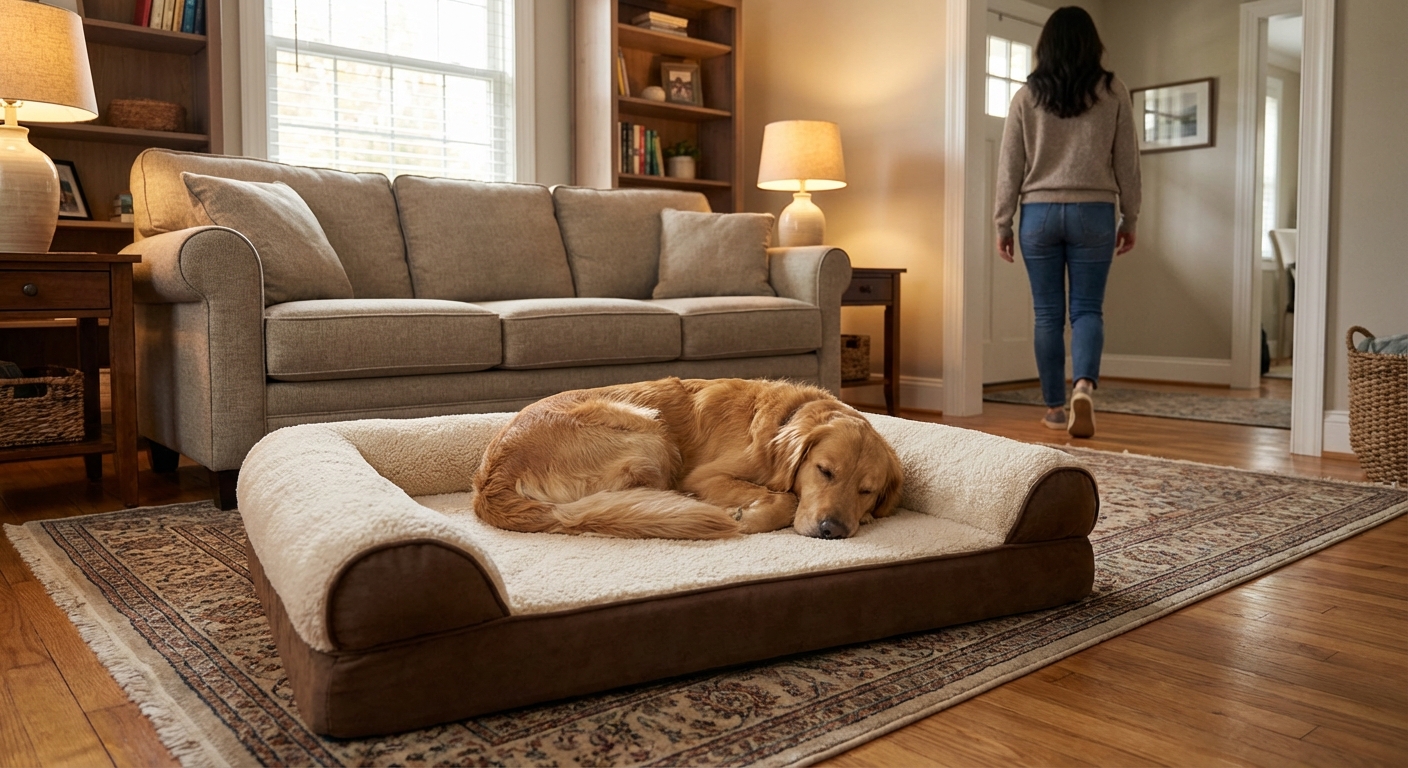
Teach a mat or bed cue (like “place”). Reward your dog for lying calmly on their spot while you move around the house. This builds independence in a positive way.
Use food enrichment smartly
Offer a stuffed food toy, a lick mat, or a safe chew when you need privacy. Licking and chewing are soothing behaviors for many dogs.
Safety note: Choose items appropriate for your dog’s size and chewing style, and supervise when needed (especially for power chewers or dogs who break pieces off). If your dog tends to swallow chunks, skip high-risk chews and ask your vet for safer options.
Reinforce calm, not cling
Try to notice and reward the moments your dog is relaxed on their own. A quiet “good” and a treat delivered to their bed helps teach that independence pays.
Keep exits and entries low-key
Big emotional goodbyes and greetings can accidentally teach a dog that separation is a dramatic event. Calm in and calm out is often best for anxious dogs.
What not to do
- Do not punish door scratching or crying: Punishment can increase anxiety and make the behavior worse.
- Do not force long separations during training: If your dog is panicking, they are not learning to relax. Go back to shorter, successful reps.
- Avoid “cry it out” for true panic: Some dogs will escalate, not settle, if they are genuinely distressed.
Bathroom tips
- If you do not mind the company: It is okay to let them come in, as long as it is safe and not stressful.
- If you want the door closed: Give your dog a consistent job right before you go in, like “place” with a chew or lick mat.
- If they paw or cry: Do not punish. Instead, back up and train shorter separations, then build duration gradually.
- If kids are involved: Remind children not to tease a dog at the door. Door frustration can escalate in sensitive dogs.
When to get help
Please reach out for help if:
- Your dog’s behavior is sudden or worsening.
- You see panic signs, self-injury, or major destruction when separated.
- Your dog will not eat when you leave, even with high-value food.
- You suspect pain (stiffness, licking joints, reluctance to jump, changes in posture).
For separation anxiety, evidence-based help often includes a structured training plan, management strategies, and sometimes medication support from your veterinarian. You are not “failing” your dog if you need that extra layer of help. You are advocating for them.
Bottom line
Most dogs follow their humans to the bathroom because they are social, bonded, curious, and comforted by being close. For many Velcro dogs, it is simply affection plus routine. If the behavior comes with distress, panic, or a sudden change in clinginess, it is worth a veterinary check and a training plan.
You can absolutely keep your close bond while teaching your dog the most important life skill of all: it is safe to relax, even when we are not in the same room.