Scooting, licking, or a fishy smell can signal anal gland trouble. Learn key causes, warning signs, and prevention steps—stool quality, weight control, and...
Article
•
Designer Mixes
Why Does My Dog Drag Her Butt?

Shari Shidate
Designer Mixes contributor
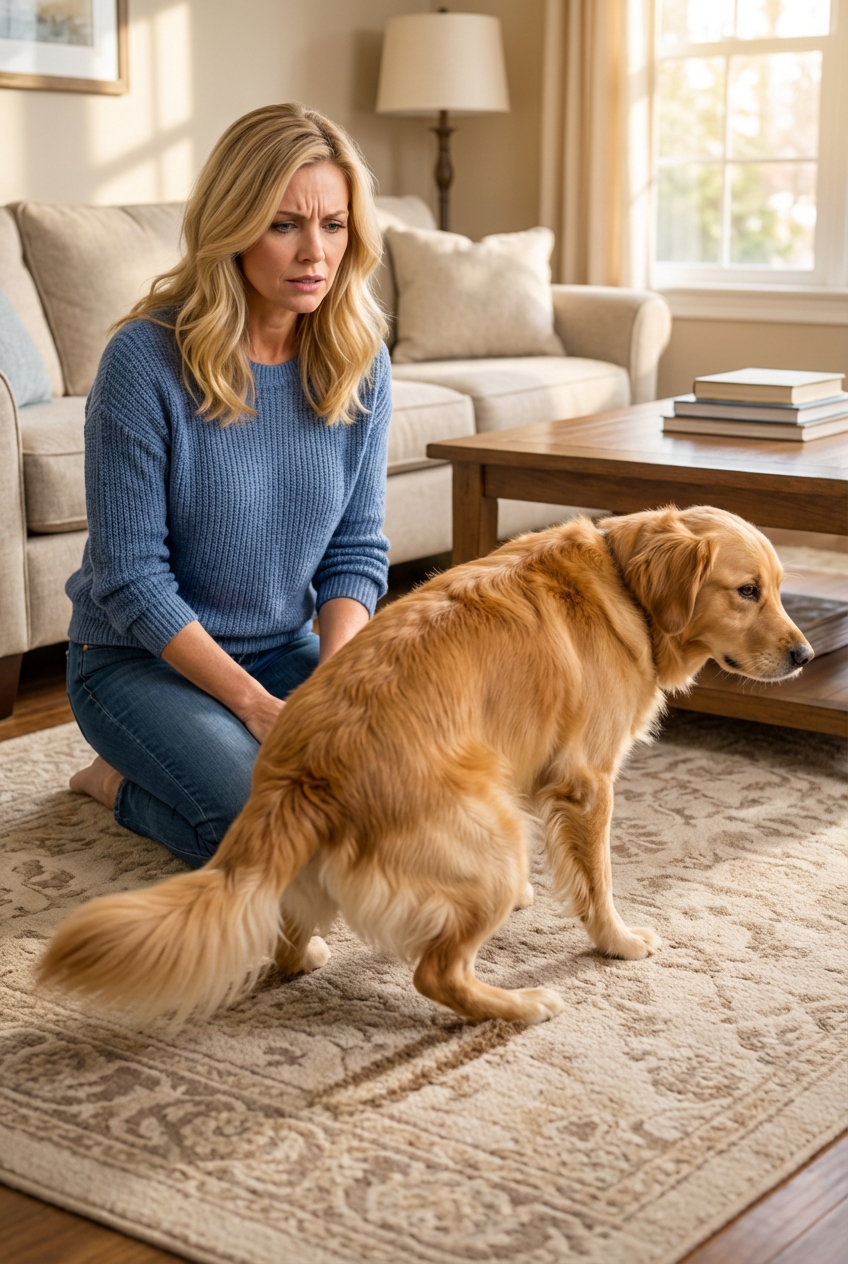
If you have ever watched your dog sit down and scoot her bottom across the floor, you are not alone. It is common, usually fixable, and it is your dog’s way of saying, “Something back here feels itchy, full, or uncomfortable.”
In veterinary medicine we call this behavior scooting. Sometimes it is a one-off itch after a bowel movement. Other times, it is an early clue that something needs attention, like anal gland trouble, parasites, allergies, or skin irritation.
Note: This article is educational and not a substitute for a veterinary exam or diagnosis.
The most common reasons dogs scoot
Here are the top causes I see again and again, from most common to less common.
1) Full or irritated anal glands
Anal glands (also called anal sacs) sit just inside the anus at roughly the 4 o’clock and 8 o’clock positions. They often release a small amount of fluid during bowel movements. If they do not empty well, they can feel full, itchy, or painful.
- Signs: scooting, licking the rear, a fishy odor, sudden sitting during walks, discomfort when pooping.
- Why it happens: soft stools, chronic diarrhea, obesity, anatomy, or inflammation.
- Why it matters: glands can become infected or form an abscess, which is painful and needs prompt veterinary care.
2) Tapeworms or other intestinal parasites
Tapeworm segments can irritate the area around the anus. They often look like tiny grains of rice on the stool, near the anus, or on bedding. Other intestinal parasites are more likely to cause scooting indirectly, especially if they trigger diarrhea that irritates the skin.
- Signs: scooting, licking, visible “rice” segments, changes in stool, weight loss in heavier infestations.
- Common source: fleas. Dogs get tapeworms by swallowing an infected flea.
3) Allergies (environmental or food-related)
Allergies often show up as skin and ear issues, but they can also cause itchiness around the rear. When the skin barrier is inflamed, your dog may lick and scoot more, and the anal glands may also become irritated secondarily.
- Signs: itchy paws, recurrent ear infections, red skin, licking, scooting that keeps returning.
4) Diarrhea, soft stool, or messy poop
Loose stool can leave residue that irritates the skin and makes your dog want to wipe it off. It can also prevent normal anal gland emptying.
- Signs: scooting after bowel movements, frequent stools, gas, mucus in stool, stool that looks soft or pudding-like.
5) Matted fur, stuck debris, or grooming irritation
Long-haired dogs can get mats that tug on the skin, or they can have stool stuck to fur. Some dogs also get irritation after grooming if the area was clipped too closely. Foreign material can also be a problem, like dried fecal matter or plant debris that gets stuck in the coat.
- Signs: scooting that started suddenly after grooming, visible matting, redness, or a dirty rear coat.
6) Skin infection or anal area inflammation
Bacterial or yeast infections can develop when the skin stays moist or inflamed. Dogs may scoot, lick, and seem restless.
- Signs: redness, odor, dampness, itch, skin that looks thickened or darker.
7) Less common but important causes
- Rectal pain or constipation (straining, hard stool, crying when pooping).
- Perianal masses (a lump near the anus, bleeding, swelling, changes in stool shape).
- Injury (a scratch, bite, or irritation from rough play).
- Perianal fistulas (more common in German Shepherds, can look like painful draining tracts or sores around the anus).
Now that you know the most common causes, here is a quick way to gather helpful clues before you call your clinic.
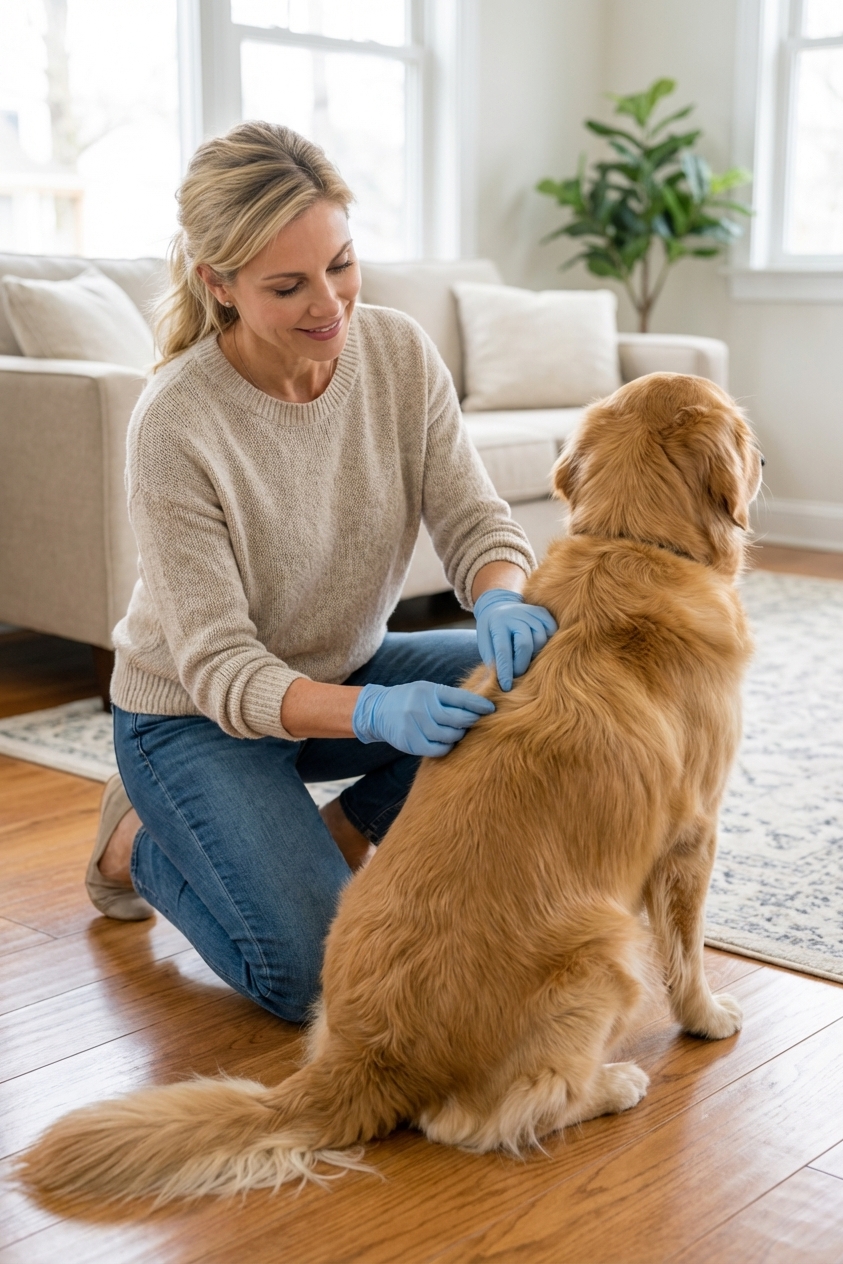
Quick at-home check
You do not need to guess. A simple, calm check can give you clues.
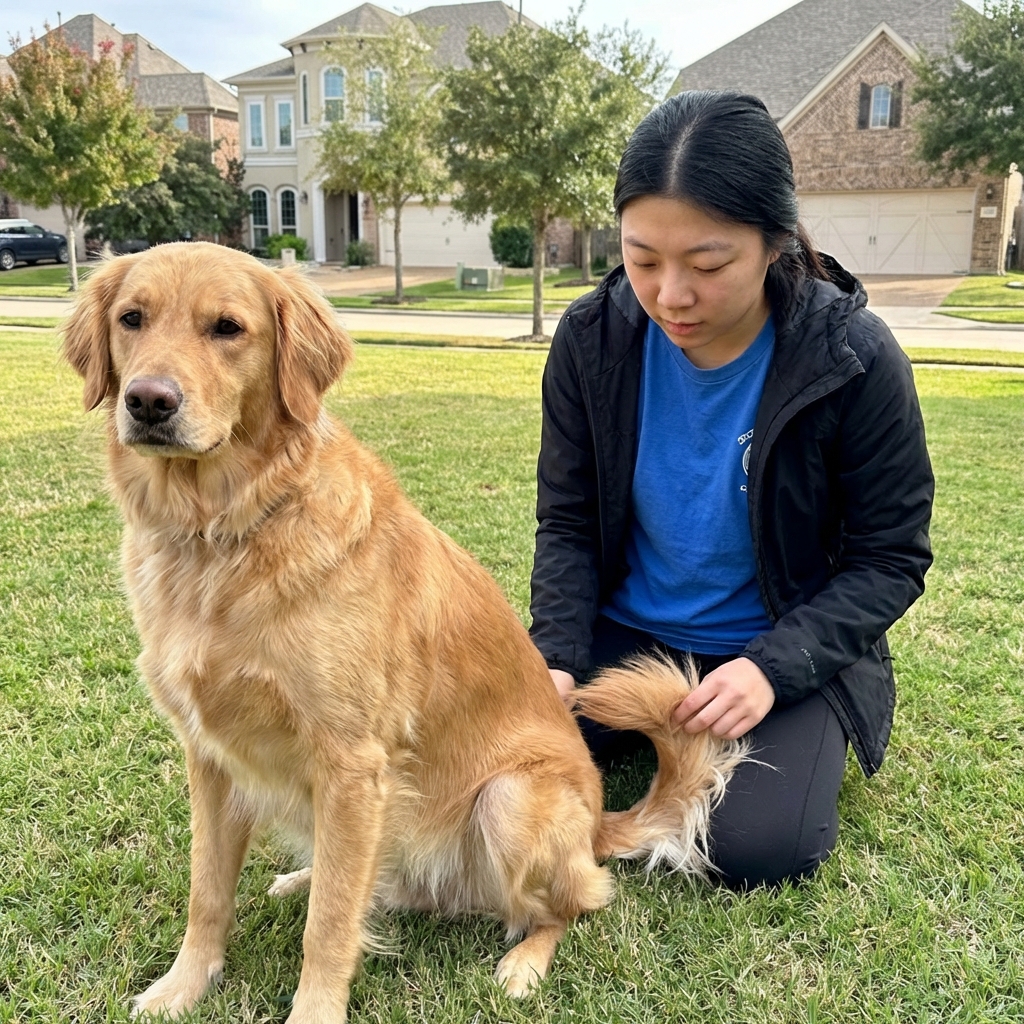
- Look: Is there redness, swelling, discharge, or a lump near the anus?
- Smell: Is there a strong fishy odor (often anal glands)?
- Check the fur: Is anything stuck, or is the hair matted?
- Check the poop: Is it soft? Any mucus? Any “rice-like” tapeworm segments?
- Note frequency: Is she scooting once and done, or multiple times a day?
Tip: If your dog seems painful, do not press around the anus. Pain can signal infection or an abscess.
When to call the vet
Scooting is often minor, but these signs mean it is time to book an appointment soon or seek urgent care.
- Swelling next to the anus or a visible lump
- Bleeding, pus, or open sores
- Crying, snapping, or intense pain when sitting or pooping
- Sudden strong odor plus swelling (possible anal gland infection)
- Scooting that keeps recurring, or that lasts longer than a day or two
- Diarrhea lasting more than a day, or any diarrhea with lethargy or dehydration
- Straining to poop, especially with little or no stool produced
What your vet may do
As a veterinary assistant, I love when owners bring clear notes. It helps us move faster and keep your dog comfortable.
- Anal gland exam: checks for fullness, thick material, infection, or pain.
- Expression and possibly a flush: many dogs get relief with proper expression; if material is thick or infection is suspected, your vet may flush the sacs. Some dogs need sedation if they are very painful.
- Fecal test: looks for parasite eggs or protozoa. Tapeworms can be tricky, so your vet may treat based on history and evidence.
- Skin and allergy evaluation: if scooting is part of a bigger itch pattern.
- Diet and stool quality review: stool firmness plays a big role in anal gland health.
- Medication if needed: may include dewormers for parasites, or targeted treatment for yeast or bacteria. Antibiotics and anti-inflammatories are case-dependent and are used when there is clear infection, significant inflammation, or an abscess.
One more thing: Some dogs may scoot briefly even after their glands are expressed or the area is cleaned, simply because the tissue is still irritated. If it continues or worsens, let your clinic know.
How to help prevent scooting
Prevention depends on the cause, but these steps help many dogs.
Support healthy stool
- Feed a consistent, high-quality diet that agrees with your dog’s stomach.
- Introduce new foods slowly over 7 to 10 days to avoid diarrhea.
- Ask your vet about fiber if your dog has recurring anal gland issues. The goal is firm, formed stools that help empty the glands naturally.
- Hydration matters: keep fresh water available, and consider adding moisture to meals if your vet agrees.
Stay on parasite and flea prevention
- Use vet-recommended flea prevention year-round when appropriate for your region and your pet’s lifestyle.
- Do regular fecal checks as advised, especially for puppies and dogs who visit parks or daycare.
Reduce rear-end irritation
- Keep the area clean and trimmed, especially for long-coated dogs.
- After diarrhea, gently clean with a damp cloth and dry well to prevent skin irritation.
- Address chronic licking or itching early so it does not snowball into infection.
What not to do
- Do not use human hemorrhoid creams or medicated wipes unless your vet tells you to.
- Do not give over-the-counter medications (including pain relievers) without veterinary guidance.
- Avoid aggressive wiping or scrubbing, which can make irritation worse.
Action step: Take a photo of your dog’s stool the next time she scoots and note the date, diet, and any treats. It sounds simple, but it can be incredibly helpful for your vet.
Expressing anal glands at home
For most dogs, I recommend leaving anal gland expression to veterinary professionals or a groomer trained to do it correctly. Done improperly, it can cause pain, bruising, inflammation, and in some cases make anal gland issues harder to manage over time.
If your dog has frequent anal gland problems, your veterinarian can help you build a plan that may include diet changes, treating underlying allergies, or in chronic cases discussing longer-term options.
Bottom line
Butt dragging is not “bad behavior.” It is a symptom. Many cases are caused by anal glands, parasites, or allergies, and most can be managed once you identify the root issue. If scooting is frequent, painful, or paired with swelling, odor, bleeding, diarrhea, or sores, it is time to bring your dog in so she can get relief quickly.