Chicken and rice can soothe mild stomach upset and help dogs transition back to normal food. Learn safe recipes, portions, how long to feed it, and when to c...
Article
•
Designer Mixes
Why Does My Dog Constantly Lick Me?

Shari Shidate
Designer Mixes contributor
If your dog is constantly licking you, you are not imagining it. For many dogs, licking is a normal way to communicate, self-soothe, explore the world, and strengthen social bonds. But when licking becomes frequent and hard to interrupt, it can also be a sign of stress, discomfort, or a learned habit that is getting reinforced.
As a veterinary assistant in Frisco, Texas, I see this question all the time: “Is it love or is something wrong?” The answer is often a little of both. This is not a diagnosis, just the most common causes I see and how to think through them in a practical way.
What counts as “constant”? Think multiple times per hour, or licking that restarts the moment you disengage and is difficult to redirect for more than a few seconds.
What licking means
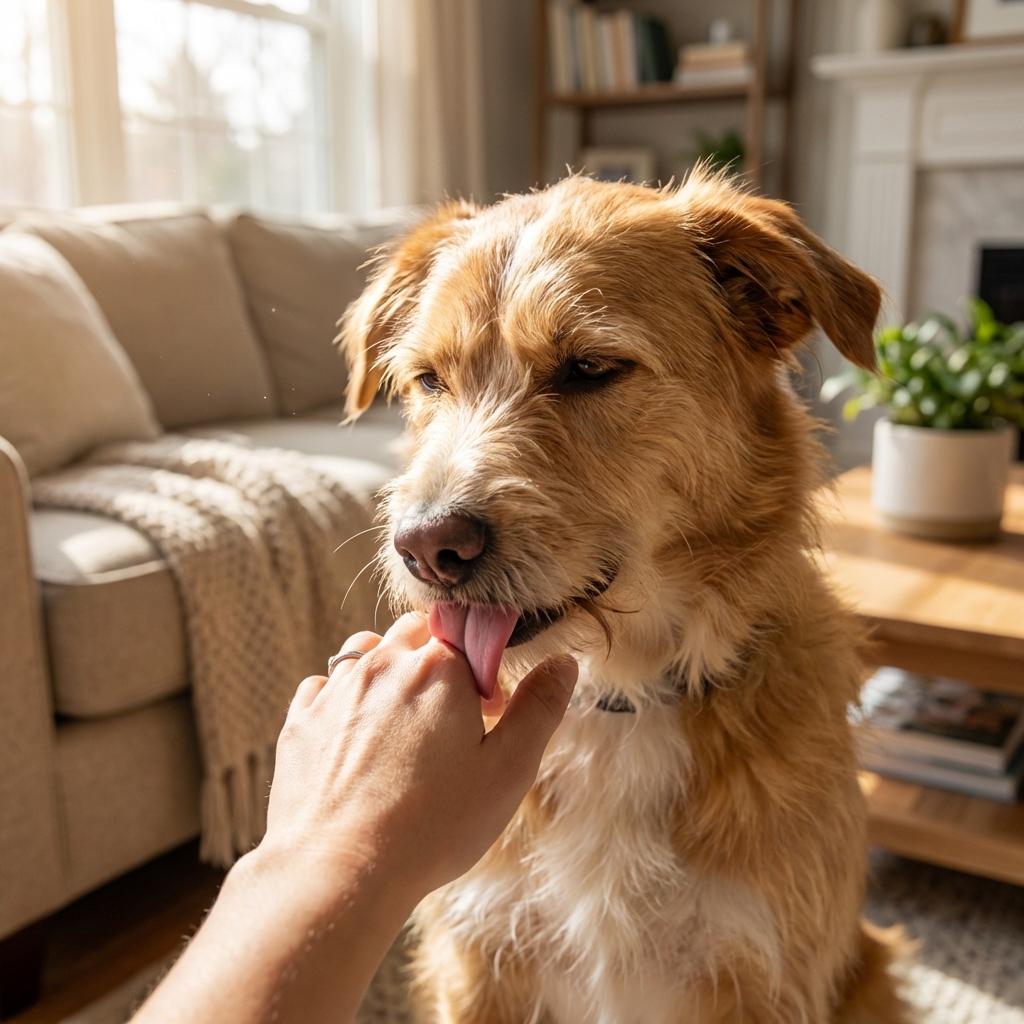
Licking is a natural canine behavior. Puppies lick and nuzzle their mom to seek comfort, attention, and care, and adult dogs lick to gather information and interact with their social group, including you.
Here are the most common reasons dogs lick people, and how to tell which one fits your situation.
Why your dog won’t stop licking
1) Affection and bonding
Many dogs lick as a friendly social behavior. It can be their version of a hug or a “you are my person” signal, especially during calm moments like cuddling on the couch.
2) You taste interesting
Dogs have an incredible sense of smell, and our skin can taste like salt, lotion, sunscreen, food, or even residue from pet treats. If licking increases after workouts, cooking, or applying skincare, your dog may be investigating what is on your skin.
Quick safety note: Do not let your dog lick skin that has medication on it. Some products can be harmful if ingested, including prescription creams, hormone gels, psoriasis medications, and zinc oxide (common in diaper rash creams). When in doubt, cover the area or wash it off and ask your vet.
3) Attention and reinforcement
Licking works because it gets a reaction. Even saying “stop” can be rewarding if your dog is seeking engagement. Over time, this can turn into a persistent habit.
4) Stress relief or self-soothing
Licking can be calming for some dogs. There is evidence that repetitive behaviors may help some dogs settle (often discussed in terms of stress reduction and endorphins), but it varies by dog and situation. If you notice licking during storms, when guests arrive, after a schedule change, or when your dog is left alone, it may be a coping strategy.
5) Anxiety or compulsive behavior
When licking is intense, hard to interrupt, or paired with pacing, whining, panting, or restlessness, it may be anxiety-driven. In some dogs, licking can shift from a normal behavior into a compulsive pattern.
6) Nausea or stomach upset
Some dogs can get extra clingy and lick more when they feel queasy. It is nonspecific, but if you also see lip-smacking, drooling, grass eating, reduced appetite, or gulping, think tummy trouble.
7) Pain or discomfort
Dogs sometimes seek contact when they do not feel well. Sudden increases in licking, especially in an older dog, can be a subtle sign that something hurts.
8) Routine
Dogs thrive on patterns. If licking happens at the same time every day, like when you sit down at night or when you wake up, it may be a learned ritual.

Normal vs problem licking
Occasional licking is typically normal. The concern is when it becomes frequent, hard to stop, or tied to other changes.
Usually normal
- Brief licking during greetings or cuddles
- Stops when redirected
- No other behavior changes
- Your dog is eating, sleeping, and playing normally
Talk to your vet
- Licking suddenly increases or becomes frantic
- You notice vomiting, diarrhea, appetite changes, or weight loss
- Licking is paired with panting, pacing, trembling, or clinginess
- Your dog seems unable to settle without licking
- New skin irritation on you (some dogs’ saliva can worsen sensitive skin)
Go to an urgent vet
- Repeated vomiting, vomiting with blood, or severe diarrhea
- Distended abdomen, unproductive retching, or sudden restlessness (possible bloat)
- Severe lethargy, collapse, pale gums, or trouble breathing
- Sudden neurologic changes (stumbling, seizures, extreme disorientation)
What to do if licking is too much
You do not need to punish licking. You can gently set boundaries and teach a replacement behavior.
Step 1: Make licking boring
If licking is attention-seeking, change often comes fastest from consistency.
- Calmly remove your hand or stand up and turn away.
- Avoid talking, laughing, or petting during licking.
- As soon as licking stops, ask for a simple alternative like sit or settle, then reward with calm affection or a treat.
Step 2: Teach an incompatible cue
Give your dog a job they cannot do while licking.
- Place: Send them to a bed or mat, reward for staying.
- Touch: Nose-to-hand touch earns a treat, then hands go away.
- Find it: Scatter a few kibble pieces on the floor to redirect.
Step 3: Add enrichment
A bored brain finds a habit. A busy brain relaxes.
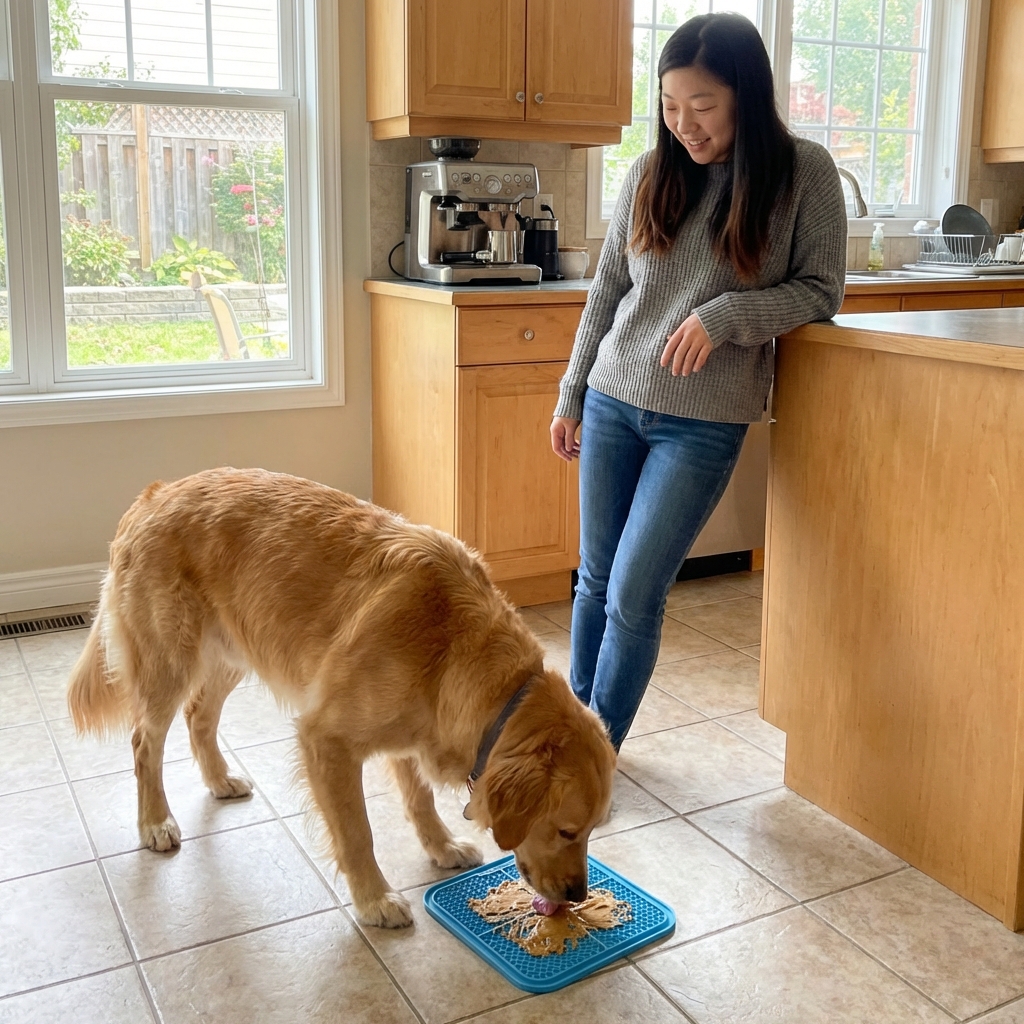
- Food puzzles or a stuffed frozen Kong
- Sniff walks where your dog leads and explores
- Short training sessions, 3 to 5 minutes at a time
- Chews that are appropriate for your dog’s size and chewing style
Step 4: Manage triggers
- If lotions or salty skin trigger licking, cover up with a light sleeve or wash hands after applying products.
- During high-stress triggers (guests, storms), provide a quiet space plus a calming activity like a lick mat.
- If kids are involved, supervise closely and teach them to stand up and turn away rather than squealing, pushing, or waving hands (which can accidentally rev a dog up).
What not to do
- Do not use aversive methods like yelling, alpha rolls, or physical corrections.
- Do not accidentally reward licking by petting while saying “stop.”
- Do not use bitter sprays on your skin without checking safety, especially around children and pets.
When licking is a health clue
If your dog’s licking is new or constant, it is smart to consider a medical check. Licking itself is not a diagnosis, but it can be a signal.
Possible medical contributors
- Gastrointestinal upset: nausea, reflux, food sensitivity. Nausea is more commonly linked to licking surfaces, lips, or people.
- Skin allergies: allergies more often cause dogs to lick themselves, especially paws, legs, and belly. If you also notice paw chewing, redness, ear issues, or a new odor, allergies move higher on the list.
- Dental disease: oral discomfort can change mouth behaviors
- Pain: arthritis or hidden injury
- Cognitive changes in seniors: increased repetitive behaviors
Also, some dogs who start with licking people may redirect to licking their own body, which can contribute to irritated skin and hot spots. If you notice hair loss, redness, moisture, or a strong odor on the skin, schedule a visit.
If you are unsure, keep a simple 3-day log of when licking happens, what was going on right before it started, and any digestive or behavior changes. That information is incredibly helpful for your veterinarian.
Quick FAQ
Is it safe to let my dog lick my face?
Most healthy adults tolerate it, but it is not ideal around the mouth, eyes, or open wounds. Dog mouths can carry bacteria and parasites, and risk goes up if your dog is ill, has been into feces or garbage, or eats a raw diet. If anyone in the home is immunocompromised, very young, elderly, pregnant, or has skin issues, keep licking to hands or clothing and wash up afterward.
Why does my dog lick me more than other people?
Because you are the favorite source of comfort, routine, and reinforcement. Your dog may also be responding to your scent, your skincare products, or simply the fact that you react the most.
Should I stop the behavior completely?
You can decide what feels comfortable. Many families aim for “licking allowed sometimes” with a clear cue to stop, like “all done,” followed by redirecting to a toy or mat.
Bottom line
Frequent licking is usually your dog communicating something: affection, curiosity, stress relief, nausea, or a habit that has become rewarding. If you pair gentle boundaries with enrichment and a simple redirection plan, most dogs improve quickly.
If the licking is sudden, intense, or comes with digestive changes, anxiety signs, or any other health shift, it is time to check in with your veterinarian. You know your dog best, and you are not overreacting by asking questions.