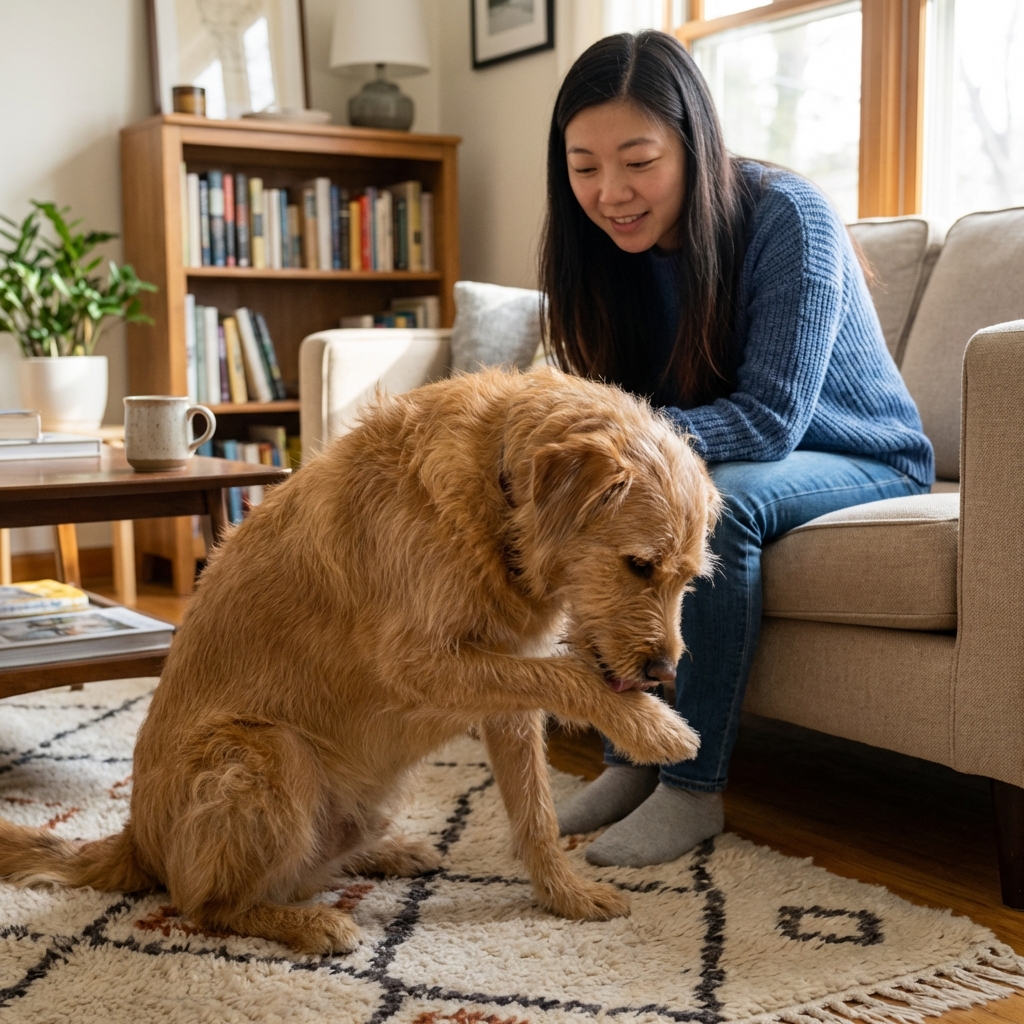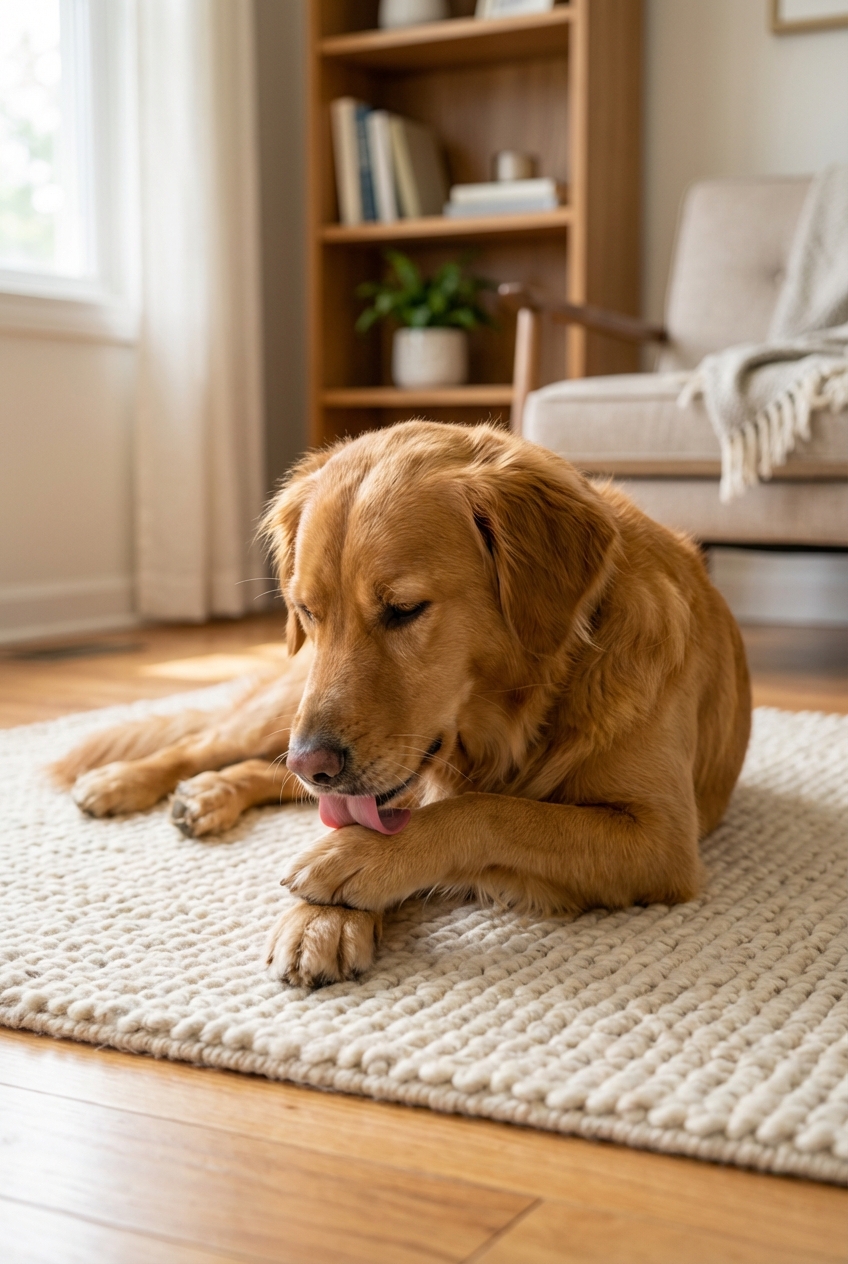
Find the real reasons dogs lick and chew their paws—allergies, yeast or bacteria, irritants, parasites, injury, or stress—plus safe home care and when to...
Article
•
Designer Mixes
Why Does My Dog Chew on Her Paws?

Shari Shidate
Designer Mixes contributor
If you have ever caught your dog chewing her paws, you are not alone. In our clinic, paw chewing is one of those “small” habits that can signal something simple like a dirty paw, or something bigger like allergies, pain, or anxiety. The good news is you can usually narrow down the cause with a few smart observations and a clear plan.
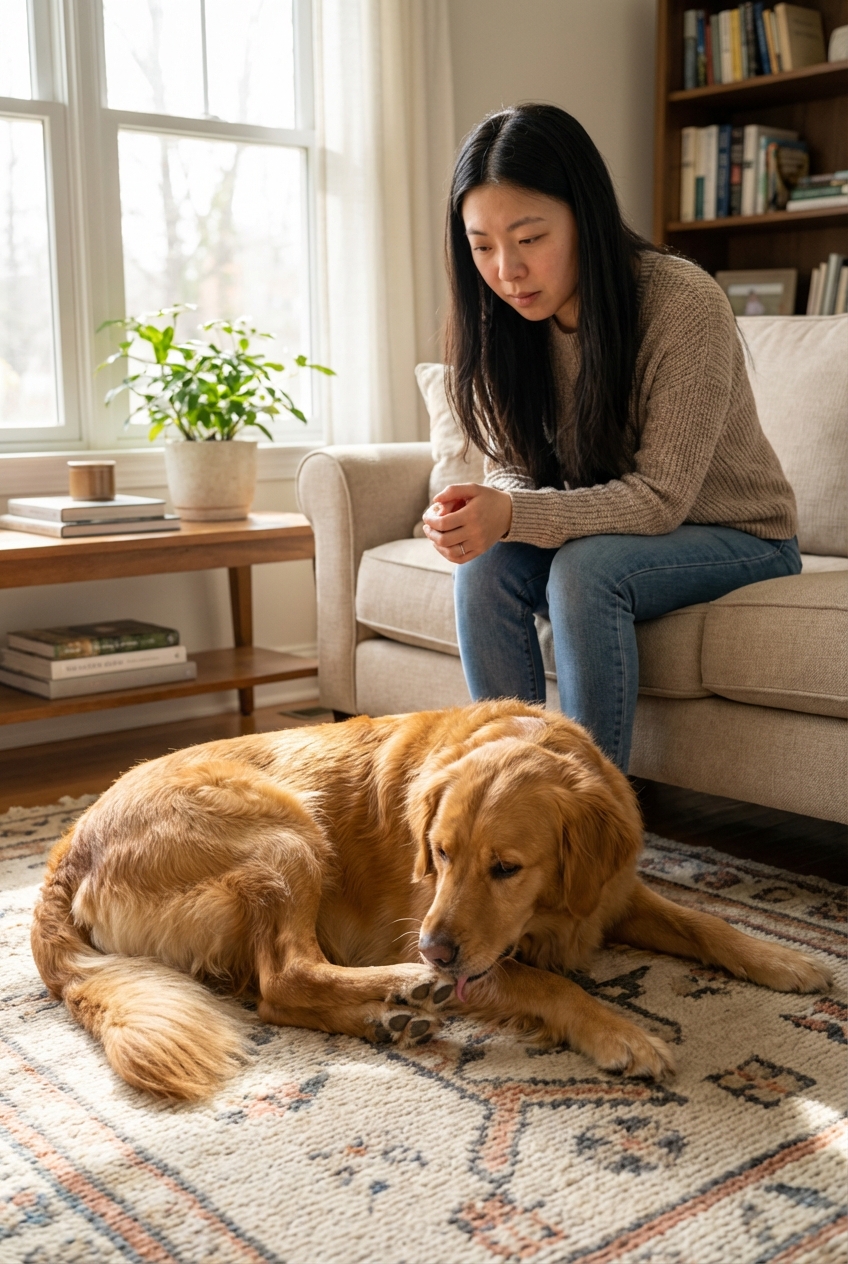
Let’s walk through the most common reasons dogs chew their paws, what you can do at home, and when it is time to see your veterinarian.
What is normal vs. a problem?
Some paw licking after a walk, after eating, during grooming, or before bed can be totally normal. It becomes more of a concern when the behavior is new, increasing, or you notice any of the following:
- Chewing or licking multiple times a day or for long stretches
- Red, swollen, or saliva-stained fur (often rust-colored or brown)
- A smell that is stronger than usual (sometimes described as “corn chips” or musty feet), which can be associated with yeast or bacterial overgrowth
- Hair loss, sores, scabs, bleeding, or thickened skin
- Limping, sensitivity when you touch the paw, or avoiding walks
- Chewing that wakes your dog up or interrupts play and meals
Persistent chewing is not just annoying. It can create a cycle of inflammation and infection that is harder to break the longer it goes on.
Common causes
1) Allergies (one of the most common causes)
Allergies often show up in dogs as itchy skin, not sneezing. The paws are a prime target because allergens collect there and because yeast and bacteria love irritated, moist skin.
- Environmental allergies (pollens, grasses, dust mites, molds) often cause seasonal or year-round itching.
- Food allergies are less common than many people think, but they can cause paw itching, ear infections, and belly itch.
- Flea allergy dermatitis can cause intense itching even if you rarely see fleas.
2) Yeast or bacterial infection
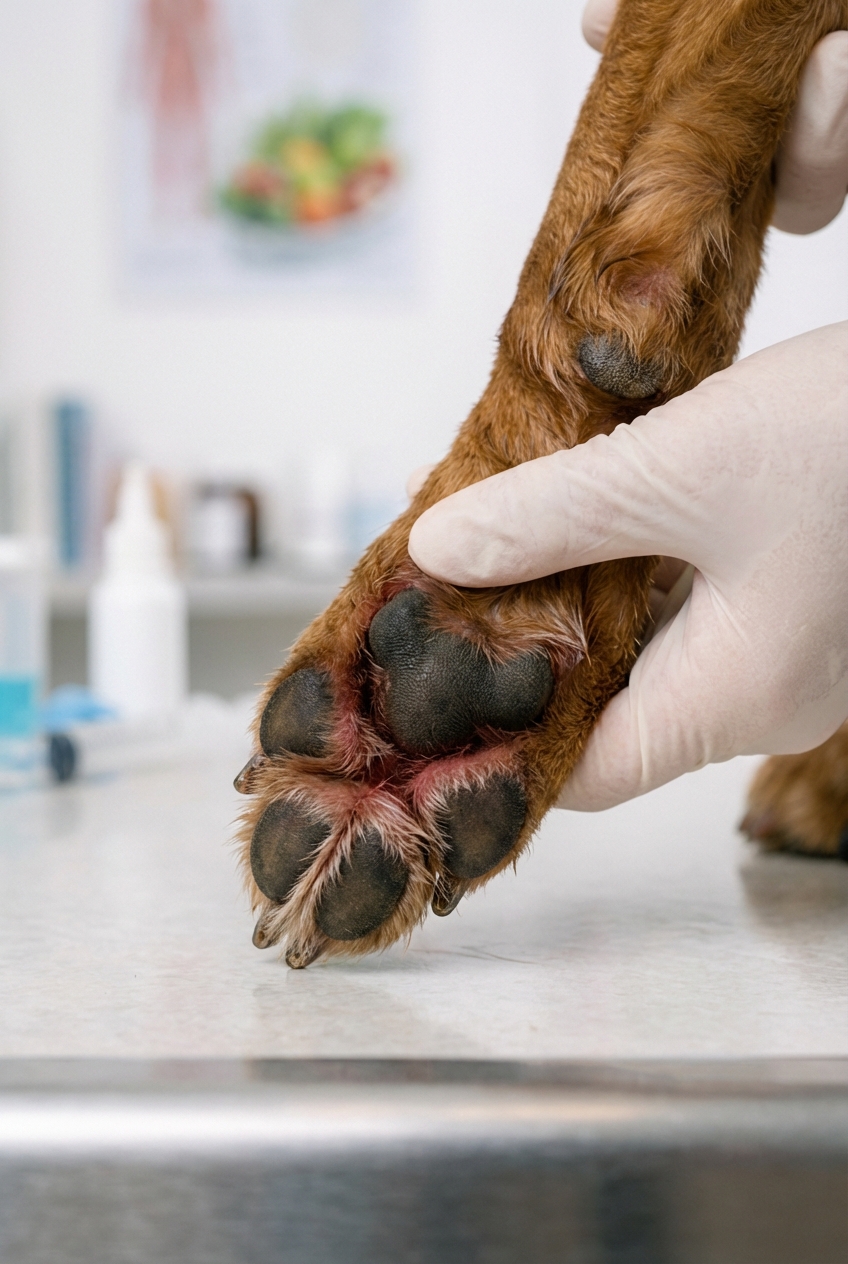
Infections may start secondary to allergies, licking, or trapped moisture between toes. Clues can include odor, redness between toes, saliva staining, a greasy feel, discharge, and tenderness.
3) Something stuck or painful
Foxtails, splinters, thorns, burrs, small cuts, cracked pads, hangnails, and even tiny burns from hot pavement can trigger chewing. Some dogs will focus on one paw if there is a foreign body or localized pain, but debris after a hike can irritate multiple paws too.
4) Dry paws or contact irritation
Winter dryness, salty sidewalks, lawn chemicals, cleaning products, and rough terrain can cause inflammation and cracking. Dogs may chew to soothe the discomfort.
5) Parasites
Mites and other parasites can cause intense itchiness. Sarcoptic mange is especially important because it can be contagious to other pets and can cause itchy bumps in people. Demodex mites can also cause skin issues, but they are generally not contagious and often involve the face and legs as well.
6) Anxiety, boredom, or compulsive habits
Some dogs self-soothe with licking and chewing, especially during stressful changes, long alone-time, or lack of enrichment. Often the paws look normal at first, then get irritated from repetitive licking.
7) Pain (orthopedic or nerve)
Sprains, arthritis, toe injuries, or nerve-related discomfort (tingling, sensitivity, referred pain) can sometimes lead a dog to chew near the painful area. This is more likely if you notice stiffness, limping, trouble getting up, or chewing that worsens after exercise.
8) Interdigital cysts and deep inflammation
Interdigital cysts (also called interdigital furuncles) and deeper inflammation of the skin between the toes can be very uncomfortable. You might see a firm, painful bump between toes, swelling, or recurring draining spots. These often need veterinary treatment and can be linked to allergies, infection, or hair and friction issues.
A simple plan
Step 1: Check the paws
Pick a calm moment and do a quick paw exam:
- Look between toes for redness, discharge, swelling, a lodged seed, or a new lump.
- Inspect nails for cracks, torn dewclaws, or bleeding.
- Check pads for cuts, cracks, or stuck debris.
- Smell the paws. A strong or new odor can point toward yeast or infection.
If your dog is painful, snapping, you see a puncture wound, or the skin is open, do not push the home work-up. Prevent licking right away (cone if needed) and call your vet.
Step 2: Notice the pattern
- One paw often suggests injury, foreign body, nail issue, a cyst, or localized pain.
- Multiple paws often suggests allergies, yeast, contact irritation, or debris exposure (like burrs) after outdoor time.
- Seasonal flares can suggest environmental allergies.
- With ear infections often suggests allergies (environmental or food).
- Mainly at night or when alone can suggest anxiety or a compulsive habit.
Step 3: Do a 7-day paw support routine
This is common veterinary guidance for mild cases. It can calm irritation, reduce yeast-friendly moisture, and gives you useful information for your veterinarian if symptoms persist.
- Daily rinse after outdoor time: Use lukewarm water to rinse pollen, dirt, and irritants off paws. Dry well, especially between toes.
- Keep the paws dry: Moisture feeds yeast. After baths, rain, or snow, towel dry thoroughly.
- Prevent access: Use an e-collar or a soft recovery cone if chewing is constant or causing sores. Dog booties or clean socks can help short-term (supervised).
- Limit irritants: Avoid freshly treated lawns, harsh floor cleaners, and hot pavement. Wipe paws when coming inside.
- Trim hair between pads: If your dog has fluffy feet, ask your groomer or vet team to keep the fur neat to reduce trapped moisture and debris.
Step 4: Keep an itch log
Write down:
- Which paws (front, back, left, right)
- When it happens (after walks, evenings, after meals)
- Any diet changes, new treats, or new supplements
- Any other signs (ear scratching, scooting, red belly, watery eyes)
This simple log can speed up diagnosis a lot.
What not to do
- Do not use human anti-itch creams, essential oils, hydrogen peroxide, or alcohol on paws unless your veterinarian recommends it. Many products irritate skin or are unsafe if licked.
- Do not start leftover antibiotics or steroids. Inappropriate use can worsen infections or mask symptoms.
- Do not ignore it if there is odor, discharge, swelling, limping, open skin, or a painful lump. Those often need medical treatment.
When to call the vet
Reach out to your veterinarian promptly if:
- Your dog is chewing enough to cause bleeding, sores, or hair loss
- You see swelling, a puncture, pus, a draining spot, or a broken nail
- There is a strong, new smell or greasy discharge
- Your dog is limping or acting painful
- Symptoms last more than 5 to 7 days despite the paw support routine above
- Chewing keeps returning (chronic or seasonal pattern)
Seek urgent care if there is rapidly increasing swelling, severe pain, significant bleeding (especially from a nail), sudden non-weight-bearing limping, or you suspect a foxtail (seeds can migrate and cause deep infection).
At the appointment, your vet may recommend:
- Skin cytology (a quick microscope check) to look for yeast or bacteria
- Allergy management such as prescription itch control medications, targeted shampoos or mousses, or immunotherapy in some cases
- An elimination diet trial with a controlled re-challenge if food allergy is suspected (this is the gold standard approach)
- Parasite prevention review, including fleas and mites
- Pain evaluation if licking appears linked to orthopedic or nerve-related issues
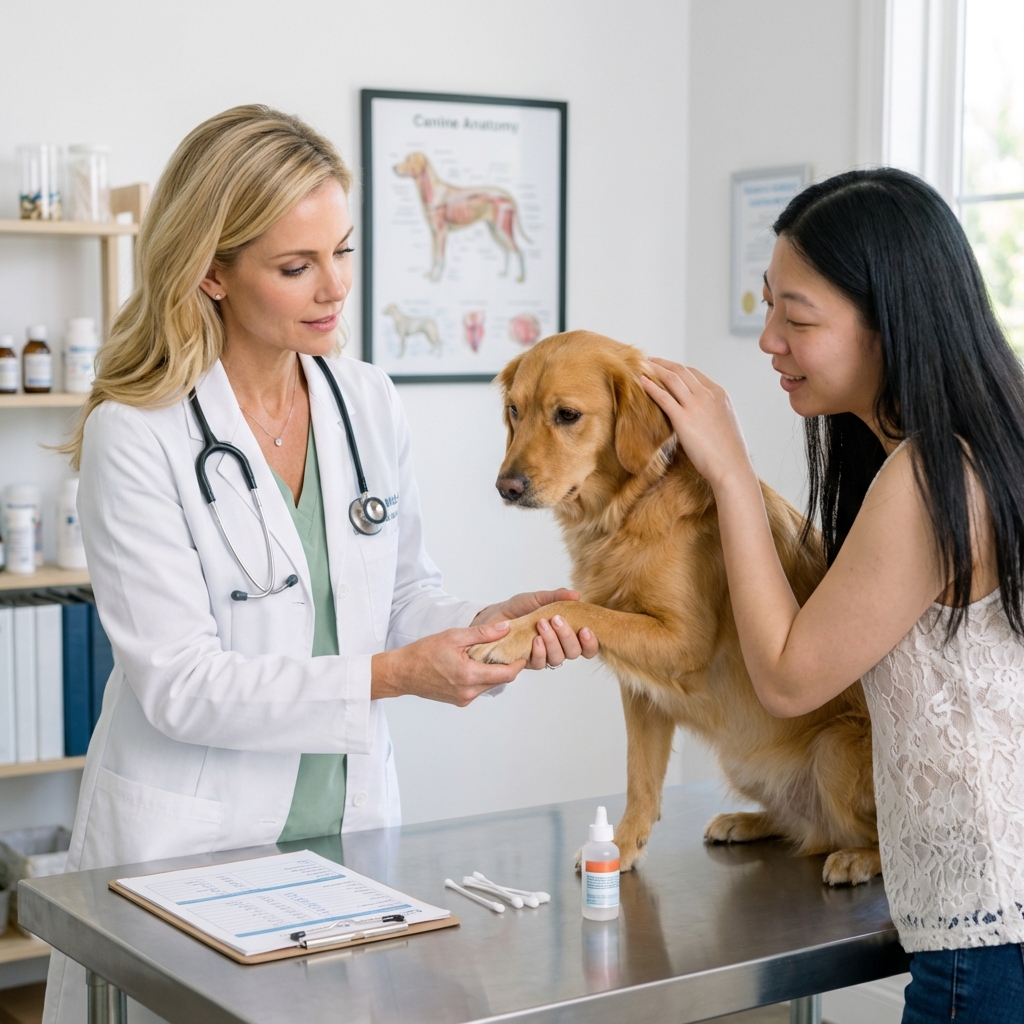
There is no single “best” solution because paw chewing is a symptom, not a diagnosis. The goal is to treat the cause and protect the skin barrier while it heals.
Prevention tips
- Year-round parasite prevention based on your vet’s guidance, especially in warmer climates.
- Rinse and dry paws during high pollen seasons or after wet walks.
- Keep nails trimmed to prevent toe strain and nail breaks.
- Support the skin with a balanced diet and vet-approved omega-3s when appropriate.
- Increase enrichment for anxious or bored dogs: food puzzles, sniff walks, training games, and calm routines.
If you take one thing from this guide, let it be this: paw chewing is your dog’s way of saying “something feels off.” With a little detective work and timely care, most dogs get real relief.