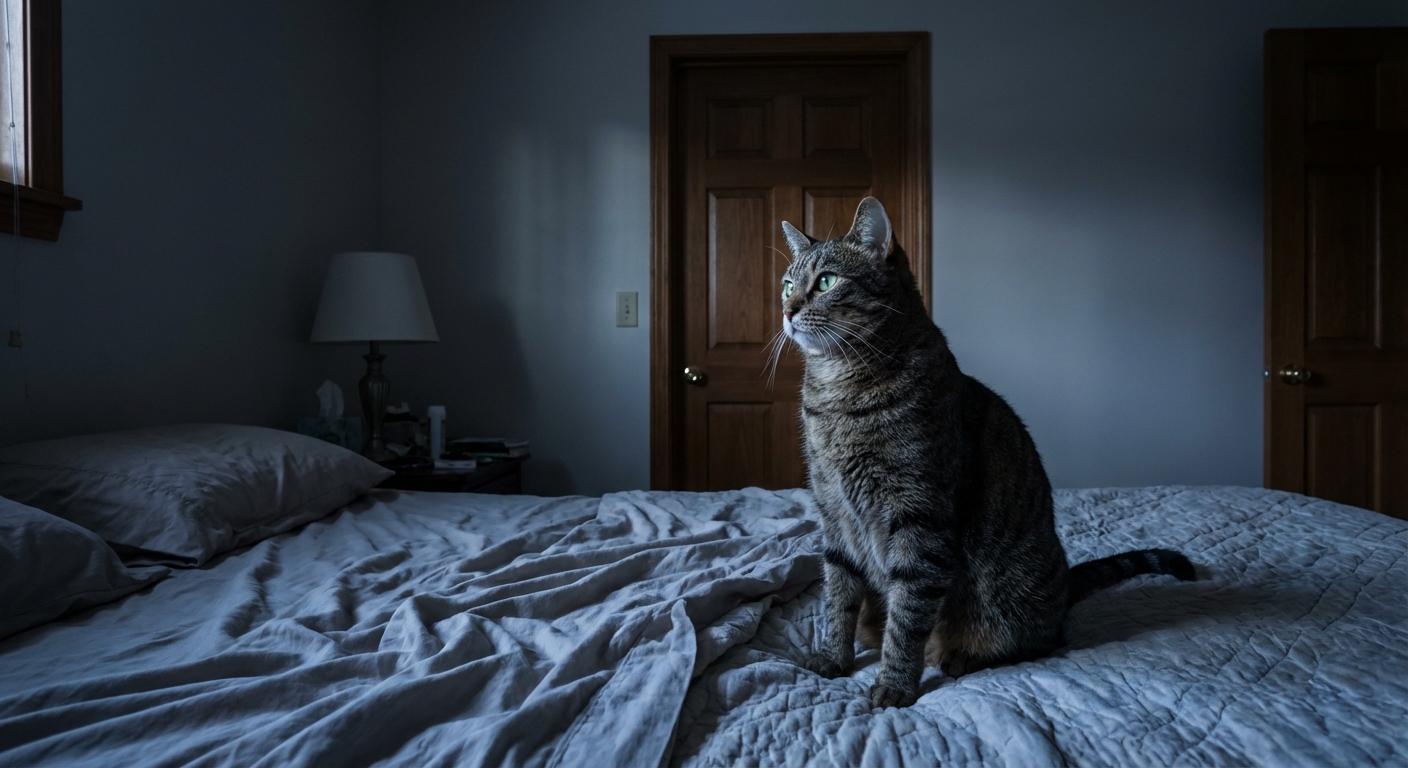
Learn why cats meow at night and what to do: a simple evening play-and-feed routine, how to avoid rewarding meows, stress fixes, automatic feeders, and vet r...
Article
•
Designer Mixes
Why Does My Cat Meow So Much At Night?

Shari Shidate
Designer Mixes contributor
If your cat turns into a tiny opera singer the moment you turn off the lights, you are not imagining it. Nighttime meowing is one of the most common behavior concerns I hear about as a veterinary assistant here in North Texas. The good news is that most causes are manageable once you figure out the “why.”
Below, I will walk you through the most likely reasons your cat vocalizes at night, what you can do today, and when it is time to schedule a vet visit.
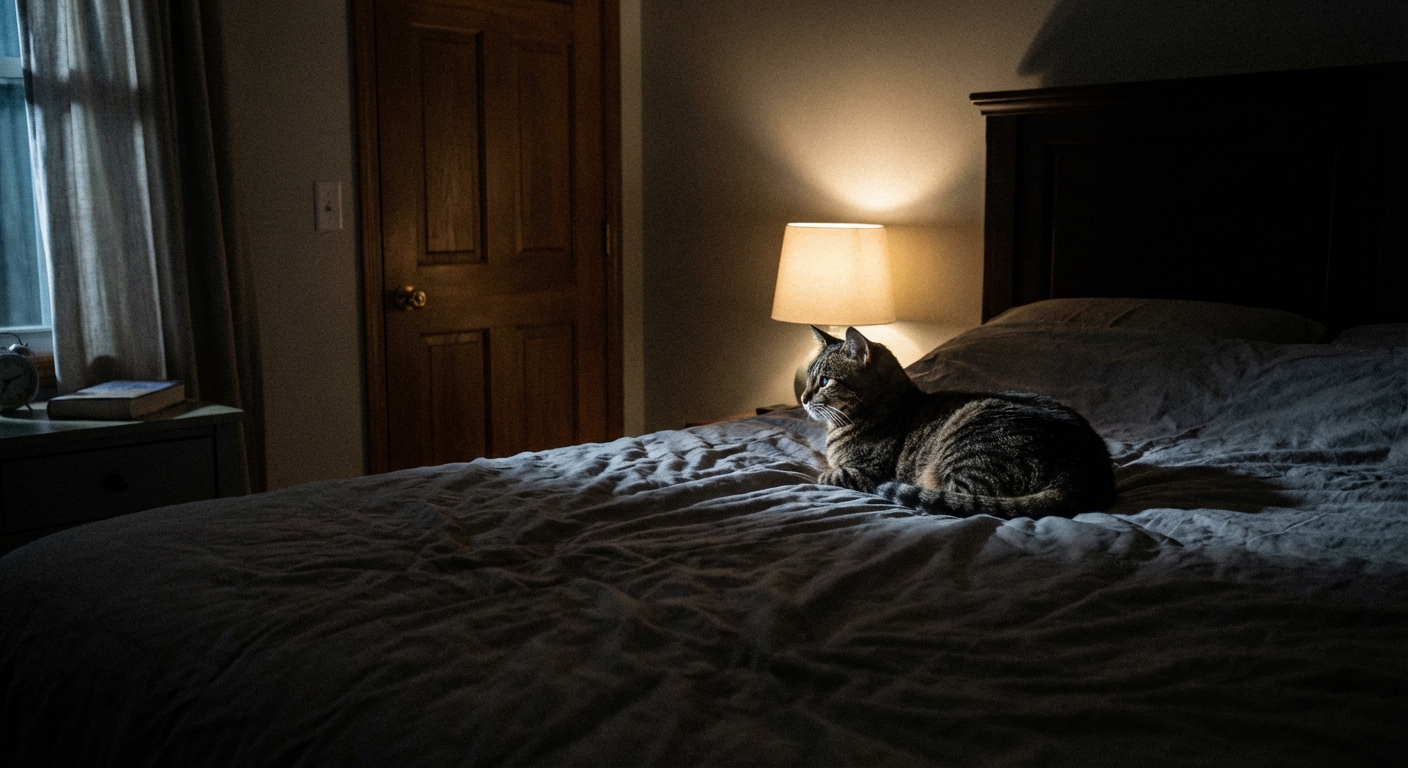
Common reasons cats meow at night
1) Your cat is bored, understimulated, or full of energy
Many cats tend to be more active at dawn and dusk. If your cat sleeps all day, they may be ready to play when you are ready to sleep. Night meowing can be your cat’s way of saying, “I need something to do.”
2) Hunger, habit, or a learned routine
If meowing has ever resulted in food, treats, or you getting up, cats learn that nighttime is a great time to ask. Even negative attention, like scolding, can reinforce the behavior for some cats because your cat still got a response.
3) Attention-seeking or separation stress
Some cats meow when they cannot access you, especially if bedroom doors are closed or the household routine recently changed. A new baby, a new schedule, travel, moving, or a new pet can all increase overnight vocalizing.
4) Litter box or environment issues
If your cat is unhappy with the litter box setup, they may vocalize and roam at night. Common triggers include a dirty box, strong litter fragrance, a covered box that traps odor, a box placed near a loud appliance, or not enough boxes in multi-cat homes.
5) Hormones and mating behavior (intact cats)
This one is easy to miss if you have always had spayed or neutered cats. Intact cats can be very vocal, especially after lights-out.
- Females in heat: loud yowling (caterwauling), restlessness, and calling for mates.
- Intact males: increased roaming, vocalizing, frustration, and sometimes spraying.
If your cat is not spayed or neutered and the nighttime yowling is intense or cyclical, talk with your vet about spay or neuter options. It is one of the most effective long-term fixes for hormone-driven vocalizing.
6) Medical problems that feel worse at night
This is the one I never want people to ignore, especially if the meowing is new, escalating, or sounds distressed. Cats can vocalize from pain, nausea, increased thirst, increased hunger, or confusion.
- Hyperthyroidism can cause increased appetite, weight loss, restlessness, and vocalizing.
- Kidney disease can increase thirst and urination and make cats feel unwell.
- High blood pressure can occur along with other conditions and may affect behavior.
- Arthritis can make it uncomfortable to settle, jump, or climb into a favorite sleep spot.
- Urinary issues can cause repeated trips to the litter box, crying, or agitation.
- Dental pain can make some cats restless or more vocal, even if they still eat.
- GI upset (nausea, constipation) can trigger pacing and vocalizing.
- Cognitive dysfunction in senior cats can lead to nighttime confusion and “yowling.”
If you notice straining to urinate, frequent trips with little output, blood in urine, vomiting, collapse, or open-mouth breathing, that is urgent. Urinary blockage in male cats is a life-threatening emergency.
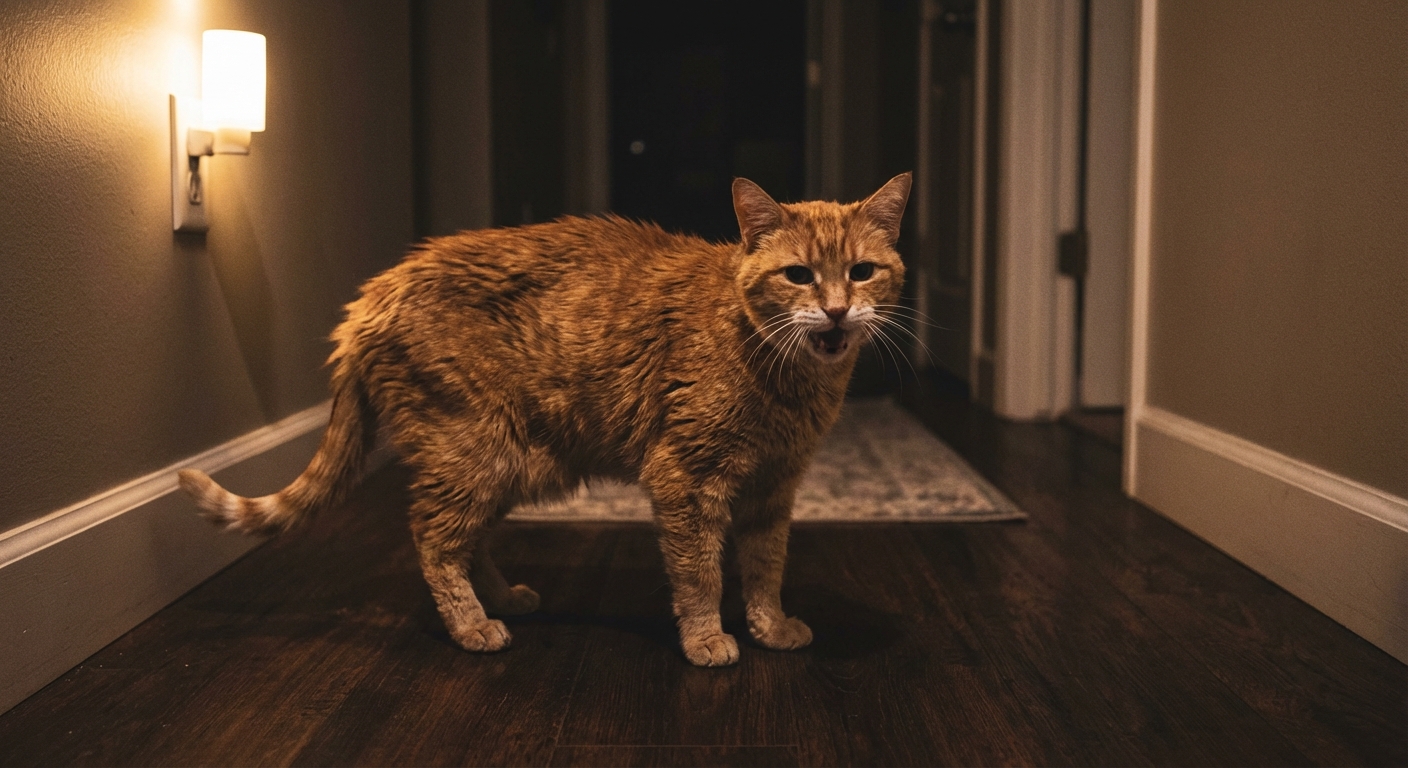
How to tell what your cat is asking for
Try to decode the pattern. Small details help you choose the right fix.
- Meowing at the bedroom door: often attention, access, or separation stress.
- Meowing near the food bowl: hunger, habit, or a medical issue that increases appetite.
- Meowing while pacing: boredom, anxiety, discomfort, or senior confusion.
- Crying in or near the litter box: litter box dissatisfaction or urinary discomfort.
- Sudden new vocalizing in an older cat: schedule a vet visit to rule out medical causes first.
What to do tonight: simple steps that help fast
Do a quick basic needs check
Before you start changing routines, make sure the basics are covered:
- Fresh water is available and easy to reach.
- Litter box is clean and accessible.
- Your cat ate enough during the day for their life stage and health needs.
- No new red flags like vomiting, straining in the litter box, or obvious limping.
Use a “hunt, eat, groom, sleep” routine
This routine is commonly recommended by cat behaviorists and tends to work well for many cats. The goal is to mimic a natural feline cycle so your cat is more likely to settle.
- Play: 10 to 15 minutes of interactive play 1 to 2 hours before bed. Wand toys and prey-like movements work better than laser pointers alone.
- Feed: Offer a small meal right after play. A protein-rich wet food meal often helps cats feel satisfied.
- Calm: Keep lights low, voices soft, and avoid exciting games right at bedtime.
Use food puzzles or timed feeding
If your cat wakes you up for breakfast at 3 a.m., an automatic feeder or a puzzle feeder can shift the reward away from you. Start by setting the feeder for just before your cat’s usual wake-up time, then gradually push it later toward your preferred breakfast time.
Improve overnight comfort
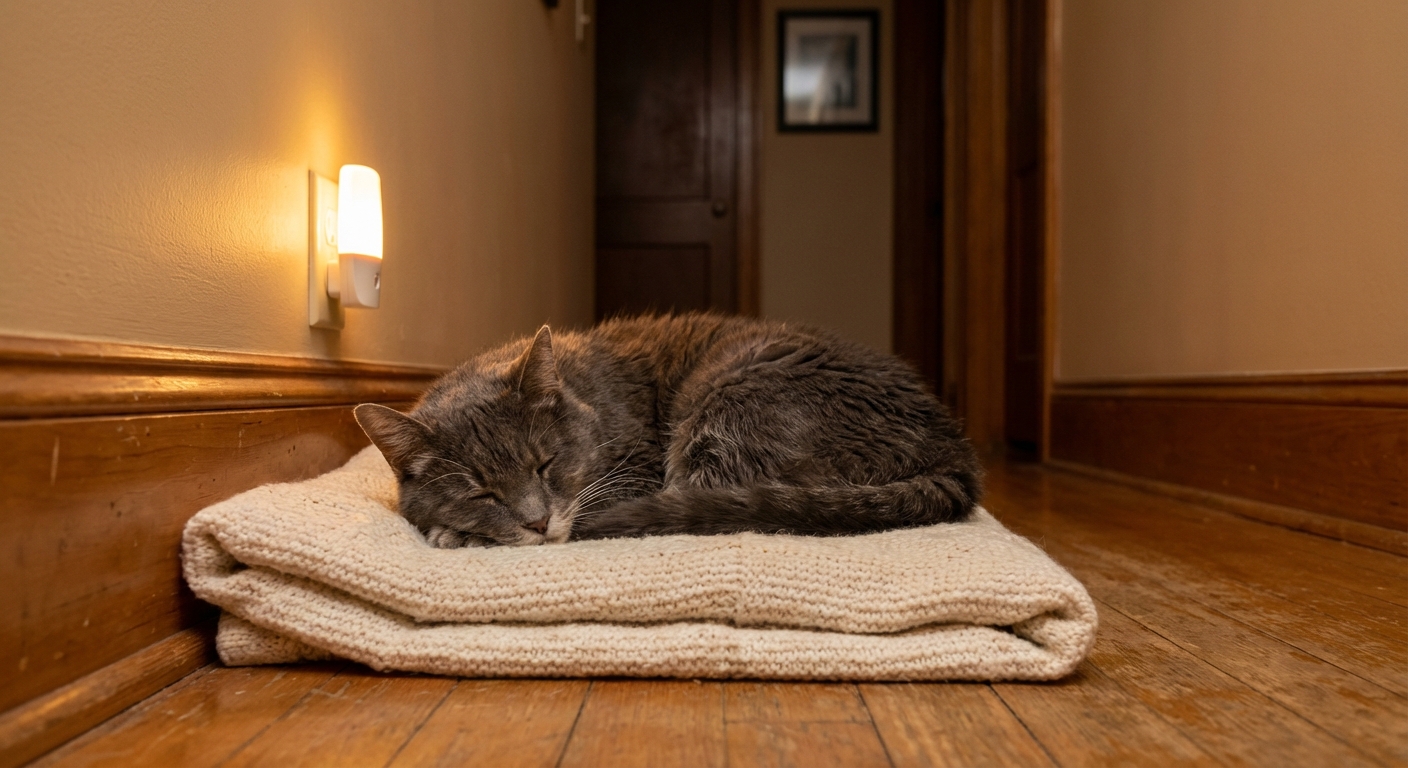
- Warm, soft sleep spots: Consider a cozy bed or a heated pet pad designed for cats. Choose a temperature-controlled, pet-safe product, route cords safely, and stop using it if your cat chews cords.
- Easy access: For older cats, add a small step stool or pet stairs to favorite furniture.
- Quiet and predictable: White noise can reduce startling sounds that trigger nighttime activity.
Consider pheromones for stress
If anxiety or separation stress seems likely, a feline facial pheromone diffuser may help some cats settle, especially when paired with a consistent routine and enrichment.
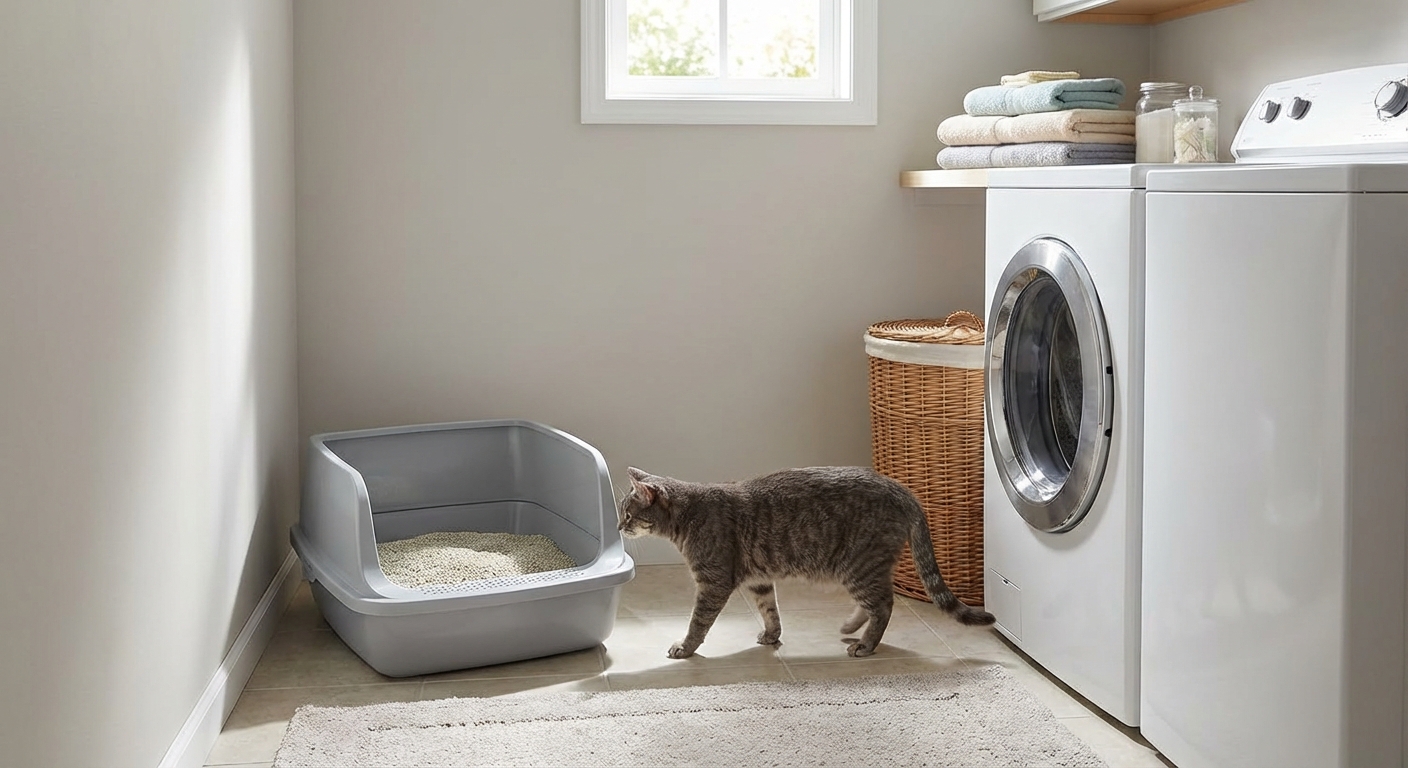
Check the litter box basics
Many cats are very particular, and nighttime is when a minor issue becomes a bigger complaint.
- Scoop at least once daily, ideally before bed.
- In multi-cat homes, aim for one box per cat plus one extra.
- Try an uncovered box with unscented clumping litter if your cat seems hesitant.
- Place boxes in quiet, easy-to-reach locations, not tucked into a scary corner.
What not to do
- Do not punish or yell. It increases stress and can make vocalizing worse.
- Do not reward the meowing. If you get up to feed, play, or cuddle when your cat cries, the behavior can strengthen quickly.
- Do not abruptly lock your cat out without a plan. If separation is part of the issue, sudden door-closing can escalate yowling. If you need boundaries, pair them with enrichment, a bedtime routine, and a comfortable setup outside the room.
If you are changing your response, expect an “extinction burst,” which is a temporary increase in meowing because your cat is trying harder for the old reward. Consistency is what gets you through that phase.
Senior cats: special considerations
If your cat is older, nighttime meowing deserves extra attention. Senior cats may yowl because they feel disoriented, cannot find you, are uncomfortable, or are struggling with vision or hearing changes.
Tips for older cats
- Add night lights in hallways or near food and litter.
- Keep essentials close so they do not have to travel far.
- Ask your vet about pain management if arthritis is suspected. Cats are masters at hiding joint pain.
- Discuss cognitive dysfunction if your cat seems confused at night but normal during the day.
- Help with sensory changes: keep furniture layout consistent and avoid moving litter, food, and water frequently.
When to call the vet
I always tell pet parents this: if the nighttime meowing is new, intense, or out of character, rule out medical causes early. It can save you time, money, and a lot of stress.
Make an appointment soon if you notice
- Weight loss, increased appetite, or increased thirst
- Vomiting, diarrhea, constipation, or reduced appetite
- Changes in urination or litter box habits
- Bad breath, drooling, or chewing on one side
- Stiffness, trouble jumping, or hiding more than usual
- Senior cat yowling or seeming confused at night
Go to urgent care now if you notice
- Straining to urinate or frequent attempts with little to no urine
- Crying in the litter box with lethargy or vomiting
- Sudden collapse, severe weakness, or trouble breathing
Bring helpful details to your visit: a short video of the behavior, your feeding schedule, and notes on water intake, appetite, weight changes, and litter box habits. Those clues help your veterinary team narrow down the cause faster.
A gentle 7-day plan
Days 1 to 2: Observe and reset
- Scoop the litter box before bed.
- Confirm your cat is eating and drinking normally.
- Start a short play session in the evening followed by a small meal.
- If your cat is intact and the vocalizing seems hormone-driven, call your vet to discuss spay or neuter timing.
Days 3 to 4: Add enrichment
- Introduce a food puzzle for part of dinner.
- Try an automatic feeder if early-morning hunger is a trigger.
- Consider a pheromone diffuser if stress seems likely.
- Offer a comfortable sleep setup outside your bedroom if you need the door closed.
Days 5 to 7: Be consistent
- Do not get up for meowing unless you suspect illness or an emergency.
- Reward quiet behavior in the evening with calm attention.
- If meowing persists or worsens, schedule a vet visit.
Bottom line: nighttime meowing is usually your cat communicating a need. The fastest path to quieter nights is pairing medical rule-outs with a consistent evening routine, enrichment, and a plan that does not accidentally reward the behavior.