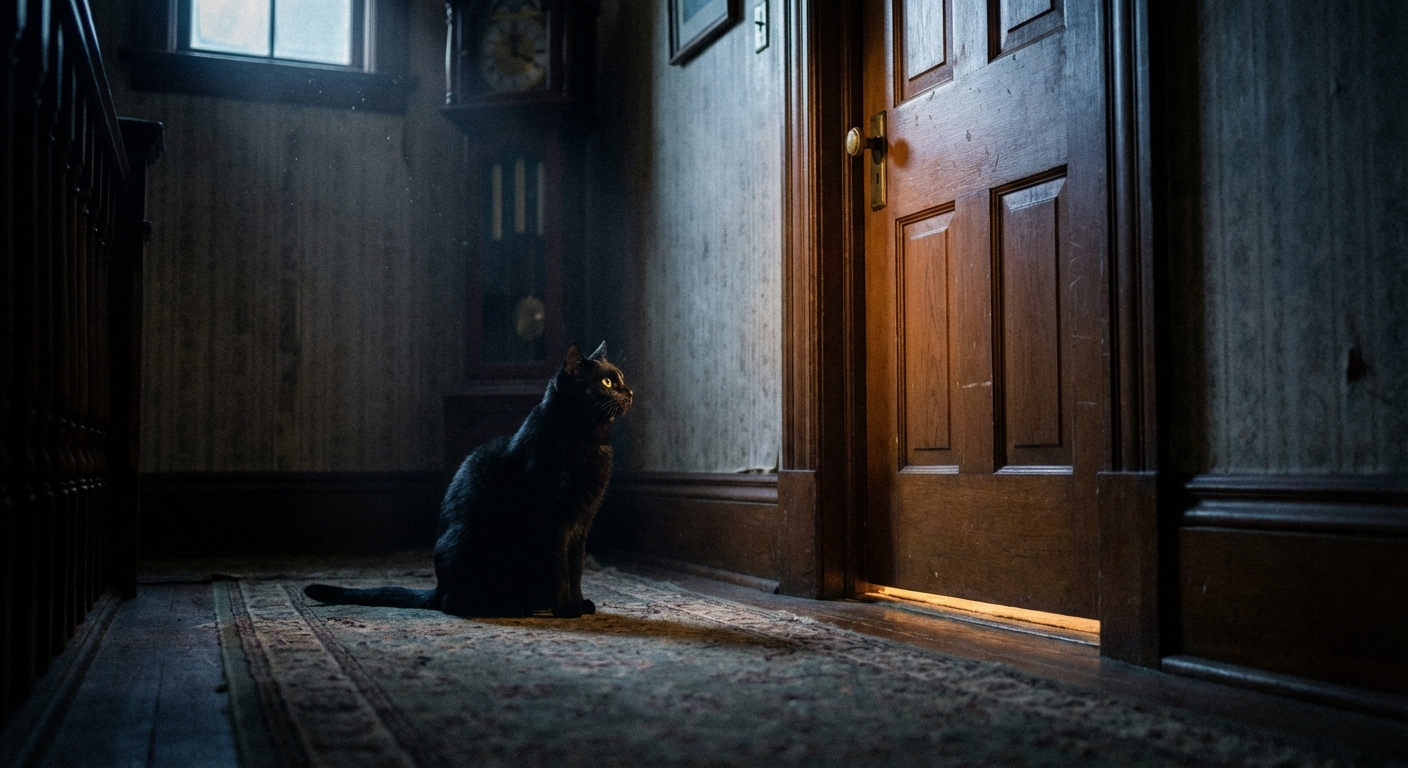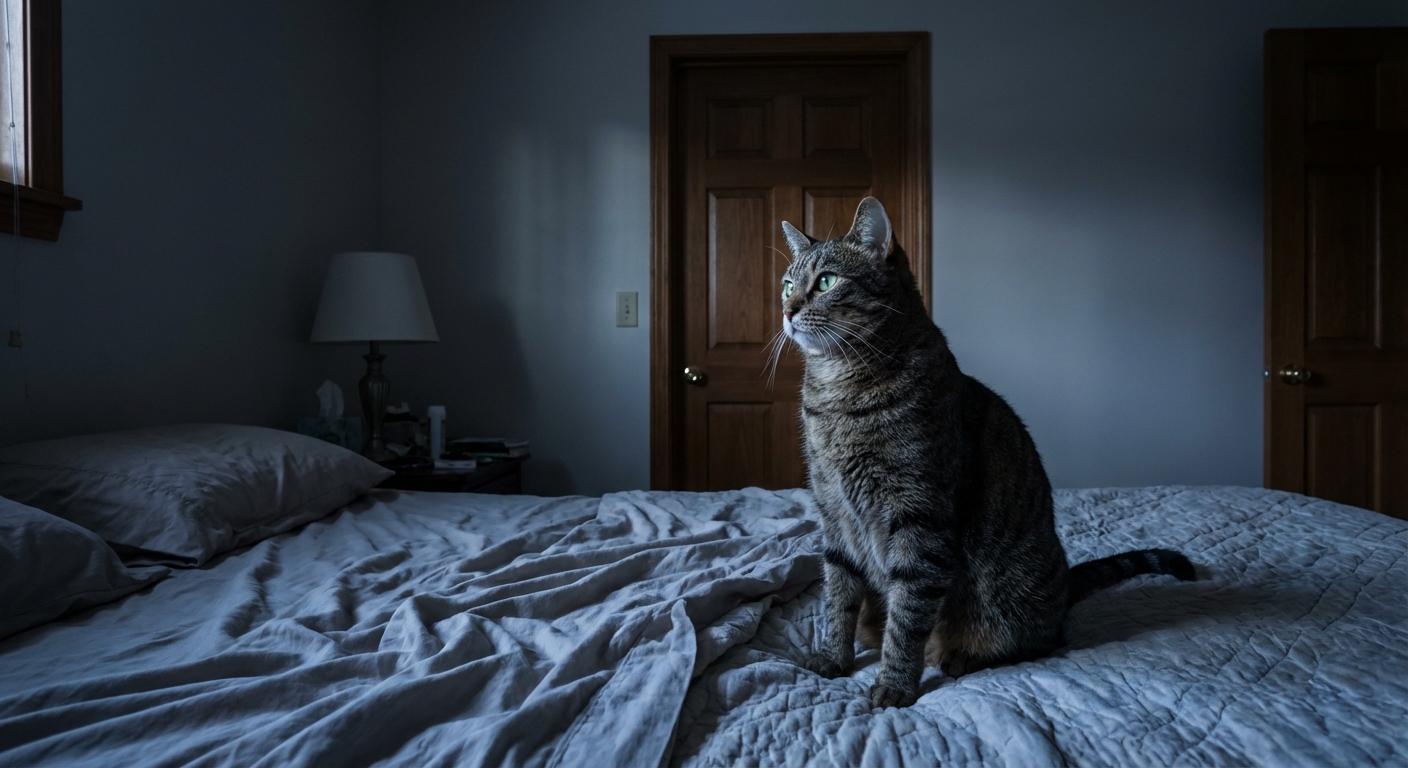
Learn why cats meow at night and what to do: a simple evening play-and-feed routine, how to avoid rewarding meows, stress fixes, automatic feeders, and vet r...
Article
•
Designer Mixes
Why Does My Cat Meow at Night?

Shari Shidate
Designer Mixes contributor
If your cat turns into a little “night singer” the moment you crawl into bed, you are not imagining it. Nighttime meowing is one of the most common behavior complaints families bring up in clinics, and it is often your cat communicating a real need (or a learned habit that has worked before). The trick is figuring out which need is driving it, and then responding in a way that helps your cat settle without accidentally training more midnight noise.
Why cats meow more at night
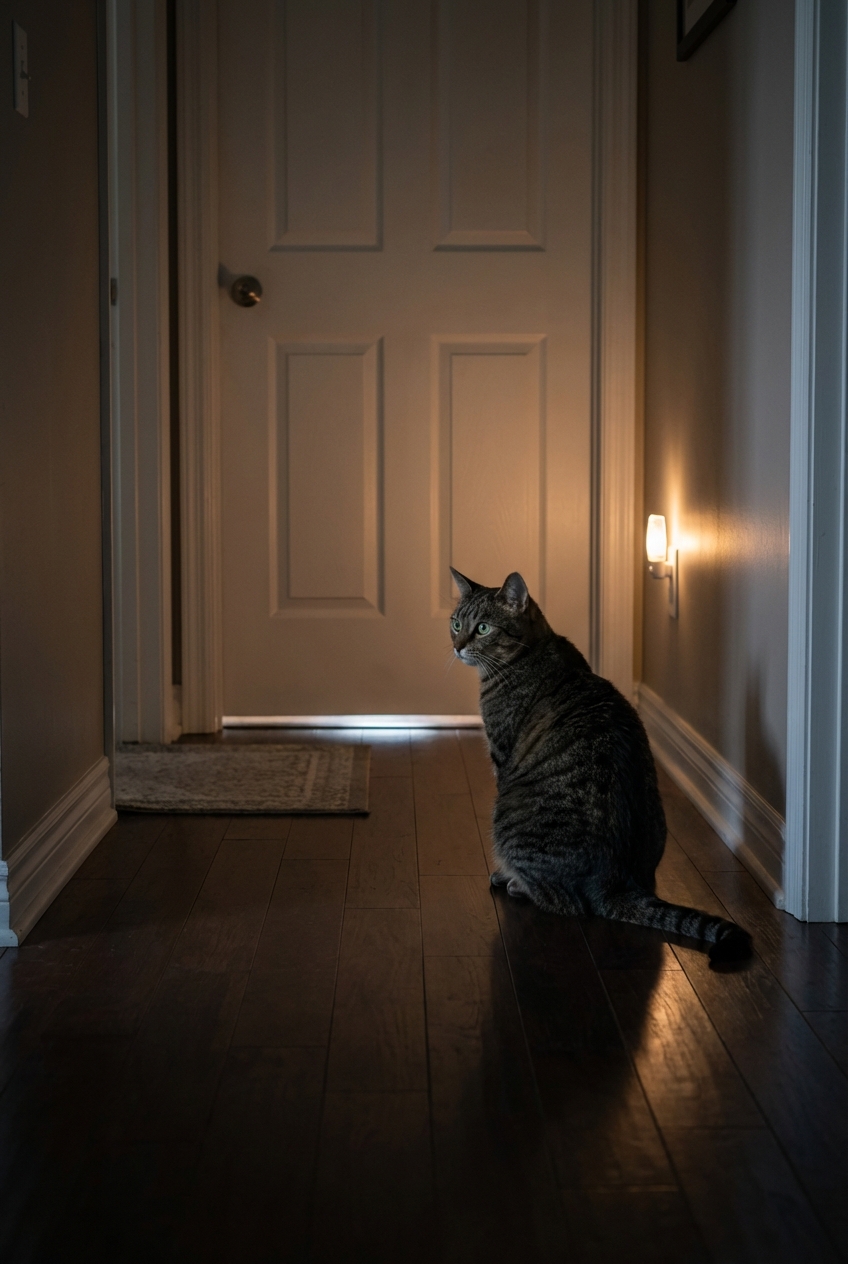
Cats are naturally crepuscular, meaning many are most active at dawn and dusk. If your household schedule does not match your cat’s internal clock, nighttime can become the perfect stage for attention, play, and hunting behaviors. Some cats also shift their active hours based on routine, light, and feeding schedules.
Also, the house gets quiet at night. With fewer distractions, your cat may notice hunger, boredom, separation, or discomfort more strongly. And if meowing has ever led to food, petting, or you getting up, your cat may repeat it because it works.
Common causes of nighttime meowing
1) Hunger or a learned “snack schedule”
Some cats genuinely need a different feeding routine, especially kittens, very active cats, or cats with medical conditions that increase appetite. Other cats have simply learned that waking you up leads to breakfast sooner.
- Clue: Meowing happens near the same time nightly and stops if food appears.
- Helpful check: Review portions with your veterinarian and confirm you are meeting calorie needs for age and body condition.
2) Boredom and extra energy
If your cat sleeps much of the day, nighttime becomes their playtime. Many indoor cats need intentional enrichment to feel satisfied.
- Clue: Meowing includes zoomies, pouncing on feet, or batting objects after you turn off the lights.
3) Attention seeking or separation stress
Cats form strong routines. If you close a door that is usually open, travel more often, or work longer hours, your cat may vocalize to call you back.
- Clue: Meowing escalates when you move, speak, or approach the bedroom door.
4) Environmental triggers
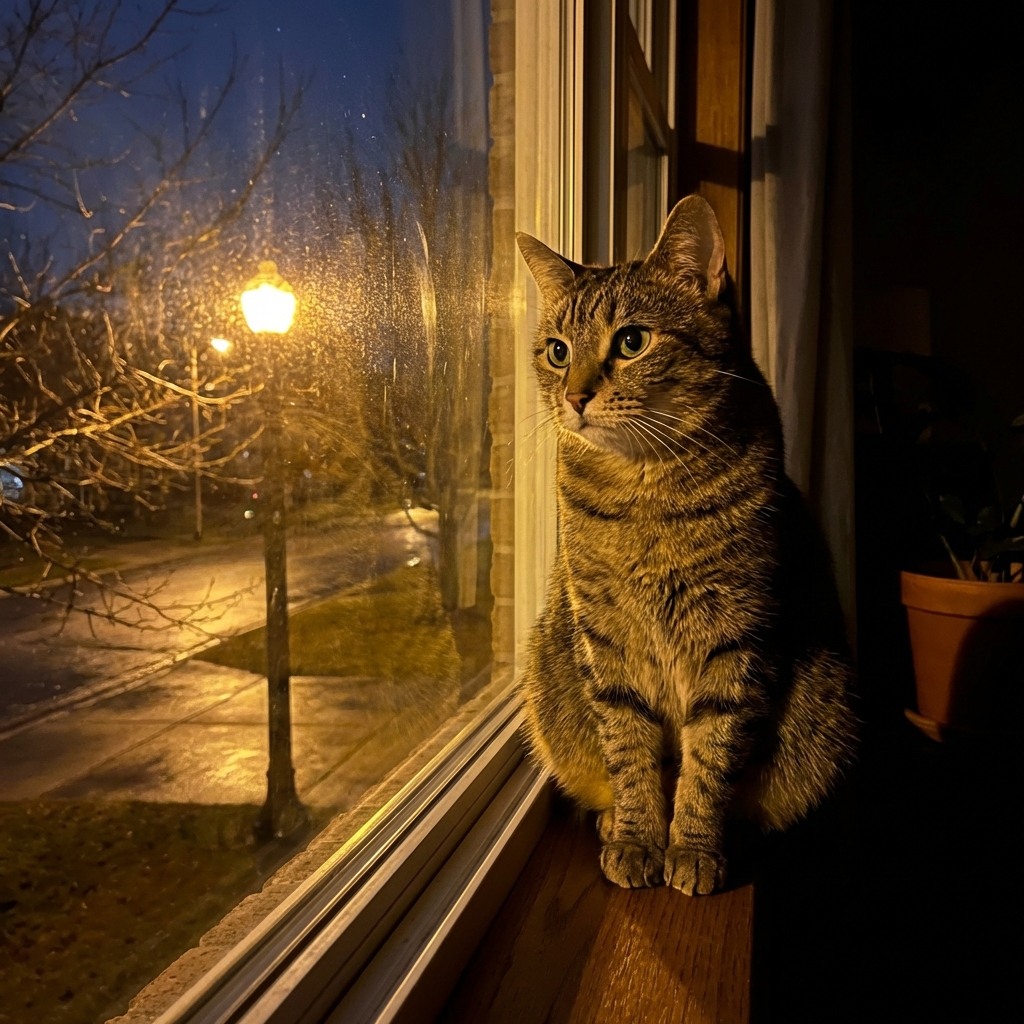
Outdoor cats, wildlife, neighborhood noise, and even reflections can set off nighttime yowling. A cat who sees another cat outside may vocalize, pace, and mark.
- Clue: Your cat stares out windows, chatters, growls, or patrols specific spots.
5) Litter box problems
Nighttime meowing can be your cat’s way of saying, “Something is not right with my bathroom.” A dirty box, a new litter, a covered box, competition with another cat, or a location that feels unsafe can all cause distress.
- Clue: Meowing is paired with repeated trips to the box, or accidents outside the box.
- Quick basics: Scoop daily, keep boxes in quiet and easy-to-reach spots, and aim for one box per cat, plus one extra.
6) Pain, illness, or age changes
This is the category I never want families to skip, especially if the meowing is new or intense. Cats can vocalize more with hyperthyroidism, high blood pressure, kidney disease, arthritis pain, dental pain, urinary problems, constipation or other GI discomfort, and cognitive dysfunction in senior cats. In older cats, hearing or vision loss can also make them more easily startled or disoriented at night.
- Clue: The meow sounds different than usual, your cat seems restless or confused, appetite or thirst changes, weight changes, mobility changes, vomiting, constipation, or there is any straining in the litter box.
If nighttime vocalization starts suddenly, increases quickly, or comes with changes in drinking, urination, appetite, weight, vomiting, constipation, or mobility, schedule a veterinary visit first. Behavior plans work best when we rule out medical causes.
7) Hormones and sexual or territorial behavior
If your cat is not spayed or neutered, vocalizing can ramp up at night due to heat cycles, mate-seeking, and territorial behaviors. This can sound like loud yowling and may come with pacing, restlessness, spraying, or attempts to escape.
- Clue: Sudden loud yowling plus marking, pacing, or intense interest in doors and windows.
- Helpful check: Talk with your veterinarian about spay or neuter and timing.
8) Multi-cat tension
In multi-cat homes, nighttime can magnify stress. One cat may block hallways, litter boxes, food stations, or doorways, leaving the other cat anxious and vocal.
- Clue: Staring, stalking, sudden chasing, or one cat hesitating to pass a doorway or use the litter box.
- Helpful check: Add resources in multiple locations (more boxes, more water, more beds, more scratching posts) and create safe escape routes with vertical space.
How to curb nighttime meowing
The goal is a calm night for you and your cat. Most households need a combination of routine changes and gentle behavior training. Try these steps consistently for 2 to 3 weeks, but do not wait if you see any signs of illness or pain.
Step 1: Rule out health problems
Before assuming it is “just behavior,” ask your veterinarian about an exam and any recommended lab work. In cats, pain and metabolic changes are often quiet until they are not.
Step 2: Build a predictable evening routine
Cats love patterns. A simple nightly rhythm helps them settle.
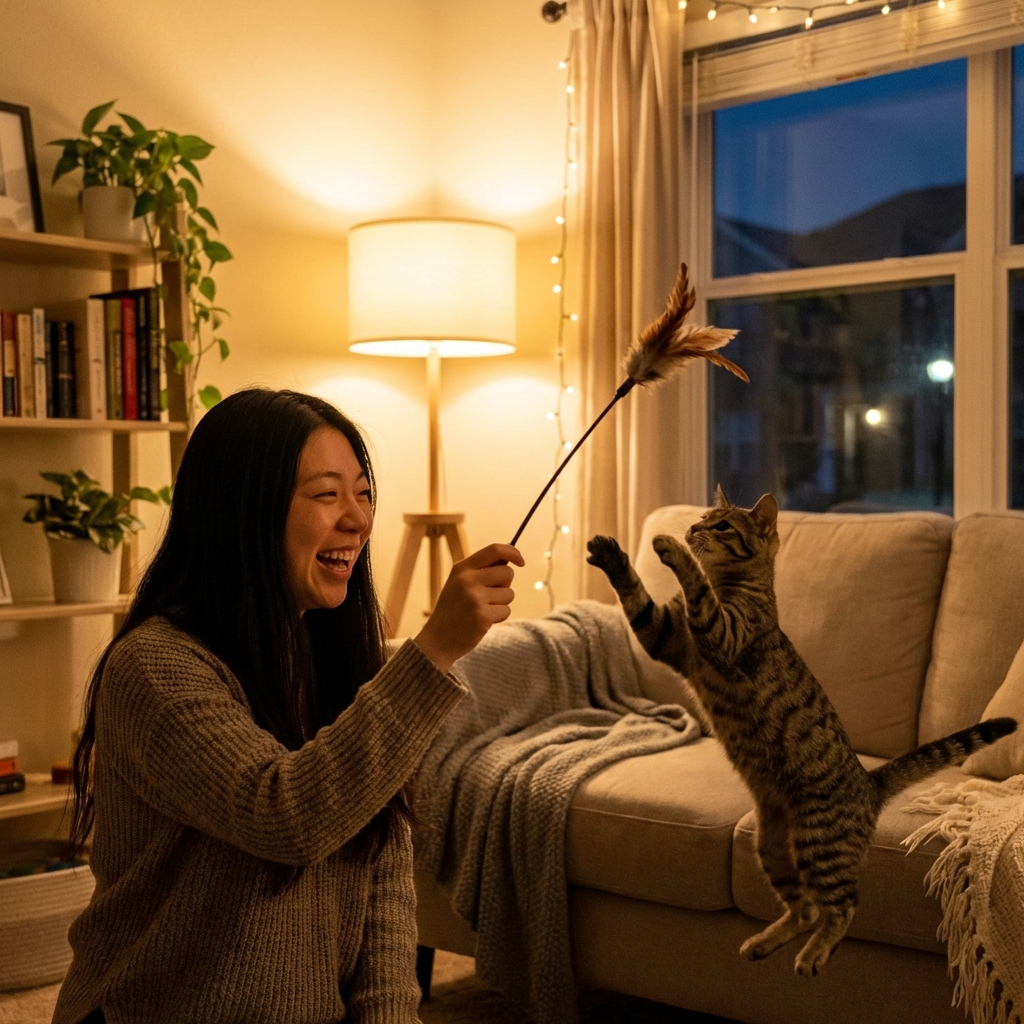
- Play: 10 to 15 minutes of interactive play with a wand toy. Aim for stalking, chasing, and pouncing.
- Feed: Offer dinner right after play, so the “hunt” ends with a meal.
- Wind down: Dim lights, reduce loud TV, and keep bedtime consistent.
Step 3: Adjust feeding to prevent early wake-ups
If your cat is waking you for food, consider:
- Later last meal: Move dinner closer to your bedtime.
- Food puzzle at night: A puzzle feeder can occupy your cat and slow eating.
- Timed feeder: An automatic feeder can deliver a small early-morning meal without involving you. This helps break the association between meowing and you getting up.
Step 4: Do not reward the meowing
This is the hardest part, but it matters. If you respond by talking, petting, feeding, or even scolding, many cats interpret that as attention.
- If the behavior is attention-based, aim for neutral consistency.
- Expect a short-term increase called an “extinction burst” when you stop rewarding the behavior. Stay steady.
- If you are struggling to stay consistent, use temporary supports like white noise, earplugs, or sleeping behind a closed door while you retrain the pattern.
Step 5: Improve the sleep setup
- Safe cozy sleep spots: Provide a bed in a quiet area, plus a second option like a covered cat cave.
- Night light: A soft light can help senior cats who seem disoriented in the dark.
- Window management: Close blinds at night or block access to a window that triggers territorial stress.
- White noise: Gentle background sound can reduce startle responses to outdoor noises.
Step 6: Add daytime enrichment
A cat who has appropriate outlets during the day is more likely to sleep at night.
- Rotate toys weekly so they stay “new.”
- Offer food puzzles for part of the daily calories.
- Add vertical space like a cat tree or wall shelves.
- Consider short training sessions using treats, like target training or “sit.”
When nighttime meowing is an emergency
Call an emergency clinic right away if you notice:
- Straining to urinate, frequent litter box trips with little output, crying in the box, or licking the genitals (especially in male cats). This can be a urinary blockage and it is life-threatening. Go even if it seems intermittent.
- Open-mouth breathing, collapse, or extreme lethargy.
- Sudden inability to use back legs, or severe pain signs (possible saddle thrombus).
For non-emergency but concerning patterns, book a vet appointment if the meowing is new, your cat is middle-aged or older, or anything about appetite, thirst, weight, vomiting, constipation, mobility, or litter box habits has changed.
A plan you can start tonight
If you want an easy starting point, here is a simple, cat-friendly reset:
- Schedule an exam if the behavior is new or your cat is middle-aged or older.
- Play for 10 minutes, then feed dinner right after.
- Set up an automatic feeder for a small early-morning meal.
- Close blinds, offer a cozy bed, and keep the bedroom response boring and consistent.
You deserve sleep, and your cat deserves to feel safe and satisfied. Once you identify the root cause, the nighttime meowing usually improves faster than people expect.