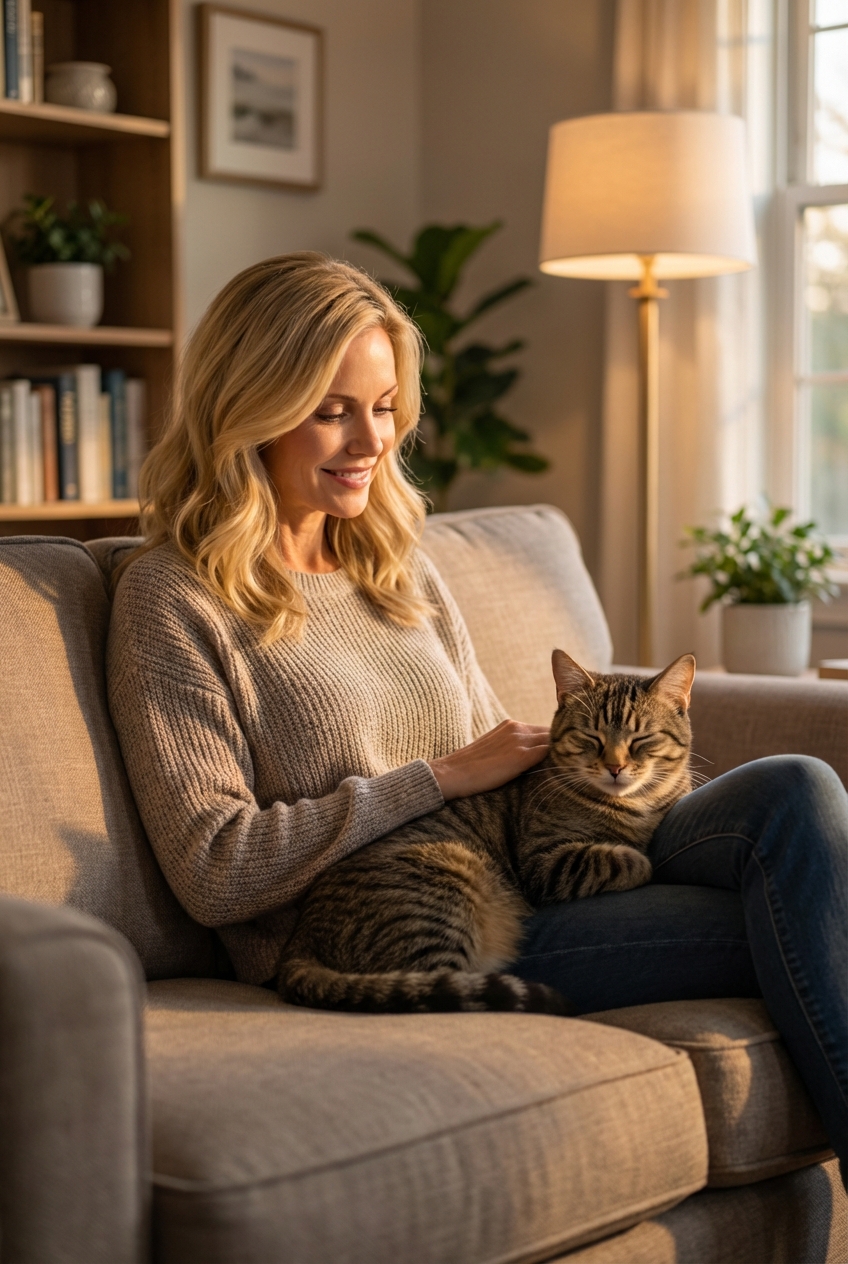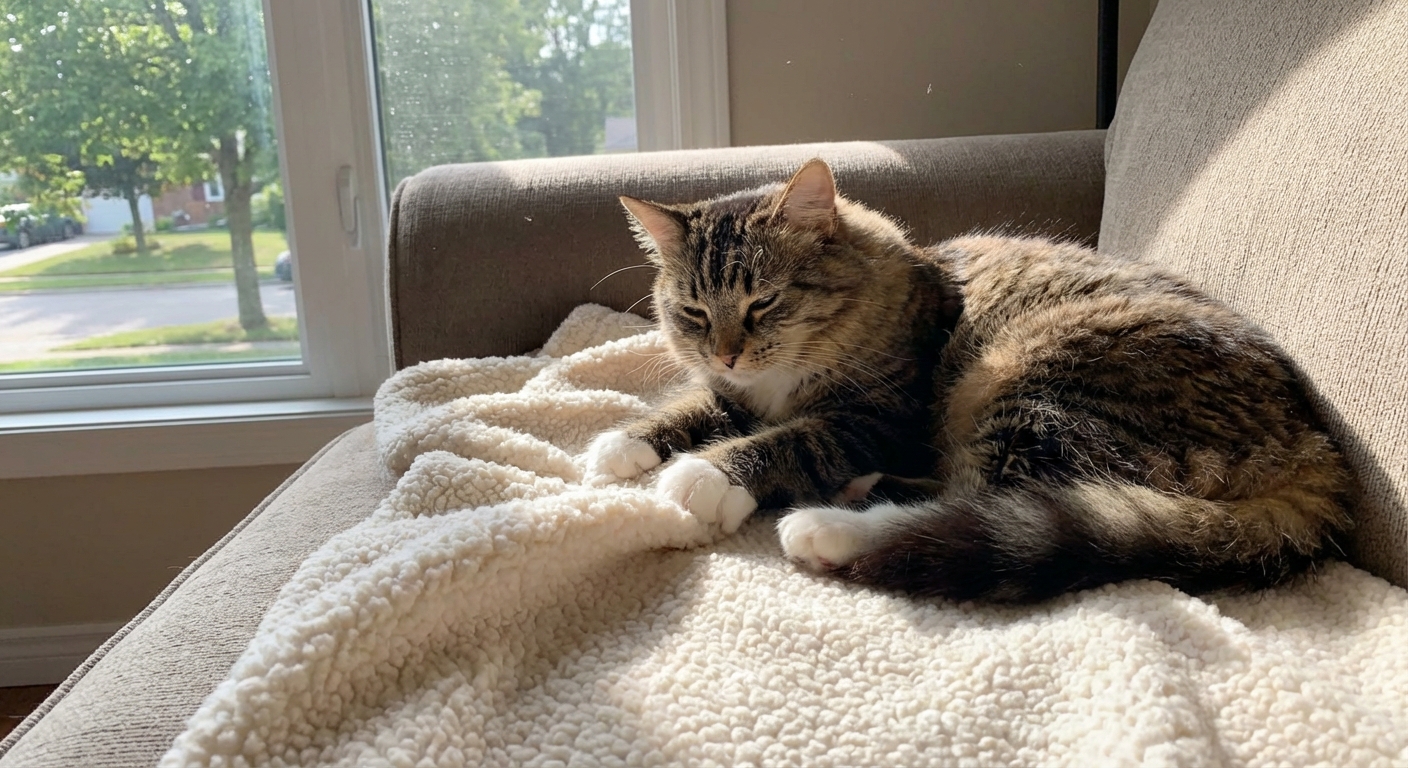
Vet-informed reasons cats snuggle: warmth, safety, bonding, scent marking, and stress relief. Decode cuddle styles, why they pick one person, and red flags t...
Article
•
Designer Mixes
Why Does My Cat Lie on My Chest?

Shari Shidate
Designer Mixes contributor
If you have ever been pinned down by a purring cat who insists on settling right on your chest, you are in very good company. As a veterinary assistant, I hear this question all the time, and the sweet truth is that chest-sitting is usually a sign of connection, comfort, and trust. That said, cats are complex little creatures, and sometimes this behavior can also hint at what they need in the moment.
Let’s walk through the most common reasons your cat lies on your chest, what it can mean, and when it might be time to check in with your vet. (As always, behavior is not diagnostic by itself, so look at the whole picture.)
Warmth and comfort
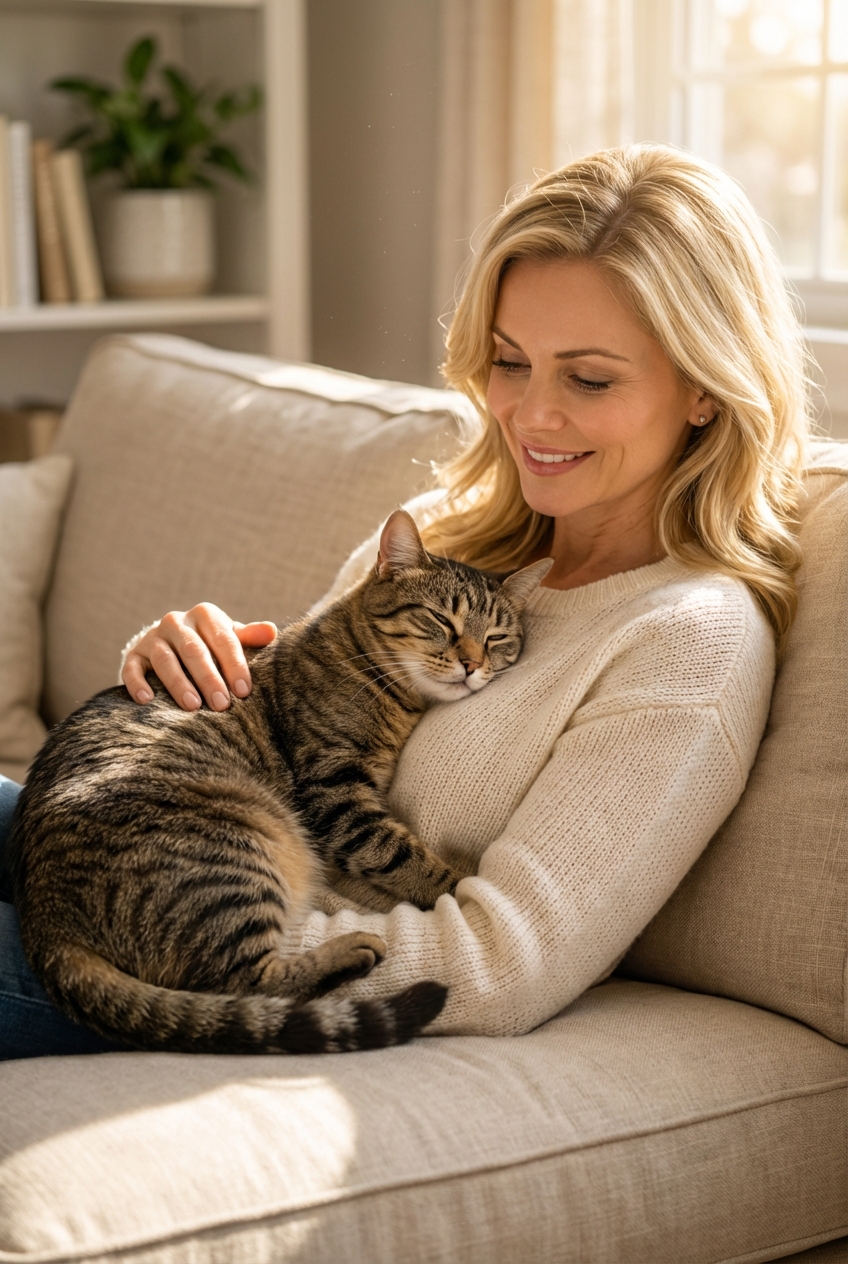
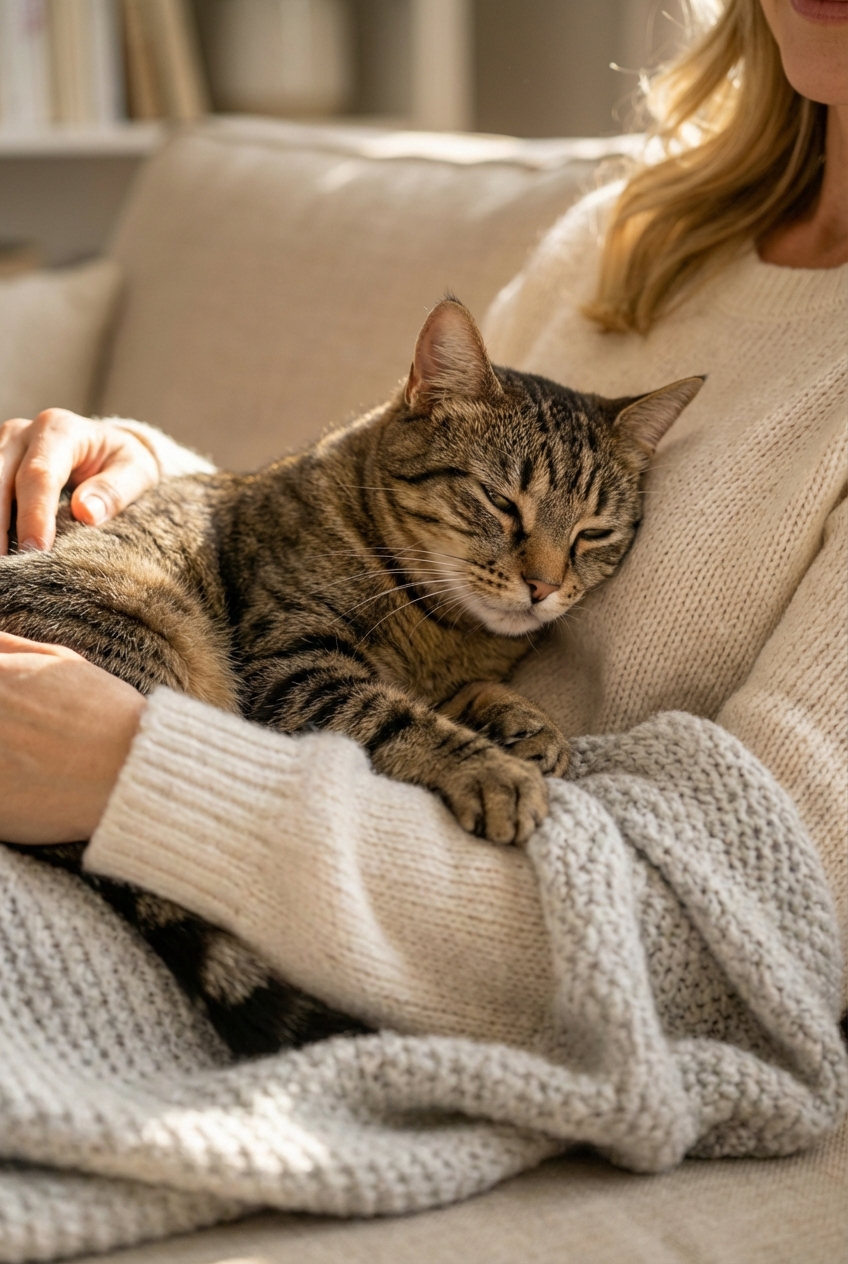
Your chest is basically a cozy cat mattress with built-in heat. Cats naturally seek warm, soft places because warmth helps them conserve energy and feel safe. Your body temperature, a blanket, and the gentle rise and fall of your breathing can be incredibly soothing.
Some cats also like the “nest” effect when you are reclined, especially if your arms or a blanket create a snug boundary around them.
They feel safe with you
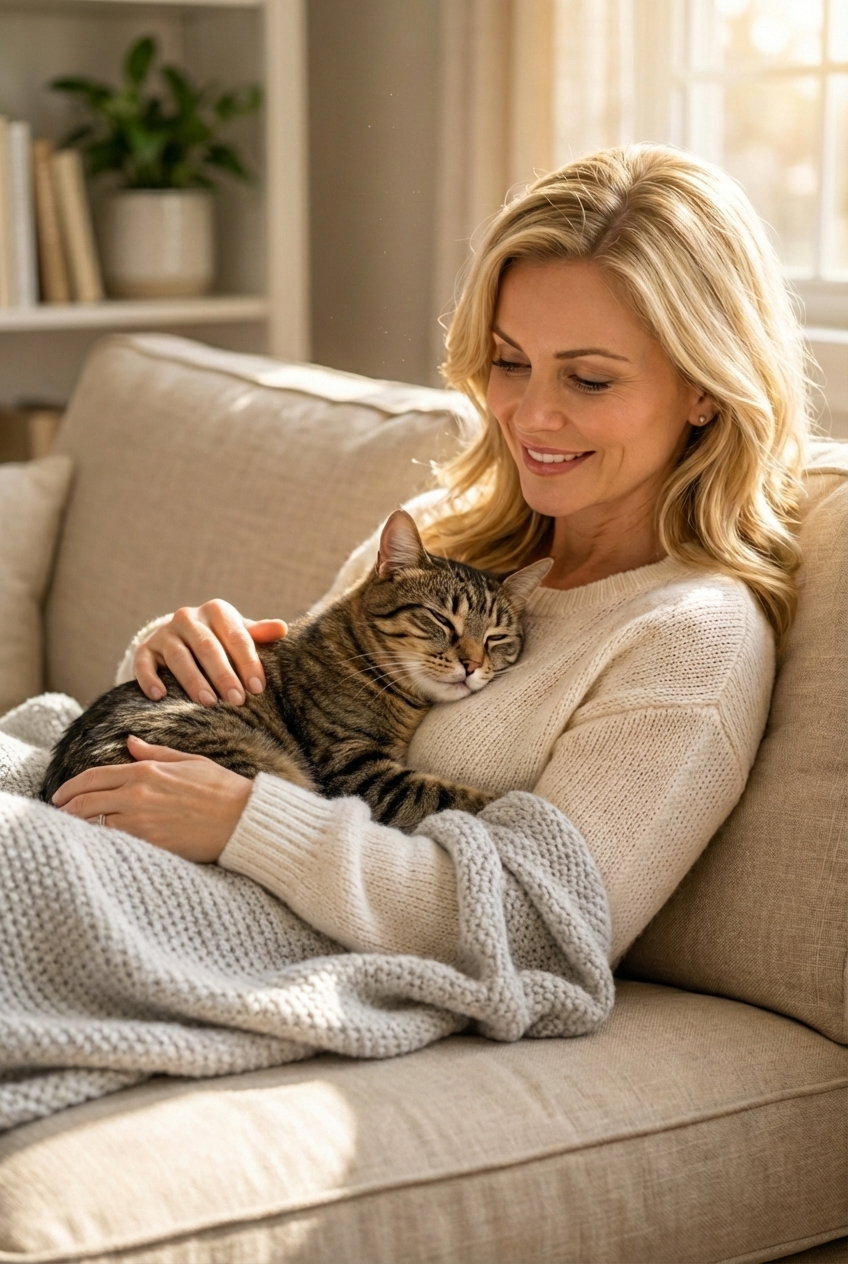
In feline body language, closeness is a big deal. Cats are both predator and prey by nature, so they typically do not choose close, relaxed contact unless they feel secure.
When your cat chooses to lie on your chest, they are often doing a few trust-filled things at once:
- Relaxing their body instead of staying tense and ready to move
- Closing their eyes or half-closing them
- Choosing to be very close to you, which is meaningful in cat terms
It is often one of the clearer signs your cat sees you as a safe person.
Your heartbeat and breathing can soothe them
Cats are sensitive to routine and familiar sensations. Many cat owners notice that the steady rhythm of a human heartbeat and breathing seems to help some cats settle, especially during quiet, sleepy times. It may be similar to the comfort kittens get from being close to their mother and littermates, although we cannot measure that in any simple way at home.
If your cat seems especially drawn to your chest when you are resting, sick, or stressed, they may be seeking that familiar closeness and predictable calm, or they may have learned that cuddling with you is a safe, quiet routine.
Affection and bonding
Despite their independent reputation, cats can be deeply social with the humans they love. Chest-lying can be a bonding behavior, similar to:
- Head bunting and cheek rubbing (scent marking)
- Kneading (a comfort behavior that often starts in kittenhood)
- Purring while making contact (often self-soothing, and sometimes social)
Think of it as your cat’s way of saying, “You’re my person.”
Scent marking and familiarity
Cats communicate with scent more than we realize. When your cat lies on you, rubs on you, or kneads you, they can be leaving familiar scent markers from glands in their face and paws. This is not necessarily possessive in a negative way. It is often your cat making you smell like “home,” which can help them feel secure.
If chest-sitting happens more when guests are over, after you return from travel, or after you pet another animal, your cat may be re-establishing that comforting familiarity.
Attention, food, or a reaction
Let’s be honest. Sometimes chest-sitting is strategic.
If your cat has learned that sitting on you gets petting, playtime, or breakfast faster, they will often repeat the behavior. Cats are excellent at training humans.
Common patterns I see:
- Chest-lying right before your alarm goes off
- Chest-lying when you are on your phone or laptop
- Chest-lying followed by gentle paw taps to your face
If it feels like your cat is “interrupting,” they may simply be asking for engagement.
Why chest instead of lap
Not all cats are lap cats, but many are chest cats. A few reasons chest-sitters may prefer this spot:
- More security: Your arms and blankets can form a partial “nest” around them.
- Better warmth: The chest holds heat well, especially under blankets.
- More closeness: They are near your face, scent, and voice.
- Less movement: Laps shift. A reclined torso can feel steadier.
- A better view: If you are reclined, some cats enjoy the small “vantage point” to watch the room.
When it could signal a problem
Most of the time, this behavior is completely normal. But I always encourage pet parents to pay attention to changes. If your cat suddenly starts insisting on lying on your chest much more than usual, or seems unusually clingy, it can be worth looking closer, especially if anything else seems off.
Possible reasons to consider
- Pain or discomfort: Cats often seek extra comfort when they do not feel well.
- Anxiety or environmental stress: New pets, visitors, construction sounds, moving furniture, or schedule changes can trigger clinginess .
- Feeling cold: Older cats, thin cats, and cats with certain health conditions may seek warmth more intensely.
- Breathing issues: If your cat is lying on you but also breathing fast, struggling to breathe, or breathing with an open mouth, that is urgent .
Seek emergency care now if you notice
- Open-mouth breathing, gasping, or blue or pale gums
- Labored breathing (heaving sides, belly breathing), or breathing that seems clearly harder than normal
- Sudden collapse, extreme weakness, or your cat cannot stay awake
- Straining in the litter box with little or no urine (especially in male cats)
Call your vet soon if you notice
- Reduced appetite or drinking changes that last more than a day
- Hiding more than usual or seeming unusually “off”
- Less grooming, or sudden overgrooming
- Vomiting or diarrhea that is persistent, or any litter box changes
- Coughing, wheezing, or an ongoing increase in breathing rate at rest
- A behavior change that does not improve within 24 to 48 hours, or that worries you at any point
Helpful tip: Snap a short video if you notice odd breathing, coughing, straining in the litter box, or unusual behavior. That can be very useful for your veterinary team.
Encourage cuddles safely
If you love the snuggles, you can make it even more comfortable for both of you.
- Support your cat’s body: A pillow under your arm can create a cozy boundary so they feel secure.
- Watch for overheating: If your cat gets too warm, they may hop off or sprawl out. Let them adjust.
- Respect consent: If your cat gets up and leaves, do not force them back. That keeps chest time positive.
- Protect your breathing and sleep: If your cat is heavy, you have asthma, sleep apnea, or you simply cannot breathe comfortably, it is completely okay to redirect them to a safer spot nearby.
If you want an easy alternative, many cats love a heated cat bed or a pet-safe warming pad placed next to you, plus a soft blanket that smells like you.

If you do not want chest time
It is okay if chest-sitting is not your favorite. You can redirect without damaging your bond.
- Create a better option: Place a soft blanket or cat bed next to your shoulder, on the back of the couch, or on a nearby cat tree.
- Reward the alternate spot: Pet them or offer a small treat when they choose it. Timing matters, so reward within a few seconds.
- Stay consistent: Gently move them every time they climb onto your chest, without scolding.
Cats respond best to patterns and positive reinforcement, not punishment .
The bottom line
When your cat lies on your chest, it is usually a heartfelt mix of warmth, safety, and bonding. You are their cozy place. If the behavior is new and paired with other changes like appetite, litter box habits, energy level, or breathing differences, it is smart to check in with your veterinarian, and treat any breathing trouble or urinary straining as urgent.
Otherwise, take it as a compliment. In cat language, this is a very sweet vote of confidence.