Wondering why your cat licks you? Learn the most common reasons—bonding, affection, stress relief, taste/scent, attention, or overstimulation—plus what t...
Article
•
Designer Mixes
Why Does My Cat Lick Me? Affection or Something Else?

Shari Shidate
Designer Mixes contributor
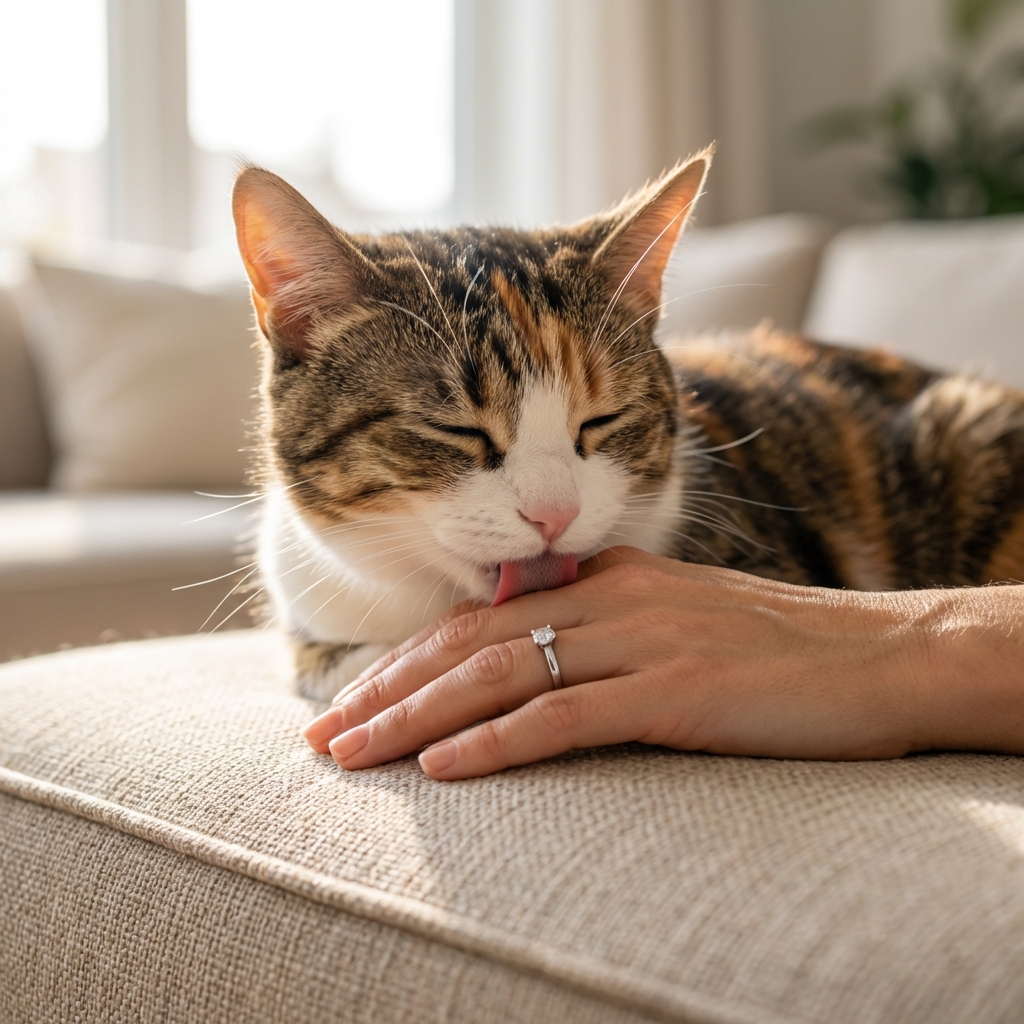
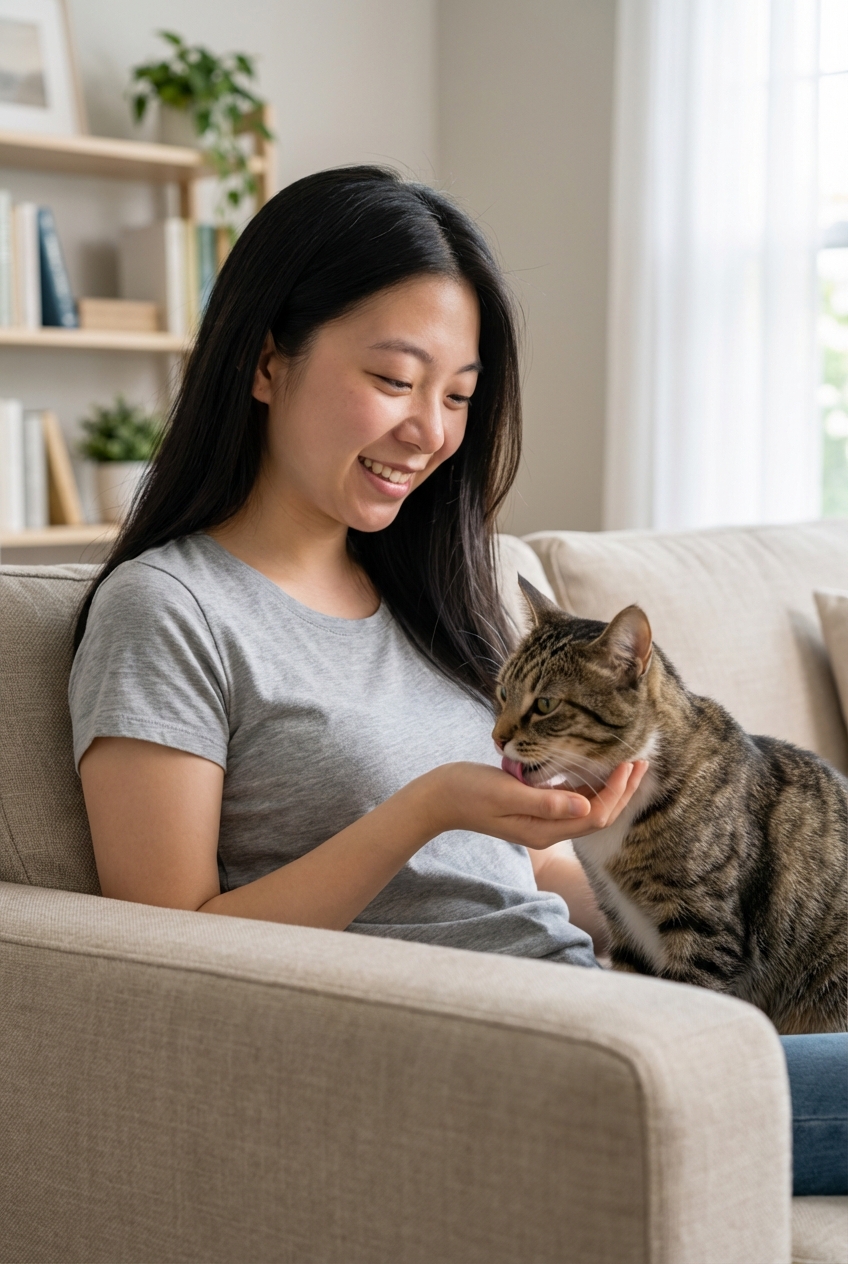
Few things feel as oddly sweet and slightly sandpapery as a cat licking your hand or face. Many people assume it is a kiss, and sometimes it is. But licking can also signal stress, a learned habit, a request for attention, or even a health concern.
Let’s break down the most common reasons cats lick humans, how to tell what your cat is communicating, and what to do if the licking becomes excessive.
The short answer: licking is communication
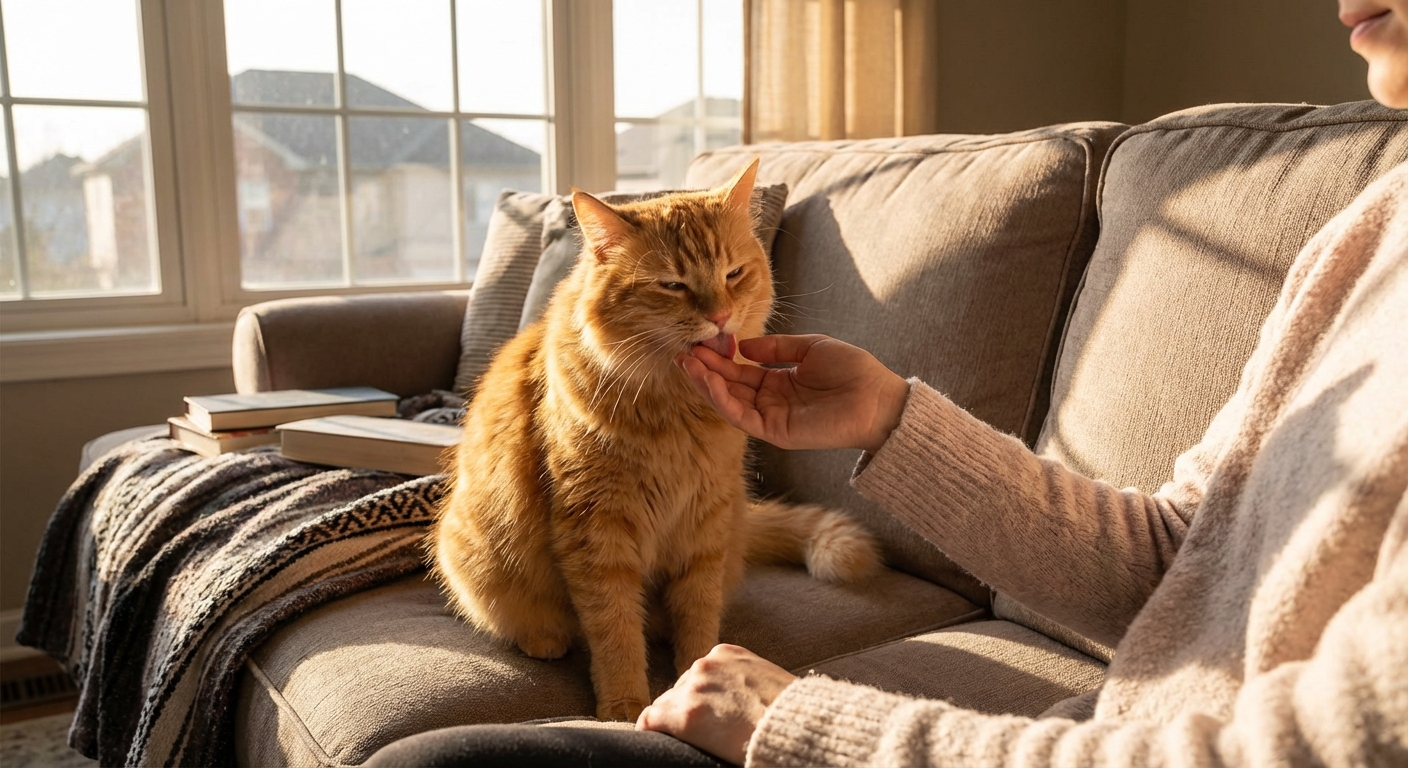
Cats use licking for grooming, bonding, and self-soothing. When that behavior is directed at you, it is usually a blend of affection and routine, shaped by your cat’s personality, early experiences, and current environment. Context matters most.
If your cat’s body looks loose and comfortable while licking, it is typically friendly. If their body looks tense or the licking escalates quickly, it may be stress-related or overstimulation.
8 common reasons your cat licks you
1) Affection and social bonding
In cat social groups, mutual grooming helps strengthen bonds. If your cat licks you, they may be treating you like family. This is especially likely if licking happens during calm cuddle time, purring, slow blinking, or kneading.
2) You smell or taste interesting
Cats explore the world with their noses and mouths. Lotion, salt from sweat, cooking smells, and even shampoo can make your skin “taste” worth investigating. Some cats are particularly drawn to salty skin after exercise.
Quick safety note: Some topical products can be harmful if ingested (including certain essential oils and medicated creams). If your cat is determined to lick a spot, it is best to wash it off and switch to a pet-safer routine.
3) Grooming you like they would groom themselves
Your cat may be trying to clean you, especially if they lick hairline areas, hands, or arms. This can be normal social grooming behavior, but it can also become a repetitive habit for some cats.
4) Attention-seeking and learned behavior
If licking makes you laugh, talk to them, pet them, or offer a treat, your cat may repeat it because it works. Cats are excellent at learning which behaviors reliably get a response.
5) Stress relief or self-soothing
Licking can be self-soothing for many cats. Changes like a new pet, a move, schedule shifts, loud construction, or even boredom can increase licking, both toward you and toward their own body.
6) Overstimulation during petting
Some cats lick as petting escalates, then shift to gentle nibbling or a quick swat. This can be a sign your cat has reached their threshold and needs a break.
7) Kitten comfort habits
Cats that were weaned early, orphaned, or bottle-raised sometimes carry comfort behaviors into adulthood. That can look like persistent licking, suckling on fabric, or “blanket nursing,” especially when they are relaxed or trying to settle.
8) A medical issue (less common, but important)
Excessive licking, sudden new licking behavior, or licking paired with other symptoms can sometimes be linked to pain, skin irritation, dental disease, nausea, or anxiety. It is not the most common cause, but it deserves attention if the behavior changes abruptly.
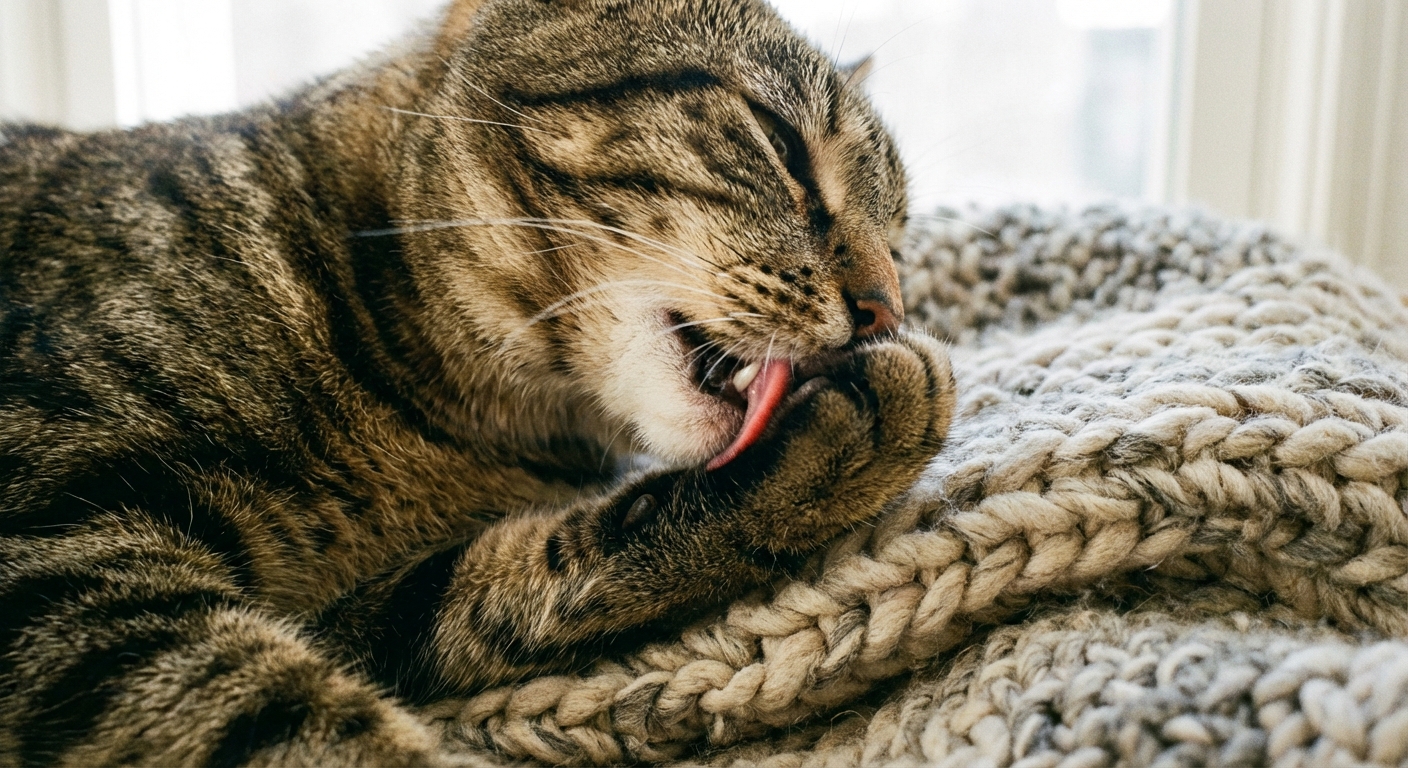
Affection or something else?
Use your cat’s full body language as your guide. Licking alone is not the whole story.
Signs it is likely friendly
- Loose, relaxed posture
- Purring, slow blinks, or kneading
- Licking happens briefly, then your cat settles
- Ears neutral and tail calm
Signs it may be stress or overstimulation
- Sudden increase in frequency or intensity
- Dilated pupils, twitching skin, or tail flicking
- Licking turns into biting, grabbing, or agitation
- Other changes like hiding, vocalizing, appetite changes, or overgrooming
Is cat licking safe for humans?
For most healthy adults, occasional licking on intact skin is low risk. The biggest concern is bacteria getting into broken skin (or from a bite or scratch), and repeated licking can also irritate sensitive skin.
Be more cautious if:
- You have an open cut, rash, or eczema flare
- You are immunocompromised, very young, or elderly
- Your cat has signs of oral disease like bad breath, drooling, or inflamed gums
If you develop redness, swelling, warmth, or pain after being licked, contact a medical professional. And if your cat bites and breaks the skin, it is wise to seek medical guidance promptly because cat bites can become infected.
What to do if it is too much
You do not have to tolerate constant licking to keep a good relationship with your cat. The goal is to set gentle, consistent boundaries and give your cat a better outlet.
Try these steps
- Redirect calmly: Offer a toy, a kicker, or a treat puzzle when licking starts.
- Reward alternatives: Pet and praise when your cat sits calmly without licking.
- End the moment: If licking continues, quietly move your hand away, stand up, or step out for 10 to 20 seconds. No scolding needed.
- Keep reactions boring: If licking is attention-seeking, big reactions can reinforce it.
- Adjust petting style: Shorter petting sessions with breaks can prevent overstimulation.
- Enrichment matters: Daily play sessions, window perches, climbing spaces, and food puzzles reduce boredom-driven behaviors.
- Consider taste triggers: If your cat targets lotion or sweat, wash hands after applying products and avoid strongly scented creams.
- Avoid punishment: Yelling, pushing, or tapping can increase stress and make the behavior worse.

When to call your veterinarian
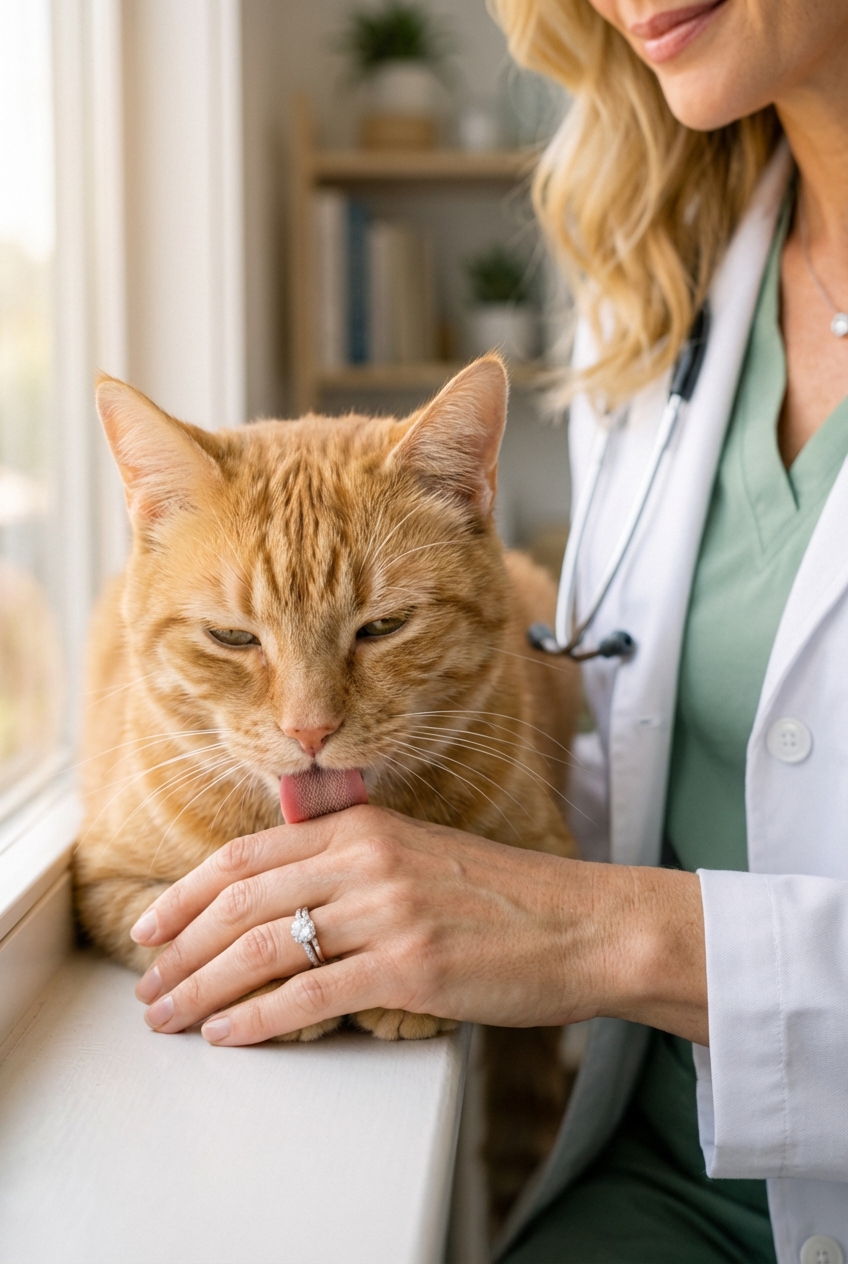
While we provide helpful pet info, we are not veterinarians. Use this list as a guide to decide when a professional check is the safest next step.
- Licking is new and sudden, especially in an older cat
- Your cat seems restless, anxious, or unable to settle
- You notice overgrooming, bald spots, scabs, or skin redness
- There are signs of dental issues (bad breath, pawing at mouth, drooling, dropping food)
- Licking pairs with vomiting, appetite changes, weight change, or litter box changes
A vet can rule out pain, skin conditions, and oral disease, and can also advise on stress reduction strategies if anxiety is part of the picture.
Quick takeaways
- Most cats lick humans as a form of bonding, grooming, or attention-seeking.
- Body language and context help you tell affection from stress or overstimulation.
- Frequent, intense, or sudden licking changes warrant a vet conversation.
- Gentle redirection, clear boundaries, and better enrichment can reduce excessive licking without damaging trust.
Small, consistent adjustments can make a big difference over time. If you are unsure, trust your instincts and get your cat checked. Peace of mind is worth it.