Wondering why your cat licks you? Learn the most common reasons—bonding, affection, stress relief, taste/scent, attention, or overstimulation—plus what t...
Article
•
Designer Mixes
Why Does My Cat Lick Me?

Shari Shidate
Designer Mixes contributor
If you have ever wondered, “Why does my cat lick me?” you are definitely not alone. In my work as a veterinary assistant here in Frisco, Texas, I hear this question all the time. Cat licking can be sweet, funny, and sometimes a little confusing, especially when it turns into nonstop sandpaper kisses.
The good news is that licking is often normal feline communication. The key is learning to tell the difference between affection and a sign your cat is stressed, uncomfortable, or feeling unwell.
Quick note: This article is general guidance and does not replace veterinary advice for your specific cat.
What licking means
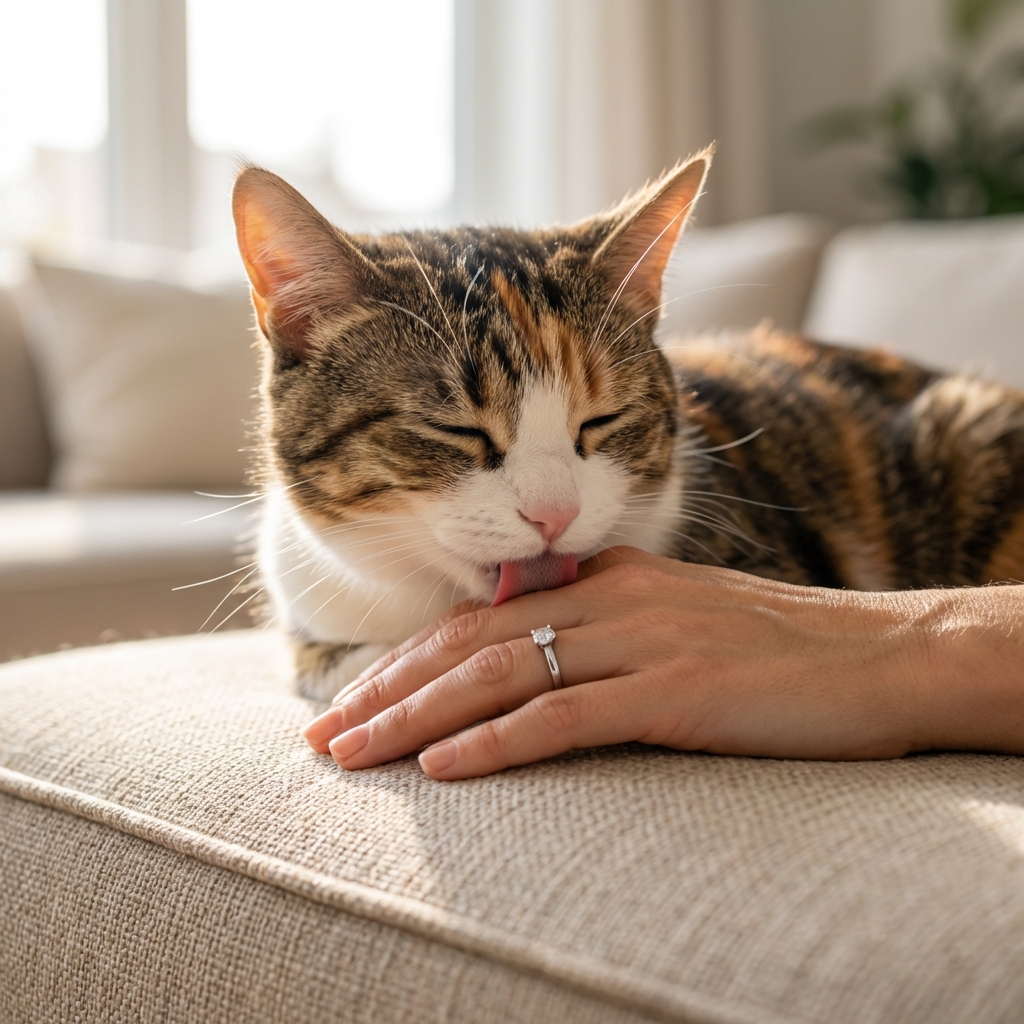
Cats use licking the way we use words, tone, and touch. It can mean connection, comfort, or even “please stop doing that.” Your cat’s full body language matters.
- Relaxed signals: slow blinking, kneading, purring, soft posture, tail relaxed or held neutrally.
- Stressed or over-aroused signals: flattened ears, skin twitching, tail lashing, wide pupils, sudden nipping after licking, trying to leave.
- Pain signals: tense posture, avoiding touch, growling, licking a specific spot on their own body repeatedly.
Top reasons cats lick people
1) Affection and bonding
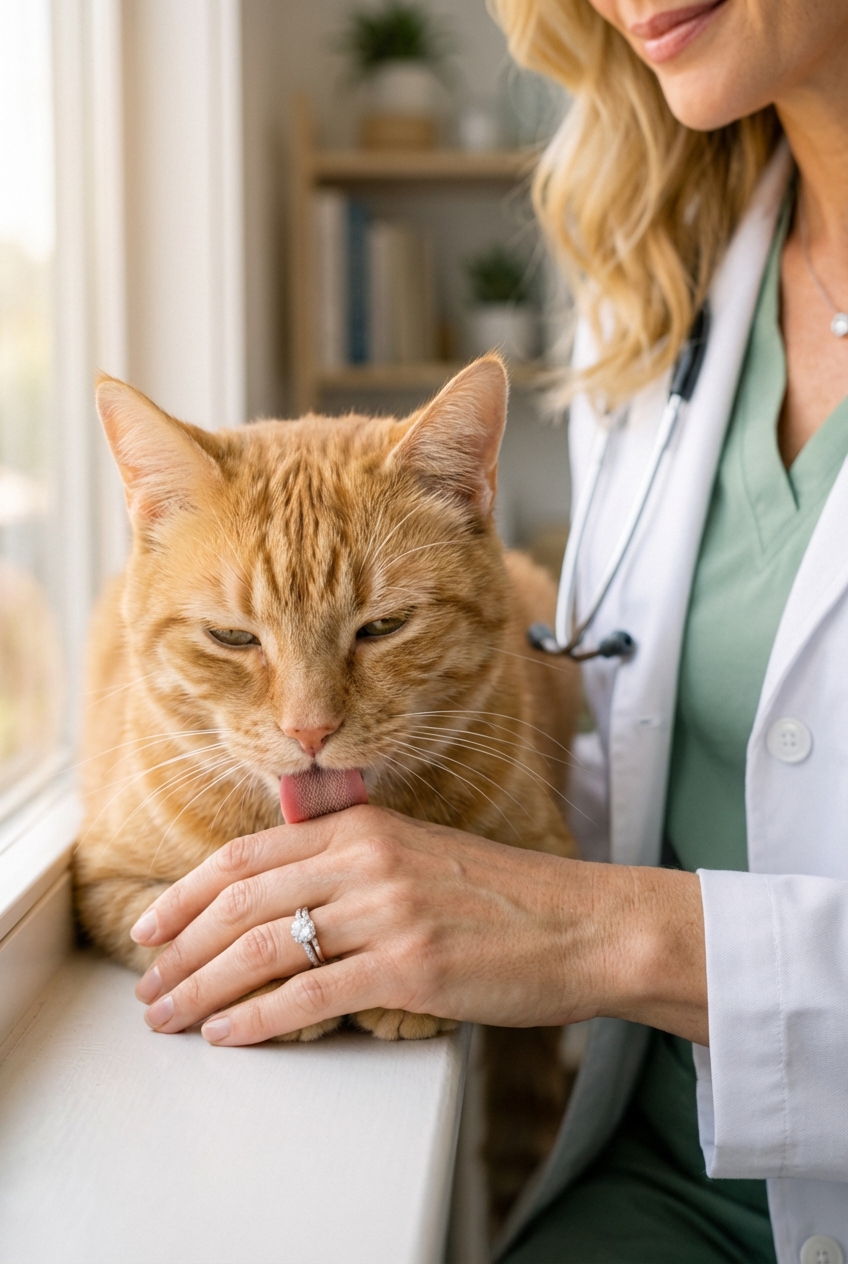
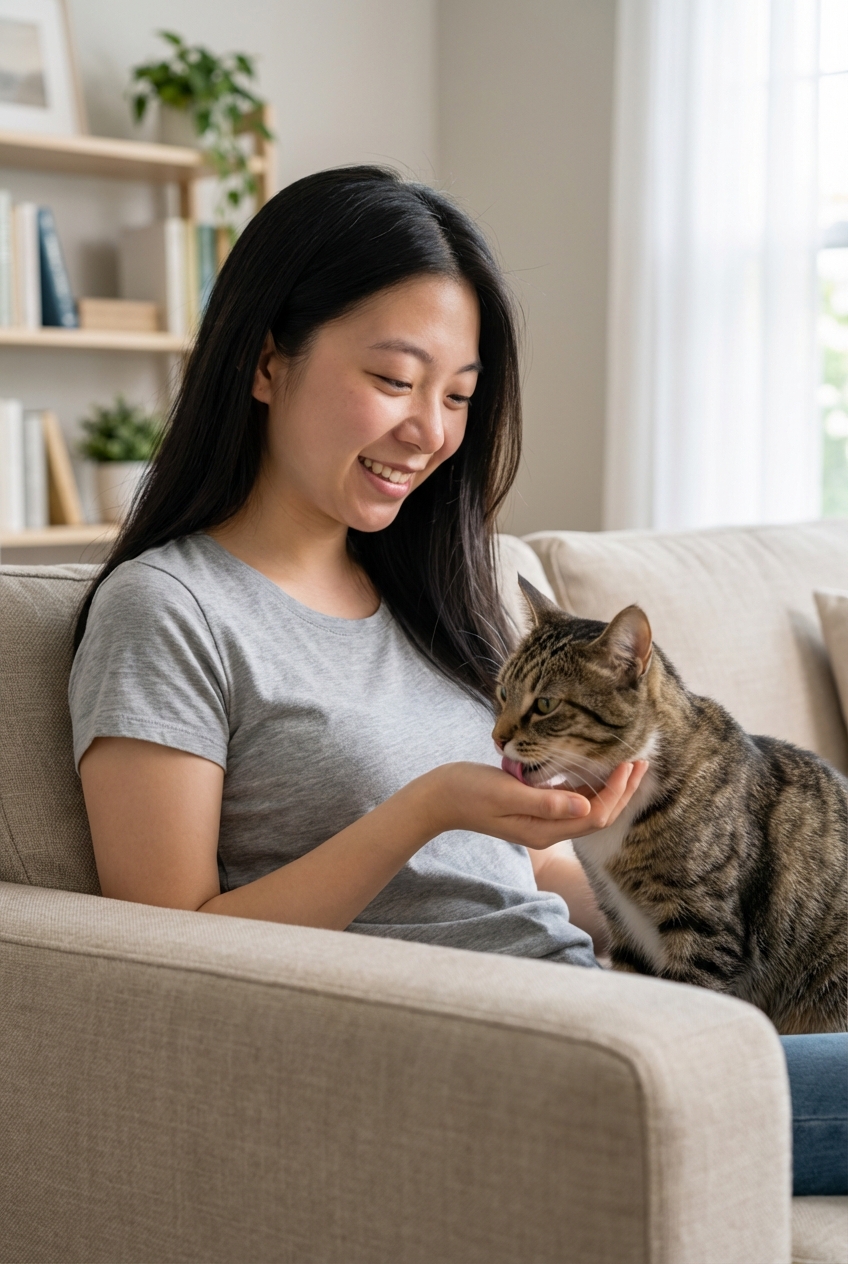
Social grooming is a real thing in cat colonies and in multi-cat homes. When your cat licks you, they may be treating you like family, reinforcing that you belong together.
2) You taste like salt, lotion, or food
Human skin can be salty, especially after exercise. Cats are also drawn to interesting scents, including lotions, hair products, sunscreen, and the smell of whatever you just cooked. Some cats lick hands right after you handle fish, chicken, or treats.
Quick safety note: some topical products can be irritating or harmful if ingested, especially if a cat licks repeatedly. Common examples include essential oils, zinc oxide (in some sunscreens), and certain hair or skin medications (like minoxidil). If your cat is obsessed with licking right after you apply something, consider switching to a pet-safer option, letting it fully absorb, or covering the area.
3) Comfort and self-soothing
Licking can be a calming behavior. If your cat licks more during changes like a new schedule, visitors, a move, or construction noise, it may be their way of regulating stress.
4) Attention-seeking
If licking reliably gets a reaction, your cat will remember. Even laughing, talking, or pushing them away can reinforce the habit if it results in “interaction.”
5) Routine and habit
Some cats develop a ritual: lick your arm at bedtime, groom your hair when you sit at the desk, or lick your fingers while you watch TV. Predictability makes many cats feel safe.
6) Overstimulation
Some cats lick right before a nip. It can look affectionate, but it is sometimes a signal that they are reaching their limit with petting or handling. Think of it as your cat saying, “I have had enough.”
7) Stress, anxiety, or compulsive behavior
Occasional licking is normal. But intense, repetitive licking of you or themselves can be tied to anxiety or medical discomfort. This is especially true if it escalates suddenly or seems hard to interrupt.
8) Itchiness or skin irritation
When cats feel itchy, they may lick themselves more and sometimes seek comfort or redirect licking onto you. Fleas, mites, seasonal allergies, and skin infections can all be underlying triggers.
9) Medical reasons that change behavior
When cats do not feel their best, behavior can shift. Increased clinginess, licking, or seeking comfort can happen alongside illness or pain. Dental disease, nausea, skin allergies, and arthritis are common examples that can make a cat act differently.
Is it safe?
For most healthy adults, an occasional lick is usually low risk. But it is still smart to be cautious.
- Avoid licking on open cuts or broken skin. Cat mouths carry bacteria that can cause infection.
- Wash your hands before eating or touching your face, especially if you have been licked a lot.
- Extra caution for: young children, older adults, pregnant people, and anyone immunocompromised.
If you develop redness, swelling, warmth, pain, or streaking after a lick to broken skin, contact a medical professional promptly.
Separate but important: if you are bitten (even a small puncture), seek medical advice sooner rather than later. Cat bites are much more likely to become infected than licks.
When licking is a red flag
Here are signs that licking might be more than affection:
- Sudden increase in licking behavior or intensity
- Licking paired with hiding, aggression, or restlessness
- Your cat is overgrooming themselves to the point of hair loss, scabs, or sores
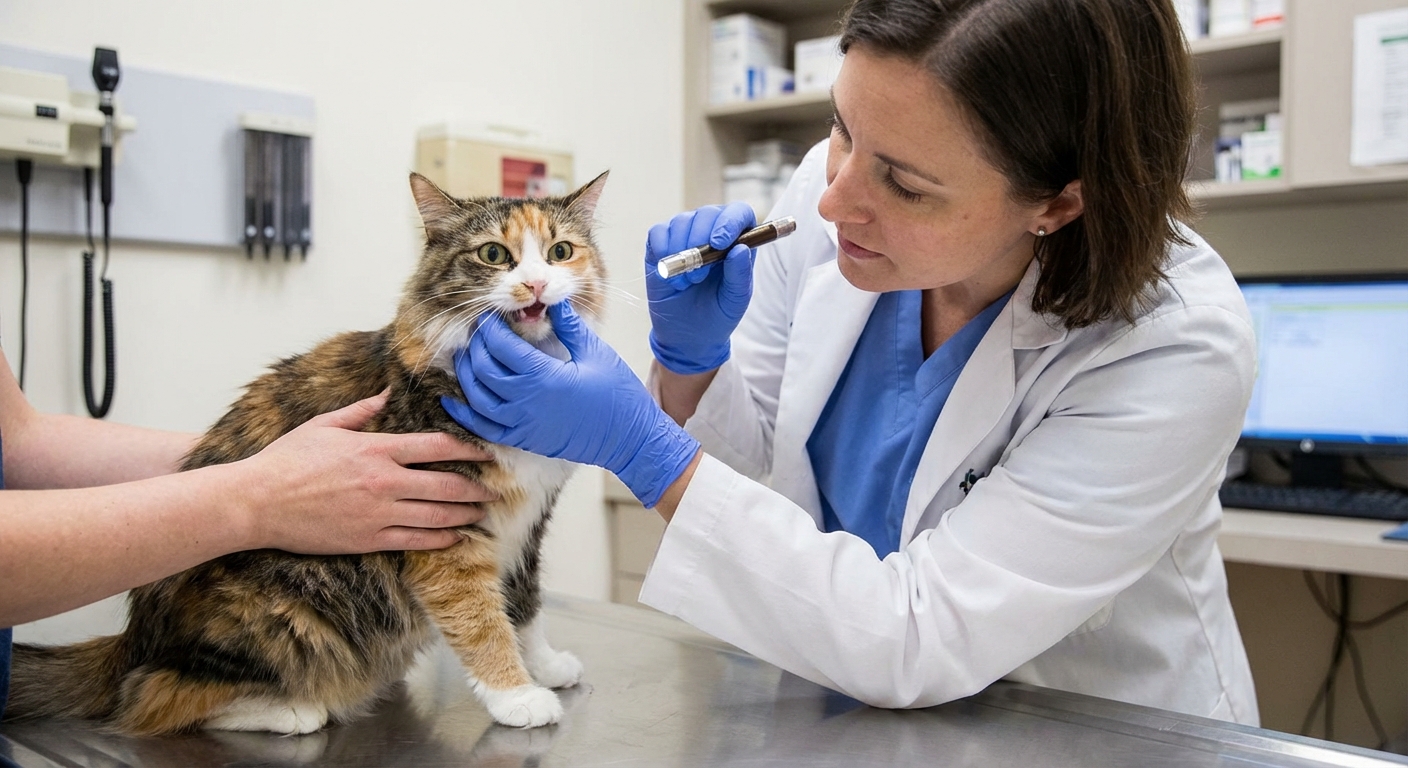
- Drooling, bad breath, pawing at the mouth, or chewing oddly (possible dental pain)
- Vomiting, appetite changes, weight loss, or increased vocalizing
- Licking that seems obsessive and hard to interrupt
What is “normal”? A few quick licks during a cuddle is usually no big deal. I start to pay closer attention when it is persistent daily sessions, it is difficult to redirect, or it comes with any health or behavior change.
If any of these are happening, it is worth scheduling a veterinary visit to rule out pain, skin issues, parasites, GI upset, or stress-related conditions.
How to respond
You do not have to tolerate constant licking to have a loving relationship. The trick is to redirect, not punish.
If you like it but want it limited
- Set a time limit: let your cat lick for a few seconds, then offer a chin scratch or a toy.
- Redirect with a treat puzzle or lickable cat treat on a mat, not on your skin.
- End the session calmly by standing up or gently moving your hand away.
If it bothers you
- Stay neutral: avoid big reactions that can reinforce attention-seeking.
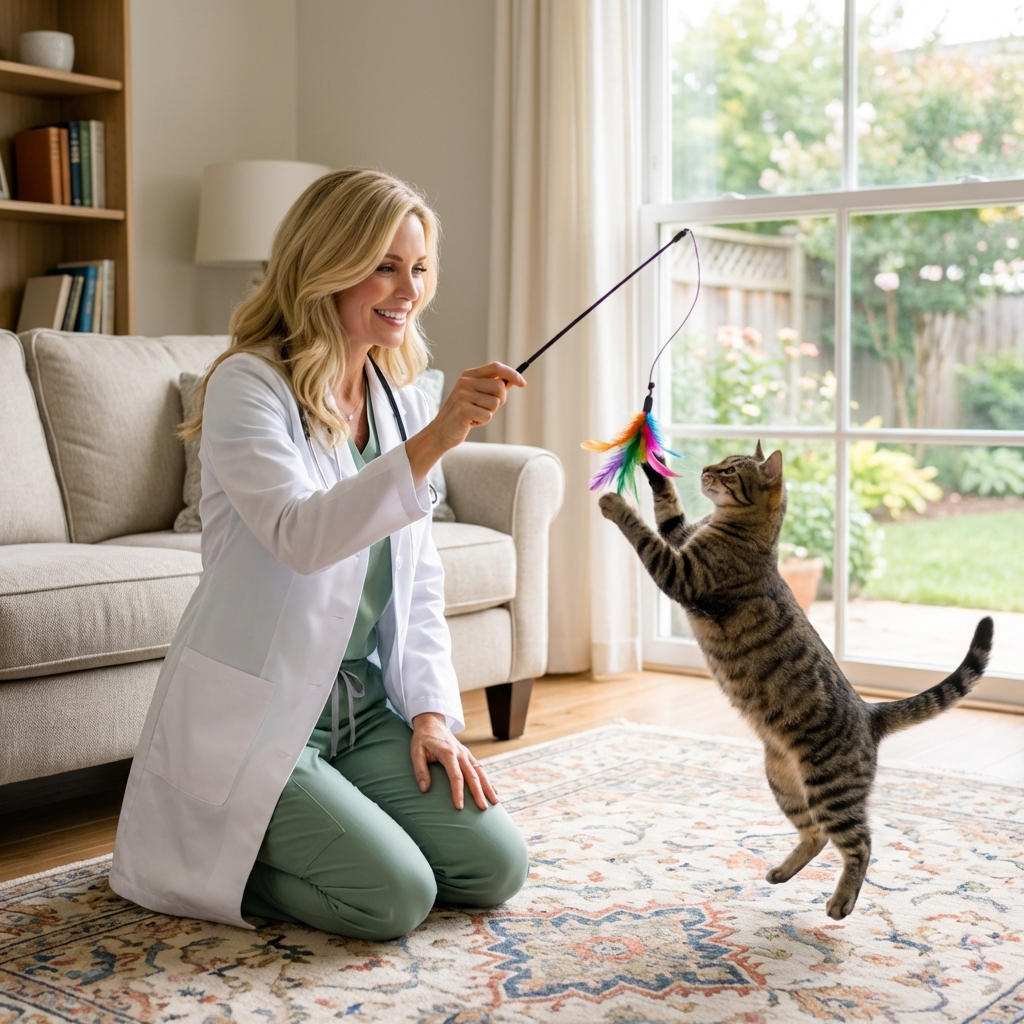
- Offer an alternative: wand toy play, a kicker toy, a cozy blanket, or a perch by the window.
- Use positive reinforcement: reward calm behavior that is not licking, like sitting beside you.
Avoid harsh deterrents: do not use punishment, and skip bitter sprays or strong scents on your skin. Many “deterrents” are irritating, and some can be unsafe for cats to ingest.
If licking is paired with biting
- Stop petting sooner and watch for early signals like tail flicking, skin rippling, or sudden stiffness.
- Switch to consent-based petting: pet briefly, pause, and continue only if your cat leans in.
- Add structured play daily to reduce pent-up energy that can spill into nippy behavior.
Reduce stress-driven licking
If your cat’s licking seems like comfort-seeking, focus on creating predictable calm.
- Keep routines steady: feeding times, play sessions, and quiet cuddle time.
- Increase enrichment: climbing spaces, window views, food puzzles, and short daily play.
- Provide safe zones: covered beds, cat trees, and rooms where the cat is not bothered.
- Consider pheromone support in stressful times, like moving or adding a new pet.
- Check the basics: enough litter boxes, clean boxes, easy access to water, and quiet feeding areas.
Special situations
Why does my cat lick my face?
Face licking is usually bonding plus “interesting taste.” If it is happening at night, it may also be a learned wake-up behavior. Try feeding later, adding a bedtime play session, and not rewarding the licking with immediate food.
Why does my cat lick my hair?
Hair can hold oils and scents that cats find fascinating. If your cat chews hair, be cautious. Swallowing hair can contribute to GI upset, and in rare cases it can add to blockage risk. True obstructions are more commonly linked to string-like items than normal hair, but it is still a habit worth addressing.
Why does my cat lick me then bite me?
This is commonly overstimulation or a playful “too much” moment. It does not mean your cat is mean. It means your cat needs clearer boundaries and more structured play outlets.
Why does my cat lick only one person?
Cats pick favorites for all sorts of reasons: who feeds them, who sits still, who smells familiar, or who respects their space. It can be simple preference.
When to talk to your vet
If licking is new, intense, or paired with other changes, a vet visit is a smart next step. In clinic, we often start with:
- A full physical exam, including a dental and skin check
- Questions about diet changes, flea prevention, stressors, and routines
- Possible testing based on symptoms (skin cytology, fecal testing, bloodwork)
It is always better to catch discomfort early than to wait until it becomes a bigger problem.
Bottom line
Most of the time, a cat licking you is a sign of trust, bonding, and comfort. If the licking becomes constant, intense, or comes with behavior or health changes, treat it as a clue. With a little observation and a few gentle redirects, you can keep the affection and reduce the irritation.