Wondering why your cat licks you? Learn the most common reasons—bonding, affection, stress relief, taste/scent, attention, or overstimulation—plus what t...
Article
•
Designer Mixes
Why Does My Cat Lick Me?

Shari Shidate
Designer Mixes contributor
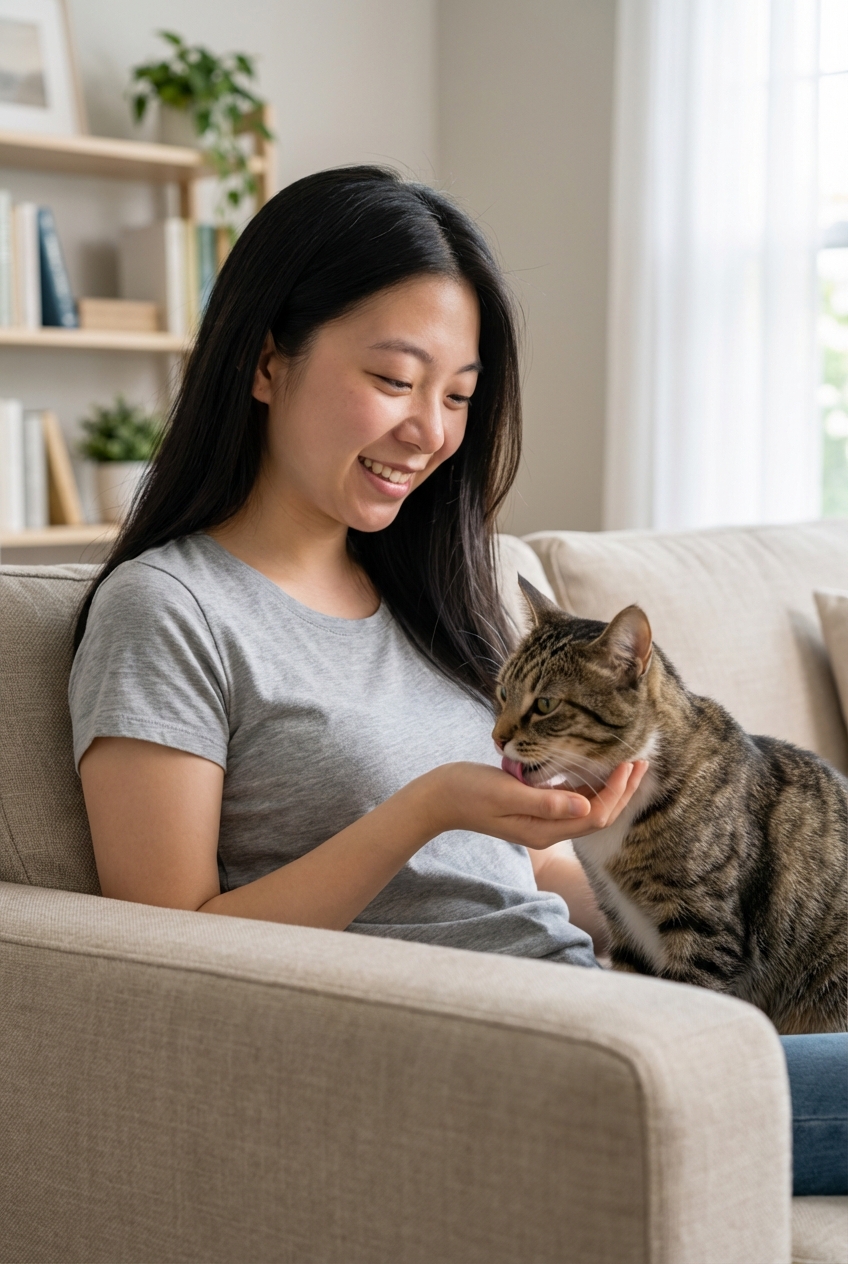
If you have ever been relaxing on the couch when your cat suddenly starts licking your hand, your arm, or even your face, you are not alone. As a veterinary assistant, I hear this question all the time: Why does my cat lick me? The sweet truth is that licking is often a normal, affectionate behavior, but it can also be your cat’s way of communicating stress, seeking attention, or responding to something on your skin.
Let’s walk through the most common reasons, what’s normal, what’s not, and how to respond in a way that supports your cat’s emotional and physical health. (This is general education, not a diagnosis. If you are worried about a sudden change, your vet is your best next step.)
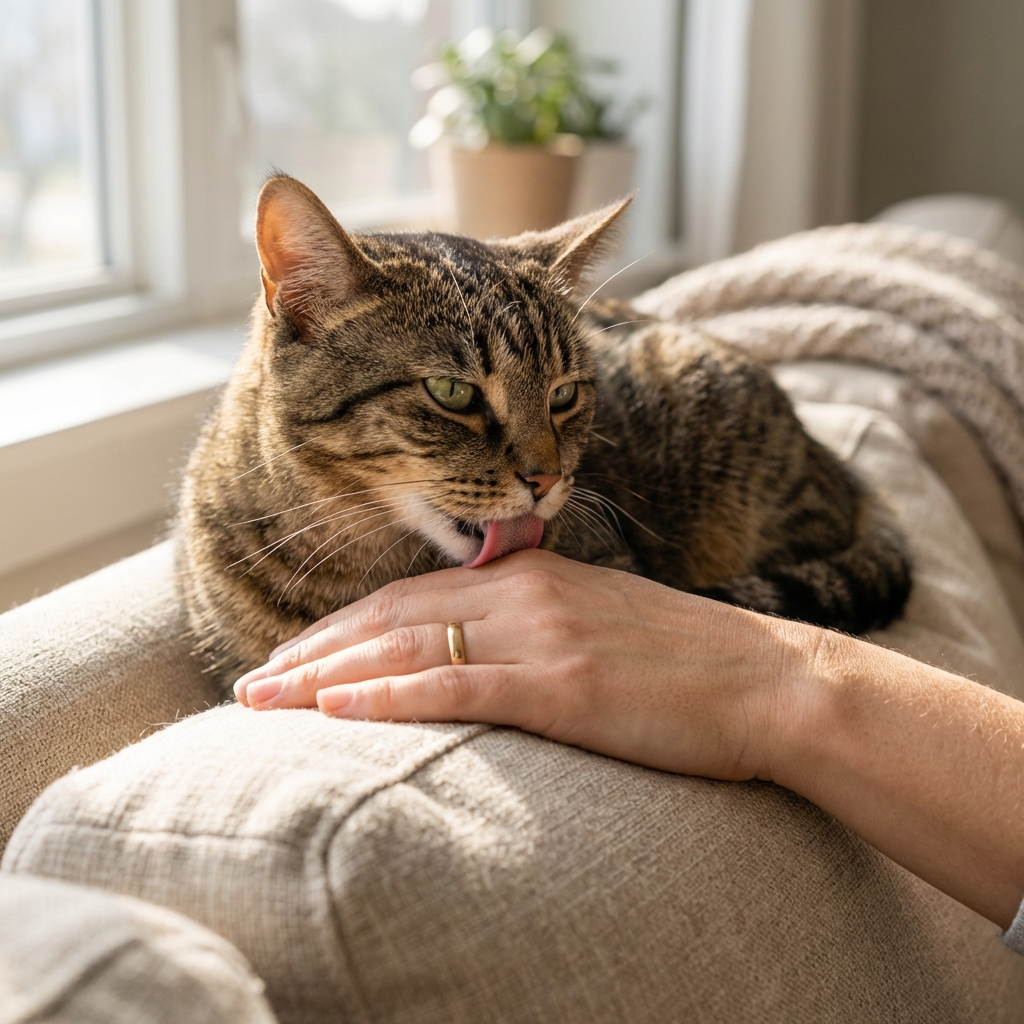
Simple answer: it’s communication
Cats rely more on body language, scent, and touch than we do. Licking can mean:
- Affection (you are part of the family)
- Social bonding (they are reinforcing connection)
- Self-soothing (they are calming themselves down)
- Attention-seeking (they learned licking gets a response)
- Grooming behavior (they are treating you like a cat friend)
The key is to look at the full picture: your cat’s posture, how intense the licking is, and whether other signs show up with it.
7 common reasons cats lick people
1) Social grooming (allogrooming)
Cats groom each other in bonded groups. This is called allogrooming. When your cat licks you, they may be treating you like a trusted companion. You will often see a relaxed body, slow blinks, and gentle licking.
2) Comfort and stress relief
Licking can have a self-soothing effect for some cats. If the licking happens more during changes like visitors, a move, schedule changes, or a new pet, it may be a coping strategy.
3) They like the taste or smell
Human skin can taste like salt from sweat, or carry appealing scents from lotions, soaps, cooking, or other pets. A cat’s sense of smell is highly sensitive, so tiny residues can be very interesting to them.
4) It works to get attention
If licking reliably gets petting, talking, laughing, or even a gentle “stop,” your cat may repeat it because it creates interaction. From your cat’s point of view, any response can be rewarding.
5) Bonding and scent mixing
Cats build a sense of safety by making their environment smell familiar. While cats primarily use facial glands (cheeks and head rubbing) for scent-marking, licking can still be part of social scenting by mixing scents during close contact. Some cats alternate licking with head-butting or cheek rubbing.
6) Overstimulation during petting
Some cats get overstimulated during petting and switch to licking or gentle nibbling. If the licking escalates quickly, watch for signs like tail flicking, skin rippling, ears turning sideways, or sudden restlessness.
7) Anxiety or compulsive patterns
If licking becomes frequent, intense, or hard to interrupt, it can be anxiety-driven or compulsive. This can happen alongside other stress behaviors like hiding, reduced appetite, overgrooming themselves, or litter box changes.

Is it normal?
Usually, yes. Gentle, occasional licking is a common social behavior in many cats, especially those that are comfortable and bonded with their people.
It is more likely to be normal when:
- The licking is gentle and short in duration
- Your cat’s body looks loose and relaxed
- There are no other new behaviors (no hiding, no aggression, no appetite changes)
- You can redirect them without a big reaction
Next, let’s look at when licking is telling you something more.
When it’s a red flag
Pay closer attention and consider a veterinary visit if licking is paired with any of the following:
- Sudden change in behavior or a new intense licking habit
- Overgrooming (bald spots, thinning fur, skin irritation)
- GI signs like vomiting, diarrhea, nausea, or appetite changes
- Signs of pain (hunched posture, sensitivity to touch, hiding)
- Increased vocalizing, restlessness, or nighttime anxiety
- Compulsive patterns that are difficult to interrupt
Quick rule-outs checklist (especially if this is new): itch or skin irritation (allergies, fleas), dental disease, nausea, pain or arthritis, and stress. Excessive licking can sometimes be linked to medical issues as well as behavior. A good exam helps you avoid guessing.
Is it safe?
For most healthy adults, occasional licking is generally low risk, but it is still smart to use basic hygiene. Cat mouths can carry bacteria (for example, Pasteurella), and infection risk is much higher with bites or scratches than with licking.
Avoid licking on:
- Open cuts, healing wounds, or surgical sites (licking can introduce bacteria and slow healing)
- Your face if you have acne lesions or compromised skin
- Lotions or medicated creams on your skin (many ingredients are not pet-safe)
Use extra caution if:
- You are immunocompromised
- You are pregnant (general hygiene matters. Toxoplasmosis risk is mainly from litter and soil, not from licking, but it is still reasonable to avoid saliva on broken skin and wash hands regularly)
- There are small children in the home who may have frequent hand-to-mouth contact
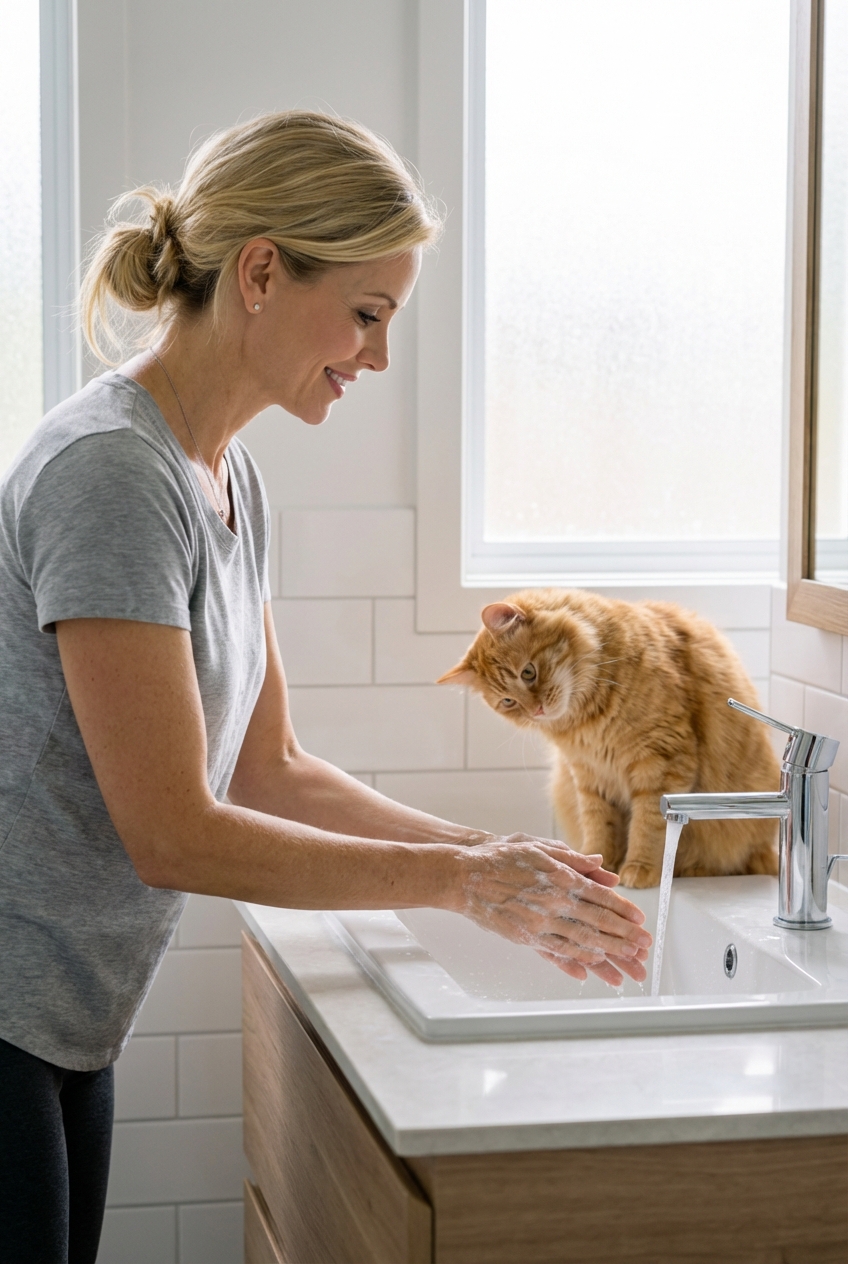
Practical rule: if you would wash your hands before handling food, it is a good idea to wash after a licking session too.
How to respond kindly
If you enjoy the licking and it’s gentle, you can let it be a bonding moment. If you would rather not be licked, you can set kind boundaries. Cats learn best with calm consistency.
Simple steps
- Stay neutral. Avoid big reactions that can reward the behavior.
- Redirect. Offer a wand toy, toss a soft ball, or start a short play session.
- Offer an alternative. Give your cat a cozy blanket, a grooming brush session, or a lick-safe enrichment option like a small amount of wet food on a lick mat.
- Reinforce what you want. When your cat sits calmly or rubs you without licking, reward with petting or a treat.
- Reduce stressors. More vertical space, predictable routines, and daily play can lower anxiety-driven licking.
If licking is your cat’s way of self-soothing, redirection plus a calmer environment works better than punishment every time.
Before your vet visit
If you plan to call or book an appointment, it helps to jot down: when the licking happens (time of day), what seems to trigger it, how long it lasts, whether it escalates to biting, and any changes in appetite, litter box habits, skin, or energy. A short phone video can be useful too.
Quick FAQs
Why does my cat lick me and then bite me?
This often happens with overstimulation. The licking starts as grooming or affection, then the nervous system hits a “too much” threshold. Watch for tail flicking or tense body posture and pause petting earlier.
Why does my cat lick my hair?
Your hair can hold scents from shampoo, sweat, or other pets. Some cats also enjoy the texture. If your cat is ingesting hair or grooming products, gently redirect to avoid tummy upset.
Why does my cat lick me at night?
Nighttime licking can be attention-seeking, boredom, or anxiety. Try a short play session before bed, a small meal, and a consistent sleep routine.
Is this the same as licking objects?
Not always. Some cats lick people for social reasons, while frequent licking of walls, floors, or fabric can point to nausea, stress, or (less commonly) pica. If your cat is obsessively licking non-food surfaces, it is worth mentioning to your vet.
The bottom line
Most of the time, a cat licking you is a sign of connection, comfort, or curiosity. Your job is to notice context and intensity. Gentle, occasional licking is normal. Sudden, excessive, or hard-to-interrupt licking deserves a closer look, especially if other behavior or health changes show up.
If you are ever unsure, bring it up at your next vet visit. A quick conversation can help you determine whether what you are seeing is affectionate grooming or a signal that your cat needs more support.
References
- International Cat Care. “Cat communication and behaviour” and related owner guides (icatcare.org).
- Overall, K. L. Clinical Behavioral Medicine for Small Animals. Elsevier.
- AAFP and ISFM Feline Environmental Needs Guidelines (Journal of Feline Medicine and Surgery).