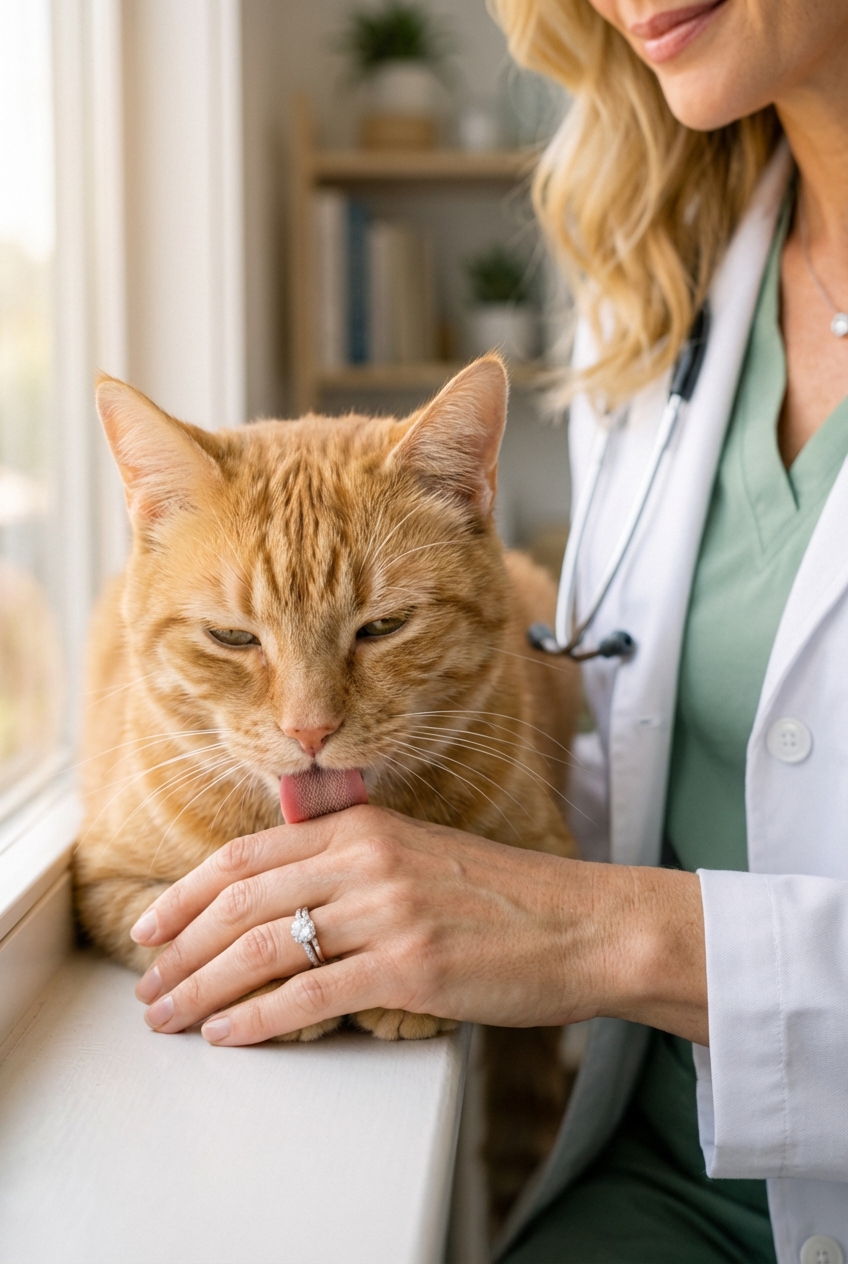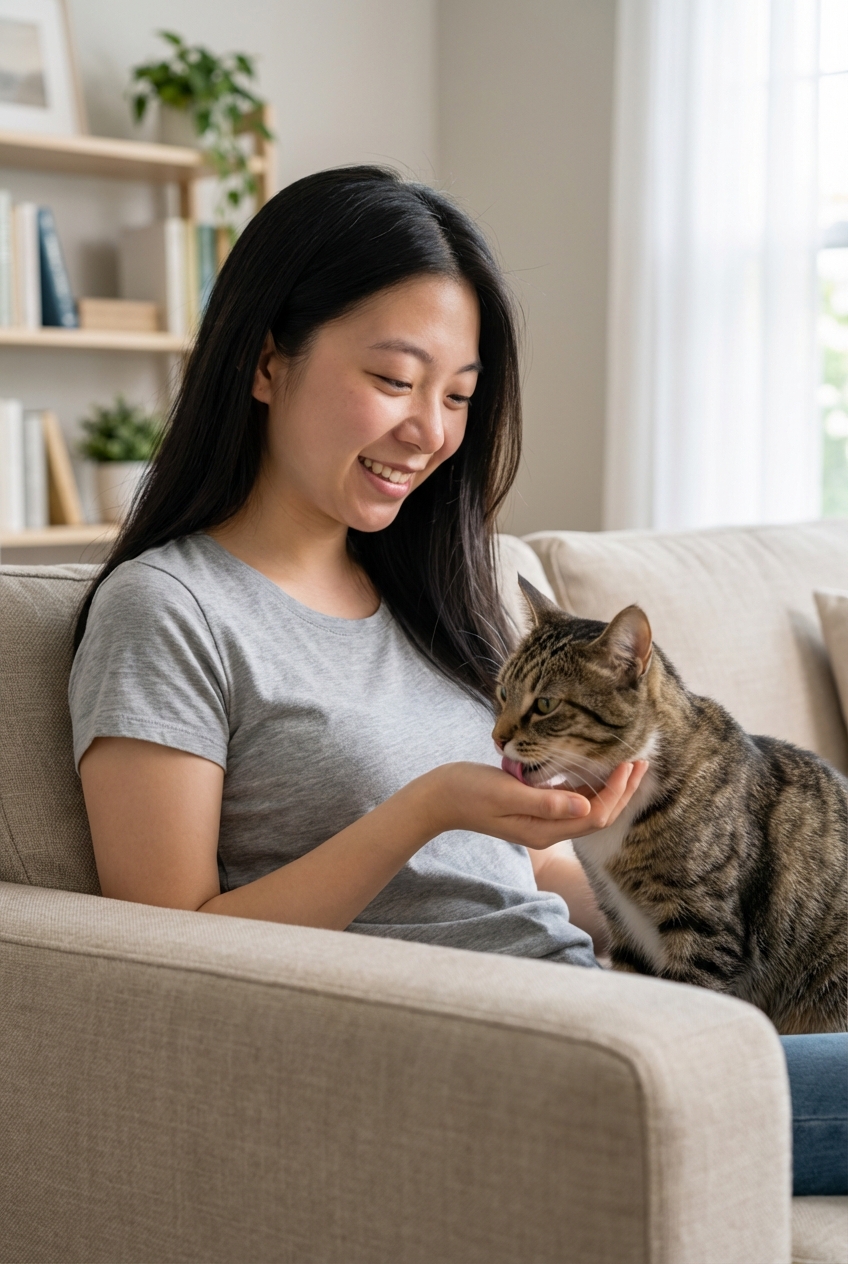
Wondering why your cat licks you? Learn the most common reasons—bonding, affection, stress relief, taste/scent, attention, or overstimulation—plus what t...
Article
•
Designer Mixes
Why Does My Cat Lick Me?

Shari Shidate
Designer Mixes contributor
If your cat licks your hand, arm, or even your face, it can feel like a tiny, sandpapery mystery. As a veterinary assistant, I hear this question all the time: “Is my cat kissing me, grooming me, or trying to tell me something?” The answer is often yes to all three. Licking is a normal feline behavior that can signal affection, social bonding, comfort, and sometimes stress or a medical need.
Let’s decode what your cat may be saying, and when that sweet (or intense) licking deserves a closer look.
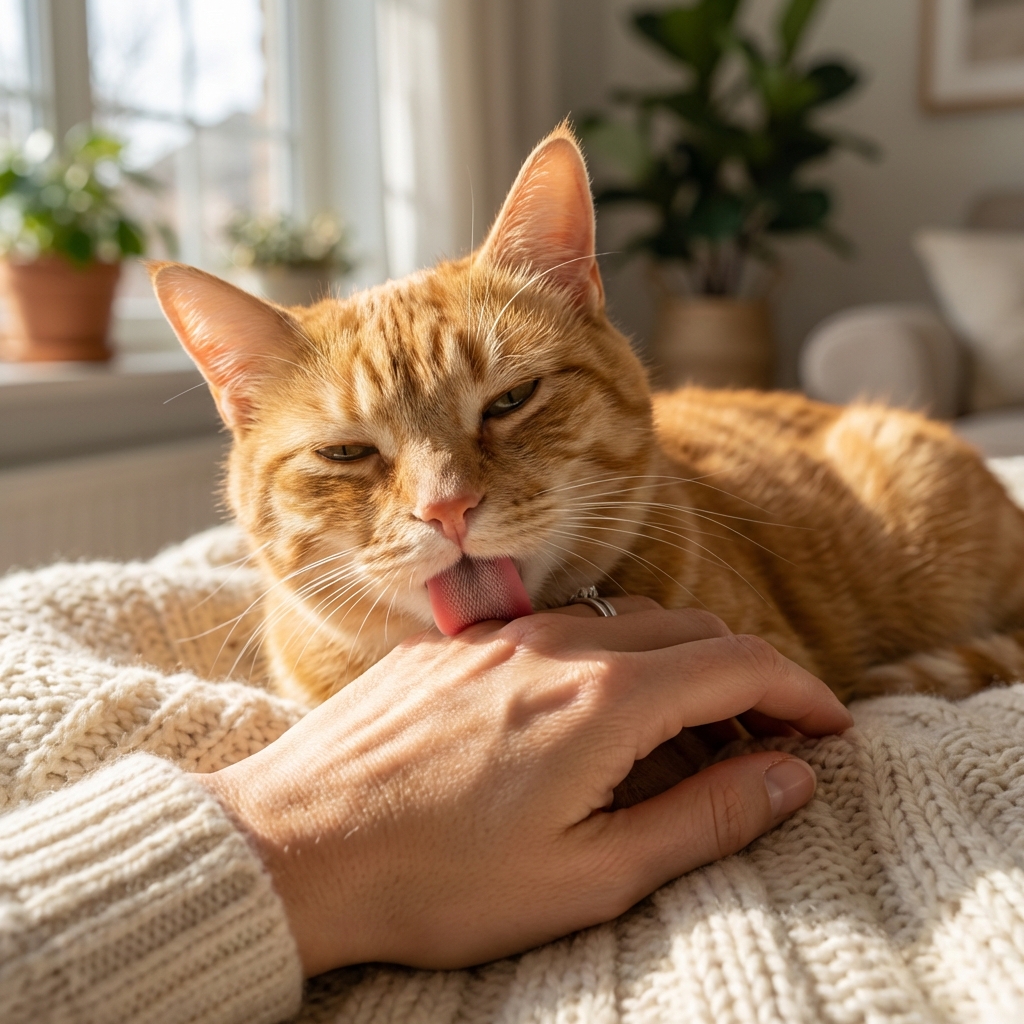
Most common reasons cats lick people
1) Affection and social bonding
One of the simplest explanations is also the nicest: your cat likes you. In cat social life, grooming is a bonding behavior called allogrooming , where cats lick each other to help maintain social relationships.
When your cat licks you, you may be getting the “you are family” treatment.
2) You smell or taste interesting
Our skin can carry traces of:
- Salt from sweat
- Lotion or sunscreen
- Food scents from cooking
- Other pets
Cats explore the world with scent, and taste is part of that. Some cats will lick more after you shower, after you apply lotion, or after you pet another animal.
3) Grooming you as “maintenance”
Even if it starts as affection, some cats lick as if they are genuinely grooming you. This is especially common when your cat is relaxed, purring, and settled in your lap.
In multi-cat homes, you might notice some cats groom more than others, and you have been added to the groom list.
4) Comfort-seeking and self-soothing
Licking can be calming for cats. If your cat licks you during thunderstorms, when guests arrive, or at bedtime, it may be using the rhythm of licking to regulate anxiety and feel safe.
Some cats also knead and lick together, which can be linked to kittenhood comfort behaviors.
5) Attention, habit, and learned behavior
Cats repeat what works. If your cat licks you and you respond by talking, petting, or laughing, that behavior can become a reliable way to get your attention.
Over time, licking can turn into a habit, especially in cats that crave interaction or have a predictable routine around cuddles.
What licking style can mean
Context matters. A gentle lick during cuddling is different from intense, repetitive licking that seems hard to interrupt.
- Slow, occasional licks with soft body language: usually affection or social grooming.
- Licking followed by a small nibble : can be playful, overstimulated affection, or a “that’s enough petting” signal.
- Rapid, repetitive licking that escalates: can be anxiety, compulsive behavior, or a sign your cat is overstimulated.
- Licking one specific spot on you repeatedly: sometimes scent-related, sometimes a habit, and occasionally a response to a smell like topical medication or lotion.
A helpful rule: if it is occasional and your cat seems relaxed, it is usually social. If it is new, intense, or hard to interrupt, it is worth looking deeper.
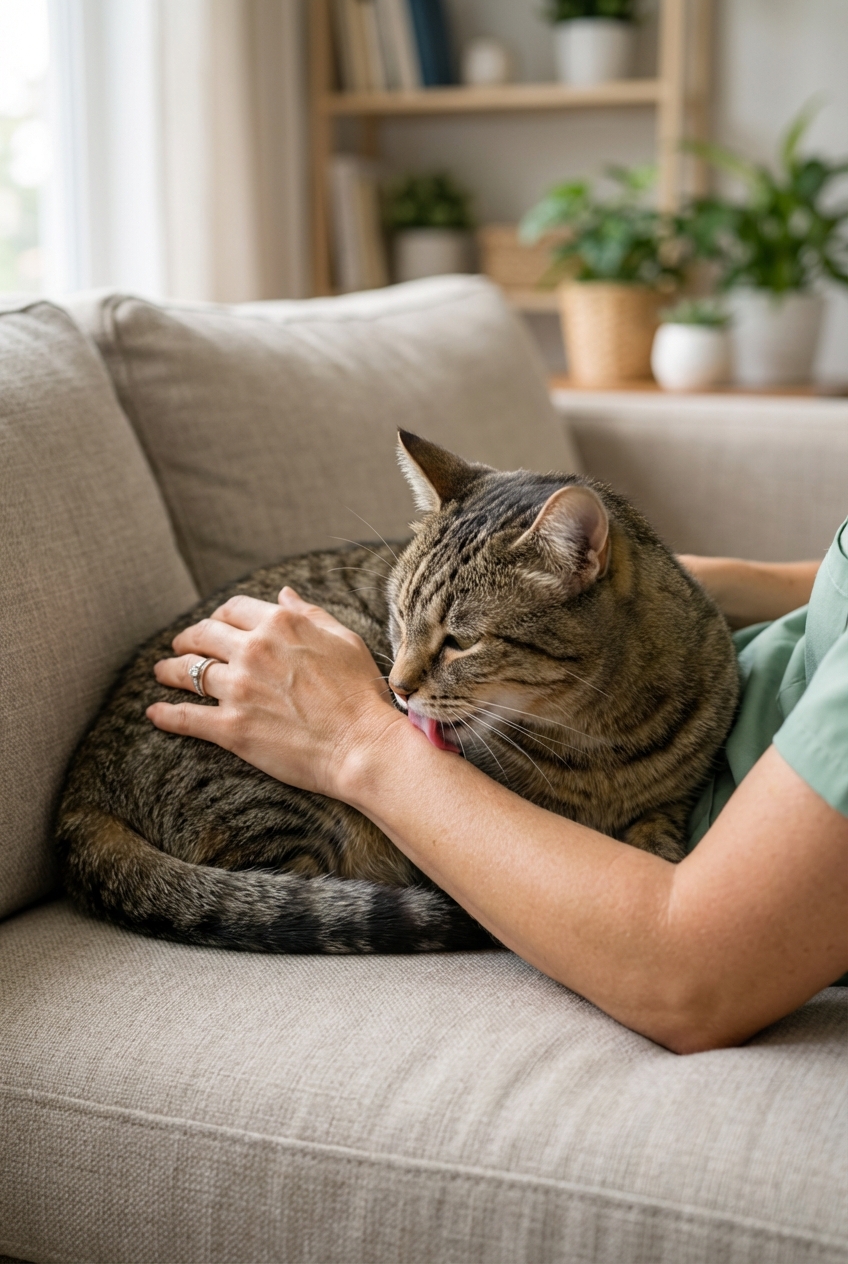
When licking might be a problem
Most licking is normal, but there are situations where I recommend paying closer attention and involving your veterinarian.
Red flags to watch for
- Sudden increase in licking behavior (especially in an adult cat that did not do this before)
- Licking seems frantic, compulsive, or hard to interrupt
- Your cat is also overgrooming themselves (bald spots, thinning fur, scabs)
- Other stress signals such as hiding, appetite changes, more vocalizing, litter box changes, or aggression
- Signs of nausea or stomach upset such as lip-smacking, drooling, swallowing repeatedly, vomiting, or licking unusual surfaces (this can also be seen with stress or other medical issues)
Possible underlying causes
Excessive licking can be associated with:
- Stress or environmental change
- Skin discomfort (allergies, fleas, dermatitis)
- Pain (including dental disease, arthritis)
- Gastrointestinal upset
- Compulsive behavior patterns
If you are seeing any red flags, it is worth booking a checkup. Many medical issues in cats are subtle at first, and early intervention makes a big difference.
When to seek urgent help
Contact a veterinarian promptly if your cat is drooling a lot, vomiting repeatedly, not eating, acting unusually lethargic, or if a sudden behavior change comes with obvious illness signs.
Is it safe to let your cat lick you?
In general, occasional licking is fine for healthy adults. Still, it helps to be realistic about germs and skin irritation.
Practical safety tips
- Avoid letting cats lick open wounds. Cat mouths can carry bacteria, and this matters most when skin is broken.
- Wash your hands if your cat licks you and you plan to handle food.
- Be cautious around face licking, especially near your mouth, nose, and eyes.
- Use extra caution for higher-risk people such as young children, older adults, pregnant people, and anyone with a weakened immune system. If that applies to you, ask your healthcare provider about safe pet contact practices.
Also, your skin matters. A cat’s tongue has tiny barbs that can irritate sensitive skin. If you get redness or a rash, it is okay to set boundaries.
Important: toxic topical products
Because cats lick what is on your skin, be especially careful with topical medications and medicated creams. Some are dangerous to cats even in tiny amounts. Keep cats away from skin treated with:
- Minoxidil (hair growth products)
- Prescription NSAID creams such as diclofenac
- Hormone creams (estrogen or testosterone)
If you use these, cover the area, prevent contact until it is fully absorbed and protected, wash hands after applying, and store products securely. If you suspect your cat licked any of these, contact your veterinarian or a pet poison helpline right away.
How to respond if licking is too much
You do not have to “endure” licking to prove you love your cat. You can keep the bond and still reduce the behavior.
Avoid punishing licking. Scolding or swatting can increase anxiety and make the behavior worse or create new stress behaviors.
Gentle ways to set boundaries
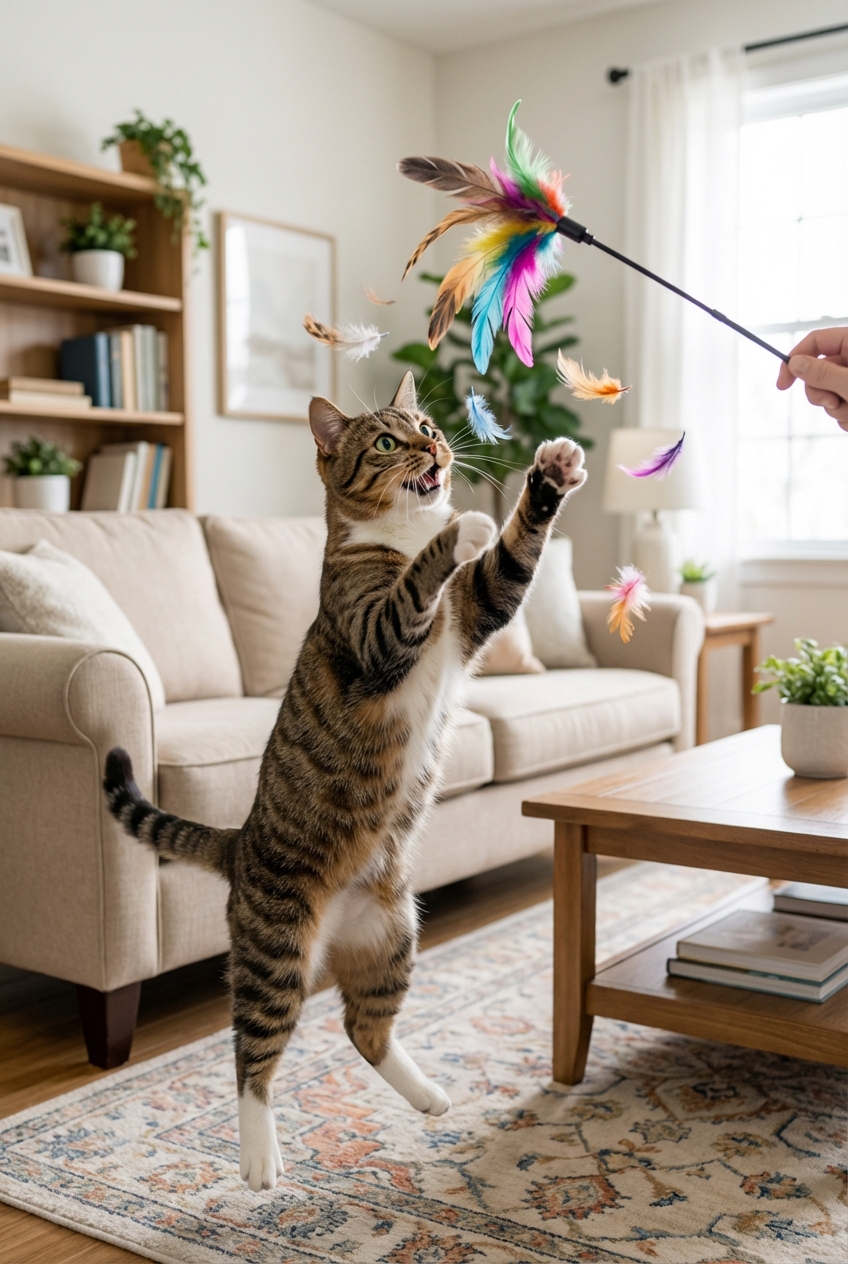
- Redirect: Offer a wand toy, treat puzzle, or a quick play session.
- Reward calm cuddling: Pet and praise when your cat is relaxed without licking.
- Move away calmly: If licking starts, quietly stand up or shift your arm without making it a big event.
- Create soothing routines: Predictable mealtimes, play, and cozy resting spots reduce stress-driven licking.
- Check your products: If you notice licking after lotion, switch to an unscented option. Make sure anything on your skin is pet-safe, and avoid exposing cats to medicated topicals.
Enrichment helps
- Daily interactive play (5 to 10 minutes, 1 to 2 times a day)
- Window perches for “cat TV”
- Scratching posts in key areas
- Food puzzles or scattered feeding
Quick takeaway
Most of the time, licking is a normal sign of connection: affection, social bonding, comfort, or a learned way to get your attention. If the licking becomes excessive, sudden, or paired with other behavior or health changes, it is worth investigating with your vet.
Your cat’s tongue can be a love language, a self-soothing tool, or a subtle signal that something is off. Watching the pattern and the context is the best way to understand what your cat is communicating.
If you are unsure what is driving the behavior, track when it happens, how long it lasts, and what else has changed recently. Those details can help your veterinarian narrow down whether this is normal bonding, stress, or a medical issue.