Cats often follow you to the bathroom for bonding, curiosity, scent, and routine. Learn fun facts, when clinginess may signal illness, and gentle tips for pr...
Article
•
Designer Mixes
Why Does My Cat Follow Me Into the Bathroom?

Shari Shidate
Designer Mixes contributor
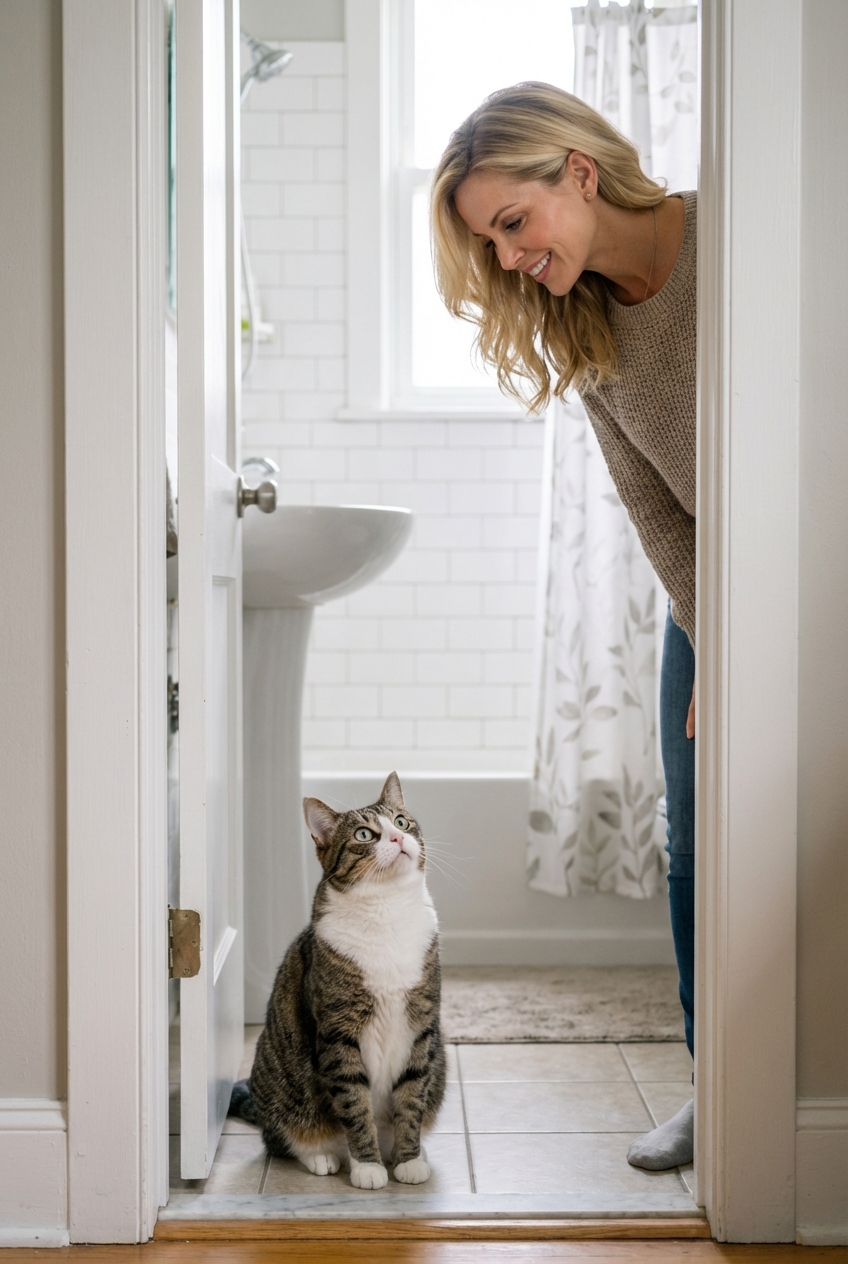
If you have ever tried to close the bathroom door and heard immediate scratching, meowing, or the dramatic body flop right outside, you are not alone. As a veterinary assistant, I can tell you that this is a common concern I hear about. And most of the time, it is completely normal.
Your cat is not doing it “just because.” Cats follow us into small, quiet spaces for a handful of very cat-like reasons: safety, curiosity, social bonding, routine, and yes, sometimes a little anxiety.
The short answer
Your cat follows you into the bathroom because you are part of their territory and their social world. Bathrooms also tend to be interesting places: enclosed, familiar, full of scents, and often associated with you giving them attention.
Common reasons cats do this
1) They feel safest when they can see you
Cats are both hunters and, in the right situation, vulnerable animals too. Many cats prefer to keep track of their favorite human because your presence signals security. A closed door blocks access and information, which can feel unsettling.
Some cats also learn that bathroom time is “quiet time” and you are less likely to be distracted by phones, chores, or visitors. In other words, it is prime bonding time.
2) Curiosity is a real feline superpower
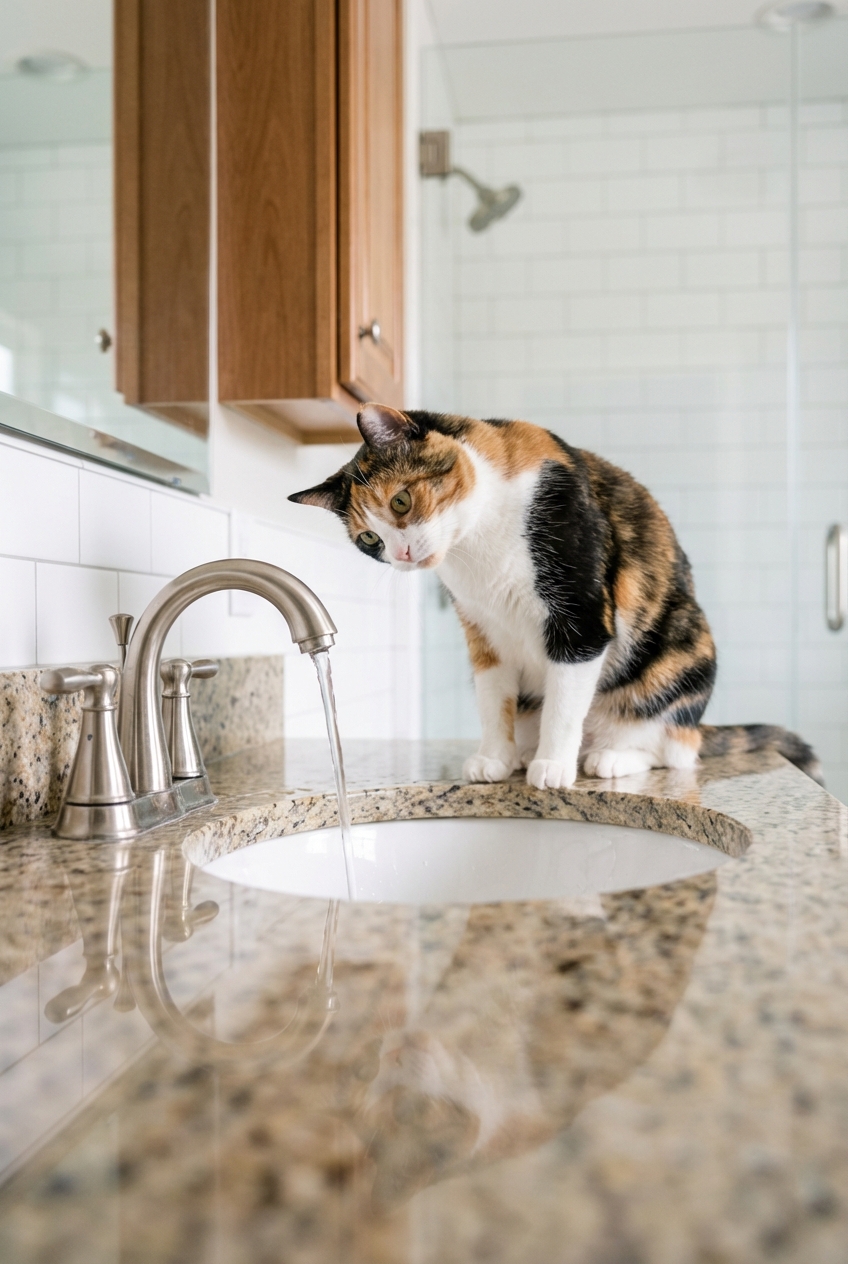
Cats are built to investigate: new sounds, new smells, running water, cabinets that open, towels that move. Bathrooms are full of sensory triggers. Even if nothing exciting happens, the space changes throughout the day, and your cat wants updates.
3) They like routines and patterns
Cats thrive on predictability. If your morning always includes a bathroom stop, your cat may have made it part of their daily schedule. Some cats even pair it with something rewarding: pets, conversation, or you washing hands and then feeding them.
4) They want access, not necessarily attention
Some cats follow you in and then ignore you completely. That does not mean you were wrong about being “the reason.” It just means they wanted the door open, the option to leave, and the ability to monitor their environment. Many cats simply dislike closed doors because closed doors change territory access.
5) Warmth, scent, and comfort
Bathrooms often have warm surfaces, soft bathmats, and a concentrated “you” scent from laundry and towels. Cats are scent-oriented and comfort-seeking. If your cat lounges on the bathmat while you are in there, they may be combining comfort with companionship.
6) Mild separation stress or clinginess
Sometimes bathroom following is a sign your cat struggles when they cannot access you. This can be more noticeable after a move, a new pet, schedule changes, or a household stressor. It can also happen with single cats who rely heavily on one person for enrichment.
Following by itself is not a diagnosis. But if it comes with other signs, it is worth paying closer attention.
7) Other pets (or life stage) can play a role
In multi-cat homes, a cat may follow you to get one-on-one time or to avoid another pet, especially if the bathroom feels like a temporary “safe room.” And in some older cats, increased following can show up alongside age-related changes like vision or hearing loss, cognitive changes, or discomfort. A new pattern is always worth noting.
When it might be a concern
Most bathroom following is harmless. Consider talking to your veterinarian if you notice any of the following changes, especially if they are new or escalating:
- Vocalizing intensely when you close the door, especially yowling or panic-like meows
- Destructive behavior at the door (scratching until nails split, chewing, tearing trim)
- House-soiling or litter box avoidance
- Over-grooming, hair loss, or stress-related skin issues
- Sudden clinginess paired with appetite changes, hiding, or irritability
- Increased thirst or urination (cats that are thirsty sometimes seek out sinks or tubs, but location preference alone is not diagnostic, and thirst and peeing changes always deserve a vet check)
Cats are masters at subtle symptoms. A behavior shift can be stress-related, but it can also be an early clue that something medical is going on.
How to respond without encouraging bad habits
Give your cat a positive “job” outside the door
If you would prefer privacy sometimes, create a predictable alternative:
- Place a cozy bed or blanket just outside the bathroom.
- Offer a food puzzle or a small treat only when you close the door.
- Use a wand toy session before your shower, then let them settle.
This works best when it is consistent. Cats learn patterns quickly.
Add enrichment during the day
Clingy behavior often improves when a cat’s needs are met through play, climbing, and hunting-style feeding.
- Two to three short play sessions daily (5 to 10 minutes) can make a big difference.
- Try a window perch, cat tree, or shelves if you have the space.
- Rotate toys weekly so they stay interesting.
Avoid accidentally rewarding door drama
If your cat screams and you immediately open the door, they may learn that yelling works. If it is safe to do so, wait for a quiet moment before opening the door.
One exception: if your cat seems truly panicked, is hurting themselves at the door, or is escalating fast, do not “tough it out.” Focus on safety first, then talk with your veterinarian about stress support.
Skip punishment
It is okay to set boundaries and privacy routines. Just avoid scolding or spraying water, which can increase anxiety and make the behavior worse.
Consider pheromones for stress
For cats who seem anxious, feline pheromone diffusers may help some households. They are not magic, but they can be a useful support alongside routine and enrichment.
Bathroom safety checklist
If your cat insists on joining you, a few simple precautions can prevent common accidents:
- Keep toilet lids down to reduce drinking from the bowl and lower the risk of accidents.
- Secure medications in closed cabinets. Many human medications are dangerous for cats.
- Watch for strings and hair ties, which can cause intestinal blockages if swallowed.
- Be careful with cleaners. Let surfaces dry before your cat walks on them.
- Check the washer and dryer if your laundry area is nearby. Cats love warm, enclosed spaces.
The bottom line
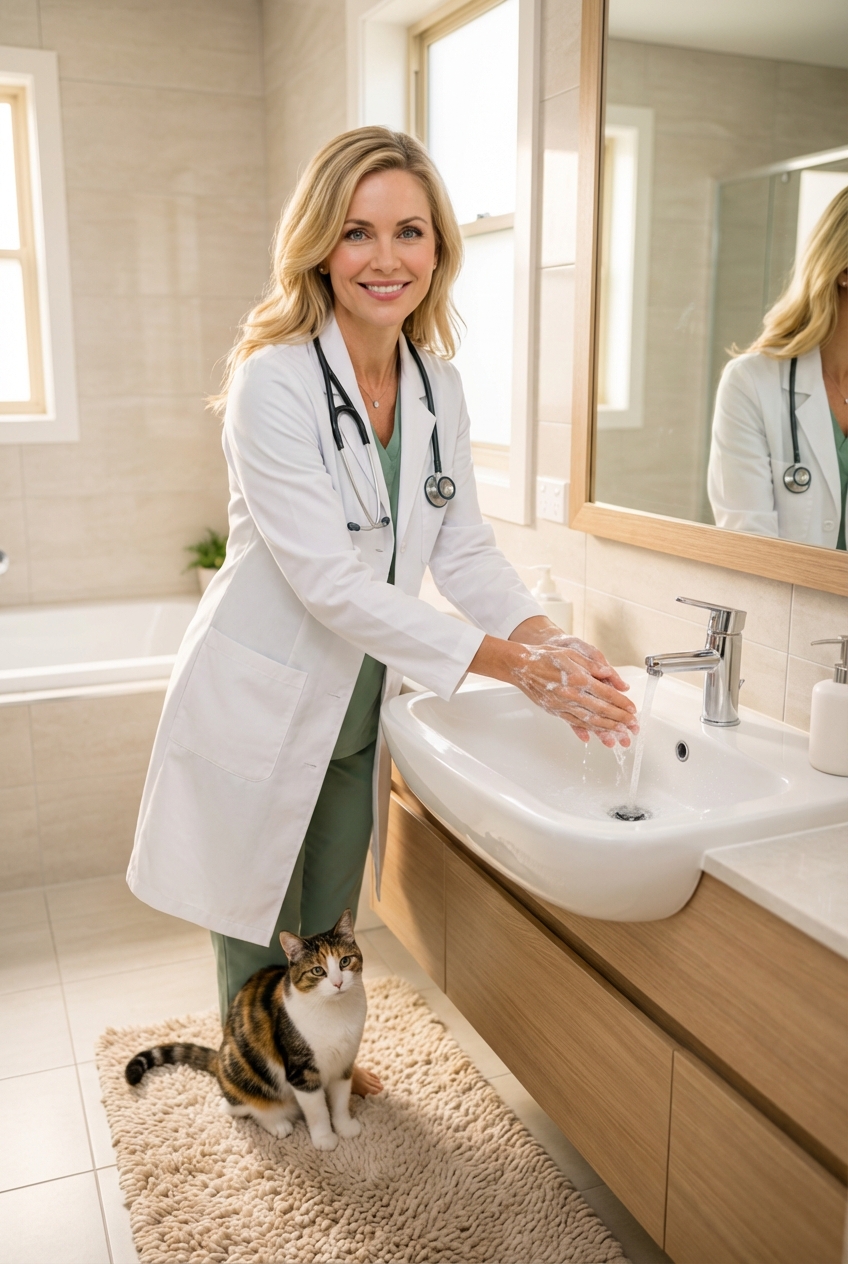
Your cat follows you into the bathroom because you are their trusted person, and the bathroom is a small, interesting, familiar space. For most cats, it is a normal blend of affection, curiosity, and routine.
If the behavior suddenly becomes intense or comes with other changes like appetite shifts, litter box issues, increased thirst or urination, or destructive anxiety, it is worth checking in with your veterinarian. You know your cat best, and you never have to guess alone.