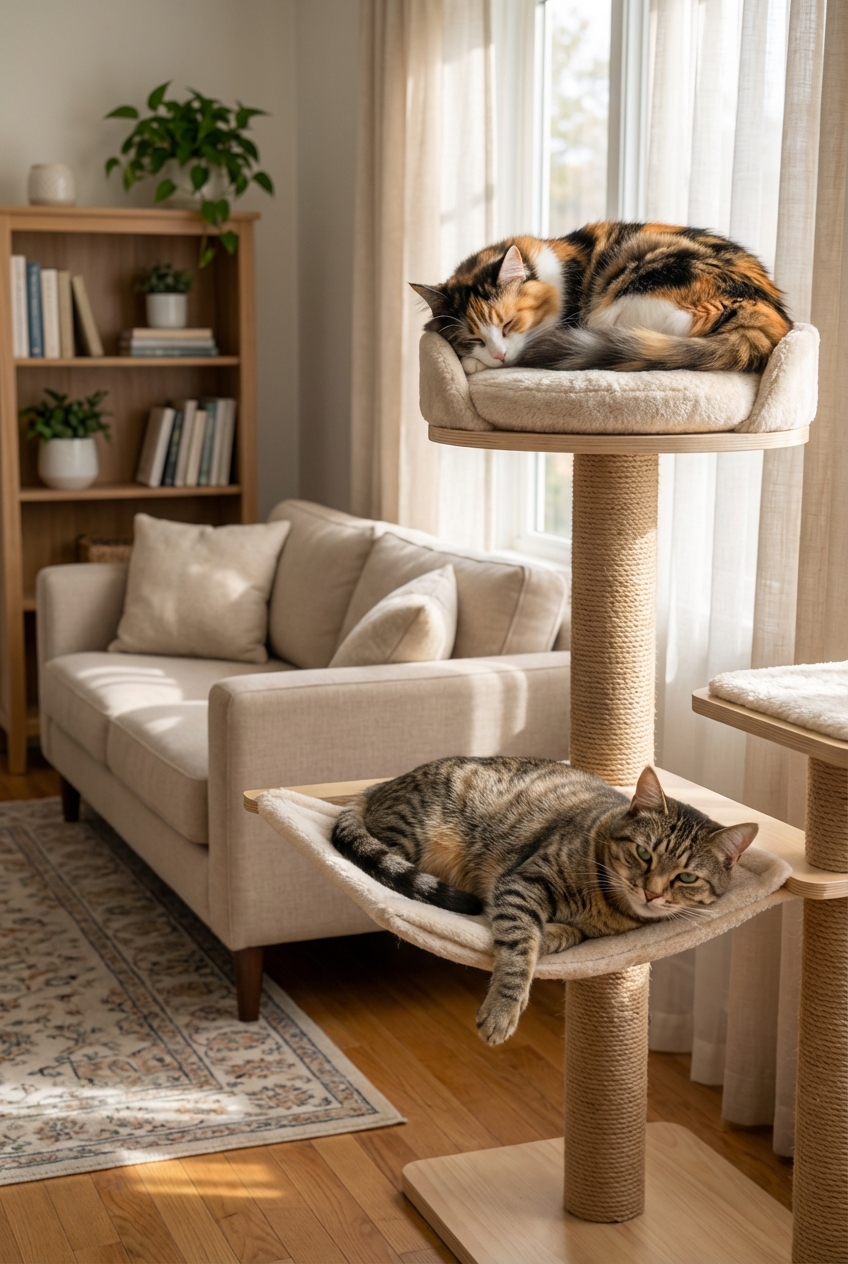
Tension between cats can escalate fast. Learn the difference between play and conflict, common causes like pain or redirected aggression, and how to separate...
Article
•
Designer Mixes
Why Does My Cat Bite My Other Cat’s Neck?

Shari Shidate
Designer Mixes contributor
If you have ever glanced over and seen one cat gripping another cat’s neck with their teeth, it can be alarming. Sometimes it looks like a fight. Sometimes it looks… weirdly calm. The truth is, neck biting can be totally normal feline communication, or it can be a red flag that the relationship is getting tense.
I like to start with two simple questions: What happens right before the bite? and What happens right after? Those details usually tell us whether you are seeing play, resource-related tension, mating-related behavior, or stress.
Quick note: This article is educational and not a substitute for veterinary care. If you are seeing injuries, sudden behavior changes, or escalating fights, involve your veterinarian sooner rather than later.
What neck biting means
Cats use their mouths the way we use hands. A neck bite can be a way to control movement, an invitation to wrestle, or a clear “back off” message. The neck is also a sensitive spot, so biting there can quickly stop a chase or freeze the other cat in place.
Common meanings include:
- Play wrestling: Many cats practice hunting skills together. Neck bites mimic how cats subdue prey.
- Overstimulation: One cat gets too excited and the bite intensity escalates.
- Social tension around space or resources: A more confident cat may use a neck bite to move the other cat away from a doorway, a bed, you, or a favorite perch.
- Mating behavior: In intact cats, males often bite a female’s neck during mounting. Spayed or neutered cats can still show mounting and neck gripping due to arousal, habit, or stress.
- Conflict: If one cat is fearful or cornered, neck biting can be part of a real fight.
Play vs bullying
Here is a quick, practical way to tell the difference at home. You do not need to be a behavior expert, you just need to watch body language.
Signs it is likely play
- They take turns chasing and “winning.”
- The cat being bitten stays engaged and comes back for more.
- You see loose, bouncy movement rather than stiff, tense bodies.
- Minimal vocalization. A tiny squeak can happen, but it does not escalate.
- No fur flying, no scratches, no punctures.
Signs it may be bullying or true conflict
- One cat consistently initiates and the other consistently tries to leave.
- The “target” cat hides more, skips meals, or stops using the litter box normally.
- Hissing, growling, screaming, or loud yowling during interactions.
- Stiff posture, ears pinned back, dilated pupils, tail thrashing.
- Clumps of fur, scabs, bite marks, or swelling that could become an abscess over the next several days.
If the cat being bitten cannot escape, that is not play. Healthy play always has an off switch and a way out.
Common reasons for neck biting
1) Play that got too intense
This is the number one cause I see in multi-cat homes. The cats start with chasing and wrestling, and then one cat gets overstimulated and clamps down harder than intended.
What you can do today:
- Add two daily play sessions (5 to 10 minutes) using a wand toy to drain energy in a positive way.
- End play on a calm note with a small snack or meal to mimic “hunt, catch, eat.”
- Interrupt escalating play with a cheerful distraction (toss a toy, start a treat scatter). Avoid yelling, which can increase stress.
2) Tension around space or resources
Cats do not always live in a true “pack” with a clear hierarchy, but they absolutely do control space and access. Neck biting can be a way to move the other cat away from a doorway, a cat tree, you, or a favorite sleeping spot.
Common triggers: one litter box, one cat tree, one food station, small living spaces, or a new cat in the home.
What helps:
- Use the “one per cat, plus one extra” rule for litter boxes.
- Feed cats in separate stations, ideally out of direct line of sight.
- Add vertical territory: cat trees, shelves, or window perches to reduce hallway showdowns.
3) Redirected aggression
This is sneaky and very real. A cat sees something stressful like an outdoor cat, a dog, construction noise, or even a sudden smell, and then takes it out on the nearest cat. Neck biting can happen fast.
Clues: episodes happen near windows, after loud noises, or around a specific trigger.
What helps: block sightlines to outdoor cats, use frosted window film on lower panes, and discuss pheromone diffusers with your veterinarian.
4) Mating-related behavior
If one or both cats are intact, neck biting can be part of sexual behavior. Even in fixed cats, you might see mounting and neck biting due to excitement, stress, or learned habit.
What helps: spay and neuter often reduces hormonally driven behaviors and can lower conflict overall, but some cats may still do it for non-hormonal reasons.
5) Pain or illness
When a cat is hurting, they often become less tolerant. A playful nip from a housemate can trigger a stronger bite response. Dental pain, arthritis, skin allergies, and ear infections can all shorten a cat’s fuse.
Consider a vet visit if: the behavior is new, suddenly worse, or paired with hiding, appetite changes, grooming changes, or litter box changes.
What to do in the moment
When cats are locked into a tense interaction, the goal is safety and de-escalation.
- Do not grab with bare hands. Even sweet cats can bite when aroused.
- Create a visual barrier. Slide a large pillow, piece of cardboard, or a folded blanket between them.
- Use a calm distraction. Toss a soft toy away from the cats or scatter a few treats on the floor in the opposite direction.
- Separate and reset. Give each cat time to cool down in separate rooms for 10 to 30 minutes if needed.
One more safety note: a highly aroused cat can redirect onto people, especially if you step in too close. If either cat is whipping around, wide-eyed, or growling, create distance and use a barrier instead of your body.
If you are seeing repeated incidents, do not just “wait it out.” Cats can practice patterns, and rehearsal can make the behavior more likely.
What not to do
These approaches often make neck biting and overall tension worse:
- Do not punish (yelling, scolding, hitting).
- Do not spray water or use loud startle devices as a long-term strategy.
- Do not force proximity by holding cats together, pinning one down, or making them “work it out.”
- Do not let one cat repeatedly corner the other in the name of “they will figure it out.”
Preventing neck biting
Make the home feel bigger
- Add vertical climbing and multiple resting spots.
- Ensure each cat has at least one safe, quiet retreat area.
- Reduce pinch points like narrow hallways by adding alternate routes (a cat shelf, a stool, a second cat tree).
Reduce competition
- Multiple water bowls.
- Separate feeding areas.
- Enough litter boxes, scooped daily.
Build positive associations
If one cat is starting to look anxious around the other, you can rebuild trust using gentle, structured routines:
- Feed high-value treats when they are calmly in the same room.
- Schedule interactive play in the same space, but with enough distance that neither cat feels trapped.
- Use scent swapping (rub a soft cloth on one cat’s cheeks, then place it near the other cat’s resting area).
Slow reintroduction (when needed)
If you are seeing stalking, repeated neck biting, or fear behaviors, a structured reintroduction can be a game changer. Think gradual, reward-based steps, similar to the slow reintroduction style many cat behaviorists teach (often associated with Jackson Galaxy-style methods).
- Start with separation: give each cat a safe room with food, water, and a litter box.
- Scent and site swapping: trade bedding, then swap which cat gets which room so they learn each other’s scent without pressure.
- Controlled visuals: use a baby gate or a cracked door with a secure barrier and feed treats or meals on each side, far enough back that both cats stay relaxed.
When to call the vet or a pro
Neck biting should be treated as urgent if there is injury risk or a big change in household harmony.
- Any puncture wounds, swelling, limping, or sudden sensitivity to touch
- Screaming fights, persistent chasing, or one cat cannot access food, water, or the litter box comfortably
- Sudden behavior change in an adult cat
- Household stress signs: hiding, urine marking, overgrooming, decreased appetite
Important wound note: cat bites often create small punctures that can seal over and turn into infection or an abscess. Avoid trying to treat bite wounds at home. Contact your veterinarian promptly if you see punctures, swelling, heat, pain, or drainage.
Your veterinarian can rule out pain or illness and help you decide whether behavior medication, pheromones, or a referral to a qualified cat behavior professional would be appropriate. If you are looking for credentials, ask about a board-certified veterinary behaviorist (DACVB) or a certified consultant through organizations such as IAABC.
Quick checklist
If you want the fastest path to solving this, jot down these notes for 3 to 5 days:
- Who starts the interaction and where it happens
- Time of day and what was happening right before
- Does the bitten cat return willingly or flee and hide
- Any vocalization or fur loss
- Any recent home changes (new pet, guests, moves, construction, schedule shifts)
With those details, you can usually pinpoint whether you are dealing with rough play, tension around resources, redirected aggression, or a medical trigger. And once you know the cause, the solution becomes much clearer.