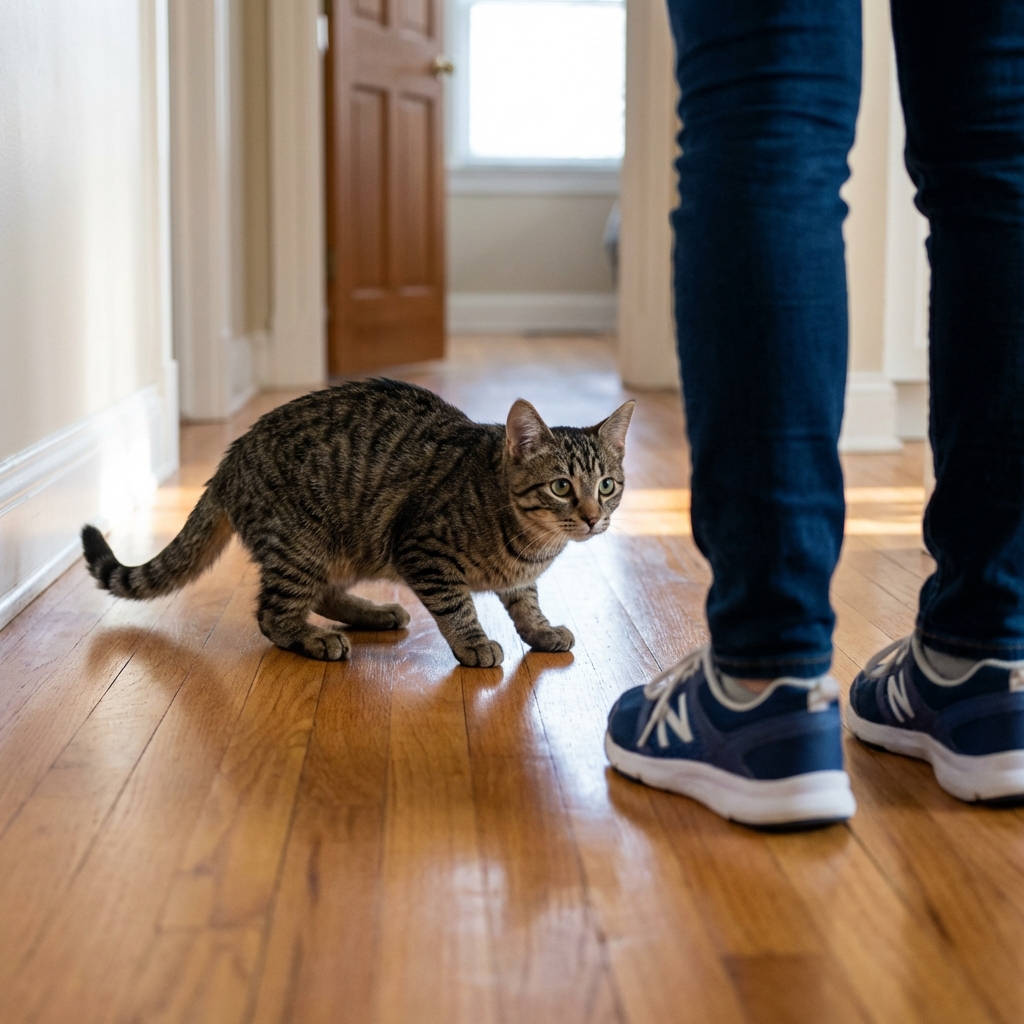
Ankle biting is often play, boredom, stress, or learned attention-seeking. Learn how to read the signs, stop rewarding bites, redirect to toys, and build a d...
Article
•
Designer Mixes
Why Does My Cat Attack My Feet?

Shari Shidate
Designer Mixes contributor
If you have ever walked across your living room and felt a sudden pounce on your ankles, you are not alone. In clinic, I see this question all the time. Foot attacks can look aggressive, but in most households it is a normal blend of play, hunting instinct, and learned behavior. The key is figuring out which motivation is driving it, then giving your cat a safer way to meet that need.
What foot attacks mean
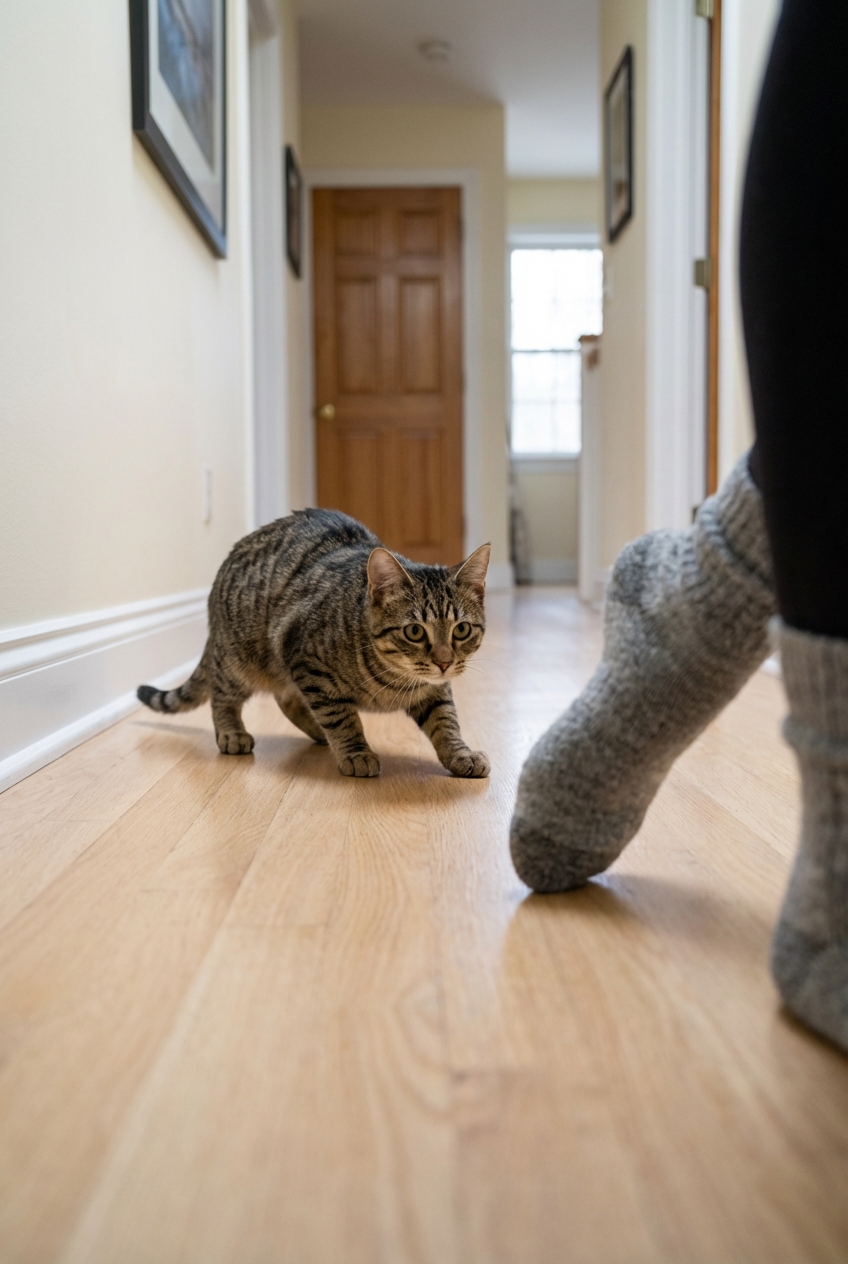
Cats are built to stalk moving targets. Feet are warm, fast, and unpredictable, which makes them very prey-like. When a cat grabs, bunny-kicks, or bites your foot, they may be:
- Practicing hunting skills (stalk, chase, bite, kick).
- Trying to initiate play because they are bored or understimulated.
- Reacting to sudden movement (especially if you shuffle, run, or wear loose pant legs).
- Responding to stress or an over-aroused nervous system.
- Repeating what worked before if foot attacks have been rewarded with attention.
Most importantly, foot attacks are not your cat being “mean.” They are communicating in the clearest way they know how.
Common causes
1) Play and hunting instinct
This is the most common reason. Kittens and young adult cats have a big need for daily hunt outlets. You may notice stalking around corners, a wiggly butt posture, and a quick pounce followed by kicking.
Clues it is play: ears mostly forward, bright eyes, quick zoomies after the attack, and your cat returns for round two.
2) Boredom and excess energy
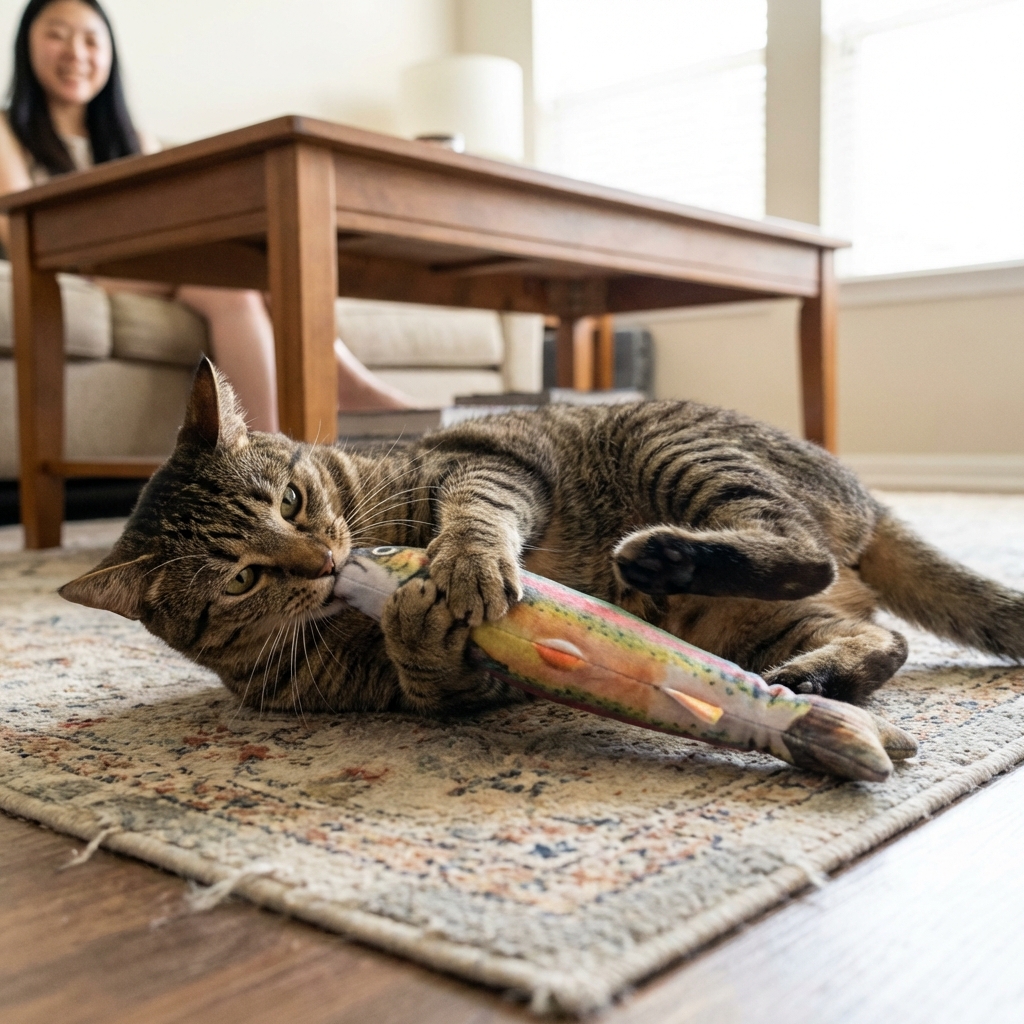
Indoor cats can become foot-focused when their day lacks structured activity. If your cat sleeps all day then attacks at night or when you get home, boredom is a strong suspect.
Clues it is boredom: foot attacks happen at predictable times, your cat meows for attention, and they do not engage with toys unless you participate.
3) Attention-seeking (accidental training)
From your cat’s perspective, even “No!” can be rewarding if it reliably makes you talk, move, or chase them. Many cats learn: attack feet, humans react.
Clues it is attention: your cat looks at you immediately after the bite, repeats the behavior when you are on a call, cooking, or busy, and stops when you leave the room.
4) Overstimulation and stress
Stress can make cats more reactive. Changes like a move, new baby, new pet, schedule shifts, construction noise, or neighborhood cats outside can raise baseline anxiety. An over-aroused cat can redirect that energy to the nearest moving target, including your feet. This also includes redirected frustration from a cat seen through a window or tension with another pet in the home.
Clues it is stress: dilated pupils, twitching tail, crouched posture, hiding more, growling, or new litter box issues alongside the foot attacks.
5) Pain or medical issues (less common, but important)
If the behavior is sudden, intense, or your cat seems touchy in general, consider pain. Arthritis, dental pain, skin irritation, and other conditions may lower tolerance and make biting more likely.
Clues it might be medical: the attacks started abruptly in an adult or senior cat, your cat is less active, grooming changes, appetite changes, weight change, or they seem uncomfortable being handled. Sudden aggression always deserves a veterinary check, even if it seems “behavioral.”
Play vs fear
Most foot attacks are play-predation, but it helps to know when to stop and create distance.
- More likely play: bouncy movement, loose body, brief pounce then disengage, returning to play.
- More likely fear or true agitation: flattened ears, puffed tail, stiff body, hard staring, growling or hissing, swatting that does not stop, or your cat does not come back for play.
If you see the fear or agitation signs, prioritize safety. Do not try to handle your cat. Use distance, a barrier, and a calm reset.
What to do in the moment
When your cat goes for your feet, your goal is to end the game without adding excitement or fear.
- Freeze. Sudden kicking can trigger more chasing and biting.
- Stay quiet. Yelling often increases arousal.
- Gently disengage. If needed, place a pillow, blanket, or soft object between you and the cat.
- Redirect immediately. Toss a small toy away from your body or use a wand toy to move the target far from your ankles.
- Then pause interaction for 30 to 60 seconds. This teaches that foot attacks end attention.
If your cat is latched on, do not pull away sharply. That can tear skin. Instead, keep the limb still, create a barrier, and redirect. If you cannot safely redirect without getting bitten, use a barrier and leave the area.
How to prevent foot attacks
Daily hunt play
A good starting point for many cats is two to three short play sessions per day (about 5 to 15 minutes each), adjusted for age, health, and energy level. Use wand toys, chase toys, or anything that lets your cat stalk and pounce away from your hands and feet.
A simple routine that works well:
- Stalk: move the toy slowly behind furniture.
- Chase: speed up for short bursts.
- Catch: let your cat win frequently.
- Eat: offer a small snack or meal after play to complete the hunt cycle.
Upgrade the environment
Enrichment reduces boredom and stress, which reduces ankle ambushes.
- Vertical space: cat tree, shelves, or window perch.
- Foraging: puzzle feeders or treats hidden in safe spots.
- Scratch options: one vertical and one horizontal scratcher in key areas.
- Window entertainment: bird feeder outside (placed safely) or a comfy perch.

No feet or hands as toys
If you have ever wiggled your toes under a blanket to tease your cat, you taught them feet are fair game. That is very common, so do not feel bad. Just change the rule going forward.
- Only play with toys, not body parts.
- Use a kicker toy for wrestling.
- Keep a wand toy in the rooms where attacks happen most.
Reward calm, teach a new habit
Catch your cat being good. If your cat walks past your feet calmly, reward with a treat, praise, or a short play session. You can also teach an incompatible behavior, like go to a mat when people walk by, or create a new pattern by tossing a treat ahead of you so your cat follows instead of ambushing.
Make feet less interesting
- Avoid shuffling and sudden sprints past known ambush zones.
- Wear slippers or thicker socks during the retraining phase.
- Block ambush points temporarily (laundry basket near the hallway corner, for example) while you build new habits.
Extra safety for kids and older adults
If someone in the home is at higher risk of falling or infection, manage more aggressively while you retrain. Use baby gates, close doors during high-arousal times, and schedule play before busy household periods so your cat is less likely to seek feet as an outlet.
What not to do
These responses often make the problem worse, or create fear and mistrust.
- Do not spray water. It can increase anxiety and does not teach a better behavior.
- Do not hit, scruff, or “alpha” your cat. Punishment may suppress behavior in the moment, but it often increases stress and can make biting or avoidance worse over time. It also does not teach what you do want.
- Do not chase your cat after an attack. Many cats interpret it as play.
- Do not punish after the fact. Cats connect consequences to what is happening right now, not what happened minutes ago.
When to get help
Please reach out for help if:
- The behavior is new and sudden, especially in an adult or senior cat.
- Bites break the skin often or your cat seems truly panicked.
- You notice other changes (appetite, litter box, hiding, weight loss, decreased jumping).
- There are escalating household stressors (new pets, inter-cat tension, frequent conflicts, or outdoor cats triggering window reactions).
In many cases, a vet visit rules out pain or medical triggers, and a qualified cat behavior professional can tailor a plan to your home.
7-day training plan
Days 1 to 2: Management
- Stop all toe-wiggling games.
- Keep a wand toy in your main walking areas.
- Wear slippers if needed.
- Use gates or closed doors in known ambush zones if someone cannot risk a bite or fall.
Days 3 to 5: Daily play
- Two sessions per day, about 10 minutes each (adjust up or down for your cat).
- End with a small meal or treat.
- Reward calm pass-by behavior with tiny treats.
- Practice “go to mat” or toss treats ahead of you during common trigger times.
Days 6 to 7: Add enrichment
- Introduce a puzzle feeder or treat hunt once daily.
- Add a scratcher or perch in the attack zone.
- Continue redirecting every attempted foot attack to a toy, or use a barrier and exit if it is not safe.
Most families see improvement quickly when they are consistent. If you slip, do not worry. Just restart the routine. Cats learn through repetition and predictability.
Human safety note
If your cat breaks skin, wash the area with soap and running water right away. Cat bites are often puncture wounds that can push bacteria deep under the skin, even when the mark looks small. If you develop swelling, increasing redness, warmth, pus, fever, or pain that worsens, seek medical care promptly. When in doubt, it is reasonable to call a clinician for advice sooner rather than later.