Worried about a vomiting dog? Learn when vomiting is an emergency, how to offer small sips safely, and the best bland foods (chicken/rice, turkey, pumpkin, e...
Article
•
Designer Mixes
Why Does a Dog Throw Up Bile?

Shari Shidate
Designer Mixes contributor
If you have ever watched your dog retch and bring up a yellow, foamy puddle, it can be scary and confusing. As a veterinary assistant, I want you to know two things can be true at once: bile vomiting is often related to something manageable (like an empty stomach), and it can also be an early clue that your dog needs medical help.
This article is general education, not a diagnosis. If you are worried or your dog has other symptoms, your veterinarian is the best next step.
Let’s walk through what bile is, why it shows up in vomit, what you can do at home, and when it is time to call your vet.
What bile is
Bile is a digestive fluid made by the liver and stored in the gallbladder. It helps break down fats and normally flows into the small intestine.
When a dog vomits and their stomach is relatively empty, that bright yellow to yellow-green liquid is often bile (sometimes mixed with a little stomach foam). You might also notice it happens early in the morning, late at night, or several hours after a meal.
Common reasons dogs throw up bile
There is no single cause. The timing, frequency, and your dog’s other symptoms help narrow it down.
1) Empty stomach (bilious vomiting syndrome)
This is a common pattern: a dog goes a long stretch without eating and ends up nauseated, often vomiting bile or yellow foam. Many veterinarians describe it as a mix of fasting-related stomach irritation plus reflux of bile into the stomach. It is typically a diagnosis of exclusion, meaning your vet may rule out other problems first, especially if it is frequent.
- Often happens early in the morning or after a long stretch without food
- May be 1 or 2 episodes, then the dog acts normal
- May improve with a small bedtime snack or more frequent meals
2) Eating something irritating
Grass, sticks, treats that are too rich, table scraps, new chews, or sudden diet changes can trigger stomach irritation. Bile may show up if the stomach empties quickly after vomiting.
3) Reflux, gastritis, or gastroenteritis
Gastritis is inflammation of the stomach. Gastroenteritis affects the stomach and intestines and is often more sudden, sometimes with diarrhea. Either can be triggered by stress, diet sensitivity, infections, or medications (especially some anti-inflammatories). Dogs may vomit bile repeatedly and seem nauseated (lip smacking, drooling, swallowing).
4) Parasites or intestinal irritation
Intestinal parasites (more common in puppies but possible in adults) can irritate the gut. You may see diarrhea, weight loss, a pot-bellied look, or mucus in stool along with vomiting.
5) Pancreatitis
Pancreatitis can range from mild to life-threatening. It is often linked to fatty foods, but it can happen for other reasons too. Dogs may vomit bile, refuse food, have abdominal pain, and act very tired.
6) Food intolerance or allergy
Food intolerance more often causes GI signs (vomiting, gas, soft stool) without skin issues. Food allergies are more likely to involve itchy skin, recurring ear infections, and sometimes GI upset too. Either way, some dogs do best on a consistent diet and careful treat choices.
7) Liver or gallbladder disease
Because bile is tied to the liver and gallbladder, disease in these organs can lead to vomiting, decreased appetite, and sometimes a yellow tint to the eyes or gums (jaundice). This is less common than empty-stomach vomiting, but important to catch early.
8) Intestinal blockage (foreign body)
If a dog swallows a toy, sock, corn cob, or bone fragment, vomiting can start with food and progress to bile as the stomach empties. This is an emergency risk, especially if vomiting is frequent or your dog cannot keep water down.
9) Other causes with recurring vomiting
If vomiting is chronic or keeps coming back, your vet may also consider conditions like inflammatory bowel disease (IBD), hormone disorders (including Addison’s disease), or motility problems, among other possibilities.
Clues that help
These quick details are very helpful to your veterinarian, and they can help you decide how urgent the situation is.
- How often is your dog vomiting? Once and normal afterward is different than repeated vomiting.
- When does it happen? Morning bile vomiting can point toward an empty stomach for many dogs.
- What does it look like? Yellow foam, yellow liquid, bile with food, bile with blood, worms, or a dark “coffee-ground” look (which can mean digested blood).
- How is your dog acting? Alert and acting normal vs. lethargic, painful, or hiding.
- Can they keep water down? Inability to hold water is a big red flag.
- Any diarrhea? The combo of vomiting plus diarrhea can dehydrate dogs quickly.
- Did anything change? New food, new treats, new meds, recent boarding, trash access.
What the color and texture can mean
Color alone is not a diagnosis, but it can offer clues when combined with timing and symptoms.
- Yellow or yellow-green: often bile, especially if the stomach is empty.
- White foam: can be stomach foam, saliva, or mild stomach upset, but repeated episodes still matter.
- Green: can be bile too, but bright green can also raise concern for certain toxins. When in doubt, call.
- Red streaks: fresh blood, often from irritation but should be checked.
- Dark brown or “coffee-ground”: possible digested blood, urgent.
- Foul odor, fecal-like material: can be serious and needs immediate veterinary attention.
When it is an emergency
Please contact your veterinarian or an emergency clinic right away if you notice any of the following:
- Repeated vomiting (for example, more than 2 to 3 times in a short period)
- Blood in vomit (red streaks or a dark coffee-ground look)
- Swollen, painful abdomen, whining, or a “praying” posture (front end down, rear up)
- Weakness, collapse, severe lethargy, or pale gums
- Cannot keep even small sips of water down
- Signs of dehydration (sticky gums, sunken eyes, skin that does not snap back quickly)
- Suspected toxin exposure (chocolate, xylitol, grapes or raisins, medications, household cleaners)
- Possible foreign body (missing toy, chewed fabric, bones, corn cob)
- Puppies, seniors, or dogs with chronic illness (they can decline faster)
If your dog is a deep-chested breed and is retching without producing much vomit, with a tight belly and restlessness, treat it like an emergency because it may be bloat (GDV).
Call your vet within 24 hours
Not every case is an ER visit, but these situations deserve a prompt call and likely an appointment:
- Morning bile vomiting that repeats over multiple days
- Vomiting that comes and goes for more than a week
- Decreased appetite, weight loss, or increased thirst
- New vomiting after starting a medication
- Vomiting plus ongoing soft stool, mucus, or straining
- Your dog seems “off” even if they are not collapsing (less playful, quieter than usual)
What you can do at home
If your dog vomited bile once, seems otherwise normal, and is not showing red-flag symptoms, these steps are commonly recommended. If you are unsure, call your vet for guidance first.
Step 1: Pause and assess
- Remove access to treats, chews, and rich foods.
- Check for possible trash exposure or missing objects.
- Note the time, what it looked like, and your dog’s energy level.
Avoid prolonged fasting unless your veterinarian specifically tells you to. Puppies and very small dogs can be more prone to low blood sugar if they go too long without food.
Step 2: Small sips of water
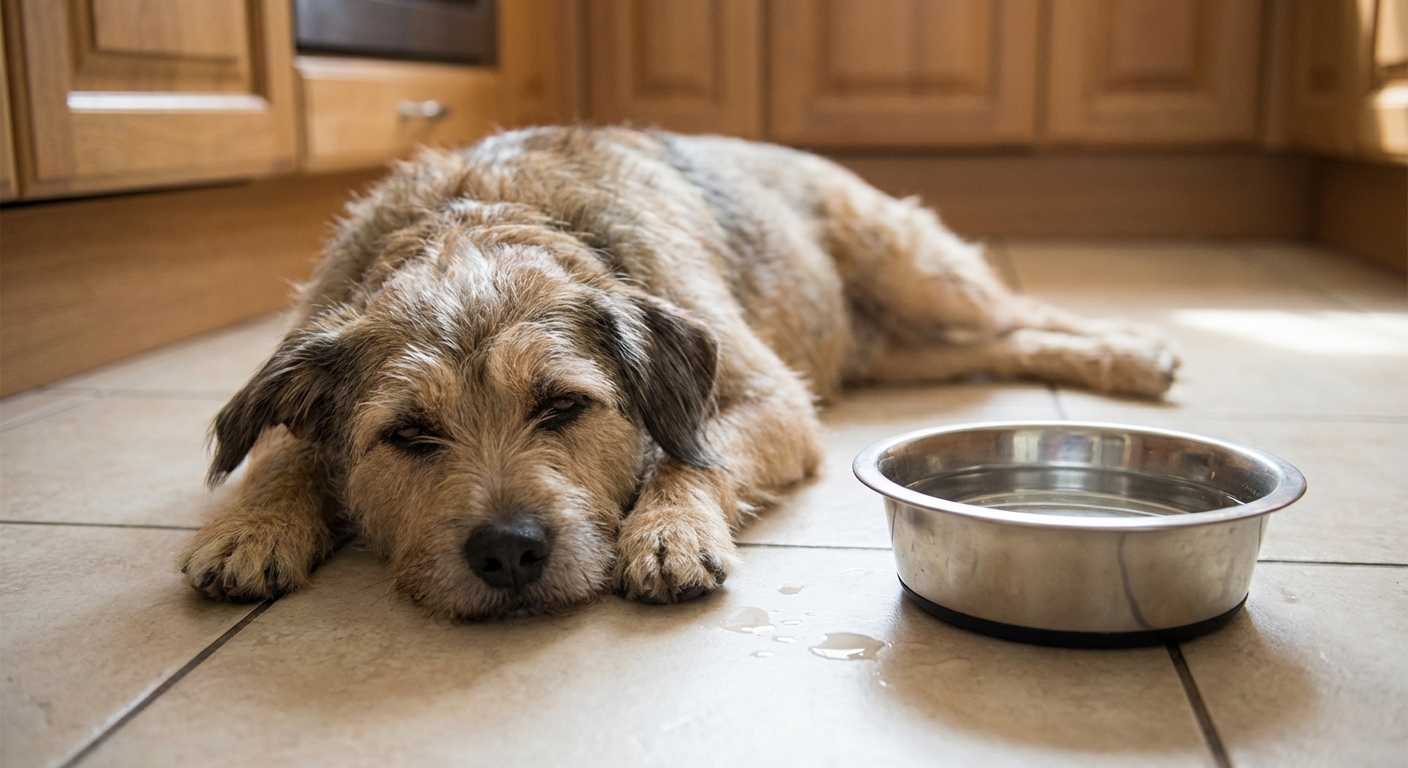
Offer small amounts of water. If your dog gulps and vomits again, pause and call your vet.
Step 3: Consider meal timing
For dogs who vomit bile in the morning, many do better with:
- Smaller, more frequent meals (often 3 to 4 per day)
- A small bedtime snack to shorten overnight fasting
- A consistent feeding schedule
This can be especially helpful for dogs who are fed once daily or have a long overnight gap between dinner and breakfast. A bedtime snack can be a small portion of their regular diet. The goal is not to add lots of extra calories, but to prevent that long, empty stretch.
Step 4: Gentle food (only if your vet agrees)
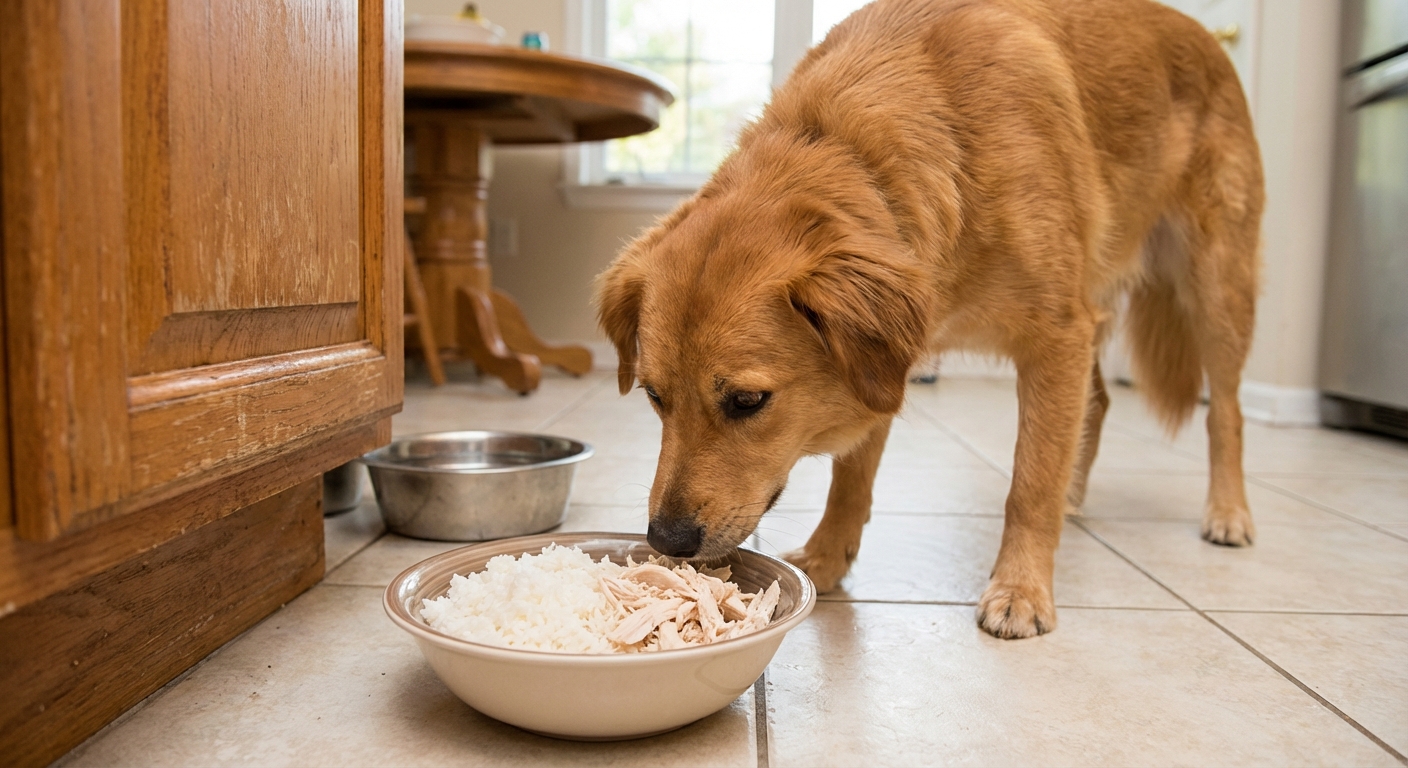
If your dog is hungry and keeping water down, your veterinarian may recommend a short course of a bland diet. Common options include boiled chicken and rice or a veterinary gastrointestinal diet. Avoid fatty foods, and avoid seasoning.
Important note: if vomiting continues, do not keep “trying bland food” for days. Persistent vomiting needs a medical workup.
How vets diagnose it
Your vet’s job is to separate the “simple” causes from the urgent ones. Depending on your dog’s exam and history, they may recommend:
- Fecal testing for parasites
- Bloodwork to assess hydration, infection or inflammation, liver and pancreas values
- X-rays if a foreign body is suspected
- Ultrasound to evaluate the stomach, intestines, liver, gallbladder, pancreas
- Diet trial if food intolerance or allergy is likely
Treatment can range from simple feeding adjustments to anti-nausea medications, stomach protectants, fluids, or surgery if there is an obstruction.
Preventing it long-term
Once your vet confirms there is not an emergency cause, prevention often comes down to routine and gut support.
- Keep meals consistent and avoid long fasting windows.
- Limit rich treats and sudden diet changes.
- Use slow transitions when changing foods (over 7 to 10 days).
- Ask about probiotics if your dog has recurring stomach upset.
- Parasite prevention and regular fecal checks, especially for dogs who visit dog parks.
- Watch the waistline: extra weight can increase risk for several digestive problems.
If your dog is vomiting bile more than occasionally, it is worth a vet visit. Catching GI and pancreatic issues early is one of the kindest things you can do for their comfort and long-term health.
Quick FAQ
Is yellow vomit always bile?
Often yes, but yellow vomit can also be stomach contents mixed with bile. Either way, the cause matters more than the color alone.
My dog vomits bile but acts fine. Should I worry?
One isolated episode with an alert dog acting normal is often not an emergency. Recurrent bile vomiting, even with normal energy, is still a reason to talk with your veterinarian because it can signal reflux, gastritis, diet intolerance, or other issues.
Can stress cause bile vomiting?
Yes. Stress can affect gut motility and stomach acid. Travel, boarding, schedule changes, and new pets can all contribute.