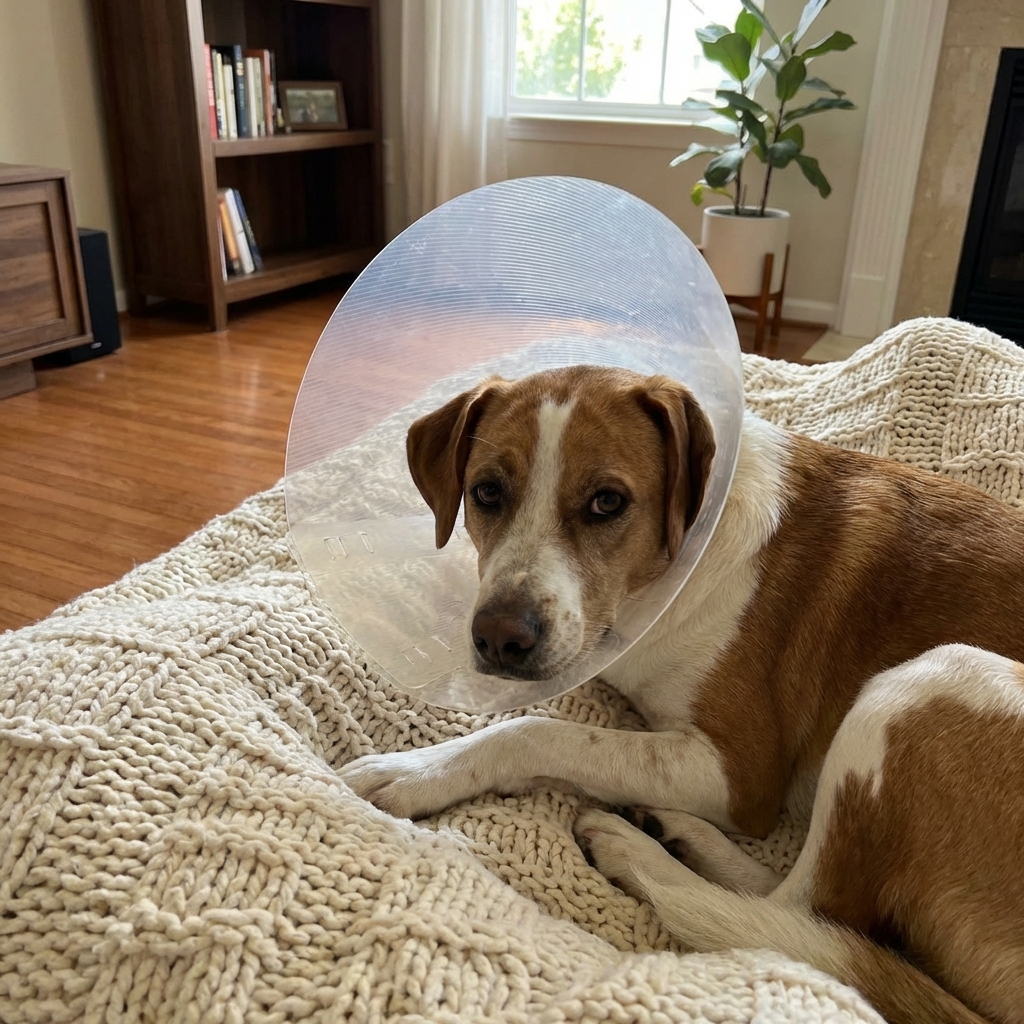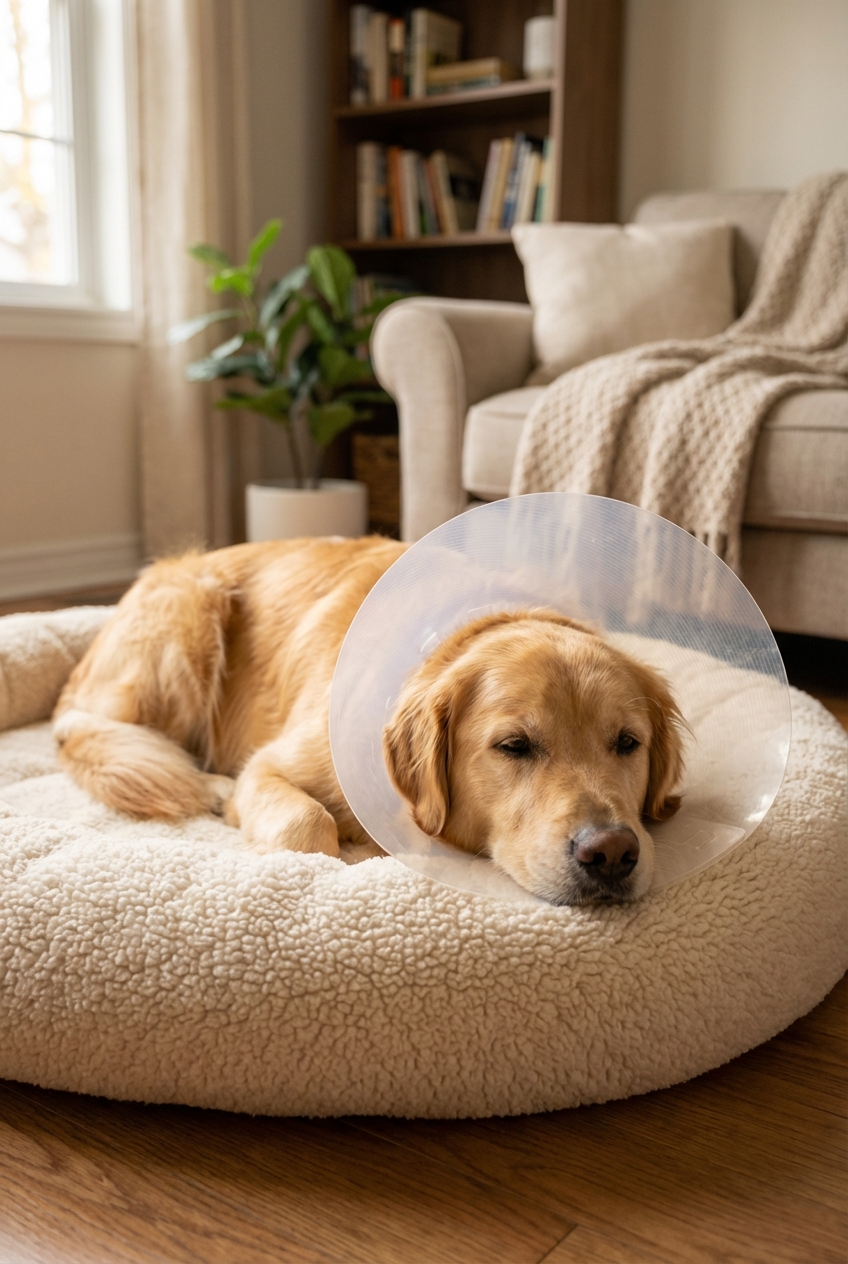
As a veterinary assistant here in Frisco, Texas, one of the most common surprises I hear after a spay is, “She is eating the same, but she is gaining weight.” It is frustrating, and it can feel unfair when you did everything right.
The truth is, weight gain after spaying is common and it is usually explainable. The key is separating two very different phases: the first 10 to 14 days of recovery (incision protection and limited activity, sometimes longer for very active or larger dogs) and the months after surgery (lower calorie needs and portion changes).
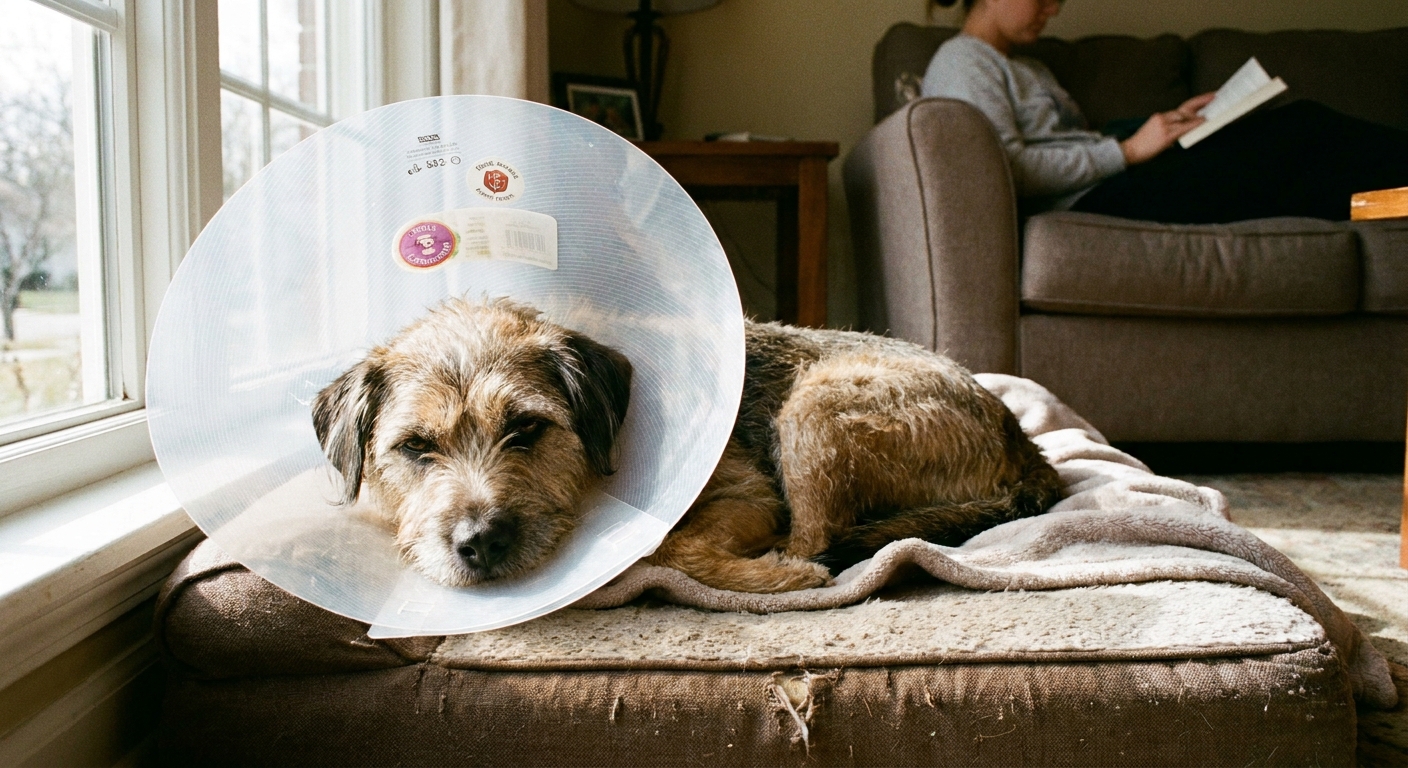
Why spayed dogs gain weight
Most weight gain comes down to a simple equation: after spaying, many dogs need fewer calories than they did before, but their food portions often stay the same.
Ovarian hormones help regulate metabolism and appetite
When a dog is spayed, the ovaries (and sometimes the uterus, depending on the technique your clinic uses) are removed. That significantly reduces estrogen and progesterone. Those hormones help regulate:
- Energy expenditure (how many calories your dog burns at rest and during daily activity)
- Appetite signaling (how hungry your dog feels)
- Body composition over time (fat storage versus lean muscle maintenance)
In plain language, many spayed dogs feel a bit hungrier and burn fewer calories, which creates a quiet calorie surplus that shows up as gradual weight gain.
Calorie needs often drop, even if your dog seems “the same”
After a spay, some dogs need noticeably fewer calories to maintain the same weight. The exact amount varies by breed, age, and activity level. In real clinic life, I often see dogs do best with something like a 10 to 30 percent reduction in daily calories over time, adjusted based on results.
To make that more concrete: for some dogs, even an extra 50 to 100 calories a day (a couple of bigger treats, or a heaping scoop instead of a level one) can be enough to cause steady gain.
That is why a dog can gain weight on the same measured scoop that kept her lean before.
Less movement during recovery can kickstart the trend
Even if your dog’s long-term metabolism is the biggest factor, the early recovery period can contribute. For 10 to 14 days (and sometimes longer), activity is restricted, which means:
- fewer walks and play sessions
- more crate rest or quiet time
- more treat-giving because you feel bad and want to comfort them (very normal, by the way)
All of that can mean extra calories plus fewer burned calories, right when your dog’s needs may already be shifting downward.
Feeding in the first 10 to 14 days
During the immediate spay recovery window, your job is protecting the incision and preventing complications. Nutrition matters, but this is not the time for aggressive diet changes.
What to prioritize in those first 10 to 14 days
- Follow your veterinarian’s medication instructions, especially if pain meds need to be given with a small meal.
- Prevent vomiting by keeping meals modest if your dog seems nauseated after anesthesia. Many clinics recommend a smaller meal the first night home.
- Keep routines calm and consistent. Sudden food switches can trigger diarrhea, which is the last thing you want while your dog is healing and possibly on meds.
- Use treats strategically. If you need treats to get your dog to take meds, use tiny pieces, and count them as calories.
If your dog is not interested in food for a day, that can happen right after anesthesia. That said, I want you to call your vet sooner if your dog is a tiny puppy, a small-breed adult who is prone to low blood sugar, is vomiting more than once, or just seems “off” in a way that worries you.
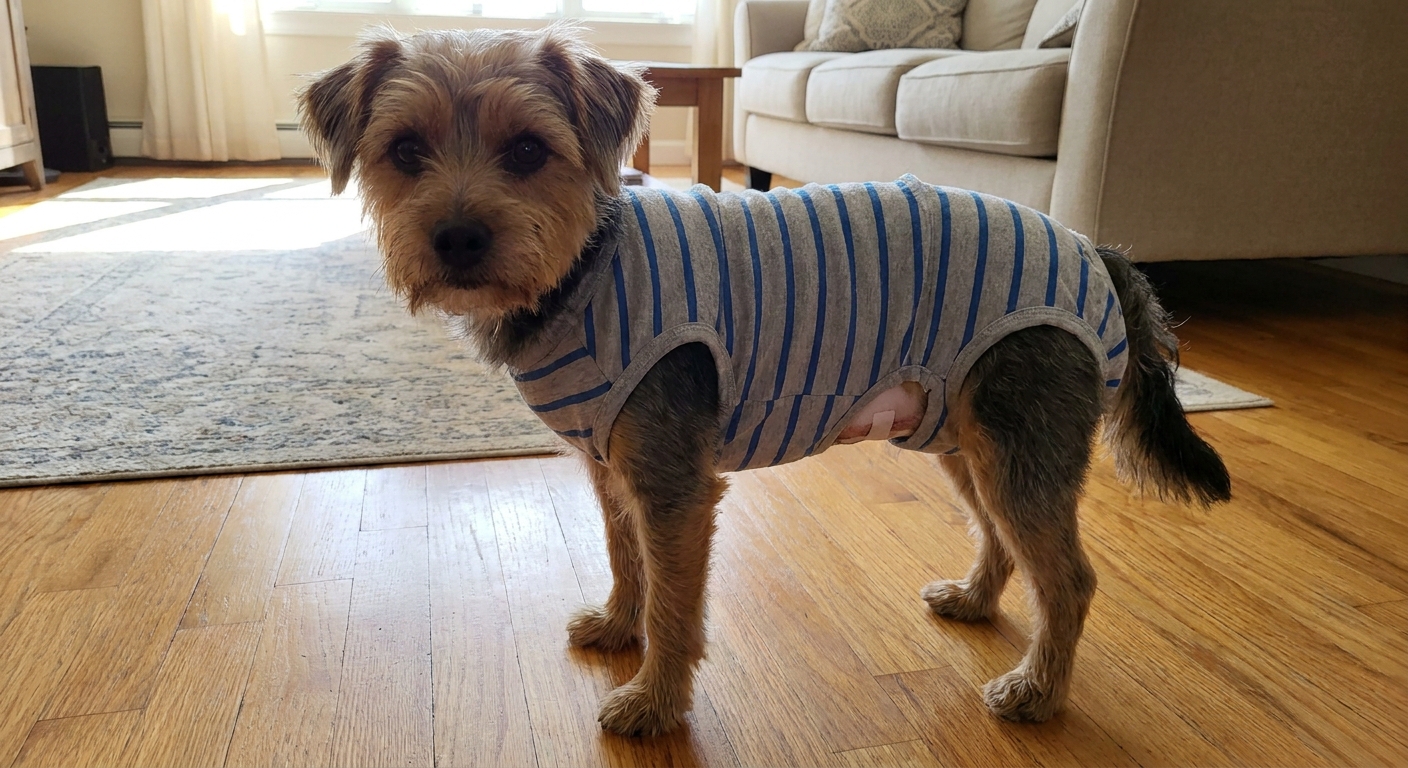
When to reset portions after a spay
Most families should start thinking about portion changes after the initial recovery, once appetite and bathroom habits are back to normal and activity restrictions are lifting. For many dogs, that means you begin adjusting somewhere around the 2 to 4 week mark.
Here is the practical reason: in the first 10 to 14 days, your dog’s intake can be a little irregular, and you may be using treats for meds. Once things stabilize, you can make clean, consistent adjustments and actually judge results.
A simple starting point
Talk with your veterinarian for a plan tailored to your dog, especially if she is a growing puppy, a senior, or has a medical condition. In general, these are common approaches:
- Reduce the daily calories by 10 percent once recovery is over, then reassess body condition and weight in 2 to 4 weeks.
- If weight is still creeping up, reduce by another 5 to 10 percent.
- Or start closer to a 20 percent reduction if your vet advises it based on body condition, breed tendencies, and lifestyle.
Small changes are powerful. For a little dog, an extra tablespoon of kibble daily can be enough to cause steady gain.
Measure food, do not eyeball it
I say this with love because I have done it myself: “It looks like about a cup” is how dogs gain weight.
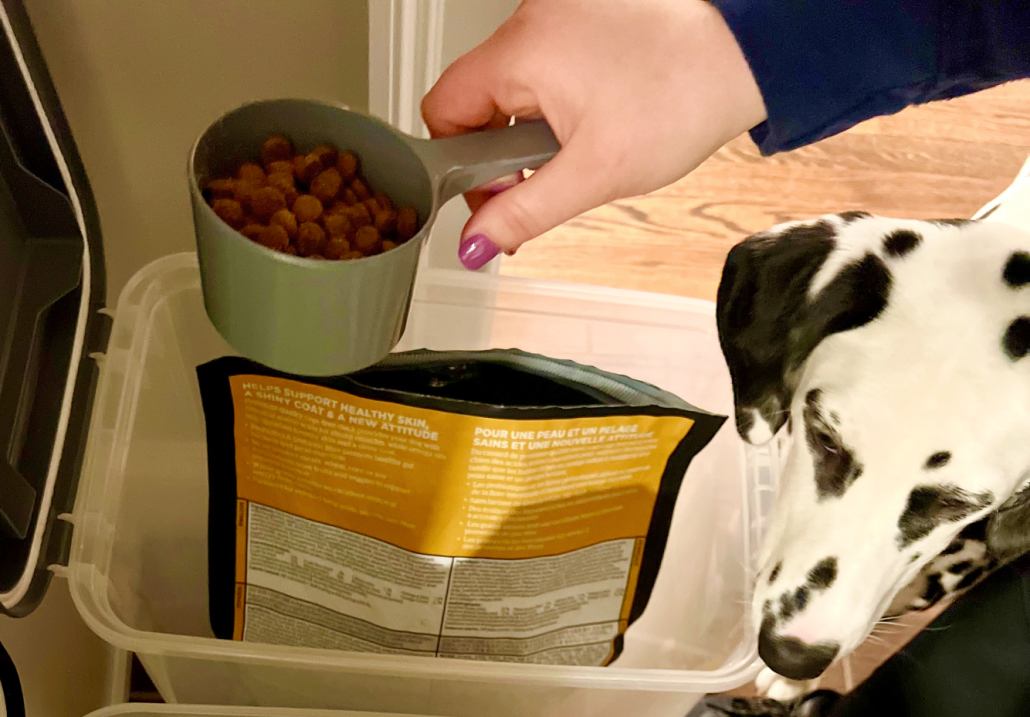
- Use a true measuring cup for kibble.
- Better yet, use a kitchen scale and feed by grams if your food label provides it.
- Track treats. If treats are part of daily life, reduce meal portions to make room for them.
How to feed in the months after surgery
Once your dog is cleared for normal activity, weight management becomes a long game. The goal is to keep her lean while still feeling satisfied and happy.
Consider a spayed-dog or weight-management diet
Some dogs do great on the same food with smaller portions. Others get hungry and start pestering, scavenging, or stealing food.
If that sounds familiar, talk with your vet about:
- lower-calorie, higher-fiber veterinary diets designed for satiety
- light formulas from reputable brands
- safe add-ins that increase volume without overloading calories, like a spoonful of plain canned pumpkin or steamed green beans, if your dog tolerates them
Protein matters for keeping lean muscle
Lean muscle helps support a healthier metabolism. Whether you feed kibble, fresh food, or a mix, ask your vet which options best support lean body condition for your individual dog.
Do a treat audit
Treat calories add up fast, especially after spay when calorie needs drop. Helpful swaps include:
- break treats into tiny pieces
- use part of your dog’s measured kibble as treats during training
- choose lower-calorie treats and avoid frequent high-fat chews unless you reduce meals to compensate
One of the most common “clinic reality” problems I see is treat creep. One person is giving dental chews, another is tossing table scraps, and someone else is sharing a bite of cheese when the dog looks sad in the cone. None of it feels like much in the moment, but it adds up fast.
Building activity back up
Once your veterinarian clears your dog, aim for a gradual return to activity. It helps burn calories, but it also protects healing tissues and joints.
- Start with short, leashed walks and add a few minutes every few days if your dog is doing well.
- Use low-impact enrichment such as sniff walks, scatter-feeding kibble in the grass, or food puzzles (once your dog is not trying to body-slam the toy in excitement).
- Avoid intense running, jumping, and rough play until your vet says it is okay, especially for dogs who heal slowly or get wild the second the cone comes off.
What results to expect
Healthy change is slow. In the months after a spay, I like owners to think in terms of trends, not day-to-day fluctuations.
Use body condition, not just the scale
At home, you can do quick checks weekly:
- Ribs: you should be able to feel ribs easily with light pressure, without seeing them sharply.
- Waist: from above, there should be an inward tuck behind the ribs.
- Abdominal tuck: from the side, the belly should slope up from the ribcage to the hips.
If you are unsure, ask your clinic to show you how to score body condition. Many vets use a 1 to 9 Body Condition Score system, and a lot of healthy adult dogs land around 4 to 5 out of 9, depending on build.
Recheck weight 2 to 4 weeks after adjusting food
Portion changes usually need a few weeks to show up on the scale. Weigh-ins every 2 to 4 weeks are a practical rhythm for many families.
If your dog needs to lose weight, slow is safer. Your veterinarian can help you pick a target rate and avoid overdoing calorie cuts.
If your dog is gaining despite reductions, let your vet know. It may mean further calorie adjustments, a diet change, or evaluating for other factors.
Red flags
Spaying is a common trigger for weight gain, but it is not the only cause. Make a vet appointment if you notice:
- rapid weight gain that does not respond to portion changes
- lethargy, haircoat changes, or heat-seeking behavior
- increased drinking and urination
- persistent hunger that feels extreme
- ongoing vomiting, diarrhea, or appetite loss after recovery
Some medical conditions, like hypothyroidism or Cushing’s disease, can contribute to weight changes in certain dogs. Your veterinarian can help you sort out what is normal and what needs testing.
A realistic post-spay plan
If I could put a simple plan on every fridge after a spay, it would look like this:
- Days 1 to 14: Focus on healing, incision protection, and calm routines. Keep feeding consistent. Keep treats small and purposeful. Some dogs need longer restrictions, so follow your discharge instructions.
- Week 2 to 4: As your dog’s routine normalizes, begin a planned portion reset, often a 10 percent reduction, unless your vet advises otherwise.
- Month 2 and beyond: Recheck weight and body condition every 2 to 4 weeks. Adjust again if needed, and build activity back up as your vet clears it.
The bottom line is this: spayed dogs do not gain weight because they are broken or because you failed. Their calorie needs often change, and once your portions match their new normal, most dogs settle into a healthy, lean weight again.
FAQ
Do all spayed dogs gain weight?
No. But many are at higher risk, especially dogs who are food-motivated, less active, or already a little chunky going into surgery. Prevention is much easier than trying to take weight off later.
Should I feed less immediately after surgery?
Not as a diet. The first 10 to 14 days are about recovery. Follow your veterinarian’s feeding instructions for the night of surgery and the days after. Once your dog is stable and healing well, that is when structured portion adjustments make the most sense.
My dog is begging constantly after her spay. What can I do?
First, rule out treat creep and make sure everyone in the household is on the same plan. Then ask your vet about a higher-satiety diet, adding low-calorie fiber sources that your dog tolerates, and increasing enrichment like food puzzles once your dog is cleared for normal activity.
When can my dog go back to normal exercise?
Many spay aftercare plans limit activity for 10 to 14 days, but some dogs need longer. Your veterinarian is the one to clear your dog based on her incision and healing. If you see swelling, discharge, or your dog seems painful, call your clinic before increasing activity.