Worried about a vomiting dog? Learn when vomiting is an emergency, how to offer small sips safely, and the best bland foods (chicken/rice, turkey, pumpkin, e...
Article
•
Designer Mixes
Why Do Dogs Throw Up Yellow Foam?

Shari Shidate
Designer Mixes contributor
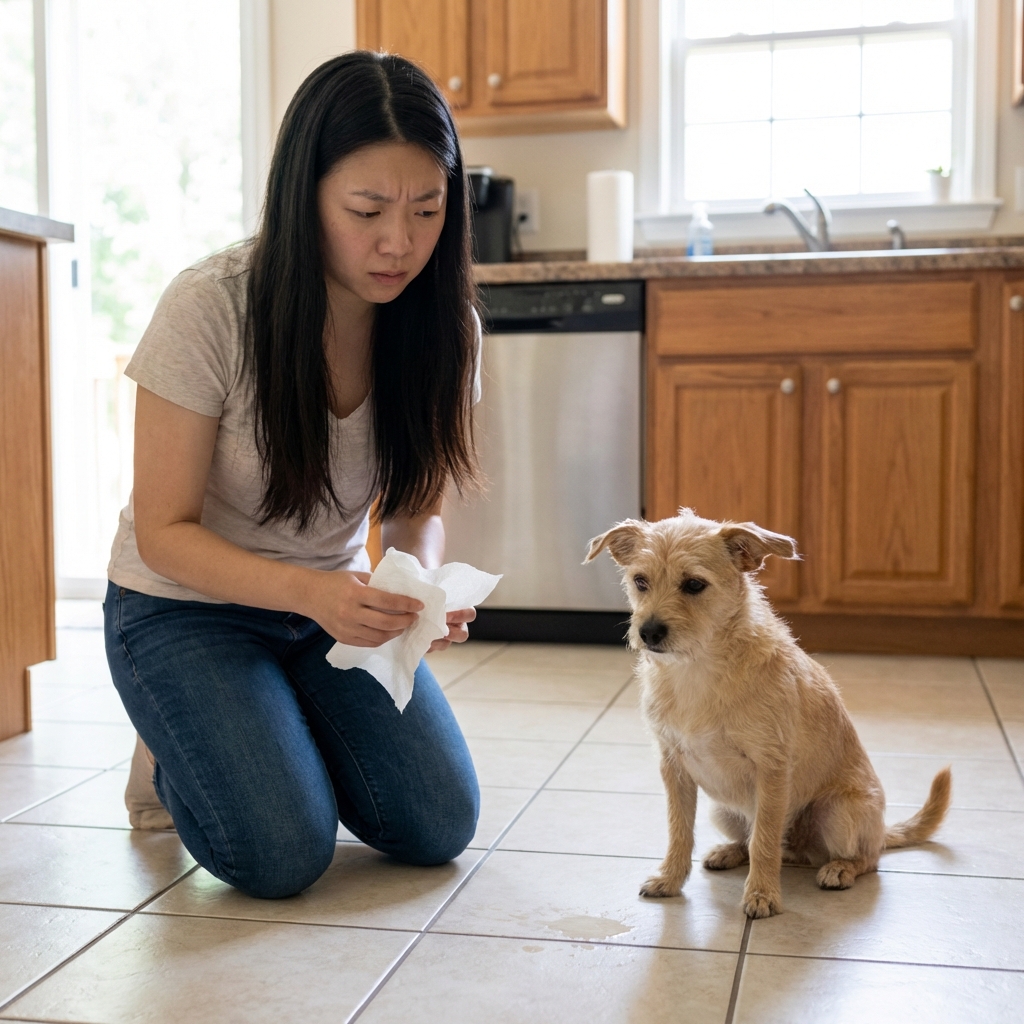
Seeing yellow foam on the floor can be scary, especially when your dog looks otherwise normal. Yellow foam is often bile, a digestive fluid made by the liver and (in most dogs) stored in the gallbladder before it flows into the small intestine. Dogs tend to bring up bile when their stomach is empty or mildly irritated, but yellow color can also come from stomach fluid mixed with mucus, a small amount of food, or something they ate.
As a veterinary assistant in Frisco, Texas, I have talked with a lot of worried pet parents about this exact situation. The goal of this guide is to help you figure out what is most likely going on, what you can safely do at home, and when it is time to call your veterinarian.
Quick note: Pet parents sometimes mix up vomiting and regurgitation. Vomiting usually includes retching and belly effort, and the material may look foamy or partially digested. Regurgitation is more passive and often looks like undigested food or a tube-shaped “log.” If you are seeing frequent regurgitation, talk to your vet because the causes can be different.
What yellow foam usually is
Yellow foam is typically a mix of:
- Bile (yellow to yellow-green digestive fluid)
- Stomach acid
- Mucus and a bit of saliva (which can make it look foamy)
If there is little or no food in the stomach, bile is more likely to show up in what comes up. That is why many dogs do this early in the morning or late at night.
Common reasons dogs vomit yellow bile
1) Empty stomach (bilious vomiting syndrome)
One of the most common patterns is: your dog vomits a small amount of yellow foam, then acts hungry and normal. This can happen when there is a long gap between meals. In some dogs, it may be related to stomach irritation when the stomach sits empty for too long.
2) Mild stomach upset
Dogs explore with their mouths. Eating grass, treats that are too rich, table scraps, or a sudden diet change can irritate the stomach and trigger vomiting. After the stomach empties, bile is often what you see next.
3) Motion sickness
Car rides can cause nausea and bile vomiting, especially if your dog travels on an empty stomach.
4) Reflux, gastritis, or food sensitivity
Reflux and inflammation of the stomach lining can lead to recurring bile vomiting. Some dogs vomit bile when a food does not agree with them, or when the diet is high in fat.
5) Parasites or infection
Intestinal parasites, viral illness, or bacterial imbalance can cause vomiting. Often you will see other signs too, like diarrhea, reduced appetite, or lethargy.
6) Pancreatitis
Pancreatitis can start with vomiting (sometimes yellow), decreased appetite, belly pain, and lethargy. This is more urgent, especially if your dog looks uncomfortable or has repeated vomiting.
7) Intestinal blockage or foreign material
If a dog swallows a toy piece, sock, corn cob, or other object, vomiting can occur repeatedly. Bile may show up after the stomach empties. This can become an emergency quickly.
8) Medication side effects
Some medications can upset the stomach, including certain antibiotics, NSAID pain medications, and supplements. If your dog started a new medication or you recently changed the dose, tell your veterinarian.

When yellow foam vomiting is an emergency
Please contact your veterinarian or an emergency clinic right away if you notice any of the following:
- Repeated vomiting (more than 2 to 3 times in a day, or cannot keep water down)
- Blood in vomit (red streaks, coffee-ground appearance) or black/tarry stool
- Swollen or painful abdomen, hunched posture, crying when picked up
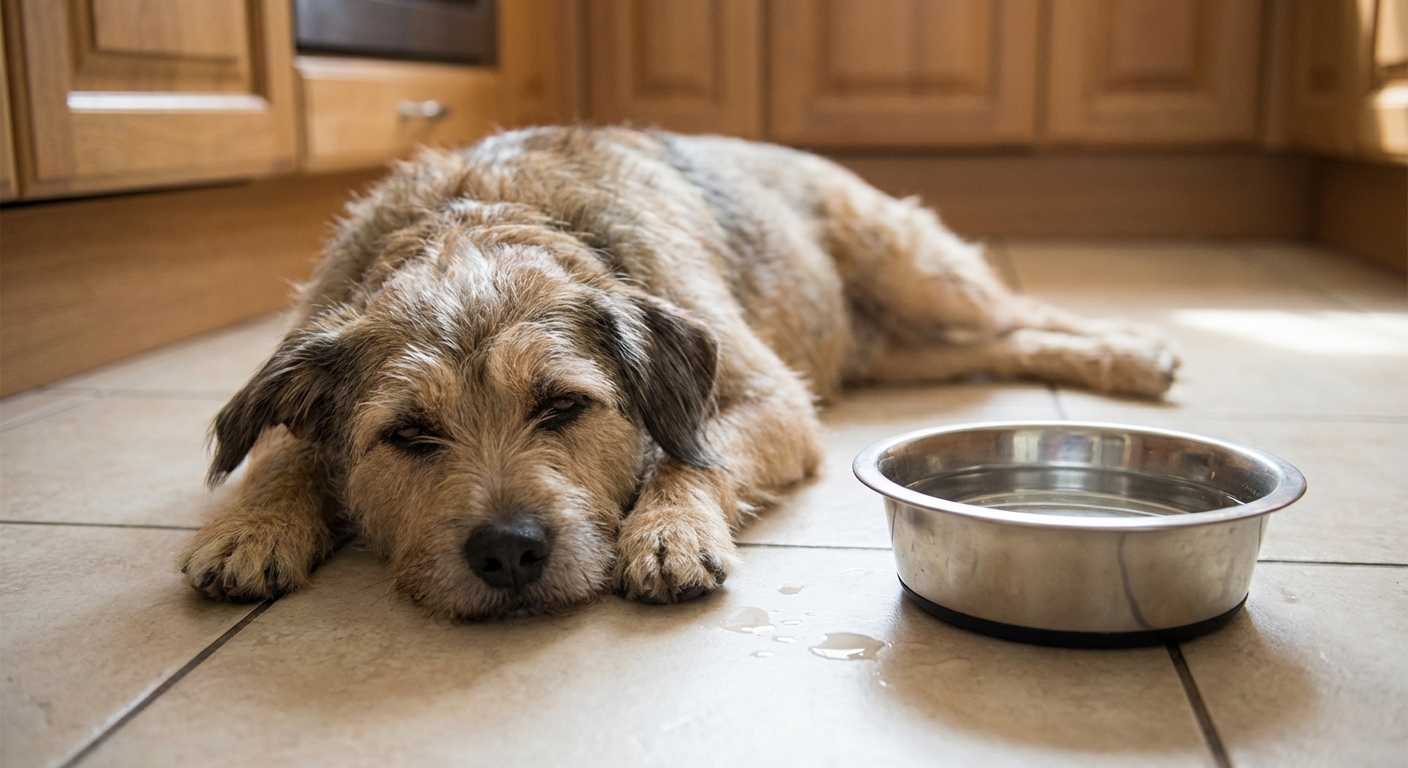
- Lethargy, collapse, weakness, or your dog seems “not themselves”
- Signs of dehydration (tacky gums, sunken eyes, not peeing much)
- Diarrhea plus vomiting, especially if watery
- Possible toxin exposure (xylitol, grapes/raisins, rodent bait, certain medications, cannabis, household cleaners, products with dye)
- Possible foreign body (missing toy, chewed fabric, trash raid)
- Puppies, seniors, or dogs with chronic disease (kidney disease, diabetes, Addison’s disease)
- Bloating with retching and little coming up (concern for GDV in deep-chested dogs)
If there is any chance your dog got into a toxin, skip home care and call immediately. If you are in the United States, you can also contact ASPCA Animal Poison Control (888-426-4435) or Pet Poison Helpline (855-764-7661). Fees may apply, but they can be lifesaving.
If your gut says something is off, trust that feeling. It is always okay to call.
When to call the vet today
Not every case is an emergency, but these situations deserve a call the same day:
- Vomiting continues for more than 24 hours even if your dog seems mostly okay
- Yellow foam vomiting happens more than once a week, or becomes a pattern
- Your dog is eating but losing weight, has a poor appetite, or seems nauseated often
- Your dog will not drink, or drinks but vomits water repeatedly, or goes about 12 hours with minimal water intake
- Intermittent vomiting and diarrhea with episodes of weakness, shaking, or collapse (this can fit Addison’s disease and should not wait)
Timing matters too. Morning bile can point toward an empty stomach pattern, while vomiting that happens right after meals can suggest reflux, fast eating, food intolerance, or other issues your vet may want to explore.
What to do at home (step-by-step)
If your dog vomits yellow foam once, then seems bright, comfortable, and interested in life, you can often start with gentle home care. Here is a safe, practical approach.
Step 1: Pause and assess
- How many times did they vomit?
- Are they acting normal or quiet and withdrawn?
- Any diarrhea, coughing, gagging, or pacing?
- Did they get into the trash, toys, a new food, or a new medication?
- Are you sure it was vomiting and not regurgitation?
Step 2: Give the stomach a short rest
For many healthy adult dogs, it is reasonable to give a short break from food after a single vomit episode. Often 6 to 8 hours is enough. Some dogs do better with an even shorter rest and then a small bland meal once they are settled. Do not fast young puppies or small toy breeds without veterinary guidance.
Step 3: Offer water the smart way
Let your dog have access to water, but if they gulp and vomit again, try:
- Small amounts every 15 to 30 minutes
- Ice cubes to lick
- In some cases, an unflavored electrolyte solution diluted with water (ask your vet if unsure)
If your dog cannot keep even small sips down, or you are seeing signs of dehydration, that is a reason to call.
Step 4: Reintroduce food gently
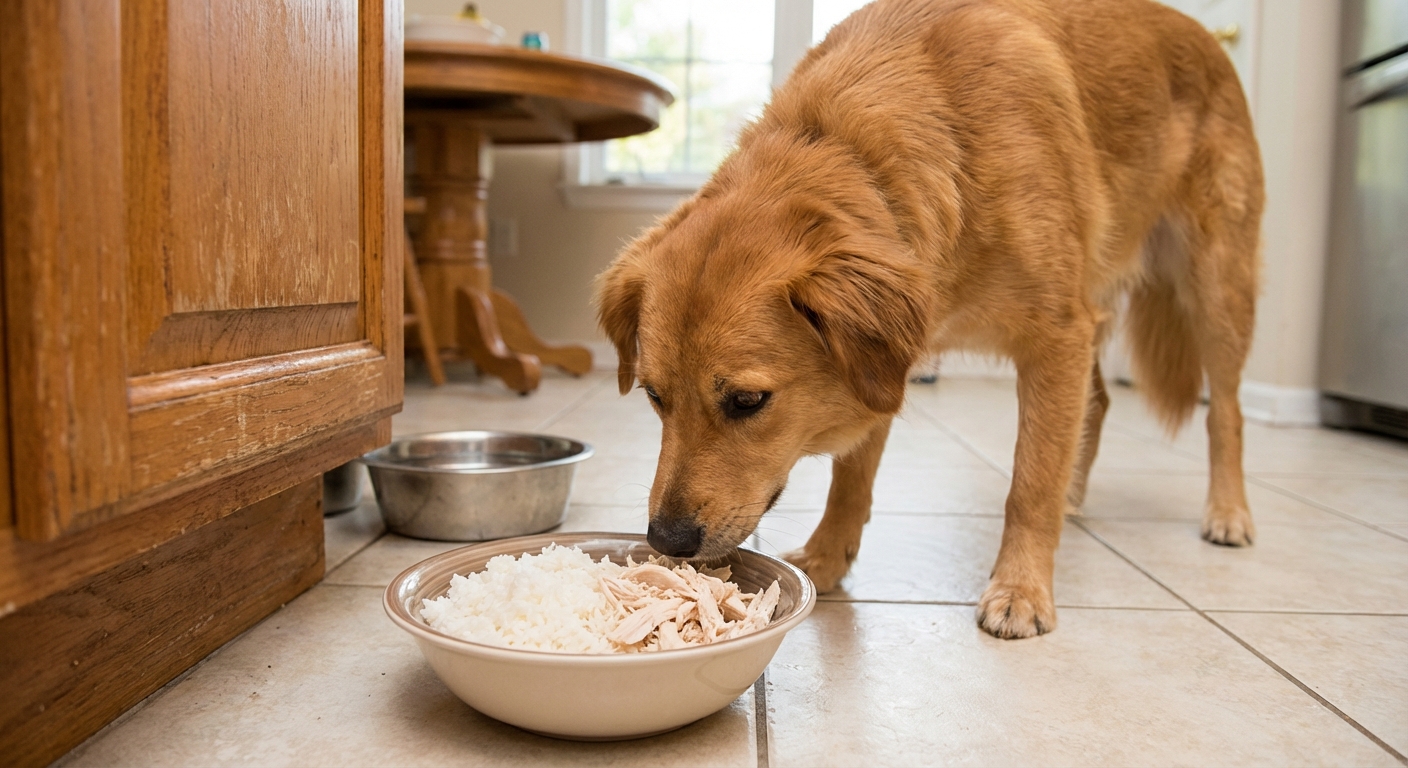
If there is no more vomiting and your dog seems comfortable, offer a small meal. Many dogs do well with bland, low-fat options for 24 to 48 hours, such as:
- Boiled chicken breast and white rice
- Cooked turkey and rice
- Plain scrambled egg (small amount)
- A veterinary gastrointestinal diet, if you have it
Feed small meals 3 to 4 times that day instead of one large meal.
Step 5: Adjust meal timing (especially for morning bile)
If your dog tends to vomit yellow foam early in the morning, try:
- A small bedtime snack (a spoonful of their food, a small low-fat treat)
- Split meals: breakfast, dinner, and a small late snack
For many dogs, this simple change reduces episodes because it cuts down the time the stomach sits empty.
Step 6: Track patterns for your vet
Write down:
- Time of vomiting
- What it looked like (foam, mucus, food, bile)
- Any diet changes, treats, chews
- New medications or supplements
- Stool changes
- Energy level and appetite
This is incredibly helpful if symptoms continue and your vet needs to decide what testing makes sense.
What not to do
- Do not give human medications (like Pepto-Bismol, ibuprofen, naproxen, or aspirin) unless your veterinarian specifically tells you to. Some are dangerous for dogs. Bismuth products can also darken stool and make it harder to judge possible GI bleeding.
- Do not force large amounts of water after vomiting. Gulping often triggers another round.
- Do not ignore repeated vomiting, even if it is “just bile.” Once the stomach is empty, bile is often what you see next.
How vets evaluate yellow bile vomiting
If vomiting is recurrent or your dog has other symptoms, your veterinarian may recommend:
- Physical exam (hydration, abdominal pain, temperature)
- Fecal testing for parasites
- Bloodwork to check liver, kidney, pancreas, electrolytes
- X-rays to look for obstruction or abnormal gas patterns
- Ultrasound for a closer look at stomach and intestines
Treatment depends on the cause and may include anti-nausea medication, stomach protectants, fluids, diet changes, deworming, or additional diagnostics.
What your vet may prescribe
Depending on your dog’s symptoms and history, your vet may use medications such as anti-nausea meds, acid reducers, or stomach lining protectants. These are not one-size-fits-all, and the safest plan is to use them only under veterinary direction.
Preventing future episodes
- Keep meals consistent and avoid long gaps between meals
- Transition foods slowly over 7 to 10 days
- Avoid fatty table scraps (a common trigger for pancreatitis)
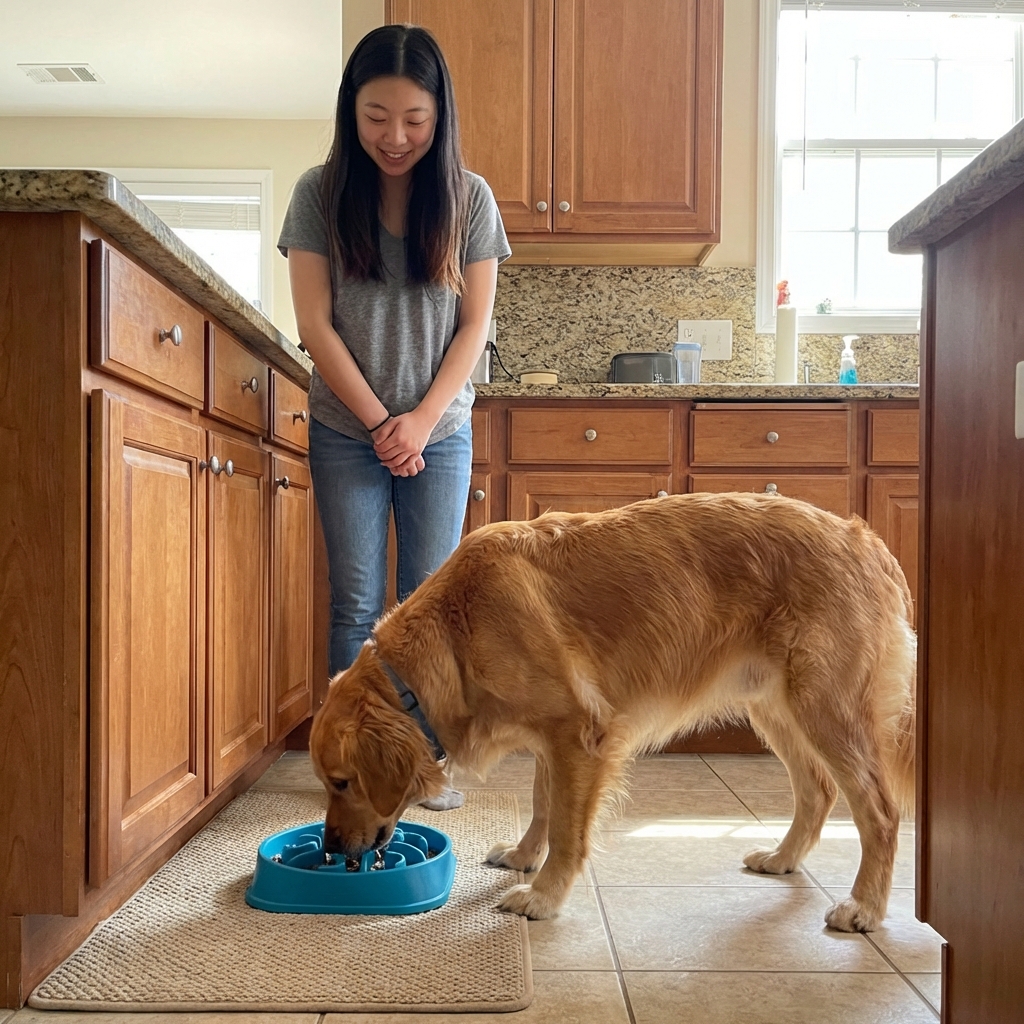
- Use puzzle feeders or slow bowls for dogs that eat too fast
- Dog-proof your home to reduce foreign body risk
- Stay current on parasite prevention as advised by your vet
Quick checklist
Often mild (still monitor closely):
- Vomited yellow foam once
- Normal energy, normal interest in food later
- No diarrhea, no belly pain
More concerning (call your vet):
- Vomiting continues or worsens
- Cannot keep water down
- Diarrhea, blood, fever, pain, weakness
- Possible toxin or foreign object
- Repeated episodes over days or weeks
If your dog vomits yellow foam repeatedly, it is not “nothing.” It is a clue. The trick is pairing that clue with your dog’s overall behavior, appetite, hydration, and risk factors.
Frequently asked questions
Is yellow foam always bile?
Often, yes. Sometimes it is yellow-tinted stomach fluid mixed with mucus, a small amount of food, or something they ate. If the color is unusual for your dog or you suspect they got into something, call your vet.
My dog vomits yellow foam but seems fine. Should I worry?
A single episode in an otherwise normal dog is often not an emergency. But if it becomes a pattern, especially several times a week, that is a great reason to talk with your veterinarian. Ongoing bile vomiting can be linked to reflux, gastritis, diet issues, or other underlying problems.
Can hunger cause yellow bile vomiting?
Yes. An empty stomach is one of the most common reasons. A small bedtime snack or splitting meals helps many dogs.
Does eating grass cause it?
It can. Some dogs eat grass when they feel nauseated and then vomit. Others eat grass because they like it. If grass eating is frequent or the vomiting is repetitive, it is worth investigating.
What if the vomit is bright green?
Bright green can be from eating grass or something dyed (like certain products or treats). If you suspect toxin exposure or your dog is acting unwell, treat it as urgent and call your veterinarian or a pet poison hotline right away.