
Dogs lick faces for bonding, communication, taste, attention, and stress relief. Learn when it’s normal, when to be cautious, and how to set kind “no kis...
Article
•
Designer Mixes
Why Do Dogs Lick Your Face?

Shari Shidate
Designer Mixes contributor
If you have ever leaned in for a cuddle and gotten a full face wash from your dog, you are in very good company. Face licking is one of the most common canine behaviors I get asked about as a veterinary assistant. The truth is, it can mean a lot of things, from affection to stress to plain old curiosity.
Let’s walk through the most evidence-based reasons dogs lick faces, when it is perfectly normal, and how to gently teach better manners if it is becoming too much.

What face licking means
1) Affection and bonding
For many dogs, licking is social. Puppies often lick an adult dog’s muzzle and face as an affiliative or appeasement gesture, and it can also be linked to food-seeking. Adult dogs may lick other dogs and people as a friendly, relationship-building behavior. If your dog’s body language is loose and wiggly, the licking is likely their version of a kiss.
2) Seeking attention
Licking works. If your dog licks your face and you laugh, talk, pet them, or even push them away while making eye contact, they may learn that licking is a reliable way to get a response. Dogs repeat behaviors that are rewarded, even accidentally.
3) “You taste interesting”
Salt from sweat, remnants of lotion, food smells, or even a recent snack can make your face extra appealing. Dogs explore with their noses and sometimes their mouths, so licking can be information-gathering as much as affection.
4) Stress relief and self-soothing
Licking can be calming for some dogs. If your dog licks intensely during stressful moments like visitors arriving, loud noises, or when you are getting ready to leave, it may be a coping behavior.
5) A learned greeting habit
Many dogs lick faces because humans lean down into their space. When you bend down, your face is suddenly within licking range. Without guidance, it becomes their default greeting routine.

Is it safe to let a dog lick your face?
In general, a quick lick from a healthy dog is generally considered low risk for most healthy adults, but “low risk” is not the same as “no risk.” Dog mouths (and fur) can carry bacteria and other germs picked up from the environment. Severe infections are rare, but they can happen.
If you want to read more on zoonotic (animal-to-human) disease risk, the CDC and AVMA both have practical guidance on safe pet contact and hygiene.
Be extra cautious if:
You have a weakened immune system, are undergoing chemotherapy, are on immune-suppressing medications, or have a chronic condition that makes infections more serious. (This is also the group at higher risk for rare but severe infections such as Capnocytophaga.)
You are caring for a newborn or infant, or you are an older adult with significant chronic illness.
You have open cuts, acne lesions, cold sores, or recent facial procedures.
Your dog has diarrhea, is vomiting, has eaten feces, or is not current on parasite prevention. (Some exposures, like Salmonella, Campylobacter, or parasites such as Giardia, are more likely when a pet has gastrointestinal illness or has been into something gross.)
Practical middle ground: if you enjoy the affection, consider directing kisses to your cheek or chin rather than lips, nose, eyes, or any broken skin. Wash your face or hands after lots of licking. Keep your dog on a veterinarian-recommended flea, tick, and intestinal parasite prevention plan, and stay on top of dental care so you can catch oral disease early.
When licking is a problem
Face licking is worth addressing if it is intense, hard to interrupt, or paired with concerning body language. Watch for:
Compulsive licking that seems out of control
Sudden new licking behavior, especially in an adult dog
Licking with pacing, whining, yawning, lip licking, pinned ears, or wide “whale eye”
Resource guarding or irritability when you try to stop the licking
Gastrointestinal signs like drooling, gulping, grass eating, vomiting, or diarrhea
Sometimes increased licking is tied to nausea, pain, skin allergies, dental disease, or anxiety. If it feels like your dog is licking to soothe discomfort, not to connect with you, it is worth a veterinary check.
Teach polite greetings
You do not have to choose between “never lick” and “endure it.” The goal is to teach your dog what to do instead. These options are gentle, effective, and realistic for most households.
One note that helps families succeed: training takes repetition, and it works best when everyone responds the same way.
Step 1: Remove the reward
If face licking is attention-seeking, any reaction can keep it going. When licking starts:
Turn your face away
Stand up or calmly step back
Keep your hands and voice neutral for a few seconds
Then immediately reward the behavior you want, like sitting, four paws on the floor, or touching your hand.
Step 2: Teach an incompatible behavior
A dog cannot lick your face while they are doing one of these:
Sit for greetings
Hand target (touch nose to your palm)
Go to mat when people enter
Practice when things are calm, then gradually add excitement. Keep sessions short and upbeat.
Step 3: Reward calm affection
If you like kisses sometimes, you can try putting them on cue. For example:
Invite with “kisses” for 1 to 2 seconds
Then cue “all done” and offer a sit or hand target
This will not be a perfect fit for every dog or household, but clear patterns and consistent boundaries help most dogs learn fast.
Step 4: Use smart management
Management is not failure; it is smart training support. If your dog is extra mouthy when guests arrive, use:
A leash for greetings
A baby gate
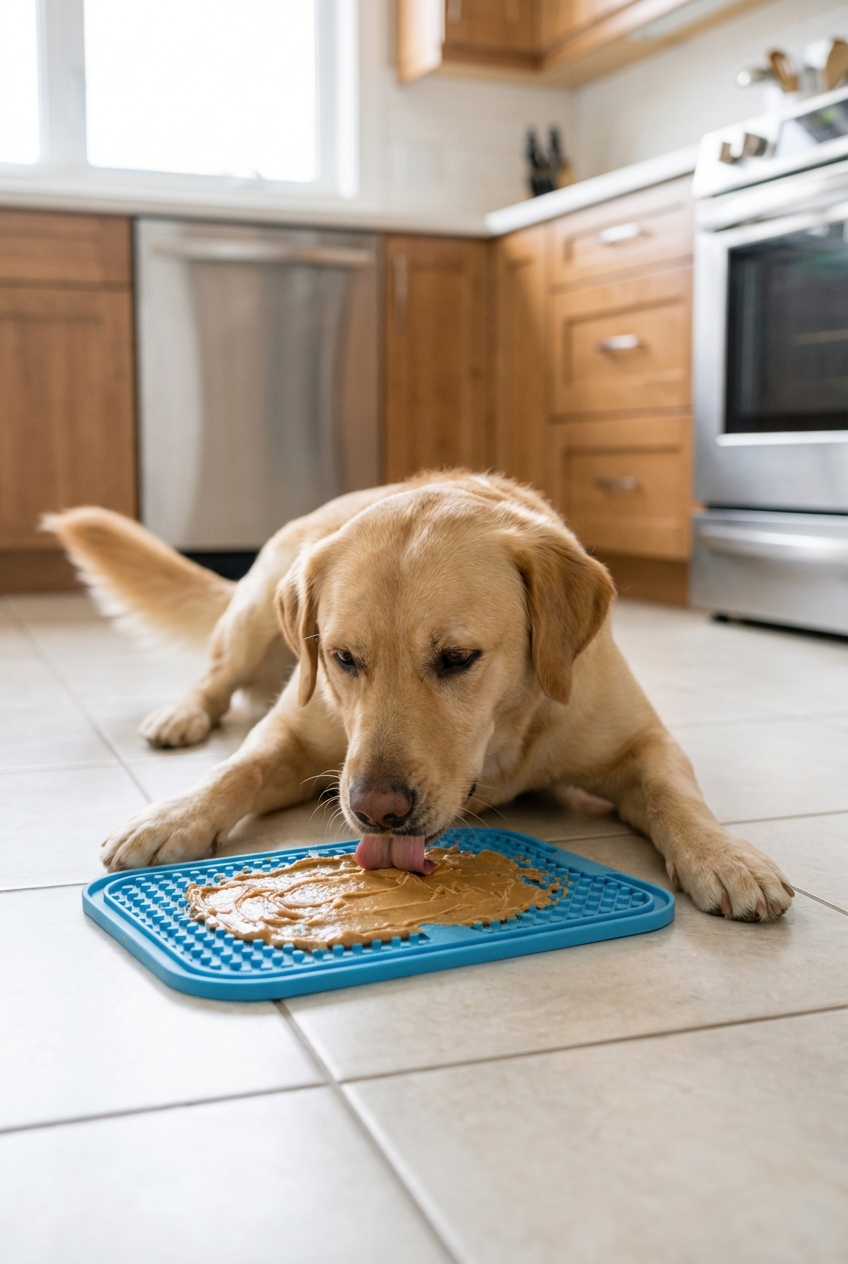
A stuffed food toy or lick mat in a separate area
What not to do
Avoid yelling, kneeing, grabbing the muzzle, or using harsh corrections. Punishment can increase anxiety, and anxious dogs often lick more, not less. It can also make greetings feel unpredictable, which is the opposite of what we want.
If the licking seems driven by anxiety or is difficult to interrupt, consider working with a qualified trainer. Look for credentials such as IAABC or CCPDT, and avoid anyone who relies on intimidation or “dominance” techniques.
Kids and face licking
For families, I recommend a clear rule: dogs do not lick children’s faces. Kids move unpredictably, and close face-to-face contact increases the risk of accidental nips, even from a friendly dog who simply gets overexcited.
Teach kids to stand tall like a tree if a dog jumps up to lick: feet planted, arms folded, chin up, and look away.
Reward the dog for sitting to greet.
Supervise closely, especially with toddlers.
Quick FAQ
Do dogs lick faces to show submission?
Sometimes. In dog-to-dog communication, muzzle licking can be an appeasement behavior. With humans, it can still be appeasement, but it is often attention-seeking or affectionate. Context and body language matter.
Why does my dog lick my face more when I cry or feel sick?
Dogs are sensitive to changes in our behavior, scent, and facial expressions. Some dogs respond to distress with closeness and licking, which can be attention, comfort-seeking, or a learned way to engage you.
Why does my dog lick only one person’s face?
It can be preference, reinforcement history, scent, or that person’s style of greeting. If one person laughs and pets, the dog will usually choose them.
Bottom line
Most face licking is normal canine communication, but you get to set boundaries. If you want fewer kisses, focus on calm, consistent redirection and reward a polite greeting behavior. For most households, a small plan repeated daily beats a big plan done once.
And if licking becomes sudden, intense, or paired with other signs of discomfort, a vet visit is a wise next step.
Your dog is not trying to be “dominant” or “bad.” They are communicating the best way they know how. With a little guidance, they can learn a greeting that works for both of you.