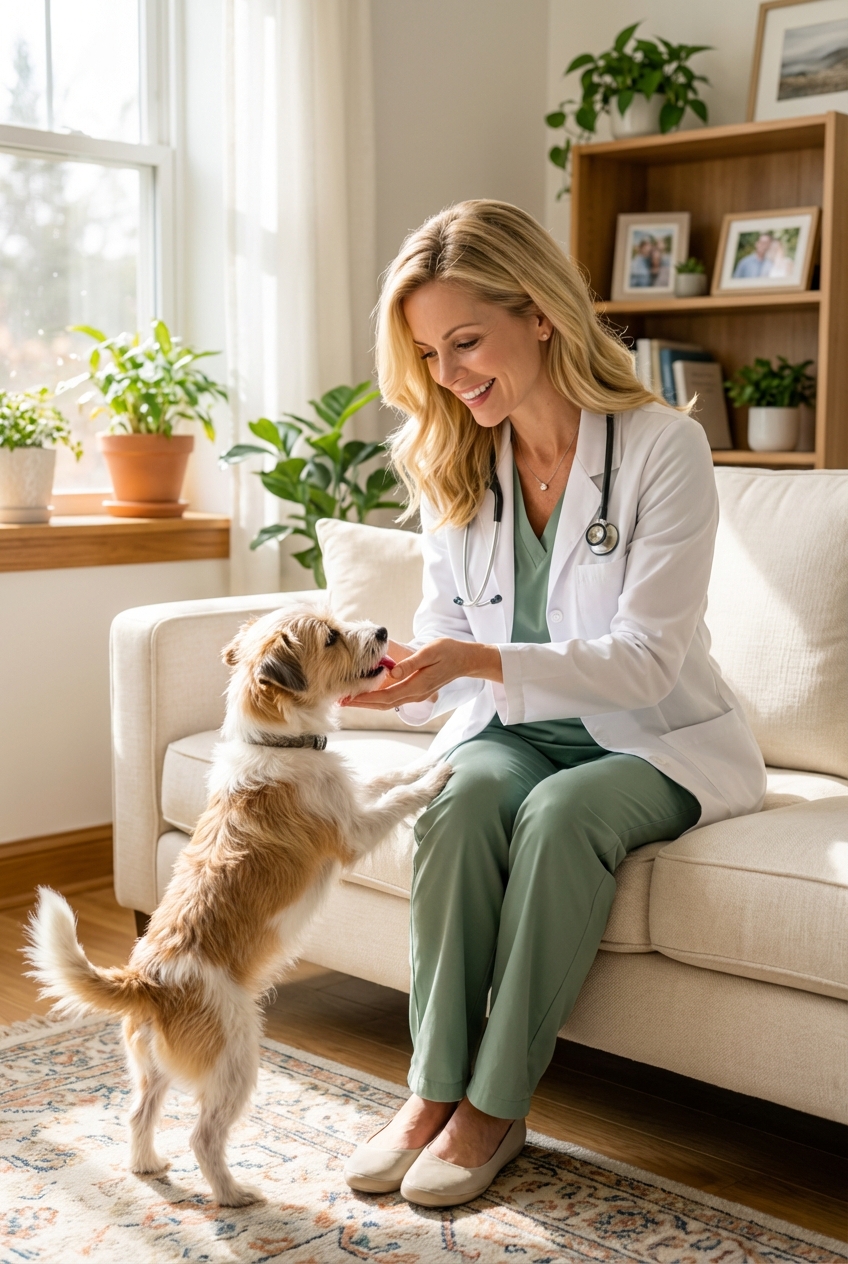
Wondering why your dog licks you nonstop? Learn common causes, when licking can signal stress or illness, hygiene safety tips, and gentle training and enrich...
Article
•
Designer Mixes
Why Do Dogs Lick Your Arm?

Shari Shidate
Designer Mixes contributor
When a dog starts licking your arm, it can feel sweet, funny, or a little confusing. In most cases, it is normal canine communication. Licking can signal affection, curiosity, stress, or simply that something on your skin smells or tastes interesting.
As a veterinary assistant, I like to remind people of one simple truth: the meaning depends on the whole picture. Your dog’s body language, the situation, and how often it happens matter more than the lick itself.
What licking means in dog language
Licking is a natural behavior that starts early. Puppies lick their mom as part of bonding and to solicit care and attention. Adult dogs continue to use licking as a social tool, and they often lick faces and hands because those are the places they most often interact with on us and they are easy to reach.
Think of licking as a multi-purpose signal. The same action can mean different things in different contexts.
Common reasons dogs lick your arm
1) Affection and bonding
Many dogs lick because you are part of their family group. If your dog has soft eyes, a relaxed body, and a loose tail wag while licking, affection is a likely explanation.
2) “You taste interesting”
Human skin carries salty sweat, lotion, sunscreen, and food residue, plus a whole library of everyday scents. Dogs experience the world through smell and taste, so an arm can be like a message board full of information.
- Sweat and salt after a workout can trigger extra licking.
- Lotions and body products may smell appealing, even if they are not meant to be ingested.
- Cooking smells cling to skin, especially hands and forearms.
Safety note: If you use medicated creams, retinoids, essential oil products, or topical pain relievers, try to prevent licking. Some ingredients can upset your dog’s stomach or be harmful in larger amounts. Higher-risk examples include zinc oxide (common in diaper rash creams), salicylates like methyl salicylate (found in some muscle rubs), and certain essential oils (including tea tree). If your dog licks or ingests a topical product and then vomits, seems wobbly, or acts “off,” call your veterinarian or a pet poison hotline right away.
3) Attention-seeking
Dogs repeat behaviors that work. If licking makes you pet them, talk to them, laugh, or even push them away, your dog may learn, “Licking gets a response.” This is especially common in social breeds and young dogs.
4) Stress relief and self-soothing
Licking can be self-soothing for some dogs, especially when they are anxious, overstimulated, or unsure. You might notice it during loud noises, when company arrives, or when routine changes.
Clues that licking is stress-based include:
- Yawning, lip licking (quick tongue flicks), or panting when not hot
- Pinned-back ears or a tense face
- Pacing, clinginess, or difficulty settling
5) Appeasement behavior
Some dogs lick as a polite “I’m friendly” signal. This can show up if your dog is unsure, meeting someone new, or when you are leaning over them. It is often paired with a lowered posture and a gentle approach.
6) Boredom or low enrichment
If a dog is under-stimulated, repetitive licking can become a default activity. This tends to happen when a dog has plenty of love, but not enough structured outlets like sniffing walks, training games, or chew time.
7) Hunger, nausea, or GI discomfort
Occasionally, frequent licking can be tied to stomach upset. Some dogs lick people, floors, or furniture when nauseated. If your dog suddenly becomes extra licky and also drools, eats grass, or seems restless, consider a tummy issue and check in with your veterinarian.
8) Discomfort or itchiness
Some dogs get more clingy or repetitive with behaviors like licking when they are uncomfortable. Allergies, itchy skin, ear infections, and pain do not always look dramatic, especially at first. If licking ramps up alongside scratching, head shaking, or sleepiness, it is worth mentioning to your vet.
When arm-licking can be a red flag
Most licking is harmless, but it is worth paying attention if it is new, intense, or hard to interrupt.
- Sudden increase in licking with no obvious cause
- Compulsive licking that seems frantic or repetitive
- Other symptoms like vomiting, diarrhea, lethargy, appetite changes, coughing, or skin irritation
- Licking specific spots on you repeatedly, especially if paired with pawing or whining. Dogs can be drawn to new scents from sweat, lotions, or minor skin changes, but this is not diagnostic of an infection or illness.
If something feels off, trust that instinct and get guidance from your vet. It is always easier to address a problem early.
If licking looks compulsive, the next steps are usually a basic medical check (to rule out pain, nausea, skin issues, and allergies), then a plan that combines enrichment plus behavior support. Many families also benefit from working with a qualified trainer or veterinary behaviorist, especially if anxiety is part of the pattern.
How to respond in a way your dog understands
If you like the licking
It is okay to allow it in moderation, but set gentle boundaries so it does not become constant. You can “thank them” with calm petting and then redirect to a toy or chew.
If you do not want licking
You do not need to punish licking. Instead, teach what you want your dog to do instead.
- Stay neutral: Avoid big reactions. Even laughter can reinforce it.
- Remove access: Calmly move your arm away and stand up if needed.
- Ask for an alternate behavior: “Sit,” “down,” or “touch” are great options.
- Reward the alternative: Give attention or a treat when your dog does the replacement behavior.
A simple training swap: lick to “sit”
If your dog licks your arm for attention, practice this when you are relaxed and your dog is likely to lick.
- When licking starts, gently move your arm away.
- Ask for a sit.
- The moment your dog sits, give calm praise and petting.
- Repeat consistently for a week.
Many dogs quickly learn that sitting is the better way to ask for affection.
What not to do
- Do not yell or punish. It can increase anxiety and make licking worse.
- Do not put bitter spray on your skin. Many products are not meant for human skin and can irritate or be accidentally ingested.
- Do not reward escalating licking. If it is getting intense, pause attention and redirect to a calmer option.
Hygiene and safety tips
- Wash hands and forearms after using topical medications or strong-scented products.
- Avoid letting your dog lick broken skin or fresh wounds. Dog mouths carry bacteria, and saliva can irritate healing skin.
- Extra caution for high-risk people: If someone in the home is immunocompromised, elderly, very young, or has open wounds, avoid face licking and prioritize handwashing.
- Be cautious with kids: If your dog licks because they are anxious, it can escalate to nipping in stressful situations. Supervise closely.
- Check your dog’s mouth if licking changes suddenly: Oral pain is not the most common reason for arm-licking, but it can contribute. Clues include bad breath, reluctance to chew, dropping food, one-sided chewing, bleeding gums, or pawing at the mouth.
Quick takeaway
Licking is usually a normal sign of connection, curiosity, or communication. Watch your dog’s body language, notice patterns, and redirect gently if licking becomes excessive.
If you are seeing sudden changes or other symptoms, reach out to your veterinarian. A little detective work can go a long way in keeping your dog comfortable and your household calm.