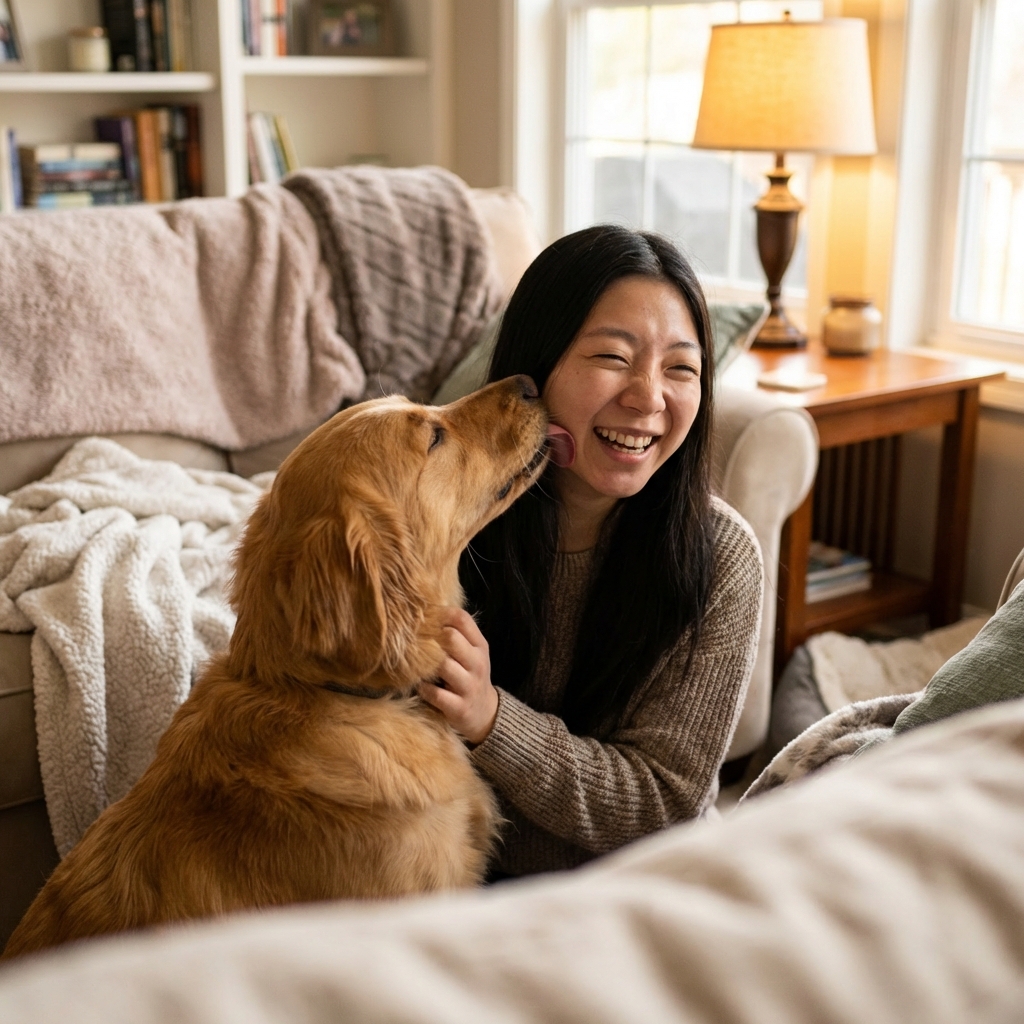
Why does your dog lick your face? Learn the most common causes, when it’s normal vs. a stress or health signal, safety guidance, and kind training steps fo...
Article
•
Designer Mixes
Why Do Dogs Lick People’s Faces?

Shari Shidate
Designer Mixes contributor
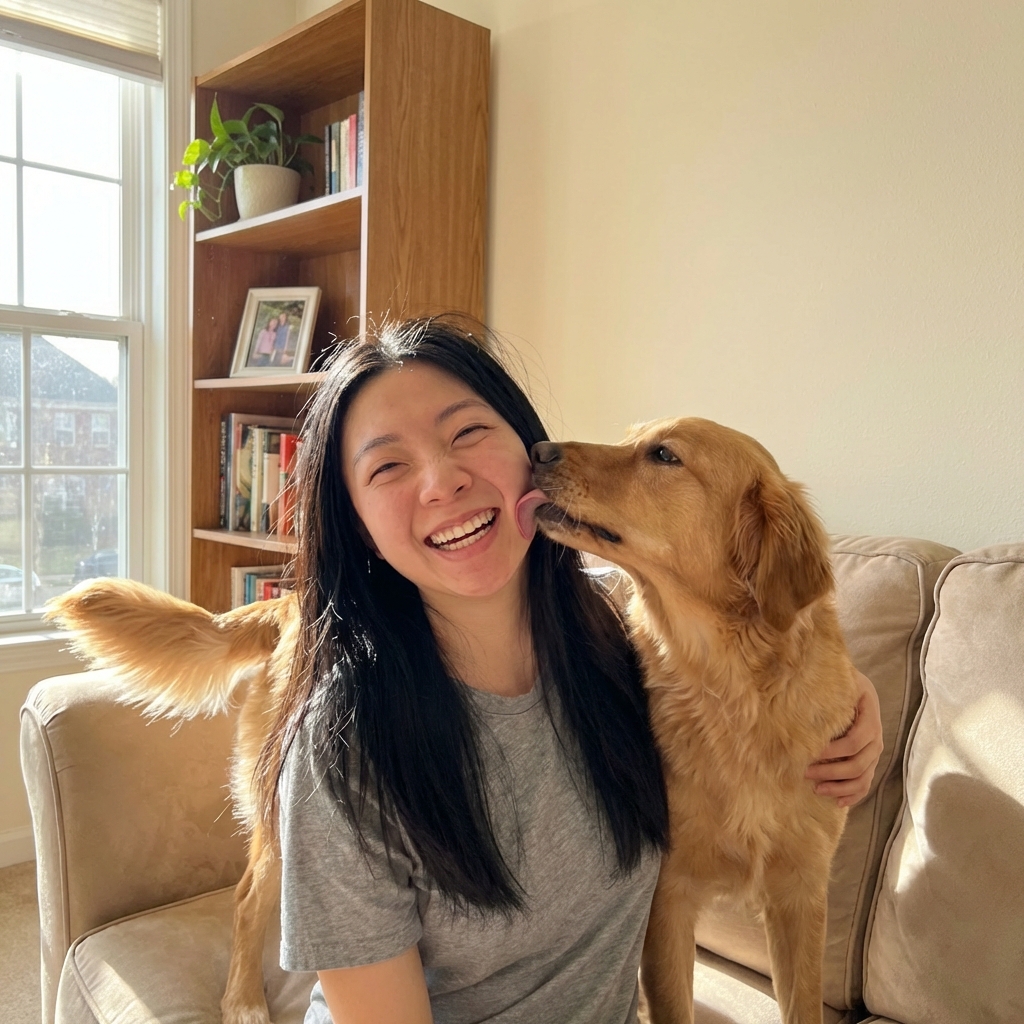
If you have ever leaned in for a cuddle and gotten a surprise face wash, you are definitely not alone. Face licking is one of the most common dog behaviors I hear about as a veterinary assistant here in Frisco, Texas. And while it can be sweet, it can also be confusing, annoying, or even a little concerning.
The good news is that most face licking is normal. The even better news is that once you understand why your dog does it, you can respond in a way that supports their wellness and your comfort.
The quick answer
Dogs lick people’s faces for a mix of reasons: social bonding, communication, attention-seeking, taste and smell, stress relief, and learned reinforcement (because it works). Sometimes it is also a sign they need something, like reassurance, enrichment, a potty break, or a calmer routine.
Common reasons dogs lick faces
1) Affection and bonding
Licking is a natural social behavior for many dogs. In friendly relationships, licking can function like grooming. It can be your dog’s way of saying, “You are my person, I feel safe with you.”
2) A social signal
In canine communication, licking around the mouth can be a polite, calming gesture. Puppies lick adult dogs’ faces, sometimes as appeasement and sometimes because it is part of early food-seeking behavior (they may lick to prompt an adult to regurgitate). Some dogs keep the habit with humans. Your dog may lick your face as a friendly “I mean no harm” signal, especially if you are leaning over them or hugging.
3) Your face tastes interesting
Skin is salty, and faces often have traces of food, lotion, or even toothpaste. Dogs experience the world through smell and taste, so a few licks can be simple information gathering.
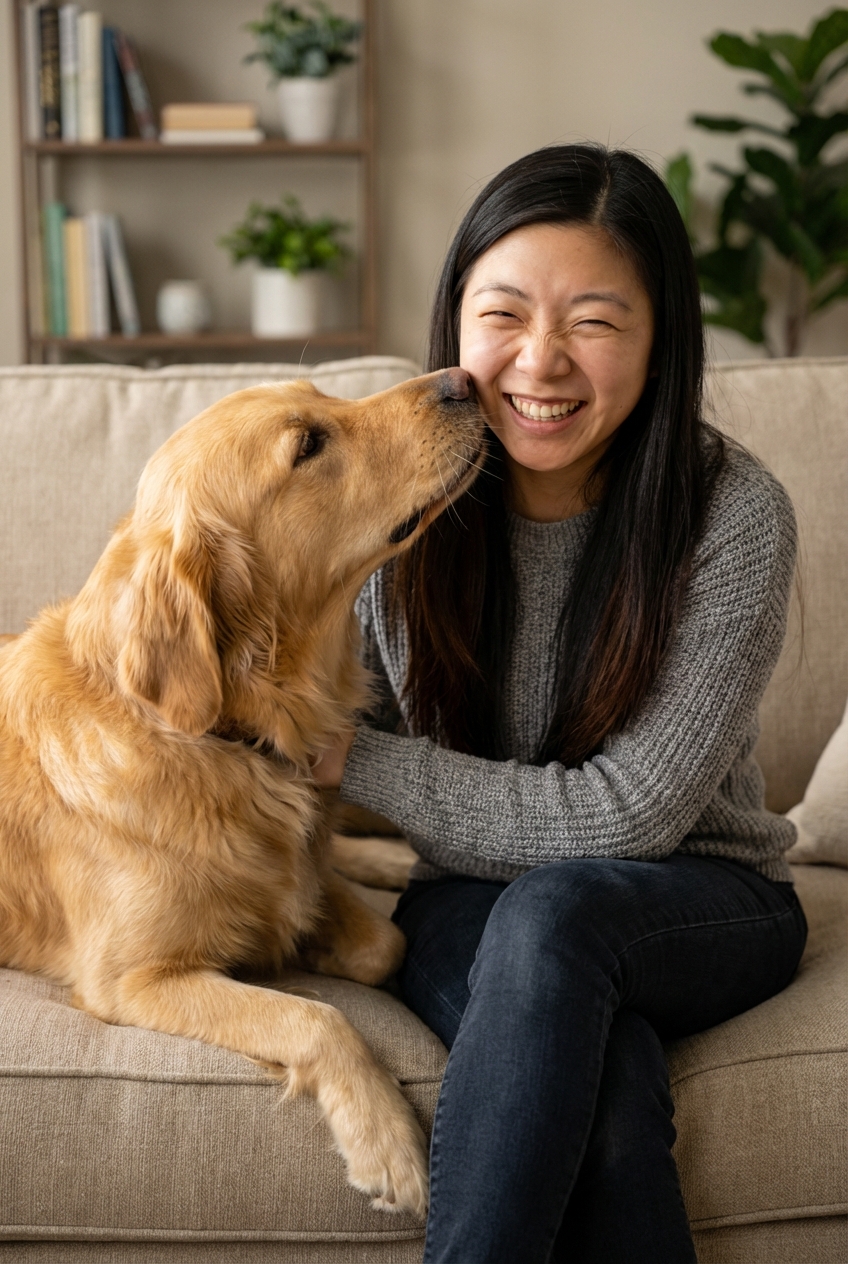
4) Attention-seeking
Dogs are excellent at learning patterns. If licking makes you laugh, talk, pet them, or even push them away, that can still be rewarding. From your dog’s perspective, licking is a reliable way to get a response.
5) Stress relief or self-soothing
Licking can be soothing for some dogs and may help them settle. If your dog licks more during storms, visitors, schedule changes, or after scolding, it may be a coping strategy.
6) They may be asking for something
Sometimes licking is a request: “Can we go out?” “Are you okay?” “Please pay attention to me.” If the licking happens at specific times, look for patterns and consider what your dog might need. For example, take them out for a quick potty break, offer fresh water, do a 2 minute training mini-session (sit, touch, down), or set them up with a chew or lick mat so they can decompress.
Is face licking safe?
For most healthy adults, occasional dog kisses are generally low risk. Zoonotic infections are uncommon but possible, and the risk goes up when a dog licks your mouth, nose, eyes, or any broken skin. If you are at higher risk, it is always reasonable to check with your physician about what boundaries make sense for you.
When to be more cautious
- If you have cuts, acne lesions, or healing skin: bacteria can enter more easily.
- If anyone in the home is immunocompromised: for example, cancer treatment, transplant medications, or certain autoimmune conditions.
- If someone has a higher infection risk: for example, poorly controlled diabetes.
- If there are infants, elderly family members, or pregnant people: extra hygiene is a good idea.
- If your dog eats feces, hunts wildlife, or has GI upset: avoid face and mouth licking until things are stable.
Common-sense hygiene tips
- Teach “off” or “no kisses” for your face, and redirect to a toy or chest scratches.
- Wash your face or hands after heavy licking.
- Stay current on parasite prevention and routine veterinary care.
Wellness is not about fear. It is about good boundaries, good hygiene, and understanding your dog’s needs.
When licking can be a problem
Face licking is usually normal, but certain patterns can hint at stress, discomfort, nausea, pain, or a compulsive behavior pattern.
Check in with your vet if you notice:
- Sudden new licking behavior in a dog who never used to do it
- Compulsive licking that is hard to interrupt or paired with pacing, panting, whining, or restlessness
- Licking plus nausea signs such as lip smacking, drooling, gulping, or grass eating
- Behavior changes like irritability, hiding, reduced appetite, or sleep disruption
In clinic, I often see families mention a “newly clingy, extra kissy” phase that turns out to line up with a diet change, a stressful schedule shift, tummy upset, or dental pain. Sometimes the fix is simple, like more structured exercise and enrichment. Sometimes it is medical. Either way, you are not overreacting by asking.
How to stop face licking
You can set a boundary and still stay loving. Dogs do best with clear, consistent feedback.
Try this step-by-step
- Stay calm and neutral: big reactions can be reinforcing.
- Turn your face away and gently stand up or step back.
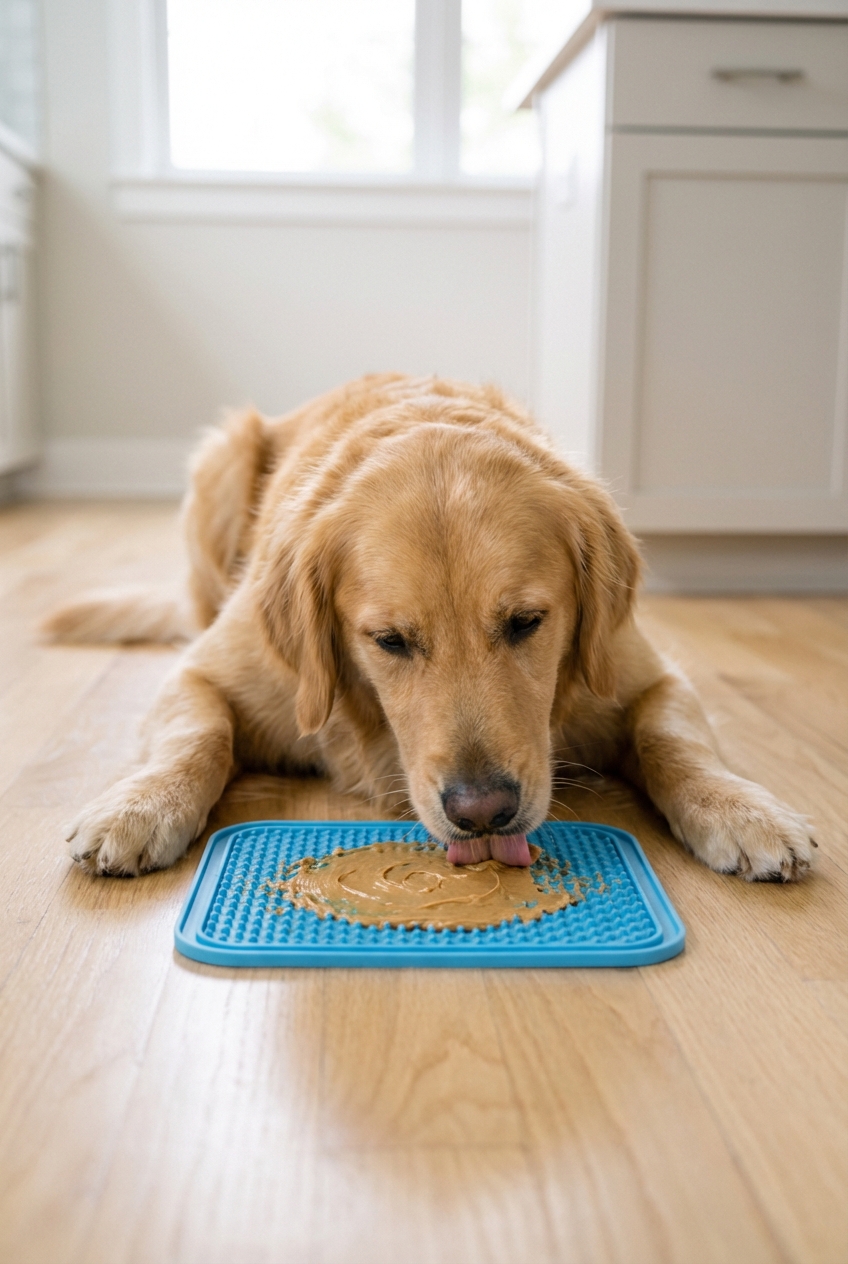
- Redirect to a toy, a sit cue, or a lick mat.
- Reward what you want: petting when your dog keeps four paws on the floor and their mouth off your face and hands.
What not to do
- Do not punish or yell: it can increase stress and make the behavior worse.
- Avoid aversive tools for this: you want calm, positive redirection and consistency.
Give them a better outlet
Some dogs lick because they need more calming enrichment. Options that many families love include:
- Frozen lick mats with a thin smear of plain yogurt or canned pumpkin
- Snuffle mats and treat searches
- More decompression walks, not just quick potty trips
A quick note on kids and consent
If you have children, supervise face contact. Teach kids to stay still, turn their face away, and call an adult instead of squealing or pushing. Also watch the dog’s body language. If you see stiffness, freezing, “whale eye,” tucked tail, or lip lifting, give the dog space and choose a calmer interaction.
Puppies vs adult dogs
Puppies
Puppies lick faces constantly because they are learning social rules and exploring the world. This is a great time to gently teach alternatives like sitting for attention, licking a toy, or targeting your hand instead of your face.
Adult dogs
Adult face licking tends to be habit, bonding, or anxiety relief. If it increases with age, I also like to rule out nausea, dental issues, or pain, especially if you notice changes in appetite or breath.
FAQ
Do dog kisses mean my dog loves me?
Often, yes. But licking is not always “love.” It can also be a calming signal, a request for attention, or a habit that has been reinforced over time.
Why does my dog lick my face only at night?
Nighttime licking is commonly linked to winding down, seeking reassurance, or excitement when you finally sit still. It can also show up when dogs have mild nausea that is more noticeable in the evening.
Should I let my dog lick my mouth?
From a hygiene standpoint, it is safest to avoid mouth, nose, eyes, and broken skin. If you love “kisses,” aim for the cheek or redirect to cuddles and petting instead.
The bottom line
Dogs lick faces because it is natural, rewarding, and meaningful to them. Most of the time it is a harmless bonding behavior. If it feels excessive or sudden, consider stress, nausea, pain, or a change in routine and check in with your veterinarian.
You can absolutely teach “no face licking” while still keeping your relationship warm and connected. Clear boundaries plus positive redirection is a wellness win for both of you.