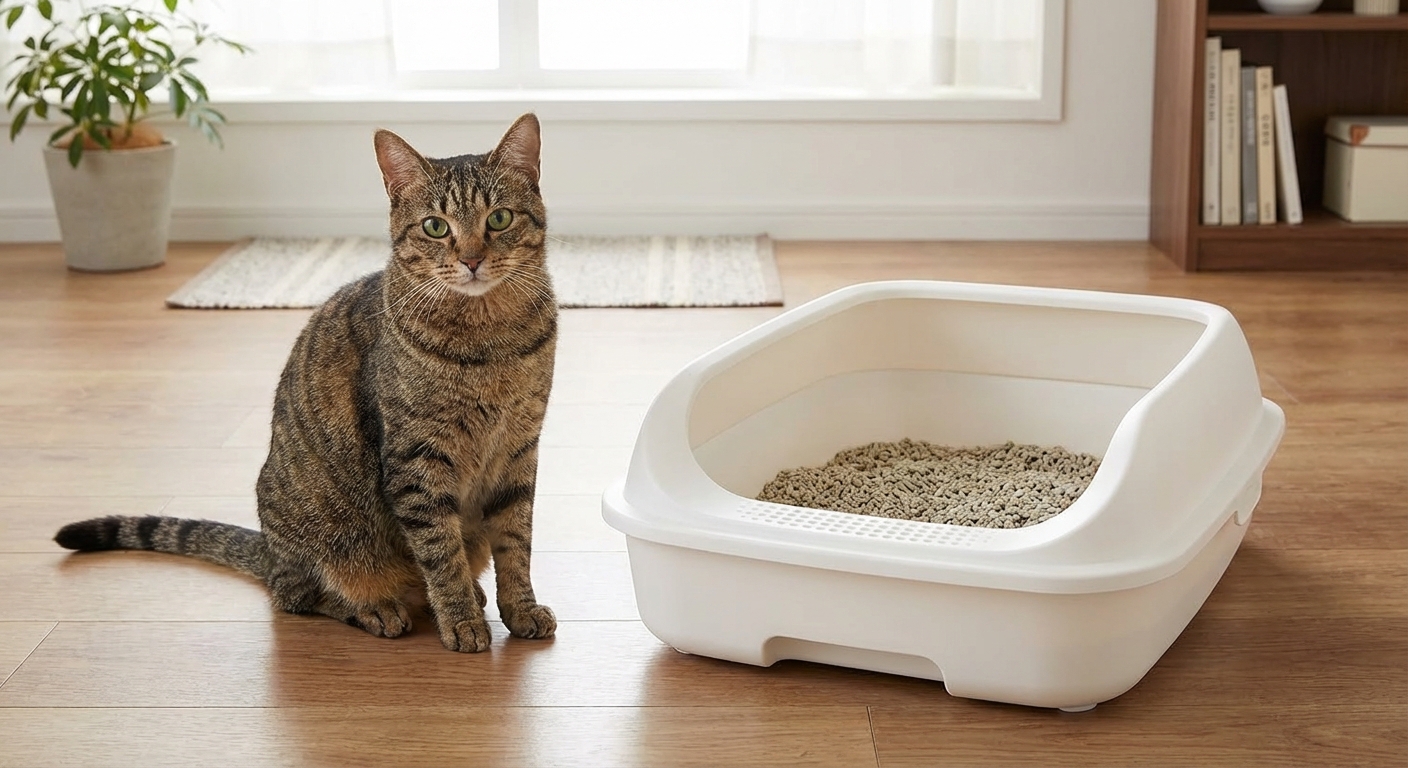
Cat spraying is usually communication, not spite. Learn how to tell spraying vs accidents, rule out medical issues, improve litter boxes, reduce stress, and ...
Article
•
Designer Mixes
Why Do Cats Spray? Causes and How to Stop Cat Spraying

Shari Shidate
Designer Mixes contributor
Cat spraying can feel personal, especially when it shows up on a couch, a doorway, or your favorite shoes. But spraying is not “spite” or “revenge.” It is a communication behavior, and once you understand the message your cat is trying to send, you can build a practical plan to stop it.

In this guide, we will cover why cats spray, how it differs from litter box accidents, what triggers it, and the most effective steps you can take at home. We will also talk about when it is time to involve your veterinarian or a qualified behavior professional.
What is cat spraying?
Spraying is a form of urine marking. Instead of squatting to urinate a full bladder, a cat typically stands, backs up to a vertical surface, lifts the tail, and releases a small amount of urine. You may also notice tail quivering. The goal is not emptying the bladder. The goal is leaving a scent message.
Spraying vs. peeing outside the litter box
- Spraying: small volume, usually on vertical surfaces (walls, doors, furniture legs), often in multiple spots.
- Inappropriate urination: larger puddles, usually on horizontal surfaces (beds, laundry piles, rugs), often related to litter box issues or medical conditions.
This distinction matters because the fix is different. When in doubt, treat it as a health and litter box issue first, because pain and bladder inflammation can change behavior quickly.
Why do cats spray?
Cats are territorial by nature. Spraying is one of the ways they maintain a sense of safety and predictability in their environment.
1) Hormones
Intact cats are much more likely to spray. Males spray more often, but females can spray too, especially when in heat. Spraying in this context is a way of advertising reproductive status and establishing territory.
2) Stress and anxiety
Many spraying cases are stress-driven. Cats thrive on routine, and even small changes can feel big to them. Common stressors include:
- Moving to a new home or rearranging furniture
- New baby, new roommate, or frequent guests
- Construction noise, renovations, or new smells
- Changes in schedule, travel, or a caregiver change
- Conflict between cats in a multi-cat home (more on this below)
3) Territorial pressure, including outdoor cats
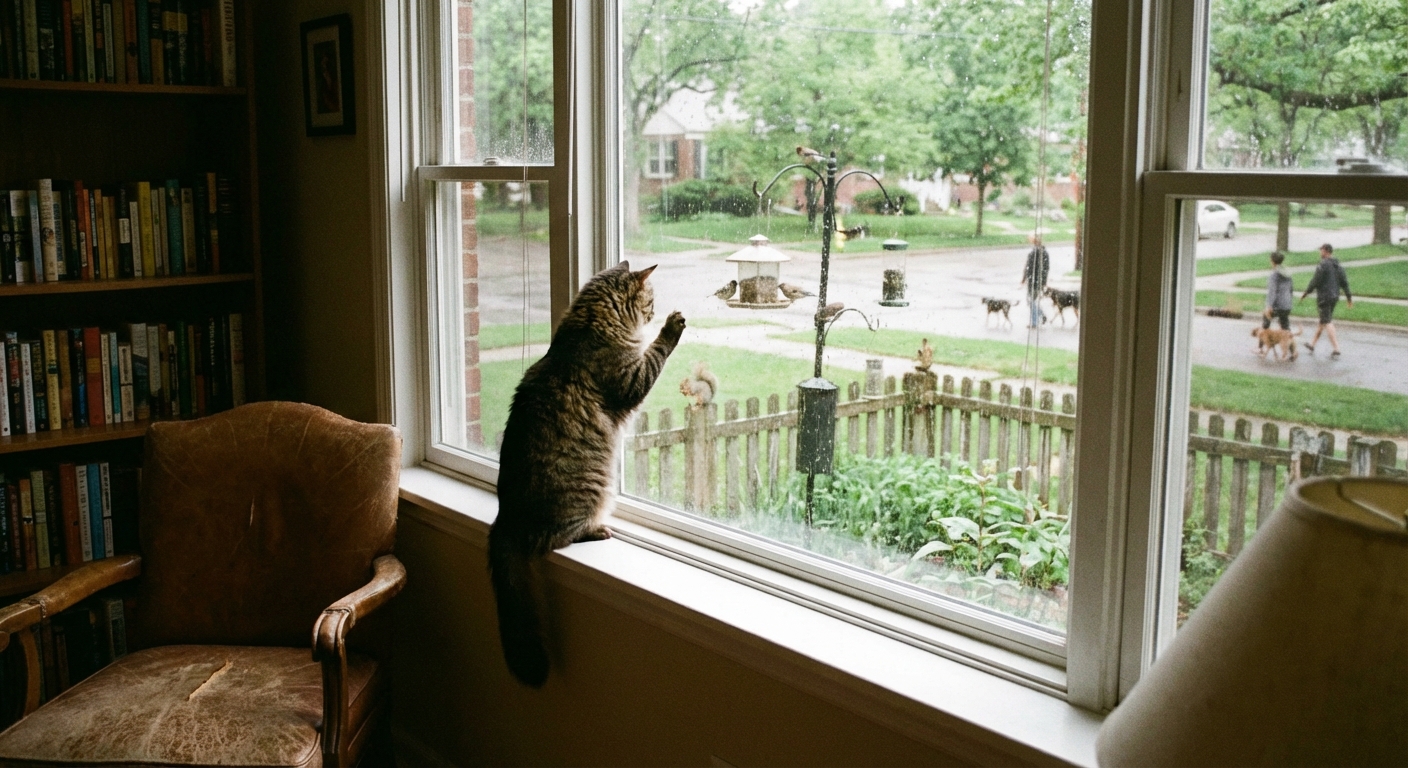
Your cat may spray because they see or smell another cat nearby. This is especially common around windows, doors, and entryways. Even if your cat is indoors only, a neighborhood cat on the porch can trigger marking.
4) Health issues
Lower urinary tract disease can lead to urination outside the box, and stress from feeling unwell can also increase marking. This umbrella includes feline idiopathic cystitis (FIC), crystals or stones, and sometimes infection (more common in older cats). Pain from arthritis or other conditions can also change litter box habits. Any new or sudden change should be treated as medical until proven otherwise.
Quick self-check
- Marks are on vertical surfaces more often than the floor
- Small amounts of urine, sometimes many spots
- Tail held upright, sometimes quivering
- Common locations include doors, windows, corners, and new items
If you are seeing large puddles, repeated accidents on soft items like bedding, or signs of discomfort, start with a veterinary visit.
How to stop cat spraying
Spraying is very treatable, but it works best when you address the problem from multiple angles. Think of it like rebuilding your cat’s sense of safety: remove the old “messages,” reduce the triggers, and make the preferred routines easy to follow.
Step 1: Rule out medical causes
Schedule a vet visit if spraying is new, suddenly worse, or paired with:
- Frequent trips to the litter box
- Crying or straining while urinating
- Blood in urine
- Urinating in unusual places after years of good habits
- Reduced appetite, hiding, or irritability
Urgent warning: If your cat is repeatedly straining with little or no urine, seems painful, vomits, or becomes weak or lethargic, seek emergency veterinary care right away. In male cats especially, this can signal a urinary blockage.
Medical care is not just about treatment. When pain and inflammation are controlled, behavior change becomes much easier.
Step 2: Spay or neuter if your cat is intact
Spaying or neutering is one of the most effective interventions. Many cats reduce or stop spraying after the procedure, but outcomes vary. If stress, territorial pressure, or inter-cat conflict is still present, your cat may need additional support even after surgery.
Step 3: Clean correctly
Regular cleaners often leave behind scent compounds that your cat can still detect. Use an enzymatic cleaner designed for pet urine.
- Blot fresh urine first, do not rub
- Saturate the area according to the product directions
- Let it air dry fully
- Avoid ammonia-based products, which can smell urine-like to cats
- Avoid steam cleaning or heat drying on soiled areas, since heat can set odors and stains
- Test cleaners on an inconspicuous spot first, especially on upholstery, rugs, or sealed wood
- If a porous item is heavily contaminated (carpet pad, foam cushions), replacement is sometimes the most realistic fix
Step 4: Improve the litter box setup
Even when spraying is the main issue, improving litter box comfort reduces overall stress.
- Number of boxes: aim for one box per cat, plus one extra.
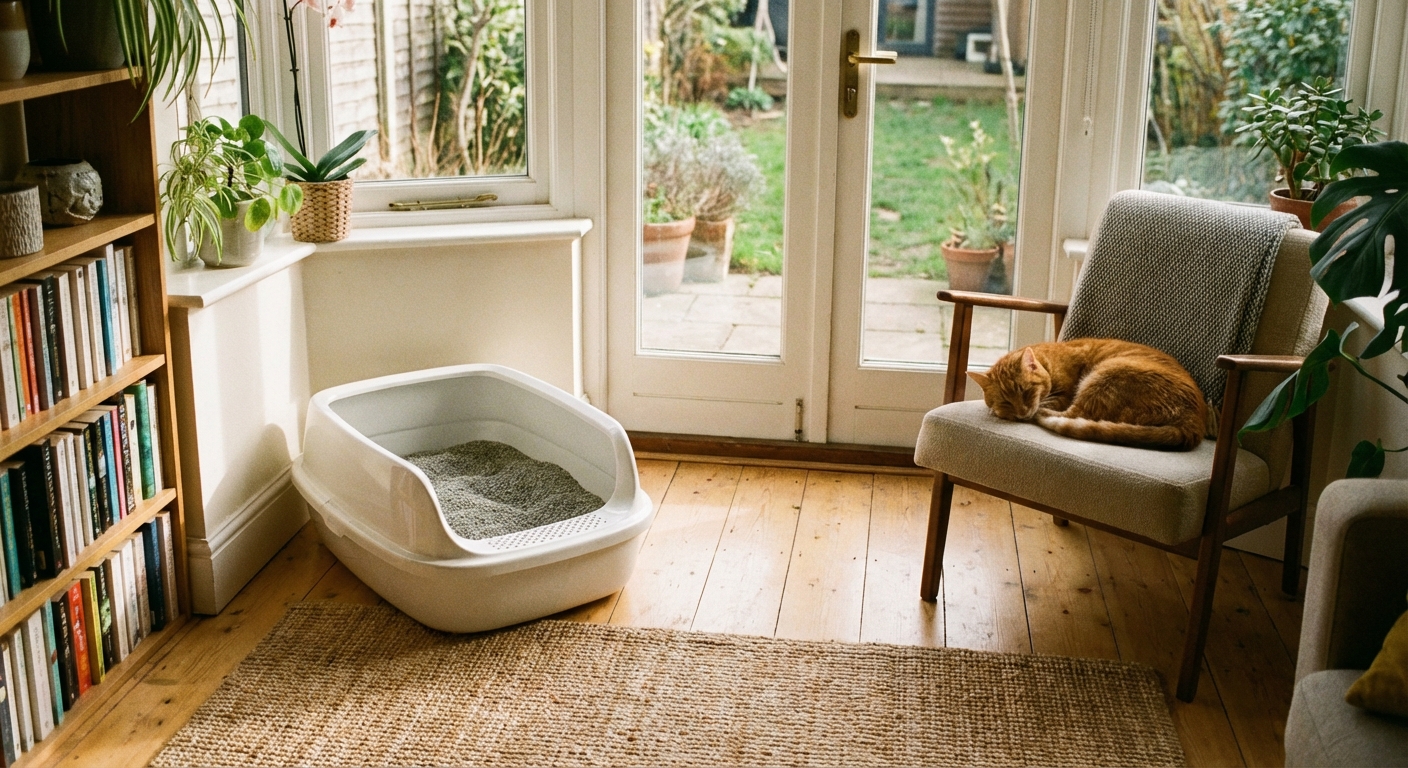
- Location: quiet, accessible, and spread out. Avoid trapping a cat in a dead-end area.
- Size: larger is usually better. Many cats prefer open boxes.
- Litter: unscented, fine-grained, clumping litter is commonly preferred. Many cats do best with about 2 to 3 inches of litter, but preferences vary.
- Cleaning: scoop daily and wash the box regularly with mild soap.
Step 5: Reduce triggers
Your goal is to make your home feel predictable again.
- Block visual access to outdoor cats with frosted window film or by closing blinds during high-traffic hours.
- Create vertical space like cat trees and shelves so cats can pass without conflict.
- Offer multiple resources in different rooms: food, water, scratching posts, resting spots, and litter boxes.
- Build routine with consistent feeding and play times.
Step 6: Use supportive tools
These strategies work best when paired with the steps above.
- Pheromone support: plug-in diffusers or sprays can help some cats feel calmer in key areas. Evidence is mixed, but many owners report benefits for stress-related marking.
- Daily play: 10 to 15 minutes of interactive play once or twice daily can reduce anxiety and territorial tension.
- Scratching alternatives: provide sturdy scratching posts near spray hotspots to redirect marking behaviors.
- Reward calm behavior: treats and praise when cats use their preferred areas helps reinforce security.
Step 7: Manage the hotspot
If your cat repeatedly marks a specific location, temporarily change what that area “means.”
- Place a food bowl or treat station there only if the spot is fully cleaned and your cat feels safe eating there. Many cats are less likely to mark near food.
- Add a cozy bed, a tall scratching post, or a cat tree to shift the behavior and create a positive hangout zone.
- Use a washable cover or a temporary barrier on hard-to-clean surfaces (for example, a plastic chair mat turned vertically, or a washable furniture cover).
Multi-cat homes
Spraying in multi-cat homes is often about resource access and social stress. Focus on creating “easy wins” that reduce competition and prevent hallway standoffs.
- Feed cats separately if one guards food or stares down the other
- Provide multiple resting areas at different heights
- Keep litter boxes in more than one location, not all in one room
- Watch for subtle bullying like blocking doorways, ambushing, or silent staring near key resources
If conflict is obvious, a slow reintroduction plan may be needed, similar to introducing new cats, even if they have lived together for years.
What not to do
It is completely understandable to feel frustrated. But punishment tends to increase stress, which can make spraying worse.
- Do not yell, spray water, or rub your cat’s nose in urine
- Do not chase your cat away from the marked area
- Do not use strong-smelling cleaners that may intensify marking
Instead, think: reduce stress, remove scent, and make the desired behavior easier than the unwanted one.
When to get extra help
Consider a veterinarian or a qualified cat behavior professional if:
- Spraying continues after spay or neuter and basic changes
- You suspect fear, aggression, or serious inter-cat conflict
- There are repeated relapses tied to predictable stressors
For behavior support, look for a board-certified veterinary behaviorist or a certified cat behavior consultant with a humane, reward-based approach.
In some cases, your vet may discuss short-term or longer-term anti-anxiety medication as part of a behavior plan. This is not a “last resort.” For the right cat, it can lower stress enough for training and environmental changes to actually stick.
FAQs
Do female cats spray?
Yes. While intact males are the most common sprayers, females can spray too, especially when stressed, in heat, or dealing with territorial conflict.
Will neutering stop spraying right away?
Some cats improve within weeks, while others need additional environmental and behavior support. If spraying has been happening for a long time, it can become a learned habit that requires a broader plan.
Does my cat hate the litter box?
Not necessarily. Many cats that spray still use the litter box normally. Spraying is usually about communication and territory, not a refusal to use the box.
The takeaway
Cat spraying is a common, solvable problem. Most cases come down to hormones, stress, territorial pressure, social tension, or a medical issue that needs attention. Start with health and proper cleaning, then improve the litter box setup, reduce triggers, and add calming structure to your cat’s day. With steady, consistent steps, many households see meaningful improvement in weeks to months.