Help your indoor cat thrive in a small apartment with smart enrichment: vertical routes, window perches, puzzle feeders, prey-style play, scratch zones, quie...
Article
•
Designer Mixes
Why Do Cats Sit in Boxes?

Shari Shidate
Designer Mixes contributor
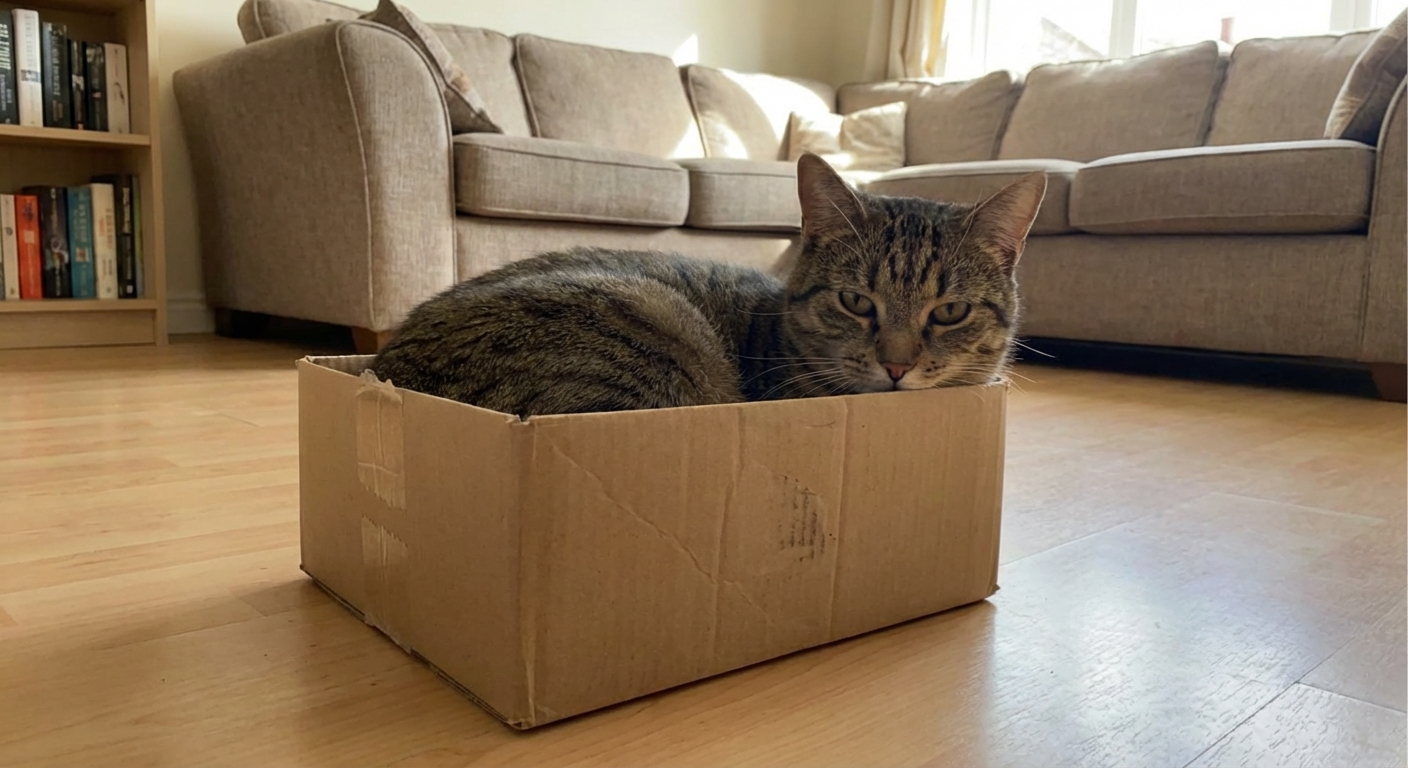
As a veterinary assistant here in Frisco, Texas, I can tell you this is one of the most common and most endearing cat questions I hear: why do cats love boxes so much? Your cat is not being “weird.” In most cases, sitting in boxes is a normal, healthy behavior rooted in feline biology. Cats are both predators and prey, and a simple cardboard box meets several core needs at once: safety, warmth, stress relief, and play.
Also, not every cat is a box fanatic. Some prefer open beds, high perches, or window hammocks. But for many cats, boxes are irresistible.
Quick answer
Cats sit in boxes because boxes help them feel secure, in control, and comfortable. A box limits what they have to watch, reduces surprise approaches, and creates a cozy micro-environment. For many cats, that combination is pure peace.
7 behavior-based reasons cats love boxes
1) Safety and hiding are survival strategies
Cats often prefer spaces where they can observe without being observed. A box gives your cat “walls” and often a single opening, which means fewer directions to monitor. This is especially helpful in multi-pet homes, busy households, or when there are unfamiliar visitors.
What you can do: Provide at least one box or covered bed in a quiet location so your cat always has a safe retreat.
2) Stress relief (yes, there is research)
Many behavior professionals point out that hiding spaces help cats cope with change. There is even a commonly cited shelter study from 2014 (University of Utrecht) showing that cats given hiding boxes showed lower stress levels and adjusted faster than cats without them.
Tip: If your cat is shy or anxious, keep a few “approved” hiding spots available instead of blocking them all. You can guide the behavior toward safer options.
3) Warmth and comfort
Cats naturally seek warm areas. Cardboard provides insulation and can help hold body heat. If your home is kept cool, a box can feel like a warm little cave.
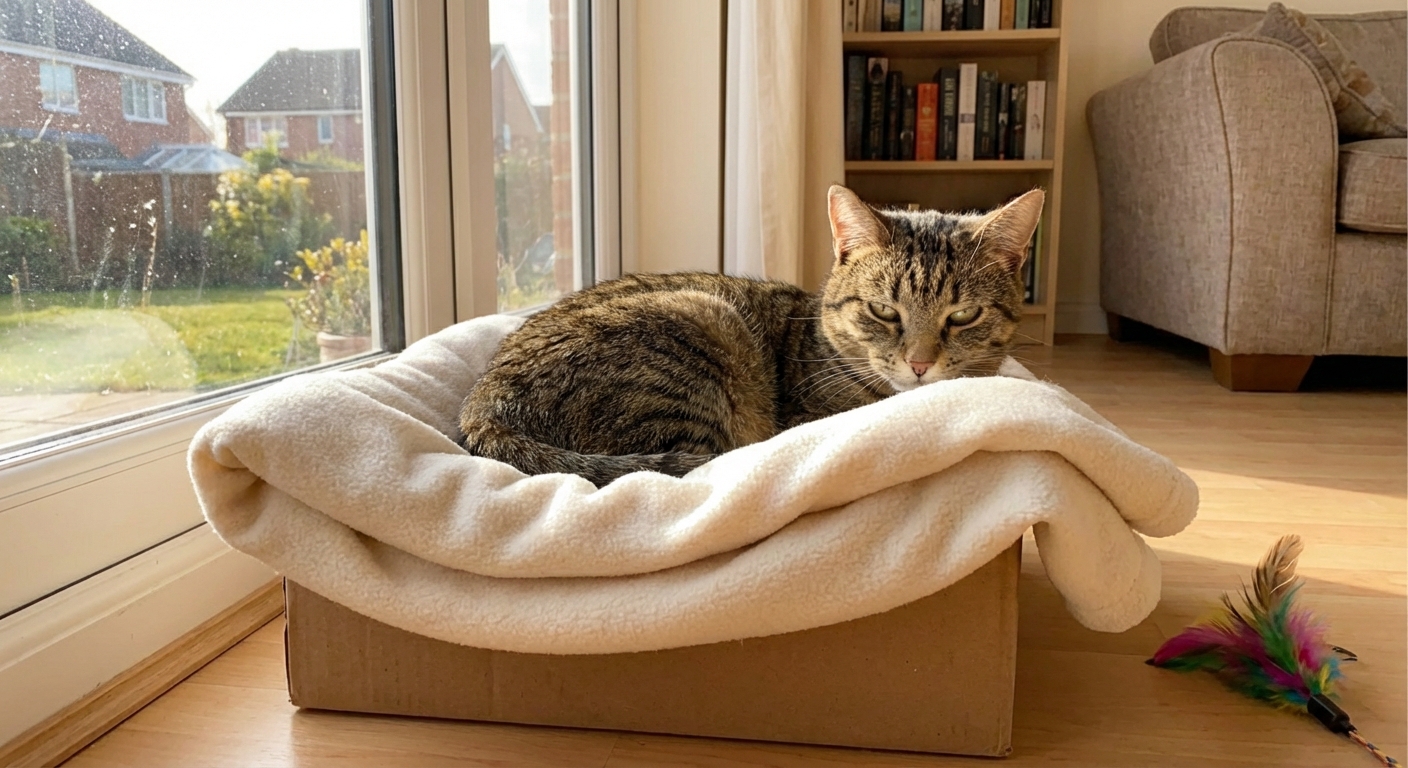
Try this: Place a soft towel or fleece inside a box. Skip loose strings or anything your cat could chew and swallow.
4) A box supports hunting instincts
Cats are ambush hunters. A box is the perfect “blind” for watching toys, feet, other pets, or anything that moves. Even indoor cats have a strong drive to stalk and pounce.
Healthy play idea: Cut a couple of small paw-sized holes in the sides of a box and move a wand toy around the outside for an engaging hunting game. Smooth any rough edges so your cat does not get scratched.
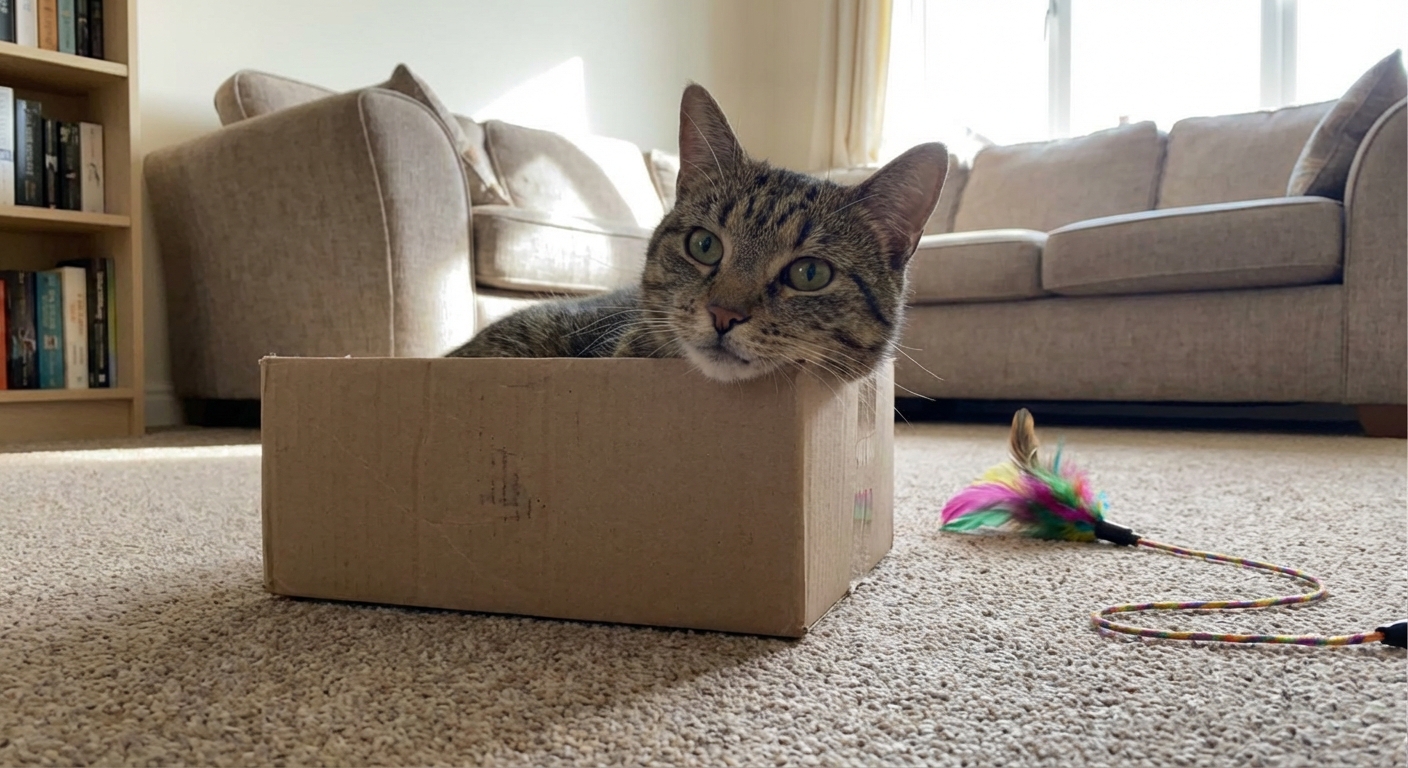
5) Lower stimulation (and fewer drafts)
From a cat’s perspective, life can feel loud and unpredictable. A box can muffle some noise, reduce visual stimulation, and help cut down on drafts. That can be soothing for cats that are easily overstimulated.
Quick safety note: Keep boxes ventilated and never seal a cat inside. Avoid boxes with lids that close, and do not cover all openings.
Look for clues: If your cat retreats to boxes during busy times, it may be telling you the environment is overwhelming.
6) Scent marking and “this is mine” behavior
Cats have scent glands on their cheeks, paws, and bodies. When they rub, knead, and settle into a box, they are transferring their scent. That scent marking helps them feel secure and establishes territory in a non-aggressive way.
Practical note: Since cardboard does not wash well, plan to replace the box when it gets dirty or worn. If you use bedding inside the box, wash the bedding instead. Avoid heavily scented cleaners around your cat’s favorite resting spots.
7) Cozy body support
Boxes can provide gentle support on the sides, which some cats find physically comforting. Senior cats or cats with arthritis may prefer snug spots that make them feel stable, especially if other resting areas are slippery or too open.
Make it senior-friendly: Choose a box with a low entry so older cats do not have to step high to get in.
When box-sitting is normal
- New cat in the home: Expect more hiding and box use for the first days to weeks.
- Household changes: Visitors, construction noise, a new baby, or a new pet can increase box time.
- Hot or cold seasons: Cats may seek insulation in winter or shade in summer.
- Playful kittens: Boxes are enrichment, not just comfort.
When to worry
Most box behavior is harmless. But I always encourage pet parents to watch the full picture: appetite, litter box habits, energy, grooming, and social behavior.
Call your veterinarian if box hiding or box sitting comes with:
- Not eating for about 24 hours (or any time for kittens, seniors, or cats with known medical issues)
- Vomiting, diarrhea, or constipation
- Straining in the litter box or frequent trips with little output
- Sudden aggression, yowling, or obvious pain when picked up
- Rapid weight loss, a dull coat, or a dramatic personality change
- Noticeably decreased water intake
Hiding more than usual can be a stress signal, but it can also be a subtle sign of illness. Cats are masters at masking discomfort.
Safe box setup
- Remove hazards: Take off plastic tape loops, staples, and strings. If the box has handles, consider cutting them off so your cat cannot get stuck.
- Skip unsafe boxes: Avoid boxes that are wet, moldy, heavily scented, chemically treated, or contaminated by spills. When in doubt, toss it.
- Choose the right size: Your cat should be able to turn around and lie down comfortably.
- Add cozy bedding: Use a washable towel or fleece. Avoid anything with loose threads.
- Placement matters: Put at least one box in a quiet area and one in a social area, depending on your cat’s personality.
- Offer more than one: In multi-cat homes, spread multiple boxes out so everyone has options and no one gets cornered.
- Rotate boxes: Swapping a box every couple of weeks keeps novelty high without costing much.
Box upgrades
- Two-door escape route: Cut a second opening so your cat feels less trapped in multi-pet homes. Smooth edges and keep openings large enough to prevent scraping.
- Paper packing fun: Add crumpled paper for digging and pouncing. Skip plastic packing materials.
- Hide treats: Toss a few treats in the box to encourage a positive association.
- Stack safely: Create a low “box fort” on the floor. Avoid tall stacks that could topple.
Bottom line
Boxes are not just cute. They are a simple, powerful tool for feline wellness that supports your cat’s need for safety, warmth, stress relief, and natural hunting behavior. If your cat is choosing boxes more than usual, treat it like communication: check the environment for stressors, and if anything else seems off, get your veterinarian involved.
If you are reading this on a platform where you can reach out, share your cat’s age, personality, and home setup, and I can suggest a simple “box plan” for your space.